
Fast, Reliable Water Damage Restoration Across Chinatown
Water damage in Chinatown moves faster than most homeowners expect. In these century-old tenements, a burst pipe on the third floor can soak a ground-floor unit before anyone notices the ceiling stain. That’s why our crews coordinate from the Los Angeles office and serve Chinatown locally, with extraction equipment on the road within the hour. Wade Ferris answers his own phone at (855) 915-0646, day or night. If water is running through your building right now, call. We’ll start extraction before the moisture reaches the next floor down.
Key takeaways:
- Chinatown’s post-1906 balloon-frame construction lets water travel two floors down before surfacing.
- Dense plaster-on-lath walls hit mold-growth thresholds within 24-48 hours in this fog-heavy neighborhood.
- We map the true moisture boundary with thermal imaging, not just the visible stain.
- Every job comes with Wade’s 90-Day Done Right Promise, in writing.
Why Wade’s Restoration of California Is Chinatown’s Preferred Water Damage Restoration Company
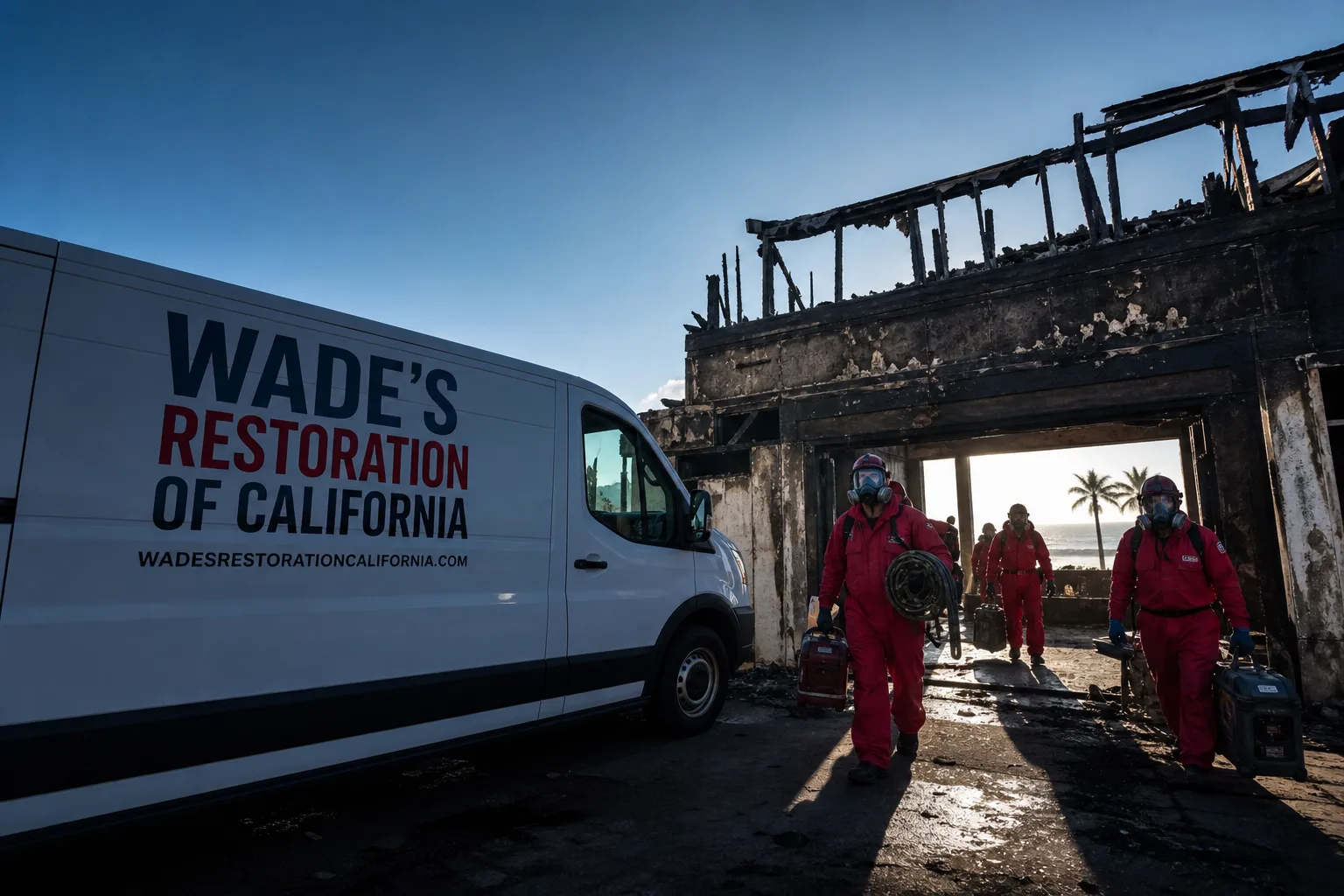
Wade has been doing restoration work since 2007, and he’s built the company around something simple: his name is on the truck, his address is published, and when you call, you get him. Not a call center. Not a voicemail. Chinatown residents have learned to ask who they’re actually dealing with before letting a crew inside. When the answer is Wade Ferris and a background-checked, uniformed crew he personally sends, that question settles fast.
Our reputation in Chinatown comes from showing up on time and doing what the estimate says. Wade takes moisture readings every single day and hands the homeowner the full log at the end of the job. That’s almost unheard of in this trade, but it’s the only way to prove the drying actually happened. In a neighborhood where shared walls and stacked units mean one building’s leak is five families’ problem, documentation matters. We hand you the log, we talk to your adjuster directly, and we put the 90-Day Done Right Promise in writing on every water restoration contract.
Response time to Chinatown runs fast. Our techs know Stockton Street, Grant Avenue, and the narrow alleys off Waverly Place. They know parking is brutal and building access usually means a walk-up. They come prepared for that. When water is moving through balloon-frame bays, the first extraction call is the difference between drying sheetrock and gutting it.
Our Water Damage Restoration Services in Chinatown
We handle the full Water Damage Restoration scope, but in Chinatown, three services do the heavy lifting. Here’s what they actually mean for buildings in the 94133 ZIP.
Emergency Water Extraction
Standing water in a Chinatown tenement doesn’t just sit there. It follows century-old diagonal bridging, runs down un-firestopped balloon-frame bays, and pools in units two floors below the source. Our extraction crew gets pumps and extraction units running fast, pulling water from hardwood, tile, and the subfloor cavities that hide between units. In a mixed-use building on Grant Avenue, a third-floor supply line burst and water surfaced in a ground-floor commercial kitchen. We mapped the full moisture boundary before demolition started. That’s the difference between a repair and a rebuild.
Structural Drying & Dehumidification
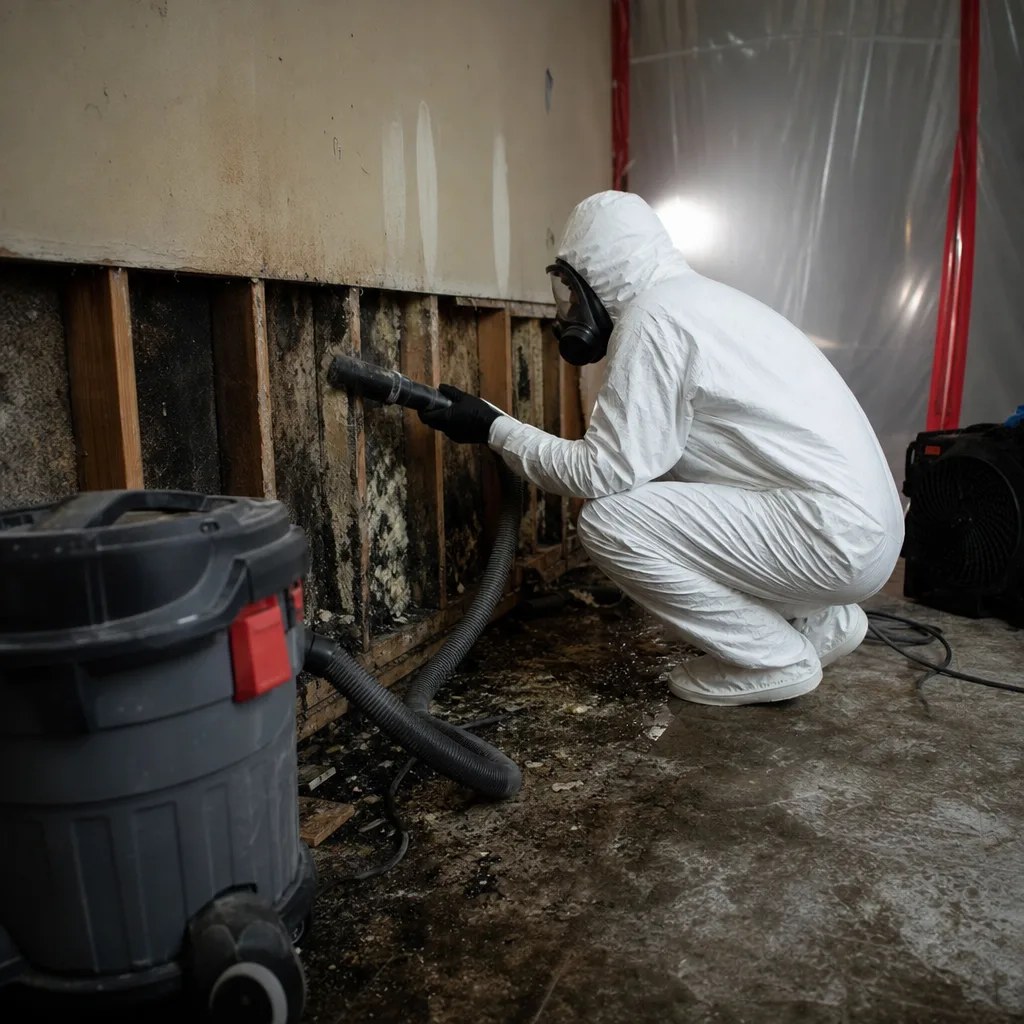
Plaster-on-lath walls hold water like a sponge. Add San Francisco’s marine layer and summer fog, and interior humidity stays elevated year-round. That means structural drying in Chinatown is a race against mold, not just a matter of running fans. We deploy Dri-Eaz dehumidifiers and Phoenix air movers sized for dense, poorly-ventilated century-old cavities. Injectidry systems go directly into wall and floor cavities where standard drying can’t reach. Daily moisture readings track the dry standard, and you get that log at the end.
Flood Cleanup
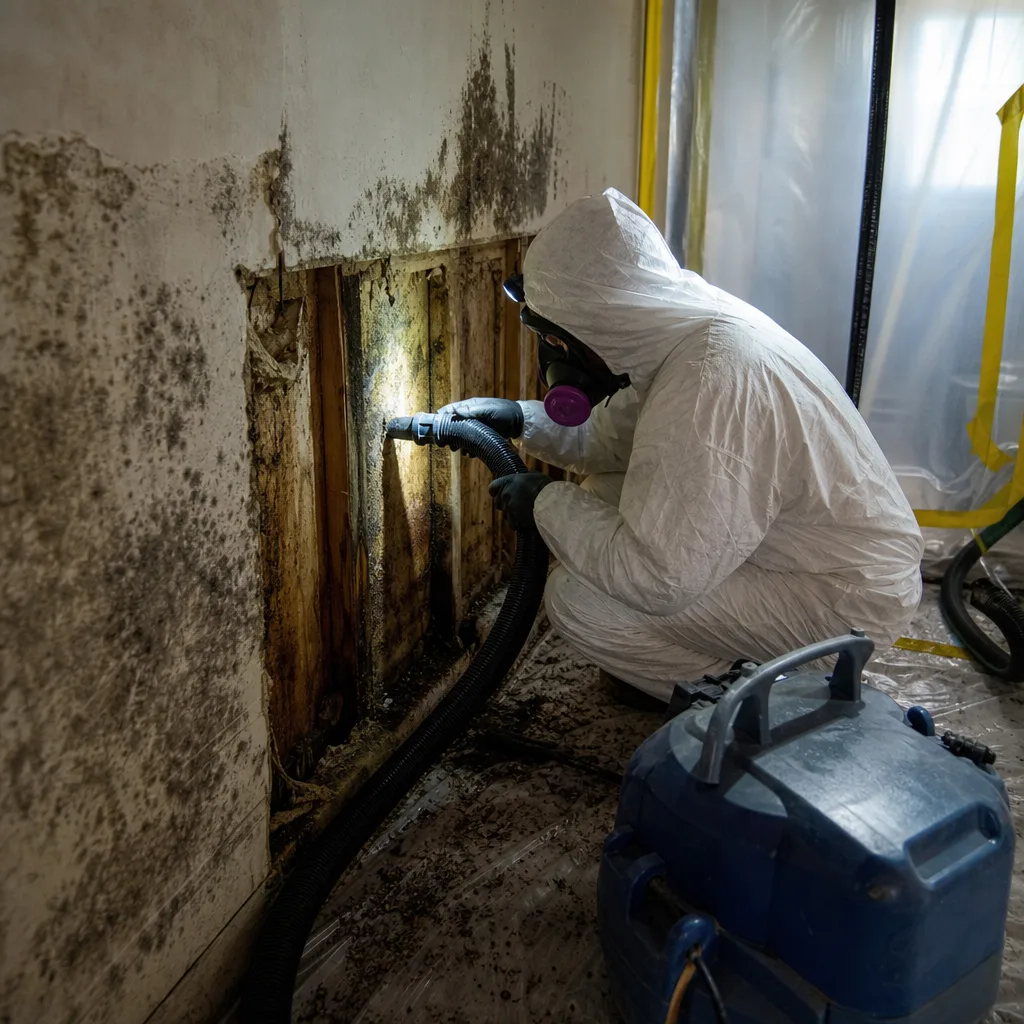
Chinatown floods come from rain, aging drainage stacks, and neighbor leaks as much as from burst pipes. Post-1906 buildings share drain lines and stack vents in ways that turn one unit’s overflow into another unit’s ceiling damage. Flood cleanup here means extracting water, removing saturated plaster and lath that won’t dry, and sanitizing the surfaces underneath. We also coordinate access across multiple residential units, often with residents present the whole time, so no one is surprised by what’s happening next door.
Burst Pipe Restoration
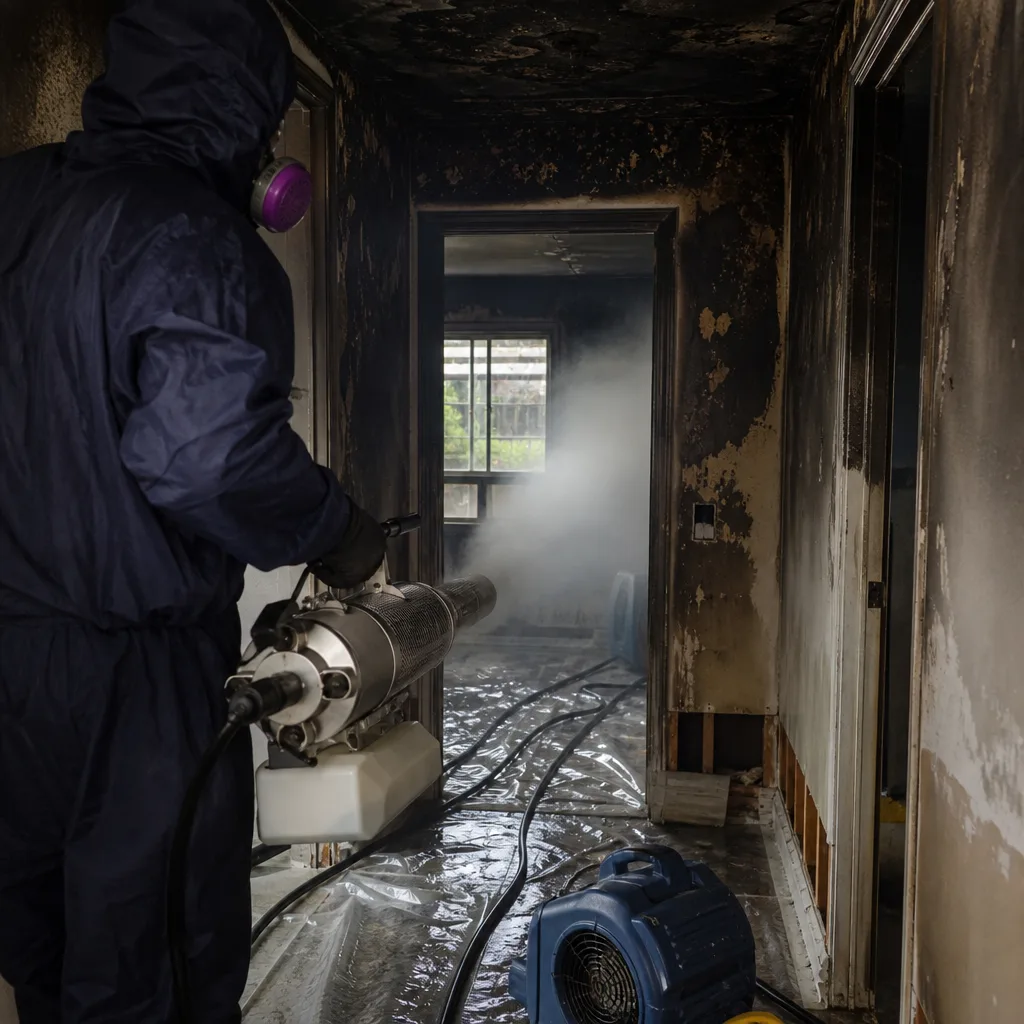
Galvanized supply lines from the 1920s and 1930s are at the end of their service life throughout Chinatown. When they fail, they fail suddenly. Burst pipe restoration here starts with stopping the water, extracting what’s pooled, and then opening walls to find where the water actually went. In these buildings, that path is rarely straight down. Hidden cavities from informal generational renovations mean the water boundary defies standard moisture-mapping. We use thermal imaging to find every wet pocket, not just the obvious one.
What happens when you call
- 1
A real person answersNo phone trees - you reach a local pro.
- 2
You get an upfront price rangeHonest numbers before anyone is dispatched.
- 3
A background-checked tech heads outLicensed & insured, dispatched right away.
- 4
You approve before work beginsNothing starts until you say go.
Trusted Brands We Service in Chinatown
We run equipment from Dri-Eaz and Phoenix, and our crews carry the certifications to back the work: IICRC-certified and RIA-affiliated. For Chinatown’s dense plaster and brick construction, we keep replacement materials and specialized drying systems ready to go, which means less waiting on parts and more actual drying. When you call, you get equipment that belongs on a job like this, not whatever the closest rental shop had left. We also keep common fittings and connectors for the older supply lines we run into throughout 94133.
Common Water Damage Restoration Problems We See in Chinatown Homes
- Hidden migration through balloon-frame bays. Water from a single burst pipe travels two floors down before it shows up anywhere. We’ve watched a third-floor leak surface in a ground-floor commercial kitchen on Grant Avenue, tripling the initial demolition estimate. Mapping the true boundary is the job.
- Plaster-on-lath walls that won’t release moisture. These dense assemblies hold water for days. Without emergency response within 24-48 hours, mold growth starts in poorly-ventilated century-old cavities. That compressed window is why same-day extraction matters more here than in North Beach or the Financial District.
- Hidden cavities from generational renovations. Decades of informal additions and subdivisions create wall and floor cavities that don’t follow modern framing logic. Standard moisture-mapping misses them. Thermal imaging and experience in post-1906 construction reveal the secondary damage most crews never look for.
- Shared walls and stacked units. One unit’s leak is the building’s problem. Access, documentation, and scope all have to work across language barriers and simultaneous active residencies. We’ve handled multi-unit responses throughout Chinatown and know what it takes to keep everyone informed while water keeps moving.
Pricing for Water Damage Restoration in Chinatown, CA
Here are real numbers for Chinatown’s market, so you know what to expect before anyone shows up. Emergency water extraction in a typical Chinatown tenement runs $1,200-$3,400 depending on floors affected and access. Structural drying with dehumidification runs $40-$80 per day per air mover, plus the cost of the dehumidifier and monitoring. Burst pipe restoration, including drywall and plaster repair, typically lands between $2,500-$7,000 for the scope of work we see most often. When hidden migration triples the affected area, that number climbs, which is why we document everything before we open the next wall.
What affects the price: how many floors the water traveled, whether plaster needs removal or can be dried in place, how many units require access, and whether hazardous materials like lead paint are present. Estimates are always free. We offer a free second opinion on any written estimate you’ve received, no trip charge inside Los Angeles County, and a permanent 10% discount for seniors and veterans. Call (855) 915-0646 and Wade will give you a straight answer.
We Also Serve Cities Near Chinatown
Our crews work throughout San Francisco, including the Mission District, Noe Valley, Visitacion Valley, and the neighborhoods immediately surrounding Chinatown. If you’re in one of those areas and dealing with water damage, call and ask for Wade. He’ll tell you honestly whether he can be the one on your job or whether a different crew makes more sense.
Serving Chinatown, CA - Our Local Coverage Area
We’re based in the Chinatown area and know this community well. Use the map below to see our service coverage - if you’re nearby, we can almost certainly help.
FAQs - Water Damage Restoration in Chinatown
Within hours, not days. Water from a burst supply line in a third-floor unit can travel down un-firestopped balloon-frame bays and reach a ground-floor commercial space before the ceiling stain even appears in the unit below. We’ve mapped moisture boundaries that extended two floors down from the original source. If you suspect a leak in a post-1906 building, call (855) 915-0646 immediately. Every hour counts before plaster and framing saturate deeper.
Because San Francisco’s persistent marine layer and summer fog keep interior humidity elevated year-round, and Chinatown’s century-old buildings have dense plaster-on-lath assemblies with minimal ventilation. A wet wall that might dry in 3 days in a newer Mission District building can hit mold-growth thresholds within 24-48 hours here. Our crews treat Chinatown jobs as emergency drying from the first call, with equipment sized for the moisture load we actually find.
Yes. Informal generational renovations have created hidden wall and floor cavities that don’t follow any modern framing logic. Water migrates through those cavities and under-dried structural members become a mold source weeks after the visible damage is cleaned up. We thermal-image every Chinatown job before we call it done, and we hand you the daily moisture log that proves the drying reached standard. If you’re not sure what’s behind your walls, get a free estimate.
The hidden paths water takes through balloon-frame bays and the refusal of dense plaster-on-lath to release moisture. In one 1920s Grant Avenue tenement, a third-floor supply line burst and water followed century-old diagonal bridging down into a ground-floor commercial kitchen. Our techs used thermal imaging to map the true moisture boundary, which tripled the initial demolition estimate, and deployed Injectidry systems into the plaster walls to hit dry standard within 72 hours. That’s the job. Not just drying what you can see.
Yes. We’ve coordinated multi-unit extractions throughout Chinatown where tenants speak Cantonese, Mandarin, and other languages, and where access has to be arranged one unit at a time while residents stay in place. We document everything, communicate scope clearly, and work with property owners and insurance adjusters directly so no resident is left trying to translate technical restoration language. Call (855) 915-0646 and Wade will walk through how we handle the whole building, not just one unit.
Call Wade’s Restoration of California for Water Damage Restoration in Chinatown
Water moves fast through these old buildings. So do we. Call (855) 915-0646 now for a free estimate, and you’ll get Wade or someone who actually knows Chinatown’s buildings on the line. No answering service. No runaround. Just a straight answer about what’s wet, how far it’s traveled, and what it takes to dry it right. One call brings Wade back, and every job carries the 90-Day Done Right Promise in writing.
Written by Wade Ferris, Owner at Wade’s Restoration of California, serving Water Damage Restoration in Chinatown since 2007.