
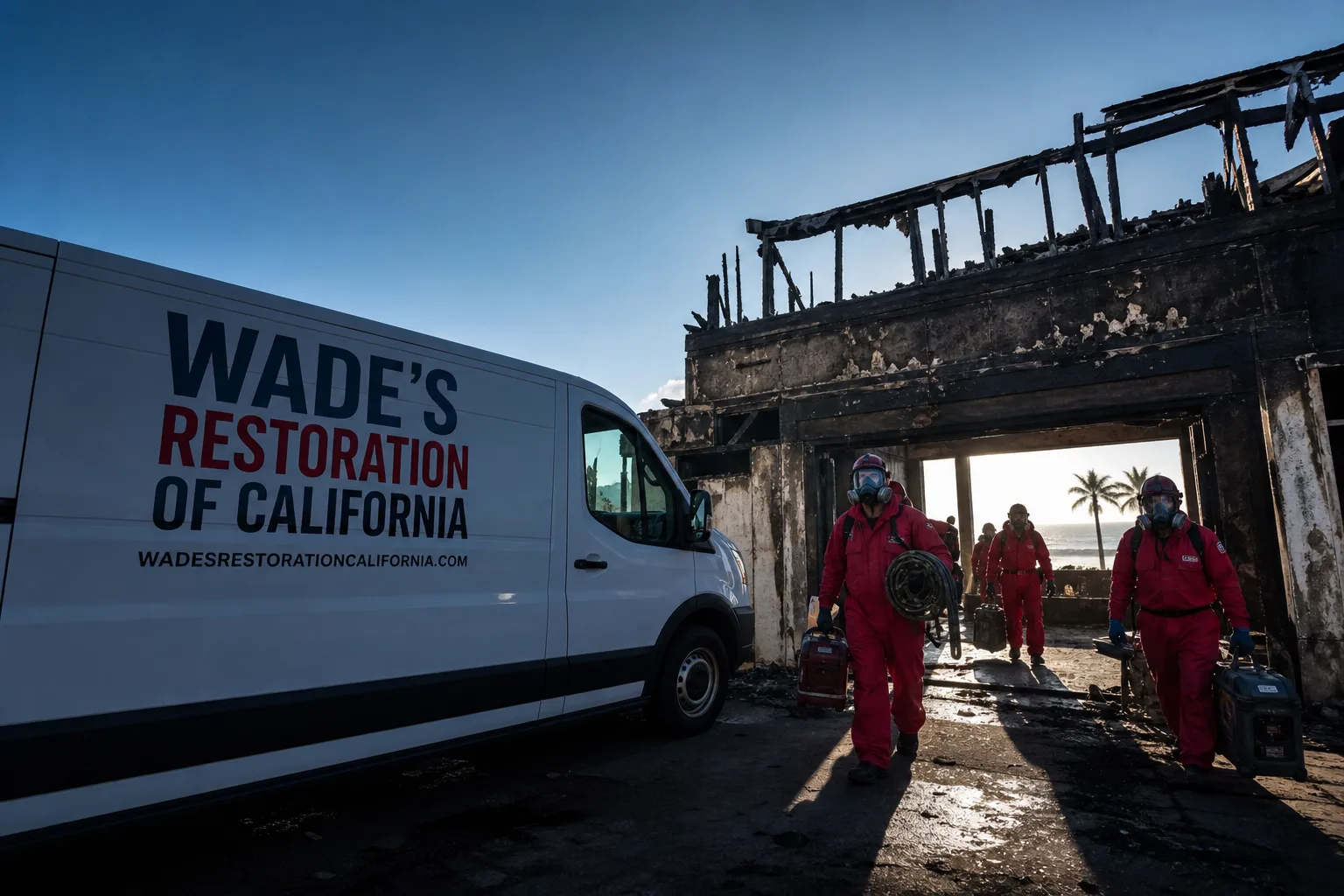
Fast, Reliable Water Damage Restoration Across Bell
Water damage restoration in Bell, CA typically runs $1,800 to $6,500 for a standard dry-out, and emergency extraction can usually be running inside the hour. In a city as dense as Bell, where 35,000 people live packed into roughly 2.5 square miles, a single pipe failure rarely stays contained to one unit. That’s exactly why we built our response protocols around multi-unit coordination from day one. Call Wade at (855) 915-0646 and a live person picks up, 24 hours a day.
Why Wade’s Restoration of California Is Bell’s Preferred Water Damage Restoration Company
Wade Ferris founded this company in 2007, and his name is still on every truck that rolls into Bell. Crews come out of the Los Angeles office, but the work is done by people Wade has trained, background-checked, and held accountable for nearly two decades. When you call (855) 915-0646 at 2 a.m. with water running through a ceiling on Florence Avenue, the person who answers is either Wade or someone standing next to him. Not a call center. Not a national franchise queue.
Bell homeowners and landlords deal with a specific kind of water damage, the kind that moves sideways through shared walls and under slab foundations, and we’ve seen enough of it to know what we’re walking into before we park the truck. Reviews from Bell customers mention the same things: we show up fast, we write down what we’re going to do, and we hand over daily moisture readings without being asked. That last part matters. Almost nobody in the trade does it.
Ask anyone on your street who’s had a flooded unit with a landlord, a tenant, and two insurance carriers all calling at once. Coordinating that mess is what we do regularly in Bell, because the housing stock here demands it.
Our Water Damage Restoration Services in Bell
Every job starts the same way, and it should: we find the source, stop it, and map the moisture. Then we dry it properly. Here’s what that looks like in Bell specifically.
Emergency Water Extraction
When a pipe lets go in a 1940s bungalow near Gage Avenue, standing water hits baseboards, wicks up drywall, and starts working into subfloor within minutes. We run truck-mounted extractors and Dri-Eaz portable units to pull water out fast, then set containment so wet air doesn’t migrate into adjacent rooms, or worse, next door. In Bell’s tightly clustered duplexes and apartment courts, containment isn’t a courtesy. It’s the difference between drying one unit and drying three.
Structural Drying & Dehumidification
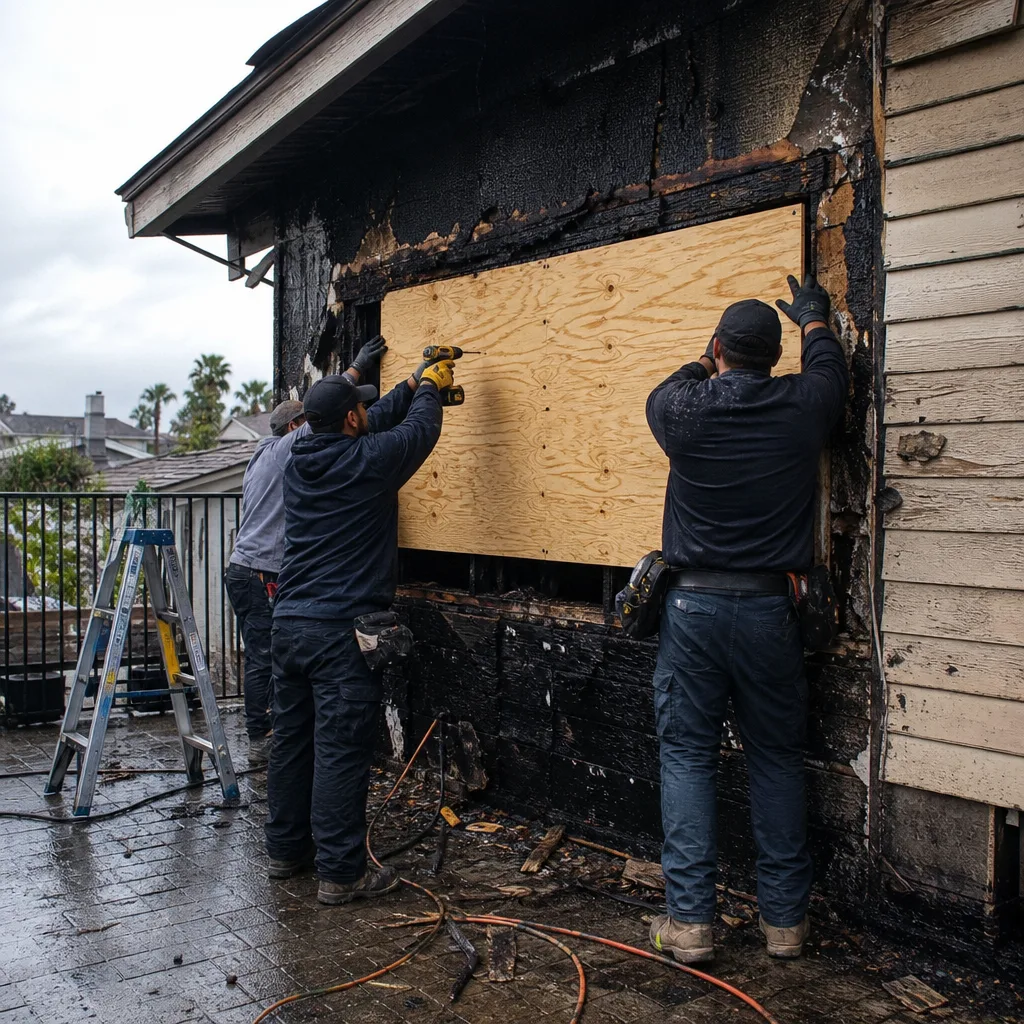
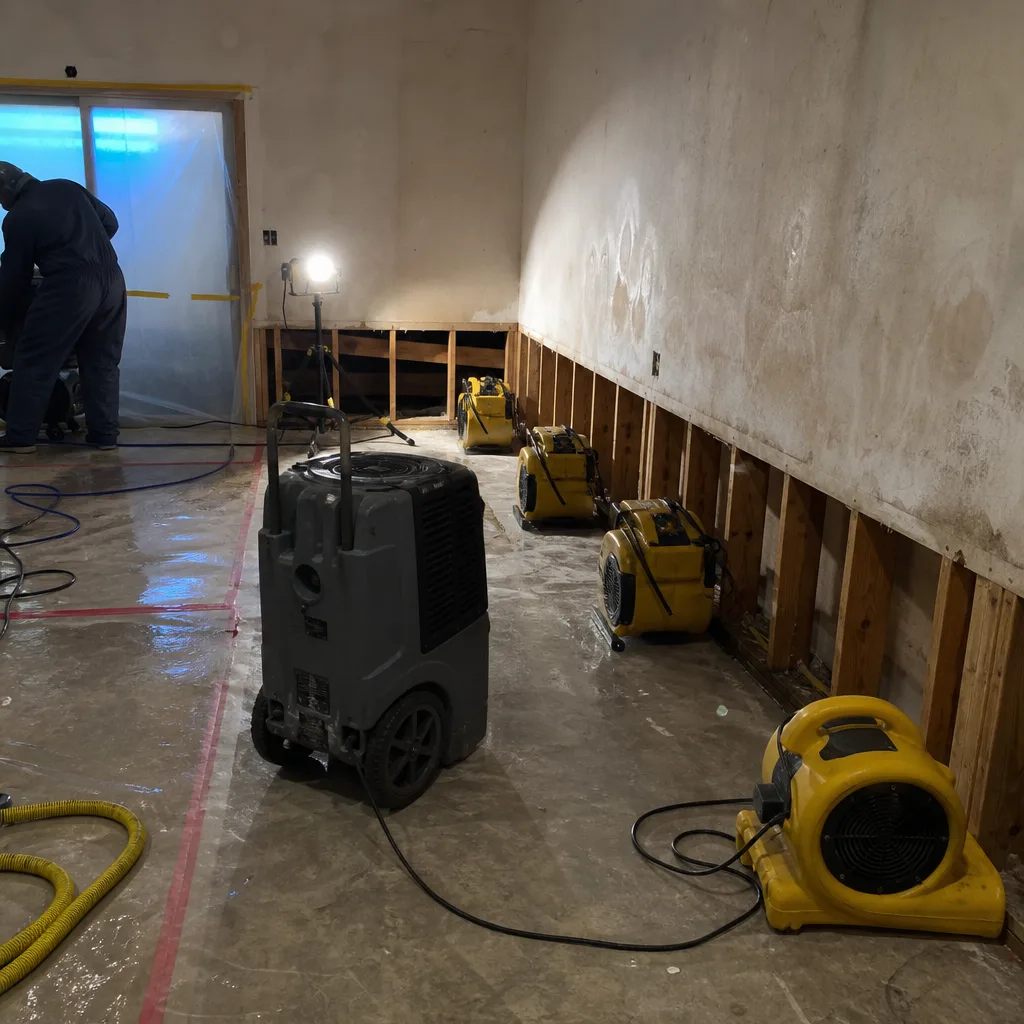
Bell sits on the nearly flat Los Angeles coastal plain, so water doesn’t drain away on its own. It pools, it sits, and it soaks. We deploy Phoenix AirMax fans and LGR dehumidifiers sized to the cubic footage of each affected room, not a one-size-fits-most setup. Every day Wade or his crew takes moisture readings and logs them. At the end of the job, you get the full log. That’s the transparency that separates a restoration company from a guy with a fan and a promise.
Flood Cleanup
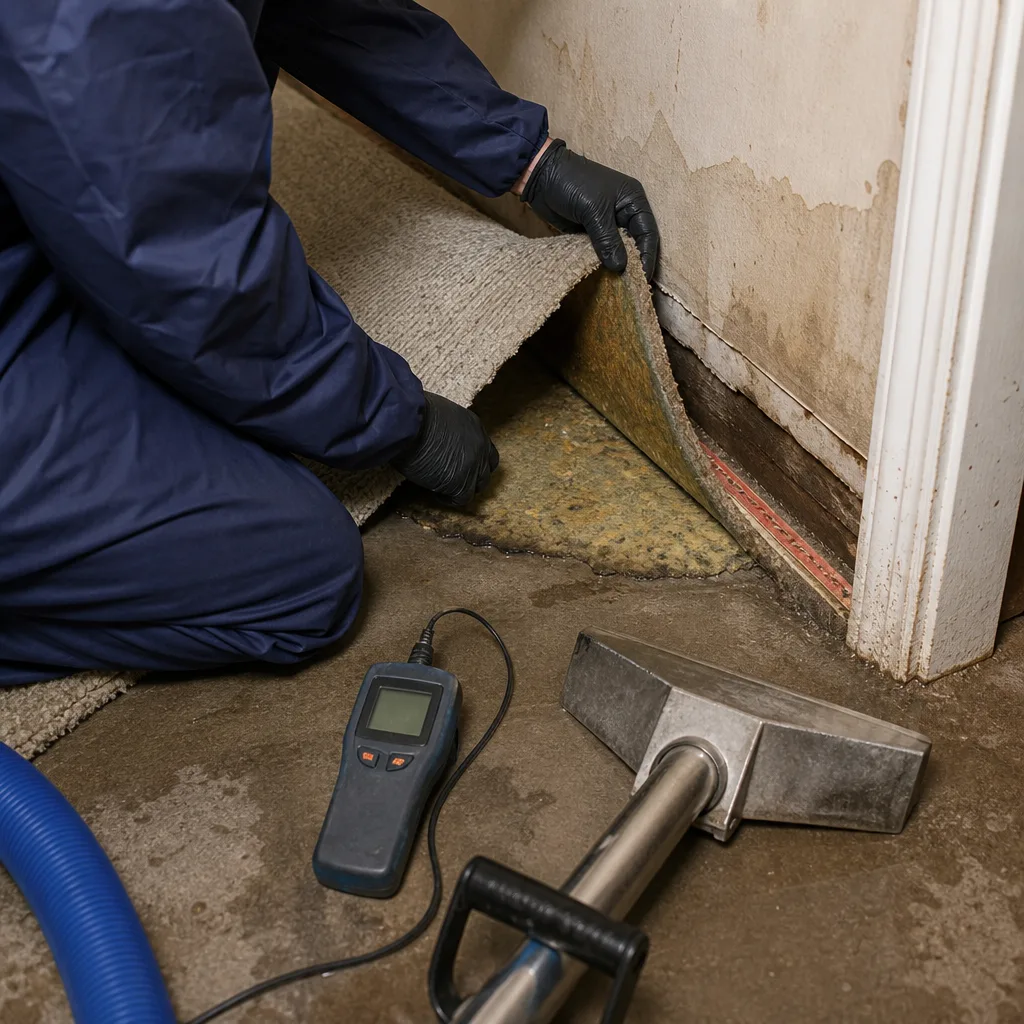
During heavy El Niño rain years, Bell’s aging storm drains back up and push Category 3 black water into ground-level units across multiple buildings. This isn’t rainwater; it’s sewage-laced floodwater that requires full antimicrobial treatment and disposal protocols. We handle the extraction, the contamination control, and the disposal, and we coordinate with the city’s infrastructure realities, not against them.
Burst Pipe Restoration
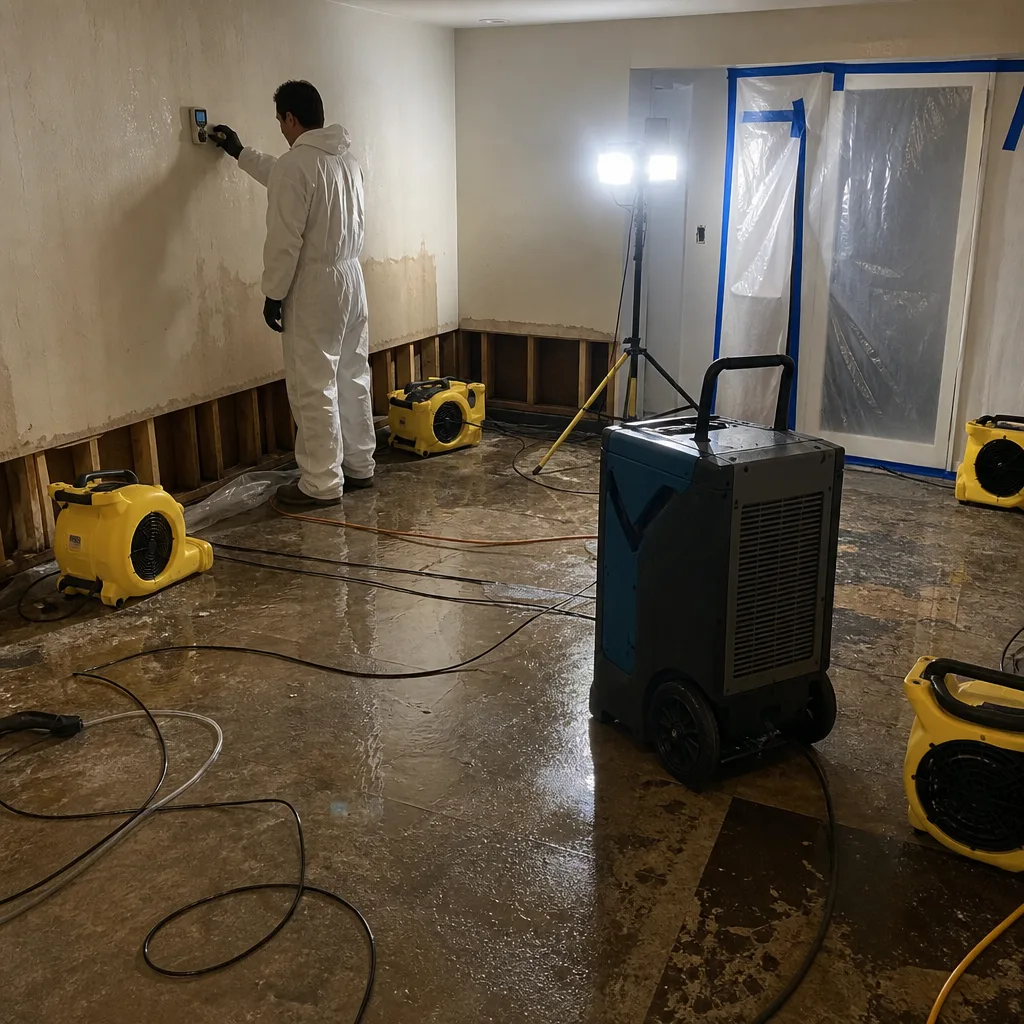
Most burst pipes in Bell are original galvanized supply lines from the 1940s through 1960s. Hard blended water delivered through the Metropolitan Water District accelerates interior corrosion on these old lines, and when they go, they go violently, not with a slow drip. We repair the line or coordinate with a plumber we trust, then restore the water-damaged framing, drywall, and flooring behind it. Cat 1 clean-water damage left untreated for even 72 hours becomes a mold problem, and in Bell’s pre-1978 construction, that means testing requirements before abatement can happen. We pre-stage for exactly that.
What happens when you call
- 1
A real person answersNo phone trees - you reach a local pro.
- 2
You get an upfront price rangeHonest numbers before anyone is dispatched.
- 3
A background-checked tech heads outLicensed & insured, dispatched right away.
- 4
You approve before work beginsNothing starts until you say go.
Trusted Brands We Service in Bell
We don’t believe in house brands from a big-box shelf. Our drying equipment is Dri-Eaz and Phoenix, and our work is backed by IICRC certification, RIA affiliation, and IFA recognition. What that means for a Bell homeowner is simple: the equipment works the first time, and the protocols meet the industry’s highest standard, the standard your insurance adjuster actually recognizes. We keep replacement parts stocked on our trucks for the equipment we run, so a failed sensor or a clogged hose doesn’t shut down a dry-out in the middle of the night.
Common Water Damage Restoration Problems We See in Bell Homes
- Shared-wall leaks that cross property lines. In a 1940s duplex, a pinhole leak behind one unit’s wall feeds moisture into the neighboring unit’s framing. By the time either tenant notices, both cavities are wet and mold is established. One moisture source, two affected owners, often two different insurance carriers.
- Silent pinhole leaks in landlord-owned rentals. Bell has a high proportion of rental units, many with original galvanized lines that have never been replaced. Tenants don’t always report a slowly buckling floor or a faint stain on the ceiling, and landlords only find out when the damage is structural. Months of hidden moisture means LA County protocol remediation, not a quick dry-out.
- Sewer-backup flooding from flat terrain. Bell’s minimal grade change means stormwater drains slowly, and when the municipal system backs up, groundwater rises into units through floor drains and toilets. We see this every significant rain cycle, and it’s always Category 3, always urgent, and always requires full contamination protocols.
- Pre-1978 asbestos and lead triggers on virtually every job. Bell’s housing stock was built predominantly between 1940 and 1970. Before demolition or rebuild can happen, LA County requires asbestos and lead testing. Customers who call a company that skips this step end up with a stopped job and a code violation. We stage the testing upfront so drying starts without the delay.
Pricing for Water Damage Restoration in Bell, CA
Let’s talk real numbers for Bell, not some national average. Emergency water extraction alone typically runs $500 to $1,200 depending on square footage and accessibility, and in a Bell apartment court, accessibility often means narrow walkways and shared walls that complicate hose runs. Structural drying with professional dehumidifiers and air movers usually adds $1,200 to $3,500 for a multi-room event. A full Category 3 flood cleanup, the kind that comes up through the drains during heavy rain, starts around $3,000 and can reach $8,000 with content cleaning and disposal. Burst pipe restoration, including drywall and flooring rebuild after the dry-out, lands between $2,500 and $6,500 for a typical Bell unit. The biggest cost variable is how long the water sat before you called. That’s why we answer the phone 24/7 and don’t charge a trip fee inside the county. Call (855) 915-0646 for a free estimate, or bring us a written quote from anyone else and we’ll give you a free second opinion.
We Also Serve Cities Near Bell
Our crews work throughout the immediate area, including Cudahy, Maywood, Huntington Park, and Walnut Park. If you’re in one of those communities, the same response standards apply: live answers, owner accountability, and documented drying. See more about our Water Damage Restoration services or read about how we serve Bell specifically.
Serving Bell, CA - Our Local Coverage Area
We’re based in the Bell area and know this community well. Use the map below to see our service coverage - if you’re nearby, we can almost certainly help.
FAQs - Water Damage Restoration in Bell
Shared walls, shared framing, and shared plumbing chases mean water doesn’t respect the property line. In Bell’s 1940s and 1950s duplexes, the wall assembly between units is often a single 2×4 frame with drywall on both sides. When a galvanized supply line inside that wall leaks, moisture wets both cavities simultaneously, and by the time one tenant sees a stain, mold is already growing on the other side. That’s why we coordinate with both owners and both adjusters from the first day. If you suspect a shared-wall leak, call (855) 915-0646 before the cavity moisture spreads further.
Almost certainly yes. Bell’s housing stock is predominantly pre-1978, which triggers mandatory asbestos and lead-paint testing before any demolition or rebuild is permitted in LA County. Any restoration company that skips this step is setting you up for a work stoppage and a possible code violation. We pre-stage the required testing on every Bell job so emergency drying starts without the delay, not after it.
It’s a recurring problem, not a rare one. Bell sits on nearly flat terrain with minimal grade change, so stormwater drains slowly, and the aging municipal storm-drain and sewer infrastructure, strained by years of budget shortfalls following the city’s 2010 fiscal crisis, makes backups more frequent than in neighboring communities with newer systems or more slope. During heavy El Niño rain events, Category 3 black water comes up through floor drains and toilets, and it almost always affects multiple ground-level units at once.
Because nobody reports them until the damage is structural. Many of Bell’s landlord-owned rentals still have original galvanized supply lines, and the hard blended water delivered through the Metropolitan Water District accelerates interior corrosion. A pinhole leak inside a wall cavity can run for months, saturating framing and feeding mold growth while tenants live with a faint stain or a warped floor, either not noticing or not wanting to involve the landlord. By the time it’s caught, the cavity mold load typically requires full LA County protocol remediation instead of a simple dry-out. Call (855) 915-0646 the day you notice any sign of hidden moisture, and we’ll assess it for free.
Multi-unit coordination, period. In a detached home, you have one owner, one insurance policy, one timeline. In a Bell apartment court, a single water event often touches multiple units with multiple owners, tenants, and carriers, each with different coverage limits and different expectations. We run one drying plan across all affected units, document everything consistently, and communicate with every adjuster directly so the owner isn’t stuck relaying information between two sides. That coordination is built into how we work in Bell, not bolted on.
Written by Wade Ferris, Owner at Wade’s Restoration of California, serving Bell since 2007.
Water in your Bell home or rental right now? Call (855) 915-0646. Wade answers his own phone, and he’ll be on the road within the hour.