
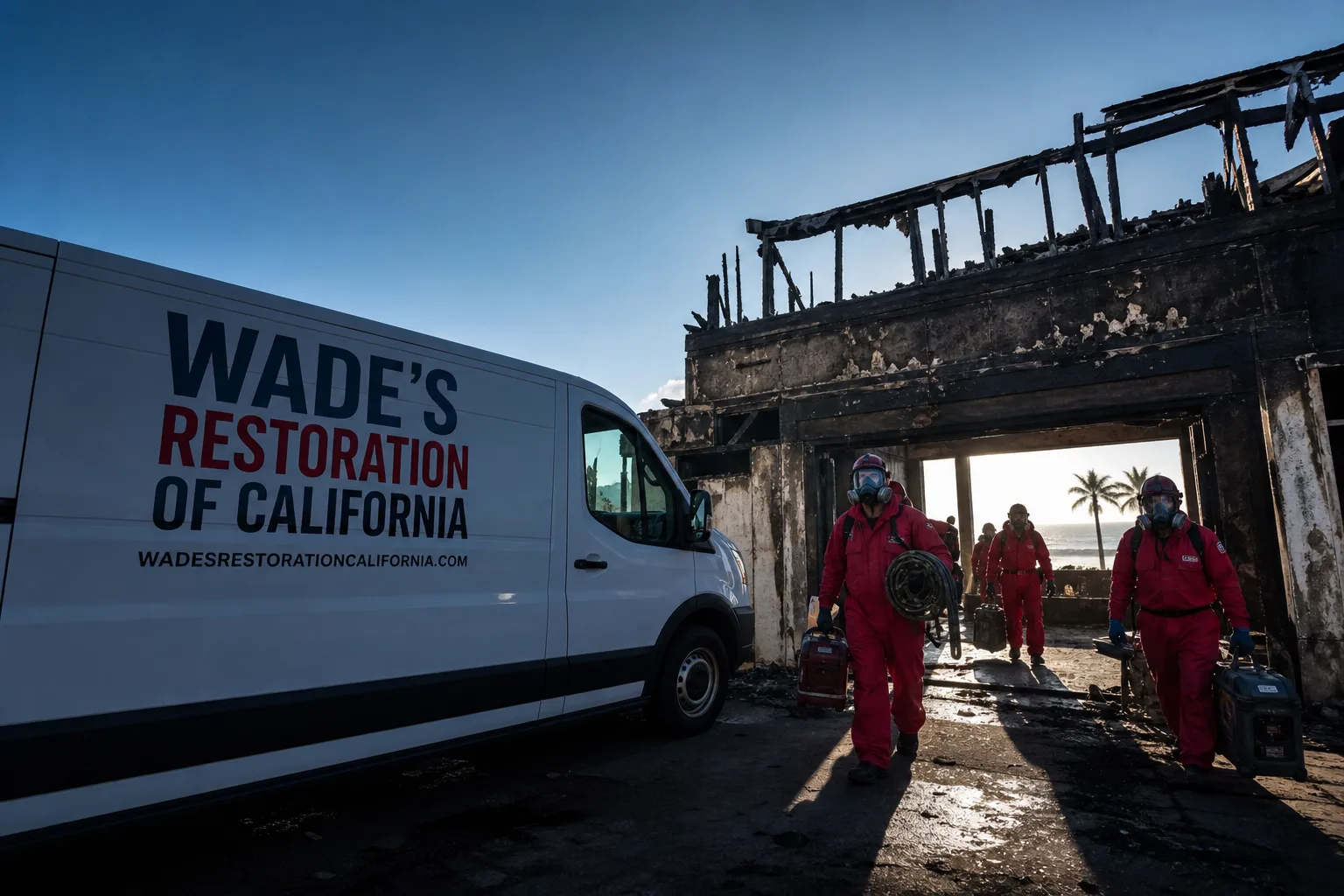
Fast, Reliable Storm & Disaster Restoration Across Watsonville
Storm damage in Watsonville moves fast, and so do we. A wind-driven limb through a window on East Lake Avenue, a flooded crawl space off Freedom Boulevard, a roof opened up over a 95076 bungalow during an atmospheric river: Wade’s Restoration gets a live person on the phone at (855) 915-0646 any hour, and Wade heads out with a crew that knows Watsonville’s streets, its flood zones, and its older wood-frame houses. We’ve worked the Pajaro River corridor since before 2023, and we know what the levee breach taught this town about how fast water becomes mold.
Why Wade’s Restoration of California Is Watsonville’s Preferred Storm & Disaster Restoration Company
Wade Ferris started this company in 2007, and his name is on the truck, his license number is published, and his crew shows up in uniforms, background-checked, with Dri-Eaz and Phoenix equipment in the truck. Homeowners off Green Valley Road and renters in the older apartments near downtown Watsonville have the same experience: Wade or a member of his crew walks the damage with you, writes a scope in plain language, and answers his own phone at two in the morning. That’s not marketing. That’s just how a locally owned restoration business works when the owner lives with his reputation.
Watsonville customers who’ve already been burned once by a national chain that quoted one price on the phone and another at the door tend to call us second. Wade’s Restoration shows up, hands over daily moisture readings from Phoenix meters, and gives you the full log when the job’s done. Almost nobody in the trade does that. Our Storm & Disaster Restoration team also deals directly with insurance adjusters, so you’re not the one stuck relaying information between two sides. Ask anyone on your street who’s dealt with a flood claim in Watsonville. They’ll tell you the paperwork fight is half the damage.
Our Storm & Disaster Restoration Services in Watsonville
Flood Damage Restoration
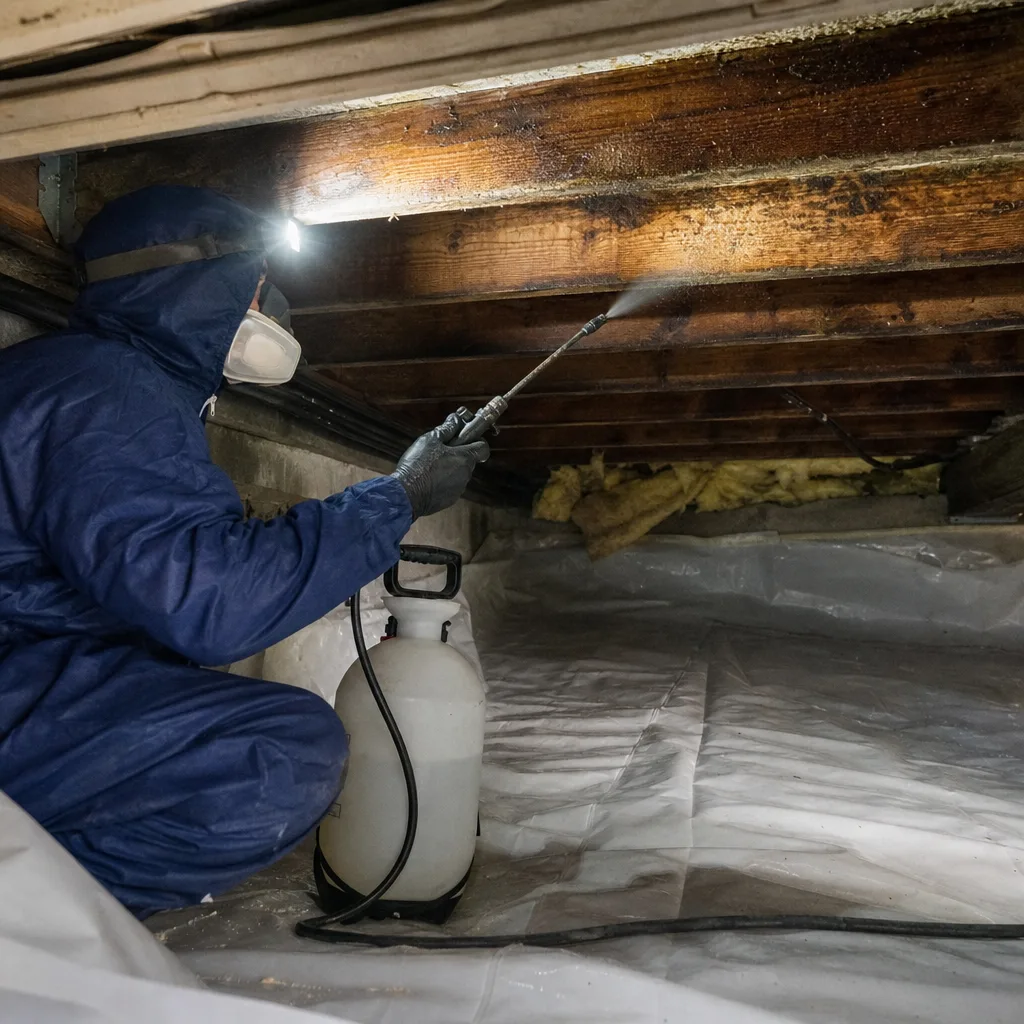
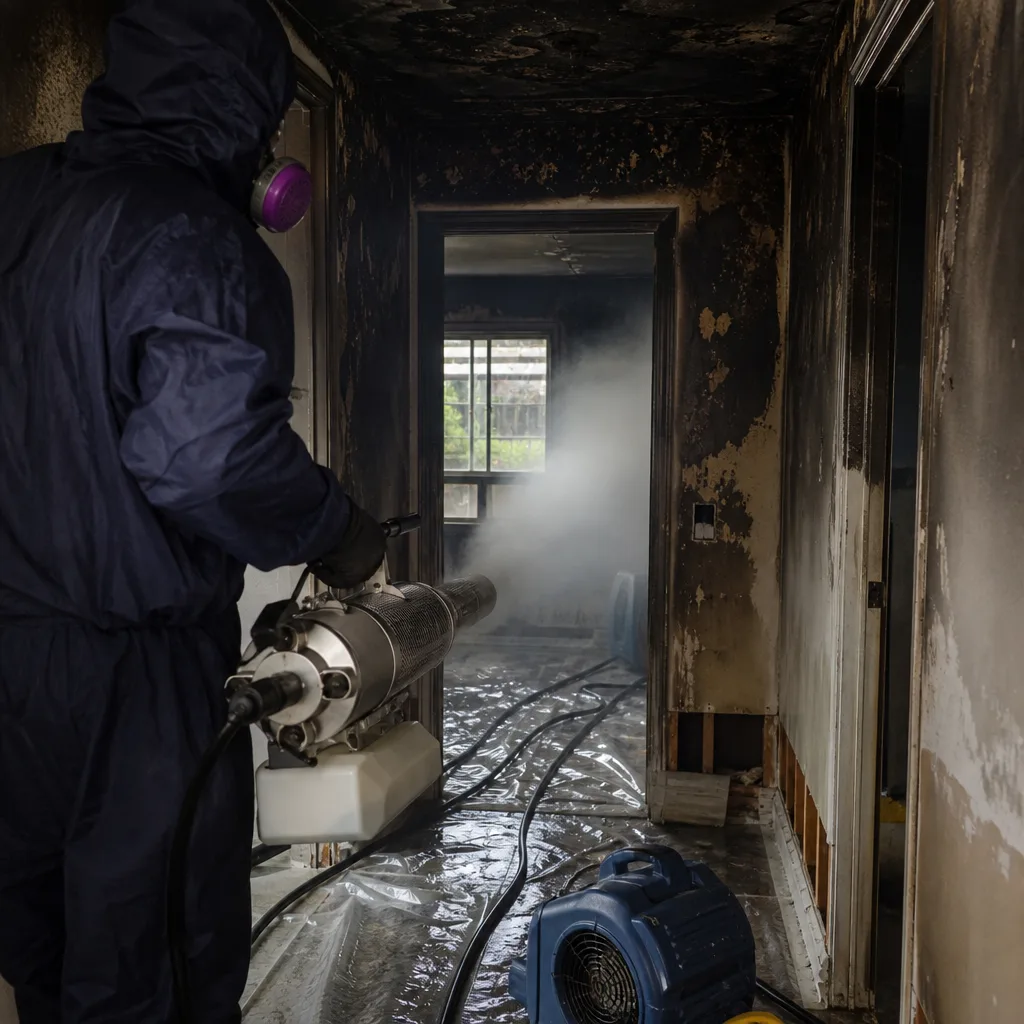
Watsonville sits on the low-lying Pajaro Valley floor, and when the Pajaro River rises, water doesn’t just pool, it sits. Early-20th-century worker cottages with minimal subfloor ventilation stay wet far longer than newer construction. We extract the standing water, set Dri-Eaz dehumidifiers and XPOWER air movers, and take moisture readings every single day until the structure actually dries. The 2023 levee breach taught everyone in Watsonville that flood restoration means more than sucking up water: it means documenting every step for an NFIP claim and treating the mold that’s already growing behind the drywall.
Emergency Board-Up
A broken window or blown-out door on a Watsonville rental off Airport Boulevard can’t wait until Monday. We board up openings the same day, secure doors, and keep the property protected from rain and intruders. We’ve boarded up dozens of homes in the 95076 and 95077 zip codes after wind storms and break-ins. The goal is to keep the damage from spreading while you sort out the claim.
Debris Removal
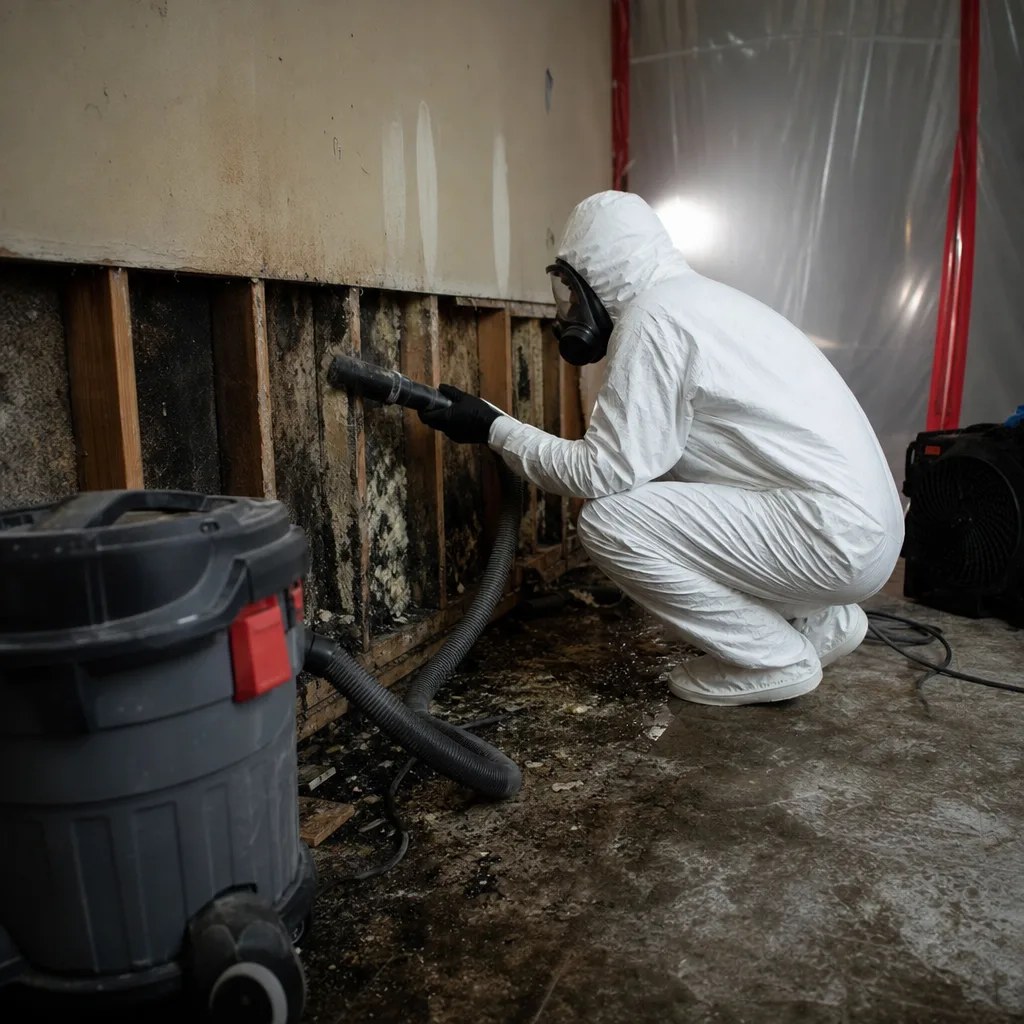
After a storm, Watsonville yards and side streets fill with downed limbs, roof tiles, soaked insulation, and whatever the wind carried in from the Pajaro Valley fields. We haul it off. Crews separate salvageable materials from trash, photograph everything for the adjuster, and leave the property clean enough to actually walk through. Debris removal in Watsonville matters more than in drier cities because wet organic material left in place becomes a mold colony in days under that coastal fog.
Roof Tarping
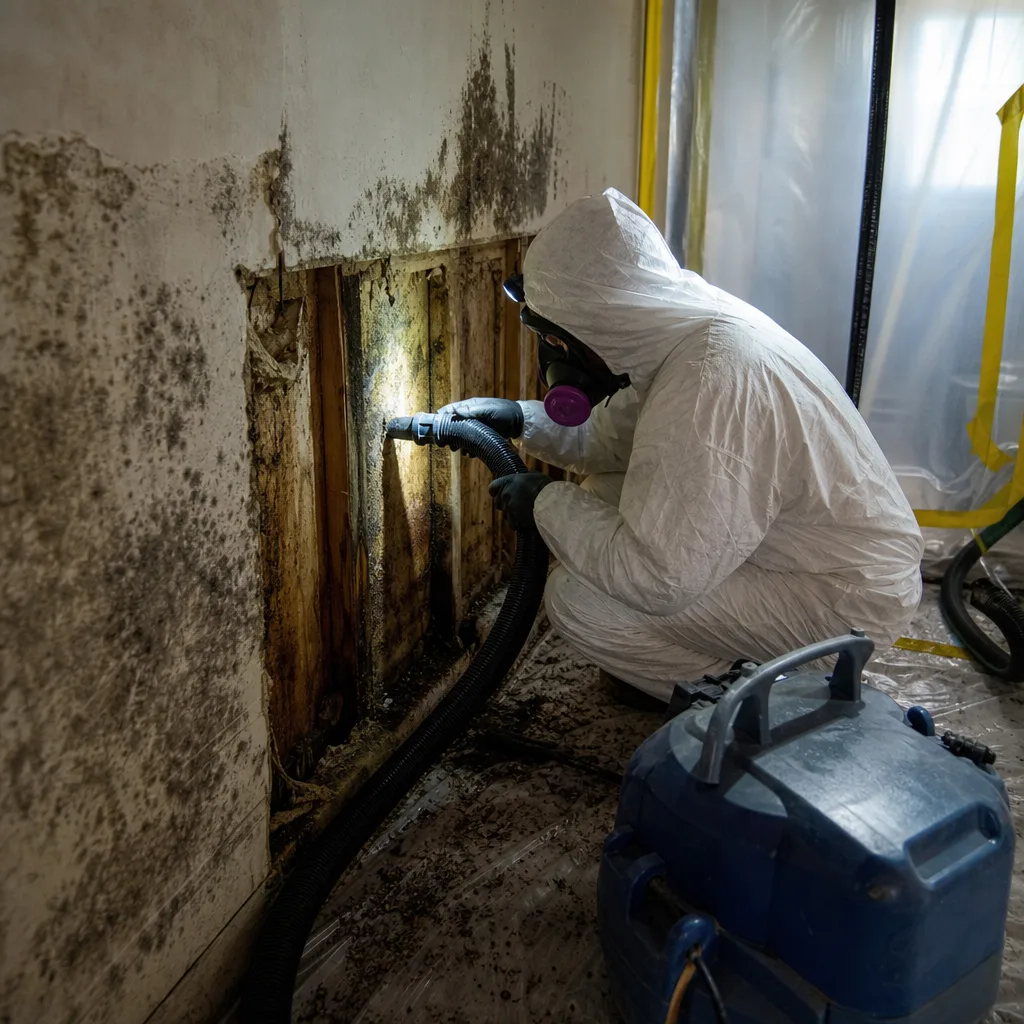
Watsonville’s persistent marine air means a small roof opening becomes a soaked ceiling faster than inland. When a branch punches through a composition shingle roof off Main Street or a tarp fails mid-storm, we get up there and install a proper weatherproof tarp, secured to hold against Monterey Bay wind. Roof tarping is temporary, but done right it buys the time needed to file the claim and schedule the real repair without the interior getting worse.
What happens when you call
- 1
A real person answersNo phone trees - you reach a local pro.
- 2
You get an upfront price rangeHonest numbers before anyone is dispatched.
- 3
A background-checked tech heads outLicensed & insured, dispatched right away.
- 4
You approve before work beginsNothing starts until you say go.
Trusted Brands We Service in Watsonville
We don’t use homeowner-grade hardware. Our crews run Dri-Eaz and Phoenix drying equipment, XPOWER air movers, and B-Air scrubbers, and our technicians carry IICRC, RIA, and IFA credentials. That matters in Watsonville because this town’s mineral-heavy water corrodes galvanized plumbing faster than almost anywhere else on the coast. We know which Phoenix and Dri-Eaz units hold up in a damp, foggy crawl space under a 1920s farmworker bungalow on a cold Pajaro Valley night. If you’re dealing with storm damage in Watsonville, we’ll bring the right equipment the first time, not make a second trip across Highway 1 a day later.
Common Storm & Disaster Restoration Problems We See in Watsonville Homes
- Mold behind drywall that hasn’t been wet for years but never dried out. Watsonville’s coastal fog keeps indoor relative humidity high year-round, so wall cavities and crawl spaces are almost always primed for mold. A flood or roof leak just accelerates what was already trying to grow.
- Landlords delaying restoration in older rentals near the Pajaro River levee. We’ve worked in the Pajaro neighborhood and the low-lying flats along the river, where renters often wait weeks while a landlord negotiates. The longer water sits, the more dangerous the mold and the harder the NFIP claim gets.
- DIY drying attempts with box fans in 1930s cottages with minimal subfloor ventilation. Box fans don’t dry a flooded crawl space. They move damp air around and spread mold spores through the whole house. By the time we arrive, the colony’s usually well established.
- Assuming “flood insurance covers everything” when many Watsonville renters lack contents coverage. Flood insurance through NFIP covers structure, not necessarily what was inside. Standard restoration reports don’t always capture the documentation a renter needs to file for contents. We write reports that do.
Pricing for Storm & Disaster Restoration in Watsonville, CA
| Service | Typical Watsonville Range |
|---|---|
| Emergency board-up (per opening) | $180-$320 |
| Roof tarping (per 100 sq ft) | $250-$450 |
| Water extraction & drying (per 400 sq ft affected) | $1,800-$3,200 |
| Flood damage restoration (full scope, single room) | $2,500-$5,500 |
| Debris removal & haul-off (storm, per load) | $350-$800 |
| Mold remediation after flood (containment & removal, per 100 sq ft) | $900-$1,700 |
Most storm restoration jobs in Watsonville run between $1,800 and $5,500 depending on water depth, how long it sat, and whether mold is present. If the Pajaro River corridor flooded your home, a real estimate needs to account for crawl space access, subfloor condition, and the mineral content in the water. Our estimates are free, in writing, and there’s no trip charge inside Watsonville. Senior and Veteran discount: 10% off, always. Call (855) 915-0646 and Wade will give you a number you can actually plan around.
We Also Serve Cities Near Watsonville
If you live just outside Watsonville, we’re still close. We regularly drive into Interlaken, Aptos, Rio Del Mar, and Capitola for storm and flood work. For the full scope of what we handle across the region, see Storm & Disaster Restoration in Watsonville. No trip charge inside our own county, whether you’re off College Road or up in the hills.
Serving Watsonville, CA - Our Local Coverage Area
We’re based in the Watsonville area and know this community well. Use the map below to see our service coverage - if you’re nearby, we can almost certainly help.
FAQs - Storm & Disaster Restoration in Watsonville
Homes affected by the 2023 breach need more aggressive mold remediation and NFIP-specific documentation than homes hit by a standard roof leak or sewer backup. Water sat inside hundreds of Watsonville houses for days, soaking through 1920s wood framing and into crawl spaces that never fully dried in the fog. What we find now is pre-existing mold behind water-stained drywall and corroded galvanized pipes from the valley’s mineral-heavy water. Restoration after this event is not a quick dry-down. It’s a full flood protocol: extract, dehumidify with Dri-Eaz units, remove colonized materials, and document every moisture reading for the adjuster. Call (855) 915-0646 and we’ll walk you through what actually needs to happen, in plain English.
Check behind water-stained drywall, under window sills, and inside any closet that shares a wall with a bathroom or kitchen. Watsonville’s coastal fog keeps indoor humidity chronically high, so mold was likely already present before the storm. Any new water intrusion, even a small roof leak, feeds it. We routinely find colonies in wall cavities that the homeowners never saw. In early-20th-century worker cottages with minimal subfloor ventilation, the crawl space is the worst spot. If you smell must or see staining, get it tested before you paint over it. Wade’s Restoration offers a free second opinion on any written estimate.
Because the floodplain is an active FEMA flood zone with specific documentation requirements, and Santa Cruz County OES tracks which structures have been deemed safe to occupy. After the 2023 breach, restoration crews that didn’t coordinate with OES often missed critical permit and inspection steps, delaying homeowner claims. We coordinate directly with OES for any job near the levee or in the Pajaro neighborhood, so the structure gets properly assessed and your NFIP paperwork matches what the county already has on file. That’s the practical difference between a crew that works Watsonville regularly and one that just followed a dispatch from San Jose.
Mold colonization typically begins within 24 to 48 hours of water intrusion in Watsonville’s humid climate, and visible growth often appears within five to seven days if materials stay damp. Testing should happen as soon as you can see staining, smell must, or notice family members with worsening allergies or respiratory symptoms. Don’t wait for the landlord or the insurance company to “get around to it.” We run air and surface tests, give you the lab results in writing, and photograph everything. Estimate is free, and we’ll be honest if the problem is smaller than you feared.
Document everything in writing: photos, text messages, any notice you sent the landlord. Then call Santa Cruz County OES if the unit is unsafe. Watsonville has many low-income, Latino agricultural-worker neighborhoods near the Pajaro River levee where landlords have delayed or disputed restoration work, leaving families in water-damaged units far too long. You have tenant rights. We’ll coordinate with OES on your behalf, document the unit’s condition in a way that holds up in housing court, and we can work with your landlord or your own claim. Spanish-speaking staff is available. Call (855) 915-0646 and we’ll help you figure out the next step, no charge for that initial consultation.
Written by Wade Ferris, Owner at Wade’s Restoration of California, serving Watsonville since 2007. Wade answers his own phone at (855) 915-0646, 24 hours a day.