
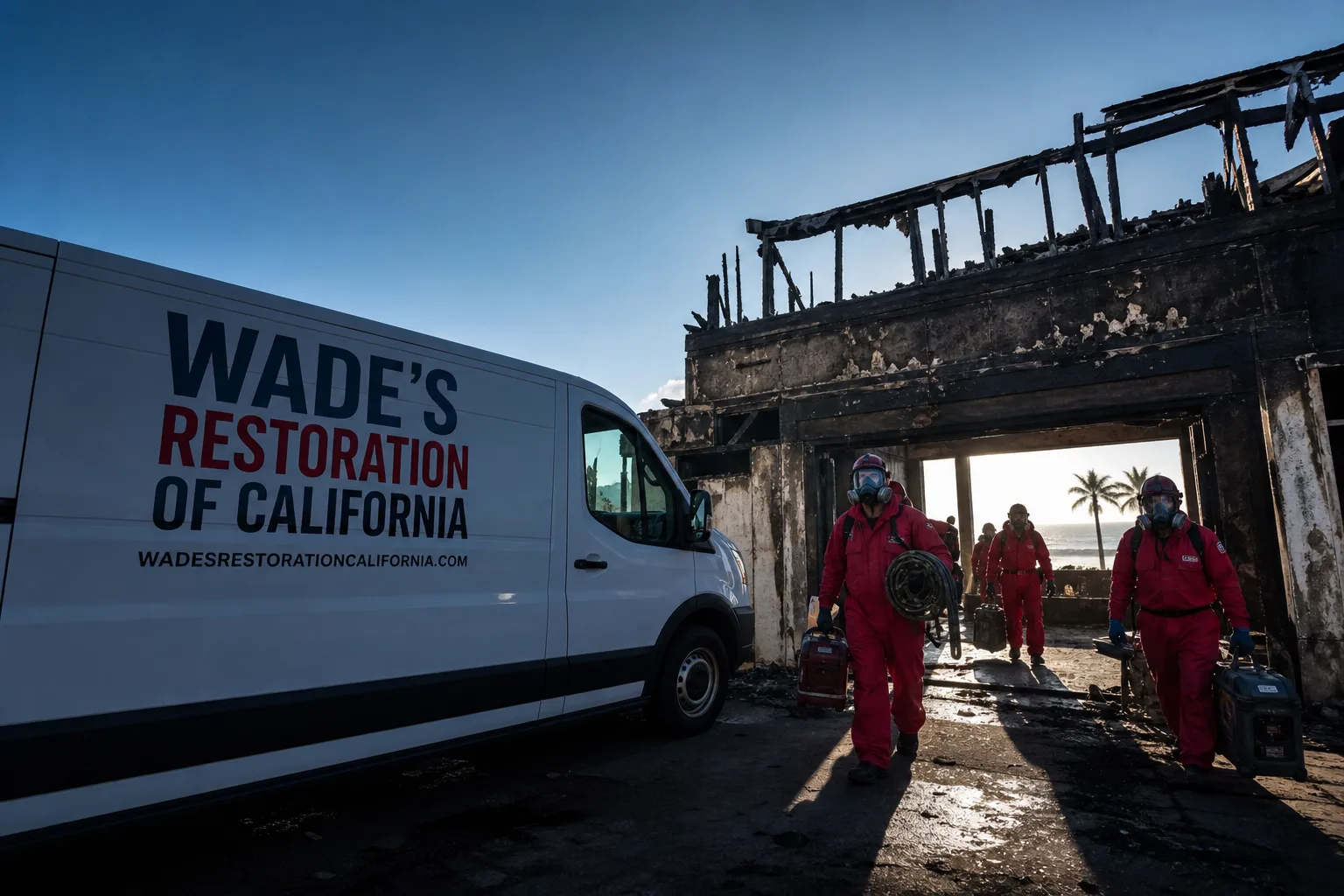
Fast, Reliable Storm & Disaster Restoration Across Stanford
Storm damage in Stanford doesn’t wait for business hours, and neither do we. Whether it’s a Diablo wind event shredding roof membranes on an Escondido Village townhome or San Francisquito Creek pushing over its banks into faculty housing, you need a crew that can get through Stanford University’s vendor requirements fast and start extraction within the hour. Wade Ferris answers his own phone at (855) 915-0646, day or night. He’s worked with Stanford Facilities Management long enough to know exactly what access, documentation, and compliance the university needs before a single dehumidifier rolls onto campus property. That’s the difference between a two-day response and a two-week one.
Why Wade’s Restoration of California Is Stanford’s Preferred Storm & Disaster Restoration Company
The people who work and live in Stanford don’t have time for a national chain that shows up without the right equipment or, worse, gets turned away at a campus gate because they’re not in the university’s system. Wade’s Restoration has been handling Storm & Disaster Restoration on university-owned property long enough that Facilities Management knows our crew by name. We’re pre-vetted, we carry the right insurance certificates, and we know which parking lots and service roads actually work for a truck full of extraction gear.
Wade Ferris founded this company in 2007 and still runs it like a man who’s going to bump into you at the Stanford Shopping Center. That means he’s accountable in a way a franchise manager never will be. On every job we hand Stanford homeowners and university property managers a written scope before work starts and a documented moisture log at the end. Every day. Most companies won’t do that because it proves they actually did what they said.
We’re local to the Bay Area, which means our response to the 94305 zip code is measured in minutes, not hours. When a storm blows through at 2 a.m., Wade answers the phone himself. He doesn’t route you to a call center or make you leave a voicemail. He heads out, and the crew follows. That’s how it’s been since day one.
Our Storm & Disaster Restoration Services in Stanford
Here’s what we handle in Stanford, from the 1940s faculty bungalows off Campus Drive to the graduate housing clusters in Escondido Village and the sandstone Main Quad buildings that have stood since the 1890s.
Emergency Board-Up
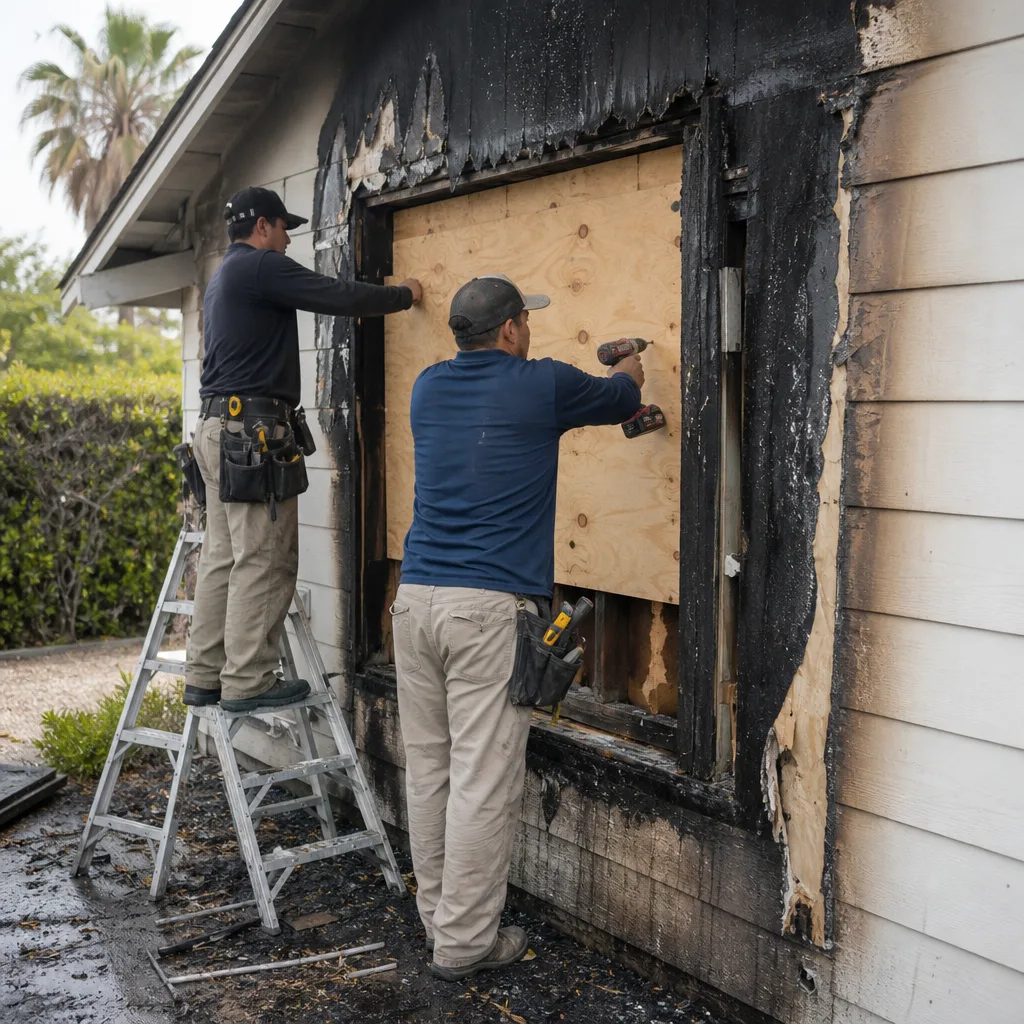
When a Diablo wind event sends a tree limb through a window on the second floor of a Stanford office building, the building is exposed immediately. Rain, wildlife, and unauthorized entry follow. We board up the opening within hours, using plywood cut to fit the specific window or door opening and secured to code. On Stanford property, we coordinate access with Facilities Management or campus security first so the crew isn’t stuck at a gate while a storm keeps blowing through the hole. A standard board-up on one or two windows in Stanford runs $450-$950, including materials.
Roof Tarping
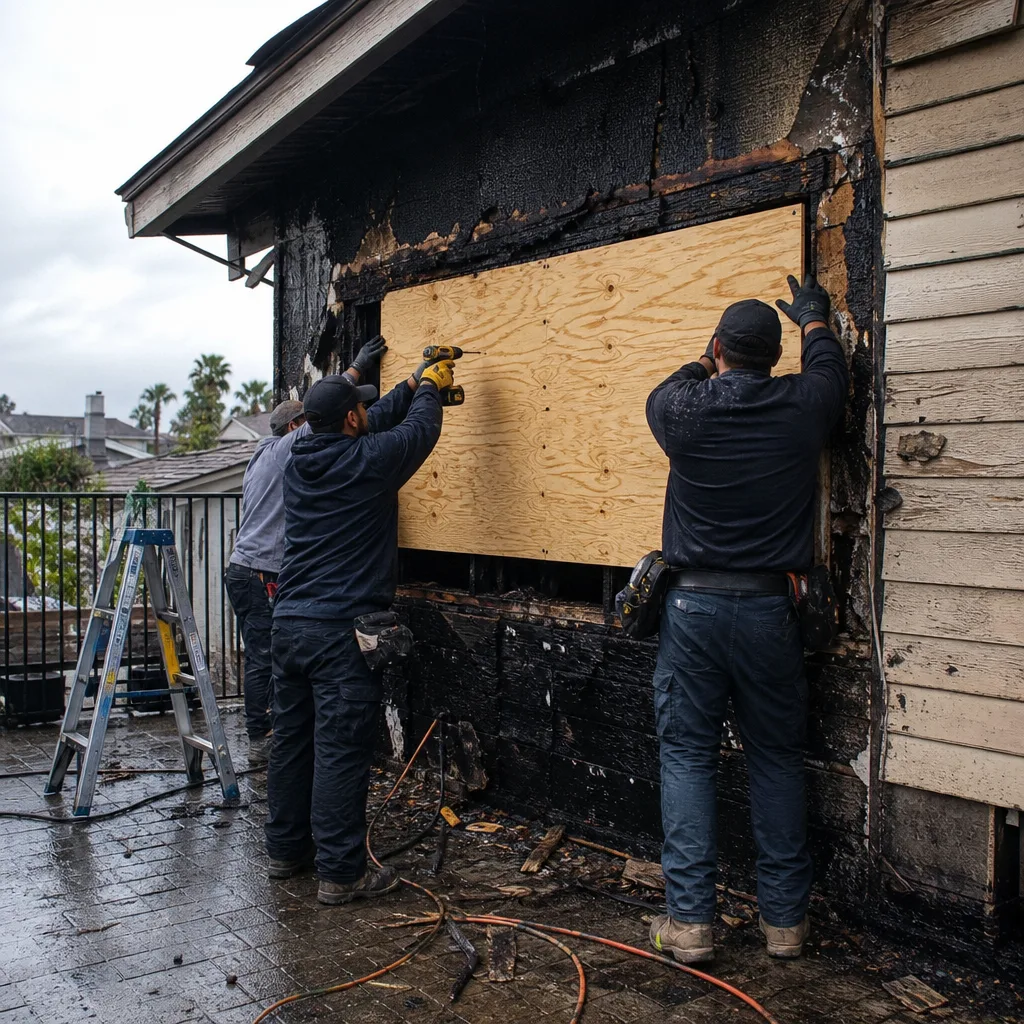
Wind damage to roofs is common in the Stanford CDP, especially on the older university housing stock from the 1940s through 1960s. These roofs weren’t engineered for the gusts that come off the Santa Cruz Mountains during Diablo wind events. We tarp damaged roof sections fast, securing the tarp with furring strips and cap nails so it won’t peel off in the next wind. A single roof tarp in Stanford typically runs $600-$1,400 depending on roof pitch, accessibility, and the size of the damaged area. If the damage is high or steep, we flag the safety concern and use proper fall protection. This is not a DIY job.
Flood Damage Restoration
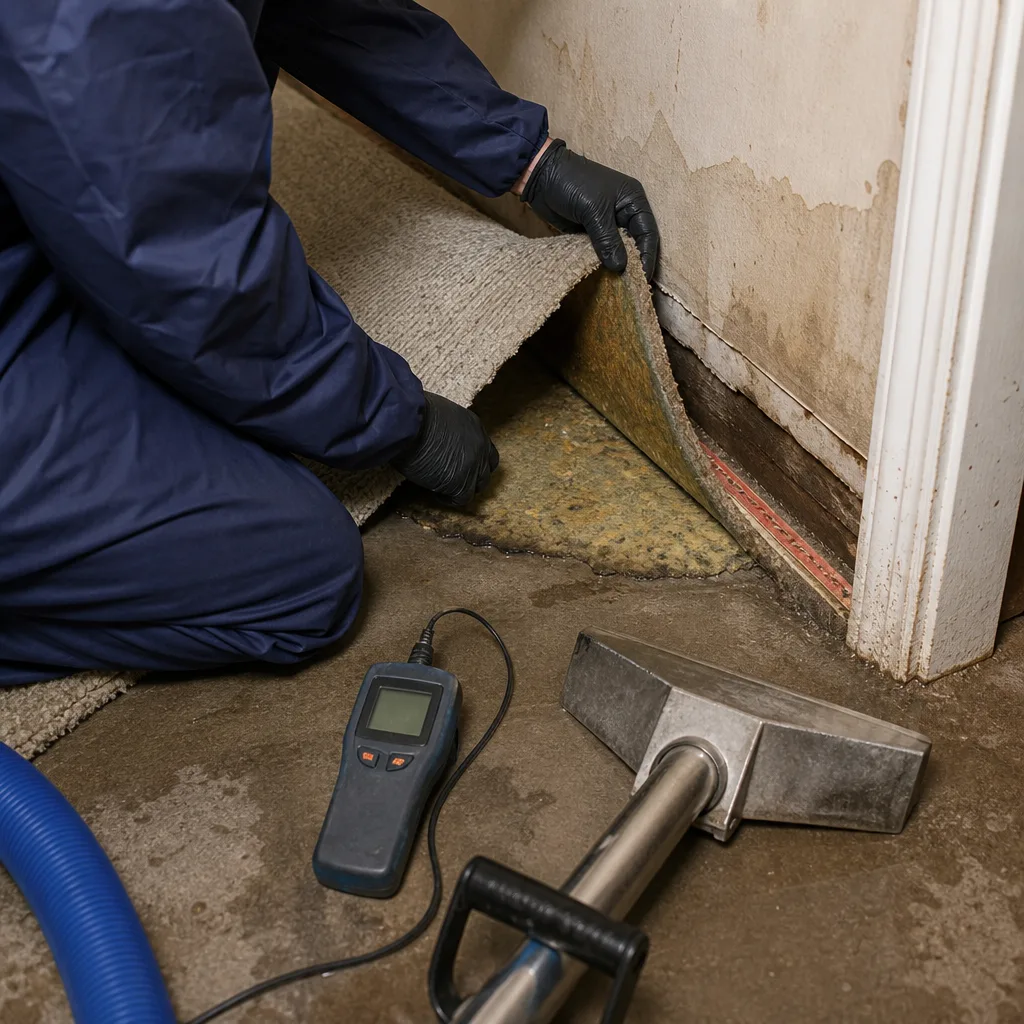
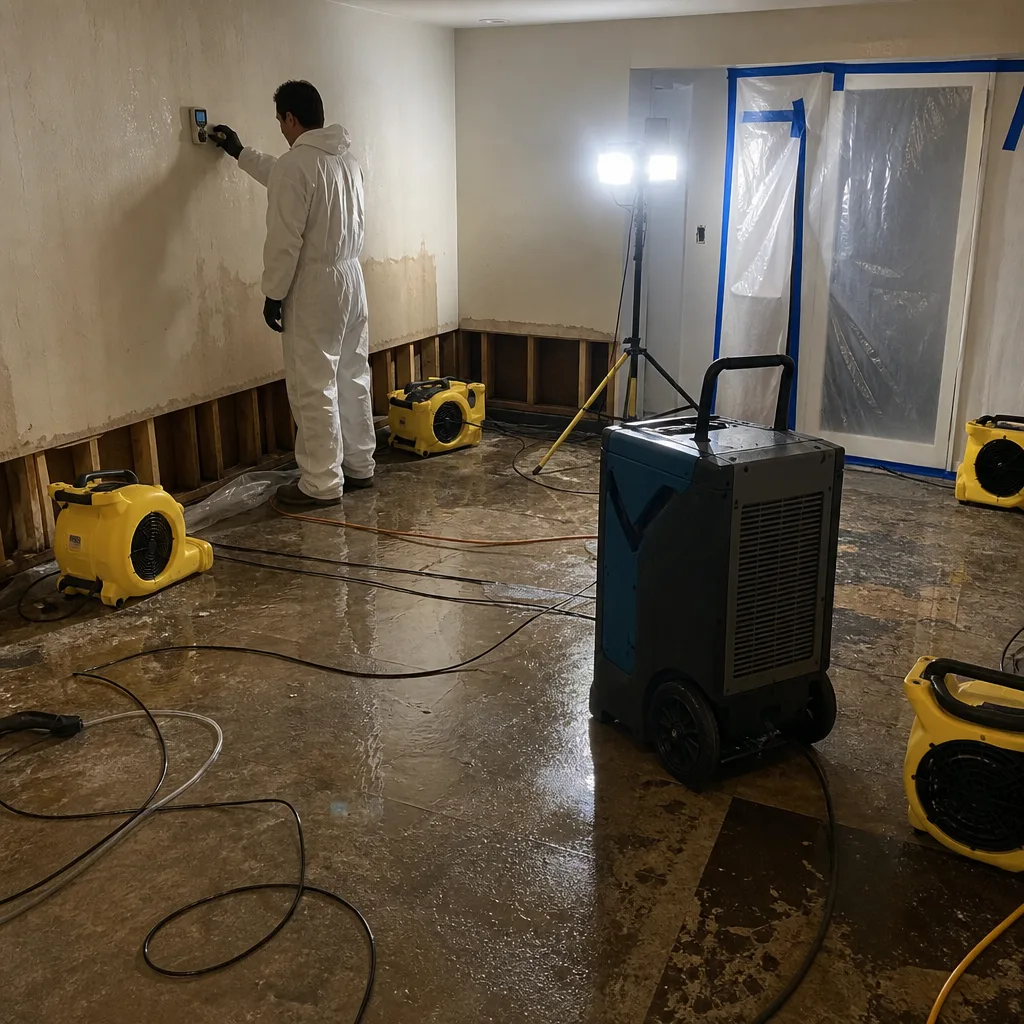
San Francisquito Creek has a documented history of overbank flooding during atmospheric river storms, and when it does, the water doesn’t discriminate between university housing and academic buildings. We extract standing water, set up Dri-Eaz LGR 7000XLi dehumidifiers and Phoenix AirMax air movers, and monitor moisture levels daily until the structure is dry. In tight Stanford townhomes and graduate housing units with narrow hallways and door clearances, we bring equipment sized to fit. A standard-size commercial air mover won’t get through some of those doors, and a crew that doesn’t plan for that leaves moisture behind. Flood extraction and drying in Stanford starts around $1,800 and can run $6,000+ depending on square footage and saturation depth.
Storm Damage Cleanup
After the water’s out and the building’s secured, there’s the debris, the wet drywall, the ruined insulation, and the mud. We remove it all, haul it off, and document what was damaged for your insurance claim. On Stanford property, that documentation goes to the university’s risk management or insurance team if the structure is institutionally owned, or to a private insurer if it’s a leasehold improvement or personal property. Debris removal in Stanford runs $600-$2,500 depending on volume and whether any contaminated materials are present.
What happens when you call
- 1
A real person answersNo phone trees - you reach a local pro.
- 2
You get an upfront price rangeHonest numbers before anyone is dispatched.
- 3
A background-checked tech heads outLicensed & insured, dispatched right away.
- 4
You approve before work beginsNothing starts until you say go.
Common Storm & Disaster Restoration Problems We See in Stanford
Stanford is not a typical suburb. The housing stock, the property ownership structure, and the geography all create restoration problems that don’t show up in Palo Alto or Atherton. Here’s what we deal with most:
- Gate access delays. Contractors who aren’t pre-vetted through Stanford’s vendor system get turned away at campus security gates. That costs hours, sometimes days, during a storm emergency when every hour of standing water matters. We’re already in the system, so we don’t have that problem.
- Tight clearances in graduate housing. Escondido Village and similar complexes have narrow doorways and compact floor plans. A standard truck-mounted extractor physically cannot fit through some of those entries. We bring smaller, portable units and low-profile air movers designed for exactly this kind of space.
- Concealed seismic damage in historic masonry. The Main Quad’s sandstone buildings date to the 1890s and went through the 1989 Loma Prieta earthquake. Some of those walls are unreinforced or partially retrofitted, with hidden cracks that let water wick through and feed mold inside the wall cavity. Surface drying looks done while the real problem festers out of sight.
- Wildfire smoke and soot intrusion. During dry-season Diablo wind events, ember-cast smoke from the Santa Cruz Mountains foothills drifts into campus buildings. HVAC systems pull that particulate inside, and it settles into porous surfaces. Standard janitorial cleaning doesn’t touch it; you need professional soot and smoke remediation with proper air scrubbing.
Pricing for Storm & Disaster Restoration in Stanford, CA
Let’s be straight about what this costs in the 94305 zip code. Emergency board-up runs $450-$950 per window or door opening. Roof tarping costs $600-$1,400 per tarp, depending on roof access and pitch. Flood extraction and drying starts around $1,800 for a small room and climbs to $6,000 or more for a flooded crawlspace or multi-room intrusion. Storm debris removal ranges from $600-$2,500. These are real numbers for Stanford’s market. What changes them: the age of the building, whether we’re working around university access protocols, how much demolition is required, and whether asbestos or lead testing is needed on older housing stock. Before any work starts, you get a written scope and a firm price. No phone quote that changes when someone walks through the door. We also offer a free second opinion on any written estimate from another company, and there’s no trip charge inside our own county. Seniors and veterans get 10% off, always. Call (855) 915-0646 for an exact quote.
Trusted Brands We Service in Stanford
We run Dri-Eaz LGR dehumidifiers and Phoenix AirMax air movers because they’re the most reliable equipment in the industry, and Stanford buildings don’t tolerate second-best. Our affiliation with the Restoration Industry Association (RIA) and the IICRC means the crew shows up trained on exactly this equipment and the protocols that go with it. We stock parts and consumables locally for Stanford jobs, so when a dehumidifier filter clogs after eight hours of pulling moisture from a flooded Escondido Village unit, we swap it on the spot instead of waiting on a shipment.
We Also Serve Cities Near Stanford
Stanford sits in a tight cluster of communities, and our crews regularly cross into Palo Alto, Atherton, East Palo Alto, and Los Altos Hills. If you’re in one of those cities, the same owner-operated service applies. Wade Ferris still answers his own phone, and the same written-scope-before-work rule applies everywhere we go.
Serving Stanford, CA - Our Local Coverage Area
We’re based in the Stanford area and know this community well. Use the map below to see our service coverage - if you’re nearby, we can almost certainly help.
FAQs - Storm & Disaster Restoration in Stanford
Yes. Stanford’s CDP is almost entirely university-owned, and virtually all faculty housing, graduate housing, and academic buildings are managed through centralized Facilities Management. That means restoration work must go through the university’s approved-vendor and procurement process. If you’re a faculty tenant or a departmental administrator dealing with storm damage, the first step is notifying Facilities Management. Wade’s Restoration is already in that system, so once you have the go-ahead, we can be on site immediately. Call (855) 915-0646 and Wade will walk you through exactly who to contact and what to ask for.
We don’t bring the truck-mounted unit. For Escondido Village and similar graduate housing with narrow door clearances and compact floor plans, we bring portable extraction units and low-profile Dri-Eaz dehumidifiers sized to move through a 24-inch doorway and operate inside a tight bedroom or utility closet. Our crew plans the equipment laydown before arrival so nothing sits in a hallway or blocks a stairwell. Getting the water out fast matters more than using the biggest machine. If you’ve had a flood in Escondido Village, call (855) 915-0646 and we’ll route a crew that’s equipped for those specific units.
Plenty. The Main Quad’s Romanesque Revival sandstone structures date to the 1890s and are subject to landmark-preservation restrictions. Many walls are unreinforced or only partially retrofitted, and the 1989 Loma Prieta earthquake left concealed cracks that let water move through masonry in ways you can’t see from the surface. Before any restoration work begins on these buildings, we coordinate with Stanford’s preservation team, document existing conditions, and use drying methods that don’t introduce excess moisture or chemicals that could damage historic mortar. Surface-level drying is never enough here; we monitor moisture inside wall cavities until the readings prove the wall is dry all the way through. For a project on a Main Quad building, call (855) 915-0646 and Wade will start the coordination process with preservation staff directly.
We can, and we plan around your schedule. Stanford sits in a wildland-urban interface zone at the base of the Santa Cruz Mountains foothills, so Diablo wind events push ember-cast smoke and soot into HVAC systems across campus. We use HEPA-filtered air scrubbers and surface-specific cleaning methods to remove soot from porous and non-porous surfaces without saturating the building. For occupied academic and research spaces, we can phase the work after hours or on weekends, isolate affected zones with negative air pressure, and keep adjacent rooms operational. Call (855) 915-0646 to schedule an assessment; Wade will coordinate with your department’s facility manager so no class gets disrupted.
Within a few hours of your call in most cases. Since we’re already pre-vetted through Stanford’s vendor system and our crew knows campus access points, we aren’t delayed at security gates the way an out-of-network contractor would be. Wade answers his phone live at (855) 915-0646, gets the address and extent of damage, and heads out. A standard residential window board-up runs $450-$950 including materials. If it’s a commercial or academic building with larger openings, the cost scales by opening size. Call now and we’ll have the opening covered before the next gust hits.
Call Wade’s Restoration of California in Stanford
Storm damage on Stanford property is not a do-it-yourself situation. Between the university access requirements, the tight housing stock, the flood-prone creek zone, and the historic masonry, this is work that needs a crew that’s been through it before. That’s us. Wade Ferris, the owner, answers his own phone at (855) 915-0646. He’ll talk through what happened, tell you exactly what it’ll take to fix it, and show up with a written scope before any work starts. No guesswork, no runaround, no crew you’ve never met. Just a local company that knows Stanford and does the job right.
Written by Wade Ferris, Owner at Wade’s Restoration of California, serving Stanford since 2007.