
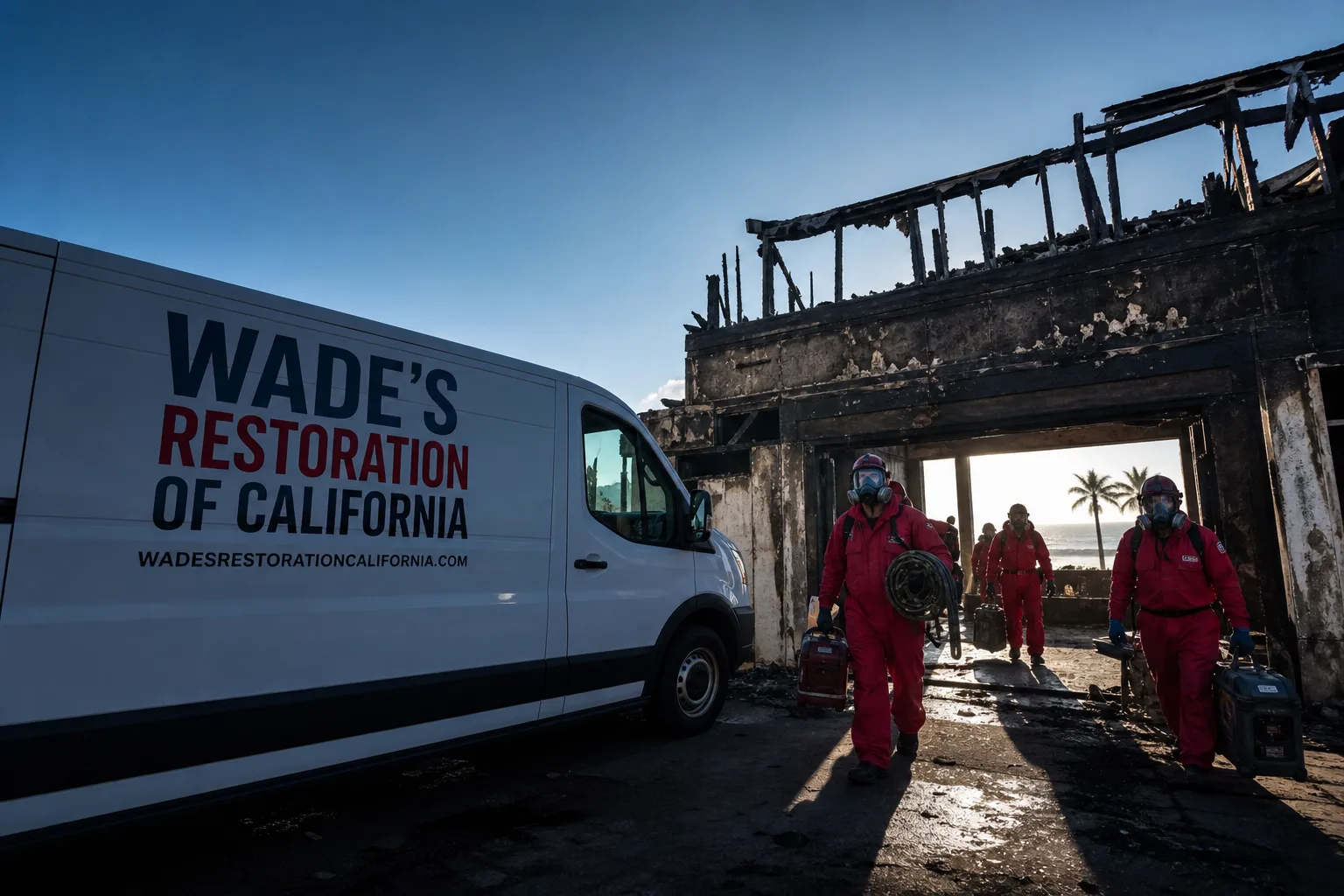
Fast, Reliable Storm & Disaster Restoration Across South Pasadena
Storm damage hits South Pasadena differently than it hits most of the San Gabriel Valley. When a Santa Ana wind event tears a section of roof off a 1923 Craftsman on Meridian Avenue, or an atmospheric river sends Fair Oaks Avenue stormwater into a raised crawl space on Diamond Avenue, you’re not dealing with a generic repair. You’re dealing with a 100-year-old structure that the city’s Cultural Heritage Commission will have something to say about. We know that before the first tarp goes up. Call (855) 915-0646 and Wade Ferris will answer.
Our Storm & Disaster Restoration team gets to South Pasadena fast, but more importantly, we get here knowing the rules. We know the difference between a repair in the Oaklawn district and one in Mission West. We know which homes still have knob-and-tube wiring behind the horsehair plaster. And we know how to keep a stop-work order from the Community Development Department from landing on your front door.
Why Wade’s Restoration of California Is South Pasadena’s Preferred Storm & Disaster Restoration Company
Wade Ferris founded this company in 2007, and he still answers his own phone. That matters in South Pasadena, where homeowners have every right to be skeptical. You’ve heard the stories: a storm rips through, some out-of-town crew shows up, quotes one number, and then the bill doubles after they open the wall and “discover” asbestos. Wade does not work that way. He publishes his name, his license number, and his address. You’ll see him at the farmers market on Thursday, and that’s the oldest accountability mechanism there is.
Ask anyone on your street. The people we’ve worked for in South Pasadena have seen our crew complete historic-structure assessments before cutting into original redwood subfloor. They’ve watched us log moisture readings every single day and hand over the full ledger at the end of the job. That’s not a service add-on. That’s how Wade runs every water, fire, and storm restoration job, and almost nobody else in the trade does it.
When a storm hits South Pasadena, we’re already coordinating from our Los Angeles office and dispatching crews who know the 91030 and 91031 ZIP codes block by block. We’re not a national chain. We’re not a call center. Wade heads out himself when the situation warrants it, and you’ll get a straight answer about response time when you call. Not a script.
Our Storm & Disaster Restoration Services in South Pasadena
Emergency Board-Up
When a tree limb punches through a Craftsman’s front window during a wind event, the first job is securing the structure. But in South Pasadena, emergency board-up is not as simple as nailing plywood over a hole. If the home is pre-1930 and the repair will be visible from the street, the Cultural Heritage Commission can require a certificate of appropriateness before any permanent exterior work moves forward. What you need immediately is a crew that knows how to seal the opening fast without creating a bigger historic-review problem down the line. We do that. Board-up in South Pasadena typically costs between $450 and $900 depending on the number of openings and the height involved.
Roof Tarping
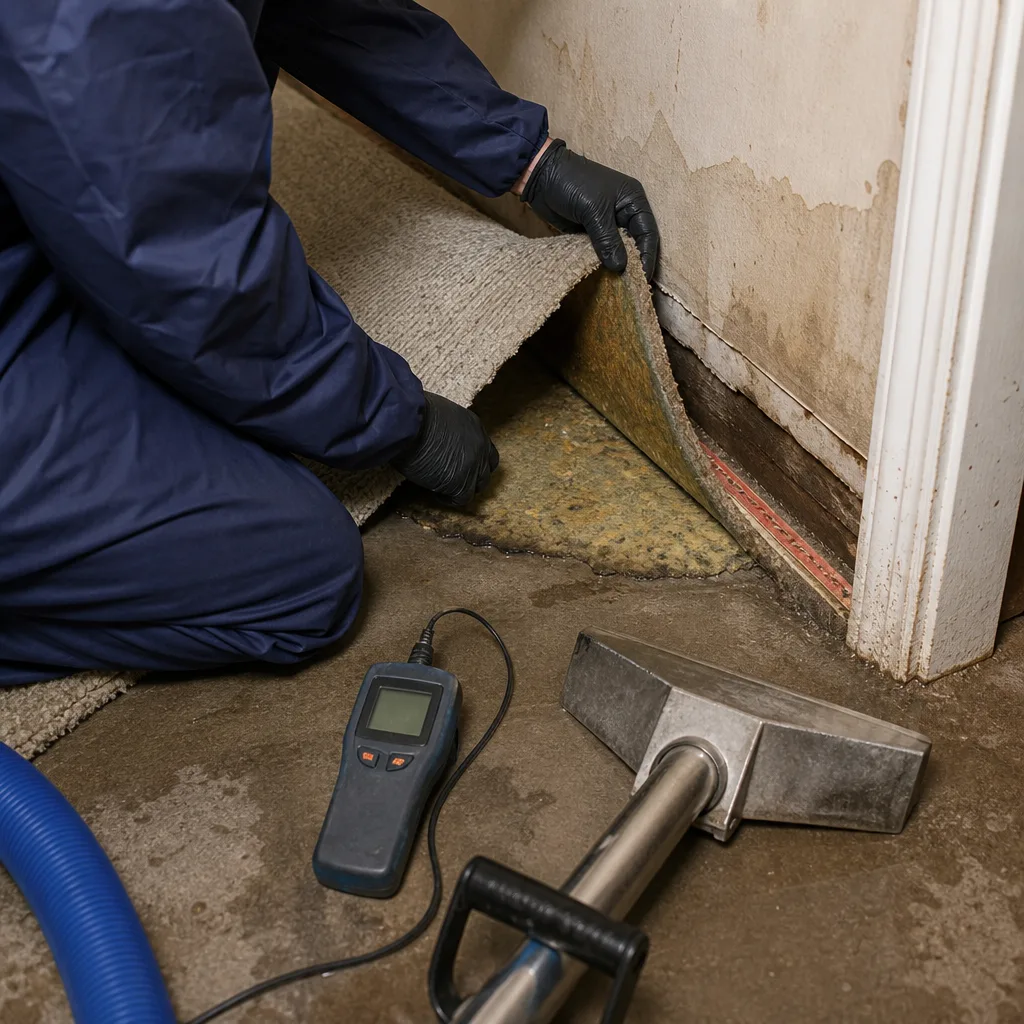
Storms here come in two flavors: Santa Ana winds that tear asphalt shingles and lift ridge caps, and atmospheric rivers that drop enough rain in 48 hours to overwhelm aging gutters and flat sections on 1920s additions. Roof tarping is the immediate mitigation step. But tarping a storm-broken Queen Anne turret near Mission Street without considering Cultural Heritage Commission review means you could be looking at exposed framing during the next Santa Ana event. We tarp properly, document everything for your adjuster, and coordinate the review path so the temporary fix doesn’t become a denied-permit mess. Roof tarping in South Pasadena generally runs $500 to $1,200 for most single-family homes, more for steep-pitch roofs or multi-story Victorians.
Storm Damage Cleanup
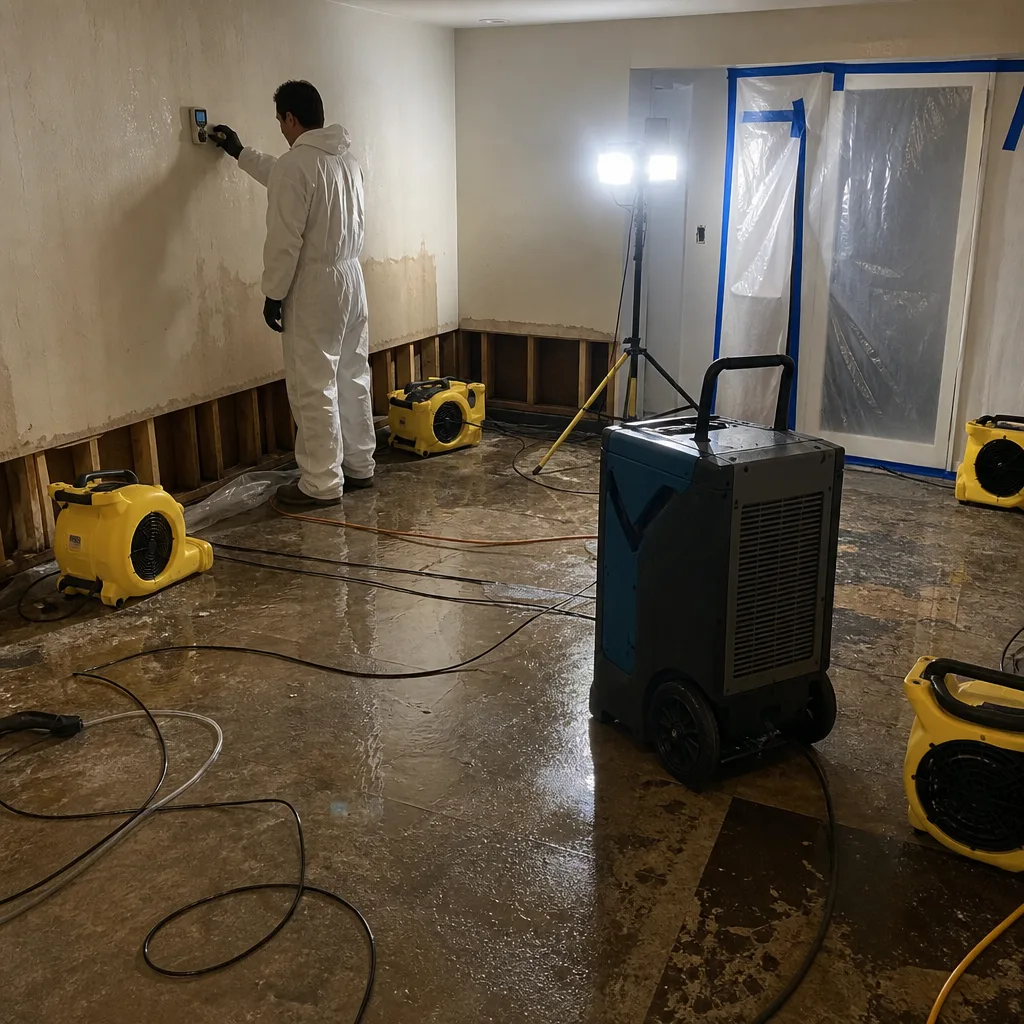
After the wind dies down, South Pasadena homes are left with a specific kind of debris: broken clay roof tiles from 1920s Spanish Colonials, shattered single-pane glass from original Craftsman window sashes, and branches from mature camphor and magnolia trees that were planted when these neighborhoods were first subdivided. Cleanup means more than hauling debris. It means checking gutters packed with leaf litter that sent water over the fascia into wall cavities, and inspecting crawl spaces for water that pushed through foundation vents. Storm damage cleanup in South Pasadena typically costs $1,800 to $4,500 including debris removal and initial moisture assessment.
Flood Damage Restoration
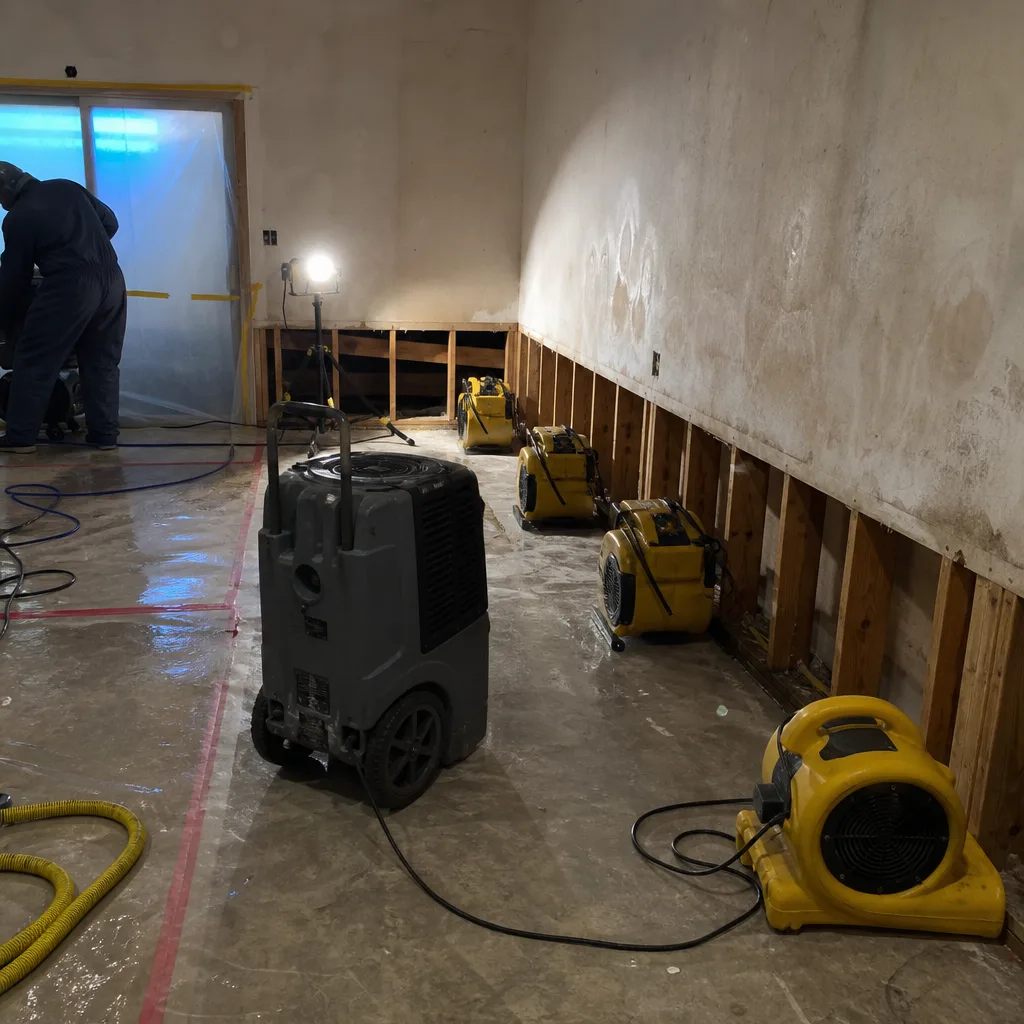
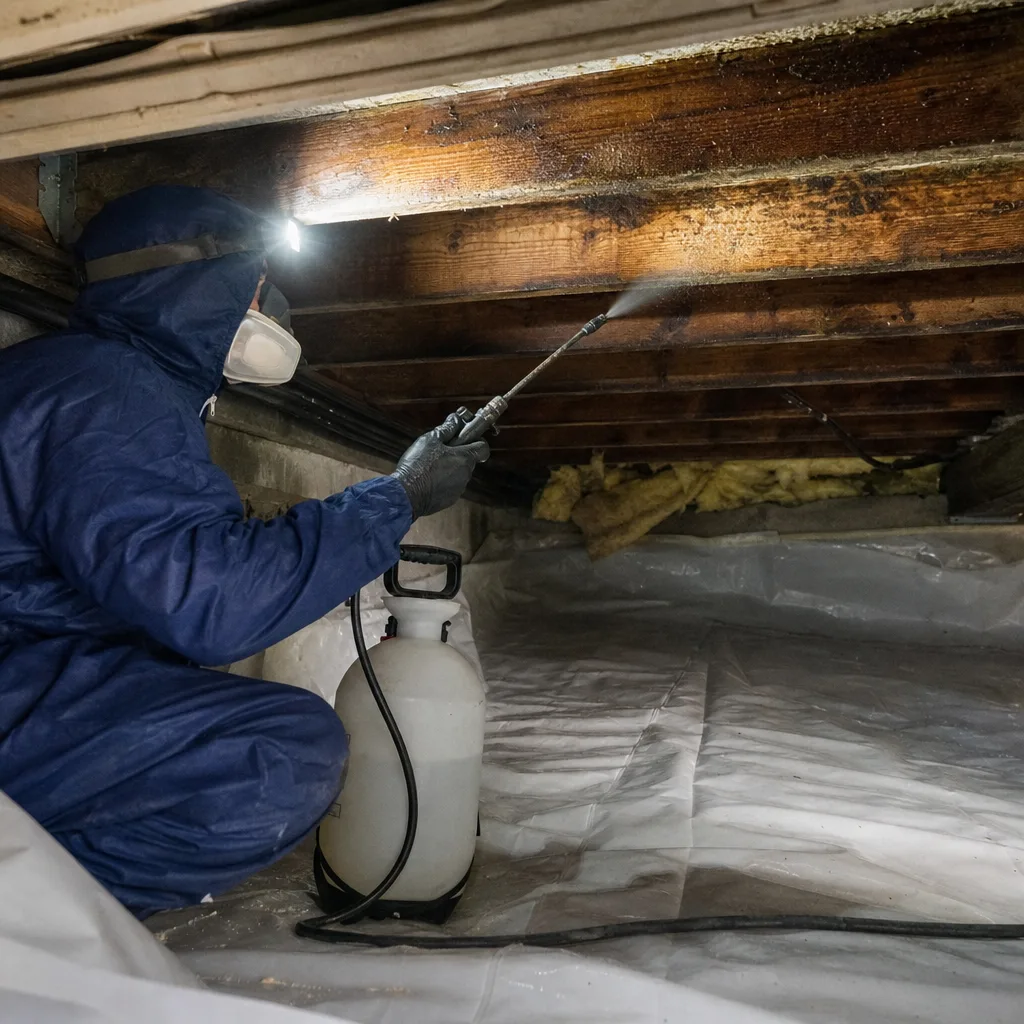
Flooding in South Pasadena hits hardest in the low-lying streets where the city’s 1920s-era stormwater system gets overwhelmed. Fair Oaks Avenue is a known trouble spot during heavy rain, and homes along its route with raised foundations and minimally vented crawl spaces take on water fast. The trapped moisture in those spaces feeds mold colonies within days. But here’s the catch specific to this city: before we can cut into original redwood subfloor decking to dry the joist bays below, we need a historic-structure assessment. We do that first, then use Dri-Eaz dehumidifiers and Injectidry floor-drying mats to pull moisture out of the wood without tearing out more than necessary. Flood damage restoration in South Pasadena typically runs $3,500 to $9,000 for a crawl-space event, depending on square footage and how long the water sat.
What happens when you call
- 1
A real person answersNo phone trees - you reach a local pro.
- 2
You get an upfront price rangeHonest numbers before anyone is dispatched.
- 3
A background-checked tech heads outLicensed & insured, dispatched right away.
- 4
You approve before work beginsNothing starts until you say go.
Trusted Brands We Service in South Pasadena
We stock and service professional-grade equipment from Dri-Eaz and Phoenix, which means when your Craftsman’s crawl space is sitting wet at 2 a.m., we’re not waiting on a rental yard to open. We keep parts for these units in our trucks and can have extraction and drying equipment running inside the hour of arrival. For South Pasadena customers, that matters because every hour of delay in a 1915 house with original cellulose insulation and no vapor barrier is another hour of moisture wicking up into the redwood floor framing. Our crew is IICRC-certified and RIA-affiliated, and the equipment we run is the same stuff we’d put in our own homes.
Common Storm & Disaster Restoration Problems We See in South Pasadena Homes
- Skipped historic review before emergency repairs: A contractor rips off a storm-damaged porch column cap on a pre-1930 Craftsman and replaces it with a box-store composite. The Cultural Heritage Commission notices. Now the homeowner is paying for the wrong repair plus the correct one. We see this every storm season, and it’s avoidable.
- Wrong insulation in Craftsman attics: Storm water damages the original cellulose insulation in a 1920s attic. A crew replaces it with modern pink batt, which creates an unvented moisture trap behind period horsehair plaster. Hidden mold follows within a year. South Pasadena’s older homes need vapor-permeable or period-appropriate insulation selections, not whatever’s cheapest at the supply house.
- Modern parts on historic exteriors: Wind damage takes out a section of original redwood lap siding on a Victorian on Pasadena Avenue. A contractor bolts up fiber-cement siding and calls it done. It fails the historic review, and the homeowner eats the cost of the whole wall. Matching species and profile is part of the job here, not a courtesy.
- Undiagnosed knob-and-tube wiring after water intrusion: Storm water runs down inside a wall cavity from a failed roof flashing and soaks the old knob-and-tube circuits still live in many South Pasadena homes. A restoration crew that doesn’t check for this before turning the power back on creates a fire hazard. We test every affected circuit before we sign off.
Pricing for Storm & Disaster Restoration in South Pasadena, CA
Storm restoration in South Pasadena carries costs you won’t see in Alhambra or Temple City. The historic-preservation review adds time and paperwork. The age of the housing stock means more abatement. Here are honest ranges for the most common jobs in the 91030 and 91031 ZIP codes: emergency board-up runs $450 to $900, roof tarping $500 to $1,200, storm debris removal $800 to $2,200, crawl-space flood drying $3,500 to $9,000, and full storm damage repair with historic material matching starts around $8,000 and goes up from there depending on the scope. What changes the price: whether the Cultural Heritage Commission review is triggered, whether asbestos or lead testing is required before walls can be opened, and whether the damage touched original redwood framing or just modern drywall. Call (855) 915-0646 for a written estimate. It’s free, and it’s the same number whether it’s Tuesday afternoon or three in the morning.
We Also Serve Cities Near South Pasadena
We cover South Pasadena and the surrounding communities, including Alhambra, Pasadena, San Marino, and San Gabriel. While the historic-preservation rules in South Pasadena are stricter than most of its neighbors, every city we work in gets the same straight dealing: photo documentation, direct adjuster communication, and a written scope before work starts. If you’re in one of these nearby cities and have storm damage, call the same number and we’ll head out.
Serving South Pasadena, CA - Our Local Coverage Area
We’re based in the South Pasadena area and know this community well. Use the map below to see our service coverage - if you’re nearby, we can almost certainly help.
FAQs - Storm & Disaster Restoration in South Pasadena
No, you do not need permission before tarping. Emergency roof tarping in South Pasadena is considered a temporary protective measure and can proceed immediately, which is exactly what we do when a storm opens up your roof at night. What will eventually need review is the permanent repair: any visible exterior work on a pre-1930 home requires a certificate of appropriateness from the Cultural Heritage Commission before that work begins. We document the temporary tarp condition for both your insurance claim and the Commission file, then help you move through the permanent repair process the right way. Call (855) 915-0646 and we’ll explain the exact sequence for your specific home.
We dry it from below and above simultaneously, and we never cut into the subfloor until a historic-structure assessment is complete and the client has signed off on the approach. In the Oaklawn district, our crew handled a January 2025 atmospheric-river flood that pushed Fair Oaks Avenue stormwater into a 1915 Craftsman’s raised crawl space. We used Dri-Eaz dehumidifiers in the crawl space and Injectidry floor-drying mats on the finished floor above, after completing the mandatory historic-structure assessment, then removed only the water-damaged sections of original old-growth redwood subfloor before rebuilding with period-matched tongue-and-groove planks. The goal is targeted removal, not wholesale replacement.
South Pasadena requires testing before disturbance. If the plaster in your pre-1930 home is storm-damaged and needs to come down, the city mandates asbestos and lead-paint assessment before any wall is opened or removed. Older horsehair plaster in South Pasadena homes frequently tests positive for asbestos in the base coat, and the original paint layers often test positive for lead. We can test, and we handle the abatement through certified contractors when the results come back positive. Skipping this step triggers stop-work orders and fines from the Community Development Department, and it’s not worth the risk to your family or your home. Call (855) 915-0646 and we’ll walk you through the testing sequence before anything gets opened.
Repair is not only possible, it is generally preferred by the Cultural Heritage Commission. Original single-pane sash windows from the 1910s and 1920s in South Pasadena Craftsman homes can usually be reglazed, reweighted, and put back into service rather than replaced. The Commission will almost always require repair or in-kind replacement if the sash is beyond salvage, and modern vinyl or aluminum units will not pass review on a visible street-facing elevation. Wind damage that cracks a pane or loosens the glazing putty is a repair job, not a replacement job, and we can handle it. For a free assessment, call us at (855) 915-0646.
Because South Pasadena’s housing stock is older and the regulatory overlay is heavier. Temple City’s post-war ranch homes have slab foundations and drywall over modern framing, so a flood cleanup there is mostly about extraction, drying, and replacing drywall. A flood in South Pasadena means a raised foundation with a minimally vented crawl space, original redwood subfloor decking, horsehair plaster walls, and potentially knob-and-tube wiring. Before we can cut into any of that, the city’s historic-preservation and hazmat protocols apply. It takes longer because doing it right protects the home’s character, its structural integrity, and your ability to sell it later as a preserved Craftsman rather than a gutted flip. Call (855) 915-0646 for an honest timeline on your specific situation.
Written by Wade Ferris, Owner at Wade’s Restoration of California, serving South Pasadena and the surrounding San Gabriel Valley since 2007.