
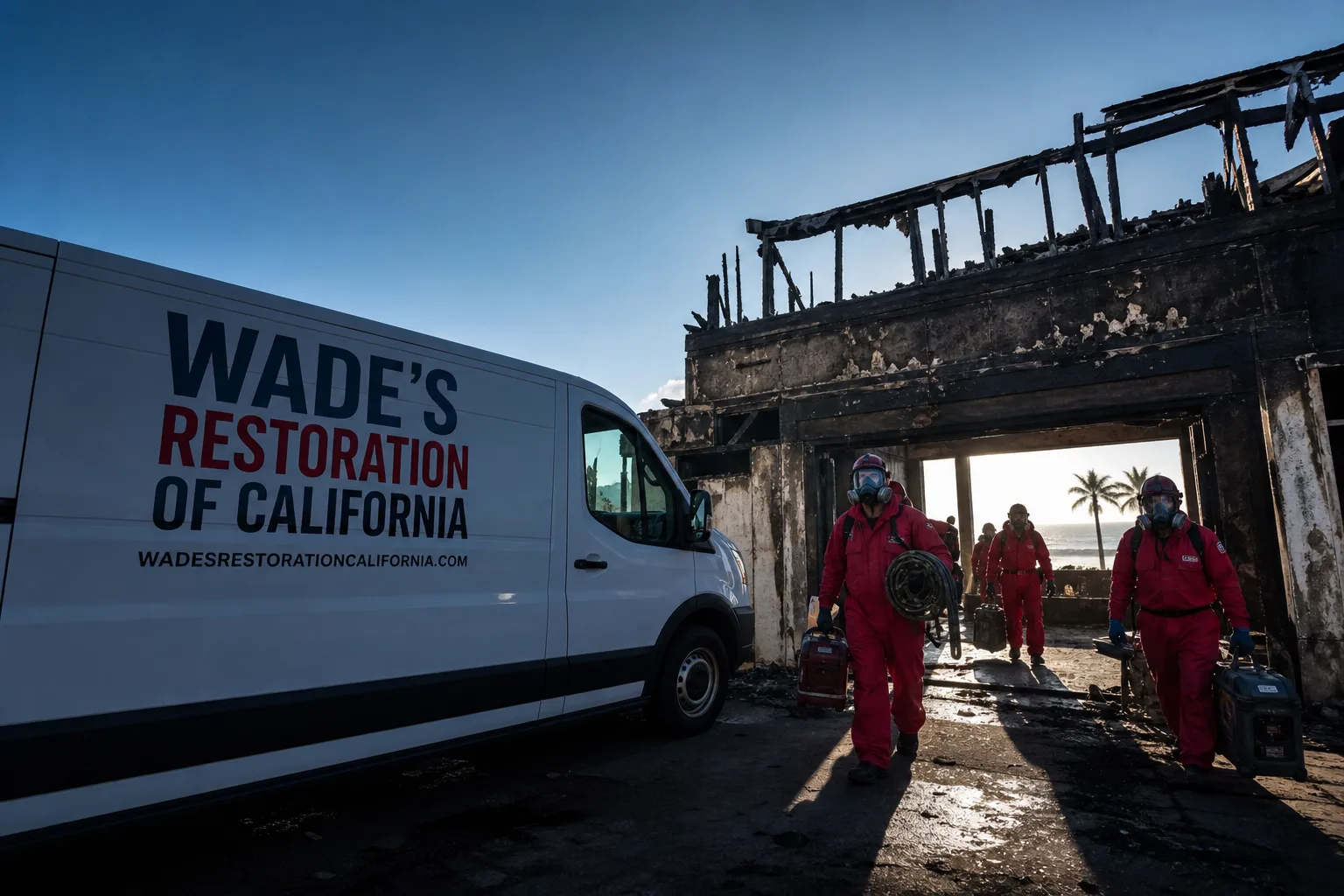
Fast, Reliable Storm & Disaster Restoration Across Scotts Valley
Storm damage in Scotts Valley hits differently than it does over the hill. When wind takes down a limb off Mount Hermon Road or a flash flood pushes Bean Creek over its banks, you need someone who knows these hills, these homes, and the way moisture behaves under a redwood canopy. That’s us. Wade’s Restoration has been answering calls from Scotts Valley homeowners since 2007, and when you call (855) 915-0646, you get a live person, not a queue. Often that person is Wade himself.
If your roof is leaking, your crawl space is flooding, or a tree just came through your window, call now. We’ll have a crew headed your way from our Bay Area dispatch office, and we’ll be at your Scotts Valley door fast. No answering service. No corporate runaround.
Why Wade’s Restoration of California Is Scotts Valley’s Preferred Storm & Disaster Restoration Company
Scotts Valley is a small town. People talk. And for nearly two decades, what they’ve said about us is that we show up, we do what we said we’d do, and we stand behind the work. Ask anyone on your street. We’re not a national chain running crews in from three counties away. We’re locally owned and owner-operated, and our name is on the side of the truck. That matters when a storm has torn off your roofing and you’re deciding who to trust with your house.
Our Storm & Disaster Restoration crews know the terrain here. We know that homes off Glenwood Drive sit in deep shade and stay damp long after the rain stops. We know that post-CZU Fire rebuilds sit next to 1970s wood-frame originals, and each one responds to water damage differently. That’s not the kind of thing you learn from a training video. It comes from doing the work here, season after season.
We also know that storm damage doesn’t wait for business hours. That’s why calls are answered 24/7 by a real person, and why Wade carries his own phone. When a storm rolls through Scotts Valley at 2 a.m., you’ll reach someone who can actually make a decision, not someone reading a script.
Our Storm & Disaster Restoration Services in Scotts Valley
Storm Damage Cleanup
When wind and rain tear through Scotts Valley, the damage is often spread across your whole property. Shingles in the yard, fence sections down, water pushing through a garage door. Our storm damage cleanup starts with a full walkthrough, a written scope of work, and photo documentation of everything we find so your insurance claim has a paper trail from minute one. We haul debris, extract standing water, and get your home to a stable, dry condition before the real restoration begins.
Flood Damage Restoration
Flooding in Scotts Valley usually comes from one of two places: Scotts Creek and its tributaries overflowing during heavy winter rain, or stormwater runoff racing down steep hillside lots and overwhelming crawl space vents. Either way, the clock matters. Standing water in a crawl space starts wicking into floor joists and subflooring within hours. We’ve handled both scenarios hundreds of times. We extract, dry, and document everything. And because we know how stubborn moisture is here, we don’t cut drying short. Every job gets the full treatment until our meters say the structure is actually dry, not just “dry enough.”
Emergency Board-Up
A broken window or a door frame ripped open by wind is an invitation to the whole neighborhood. Worse, it exposes your home to the next rain, the raccoons, and anyone who walks by. Our emergency board-up service secures your Scotts Valley home fast, with materials sized to fit the opening and anchored so they hold in real wind. We’ve boarded up everything from sliding glass doors overlooking the valley to garage doors torn off their tracks. It’s temporary, but it buys you the time to plan a real repair without more damage piling up.
Roof Tarping
When a redwood limb punches through a roof on a north-facing slope off Bean Creek Road, you need a tarp that will hold until the adjuster shows up and a roofer can schedule the job. That could be a week or more. We tarp immediately, using fasteners that won’t tear out in the next storm, and we document the condition of the roof before and after so there’s no dispute about whether the water damage predated the tarp. A proper tarp job is physics, not just throwing plastic over a hole. Water has to shed, not pool. We get it right.
What happens when you call
- 1
A real person answersNo phone trees - you reach a local pro.
- 2
You get an upfront price rangeHonest numbers before anyone is dispatched.
- 3
A background-checked tech heads outLicensed & insured, dispatched right away.
- 4
You approve before work beginsNothing starts until you say go.
Trusted Brands We Service in Scotts Valley
We run professional-grade equipment from Dri-Eaz, Phoenix, and XPOWER on our Scotts Valley jobs, and we carry repair parts and supplies in our rigs so we’re not waiting on a parts drop when your house is open to the weather. Our techs hold IICRC certifications and we stay current with RIA standards. For specialty drying on hillside crawl spaces where the redwood shade keeps things perpetually damp, we use Injectidry systems that push water out of wall cavities and under subfloors where other equipment can’t reach. Brand names matter when the job is hard. These are the names we trust.
Common Storm & Disaster Restoration Problems We See in Scotts Valley Homes
Scotts Valley’s combination of steep terrain, dense canopy, and older housing stock creates failure patterns we don’t see in flatter, newer communities. Here are the ones that show up most often after a storm:
- Hidden moisture under the vapor barrier. Homes off Glenwood Drive and Bean Creek Road often have crawl spaces that have been running at near-saturation humidity for months before a storm event. When we pull back the vapor barrier, we routinely find the kind of trapped moisture that turns a “flood cleanup” into a full mold remediation.
- Fog-stalled drying. Marine fog funnels through the Santa Cruz Mountains and stalls right over Scotts Valley, keeping ambient relative humidity too high for passive drying. Crews that skip extended dehumidification leave moisture behind, and under the redwood canopy, that means mold within weeks.
- Legacy roofs on steep slopes. Many Scotts Valley homes have 1960s to 1980s wood-frame construction with composition or wood shake roofs. Board-up and tarping on these older roofs has to be matched to the existing structure, or it can fail inspection or trap moisture against the decking.
- Post-CZU reconstruction complexity. The citywide evacuations during the August 2020 CZU Lightning Complex Fire left widespread smoke and ember intrusion across Scotts Valley. Homes rebuilt since then often sit right next to untouched originals. When restoration touches an existing structure that predates the CZU rebuilds, code compliance can get tricky. We handle both types, but it takes local familiarity to know which category any given house falls into.
Pricing for Storm & Disaster Restoration in Scotts Valley, CA
What moves the price? Steep lots, tight access, legacy roofing, and whether the redwood canopy has been hiding pre-existing moisture. That last one is the big variable in Scotts Valley. We’ll give you a written estimate before we start, and there’s no trip charge inside our own county. Call (855) 915-0646 and we’ll come take a look.
We Also Serve Cities Near Scotts Valley
While this page is written for our neighbors in Scotts Valley, our crews regularly cross into Santa Cruz, Ben Lomond, Soquel, and Capitola for storm and disaster restoration work. If you’re just over the hill or down the coast, the same owner-operator accountability and the same written 90-Day Done Right Promise applies. We answer our own phone, and we do what we say we’ll do.
Serving Scotts Valley, CA - Our Local Coverage Area
We’re based in the Scotts Valley area and know this community well. Use the map below to see our service coverage - if you’re nearby, we can almost certainly help.
FAQs - Storm & Disaster Restoration in Scotts Valley
Why does storm damage in Scotts Valley so often lead to mold even when the water was from a recent rain event?
Because the crawl spaces under many Scotts Valley homes have been running at elevated humidity for months before the storm ever arrived. The same redwood canopy that shades everything also blocks the sun and air movement that would normally dry things out. Marine fog stalls over the valley and keeps ambient relative humidity high. So when storm water enters what looks like a dry crawl space, it’s often landing on subflooring and joists that were already moist. Mold gets a running start. That’s why we pull back the vapor barrier and inspect moisture levels on every storm job, even if the visible water only appeared yesterday. If you suspect hidden moisture after a storm, call (855) 915-0646 and Wade will personally look at it.
How does the CZU Lightning Complex Fire still affect storm and disaster restoration in Scotts Valley today?
Two ways. First, the August 2020 fire forced citywide evacuations and left widespread smoke, soot, and ember intrusion damage across Scotts Valley, much of which was repaired or rebuilt in the years since. That means our crews now work on a patchwork of post-fire rebuilds and original 1960s to 1980s construction, often on the same street. Second, the fire stripped or damaged some of the tree canopy that used to intercept heavy rainfall. In areas where redwoods were lost, hillside drainage patterns changed. Homes that never flooded before can now take on water during storms that would have been manageable pre-2020. We account for that. A storm restoration plan for a Scotts Valley home has to respect what the fire changed.
What’s the biggest mistake homeowners on Glenwood Drive or Bean Creek Road make after a storm hits their crawl space?
They assume the water is the whole story. On those shaded north-facing slopes, we’ve arrived for what was billed as a simple pipe leak or storm intrusion, and when we pulled back the vapor barrier, we found near-saturation humidity that had been building for months. The biggest mistake is letting a contractor extract the standing water and declare victory without checking the ambient moisture in the structural wood. That’s how you get a mold remediation six months later that’s five times more expensive than it had to be. If you’ve had water in your crawl space on Glenwood Drive or Bean Creek Road, get it checked properly. Estimates are free.
Why do standard dehumidification timelines fail in Scotts Valley compared to San Jose or Santa Cruz?
Standard IICRC S500 drying timelines assume ambient relative humidity will cooperate. Over the hill in San Jose, it usually does. Down on the coast in Santa Cruz, the open air helps. But Scotts Valley sits in a bowl where marine fog funnels through the mountains and just sits there. Even in dry months, ambient RH rarely drops low enough for passive drying to work. So the dehumidification equipment has to work harder and longer here. On the Glenwood Drive job where the crawl space had been saturated for months, we ran Dri-Eaz LGR dehumidifiers and XPOWER air movers for nearly twice the normal duration to hit dry standard before we touched the mold remediation. Cutting that timeline short is exactly how you end up with hidden mold under the redwood canopy. We don’t cut it short.
How do tight hillside lots and narrow driveways affect emergency board-up and tarping in Scotts Valley?
Everything takes longer and has to be planned differently. Many Scotts Valley homes are built on steep lots with narrow driveways, tight turnarounds, and limited street parking. Our crews stage equipment at the bottom and carry materials up. Board-up panels sometimes have to be cut to size on-site because the openings on older hillside homes aren’t standard dimensions anymore. Roof tarping on a steep pitch means safety lines and careful anchor placement, not just throwing a tarp up and hoping. This is exactly the work we’ve been doing in Scotts Valley for years. We know which roads we can get a truck up and which ones we can’t. That local knowledge saves hours when you’re exposed to the weather.
Call Wade’s Restoration for Storm & Disaster Restoration in Scotts Valley
When a storm hits Scotts Valley, the damage doesn’t pause while you compare quotes. Water keeps moving, mold keeps growing, and the next rain is already forming off the coast. Call (855) 915-0646 right now and you’ll reach a live person who can get a crew heading your way. We’ll give you a straight answer, a written estimate, and a plan that accounts for the way Scotts Valley homes actually behave, not the way a generic storm damage manual says they should.
Written by Wade Ferris, Owner at Wade’s Restoration of California, serving Scotts Valley since 2007.