
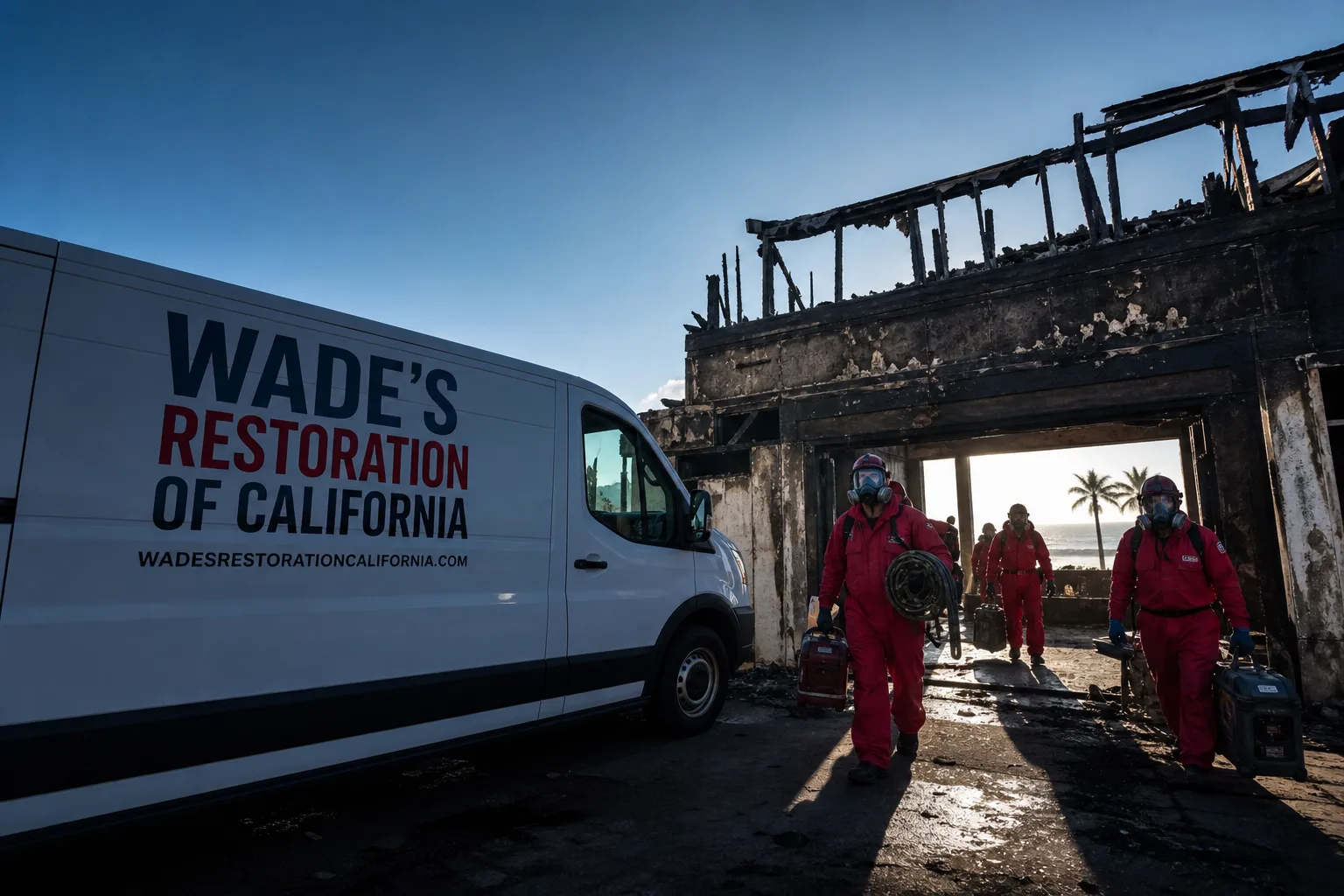
Fast, Reliable Storm & Disaster Restoration Across San Marcos
Storm damage doesn’t wait for business hours, and neither do we. If wind just tore shingles off your roof in La Costa Meadows or floodwater is rising along San Marcos Creek, you need a crew that knows San Marcos streets and gets there fast. Wade’s Restoration of California answers calls live, 24 hours a day, and Wade Ferris himself heads out to storm jobs across 92069, 92078, 92079, and 92096. Call (855) 915-0646 right now and you’ll talk to a person, not a voicemail tree.
We’ve worked San Marcos homes since 2007. We know the stucco tract houses in Twin Oaks Valley, the older ranch-style places near the original downtown townsite, and the townhome rows off Craven Road where alley access makes equipment staging tricky. That local knowledge matters when a storm hits because the damage here doesn’t look like it does in Carlsbad or Encinitas. This valley channels wind and water differently, and restoration has to account for that.
Why Wade’s Restoration of California Is San Marcos’s Preferred Storm & Disaster Restoration Company
San Marcos homeowners don’t want a rotating cast of subcontractors. They want the person whose name is on the truck. Wade Ferris founded this company in 2007 and still answers his own phone. When you call about a downed tree limb through a bedroom window off Rancho Santa Fe Road, Wade is the one coordinating the emergency board-up. When you need someone to walk your insurance adjuster through moisture readings in a flooded garage near CSUSM, Wade deals with the adjuster directly so you don’t have to relay information between two parties who should be talking to each other.
Our reputation in San Marcos comes from showing up and doing the work right the first time. Every storm restoration job gets the 90-Day Done Right Promise in writing: if it’s not done right, we make it right. We also hand you a full moisture log at the end of every water job. Wade takes readings every single day, not just on day one like most crews, and you see every number. Ask anyone on your street about us. In San Marcos, word travels fast, and that’s how we’ve built almost two decades of work here.
Our Storm & Disaster Restoration Services in San Marcos
Storm and disaster restoration covers a lot of ground in this valley. Here’s what we handle most often for San Marcos homeowners.
Storm Damage Cleanup
When a Santa Ana wind event barrels through the San Marcos valley, it leaves behind broken fencing, downed branches, and debris packed against garage doors. We clear it fast and document everything with photos for your insurance claim. Homes near Twin Oaks Valley Road and the La Costa Meadows area catch the worst of it because the valley funnels wind directly into those neighborhoods. We remove debris, tarp exposed areas, and start drying wet building materials the same day.
Flood Damage Restoration
Atmospheric river storms hit San Marcos hard because the inland valley collects runoff that coastal cities shed more quickly. Water pours toward San Marcos Creek and backs up into low-lying residential streets. We extract standing water, pull saturated drywall and insulation, and set up professional-grade drying equipment. Then Wade checks moisture levels daily until every reading confirms the structure is dry, not just the surface. That’s the difference between a flood job that’s actually finished and one that grows mold six months later.
Emergency Board-Up
Wind damage and fire threats leave San Marcos homes with broken windows, compromised doors, and open walls. On narrow lot lines and townhome rows, quick board-up prevents further damage and keeps animals and weather out. Our crew handles tight alley access off Discovery Street and restricted parking conditions without drama. We bring the right hardware for stucco exteriors and older ranch-style construction, and we secure the property before we leave. You can’t schedule a board-up for next Tuesday. It has to happen now, and Wade heads out as soon as you call.
Roof Tarping
A wind-lifted section of roof over your living room in San Elijo Hills needs a tarp immediately, not after a three-day wait. We tarp damaged roofing fast using reinforced poly and batten boards sized for your roof profile. The goal is to keep rain out until permanent repairs are scoped and scheduled. We also document the tarp job and the underlying damage for your adjuster, which speeds up claims that would otherwise stall.
What happens when you call
- 1
A real person answersNo phone trees - you reach a local pro.
- 2
You get an upfront price rangeHonest numbers before anyone is dispatched.
- 3
A background-checked tech heads outLicensed & insured, dispatched right away.
- 4
You approve before work beginsNothing starts until you say go.
Trusted Brands We Service in San Marcos
We don’t use off-brand equipment on San Marcos storm jobs. Our crews run Dri-Eaz dehumidifiers and air scrubbers, Phoenix fans, Injectidry systems for hard-to-reach cavities, and XPOWER and B-Air air movers. These are the machines serious restoration techs use, and we stock enough of them locally to deploy fast when a storm rolls through the valley. Our work is IICRC-certified, RIA-affiliated, and IFA-recognized, which means the methods and documentation meet the standards your insurance company expects. No shortcuts, no rented equipment we don’t know how to run.
Common Storm & Disaster Restoration Problems We See in San Marcos Homes
- Smoke trapped behind stucco cladding. After a wildfire passes near 92078, smoke particulates work their way behind stucco and into wall cavities. If nobody treats it, the smell comes back months later when humidity rises. We see this constantly in Cocos Fire area homes that had no structural fire damage.
- HVAC ductwork carrying soot through the whole house. A home near Cal State San Marcos can sit a quarter mile from the burn zone and still have soot recirculating through every vent. Duct decontamination isn’t a specialty add-on here. It’s a core part of storm and fire restoration in this valley.
- Flash-flood water extracted without checking the soil. San Marcos sits on clay-heavy soils that harden during dry spells. When atmospheric rivers hit, water pools against slab foundations and seeps back in after initial extraction. If the crew doesn’t address drainage and soil saturation around the foundation, you get recurring moisture intrusion.
- Townhome smoke damage with alley-only access. Rows of townhomes off Twin Oaks Valley Road and Craven Road have tight clearances and limited staging space. If a restoration crew can’t work in that footprint, the job takes twice as long and disrupts the whole building. We plan equipment staging around San Marcos’s actual lot configurations, not a generic suburban driveway assumption.
Pricing for Storm & Disaster Restoration in San Marcos, CA
What moves the price in San Marcos: how long water sat before we arrived, whether stucco cladding trapped moisture, and how much ductwork needs treatment after a wildfire. We provide a written scope before work starts, free estimates on storm cleanup, and we don’t charge a trip fee inside San Marcos’s county. Seniors and veterans get 10% off, always. Call (855) 915-0646 for an exact number on your situation.
We Also Serve Cities Near San Marcos
Most of our San Marcos work comes from referrals in neighboring North County communities. We run storm and disaster restoration jobs regularly in San Marcos and the surrounding area: Escondido, Vista, Carlsbad, and Encinitas. If you’re just outside the city line, call anyway. Wade heads out all over North County, and the no-trip-charge policy applies anywhere in the county we serve. For more detail on what we do, see our Storm & Disaster Restoration service page.
Serving San Marcos, CA - Our Local Coverage Area
We’re based in the San Marcos area and know this community well. Use the map below to see our service coverage - if you’re nearby, we can almost certainly help.
FAQs - Storm & Disaster Restoration in San Marcos
How does San Marcos’s inland valley geography change storm damage restoration compared to coastal cities?
San Marcos sits in a valley that compresses and accelerates Santa Ana winds, so wind damage here hits harder and faster than in coastal Carlsbad or Encinitas. The same topography funnels floodwater toward San Marcos Creek and low-lying streets during atmospheric river events. Restoration in this city has to account for both wind-driven structural damage and flash-flood water intrusion, often in the same storm system. Coastal homes rarely see that combination at the same severity. Call (855) 915-0646 if a storm just hit and you need someone moving now.
What should a homeowner in the 92078 ZIP code check after a wildfire even if the house wasn’t burned?
Check your HVAC system, your attic insulation, and the gaps around doors and windows. The 2014 Cocos Fire burned through 92078 and forced Cal State San Marcos to evacuate, and homes blocks from the burn zone trapped smoke particulates in ductwork and insulation. That soot recirculates through every room and the odor resurfaces months later when humidity changes. If you smell smoke but see no fire damage, the ducts are usually the culprit. We can run a scope and take readings before you commit to anything.
Why do San Marcos stucco tract homes hide smoke damage so easily?
Stucco-over-wood-frame construction, which dominates San Marcos’s 1980s through 2000s build-out, has a tight exterior cladding that traps smoke particulates inside wall cavities. The smoke works its way through small gaps and vent openings during a wildfire, then sits there behind the stucco where nobody sees or smells it until conditions change. By the time the odor becomes obvious, the contamination has spread through insulation and framing. That’s why we treat smoke in these homes as a wall-and-duct problem, not just a surface cleaning job.
How do you handle emergency board-up on narrow alleys and townhome lots in San Marcos?
We stage equipment in the alley or on the street directly adjacent to the unit, work with hand tools and compact equipment where needed, and coordinate with neighbors when access crosses shared property lines. Townhome rows off Twin Oaks Valley Road and Craven Road have tight clearances, and we’ve boarded up enough of them to know exactly what fits where. The board-up gets done the same day, usually within a couple hours of the call reaching Wade.
What’s different about flood restoration along San Marcos Creek after an atmospheric river?
The soil around San Marcos Creek is clay-heavy and hardpacked after dry spells, so floodwater doesn’t drain away quickly. It pools against slab foundations and seeps back in after initial extraction if the crew only removes standing water and runs fans. We check soil saturation around the foundation, address drainage where water is pooling against the slab, and take daily moisture readings until the whole envelope is dry. That’s the part most restoration companies skip, and it’s why some San Marcos flood jobs come back as mold problems six months later.
Written by Wade Ferris, Owner at Wade’s Restoration of California, proudly serving San Marcos and surrounding North County communities since 2007.