
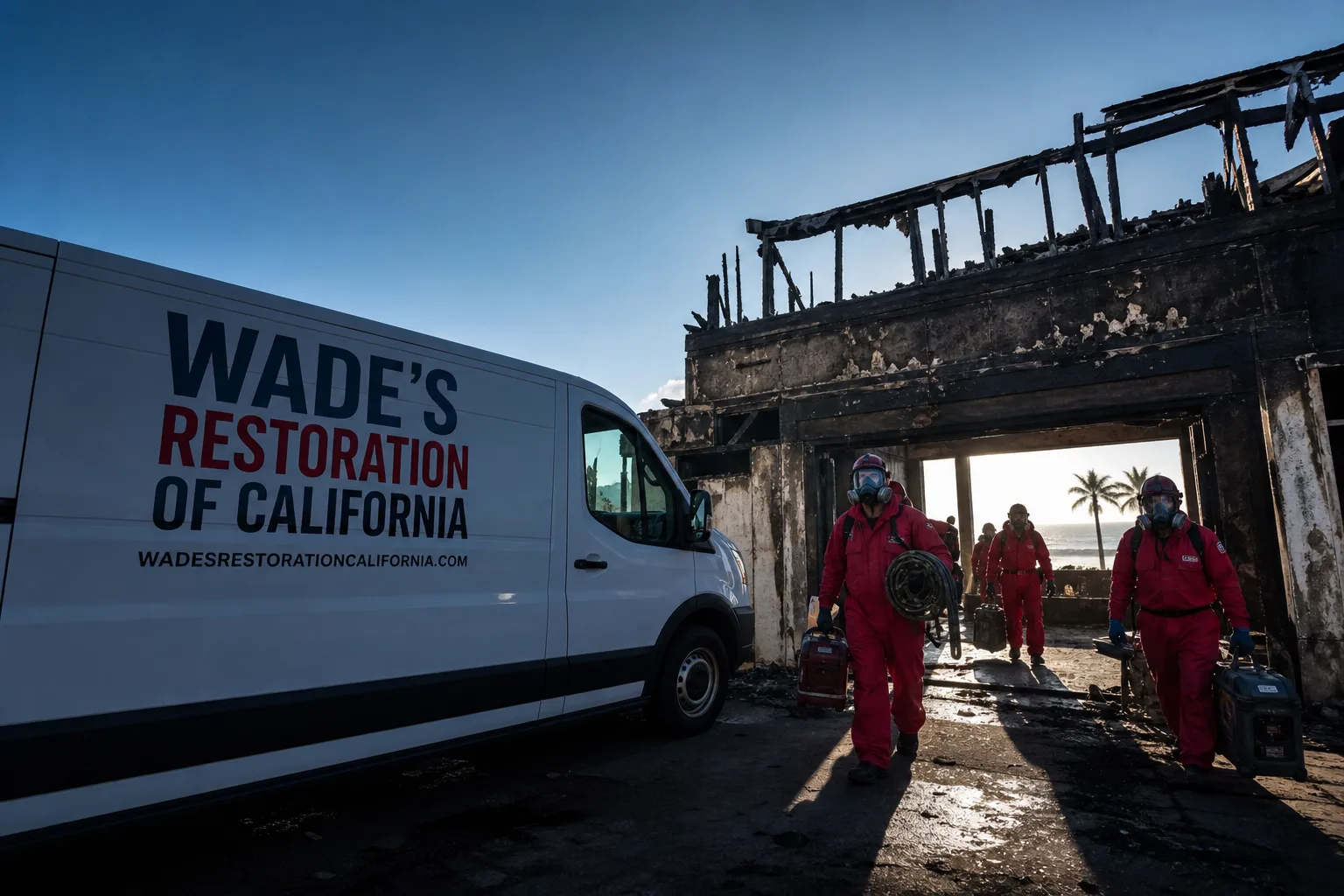
Fast, Reliable Storm & Disaster Restoration Across San Gabriel
Storm damage in San Gabriel is a different animal than it is in Alhambra or Rosemead. Here, a moderate rain after a dry summer doesn’t just soak lawns. It pushes mud, ash, and rock out of the burned watersheds above the 91775 ZIP and into residential streets. When that happens, you need someone who’s seen it before, not an 800-number that routes to a call center three states away. Wade Ferris started Wade’s Restoration of California in 2007, and he answers his own phone at (855) 915-0646. If water is moving through your walls right now, call. He’ll head out.
Here’s the part most companies won’t tell you: San Gabriel’s position at the mouth of the San Gabriel Mountain front means ordinary storms can become debris-flow events. That changes everything about how a restoration job should be documented, dried, and filed with insurance. This page explains what that means for your home specifically, what it costs, and what to do in the first hour after water gets in.
Why Wade’s Restoration of California Is San Gabriel’s Storm & Disaster Restoration Company
We’re not a franchise. Wade Ferris publishes his name, address, and license number, and if you call at 2 a.m. after a storm blows a hole in your roof, the voice on the other end is Wade himself. Not a queue. Not a recorded menu. That’s been true since 2007, and it’s why homeowners in San Gabriel call us when the mountain decides to remind everyone who built this valley.
Ask anyone on your street. The foothill blocks of 91775 have a particular kind of storm damage that flatland cities never contend with, and after enough seasons, you learn which companies actually know what they’re looking at. Ours does. We’re IICRC-certified and RIA-affiliated, and every water, fire, and mold job carries our 90-Day Done Right Promise in writing. If it’s not done right, Wade makes it right. One call brings him back.
We also deal with your insurance adjuster directly. That’s not a convenience; it’s the difference between a covered debris-flow claim and a denied flood claim. More on that below, because it’s the single most important thing for San Gabriel homeowners to understand about storm restoration.
Our Storm & Disaster Restoration Services in San Gabriel
When the San Gabriel Mountain front lets loose, the work usually starts with three things: getting debris out, getting water out, and getting the structure sealed against the next storm. Here’s how we handle each in San Gabriel.
Debris Removal
In the 91775 ZIP, storm debris isn’t just downed branches. After the 2020 Bobcat Fire burned the slopes above the city, every rain event carries fine silt, ash, and rock down the alluvial channels. That material compacts fast and gets heavy. A cubic yard of wet silt can weigh well over 3,000 pounds. Our crews cut access to choked drains, clear roadside culverts, and remove mud that’s pressed against foundation walls. We GPS-tag the source channel before we haul anything away, because your adjuster needs that flow-path evidence to classify the loss correctly.
Flood Damage Restoration
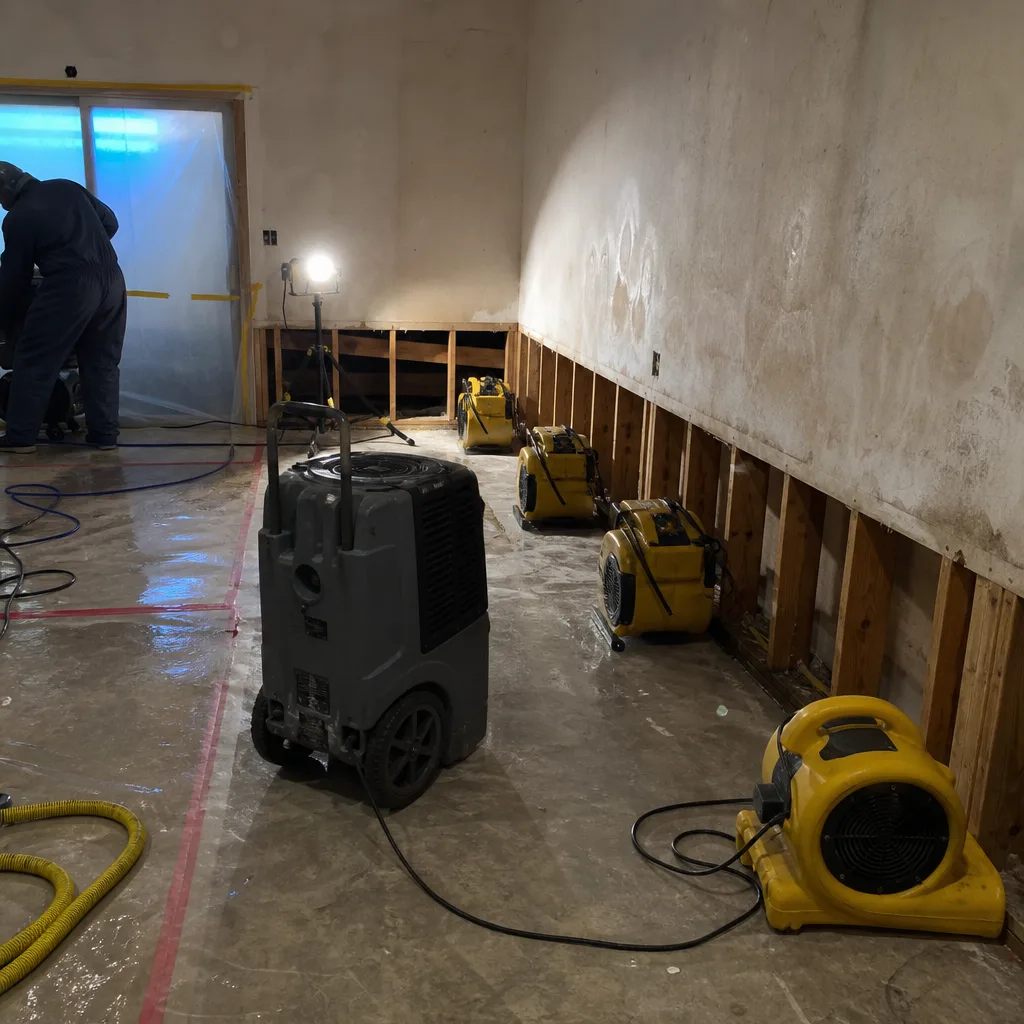
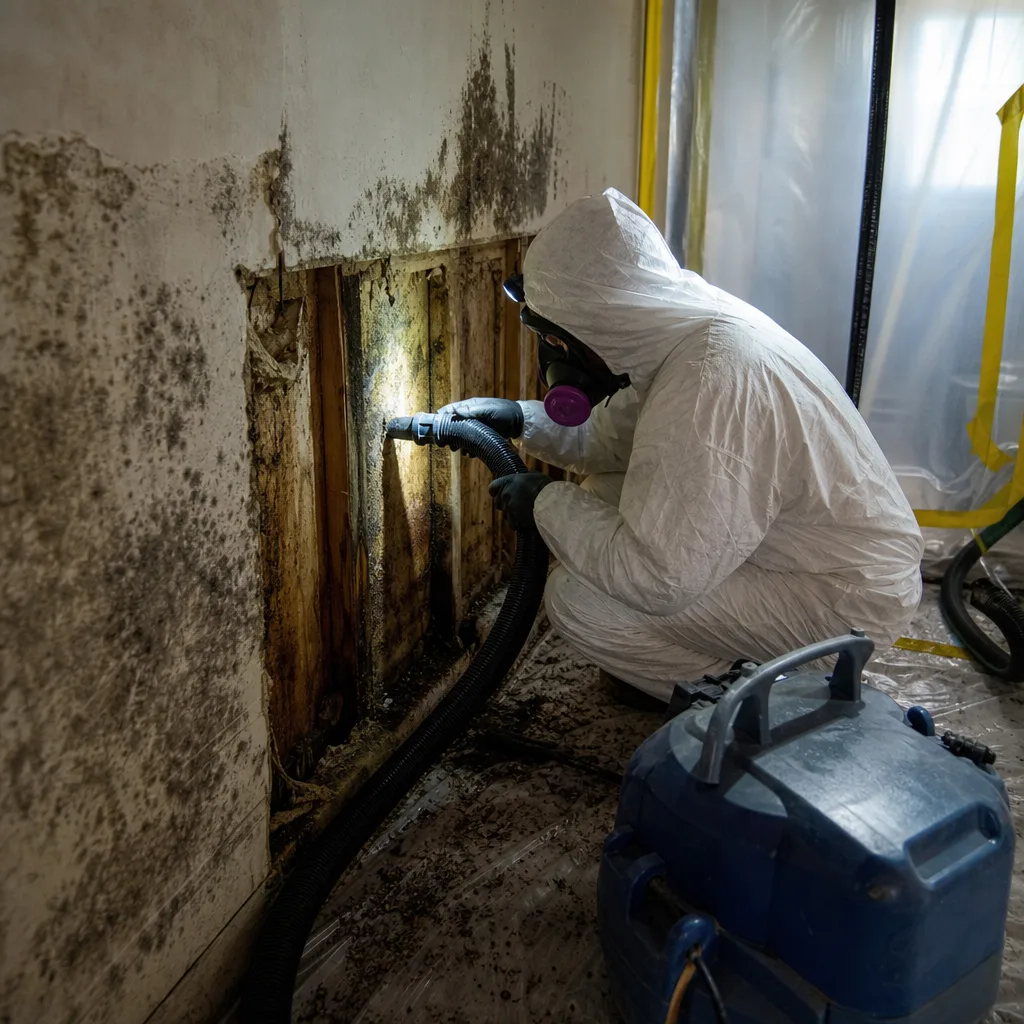
Water from debris-flow intrusion is different from a plumbing leak. It’s loaded with sediment, ash, and whatever the flow picked up on its way down the mountain. In San Gabriel’s older homes, that water seeps into wall cavities and crawls under floor systems through stem-wall foundations. We run professional-grade extraction and drying equipment from Dri-Eaz and Phoenix, and we take moisture readings every single day. At the end of the job, you get the full log. Almost nobody in this trade hands over their moisture data. We do, because you should know exactly how dry your house is before we put it back together.
Emergency Board-Up
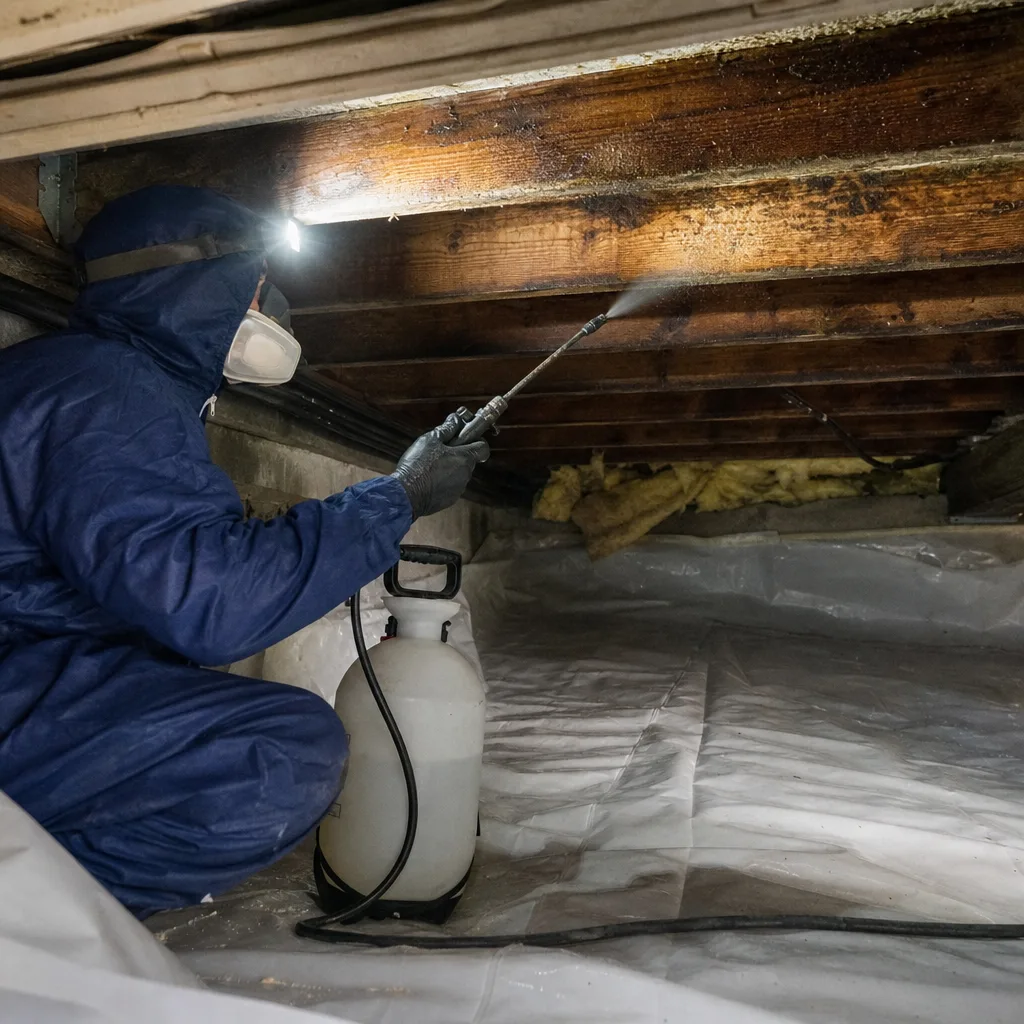
Santa Ana winds don’t announce themselves politely. When a 70-mph gust takes out a window or tears a section of roof decking loose, your house is open to rain, opportunistic animals, and anyone paying attention. We board up fast, and we do it so the next storm doesn’t turn a broken window into a full interior restoration. On older San Gabriel bungalows with original wood sash windows, we take care not to damage the framing during anchoring. Board-up is temporary. The damage from a rushed board-up can be permanent.
Roof Tarping
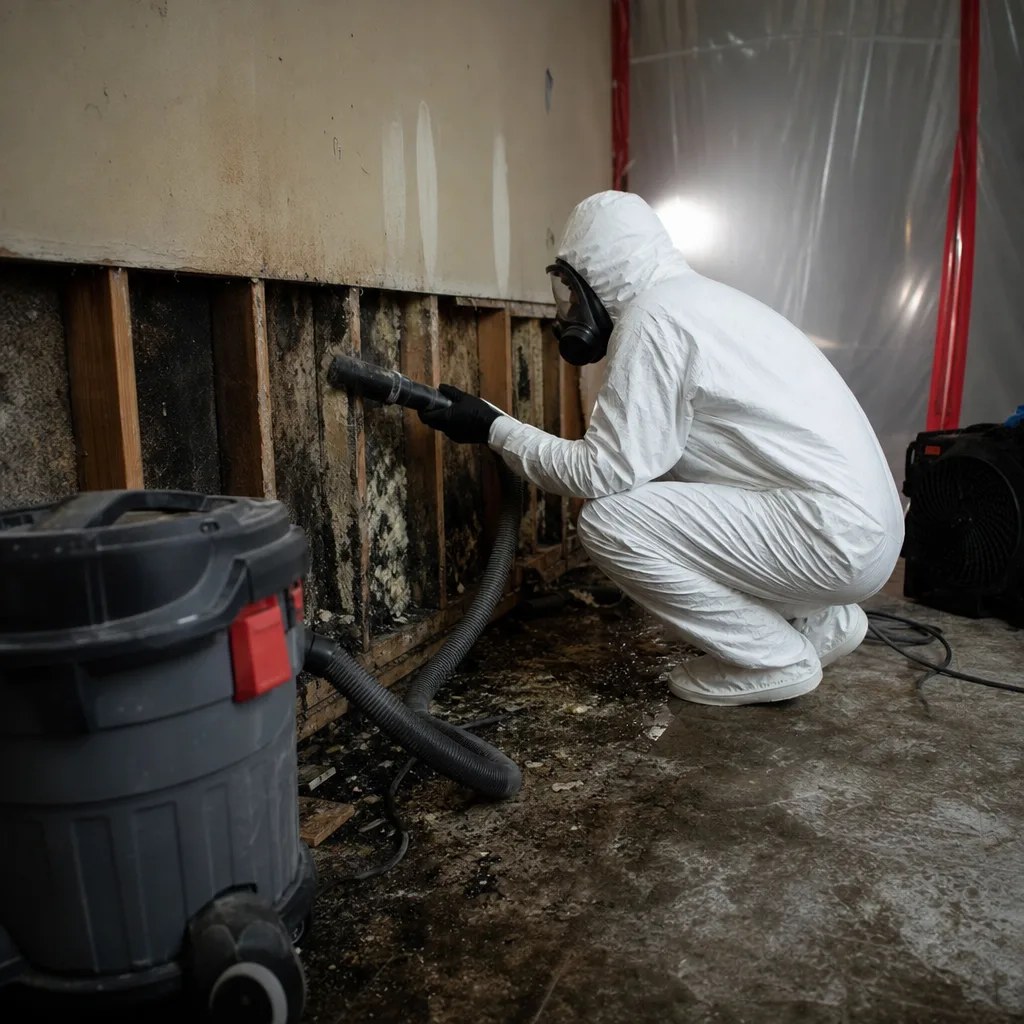
After high wind lifts shingles or tears membrane, water has a direct path into your attic. In San Gabriel’s marine layer, that moisture doesn’t evaporate quickly. It lingers, seeps into insulation, and within 48 to 72 hours, you’ve got microbial growth in your ceiling cavities. We tarp with reinforced, UV-stable covers that stay put through the next storm cycle. This buys you the time to get a scope written and a permanent roof repair scheduled without turning the inside of your house into a science experiment.
Our full Storm & Disaster Restoration capability also includes wind damage repair, sewage cleanup from backed-up storm drains, and full reconstruction when the damage goes down to structure. We don’t stop at mitigation. We put the house back the way it was.
What happens when you call
- 1
A real person answersNo phone trees - you reach a local pro.
- 2
You get an upfront price rangeHonest numbers before anyone is dispatched.
- 3
A background-checked tech heads outLicensed & insured, dispatched right away.
- 4
You approve before work beginsNothing starts until you say go.
Common Storm & Disaster Restoration Problems We See in San Gabriel Homes
- Debris-flow mudlines on stem-wall foundations. Homeowners see a ring of dried mud three inches up the foundation wall and think a supply line burst. In the foothill blocks of 91775, that ring is usually the calling card of a debris flow that came down a burned slope above the property. We photograph and GPS-tag the source channel before remediation, because the San Gabriel Valley Water District’s spreading-ground infrastructure can shift where flows concentrate from one season to the next.
- Trapped moisture in 1940s-1960s wall cavities. San Gabriel’s post-war bungalows were built without modern vapor barriers. When debris-flow water gets into those cavities, the marine layer pooling against the mountain front keeps humidity high and mold moves fast. The first 48 hours determine whether you’re drying a wall or replacing it.
- Galvanized supply lines that were already failing. San Gabriel Valley water is hard. Decades of mineral buildup inside original galvanized pipe means many homes are one pressure surge away from a pinhole leak or full split. We often find that a storm intrusion masks a plumbing failure that was already developing. It’s why a proper storm restoration in San Gabriel includes checking supply lines, not just pulling wet drywall.
- Insurance classification disputes between flood and debris flow. This is the one that costs homeowners the most. A standard flood exclusion doesn’t cover everything, and a debris-flow claim requires documentation that a flow path existed and moved material from a burned slope onto your property. Flatland adjusters rarely deal with this. Our team documents everything, communicates directly with your adjuster, and makes sure the claim is filed with the right classification from day one.
Pricing for Storm & Disaster Restoration in San Gabriel, CA
Here are real numbers for San Gabriel’s market, based on what we’ve billed on similar jobs in 91775, 91776, and 91778 over the past several storm seasons. Emergency board-up runs $350-$800 depending on the number and size of openings. Roof tarping for a typical post-wind opening: $450-$1,100. Debris removal from a debris-flow intrusion: $900-$3,200, depending on how much material moved and whether heavy equipment is needed. Flood water extraction and structural drying: $2,800-$7,500 for a single-story ranch, higher if crawlspace access is tight or the flow got into multiple rooms. Those are honest ranges. We don’t give a lowball number on the phone and a different one at the door.
We also offer a permanent Senior & Veteran 10% discount, $40 off any repair over $200, and a free second opinion on any written estimate you’ve received. No trip charge inside our own county. Call (855) 915-0646 for a straight quote.
We Also Serve Cities Near San Gabriel
Our crews work throughout the west San Gabriel Valley, including East San Gabriel, San Marino, Alhambra, and Rosemead. Each city has its own building stock and its own storm patterns, and we treat them that way. Flatland Rosemead doesn’t get debris flows. Foothill San Gabriel does. Call us and tell us what you’re seeing. We’ll tell you straight what it’s going to take.
Serving San Gabriel, CA - Our Local Coverage Area
We’re based in the San Gabriel area and know this community well. Use the map below to see our service coverage - if you’re nearby, we can almost certainly help.
FAQs - Storm & Disaster Restoration in San Gabriel
Because insurance coverage for mud, ash, and burned-slope runoff depends on proving where the flow originated and how it reached your property. When we GPS-tag the source channel and photograph the flow path before moving debris, we create the documentation your adjuster needs to classify the loss as debris flow rather than standard flood. This classification can mean the difference between a covered claim and a denied one. Call (855) 915-0646 and we’ll walk you through what documentation your specific policy needs.
Yes, very likely. San Gabriel’s post-war homes were built with asbestos-containing floor tile, popcorn ceilings, and other original materials. Cutting into wet drywall, removing saturated flooring, or accessing wall cavities can disturb these materials, and by law, testing and abatement must happen before restoration work proceeds. We handle this as a standard part of our scope. The testing won’t slow us down; ignoring it would put your family and our crew at risk.
The marine layer keeps humidity high, especially when you’re close to the foothills. That means water doesn’t evaporate on its own the way it does in drier inland cities. Wall cavities stay damp longer, and mold can establish within 48 hours. Proper drying in San Gabriel requires aggressive dehumidification and daily moisture monitoring. We take readings every day and hand you the full log when the job is done.
A standard flood is water rising from a drainage system, river, or heavy rain accumulation. Debris flow is different: it carries mud, ash, rock, and burned organic material down from the mountain slopes. Debris flow leaves a mudline, fills crawlspaces with silt, and often comes through a channel that didn’t exist before the Bobcat Fire. Insurance treats the two differently, and the burden of proof is on you to show which one hit your house. Our documentation process is built around that requirement.
If the wind lifted shingles, damaged flashing, or sent debris across your roof, then yes, you probably do. Damage that isn’t visible from the ground can let water into your attic during the next rain. In San Gabriel, that means cavity moisture that won’t dry on its own. Board-up and tarping are much cheaper than a full attic restoration two weeks later. Call us for an assessment. No trip charge inside our county.
Call Wade’s Restoration of California Now
Storms in San Gabriel don’t wait for business hours, and neither do we. Wade answers his own phone, 24/7. If you’ve got water coming in, debris up against the foundation, or a roof that just took a beating from Santa Ana winds, call (855) 915-0646 now. He’ll be there himself, not a crew you’ve never met. Free estimate, written scope before any work starts, and the 90-Day Done Right Promise on every job.
Written by Wade Ferris, Owner at Wade’s Restoration of California, serving San Gabriel since 2007.