
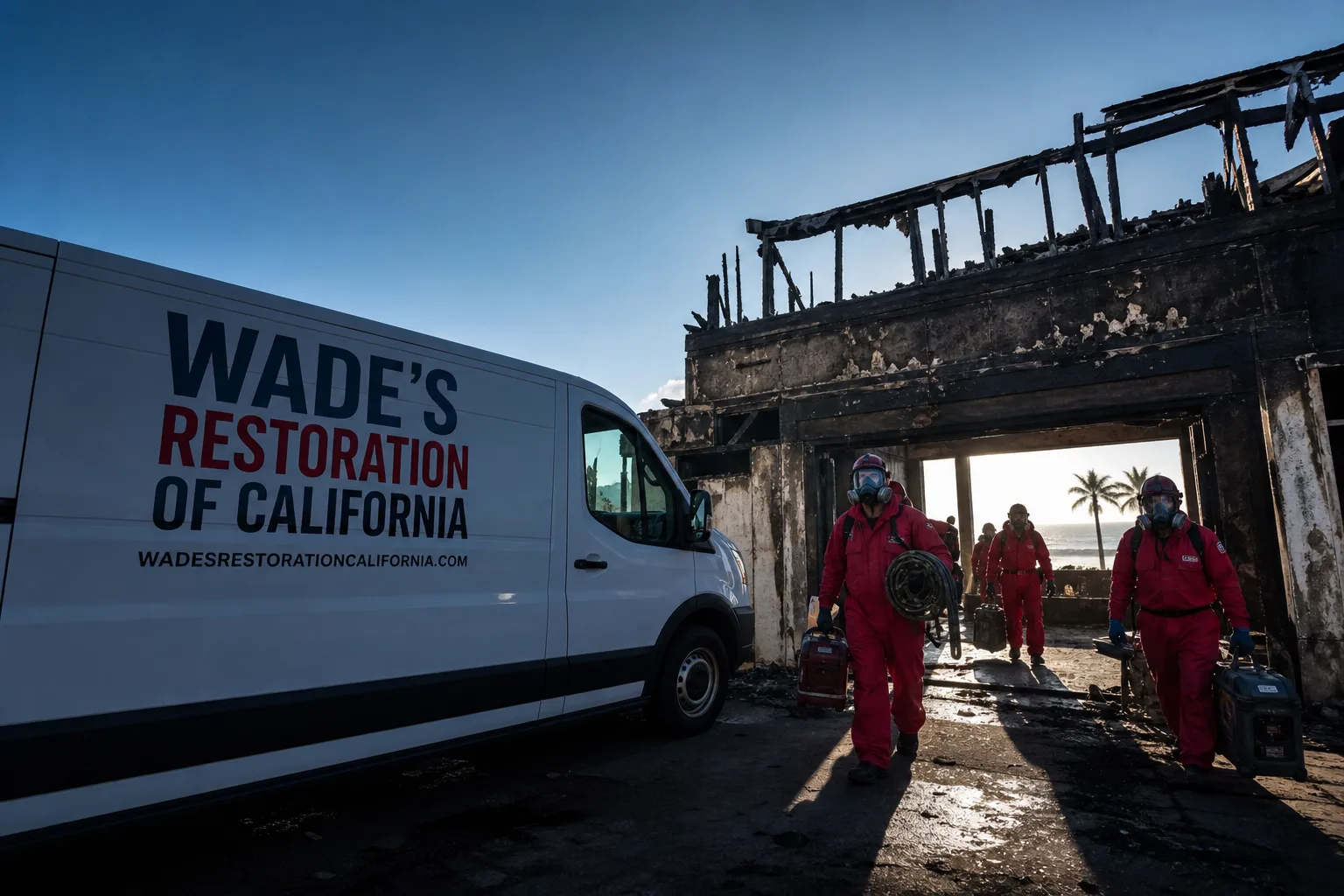
Fast, Reliable Storm & Disaster Restoration Across San Francisco
Storm damage in San Francisco rarely looks like it does anywhere else. A winter front rolling off the Pacific slams into the Richmond and Sunset first, then works its way east across the hills toward SoMa and the Bay. By the time it reaches the Financial District, you may be dealing with wind-driven rain pushing through century-old brick, salt spray eating at hinges and tracks, and groundwater pressing up through landfill that has been shifting since the Gold Rush. Wade’s Restoration handles all of it under one roof. Need emergency board-up or roof tarping tonight? Call (855) 915-0646 and you’ll get Wade or a member of his crew, not a call center in another state.
Why Wade’s Restoration of California Is San Francisco’s Preferred Storm & Disaster Restoration Company
Wade Ferris founded this company in 2007 and has kept it small on purpose. No national franchise sends a rotating cast of subcontractors to your door. Wade sends his own people, and often shows up himself at two in the morning when a storm has peeled roofing off a Victorian in the Mission. That’s the whole model: the owner’s name is on the truck, his phone number is published, and he’s going to run into you again at the hardware store on a Saturday. That’s the oldest accountability mechanism there is, and it still works.
San Francisco homeowners ask a lot of questions before letting anyone inside their home. We respect that. Wade publishes his address and license number. Every job gets documented: moisture readings taken daily and handed to you as a complete log at the end, photo documentation for your adjuster, and a written scope agreed before work starts. The 90-Day Done Right Promise is stamped in writing on every water, fire, and mold restoration contract. If it’s not done right, Wade makes it right. One call brings him back.
Response time to San Francisco is measured in minutes, not days. Wade’s Bay Area office coordinates scheduling, and his crews serve San Francisco locally. When a storm drops a tree limb through a garage roof in Noe Valley or floods a converted loft in SoMa, extraction equipment can be running inside the hour.
Our Storm & Disaster Restoration Services in San Francisco
Storm Damage Cleanup
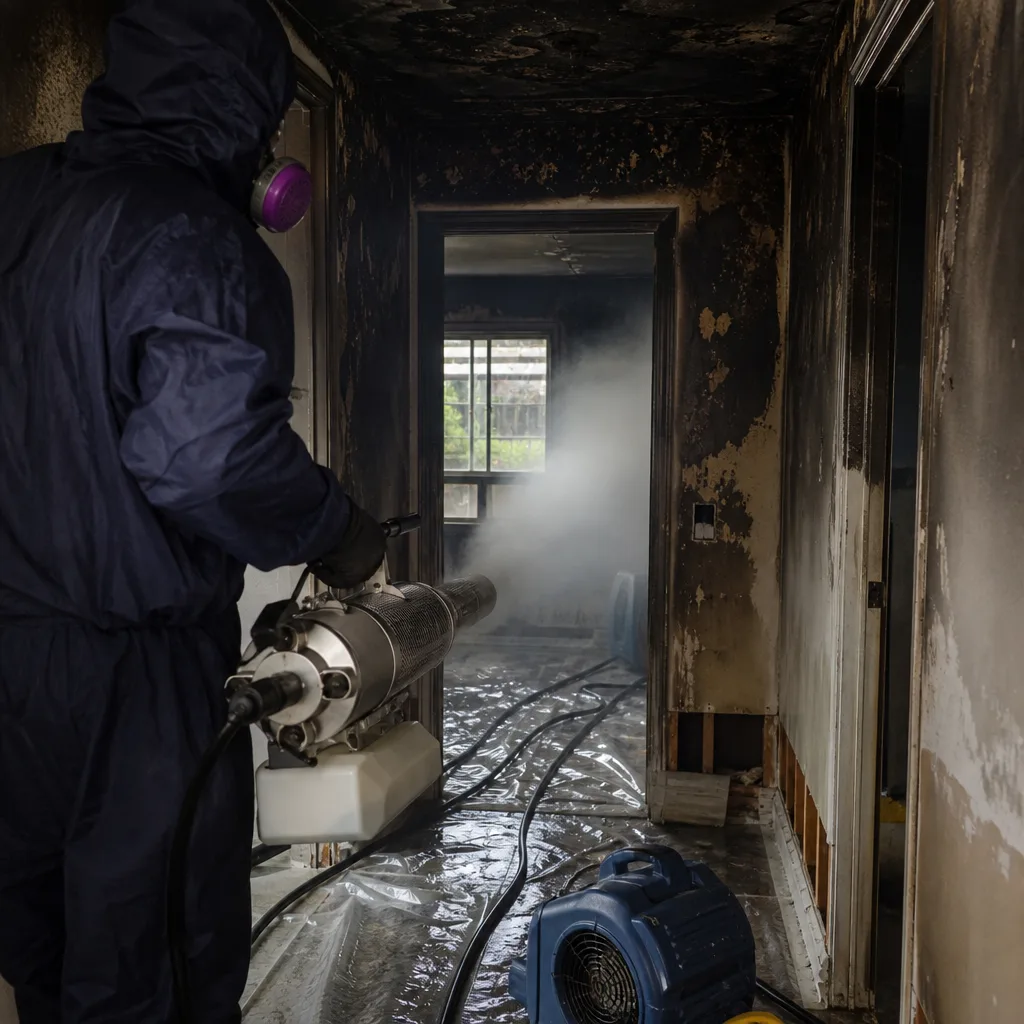
After a big blow comes through San Francisco, we do a full triage: structural assessment, water extraction, debris removal, and documentation of pre-existing conditions. In older buildings across the Mission and Chinatown, that last piece matters more than most people realize. Seismic settlement cracks and storm damage often look identical, and your insurance company needs honest documentation of both. Wade’s crew knows how to distinguish pre-existing differential-settlement cracks from new earthquake or storm damage. That discipline comes from working in this city, not from a franchise training manual.
Flood Damage Restoration
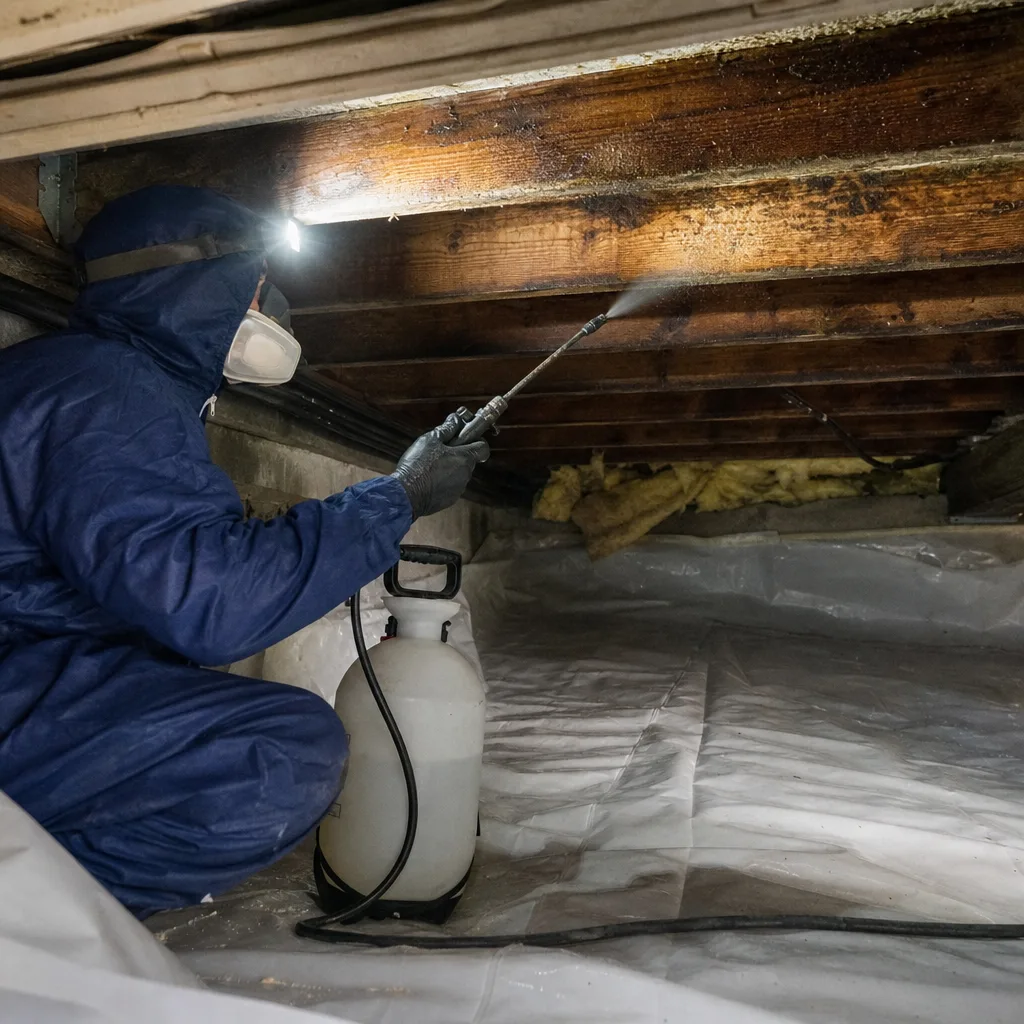
Flooding in San Francisco is rarely just rain through a window. The bay-fill ground beneath the Financial District and Embarcadero corridors holds water and pushes it up through foundations. Combined with storm surge along the waterfront, a single winter event can leave groundwater, stormwater, and wind-driven rain in the same basement. We extract all of it, then run professional-grade drying equipment from Dri-Eaz and Phoenix. Because San Francisco’s year-round high ambient humidity changes the drying math, we run equipment 20 to 40 percent longer than an inland contractor would, and we take moisture readings every single day until clearance, not just on day one and day five.
Emergency Board-Up
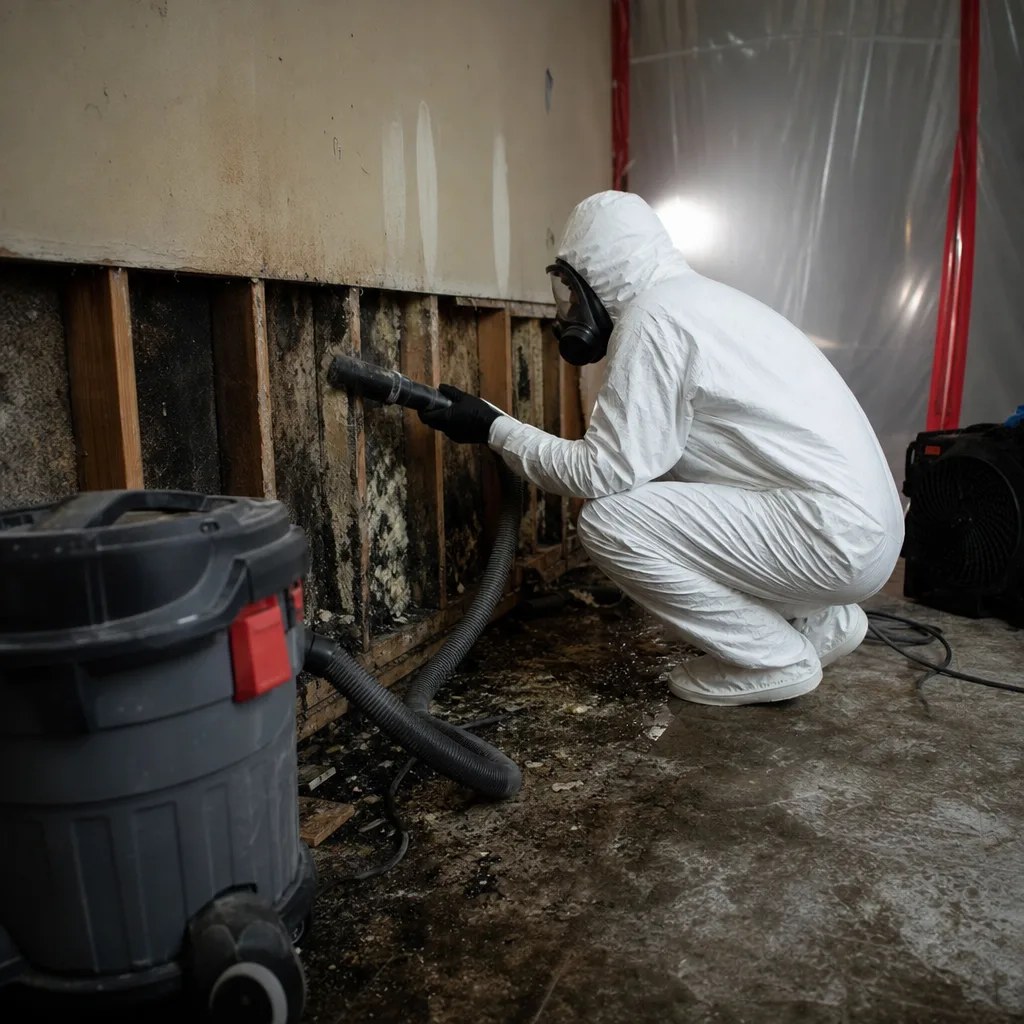
When a storm shatters a storefront window on Columbus Avenue or rips a door off its track in a Tenderloin residential hotel, the priority is securing the opening before worse damage or intrusion happens. We board up with heavy plywood and proper fasteners, not whatever scrap fits. Salt-air corrosion is a constant enemy in this city: garage door tracks seize, hinges snap, and opener chains rust through. If storm-driven wind finishes off already-corroded hardware, we replace the damaged hardware during the board-up so the door can actually be secured, not just covered.
Roof Tarping
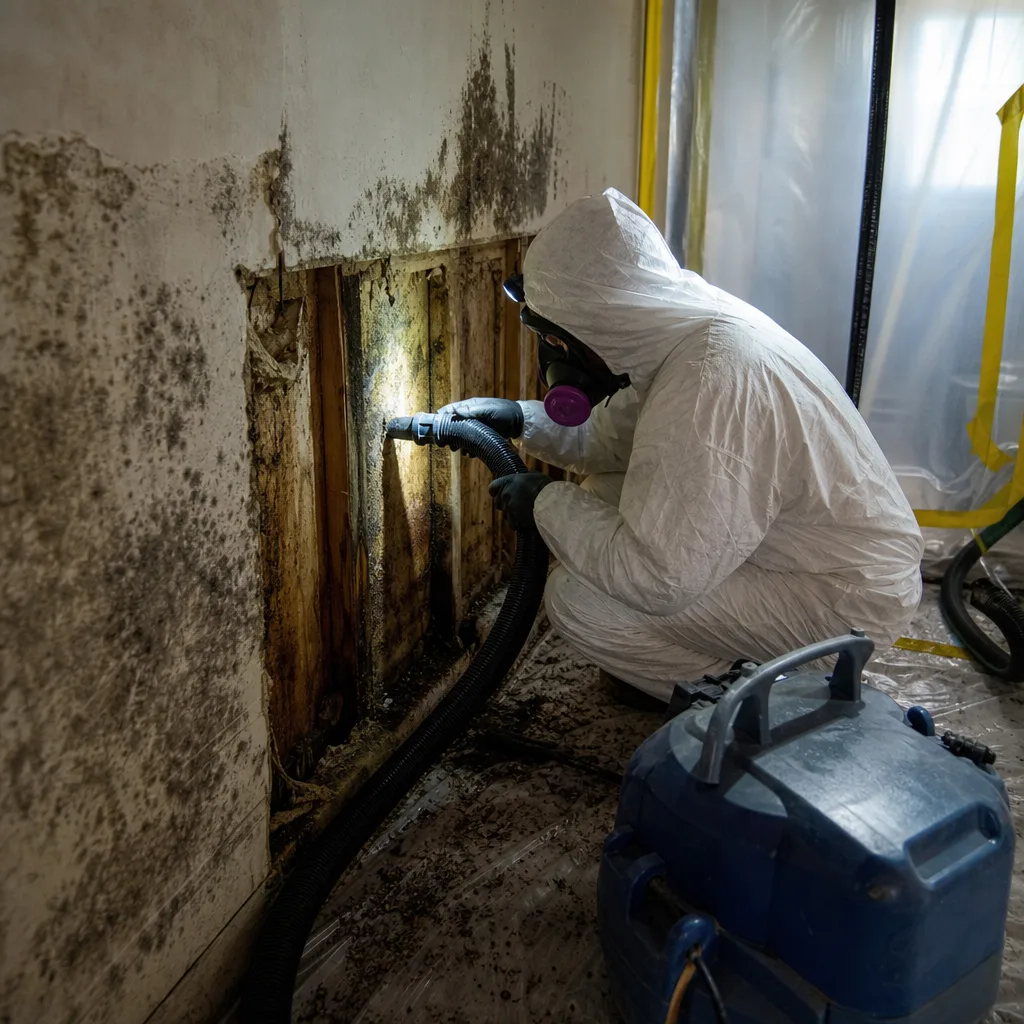
San Francisco’s marine layer means a small roof breach becomes a mold problem faster than inland contractors expect. Roof tarping stops the water immediately. For flat and low-slope roofs common in the western ZIP codes, we use weighted and anchored tarps that hold in the same wind gusts that caused the damage. On steep Victorian roofs in the Mission and Noe Valley, we secure tarps to structural anchors, never just the flashing. The goal is a tarp that survives the next front coming in off the ocean, not one that ends up on a neighbor’s car.
What happens when you call
- 1
A real person answersNo phone trees - you reach a local pro.
- 2
You get an upfront price rangeHonest numbers before anyone is dispatched.
- 3
A background-checked tech heads outLicensed & insured, dispatched right away.
- 4
You approve before work beginsNothing starts until you say go.
Trusted Brands We Service in San Francisco
Wade’s crew works with equipment and parts from brands we trust in this climate: Dri-Eaz and Phoenix for drying, Injectidry for targeted drying mats that pull moisture out of lath-and-plaster walls without tearing them apart, and XPOWER and B-Air for air movement. We’re IICRC-certified, RIA-affiliated, and IFA-recognized. For San Francisco homeowners, that credibility means something specific: when the adjuster asks whether the drying plan was appropriate for a fog-dampened Edwardian with original plaster, there’s a defensible answer backed by certification, not a shrug.
Common Storm & Disaster Restoration Problems We See in San Francisco Homes
- Salt-air corrosion means hardware fails during storms, not just after them. In the Richmond and Sunset corridors, springs snap when a winter front brings wind gusts and sudden temperature drops. A garage door that won’t open or close can’t be secured against the next storm. We carry galvanized and coated springs plus stainless hardware on the truck.
- Fog keeps walls damp all year, so mold colonizes faster after a leak. Karl the Fog deposits condensation on building envelopes even in August. After a storm breaches a window or wall, mold can begin colonizing within 48 hours in some San Francisco structures, far faster than inland timelines. That means faster response matters, and clearance readings have to be interpreted differently here.
- Lath-and-plaster walls hide moisture that drywall would reveal. Most Victorians and Edwardians in San Francisco still have original lath-and-plaster, not drywall. Plaster traps moisture invisibly and makes thermal imaging less reliable. We know to cut controlled inspection ports and use Injectidry mats instead of trusting a surface reading.
- Unreinforced masonry retrofit projects create new water pathways. The city’s mandatory retrofit program means exposed framing and penetrations on buildings that never had them before. When a storm hits mid-retrofit, that exposed framing becomes a water-intrusion pathway. We document whether the new water damage ties to the retrofit or the storm, which matters directly for liability and insurance.
Pricing for Storm & Disaster Restoration in San Francisco, CA
San Francisco’s market runs higher than most of the Bay Area, and there’s no secret about why. Parking costs more, labor costs more, and the buildings are older and harder to work in. Here are honest ranges for the work we do most often after a storm:
- Emergency board-up: $350 to $750 for a typical single opening. Brick buildings with oversized storefront windows or steel security doors run $900 to $1,400.
- Roof tarping: $450 to $1,100 for most residential roofs in the Mission, Noe Valley, or Sunset. Steep Victorian roofs with multiple levels run $1,200 to $2,100 because of staging and anchor requirements.
- Flood damage restoration: $2,800 to $7,500 for a typical basement or ground-floor unit in the Financial District or Embarcadero corridors. This includes extraction, drying equipment run time, daily moisture logs, and clearance documentation.
- Storm damage cleanup with structural drying: $1,900 to $6,200 depending on the extent of water intrusion, wall type (plaster runs a premium over drywall), and how many rooms are affected.
All estimates are free and in writing before work starts. Ask about the standing offers: no trip charge inside San Francisco County, a free second opinion on any written estimate, $40 off any repair over $200, and a permanent 10 percent discount for seniors and veterans.
We Also Serve Cities Near San Francisco
Our crews work throughout San Francisco and the surrounding neighborhoods, including the Mission District, Noe Valley, Chinatown, and Visitacion Valley. Same storm, same salt air, same old buildings. If you’re anywhere in the city and water is moving somewhere it shouldn’t be, call first and sort out the address later. Find out more about Storm & Disaster Restoration and how we handle every stage from first response to final clearance.
Serving San Francisco, CA - Our Local Coverage Area
We’re based in the San Francisco area and know this community well. Use the map below to see our service coverage - if you’re nearby, we can almost certainly help.
FAQs - Storm & Disaster Restoration in San Francisco
Salt-air corrosion kills garage door springs long before their rated cycle life. In the Richmond District, the marine layer keeps metal damp year-round, and the coating on standard springs gives out quickly. A spring that would last seven or eight years in Sacramento might last three out here. We replace them with galvanized or coated springs, inspect the tracks and hinges for corrosion at the same time, and often upgrade rollers to nylon so the door operates smoothly in the salt air. If you’re seeing repeated spring failures, call (855) 915-0646 and Wade can do a full hardware assessment on the next visit, no charge for the look while we’re there.
In SoMa’s converted lofts, you have about 24 to 48 hours before mold colonization begins, and that timeline is shorter in San Francisco than almost anywhere else in the Bay Area because of chronic fog-driven moisture. The building envelope is already carrying a baseline moisture load. We run Dri-Eaz and Phoenix equipment at higher capacity and longer runtimes than an inland contractor would calculate, and we take moisture readings every single day until the structure hits genuinely safe clearance, not just a number that would pass in a dry climate.
Roof tarping goes on top to stop water from entering from above. Emergency board-up goes on walls, doors, and windows to stop water, debris, and people from entering at ground level. In the Financial District, where brick commercial buildings sit on bay landfill and a storm can push water through a century-old parapet wall at the same time it shatters a street-level window, you often need both. The order is simple: tarp the roof first if water is coming from above, board up immediately if the building is unsecured at street level. One call to (855) 915-0646 gets both tasks assigned.
Yes, and it happens all the time. The retrofit process opens up wall cavities and roof intersections that were sealed, sometimes for a hundred years. A winter storm will absolutely find those new pathways and push water into framing and plaster. The fix is temporary sealing and tarping over the exposed work, then documentation of whether the water entered through a storm breach or a retrofit penetration. That distinction determines whether the building owner, the retrofit contractor, or the insurance policy carries the claim. We write it all down and photograph everything.
We use smaller debris containers and hand-load to a curbside truck, not a full roll-off. Tenderloin streets, especially around the residential hotels and older commercial blocks, can’t accommodate a 20-yard dumpster without blocking traffic and sidewalk access. Our crew carries 10-yard and bag systems sized to fit a standard parking lane, and we schedule debris pickups so material sits on the street for hours, not days. Storm debris in the Tenderloin is also more likely to include broken glass and metal from window security bars, so we stage that separately and haul it the same day.
Written by Wade Ferris, Owner at Wade’s Restoration of California, serving San Francisco since 2007.
Contact Wade’s Restoration of California in San Francisco
Storm damage gets worse every hour you wait, and in San Francisco the timeline for mold is shorter than almost anywhere else in the state. Call (855) 915-0646 for a free estimate, a live person on the line, and a crew that can head your way inside the hour. Wade answers his own phone. That’s the whole point.