
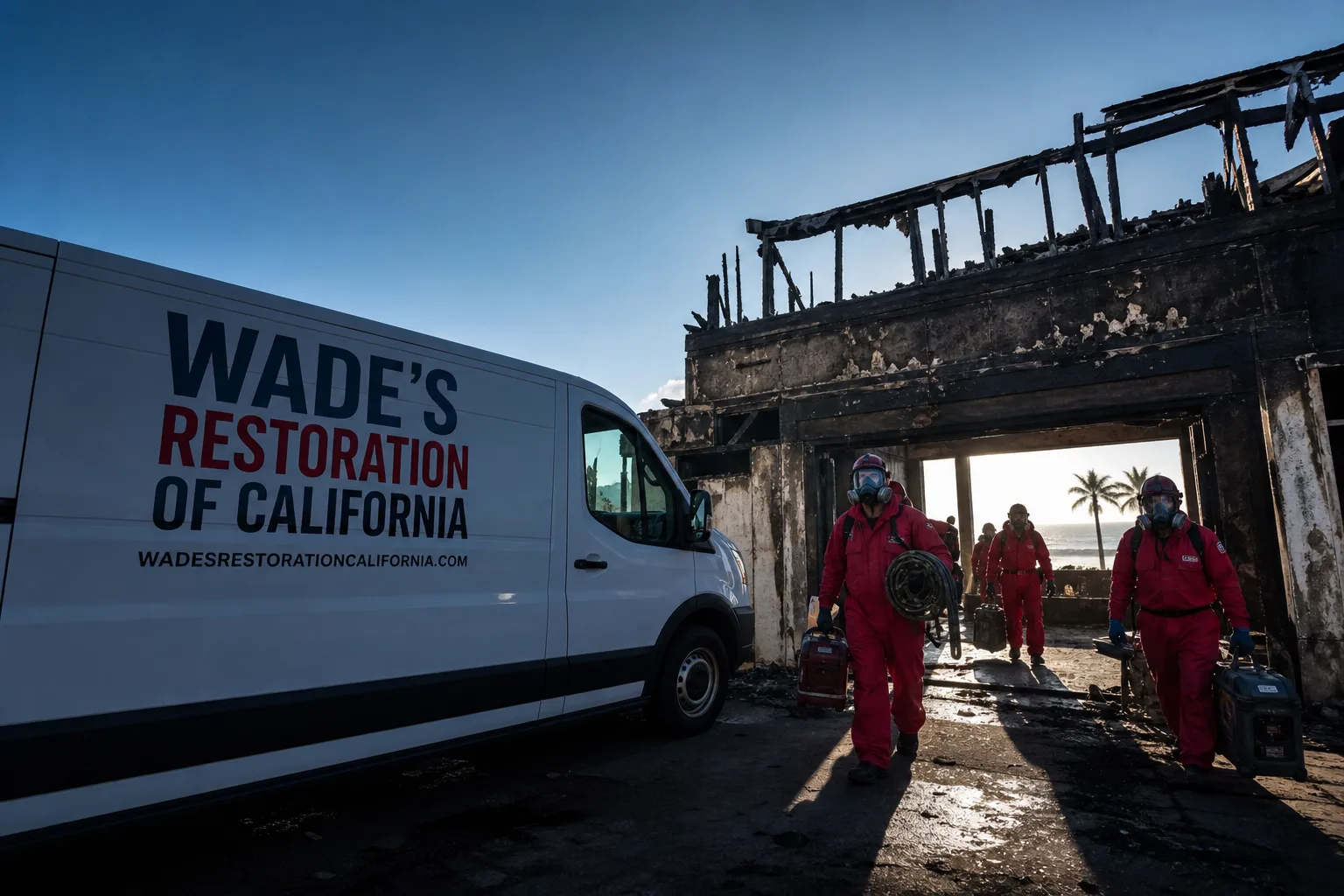
Fast, Reliable Storm & Disaster Restoration Across San Dimas
Storm and disaster restoration in San Dimas isn’t a single-service call. It’s a two-phase problem most flatland restoration companies don’t understand. Homes here sit at the base of the San Gabriel Mountains, where fire-scarred slopes shed ash, mud, and debris into residential streets the moment winter rain arrives. A typical storm cleanup in San Dimas runs $1,800 to $4,200 for water extraction, sediment removal, and structural drying. A full debris-flow intrusion with crawl space excavation runs $6,500 to $14,000. If you’re standing in water or mud right now, call (855) 915-0646. Wade answers his own phone, and he can have a crew on the road to your ZIP code, 91773, inside the hour.
Why Wade’s Restoration of California Is San Dimas’s Preferred Storm & Disaster Restoration Company
We’ve been running storm calls in San Dimas long enough to know the streets that flood first when the San Dimas Wash jumps its banks. It’s not the whole city. It’s a specific pattern: the foothill streets near the canyon mouths, the homes along the wash corridor, and the older ranch-style properties built before modern drainage codes existed. When you call us, you’re not explaining your neighborhood to someone in a call center three states away. Wade knows where Bonita Avenue sits relative to the wash. He knows which blocks off Calle de Caballos took mud during the last burn cycle. That local knowledge changes what we look for when we arrive.
Wade Ferris founded this company in 2007 and still answers his own phone. Not a voicemail tree. Not an answering service. If you call at 2 a.m. with water coming through your garage door, that’s Wade on the line, and he’s the one who heads out. The people he sends are background-checked and uniformed, carrying professional equipment from Dri-Eaz, Phoenix, and Injectidry. Every storm job we do is covered by our 90-Day Done Right Promise, in writing. If it’s not done right, Wade comes back and makes it right. No fine print. No runaround.
San Dimas homeowners tend to be skeptical of restoration companies, and for good reason. The national chains quote one price on the phone and another at the door. Wade’s Restoration operates differently. You get a written scope before work starts. You get daily moisture readings logged and handed to you at the end, not just a verbal “it’s dry.” And Wade deals with your insurance adjuster directly, so you’re never stuck relaying technical information between two sides. That alone saves homeowners hours of phone tag and a lot of stress.
Key Takeaways
- Storm restoration in San Dimas runs $1,800-$4,200 for typical water extraction and drying; full debris-flow excavation runs $6,500-$14,000.
- San Dimas’s position below fire-scarred hillsides creates a unique two-phase threat: fire and smoke damage, then mud and sediment intrusion weeks later.
- Wade answers his own phone 24/7 and can have a crew in your San Dimas neighborhood inside the hour.
- Every job comes with a written scope, daily moisture logs, direct adjuster communication, and the 90-Day Done Right Promise.
- We’re locally owned and owner-operated since 2007. Wade Ferris publishes his name and license number. He’s going to run into you again at the hardware store.
Our Storm & Disaster Restoration Services in San Dimas
Storm damage here isn’t like storm damage in Covina or Glendora. Those cities deal with water. San Dimas deals with water plus sediment, ash, and debris that abrasive material chews through standard equipment and hides saturation where a normal water-damage protocol won’t find it. That’s why our Storm & Disaster Restoration team carries extraction systems and sediment extractors built for debris-laden water, not just clean flood water. Here’s what that looks like on the ground.
Storm Damage Cleanup
After a Santa Ana wind event or a hard winter rain, we handle the full cleanup: downed tree limbs, wind-thrown debris against the house, blocked drainage swales, and the sediment that piles up against foundation walls on foothill streets. In San Dimas, we regularly see wind-driven debris from the mountain canyons pushed through fence lines and stacked against garage doors. We clear it, document it for insurance, and assess what water or mud got where the debris used to be.
Flood Damage Restoration
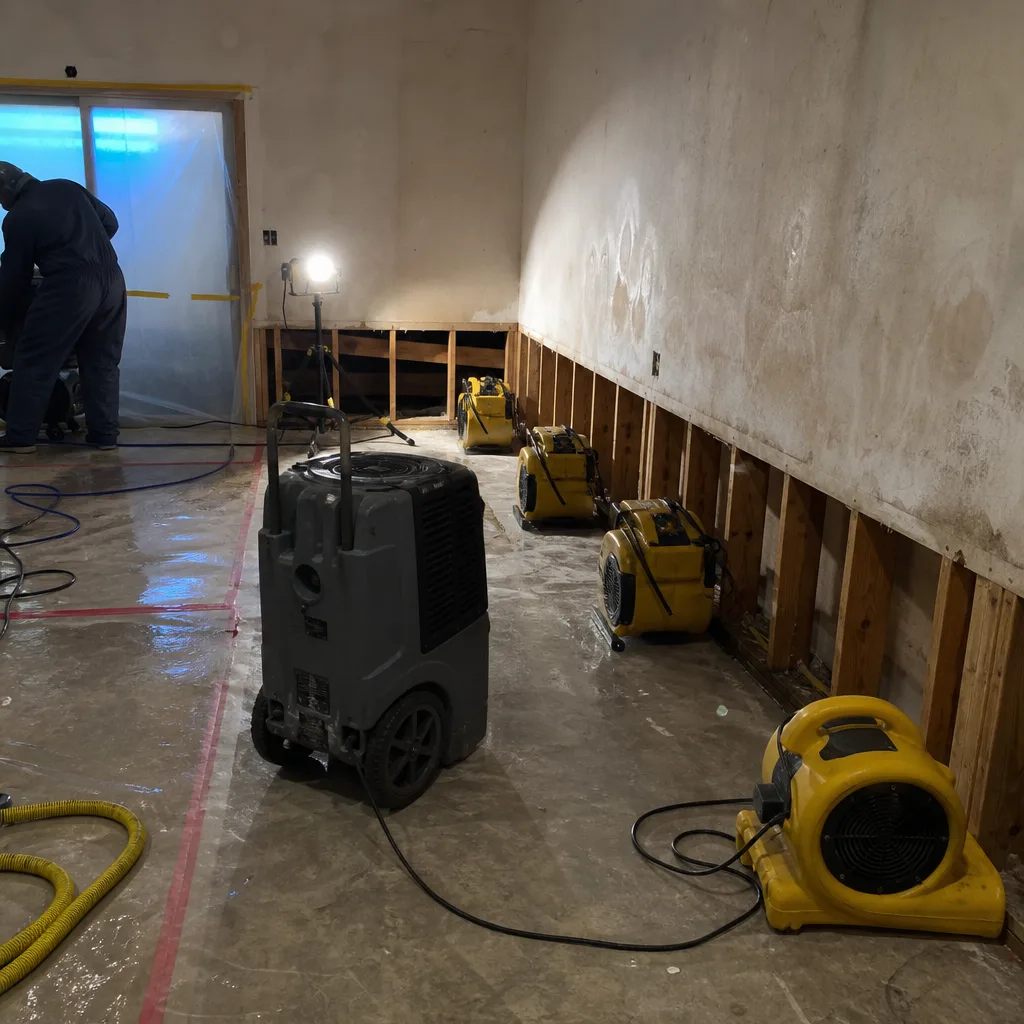
Flood water in San Dimas is rarely clean water. If it came from the wash or the canyon mouths, it’s carrying ash, sand, and soil from the slopes above town. We don’t treat it like a broken pipe. We run sediment-laden water through filtration before extraction, pull out the mud and silt that settles in the lowest points of your home, and then run a structural drying plan that accounts for the higher moisture load sediment holds. Standard flood cuts at 12 inches don’t work when the sediment load includes sand. We cut to the actual wicking line and verify with moisture meters before closing anything up.
Emergency Board-Up
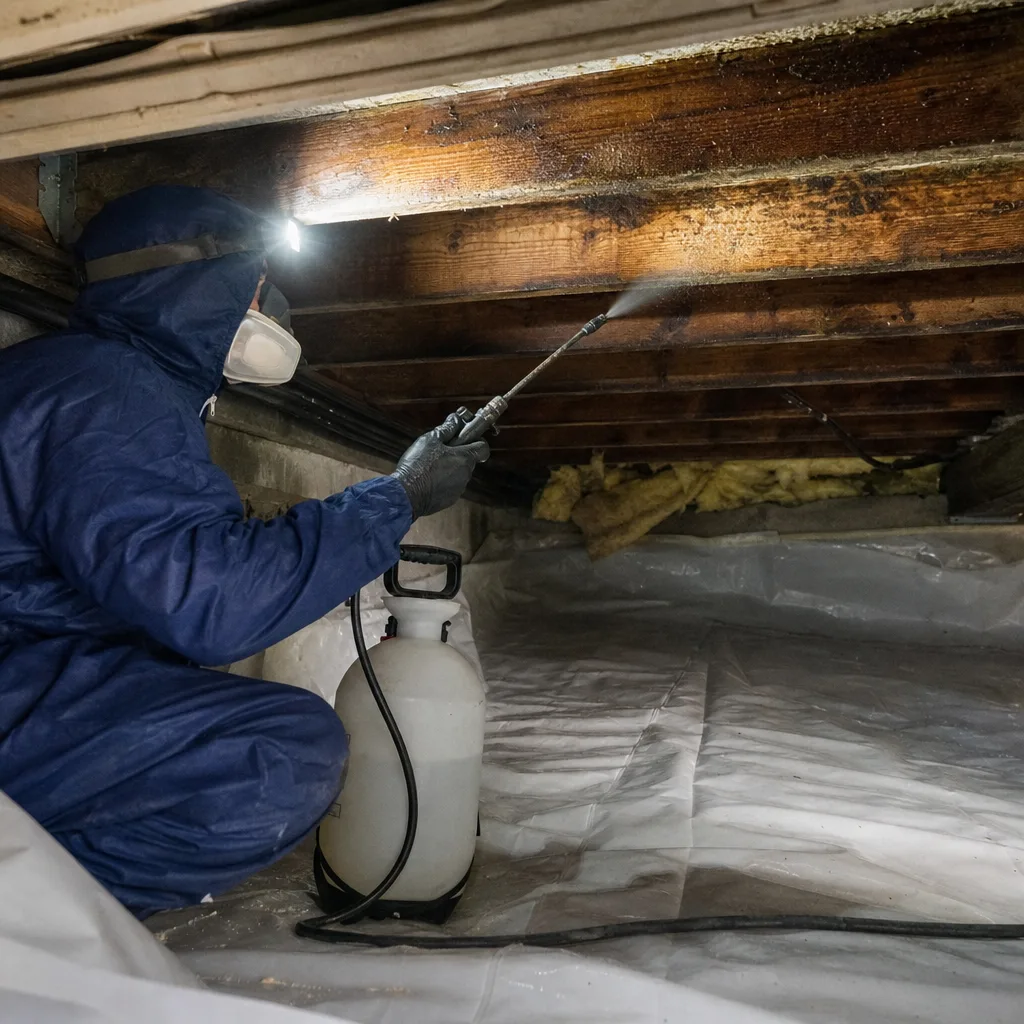
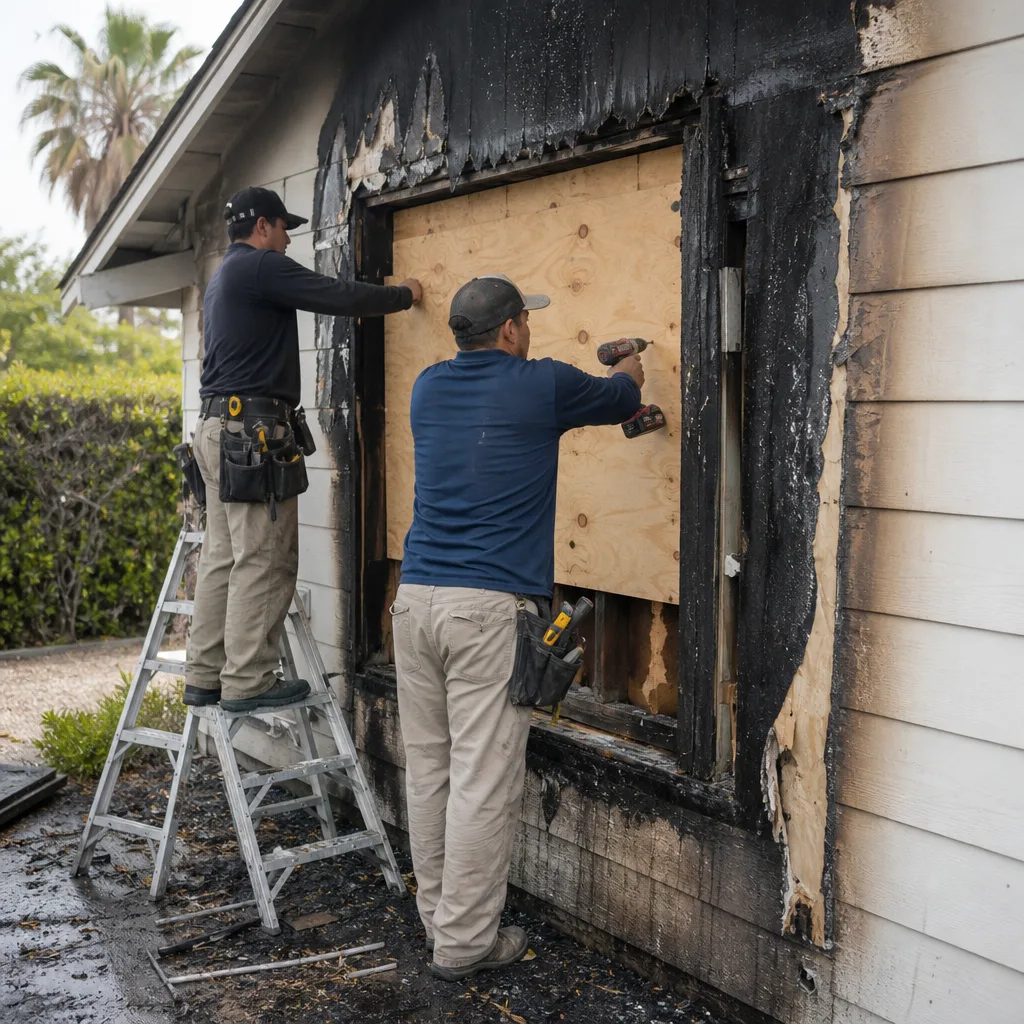
Wind-driven storms in San Dimas can take out windows, garage doors, and roof sections in minutes, especially on the northern edges of town where the Santa Anas funnel down the canyons with amplified intensity. If your home is open to weather after a storm, call us immediately. We’ll secure all openings with plywood and heavy fasteners, tarp any roof penetrations, and document everything photographically for your adjuster. The goal is simple: stop further damage before the next rain hits. In San Dimas, there’s always a next rain.
Roof Tarping
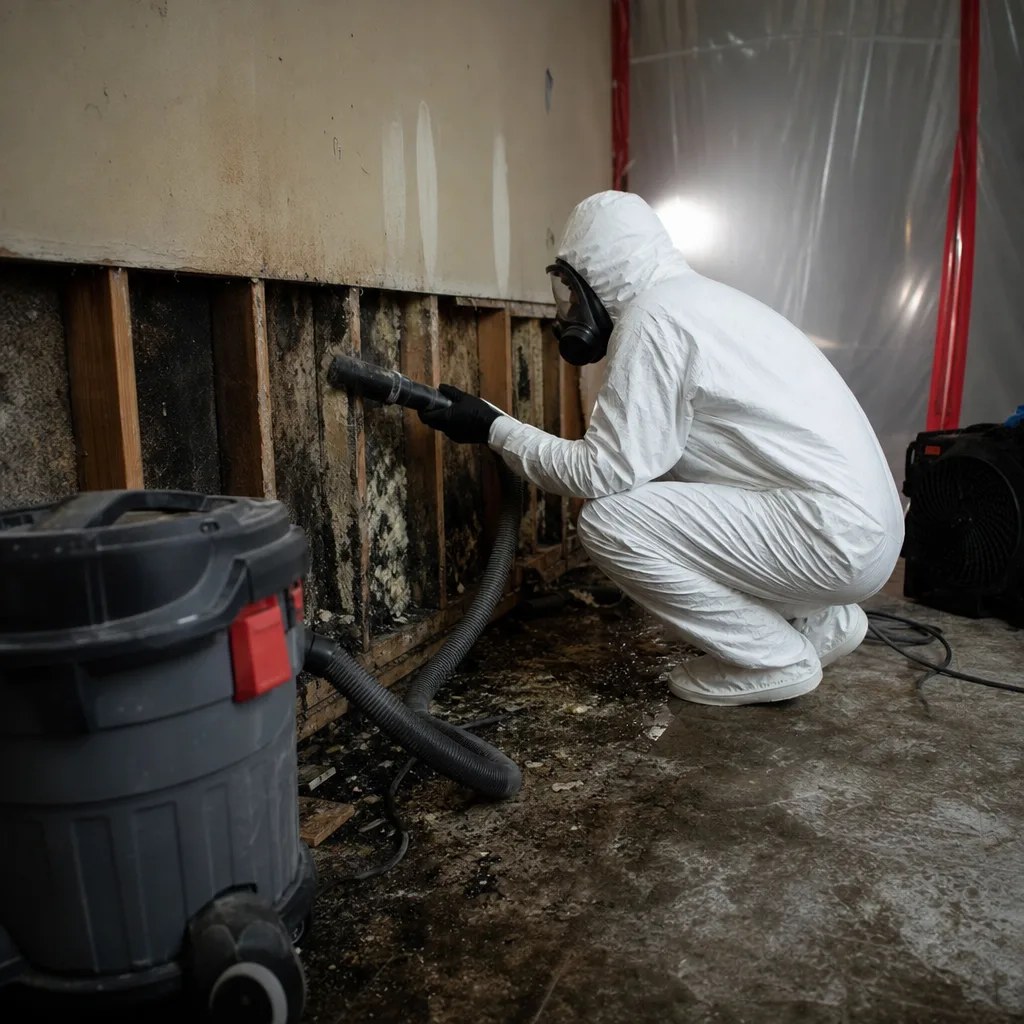
Lifted shingles, punctured roof decking, wind-thrown branches through the eaves. We see all of it on older San Dimas homes, particularly the 1950s and 1960s ranch styles with original roof structures that were never engineered for amplified canyon winds. We tarp the damaged areas tight against wind and rain, secure the tarp with battens, and get you scheduled for a full damage assessment. A good tarp job buys you weeks of protection while you work through insurance and repair bids.
Debris Removal
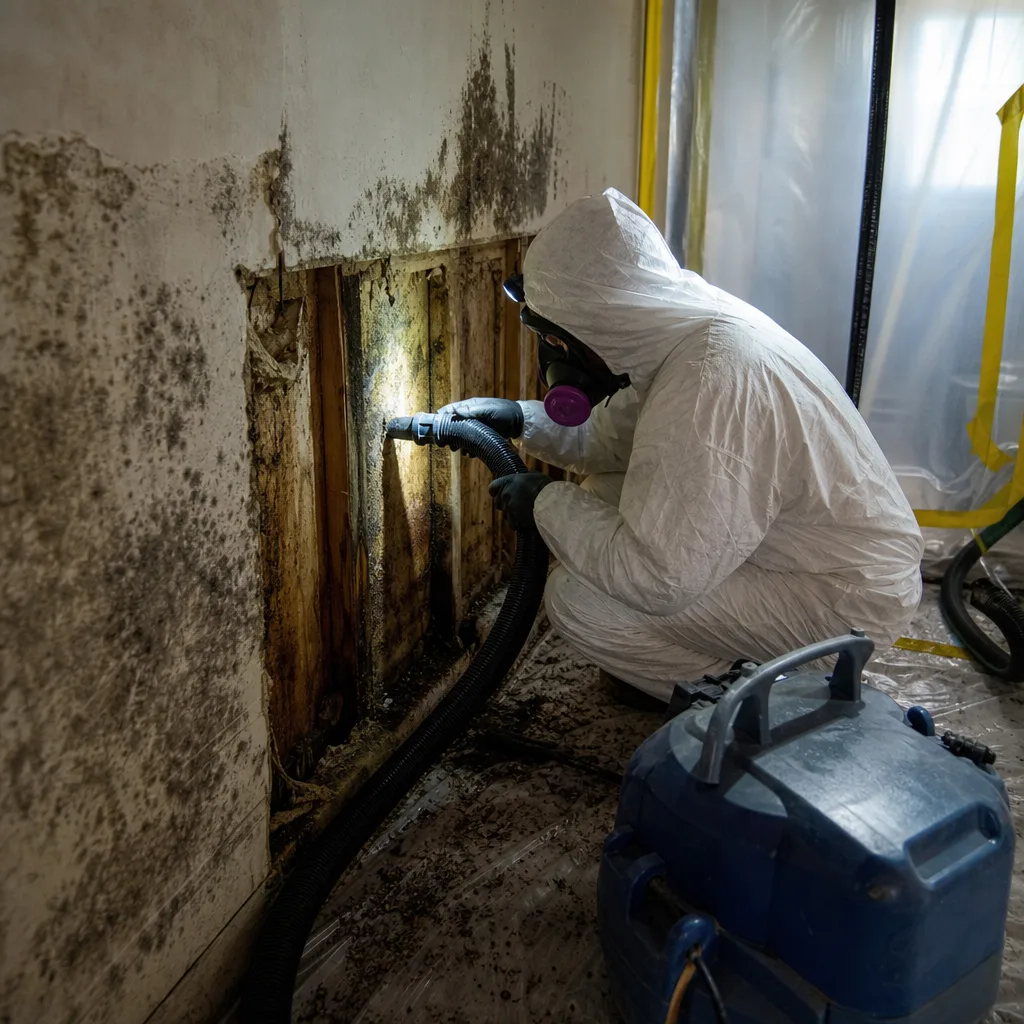
Mud, sediment, and storm debris removal is one of the most overlooked parts of disaster restoration in San Dimas. After a burn on the Angeles National Forest slopes, the first substantial rain pushes ash and debris through fence lines, under garage doors, and into crawl spaces. That material isn’t just unsightly. It holds moisture against your foundation and sill plates for weeks after the storm passes. We haul it out, sanitize what needs sanitizing, and dry what needs drying. See our full debris removal scope for San Dimas below.
Wind Damage Repair
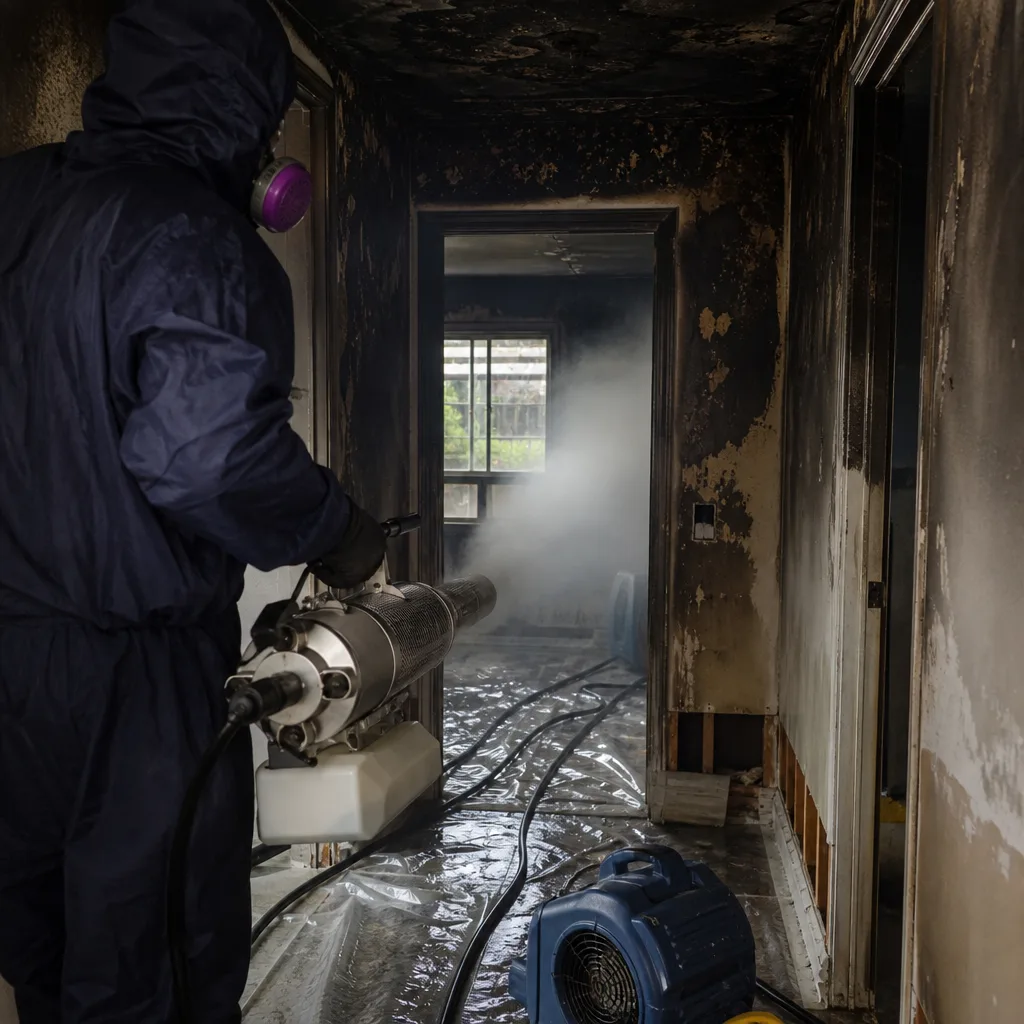
Wind damage in San Dimas concentrates on specific streets and specific home features: north-facing garage doors, older single-pane windows, fascia and soffit boards that have dried out over 60 or 70 years. We handle the restoration side of the equation: structural drying of water that got in behind wind-damaged siding, mold prevention in wall cavities, and rebuilding of damaged sections once the structure is dry and stable. We work with your adjuster so the scope includes everything the storm actually did, not just the visible damage.
What happens when you call
- 1
A real person answersNo phone trees - you reach a local pro.
- 2
You get an upfront price rangeHonest numbers before anyone is dispatched.
- 3
A background-checked tech heads outLicensed & insured, dispatched right away.
- 4
You approve before work beginsNothing starts until you say go.
Trusted Brands We Service in San Dimas
Our crews run professional-grade equipment from Dri-Eaz, Phoenix, and Injectidry on every San Dimas storm job. That matters more here than in most cities. Sediment-laden flood water from the wash destroys standard extraction wands and pumps much faster than clean water. The equipment has to be built for abrasive loads, and that’s exactly what these systems are. We keep our equipment serviced and stocked for rapid deployment, and we’re a licensed and insured contractor with IICRC, RIA, and IFA credentials behind the work. When you let a crew into your home, you want people who know what they’re doing and use tools that don’t quit halfway through the job.
Common Storm & Disaster Restoration Problems We See in San Dimas Homes
- Mud hidden behind stucco. After the first rain post-fire, a crawl space can look fine from the outside while mud is packed against the foundation wall and saturation is hiding behind the stucco. By the time you see the signs, the sill plates are already wicking water. We open up the crawl space, pull out the sediment, and run moisture meters on the framing before we call it dry.
- Garage intrusion while the house stays dry. Debris flows follow the natural slope of the land, so in San Dimas the garage and driveway apron often take the worst of the storm while the living space looks untouched. If you ignore the garage door and apron that took the mud, you’re leaving saturated framing and mold conditions in place. We treat the garage as part of the house, because it is.
- Too-shallow flood cuts on sediment-loaded drywall. A standard 12-inch flood cut leaves wicking materials in place when the water was carrying sand and ash. That abrasive mix drives moisture higher into the drywall and insulation than clean water does. We cut to the actual wicking line we measure with meters, not to a generic protocol.
- Original plumbing in 1950s-1980s homes. San Dimas has a large stock of aging ranch homes with original galvanized or early copper supply lines. The San Gabriel Valley’s hard municipal water interacts poorly with those pipes. Storm repairs frequently uncover pre-existing pipe weakness that turns a small leak into a big restoration job. We flag it when we see it and include it in the scope so your insurance claim covers the full scope of the damage.
Pricing for Storm & Disaster Restoration in San Dimas, CA
Storm restoration pricing in San Dimas depends on what actually happened to your home, but here are the real ranges we see on our jobs in this city. A standard water extraction and structural drying job after a roof leak or window blowout runs $1,800 to $4,200. Emergency board-up and roof tarping runs $450 to $1,200 depending on the number of openings and the roof access. A full crawl space excavation after a debris-flow event, with sediment removal, sanitizing, and structural drying, runs $6,500 to $14,000. Debris removal from a yard and driveway runs $600 to $2,500 depending on volume and what kind of material came down from the slopes. Every estimate is free, and we give you a written scope before any work starts. No trip charge inside our own county. Call (855) 915-0646 and Wade will tell you straight what you’re looking at.
We Also Serve Cities Near San Dimas
Most of our storm calls in this part of the valley come from San Dimas itself, but we also run crews to Charter Oak, La Verne, Pomona, and Glendora when a storm rolls through. If you’re in one of those cities and dealing with water or mud where it shouldn’t be, the same applies: call (855) 915-0646 and Wade answers. We know the whole eastern San Gabriel Valley, and we treat every job like it’s in our own neighborhood. For more about how we serve the broader area, see our San Dimas coverage page.
Serving San Dimas, CA - Our Local Coverage Area
We’re based in the San Dimas area and know this community well. Use the map below to see our service coverage - if you’re nearby, we can almost certainly help.
FAQs - Storm & Disaster Restoration in San Dimas
As soon as the fire is out and access to your street is safe. You don’t wait for the first rain. The burn scars on the Angeles National Forest slopes above San Dimas create hydrophobic soil that sheds water instead of absorbing it, which means the first substantial rainstorm after a burn moves mud and debris down the canyon mouths and into the streets near the San Dimas Wash. A pre-rain inspection lets us document your baseline, clear drainage paths, and identify where debris is likely to enter your property. Then when the rain does come, we’re already on your radar. Call (855) 915-0646 and Wade will walk you through what to look for, no charge for the conversation.
Yes. Every San Dimas storm job we run assumes sediment and debris are present. We bring sediment extractors and filtration systems designed for abrasive, ash-laden water, not just clean water extractors. We pull out the mud, the silt, the ash, and whatever else came down from the slopes. Then we dry and sanitize what’s left. If a restoration company treats San Dimas mud intrusion like a clean water flood, they’re going to leave wicking material in place and you’re going to have mold inside of 60 days. We don’t do that.
Emergency board-up covers any opening the storm created: broken windows, damaged doors, garage doors that won’t close, roof penetrations, and any section of wall that’s open to weather. We secure the opening with plywood and heavy fasteners, tarp roof damage tight against wind and rain, and document everything with photos for your adjuster. In San Dimas, where the next rain can come within days, board-up is the difference between a contained claim and a compounding one. We can usually be on site within the hour for emergency board-up in most of the city.
Because standard protocols assume clean water and a clean wicking line. Mud and ash from the San Dimas Wash carry sediment that packs against foundation walls, hides saturation behind stucco, and wicks moisture higher into drywall and insulation than clean water ever would. A standard 12-inch flood cut leaves that wicking material in place. A standard extractor clogs on sand and ash. The abrasive load destroys standard wands and pumps. Mud intrusion in San Dimas requires sediment-rated equipment, deeper cuts to the actual moisture line, and a structural drying plan that accounts for the slower release of water from soil and sediment. We run that plan on every foothill job.
The foothill streets nearest the canyon mouths and the San Dimas Wash corridor. That’s the only place in the eastern San Gabriel Valley where the wash exits the mountains directly into residential streets, so after any significant burn on the slopes above town, the first substantial rainstorm doesn’t just cause flooding, it pushes mud and debris through fence lines, under garage doors, and into crawl spaces along those streets. Homes near the wash corridor and the northern edges of town, especially the older ranch and Craftsman-era homes near the Bonita Avenue corridor, should have a plan. If you’re on one of those streets, call (855) 915-0646 before the rain shows up. We’ll tell you what to watch for and what it’ll cost to fix if it happens.
Call Wade’s Restoration of California for Storm Restoration in San Dimas
If you’ve got water where it shouldn’t be, mud in your garage, or a hole in your roof after a San Dimas storm, don’t wait. The damage compounds every hour you put it off. Call (855) 915-0646 right now. Wade Ferris answers his own phone, 24 hours a day, seven days a week. He’ll tell you straight what you’re dealing with, what it’ll cost, and whether you actually need a full restoration or a targeted repair. Free estimate. Written scope before work starts. The 90-Day Done Right Promise in writing. And yes, he’s the same Wade you’ll run into at the hardware store on a Saturday. Around here, that’s the whole point.
Written by Wade Ferris, Owner at Wade’s Restoration of California, serving San Dimas and the eastern San Gabriel Valley since 2007.