
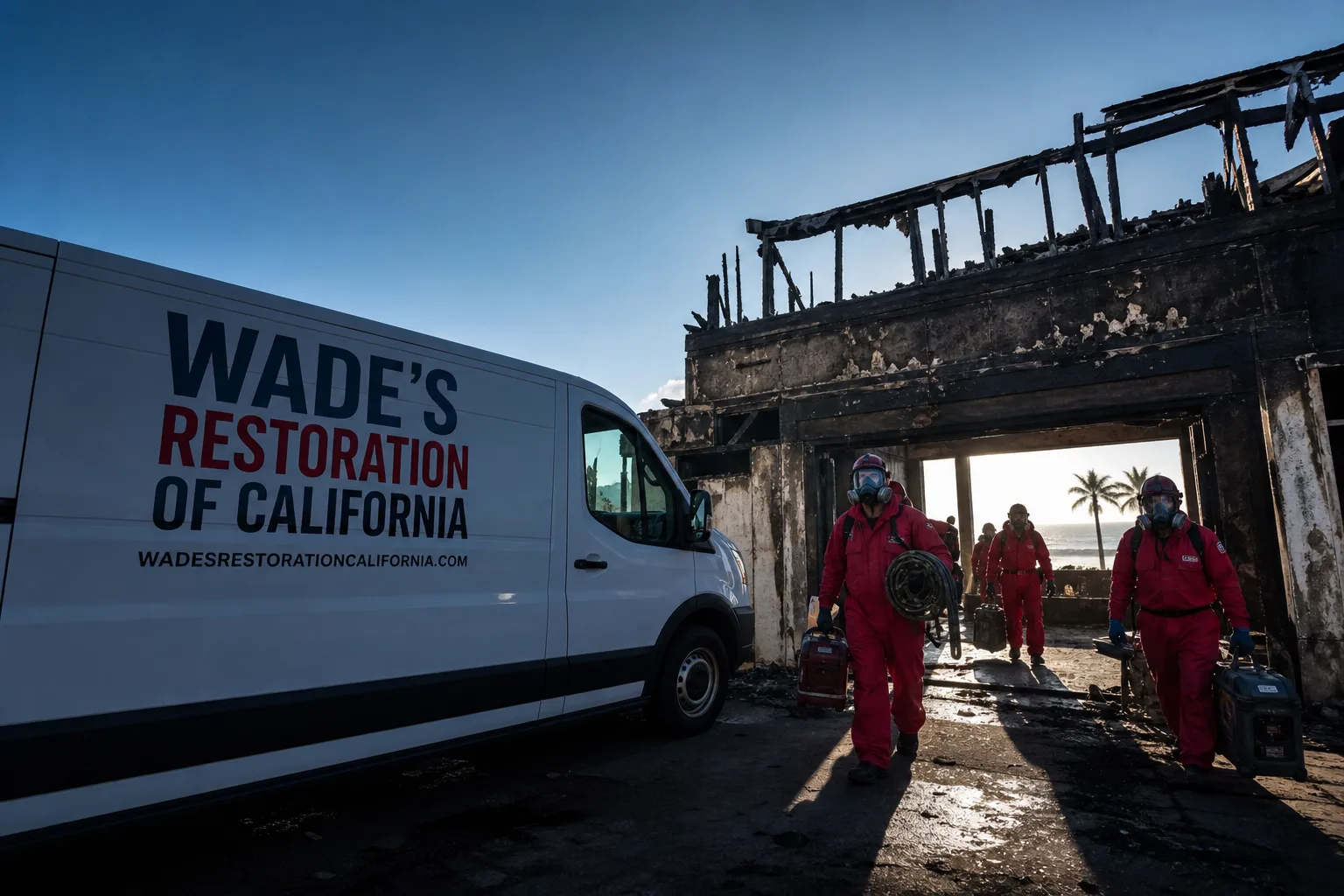
Fast, Reliable Storm & Disaster Restoration Across Pico Rivera
When a storm hits Pico Rivera, the damage usually isn’t from what you’d expect. It’s not the wind that wrecks homes here the way it does in Montebello or Santa Fe Springs. It’s the water. Pico Rivera sits pinched between the San Gabriel River on the east and the Rio Hondo channel on the west and south, which means a large share of residential parcels fall inside FEMA-mapped Special Flood Hazard Areas. When the rivers rise, the water has nowhere to go but into your crawl space, your slab foundation, and your walls. Wade’s Restoration of California has been answering calls from Pico Rivera homeowners for over 29 years, and Wade Ferris himself answers the phone at (855) 915-0646, 24 hours a day. He’ll have extraction running inside the hour.
Why Wade’s Restoration of California Is Pico Rivera’s Preferred Storm & Disaster Restoration Company
Wade Ferris founded this company in 2007 and put his own name on the truck. That’s not marketing. It’s the oldest accountability mechanism there is. When you call Wade’s Restoration of California for storm damage in Pico Rivera, you’re getting the owner, not a faceless call center. Wade’s crew knows the 90660, 90661, and 90662 ZIP codes by heart because they’re in them every week, pulling saturated insulation out of 1950s stucco homes and documenting moisture readings that other crews never bother to take.
What sets Wade apart isn’t equipment, though the Dri-Eaz and XPOWER gear sitting in his trucks matters. It’s the 90-Day Done Right Promise, stamped in writing on every water, fire, and mold restoration job. If it’s not done right, Wade makes it right. He also deals with your insurance adjuster directly, so you’re never the one stuck relaying information between two sides. And every single day a drying job runs, Wade’s team takes moisture readings and logs them. At the end of the job, that log is yours. Almost nobody in this trade does that.
Ask anyone on your street in Pico Rivera. Wade’s the guy who shows up at 2 a.m. when the Rio Hondo floods. He’s the guy who runs into you at the hardware store on a Saturday. That matters more than any star rating from a stranger.
Our Storm & Disaster Restoration Services in Pico Rivera
Storm restoration in Pico Rivera has a different shape than it does in the hills or the drier cities to the north. Wade’s crew focuses on what actually happens here, not what a national playbook says should happen. That means board-up, flood extraction, and structural drying tied to the San Gabriel River and Rio Hondo floodplain geography, plus the wind-load reinforcement work that keeps a Santa Ana gust from turning into a full flood loss. This is the core of our Storm & Disaster Restoration service across the region, and it’s applied with local specificity here in Pico Rivera.
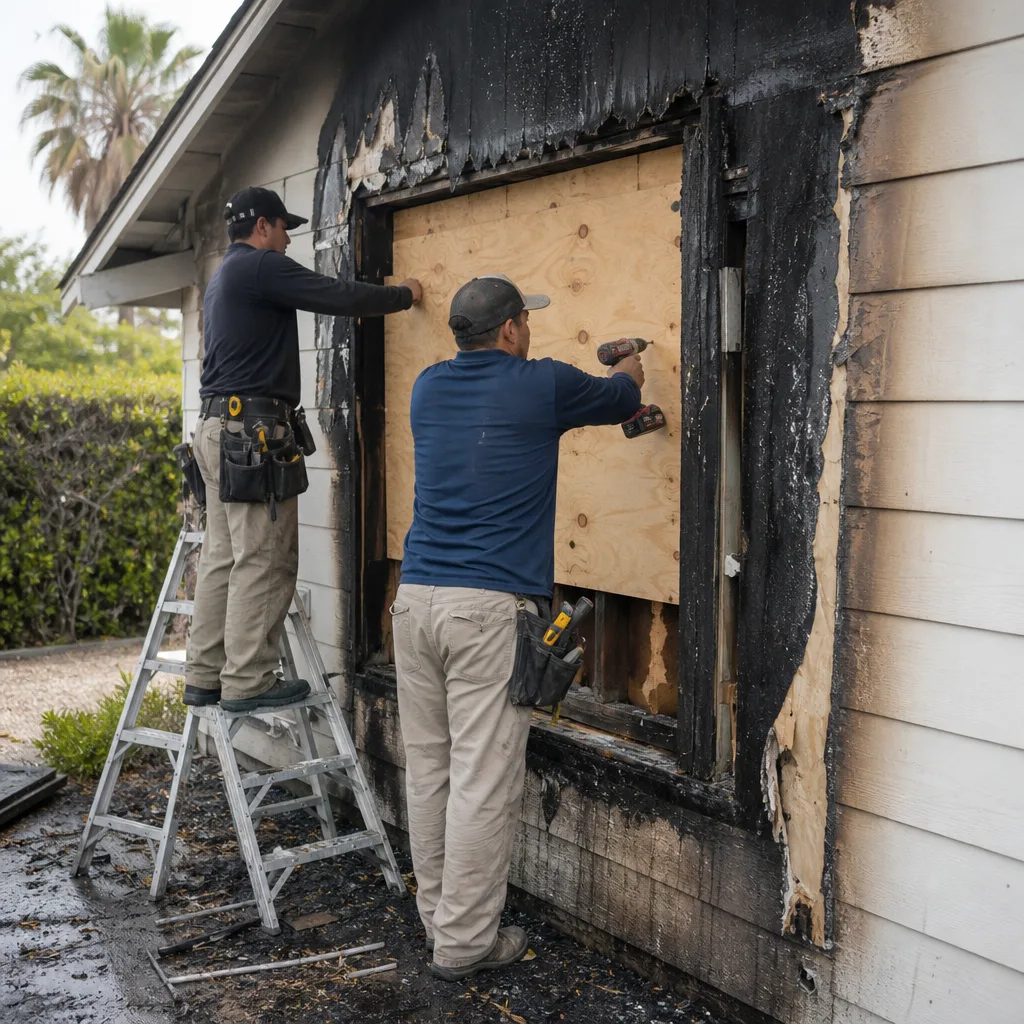
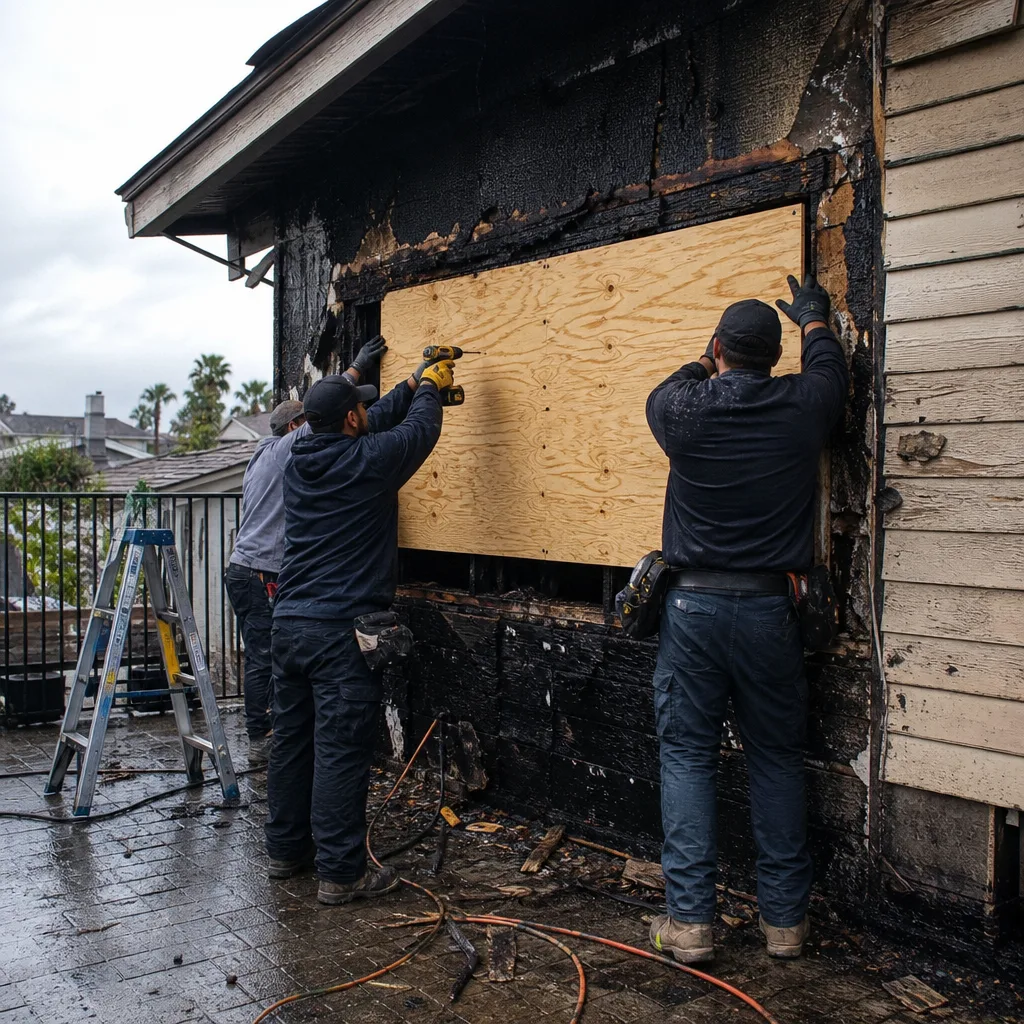
Emergency Board-Up
A blown-in door or shattered window in Pico Rivera isn’t just a security issue. It’s an open invitation for the next atmospheric river to push water straight into your living room. Wade’s crew responds fast to board-up calls in the 90660 and 90662 ZIP codes, reinforcing openings with impact-rated framing and plywood that actually holds against wind pressure. Many Pico Rivera homes still have original hollow-core doors from the post-war build-out, and those things flex like cardboard when a storm front pushes through.
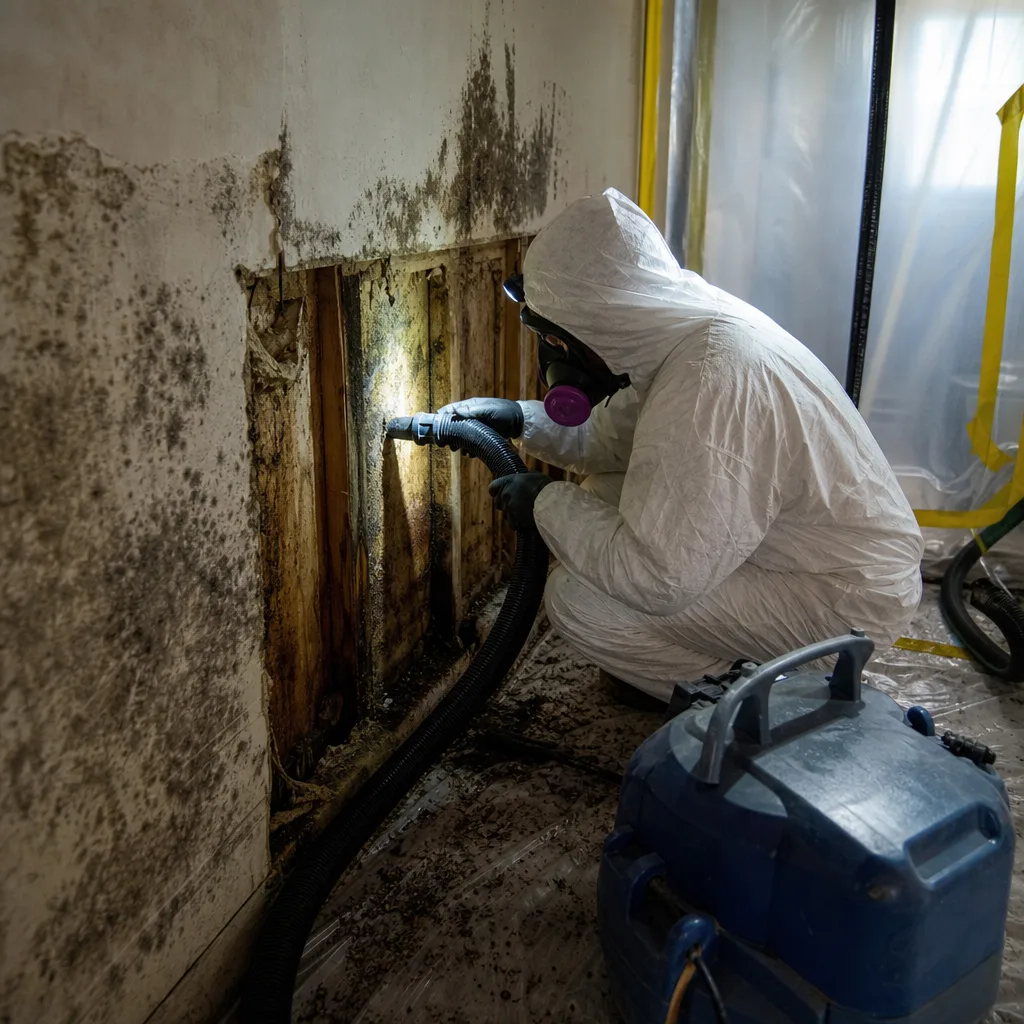
Flood Damage Restoration
When the Rio Hondo overflows, the water doesn’t just sit on the surface. It soaks into the clay-heavy basin soil that dominates Pico Rivera, and that soil holds water for weeks. Wade’s team sets up Dri-Eaz dehumidifiers and Injectidry drying mats designed for saturated slab and crawl space applications. They don’t pull equipment when the floor looks dry. They pull it when the moisture readings say it’s dry. That’s the difference between a proper restoration and a mold problem six months later.
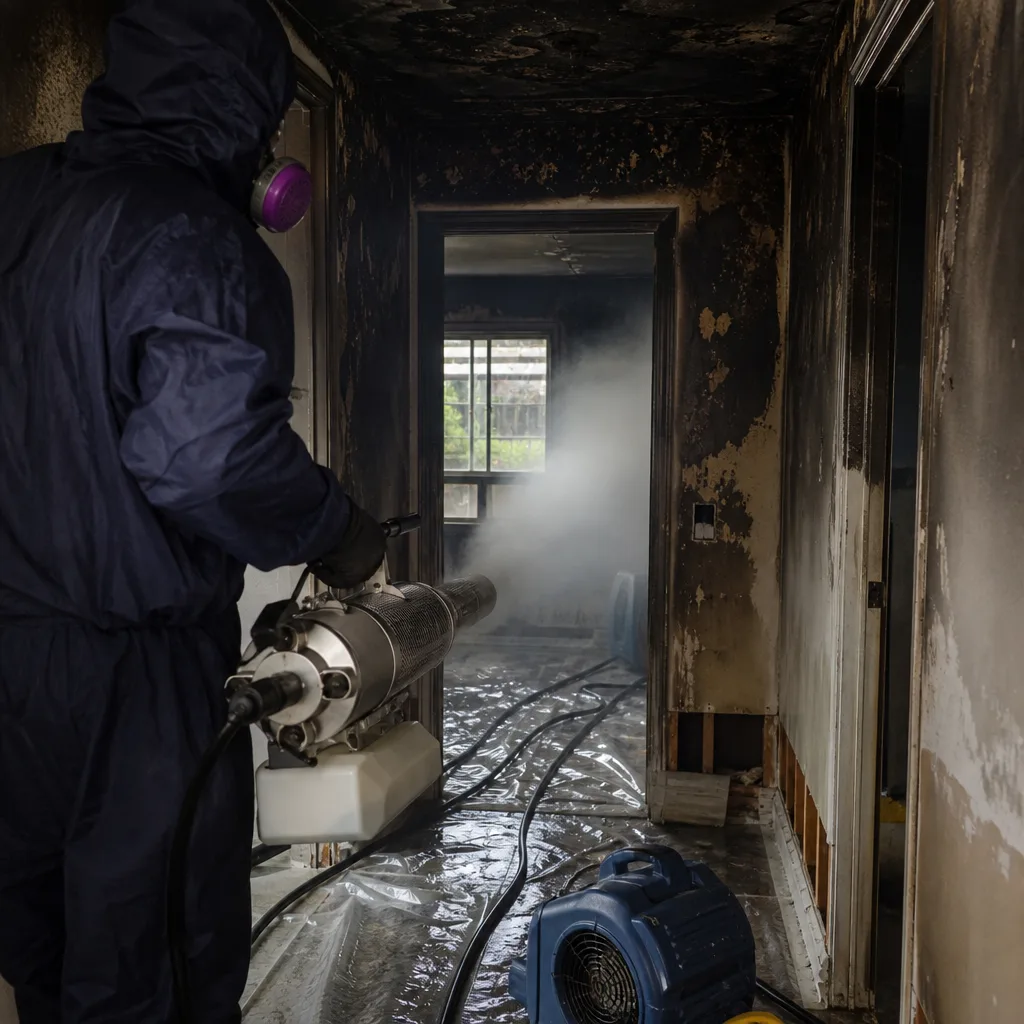
Storm Damage Cleanup
Debris, mud, and river silt are the calling cards of a Pico Rivera storm. Wade’s crew handles the full cleanup: removing saturated drywall, hauling storm debris, pressure-washing mud lines, and sanitizing everything that touched river water. The San Gabriel and Rio Hondo channels carry agricultural runoff and urban stormwater, which means the water in your home after a flood isn’t clean. Wade treats it accordingly.
Roof Tarping
Wind-driven rain finds every weak point in a Pico Rivera roof, especially on those 1950s and 60s tract homes with original composition shingles. Wade’s crew tarped roofs all along Rosemead Boulevard after the last major storm cycle, securing exposed decking before the next rain band arrived. A proper tarp job keeps the interior from becoming a second disaster.
What happens when you call
- 1
A real person answersNo phone trees - you reach a local pro.
- 2
You get an upfront price rangeHonest numbers before anyone is dispatched.
- 3
A background-checked tech heads outLicensed & insured, dispatched right away.
- 4
You approve before work beginsNothing starts until you say go.
Trusted Brands We Service in Pico Rivera
Wade’s Restoration runs professional-grade equipment from Dri-Eaz, Phoenix, Injectidry, XPOWER, and B-Air. All of it is maintained and ready to roll from Wade’s Los Angeles office, with crews dispatched to Pico Rivera daily. Our techs carry IICRC certification and the company is RIA-affiliated, so the work is done to the industry’s highest standard. When your Pico Rivera crawl space is drying out, it gets the same gear and the same daily moisture logging as any job Wade handles, no shortcuts.
Common Storm & Disaster Restoration Problems We See in Pico Rivera Homes
- Pre-storm wind-load failures on original 1950s door frames. Many Pico Rivera homes still have untreated single-pane jalousie windows and hollow-core doors that blow in during Santa Ana gusts, turning a wind event into a full flood loss. Wade’s team checks these openings before storm season and reinforces the ones that need it.
- Crews pulling equipment too early after surface water recedes. The clay-heavy basin soil near the Rio Hondo keeps subfloor assemblies saturated for weeks after a flood. Companies from drier neighboring cities often leave before the crawl space reaches a safe moisture reading. Wade doesn’t pull until the numbers say it’s safe.
- Skipping asbestos and lead-paint sampling before storm-damage demolition. Pre-1978 Pico Rivera tract homes frequently test positive for both, and that triggers mandatory Cal/OSHA and AQMD containment protocols. Unlicensed crews miss this all the time. Wade’s team samples first, every time.
- Mold colonization in raised-foundation crawl spaces even without surface flooding. The Rio Hondo floodplain water table rises high enough through winter to wet the soil directly beneath floor joists, and we find active mold in Pico Rivera crawl spaces during spring inspections almost as a rule. This is a Pico Rivera-specific problem that needs a local eye to catch.
Pricing for Storm & Disaster Restoration in Pico Rivera, CA
Storm restoration pricing in Pico Rivera depends on what actually happened to your home, but here’s what you can expect. Emergency board-up on a single opening runs $150-$350, and it’s the cheapest insurance you’ll ever buy against a follow-up rain event. Roof tarping typically lands between $400 and $900 for a standard Pico Rivera tract home, depending on pitch and access. Flood extraction and dry-out for a single room starts around $1,200 and can reach $4,500 for a full crawl space and subfloor drying job. Debris removal runs $300-$800 per truckload. We offer free estimates, and there’s no trip charge inside our own county. If you’re a senior or veteran, take 10% off any job, always.
We Also Serve Cities Near Pico Rivera
Wade’s Restoration of California serves the whole San Gabriel Valley and the neighboring communities. When you call for Pico Rivera storm restoration, you’re also welcome to ask about work in West Whittier-Los Nietos, Montebello, Santa Fe Springs, or Bell Gardens. Wade’s crew is in these cities every week, and the same 90-Day Done Right Promise applies everywhere.
Key Takeaways for Pico Rivera Storm Restoration
- Flooding, not wind, is the dominant storm threat in Pico Rivera thanks to the San Gabriel River and Rio Hondo channel pinching the city on both sides.
- Pre-storm door and window reinforcement is critical on original post-war tract homes with hollow-core doors and jalousie windows.
- Crawl space drying takes longer here because clay-heavy basin soil holds water for weeks. Daily moisture readings are non-negotiable.
- Asbestos and lead-paint testing is mandatory on pre-1978 Pico Rivera homes before any demolition begins.
- Wade Ferris answers his own phone at (855) 915-0646, and he’ll have a crew in Pico Rivera inside the hour.
Serving Pico Rivera, CA - Our Local Coverage Area
We’re based in the Pico Rivera area and know this community well. Use the map below to see our service coverage - if you’re nearby, we can almost certainly help.
FAQs - Storm & Disaster Restoration in Pico Rivera
Pico Rivera sits at the low point of the San Gabriel Valley where both the San Gabriel River and the Rio Hondo channel converge, concentrating runoff from a massive upstream watershed during atmospheric river events. Montebello sits higher and drains faster. The clay-heavy basin soil under Pico Rivera holds that water against foundations and subfloor assemblies for weeks, which means longer drying timelines and a dramatically higher secondary mold risk than hillside or upland communities face. Call (855) 915-0646 if you’re looking at standing water right now.
The blocks just west of Rosemead Boulevard in the 90660 ZIP, directly adjacent to the Rio Hondo floodplain, see the highest board-up call volume in Pico Rivera after a storm. Homes there sit closest to the channel, and the oldest original hollow-core doors fail first under wind pressure. Wade’s crew knows these blocks by name and can reinforce openings before the next rain band moves through.
If your Pico Rivera home was built before 1978 and the storm damage requires demolition of walls, flooring, or ceilings, California OSHA and AQMD rules require asbestos and lead-paint sampling before any tear-out begins. The overwhelming majority of Pico Rivera’s tract housing was built between 1945 and 1968, so this applies to most homes in the 90660, 90661, and 90662 ZIP codes. Wade’s team handles sampling and containment as a standard part of the job, not an upsell.
Not reliably. The clay-heavy basin soil near the Rio Hondo maintains an elevated water table, and standard air movers recirculate humid air rather than extracting it. Wade’s crew pairs low-grain refrigerant dehumidifiers with targeted Injectidry drying mats placed directly against saturated subfloor and joists. That combination, run to a daily moisture-log endpoint, is what actually gets a Pico Rivera crawl space dry. If you want an honest assessment of an already-running dry-out, we’ll give you a free second opinion on any written estimate.
Wind-load reinforcement on original door frames and the replacement of hollow-core doors with impact-rated units. Most Pico Rivera homes went up between 1945 and 1968, and the original openings were never rated for the wind events the area gets now. A reinforced door frame and a properly sealed threshold keep the next Santa Ana gust from becoming a flood loss. Call (855) 915-0646 and Wade will tell you honestly whether your openings need work or not.
Call Wade’s Restoration of California Today
If you’re looking at storm damage in Pico Rivera right now, or if you want to harden your 1950s tract home before the next atmospheric river, call (855) 915-0646. You’ll get Wade or one of his people on the line, not a voicemail. The estimate is free, there’s no trip charge inside the county, and seniors and veterans get 10% off every job, permanently. Wade’s name is on the truck, his address is published, and he’s going to run into you at the hardware store on a Saturday. That’s how restoration should work.
Written by Wade Ferris, Owner at Wade’s Restoration of California, serving Pico Rivera since 2007.