
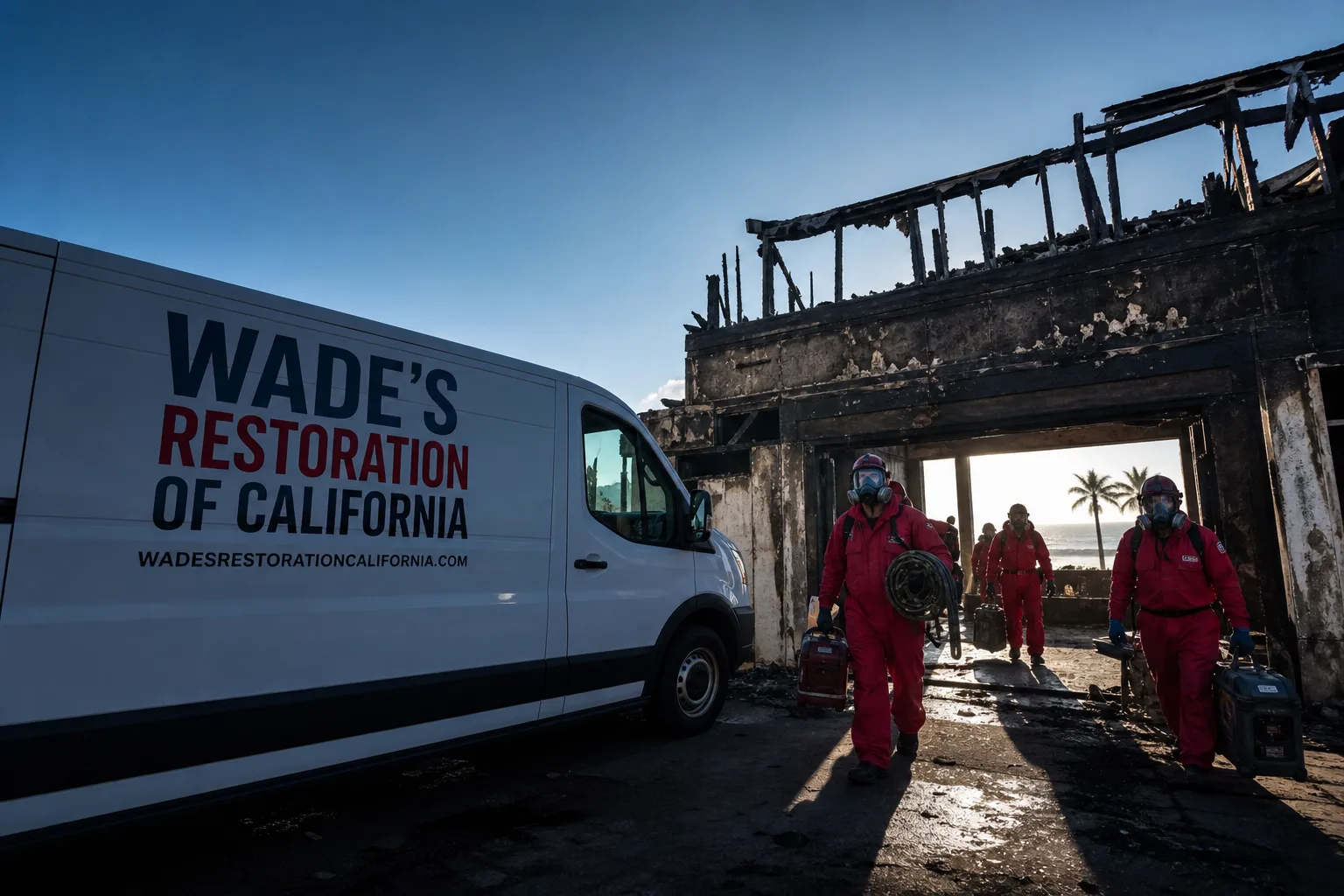
Fast, Reliable Storm & Disaster Restoration Across Montebello
Wind shear, flash flooding, and sudden debris strikes hit Montebello hard because of where the city sits: below the Montebello Hills, on expansive clay, with thousands of 1940s and 1950s homes that were never built for the storm cycles we get now. When a storm tears off shingles, pushes runoff through a foundation crack, or sends a eucalyptus limb through a bedroom window, the first call should be to someone who already knows what’s behind those stucco walls. Wade’s Restoration answers live, 24/7, and Wade himself can be on the road to your 90640 block within the hour. Call (855) 915-0646 now if water is already inside.
Most national outfits dispatch a crew that has never seen Montebello. We know the difference between a cosmetic stucco patch and an original seismic crack from the 1987 Whittier Narrows earthquake. That distinction is the difference between drying a floor and missing the mold colony that’s been growing behind it for thirty years. Our Storm & Disaster Restoration team works Montebello weekly, not quarterly. That local repetition matters when rain is coming and your roof is open.
Why Wade’s Restoration of California Is Montebello’s Preferred Storm & Disaster Restoration Company
Wade Ferris founded this company in 2007 and still answers his own phone at 2 a.m. He is not a call center. He publishes his name and license number, and his crew shows up in uniform, background-checked, with Dri-Eaz and XPOWER equipment that actually pulls water out of slab foundations and wall cavities. Ask anyone on your street whether they’ve had water intrusion from a patched foundation crack or a corroded galvanized supply line. Then ask if the company that fixed it gave them a written 90-Day Done Right Promise. That promise is on every water, fire, and mold job we do. If it’s not done right, Wade comes back and makes it right. In writing.
We deal with insurance adjusters directly. When a storm tears off a roof section and water is running into your living room, the last thing you should be doing is relaying messages between your carrier and a contractor. Wade handles that conversation, documents every moisture reading, and hands you the full log at job’s end. Almost nobody in this trade does that. We’ve been at this for over 29 years across Southern California, and the Montebello work has taught us things you only learn by pulling up floorboards in these neighborhoods again and again.
Response time to Montebello: under an hour for emergency board-up and roof tarping, assuming roads are passable. That’s not a guarantee written by a marketing team. That’s what Wade does because he’s based in Los Angeles and his crews work these streets constantly. When the next atmospheric river hits and you’ve got water coming through a long-patched seismic crack, an hour matters. Not tomorrow.
Our Storm & Disaster Restoration Services in Montebello
Flood Damage Restoration
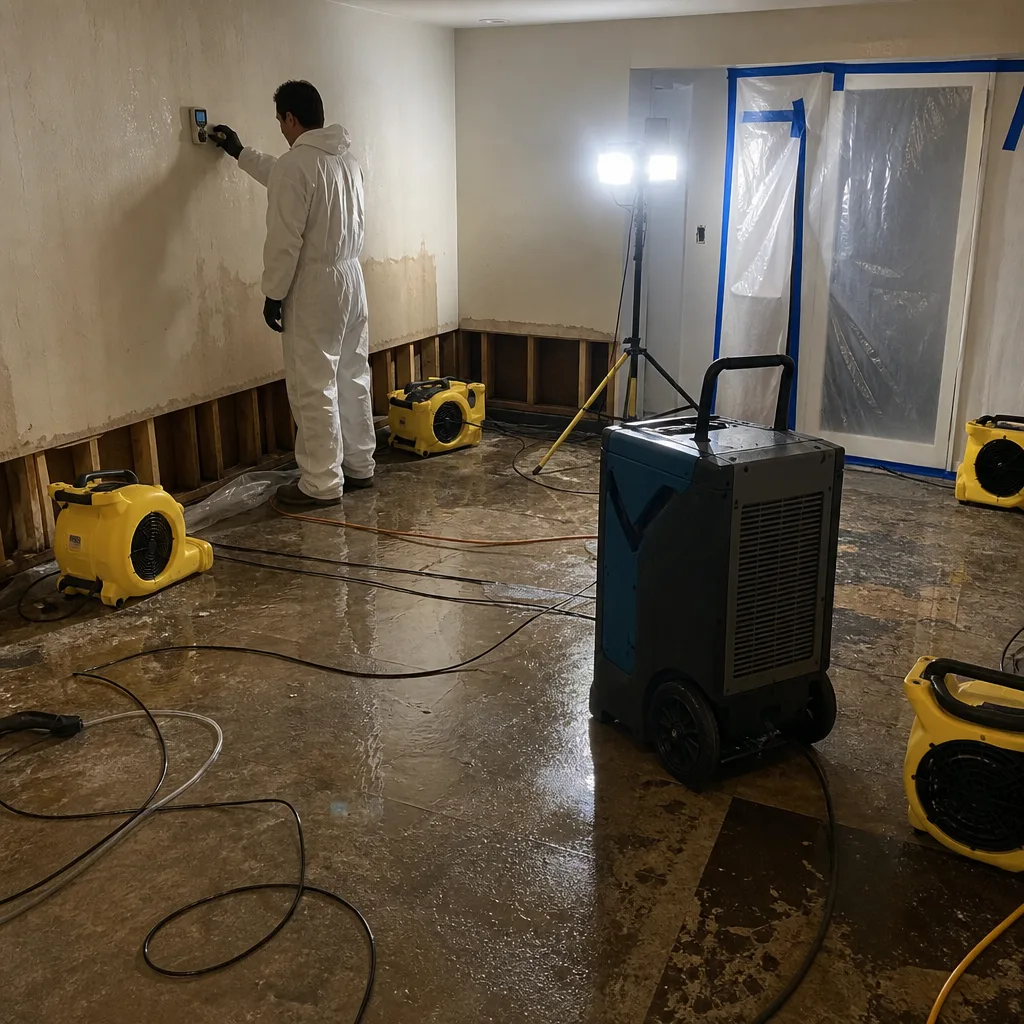
Montebello floods differently than Commerce or Bell Gardens. The hills funnel runoff down into flatland neighborhoods, and that water presses against downslope foundations with real force. When it finds a hairline crack in a 1950s slab, it follows gravity inside. We extract the standing water, map the moisture path through the slab and joists, and dry the cavity to IICRC standards. If the water came through a patched 1987 seismic crack, we identify that layered failure before we dry, not after mold sets in. A typical flood damage restoration in Montebello runs $2,800 to $7,500 depending on how far the water traveled and what was parked on top of it.
Emergency Board-Up
Montebello’s dense post-WWII tracts have tight side yards, alley-loaded rear doors, and lots of homes built close to the property line. Board-up crews that stall getting to a rear door leave your home exposed through the next rain event. Wade’s team works these alleys regularly. We carry pre-cut plywood, Hilti fasteners, and enough clearance awareness to secure windows and doors on bungalows and small ranch homes without chewing up your stucco or your neighbor’s wall. A standard emergency board-up in Montebello runs $400 to $900 for a single opening, with multiple openings priced per window or door. We don’t leave openings exposed overnight.
Roof Tarping
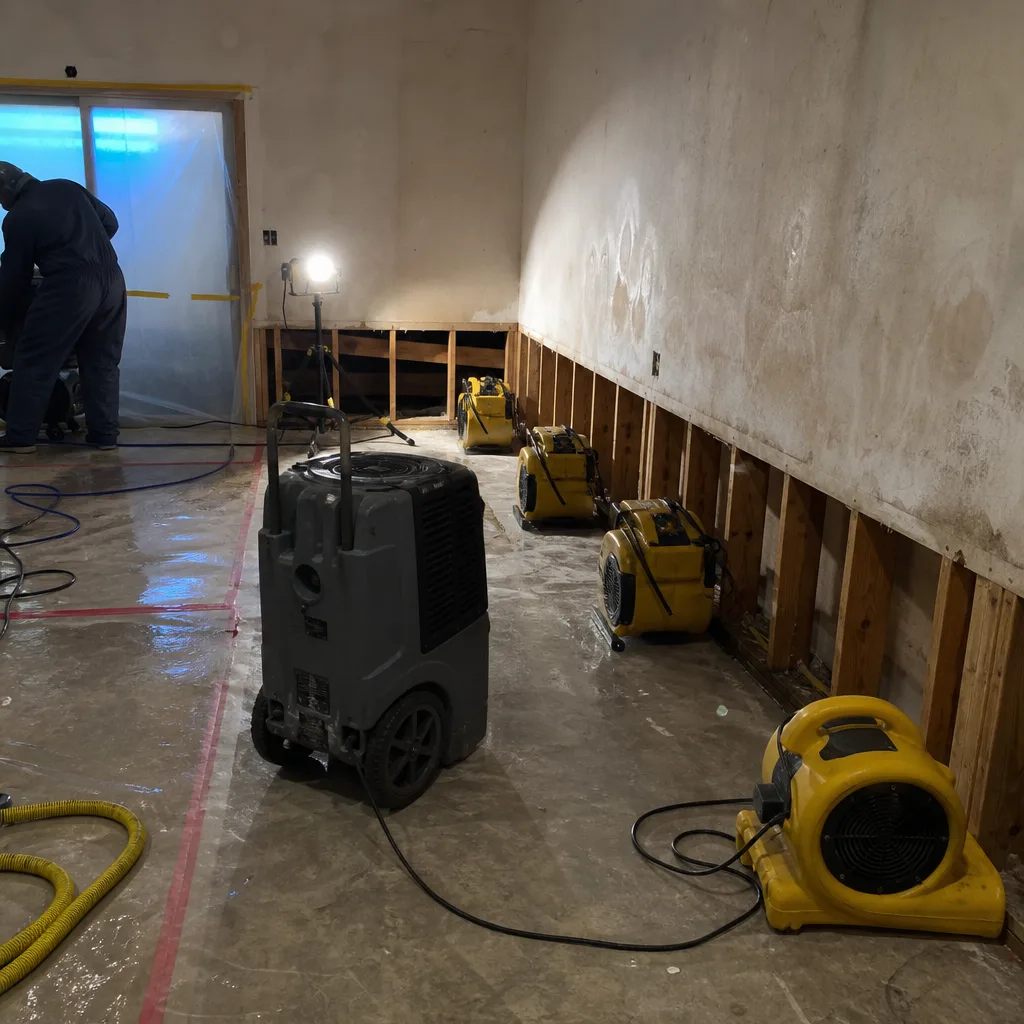
When wind strips shingles or a tree limb punctures a roof, the goal is the same: keep the next rain out before it soaks your ceiling, your insulation, and your subfloor. In Montebello’s tight bungalow blocks, roof access can be awkward. Ladders go up from narrow driveways or from the alley side. We anchor tarps with furring strips and cap nails so they don’t flap loose in the next wind gust. Roof tarping in Montebello typically runs $500 to $1,200 for a standard single-family home, depending on roof height and the size of the breach. We can usually be there the same day you call.
Storm Damage Cleanup
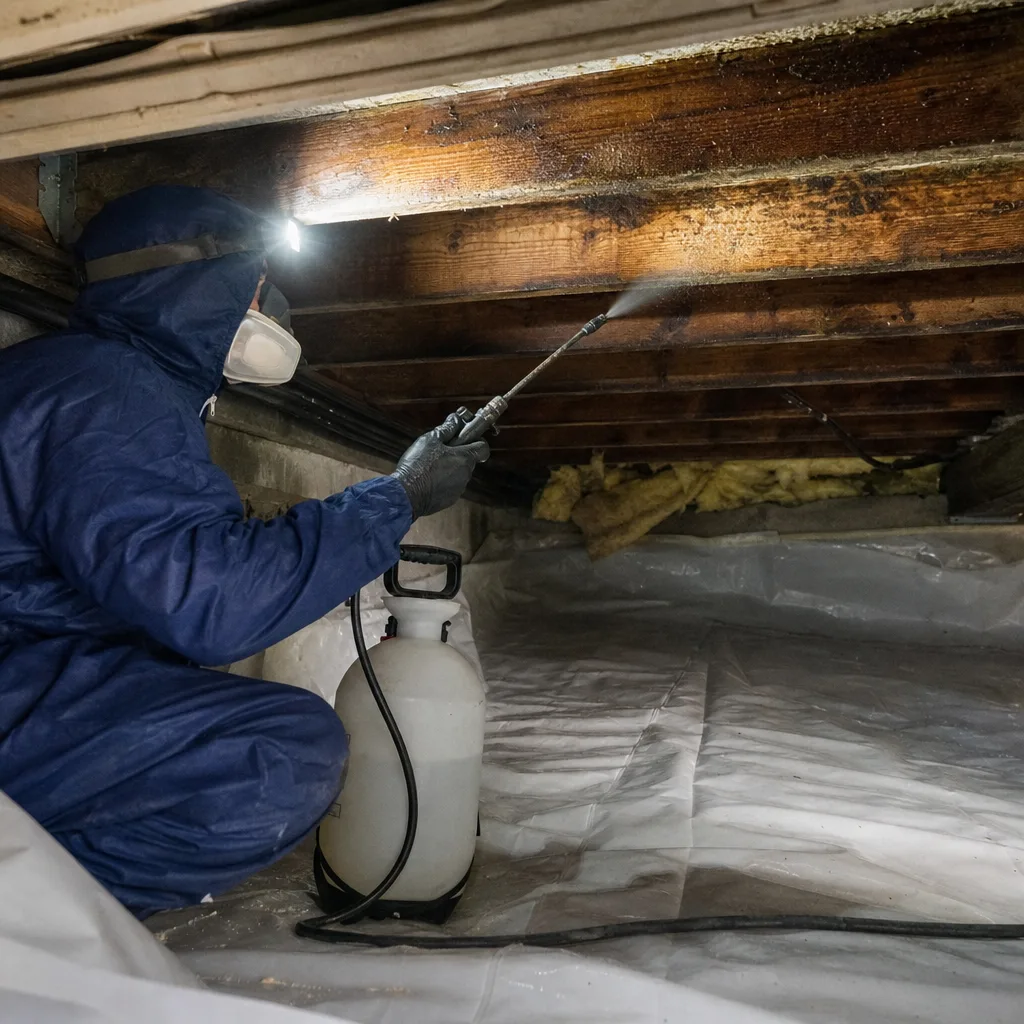
After the rain stops, the debris and silt stay. Storm damage cleanup means more than raking leaves. We remove downed limbs, shovel silt that pushed against your foundation, and check for water that made it into crawlspaces or under vinyl flooring. The flatland blocks near the Rio Hondo corridor especially need that subfloor check. In Montebello, storm damage cleanup labor runs $75 to $120 per hour per technician, with most single-family jobs falling between $1,200 and $3,800 depending on debris volume and the extent of water that needs extraction. We give you a written scope before work starts. No surprises at the door.
What happens when you call
- 1
A real person answersNo phone trees - you reach a local pro.
- 2
You get an upfront price rangeHonest numbers before anyone is dispatched.
- 3
A background-checked tech heads outLicensed & insured, dispatched right away.
- 4
You approve before work beginsNothing starts until you say go.
Equipment and Standards We Use in Montebello
We run Injectidry floor-mat drying systems when water has traveled under laminate or vinyl flooring laid in the 1990s. That’s not a sales pitch. That’s the correct tool for Montebello’s older flatland blocks, where subfloor joists under that flooring often never dried from earlier events. We pair Injectidry with XPOWER air movers and Dri-Eaz dehumidifiers, and our work is certified to IICRC standards, with RIA and IFA credentials behind it. Most national chains rent this equipment. We own it, and we stock replacement mats and filters so Montebello jobs don’t wait on a warehouse in Orange County. That’s what local means in a storm.
Common Storm & Disaster Restoration Problems We See in Montebello Homes
- Cosmetic stucco patches hiding seismic cracks. Montebello’s 1940s-1960s homes absorbed serious structural movement in the 1987 Whittier Narrows earthquake. Most cracks were skimmed over and painted. Storm runoff finds those cracks and channels behind the stucco skin, into wall cavities, and down into the slab. By the time you see water, it’s been traveling for a while.
- Undried subfloors under 1990s vinyl or laminate. In the older flatland blocks near the Rio Hondo corridor, we routinely find joists that never dried after a past plumbing or flood event. The visible damage looks recent. The mold under the flooring is advanced. We probe deeper on every water-loss job in those ZIP blocks, because skipping that step is how mold comes back.
- Flash-flood pressure on downslope foundations. Homes below the Montebello Hills take runoff with more force than flat neighboring cities. Water doesn’t just pool; it presses. That pressure finds entry through any existing slab crack, especially after the long dry season shrinks the expansive clay and opens hairline gaps that later rains exploit.
- Roof tarp and board-up delays from tight access. Montebello’s bungalow blocks and alley-loaded rear doors slow down crews that aren’t used to them. We know where to stage ladders, how to get a truck down the alley without clipping a fence, and how to secure an opening before the next squall line arrives. Speed matters because the next rain always comes faster than you think.
Pricing for Storm & Disaster Restoration in Montebello, CA
Here are honest ranges for Montebello’s market. Flood damage restoration typically runs $2,800 to $7,500. Emergency board-up for a single opening is $400 to $900. Roof tarping is $500 to $1,200 for a standard single-family home. Storm damage cleanup labor runs $75 to $120 per hour per technician, with most jobs falling between $1,200 and $3,800. What moves the number: how far water traveled, whether subfloor or wall cavities are involved, how many openings need securing, and whether the original 1987 seismic cracks are part of the failure. Estimates are free. We also give a free second opinion on any written estimate from another company. And if you’re a senior or veteran, you get 10% off, always. Call (855) 915-0646 for an exact quote before the rain gets worse.
We Also Serve Cities Near Montebello
Wade’s Restoration handles storm and disaster work throughout the surrounding area, including Pico Rivera, South San Gabriel, East Los Angeles, and Monterey Park. If you’re in one of those communities and water is already inside, call (855) 915-0646. Wade’s team covers Storm & Disaster Restoration in Montebello and the whole surrounding corridor, with the same live-answer phone and the same promise in writing.
Serving Montebello, CA - Our Local Coverage Area
We’re based in the Montebello area and know this community well. Use the map below to see our service coverage - if you’re nearby, we can almost certainly help.
FAQs - Storm & Disaster Restoration in Montebello
Because much of the vinyl and laminate flooring in those 90640 blocks was laid directly over subfloors that never fully dried after past plumbing or flood events. When we pull up that flooring after a storm, we frequently find entrenched mold colonies inside the joist cavities, far more advanced than the visible water stain would indicate. That’s why our crews probe subfloors on every water-loss job in Montebello, not just the obvious ones. If you suspect an undried subfloor under your flooring, call (855) 915-0646 and Wade will come take moisture readings himself.
The earthquake left original seismic cracks in thousands of stucco-over-wood-frame homes, and most of those cracks were patched cosmetically, not structurally. When winter storms push water against those walls or downslope foundations, runoff finds the old cracks and travels behind the stucco skin. Restoration crews that don’t know Montebello’s history miss that layered failure and only dry the visible surface water. We look for the original crack, document it, and seal it before we finish the job.
Yes. Roof access is often from a narrow driveway or an alley, not an open side yard. Ladders have to be staged carefully, and tarps have to be anchored so they don’t flap against a neighbor’s wall or fence in the next wind event. We use furring strips and cap nails, not just bungee cords, and our crews know the alley-loaded block pattern well enough to get a truck positioned without making a bad situation worse. Same-day tarping is usually possible, even during active rain, as long as it’s safe to get on the roof.
The Montebello Hills funnel storm runoff steeply down into the flatland neighborhoods, so water arrives with pressure, not just pooling. That pressure finds entry through existing slab cracks and pushes further into wall cavities than still water would. Flat neighboring cities without the same hillside gradient don’t get that same forced intrusion. Homes on the downslope side of Lincoln Avenue and streets closer to the hills take the brunt of it. Wade’s team maps the water path before drying, because drying the wrong area is a waste of your time and money.
Walk the perimeter and look for visible cracks in the slab or the lower stucco, especially on the side facing the hills. Try to remember whether those cracks were patched during the 1980s or early 1990s. If you see a hairline crack with old paint skimmed over it, water has likely been getting in for years. Also check your galvanized supply lines: homes built in the 1950s in Montebello usually have original galvanized steel, and it corrodes from the inside out in our moderately hard water. If you see any sign of moisture, call (855) 915-0646 before the rain, not after. Wade will come look, and the estimate is free.
Call Wade’s Restoration for Storm & Disaster Restoration in Montebello
Wade Ferris put his name on this company in 2007, and he answers his own phone. That’s the whole story. When the next storm hits Montebello and water is moving through a crack you didn’t know you had, call (855) 915-0646. We’ll have a live person on the line, not a voicemail tree. If it’s an emergency, Wade heads out. If it’s not an emergency, you still get a written scope, a free estimate, a documented moisture log, and the 90-Day Done Right Promise in writing. No trip charge inside the county. You won’t find that from a national chain.
Written by Wade Ferris, Owner at Wade’s Restoration of California, serving Montebello and the surrounding communities with storm and disaster restoration since 2007.