
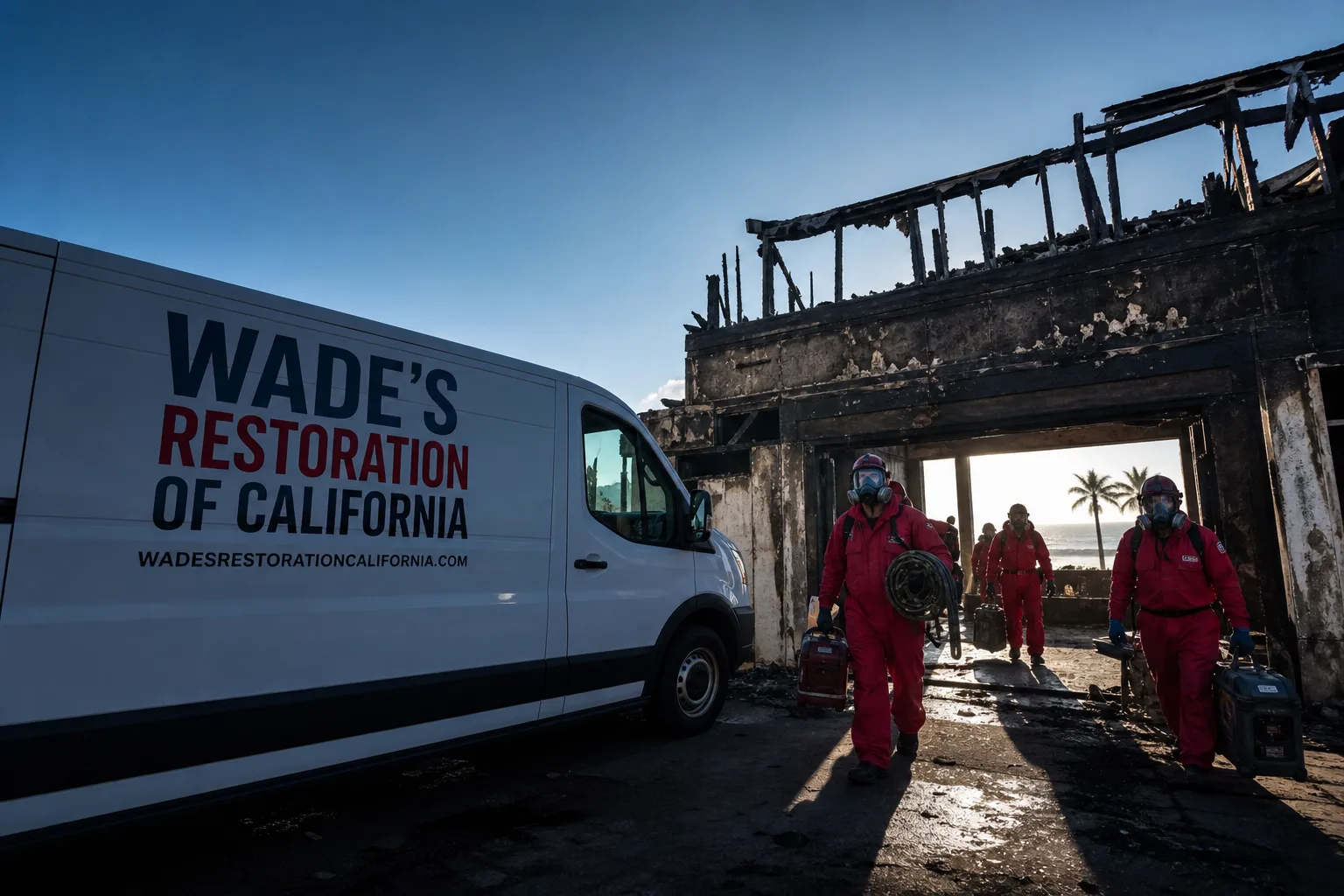
Fast, Reliable Storm & Disaster Restoration Across Lodi
Storm damage in Lodi rarely announces itself politely. It arrives as a January atmospheric river that overwhelms Bear Creek, a February wind gust that peels shingles off a 1950s ranch on the 95240 side, or a Tule fog week that keeps everything damp long after the rain stops. When water is moving through your crawl space or roof deck, the clock is not on your side. That’s why our Storm & Disaster Restoration team heads to Lodi the moment you call, and why Wade Ferris built this company around one promise he puts in writing: if it’s not done right, he makes it right. No dispatcher runaround. No national-chain phone tree. Just a live person at (855) 915-0646, 24 hours a day, who can tell you exactly when the crew will be at your door.
Why Lodi Homeowners Call Wade’s Restoration of California First
Lodi is not Stockton. It’s not Galt. It’s a city built low and flat along Bear Creek, where the 95240 historic core sits 15 to 20 feet above sea level on a floodplain that has been wet more times than most property records show. That changes what storm restoration actually requires. A crew that treats a West Locust Street bungalow like a standard slab home will miss the groundwater pushing up through stem walls and the two or three prior wetting cycles hidden under newer flooring. We know to look for those things because we’ve pulled back original redwood floors in Lodi and found stained joists from the 1997 creek event sitting right below vinyl plank installed in 2019.
Wade’s Restoration of California is locally owned and owner-operated. Wade’s name is on the truck, he answers his own phone, and he’ll be the one you run into at the Lodi farmers market or the hardware store on Cherokee Lane a month after the job is done. That kind of accountability matters in a town where a bad restoration job from an out-of-area franchise means you’re stuck chasing an 800 number in another state. Instead, every water, fire, and mold restoration job in Lodi carries the 90-Day Done Right Promise, stamped in writing. One call brings Wade back. No fine print, no claim department.
Response time matters in a city where a saturated clay soil can wick moisture into floor joists within 48 hours and the winter fog keeps humidity at ground level for weeks. Wade can have extraction running inside the hour for Lodi callers. The trucks carry professional-grade Dri-Eaz and Phoenix equipment sized for real jobs, not the under-powered residential units a lot of crews drag into detached Lodi workshops and then wonder why the place still smells musty in March.
Our Storm & Disaster Restoration Services in Lodi
Storm damage in Lodi falls into a few repeating patterns that we’ve learned to address quickly. Here’s what we actually do when we roll up to a flooded crawl space on the 95240 side or a wind-damaged roof on an east-side 95242 acreage property.
Flood Damage Restoration
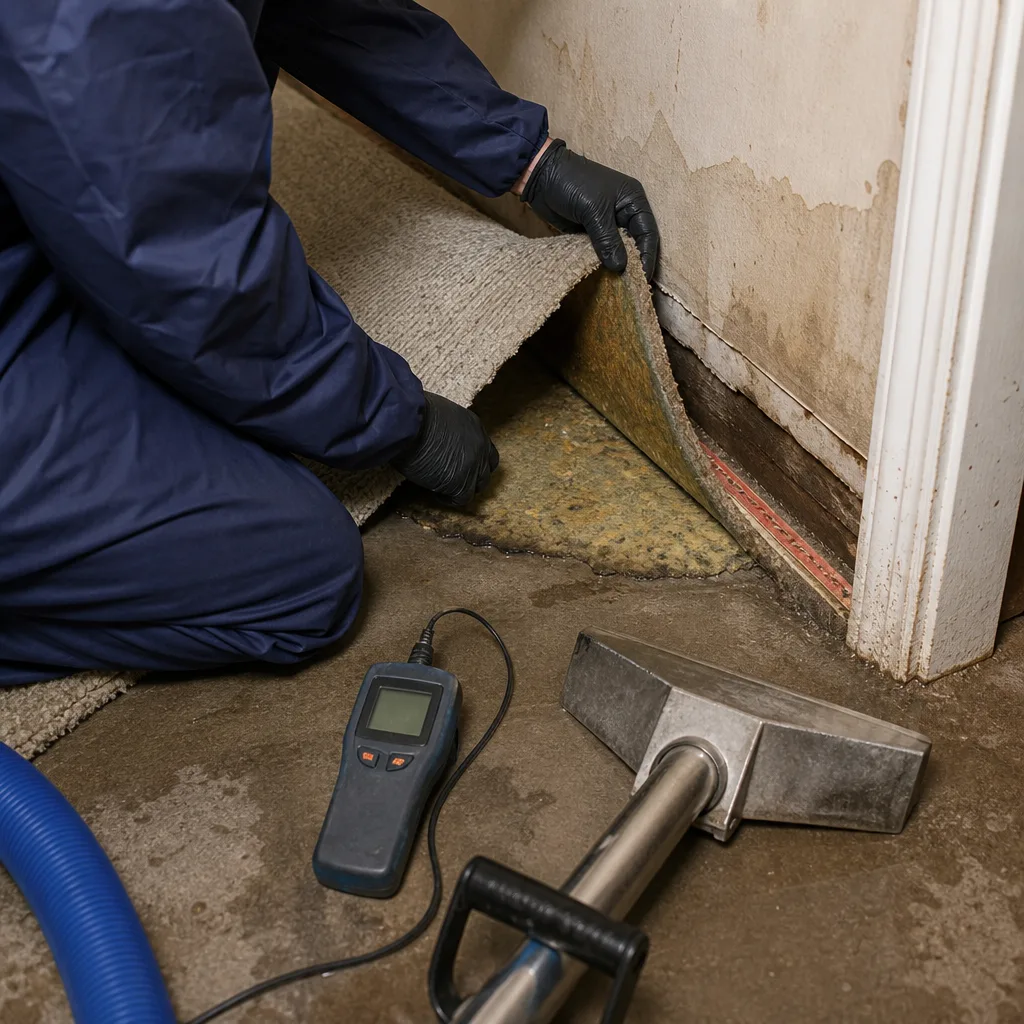
Flooding in Lodi is not a one-size problem. The 95240 core floods when Bear Creek overtops its banks or when storm drains at the property line back up after three days of steady rain. The 95242 side deals more with expansive clay soil that swells, cracks slabs, and lets groundwater push through stem walls. Both require commercial-grade extraction and a drying plan built around Lodi’s actual humidity patterns. The Tule fog from November through February means you cannot just set a dehu and walk away. We take moisture readings every single day and hand you the full log when we’re done. Almost nobody in this trade does that.
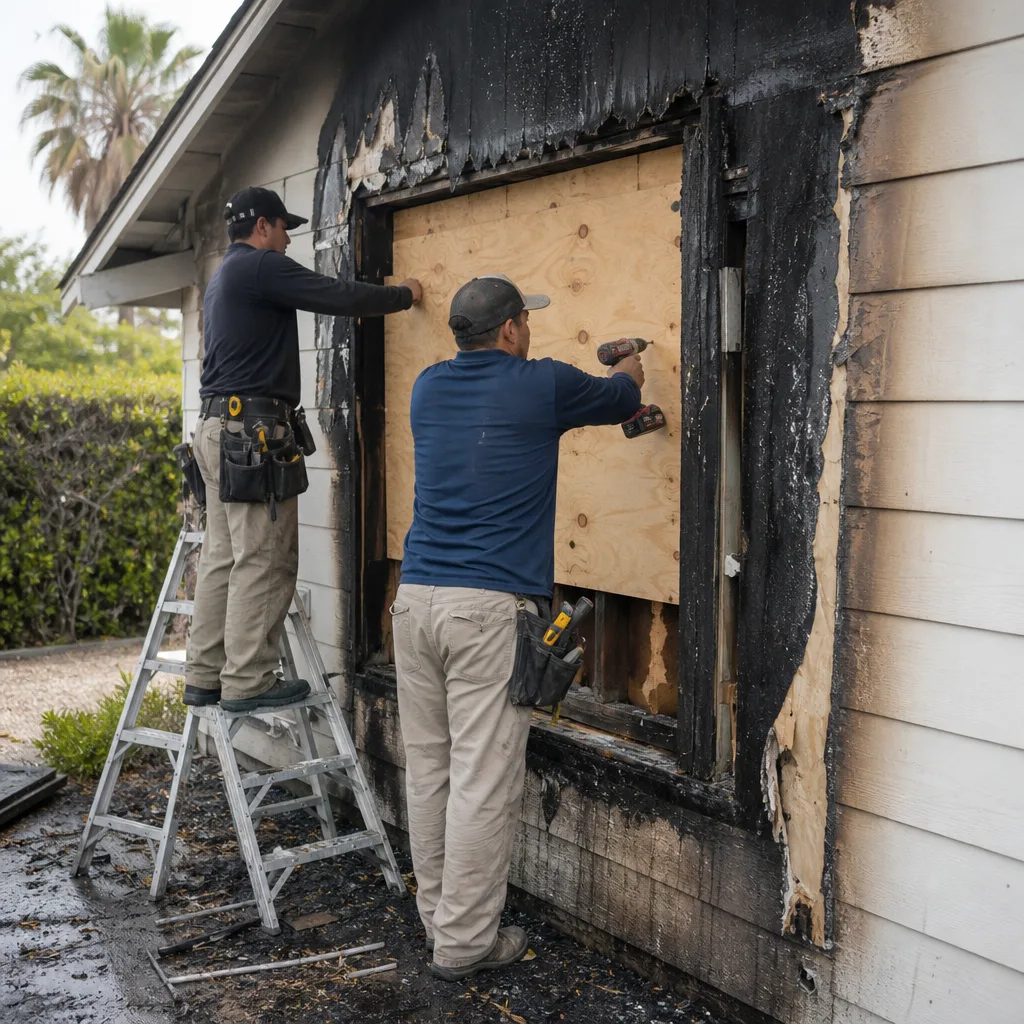
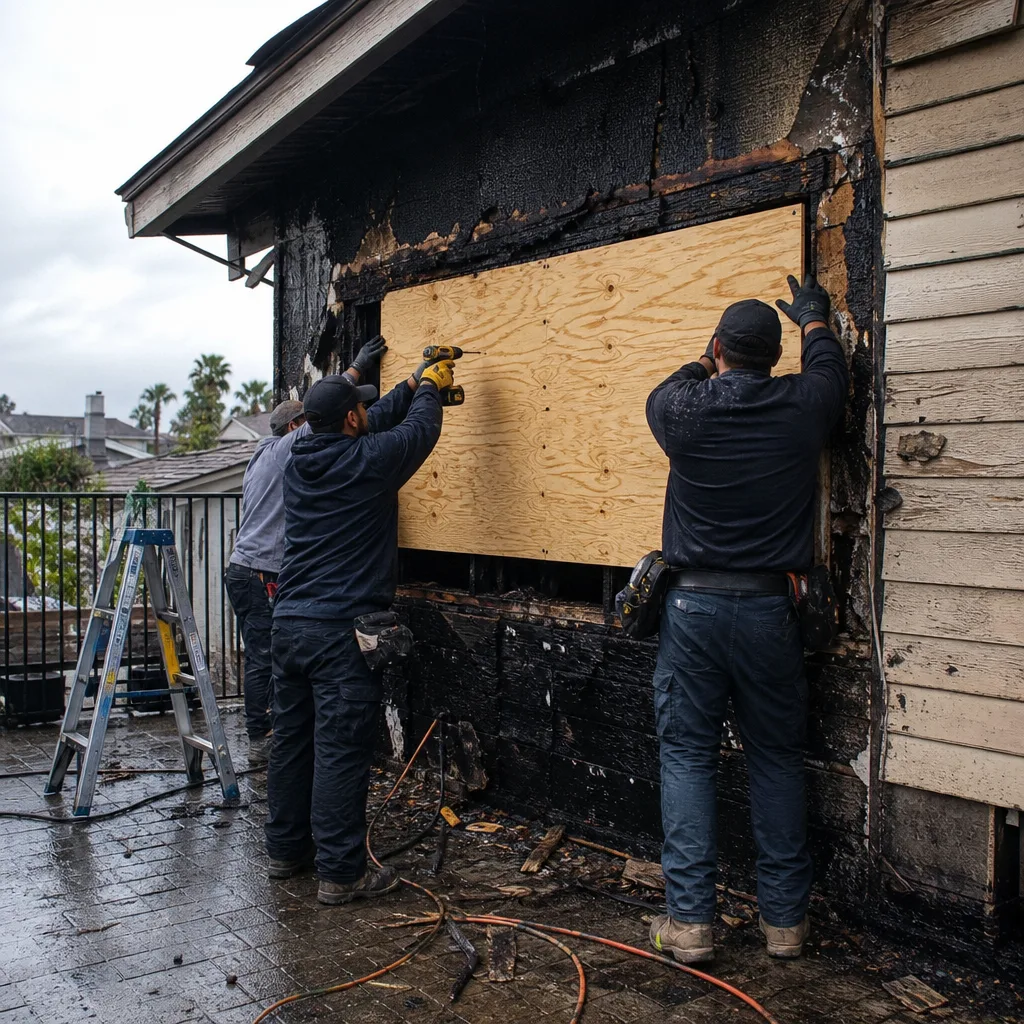
Emergency Board-Up
When a tree limb goes through a bedroom window on an older Lodi street lined with mature oaks, or wind rips a door off its hinges in an acreage workshop, the first job is keeping the weather and the animals out. We board up on the same trip. No waiting until morning, no asking you to tarp it yourself with a blue sheet from the hardware store. This is a Storm & Disaster Restoration crew that carries pre-cut plywood, proper fasteners, and the experience to secure openings without causing more damage to original 1920s siding.
Roof Tarping
Lodi’s older craftsman bungalows and early ranch homes have rooflines that were built for a drier era. Concentrated winter rain finds the weak spots fast, and a small leak above a 1940s ceiling can turn into a saturated plaster cavity before you see any stain. We tarp roofs to stop active water entry, and we coordinate the tarp work with drying the interior so you’re not stuck waiting on a roofer while mold blooms behind your walls. Crews that only tarp and leave often create a secondary damage problem, because water trapped under a poorly vented tarp in foggy conditions can make a bad situation worse.
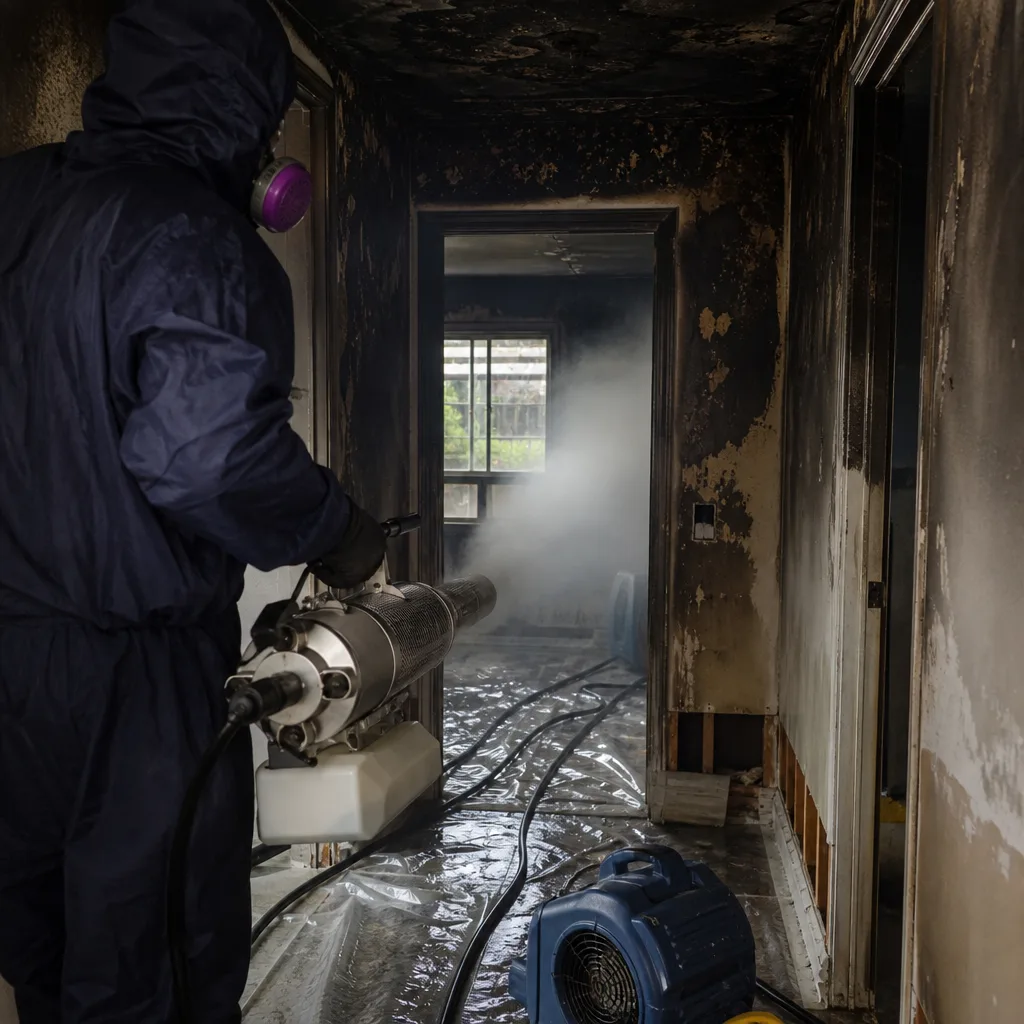
Storm Damage Cleanup
Storm cleanup in Lodi means debris removal, yes, but it also means the less glamorous work: pulling wet insulation from crawl spaces under early ranch homes, cutting out saturated drywall in a 95240 bungalow, and hauling out the mess that a backed-up storm drain leaves on a garage floor. We handle it without making you deal with a second vendor, and we document everything with photos for your insurance claim.
What happens when you call
- 1
A real person answersNo phone trees - you reach a local pro.
- 2
You get an upfront price rangeHonest numbers before anyone is dispatched.
- 3
A background-checked tech heads outLicensed & insured, dispatched right away.
- 4
You approve before work beginsNothing starts until you say go.
Trusted Brands We Service in Lodi
Lodi homeowners don’t want a stranger guessing at their equipment needs. We run Dri-Eaz and Phoenix drying systems on storm restoration jobs because they’re the same units used on commercial losses and they actually hold up to multi-day drying cycles. Our crew is IICRC-certified, and the work follows RIA and IFA standards. That means the equipment gets placed correctly, monitored daily, and removed when the moisture readings say it’s time, not when a rental agreement says it’s due back. For Lodi’s acreage workshops and detached buildings, we bring units sized for the square footage, which most residential kits simply are not.
Common Storm & Disaster Restoration Problems We See in Lodi Homes
Every city has its own failure patterns. These are the ones we’ve learned to expect in Lodi, and they shape how we scope and dry every job.
- Groundwater intrusion through slab cracks and stem walls in the 95240 floodplain. The historic core sits low and wet, and after heavy rain the water table rises close enough to the surface to push up through foundation gaps. This is a chronic Lodi problem that standard surface-water restoration never addresses.
- Multiple prior wetting cycles hidden under newer flooring. Lodi’s older homes have been wet before, often several times. A restoration estimator who treats the current event as the only event will call scope clean while old mold remains alive behind original plaster and beneath click-lock vinyl.
- Undersized restoration gear on detached workshops and outbuildings. A single residential dehumidifier cannot dry a 1,200-square-foot slab-on-grade barn after a storm. The wood wicks moisture for months, and the homeowner gets recurring must and warped workbenches. We size equipment for the building, not for a bedroom.
- Concealed roof leaks turning into wall-cavity mold during fog season. Lodi’s winter fog holds ground-level humidity high for weeks. A small roof leak that would dry on its own in a drier climate stays wet enough to colonize mold inside wall cavities. If you notice a leak after a storm, don’t assume it just dried out because the stain stopped spreading.
Pricing for Storm & Disaster Restoration in Lodi, CA
Storm and disaster restoration pricing in Lodi runs in a fairly predictable band for the work we do most often. Emergency roof tarping on a bungalow roofline typically runs $400 to $900 depending on roof pitch and damage extent. Flood extraction and drying in a 1,200-square-foot finished basement or crawl space usually lands between $1,800 and $4,500 when it involves full containment and multiple drying units. Emergency board-up services run $300 to $700 per opening, including materials and same-trip labor. Detached workshop drying on Lodi acreage properties tends to run $2,500 to $6,000 because of the square footage and the heavier equipment load. Debris removal from a storm fall typically runs $500 to $1,800 for a full day of crew time and hauling. We offer free estimates, and we’ll give you a written scope before any drying begins. If you have a written estimate from another company, bring it to us for a free second opinion.
If you’re a senior or veteran in Lodi, you’ll get 10% off, always. If your repair exceeds $200, take $40 off. And if you’re inside our county, there’s no trip charge. Call (855) 915-0646 and Wade will tell you the same thing on the phone.
We Also Serve Cities Near Lodi
Our crews work throughout the northern San Joaquin Valley, so if you’re outside the city limits we can still help. We regularly respond to storm calls in Galt, Country Club, Wilton, and Elk Grove, using the same equipment and the same written-scope discipline we bring to every Storm & Disaster Restoration in Lodi job. If your property sits between Lodi and any of those communities, call us and we’ll tell you straight whether we can get to you today.
Serving Lodi, CA - Our Local Coverage Area
We’re based in the Lodi area and know this community well. Use the map below to see our service coverage - if you’re nearby, we can almost certainly help.
FAQs - Storm & Disaster Restoration in Lodi
Yes, in most cases. We use Injectidry floor-drying mat systems that pull moisture out through the subfloor from below, which means your original redwood or oak flooring stays in place while the crawl space dries. The catch is that Lodi’s pre-1960s crawl spaces often have prior wetting damage that changes the drying plan. We map the crawl space first, check for old vapor barriers that are trapping moisture, and give you a written scope before setting equipment. Call (855) 915-0646 and we’ll get eyes on your crawl space fast.
We handle outbuildings all the time in Lodi’s acreage neighborhoods, and we bring equipment sized for the square footage. A detached workshop with a slab floor and exposed framing needs a different drying strategy than a house, and a lot of crews under-size the dehumidifiers. You cannot dry 1,000 square feet of workshop with a rental unit from a chain store. We’ll scope it, set the right gear, and monitor it daily with the same moisture log we give you for the main house.
Yes, especially during Lodi’s fog season. The Tule fog from November through February keeps humidity high enough that concealed wall cavities stay wet for weeks. Mold can colonize behind original plaster with zero visible stain on the interior drywall face. If you know you had a roof leak, don’t guess. We’ll check the cavity with a moisture meter, document what we find, and tell you whether you need drying or just monitoring. It’s a quicker call than waiting for a musty smell in April.
Yes, creek floodwater is treated as Category 3 water, the same as sewage. It carries silt, agricultural runoff, and whatever else the water picked up between the creek bank and your foundation. That means full containment during drying, antimicrobial treatment on affected framing, and proper disposal of saturated materials. We see this regularly in Lodi’s 95240 floodplain and we handle it with the same protocols as a sewage loss. Call (855) 915-0646 and we’ll explain the difference and get you a written scope.
Yes. We coordinate tarping by phone and photo, and we’ll walk every step with you before we touch the roof. You don’t need to leave work or cancel a shift. We’ll document the damage before, during, and after tarping, then send you the photos and the moisture readings so you have everything for your adjuster. Wade’s crew is background-checked and uniformed, and you’ll know exactly who is on your roof before they show up.
One More Thing About Lodi’s Storm Damage
Lodi sits in a low-lying section of the northern San Joaquin Valley, bisected by Bear Creek with the Mokelumne River along its southern edge. That geography means the city faces recurring flood and groundwater intrusion that nearby foothill towns like Amador or Angels Camp simply don’t have. The dense stock of pre-1960s craftsman bungalows and early ranch homes in the 95240 core were built without modern vapor barriers or positive drainage. The newer west-side subdivisions in 95242 sit on the same expansive clay soils that crack slabs when saturated. Storm restoration on a Lodi property is not the same job as storm restoration on a Stockton tract home. It requires reading the landscape, not just the wet drywall.
Last winter we responded to a 1940s craftsman bungalow on West Locust Street after a three-day storm backed up the storm drain at the property line, sending six inches of turbid water over the crawl-space access. Our crew pulled back original redwood flooring and found two prior wetting layers, stained joists from the 1997 Bear Creek event and a failed vapor barrier patched with roofing felt, before setting three Dri-Eaz LGR 7000 dehumidifiers and an Injectidry floor-drying mat system to wick moisture from the oak subfloor. The homeowner, a third-generation Lodi grower, made one call and expected one visit. We completed scope assessment, extraction, and drying placement in a single five-hour window.
That’s the job in Lodi. It’s not glamorous, and it’s not quick when it’s done right. But it’s done right, and Wade puts that in writing. If you’ve got storm damage, a wet crawl space, or a roof leaking into your walls, call (855) 915-0646. Wade will answer, and he’ll tell you exactly what the next step is. No charge for the trip inside the county, no pressure. If you’d rather get a written estimate first, bring us any competing written estimate and we’ll give you a free second opinion. That’s how a neighbor works.
Written by Wade Ferris, Owner at Wade’s Restoration of California, serving Lodi and the surrounding Central Valley communities since 2007.