
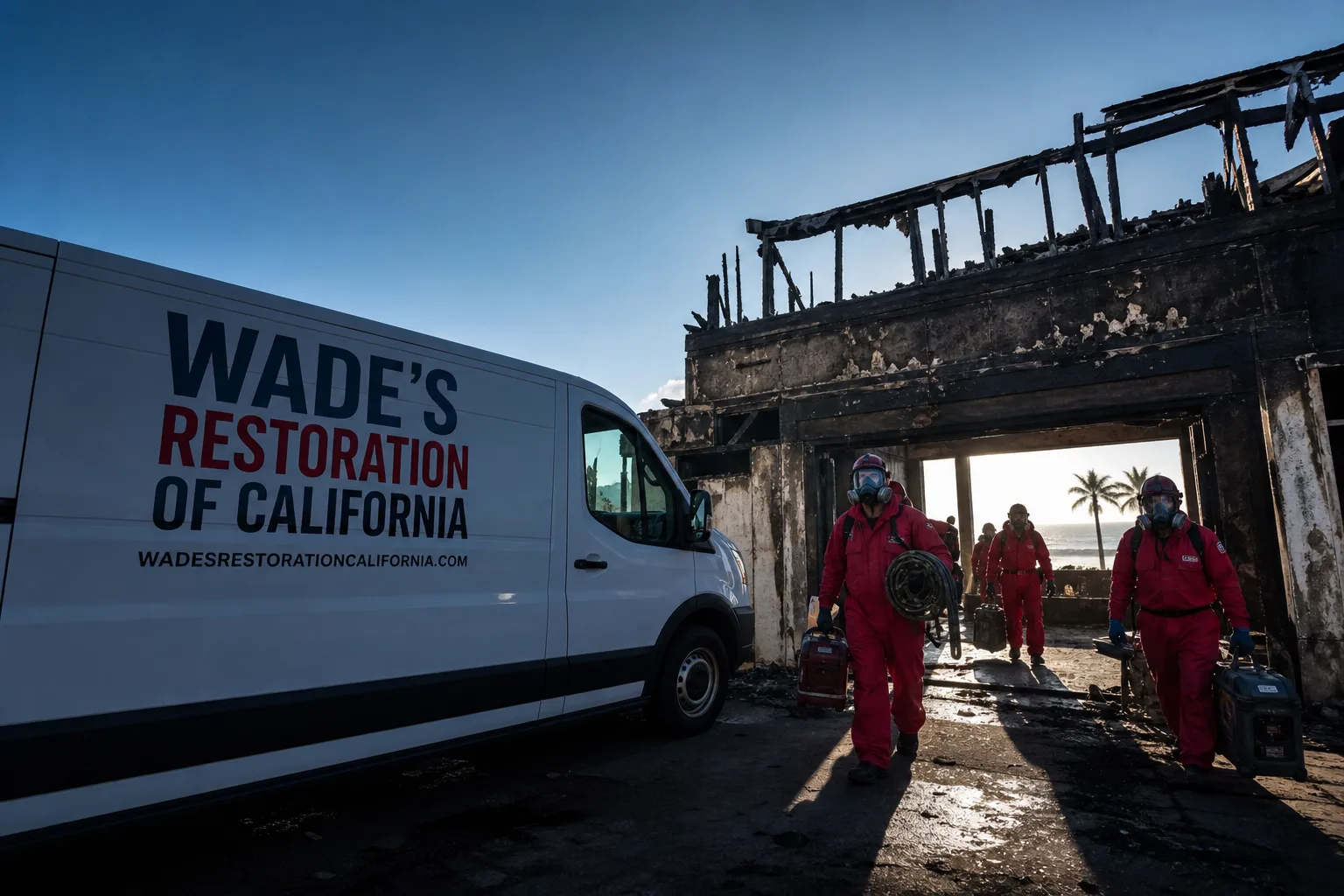
Fast, Reliable Storm & Disaster Restoration Across Live Oak
Storm and flood damage in Live Oak moves fast, and so do we. When the Feather River rises against the levee system or a winter storm tears through the Sutter Basin, you need a crew that knows 95953’s low-lying terrain, its aging pier-and-beam homes, and the way the rice-field water table keeps crawl spaces damp for months. Wade Ferris and his team handle the full scope: storm damage cleanup, flood water extraction, emergency board-up, and roof tarping, with a live person answering at (855) 915-0646 day or night. We coordinate dispatch from our San Francisco Bay Area office, but the crews working your street are local, equipped, and on the road fast.
Why Wade’s Restoration of California Is Live Oak’s Preferred Storm & Disaster Restoration Company
We’re not a national franchise with a call center in another state. Wade’s Restoration is owned and operated by Wade Ferris, who has published his name, address, and license number since 2007 and still answers his own phone. That matters in Live Oak, where a handshake at the hardware store still counts for something. Homeowners here tend to be wary of the big outfits that quote one price over the phone and a different one at the door. Wade runs the opposite way: a written scope before work starts, daily moisture readings handed to you in a log, and a 90-Day Done Right Promise in writing on every storm, water, and fire restoration job.
Ask anyone on your street who has dealt with a flooded crawl space off Pennington Road. They will tell you the drying took longer than the adjuster expected, that the mold crept in behind the lath-and-plaster before anyone noticed, and that the contractor who finally fixed it was the one who actually came back. Wade comes back. If something is not done right, one call brings him back within the 90-day window, no runaround.
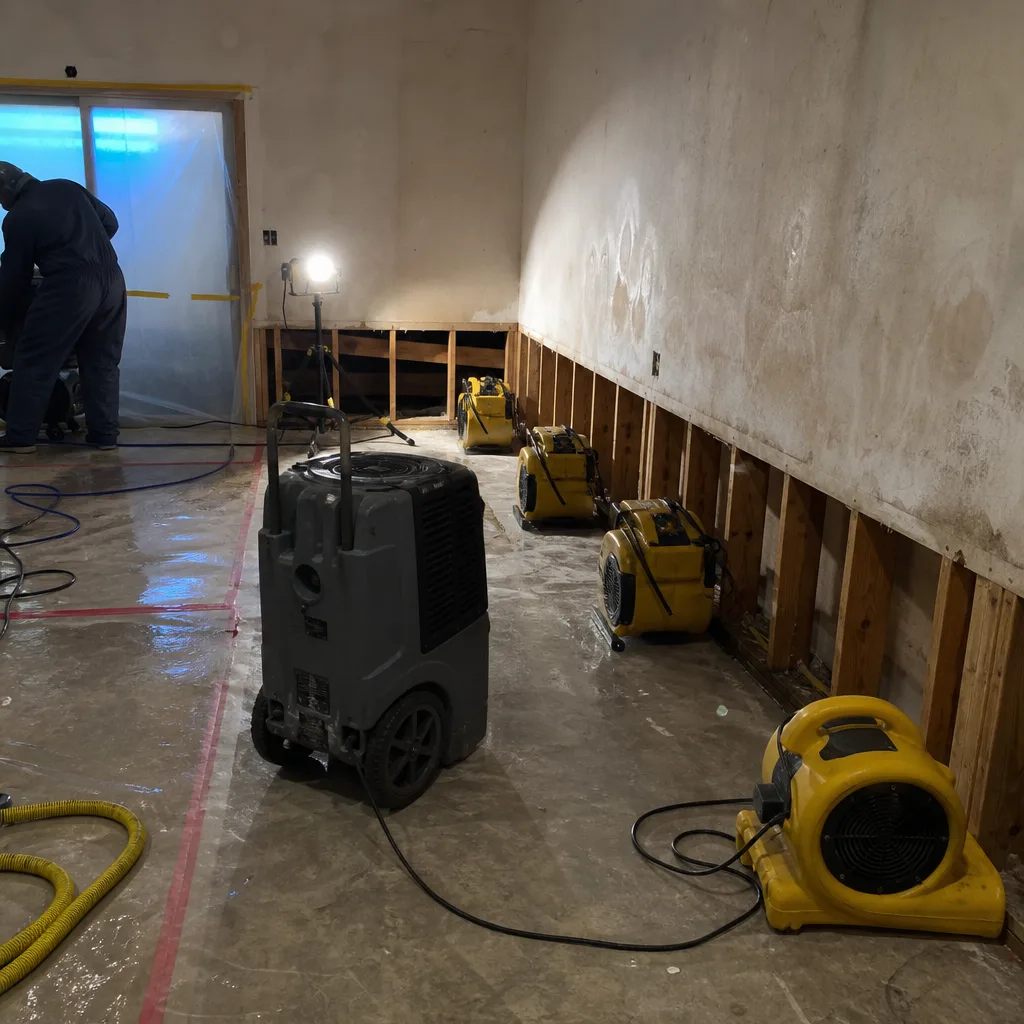
Background-checked, uniformed crews show up with professional-grade equipment: Dri-Eaz dehumidifiers, Phoenix air movers, Injectidry mats, XPOWER fans, and B-Air drying systems. The work carries IICRC and RIA standards. No subcontractor roulette. No voicemail maze.
Our Storm & Disaster Restoration Services in Live Oak
Flood Damage Restoration
Flooding is the defining risk in Live Oak. The entire 95953 ZIP sits within the Sutter Basin, behind aging Feather River levees that have been tested repeatedly in high-water years. When water enters a home here, it is rarely clean water from a burst supply line. It’s sediment-heavy river water that sat for days, saturating original hardwood subfloors and wicking up into lath-and-plaster walls. Our flood restoration work starts with extraction, then moves to structural drying that accounts for the high water table underneath your house. We replace vapor barriers, dry subfloor assemblies, and document every moisture reading for your flood insurance claim.
Storm Damage Cleanup
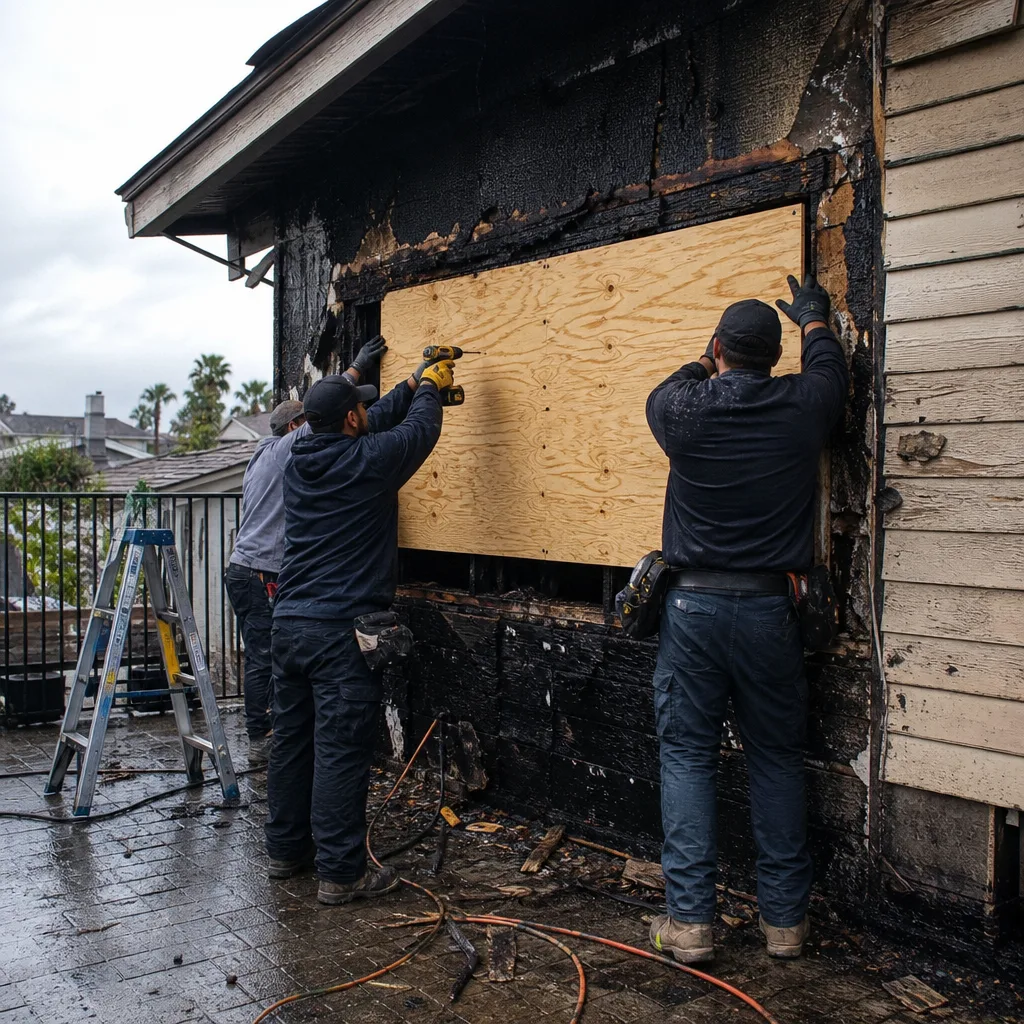
Winter storms in the Sacramento Valley hit Live Oak hard. Downed limbs, wind-driven rain, and saturated ground push water into homes built on vented pier-and-beam foundations. Our storm cleanup crews remove debris, extract standing water, and set up drying before the next front rolls through. We know the 1950s and 1960s housing stock here holds moisture longer than modern construction, so we don’t pack up on day four just because the drywall feels dry to the touch.
Emergency Board-Up
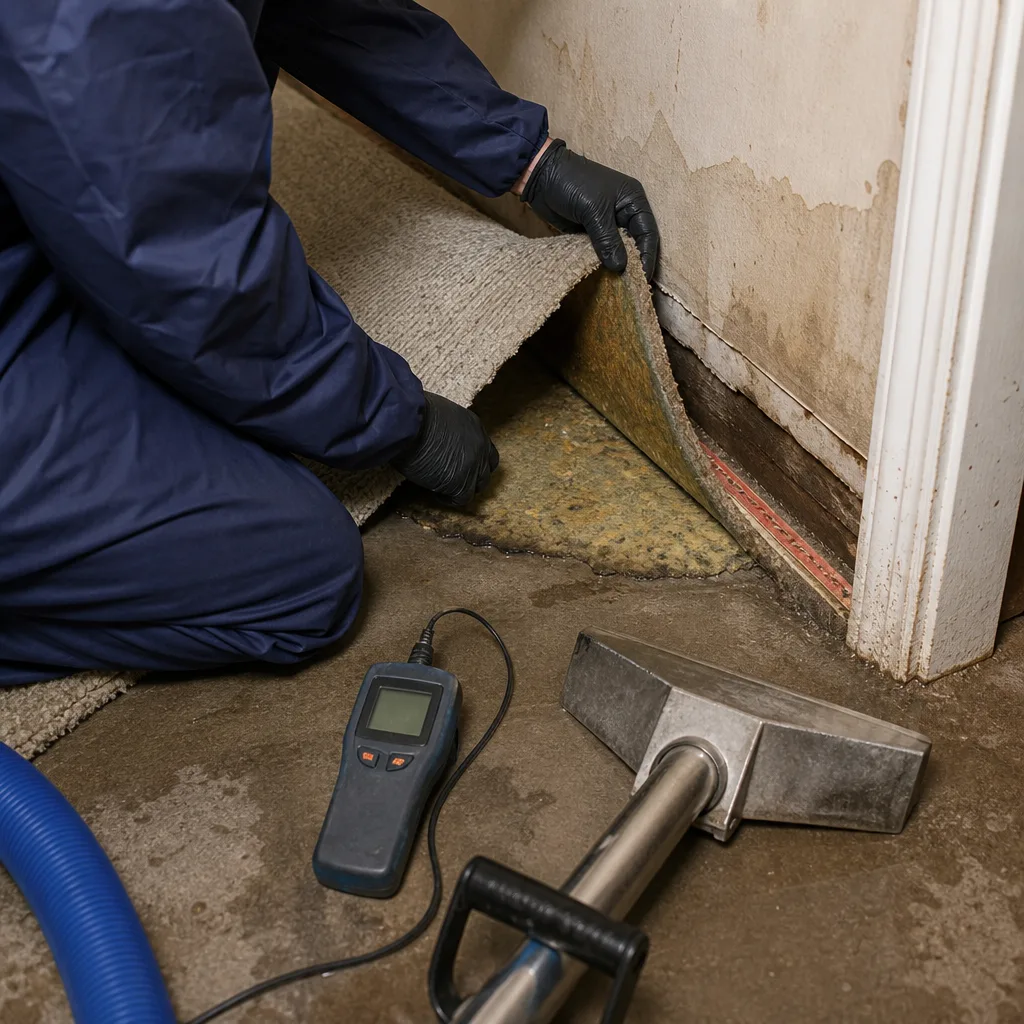
When a tree comes through a window off Highway 99 or wind tears a section of roof off a 1970s ranch, the house is open to weather, animals, and looters. We board up the same day, and sometimes the same hour depending on where the call comes from. Plywood, fasteners, and a crew that knows how to secure a damaged structure without causing more harm to original plaster or framing. Board-up is a temporary fix, but done wrong it makes the permanent repair harder. We do it right.
Roof Tarping
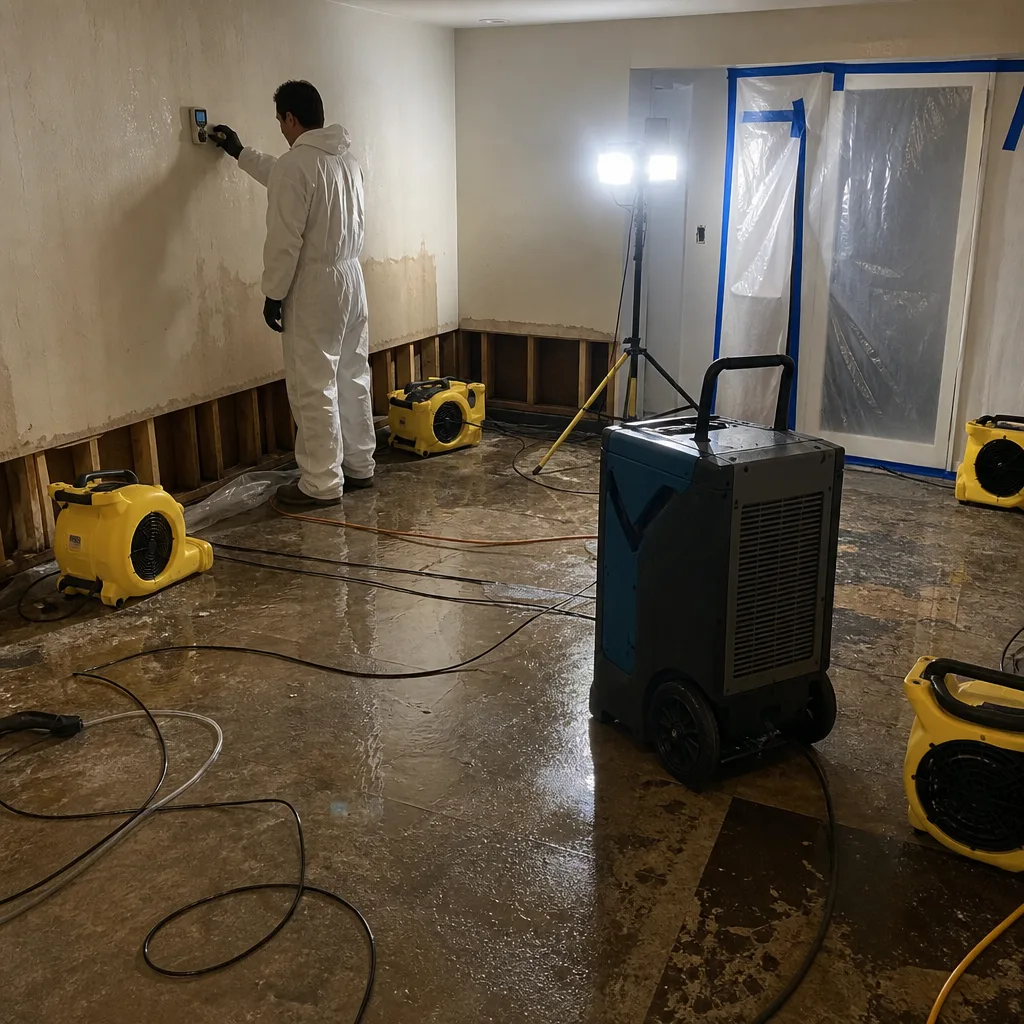
A torn roof over a Live Oak home is an emergency. Rain in the Sacramento Valley wet season will find every gap. Our team installs heavy-duty tarps anchored to the structure so the next storm does not turn a roofing issue into a full interior water loss. We tarp fast, document the condition before and after, and keep the tarp in place until your contractor or our reconstruction team can complete the permanent repair.
What happens when you call
- 1
A real person answersNo phone trees - you reach a local pro.
- 2
You get an upfront price rangeHonest numbers before anyone is dispatched.
- 3
A background-checked tech heads outLicensed & insured, dispatched right away.
- 4
You approve before work beginsNothing starts until you say go.
Trusted Brands We Service in Live Oak
We work on every brand of drying equipment and restoration hardware out there, so if you already have a Dri-Eaz or Phoenix system running after a flood and it is not getting the subfloor dry, we can step in without making you buy new gear. We stock common parts for B-Air and XPOWER units and can have specialty components in hand within a day for Live Oak customers. The brand on the machine matters less than whether the operator knows how Live Oak’s high water table changes the drying math. Wade’s crew knows the difference.
Common Storm & Disaster Restoration Problems We See in Live Oak Homes
- Contractors ending drying too soon. The standard 3 to 5 day structural drying window does not hold in Live Oak. Vented pier-and-beam homes with original hardwood subfloors and old vapor barriers routinely need 7 to 10 or more days because the rice-field water table keeps the crawl space damp all winter. Crews that pack up on schedule leave the subfloor wet.
- Skipped vapor barrier replacement. After a flood, restoration crews sometimes dry the living space and call it done, leaving the original vapor barrier torn or saturated underneath. Six weeks later, 100°F summer heat hits and hidden mold colonizes the subfloor assembly. We replace vapor barriers as a standard part of flood restoration here, not an upsell.
- Blown-out plaster keys. High-pressure drying equipment used without first addressing saturated lath-and-plaster walls can destroy the original plaster keys in 1950s to 1970s construction. That causes cosmetic cracks and, in bad cases, structural wall failure. Our drying plan treats these walls carefully, with lower-pressure targeted drying rather than blasting them.
- Crawl space mold hidden by winter. The rice fields surrounding Live Oak are intentionally flooded October through February for waterfowl habitat, keeping the local water table abnormally high for five straight months. Crawl spaces under older pier-and-beam homes stay damp all winter even without a direct flood event. Mold establishes in subfloor assemblies long before you see any visible sign inside the house.
Pricing for Storm & Disaster Restoration in Live Oak, CA
Here are honest numbers for Live Oak’s market. Emergency board-up typically runs $350 to $700 depending on the number of openings and the level of security needed. Roof tarping on a single-story ranch runs $450 to $900, more for steep or complex rooflines. Flood water extraction and drying starts around $1,800 and commonly lands between $2,500 and $5,500 for a single-story home with a saturated subfloor, which is the norm in the pier-and-beam stock around 95953. Vapor barrier replacement in a crawl space adds $1,200 to $2,800 depending on square footage and access. Mold remediation, when hidden colonization has already started, runs $2,000 to $8,000 or more. These are what we see on real jobs in Live Oak, not national averages. We offer a free estimate, no trip charge inside our own county, a free second opinion on any written estimate, and a permanent Senior and Veteran 10% discount. Call (855) 915-0646 for an exact quote.
We Also Serve Cities Near Live Oak
Our crews work throughout the Sutter Basin and surrounding areas, including Gridley, South Yuba City, Tierra Buena, and Marysville. If you are in one of those communities and need Storm & Disaster Restoration from a crew that understands levee flood risk and older housing stock, call us. We answer the phone.
Serving Live Oak, CA - Our Local Coverage Area
We’re based in the Live Oak area and know this community well. Use the map below to see our service coverage - if you’re nearby, we can almost certainly help.
FAQs - Storm & Disaster Restoration in Live Oak
Because Live Oak sits entirely within the low-lying Sutter Basin, with a water table kept abnormally high from October through February by the intentionally flooded rice fields surrounding the 95953 ZIP. The water under your floor wicks moisture back up into the subfloor assembly, extending structural drying to 7 to 10 days or more in the older vented pier-and-beam homes that dominate the area. Yuba City has more homes on slab foundations at higher grade, so drying finishes faster there. Call (855) 915-0646 if you are still pulling moisture readings after a week.
If the vapor barrier is torn, brittle, or has pooled water sitting on top of it after flood extraction, it is no longer doing its job and needs replacement. In Live Oak’s high water table conditions, a failing vapor barrier means the subfloor stays damp even after the visible water is gone, and mold follows when summer heat arrives. The only way to know for sure is to get into the crawl space and look. We do that as part of every flood restoration job, free with the estimate.
Yes. A levee-stress flood event can displace dozens of homes at once, overwhelming local drying capacity, so the triage is different. It’s not one house with a broken supply line; it’s a neighborhood where every crawl space is wet at the same time and the water table is rising. We stage equipment in the area before the worst of it when forecasts point to Feather River pressure, and we work neighborhoods in order of structural urgency. If your home took on river water, call (855) 915-0646 immediately and we will get in the queue with priority for the worst-hit structures.
Because the hidden moisture never left. Live Oak’s vented pier-and-beam construction, original hardwood subfloors, and the Sacramento Valley’s 100°F summer heat combine to create ideal mold conditions inside wall cavities and under floors within two to three weeks of an incomplete dry-out. The water you can’t see, held in the subfloor and wicked up into lath-and-plaster walls, is where the mold takes hold. That is why we hand you daily moisture readings and refuse to sign off on a job until the numbers, not the calendar, say it’s dry.
Turn off the power at the main breaker if water reached any electrical outlets or the panel, and do not walk through standing water in a home that still has power connected. If you can safely reach the crawl space, open the access door to vent it, but do not enter if water is still standing against the foundation. Take photos of everything for your flood insurance claim, including the water line on the walls. Then call (855) 915-0646. We will talk you through the next steps and get a crew headed to your address in Live Oak.
Written by Wade Ferris, Owner at Wade’s Restoration of California, serving Live Oak and the Sutter Basin since 2007.