
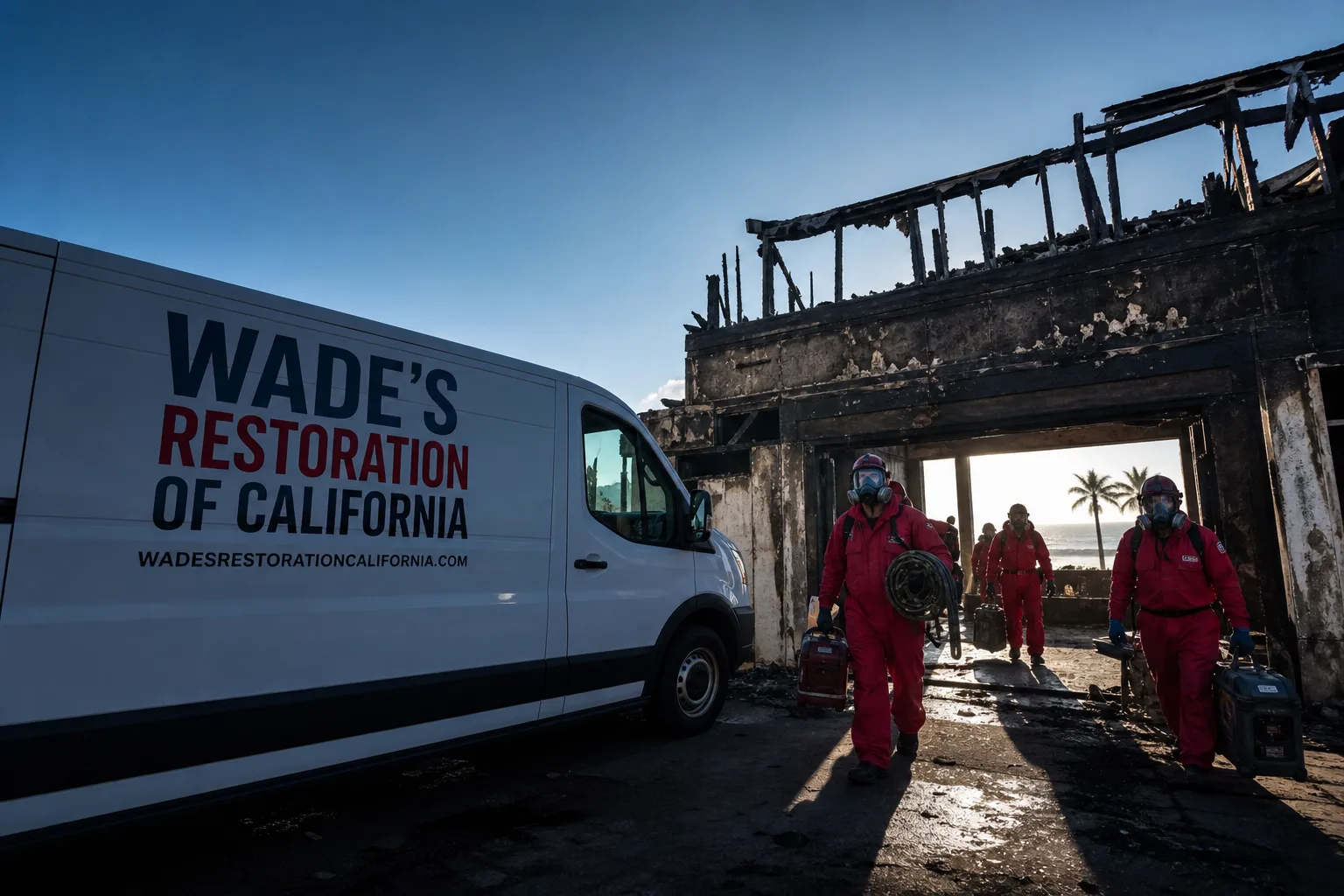
Fast, Reliable Storm & Disaster Restoration Across Laguna Hills
Storm damage in Laguna Hills rarely comes as a single event. It comes as wind-driven rain prying into a 1980s stucco wall on a canyon-facing slope, followed three weeks later by mold behind the baseboard, followed in January by a debris flow pressing ash-laced mud under the garage door of a 92653 home backing onto Aliso and Wood Canyons Wilderness Park. We know this sequence because we’ve worked it, on real streets, in real houses, more times than we can count. Wade Ferris founded Wade’s Restoration in 2007, and he still answers the phone himself at (855) 915-0646, 24 hours a day, because the people who call after a storm are not calling to schedule a consultation. They’re calling because water is inside their home right now.
Our Storm & Disaster Restoration crew reaches Laguna Hills fast, with the equipment already on the truck: Dri-Eaz dehumidifiers, XPOWER air movers, Injectidry drying systems for wall cavities, and the PPE needed for ash-contaminated sediment. When you call, you talk to a person. That person is usually Wade.
Why Wade’s Restoration of California Is Laguna Hills’s Preferred Storm & Disaster Restoration Company
Nobody in Laguna Hills wants a restoration company that treats the 92653 and 92654 ZIP codes like any other job on a dispatch board. The canyon topography here changes how water moves. The housing stock, built largely between the mid-1970s and early 1990s, changes how walls fail. A slab-on-grade tract home off Alicia Parkway does not dry the same way a raised-foundation house in the flat basin does, and it doesn’t leak the same way either. We know that because we’ve been inside these homes, with moisture meters on the baseboards and thermal cameras on the drywall, long enough to know what’s normal for Laguna Hills and what’s a problem.
Our reputation in Laguna Hills rests on the oldest accountability structure there is: Wade’s name is on the truck, his address is published, and he is going to run into you at the hardware store on a Saturday. Since 2007, he has competed not on volume but on transparency. He takes moisture readings every single day and hands you the full log at the end of the job. Almost nobody in this trade does that. He deals with the insurance adjuster directly, so you’re not the one relaying technical information between two sides. And every water, fire, and mold restoration job carries the 90-Day Done Right Promise in writing: if it’s not done right, he makes it right. One call brings Wade back.
Response time to Laguna Hills is measured in minutes, not hours. Wade lives and breathes this county. His crews are background-checked, uniformed, and IICRC-certified, with RIA and IFA credentials behind the work. The equipment is professional grade: Dri-Eaz, Phoenix, Injectidry, XPOWER, B-Air. When a storm hits Laguna Hills, we’re already on the road while the national chains are still routing your call to a call center in another state.
Our Storm & Disaster Restoration Services in Laguna Hills
Storm Damage Cleanup
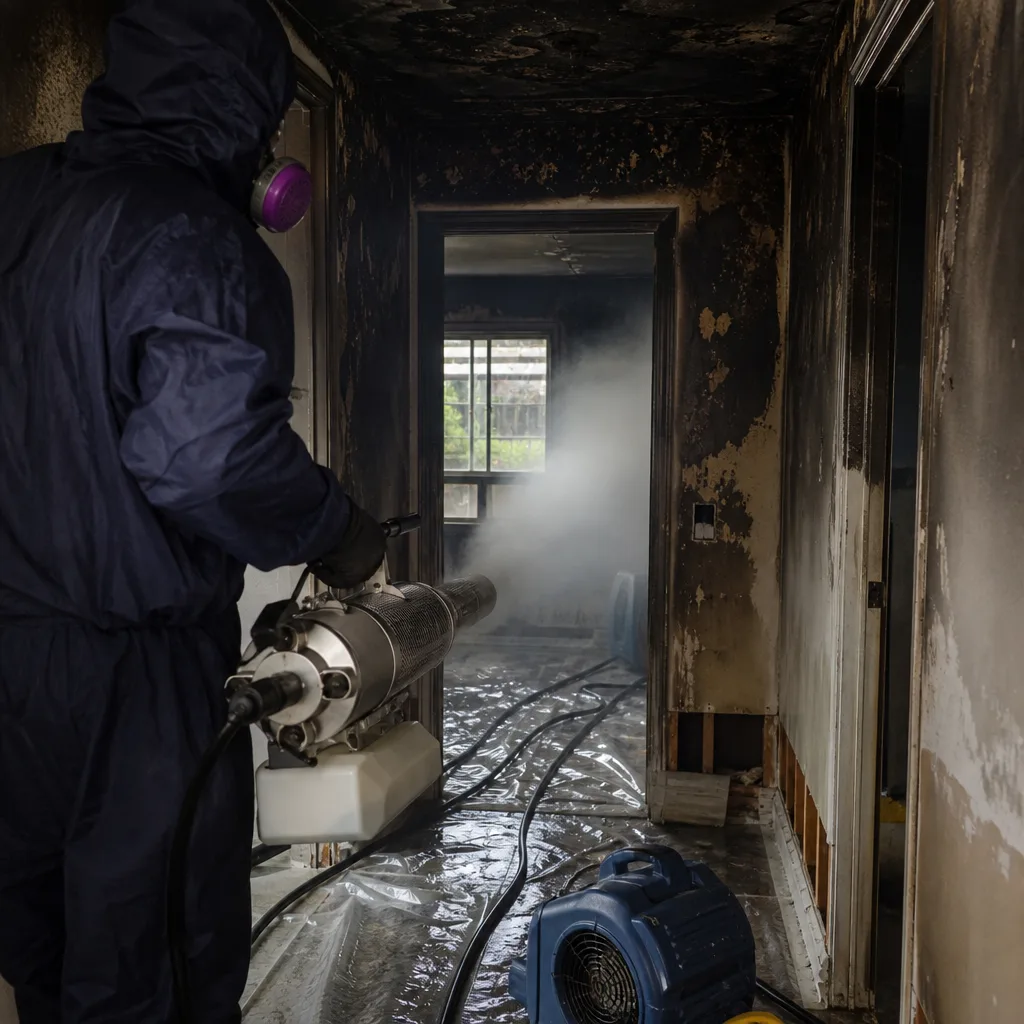
A Santa Ana wind event in Laguna Hills doesn’t just knock down fences. It drives rain laterally into building envelopes, a failure mode the Aliso and Wood Canyons corridor amplifies as wind funnels through the canyon openings and hits canyon-facing slopes at full force. Storm damage cleanup here means cutting out saturated drywall, pulling wet insulation, setting up containment, and drying the wall cavity properly, not just wiping down the surface and hoping for the best. We see homes where wind-driven rain has penetrated single-pane window seals and saturated the wall cavity behind the stucco for weeks before any visible stain appeared. By then, mold is already growing. We find it, we document it, and we fix it.
Flood Damage Restoration
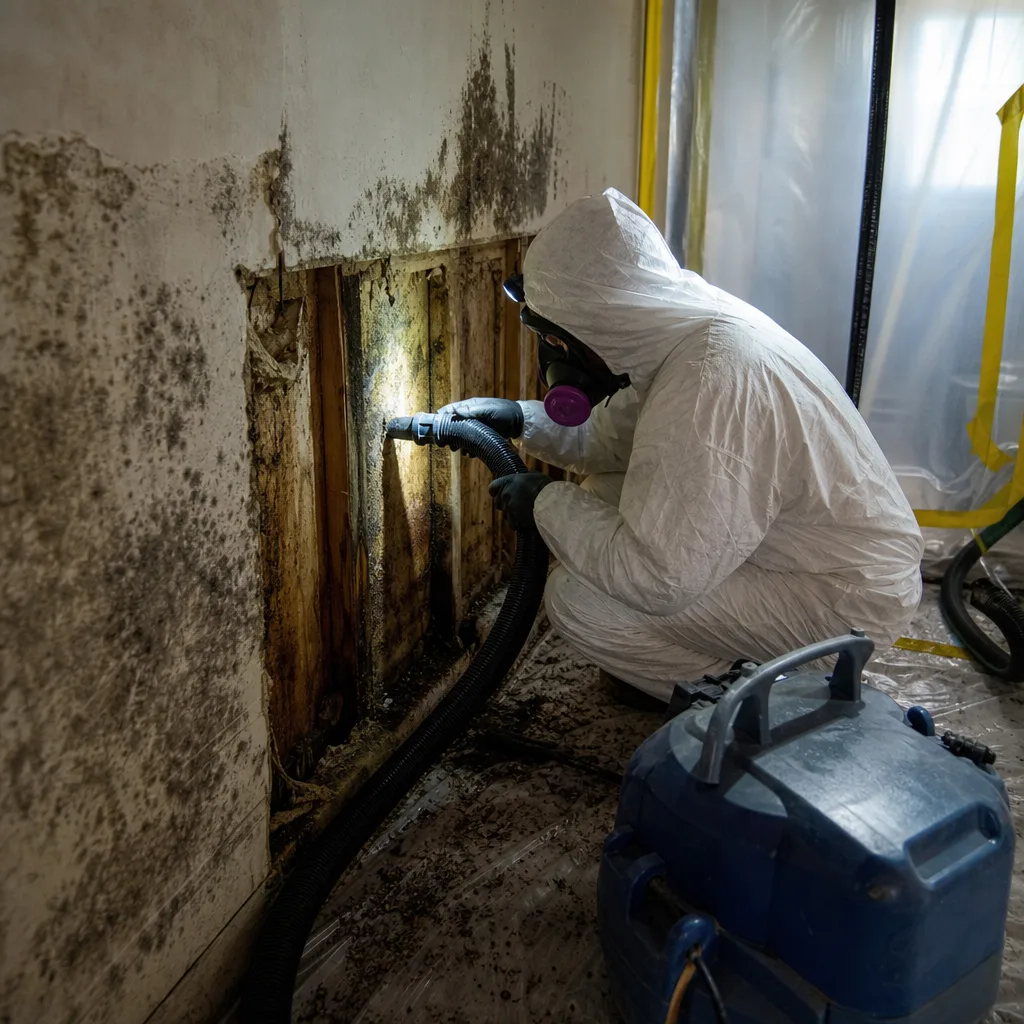
Flooding in Laguna Hills takes two distinct forms. There’s the interior flood: a slab leak from aging copper supply lines corroded by hard Colorado River-sourced water, surfacing as water wicking up through floor coverings with no obvious source. Then there’s the canyon flood: post-fire debris flows and ash-laden mud overwhelming garage thresholds and ground-level vents in the 92653 ZIP after winter rains hit hydrophobic burn scars on the canyon walls. Both require extraction, drying, and reconstruction. The canyon flood also requires elevated PPE and air-quality testing, because that sediment carries concentrated toxins from burned chaparral and structural materials on canyon-edge lots. We do not skip that step. Call (855) 915-0646 and Wade will talk you through what actually needs to happen before anyone touches the mud.
Emergency Board-Up
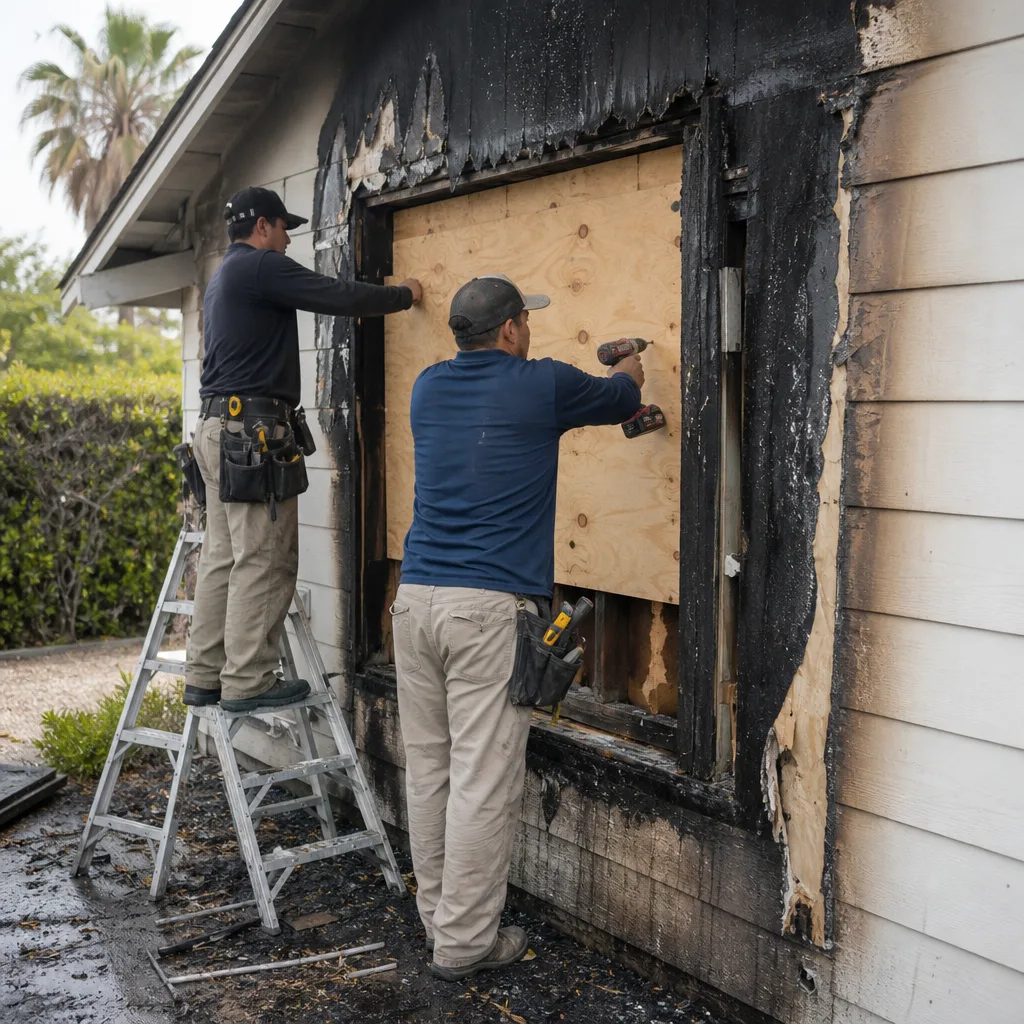
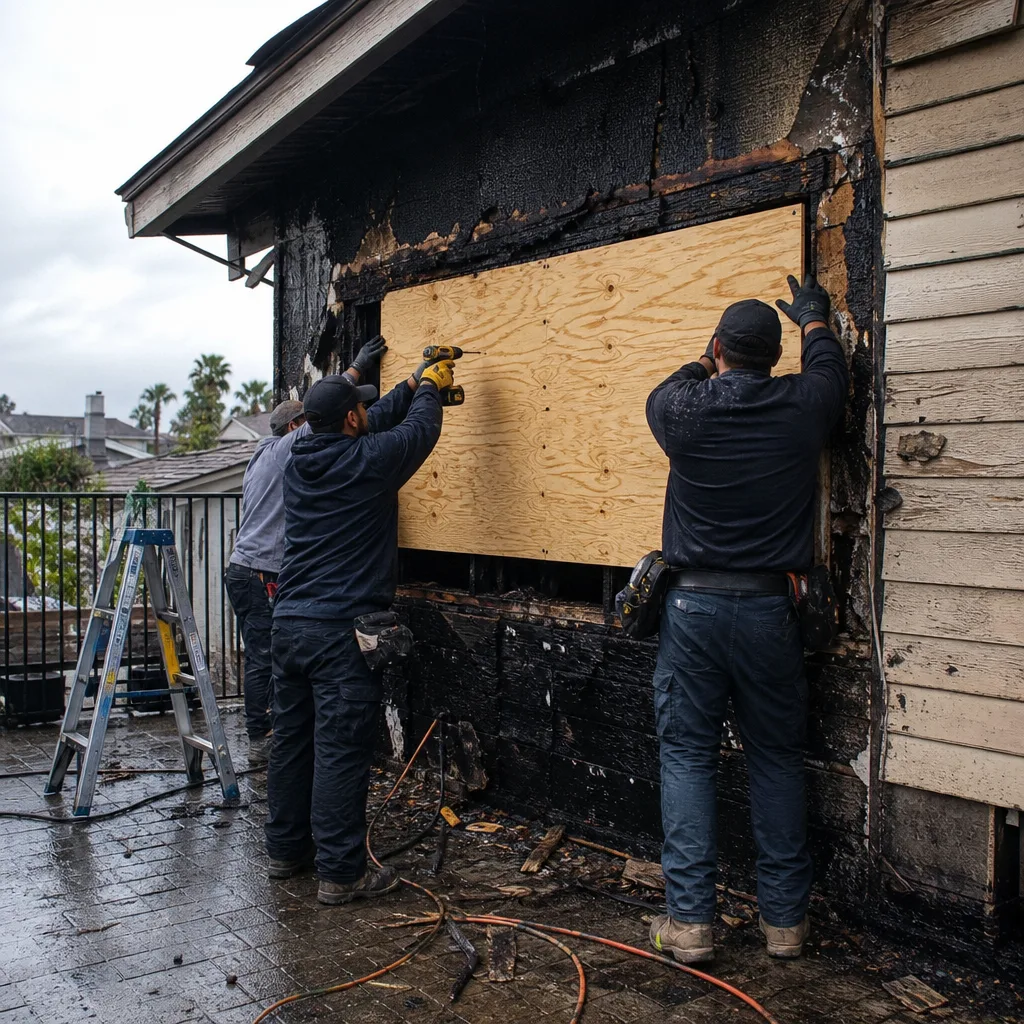
When a wind event blows out a window or a tree limb comes through a roof in Laguna Hills, the first job is protecting the structure from what’s coming next. Emergency board-up in the 92653 and 92654 ZIP codes means securing openings before the next rain event arrives, and that’s exactly what we do. Our crews board up damaged windows, tarp exposed roof sections where the sheathing is compromised, and seal any opening that could admit water or vermin. We work directly with your insurance adjuster and photograph everything before and after, so the claim documentation is complete from the first hour.
Roof Tarping
Roof tarping in Laguna Hills is not a one-size-fits-all job. The roof pitch on a 1970s tract home off La Paz Road is different from a 1990s rebuild near the canyon edge, and the wind loading along the Saddleback Valley slopes changes how a tarp must be secured to survive the next Santa Ana event. We anchor tarps to withstand 60 mph gusts, not just the next drizzle. The tarp buys you time to assess whether the underlying framing and sheathing are sound enough for targeted repair or whether the roof needs full replacement. We’ll give you a written scope before any repair work starts, so you know exactly what you’re paying for and why.
For the full Storm & Disaster Restoration in Laguna Hills picture, including what to do in the first 30 minutes after water enters your home, this page covers the local specifics in detail.
What happens when you call
- 1
A real person answersNo phone trees - you reach a local pro.
- 2
You get an upfront price rangeHonest numbers before anyone is dispatched.
- 3
A background-checked tech heads outLicensed & insured, dispatched right away.
- 4
You approve before work beginsNothing starts until you say go.
Trusted Brands We Service in Laguna Hills
Wade’s crew works with professional-grade restoration equipment, and that means brands with proven reliability in the field conditions we face in Laguna Hills. Dri-Eaz LGR dehumidifiers handle the dense moisture loads we encounter in enclosed canyon-adjacent wall cavities. XPOWER air movers move air aggressively through older floor plans that were never designed for modern drying. Injectidry systems get into the wall cavities and under cabinetry without tearing out every piece of drywall first. We stock the parts and filters these systems need, so when we’re drying a home in Laguna Hills, we’re not waiting on a parts delivery from a warehouse in another county. Wade’s crew arrives ready to work, and the equipment runs until the moisture log says the job is done.
Common Storm & Disaster Restoration Problems We See in Laguna Hills Homes
- Post-fire debris flows in 92653. When winter rains hit the burned canyon walls above Aliso and Wood Canyons, ash-contaminated mud flows into garage thresholds and ground-level vents along canyon-adjacent streets. This is not standard floodwater. It carries toxins from burned chaparral and structural materials, which means extraction crews need elevated PPE and the job often requires air-quality testing before anyone reoccupies the space.
- Wind-driven rain in canyon-facing walls. The Aliso and Wood Canyons corridor funnels and accelerates Santa Ana winds, pushing rain laterally into building envelopes. Older 1970s and 1980s stucco and single-pane window seals on canyon-facing slopes tend to fail first, and the moisture hides in wall cavities until mold has already started.
- Slab leaks from aging copper supply lines. Laguna Hills was built out largely on slab-on-grade foundations between the mid-1970s and early 1990s, and the hard Colorado River-sourced water has been corroding the copper supply lines for decades now. A slab leak often shows up as water wicking up through floor coverings with no visible source, and by the time you see it, the slab and the flooring above have been wet for a while.
- Roof leaks at legacy flashings. Older tract homes in Laguna Hills have original roof flashings that are now 30 to 50 years old. Santa Ana wind events lift these flashings, and the next rain event finds the gap. We see ridge vent failures, step flashing failures at the chimneys, and valley metal that’s rusted through. These are targeted repairs when caught early, full replacement when ignored.
Pricing for Storm & Disaster Restoration in Laguna Hills, CA
A typical storm damage cleanup job in Laguna Hills, where a wind-driven rain event has saturated a section of drywall and insulation, runs $800 to $2,200. Emergency board-up for a wind-damaged window or door opening typically lands between $250 and $900, depending on the size of the opening and the number of openings. Roof tarping runs $450 to $1,500 for most single-family homes in the 92653 and 92654 ZIP codes, with larger or steeper roofs pushing toward the higher end. Flood damage restoration from a slab leak or storm intrusion ranges $2,500 to $8,000 for a typical single room, before any reconstruction. Ash-contaminated debris flow cleanup with testing runs higher, often $3,500 to $12,000, because of the PPE, disposal, and air-quality verification that a standard inland flood job would never require. The exact number depends on square footage, how long the water sat, and what materials were saturated. Estimates are free. Call (855) 915-0646 and Wade will walk you through the scope before any work begins.
We Also Serve Cities Near Laguna Hills
Wade’s Restoration serves the entire Saddleback Valley, and that includes the communities right next door. Laguna Hills is home base for this page, but we regularly work in Laguna Woods, Lake Forest, Mission Viejo, and Coto de Caza. The same crew, the same equipment, the same owner answering the phone. If you’re in one of those cities and water is where it shouldn’t be, call (855) 915-0646.
Serving Laguna Hills, CA - Our Local Coverage Area
We’re based in the Laguna Hills area and know this community well. Use the map below to see our service coverage - if you’re nearby, we can almost certainly help.
FAQs - Storm & Disaster Restoration in Laguna Hills
We treat post-fire debris flows as contaminated sediment, not standard floodwater. The ash and mud that runs off burned canyon slopes in the 92653 ZIP carries concentrated toxins from burned chaparral and structural materials, so our crews wear elevated PPE, run air-quality testing before reentry, and follow disposal protocols that a plain inland flood job would skip. Call (855) 915-0646 if you’re dealing with this right now, and Wade will talk you through the first steps on the phone.
Santa Ana winds in Laguna Hills typically drive rain laterally into building envelopes on canyon-facing slopes first, saturating stucco and single-pane window seals. The moisture hides in wall cavities for days or weeks before visible stains appear. Then, if a wildfire has burned the surrounding slopes earlier in the season, the next winter rain event sends post-fire sediment flows downhill. So the sequence is wind damage first, hidden moisture second, and sediment intrusion third, often on the same property within a single season.
Yes. Older slab-on-grade homes in the 92653 ZIP face slab leaks from aging copper supply lines corroded by hard Colorado River-sourced water. Those leaks typically surface as water wicking up through floor coverings with no obvious source. They also face exterior flood risk from canyon debris flows entering through garage thresholds and ground-level vents. Call (855) 915-0646 for a free estimate on either one.
We run air-quality testing before reentry and use elevated PPE including respirators and full protective suits when handling ash-contaminated sediment. The mud that flows off burned canyon walls in the Aliso and Wood Canyons corridor carries toxins from burned chaparral and structural materials, so the standard dust mask from a home improvement store is not enough. We document all of this for your insurance claim, and Wade deals with the adjuster directly.
Have it inspected before the first significant rain event hits the burn scars, or immediately after if that rain has already arrived. The post-fire soil hydrophobicity on the burned canyon walls above Laguna Hills dramatically amplifies runoff velocity once the rains start, which means debris flows can reach homes that have never flooded before. An early inspection catches vulnerable thresholds, vents, and drainage paths before the mud arrives. Call (855) 915-0646 and Wade will come out himself.
Written by Wade Ferris, Owner at Wade’s Restoration of California, serving Laguna Hills and the Saddleback Valley since 2007.