
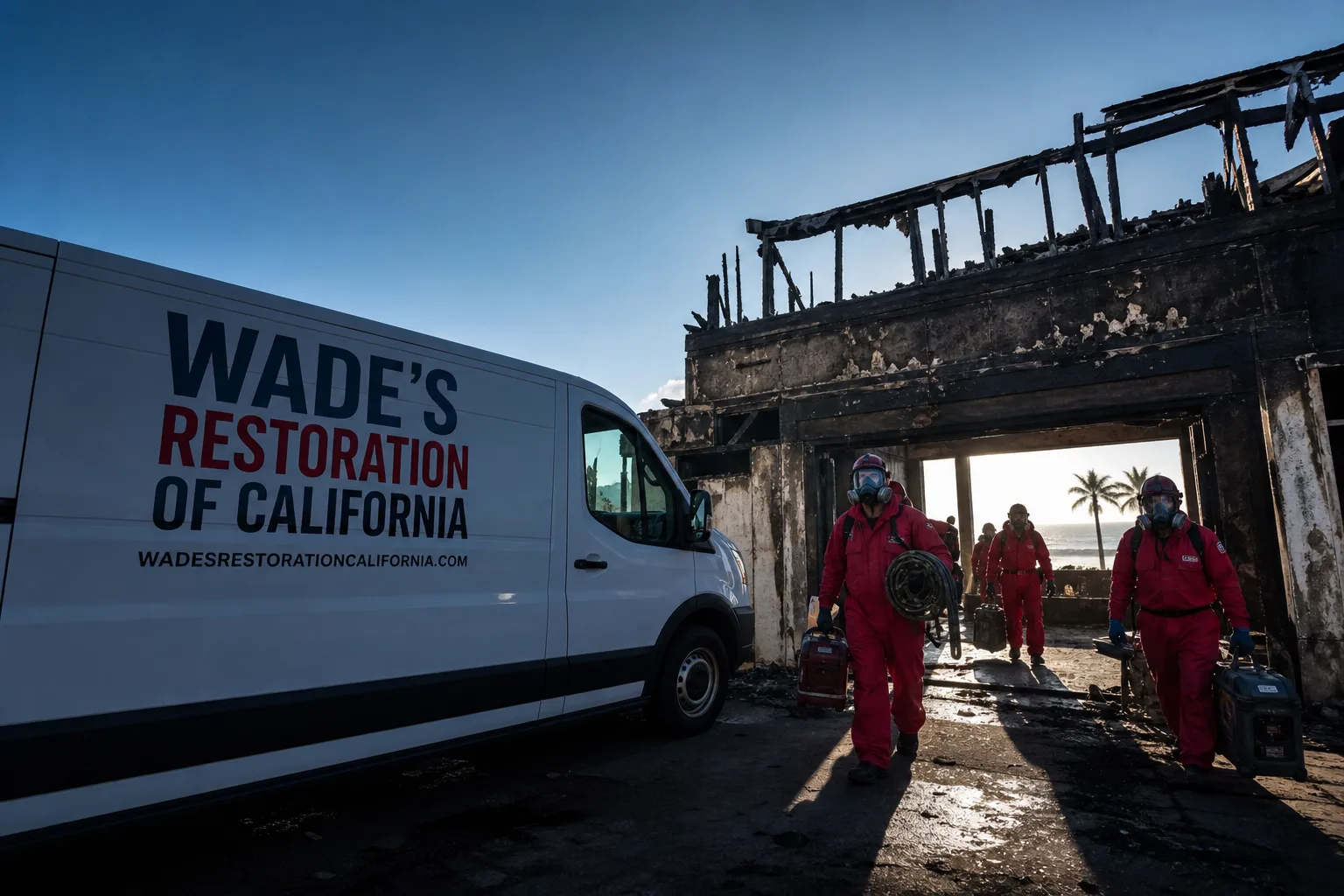
Fast, Reliable Storm & Disaster Restoration Across Koreatown
Storm damage in Koreatown rarely stays contained to one apartment. When a flat roof gives out on a 1930s courtyard building or wind-driven rain finds its way through old retrofit penetrations, water moves down through stacked units fast. We know because we’ve pulled moisture from three floors at once on South Normandie Avenue. If you’re dealing with a leaking roof, flooded unit, or wind damage right now, call (855) 915-0646. Wade Ferris answers his own phone, and he can have extraction equipment running inside the hour.
Our Storm & Disaster Restoration crews work throughout Koreatown every week. We understand these buildings because we’ve been inside hundreds of them. The soft-story retrofits, the galvanized supply lines behind shared walls, the flat roofs that hold water until they don’t. This isn’t suburbia. This is dense urban restoration, and it needs a crew that knows how water moves through a 1960s dingbat walk-up differently than it moves through a single-family ranch house.
Why Wade’s Restoration of California Is Koreatown’s Preferred Storm & Disaster Restoration Company
Wade’s Restoration has been locally owned and owner-operated since 2007. Wade Ferris puts his name and license number on every job, and he’ll hand you his cell number before the first crew rolls up. That matters in Koreatown, where building managers and landlords have been burned by national chains that quote one number on the phone and a different one at the door. Ask anyone on your street. Wade is the guy who shows up himself, takes moisture readings every single day, and hands you the full log when the job is done. Almost nobody else in this trade does that.
Our Koreatown customers call us for two reasons. First, speed. A storm doesn’t wait, and neither do we. Calls are answered by a live person 24/7, including Wade himself. Second, accountability. We put our 90-Day Done Right Promise in writing on every water, fire, and mold restoration job. If it’s not done right, we make it right. One call brings Wade back. No national call center, no runaround. That’s how we’ve built a strong local reputation across 90005 and the surrounding blocks.
Our technicians are background-checked and uniformed, and they run professional-grade equipment from Dri-Eaz, Phoenix, and Injectidry. Wade holds IICRC and RIA credentials, and he applies those standards to every Koreatown job, from a third-floor ceiling stain to a full-building multi-unit storm response.
Our Storm & Disaster Restoration Services in Koreatown
Storm Damage Cleanup
Koreatown’s density means one storm event can hit dozens of units in a single block. We respond to wind-driven rain intrusion, saturated drywall, ceiling collapse, and water-logged flooring across courtyard apartments, dingbat walk-ups, and multi-story blocks. Our crews extract standing water, set drying equipment, and document everything for your insurance adjuster. Photo documentation and direct adjuster coordination are standard on every job we do in Koreatown. You won’t be stuck relaying information between two sides.
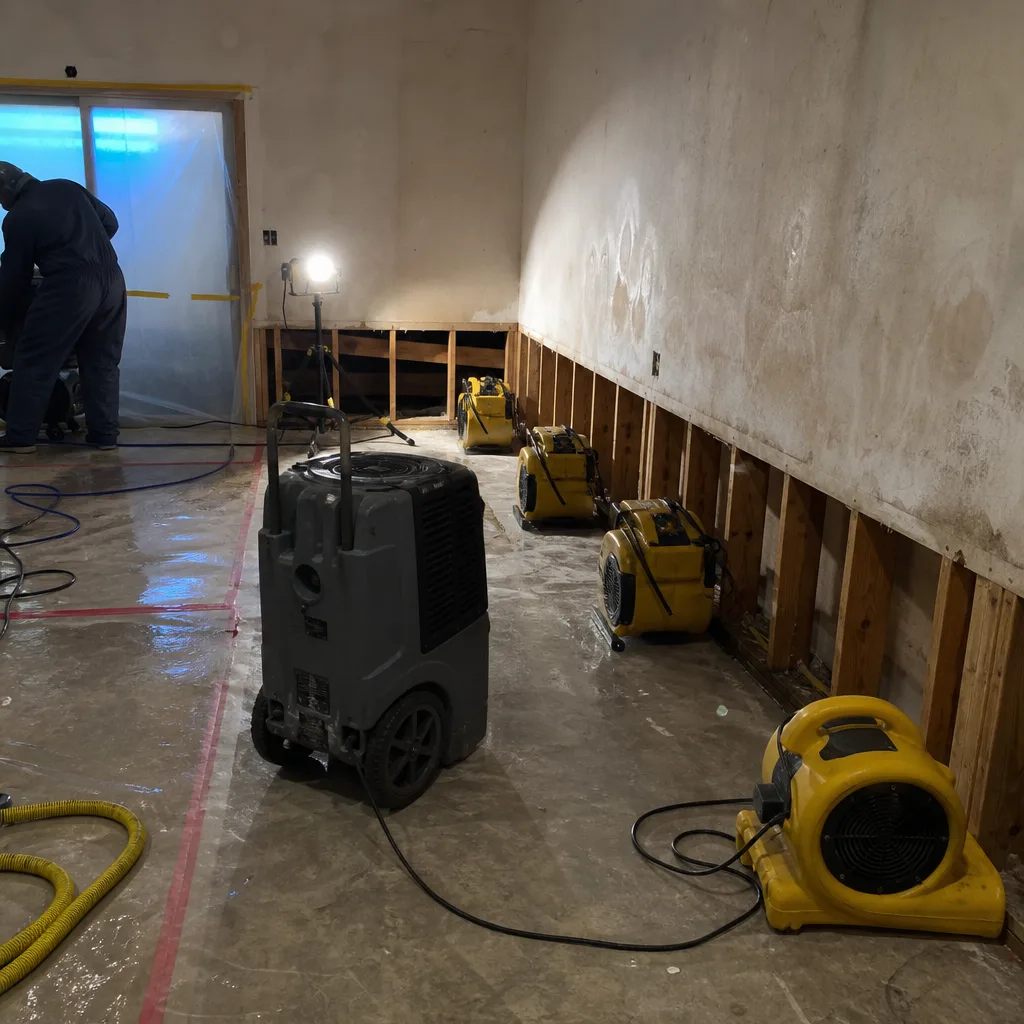
Flood Damage Restoration
Flat roofs on pre-WWII courtyard buildings and 1950s-60s walk-ups clog with debris during LA’s long dry spells. When the first intense winter storm hits, those drains back up and water pools until it finds a seam, a crack, or a dried-out membrane. Then it cascades down through stacked units. In Koreatown, a third-floor flood routinely saturates subfloor assemblies in the two units below before anyone notices. Our Storm & Disaster Restoration team runs Dri-Eaz dehumidifiers and Injectidry floor-drying mats to pull moisture from multiple stacked floors simultaneously. We coordinate with every tenant and landlord involved, and we work directly with their carriers.
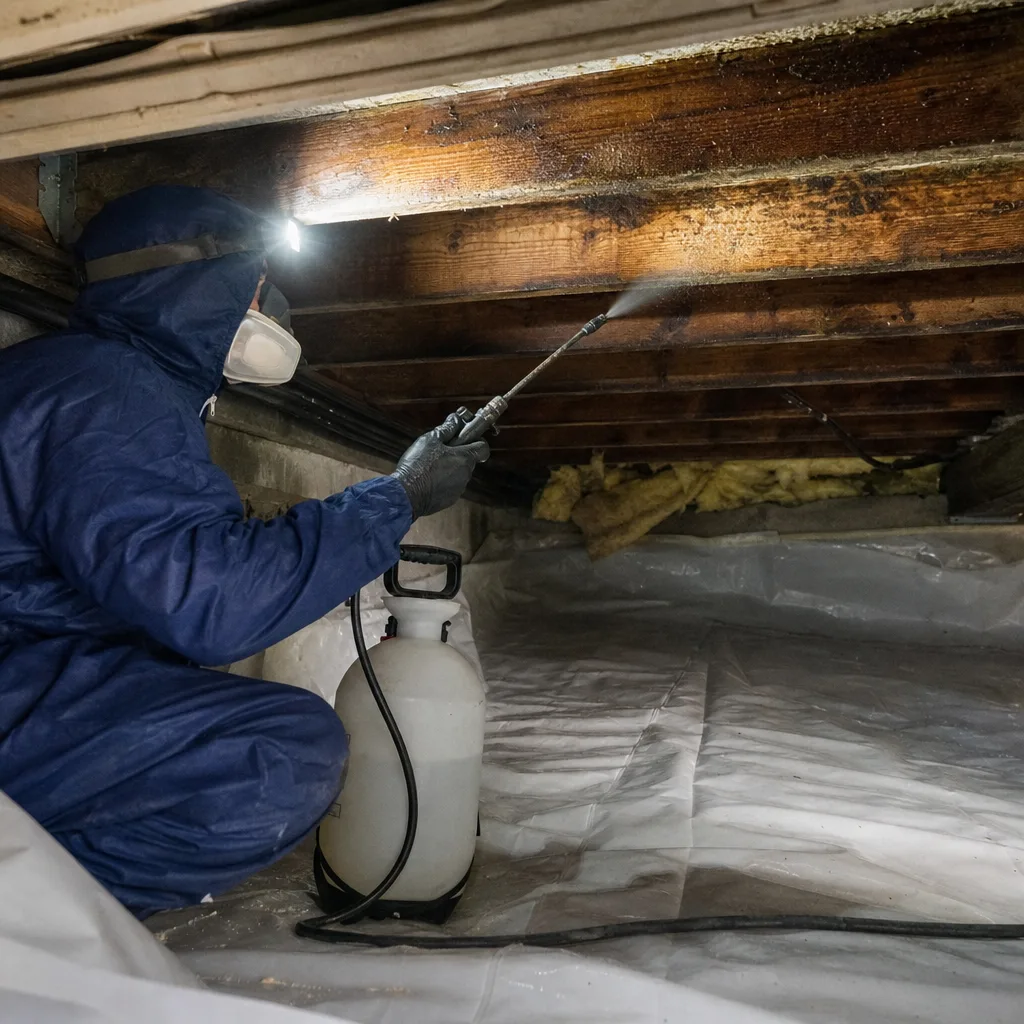
Emergency Board-Up
Wind damage and broken windows leave Koreatown apartments exposed to rain, trespassers, and further damage within minutes. We board up broken glass and compromised openings fast, using materials that hold up on busy streets like Western Avenue and Wilshire Boulevard. Board-up also matters for insurance: a documented, properly secured opening prevents further loss and keeps your claim clean. We photograph everything before and after.
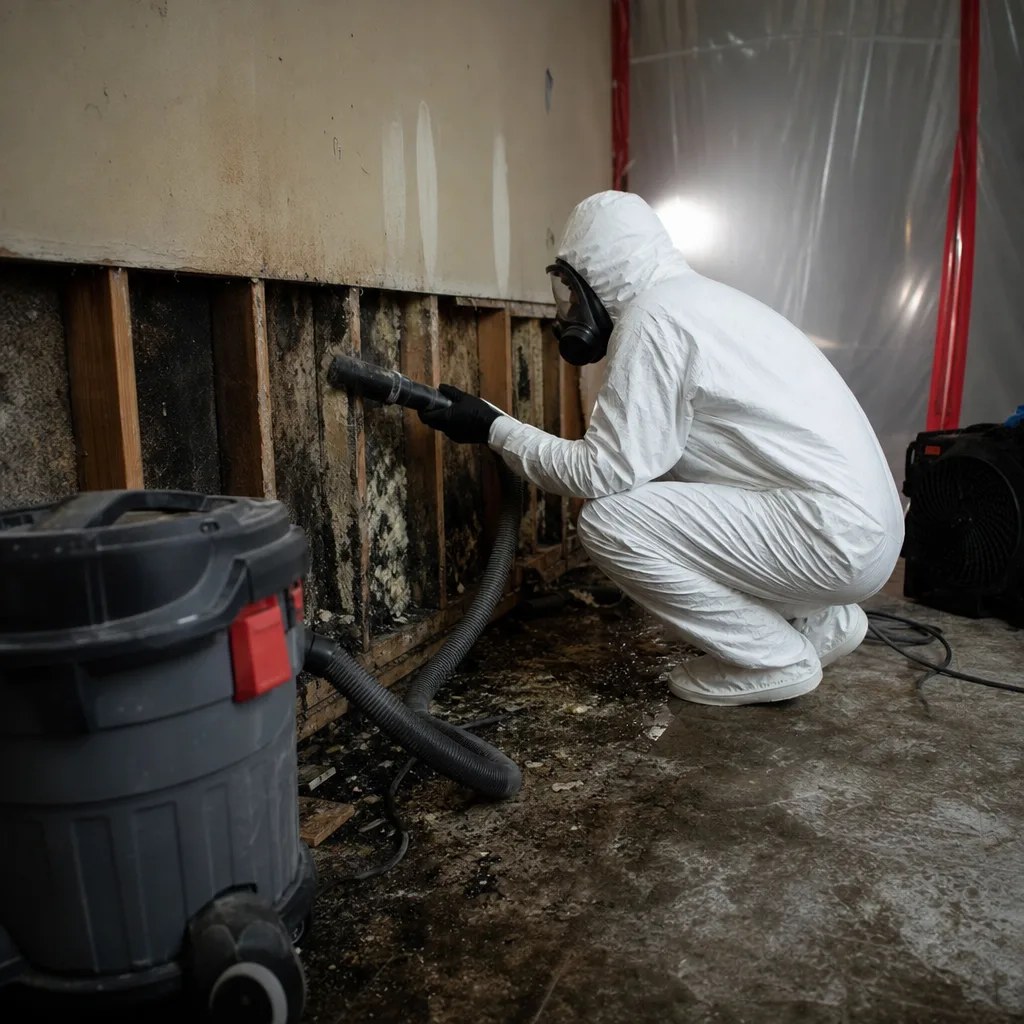
Roof Tarping
A tarp on a flat or low-slope Koreatown roof isn’t a permanent fix. It’s a stopgap that buys you time to get a proper repair scoped and scheduled. We tarp damaged membranes and failed seams on courtyard roofs and dingbat walk-ups throughout 90005, then we file the photos and scope with your adjuster so the claim moves forward without weeks of back-and-forth. In a dense neighborhood like Koreatown, one exposed roof can mean water in four to eight units by morning. We don’t wait.
What happens when you call
- 1
A real person answersNo phone trees - you reach a local pro.
- 2
You get an upfront price rangeHonest numbers before anyone is dispatched.
- 3
A background-checked tech heads outLicensed & insured, dispatched right away.
- 4
You approve before work beginsNothing starts until you say go.
Trusted Brands We Service in Koreatown
We stock and service equipment from Dri-Eaz, Phoenix, Injectidry, XPOWER, and B-Air, which means we can pull the right drying system for a tight Koreatown floor plan without waiting on a parts run across town. For older buildings in 90005, proper air movement matters more than in a suburban house. Dense concrete-and-wood hybrids with shared wall cavities need the right dehumidifier placement, and we carry what those jobs require. Our IICRC-certified and RIA-affiliated crews know the difference between a quick dry and a thorough one.
Common Storm & Disaster Restoration Problems We See in Koreatown Homes
- Post-retrofit water intrusion through anchor-bolt penetrations. Koreatown’s mandatory soft-story seismic retrofit left thousands of holes cut through exterior walls and roof membranes for hold-downs, anchors, and shear-wall tie-ins. Many of those holes were sealed with caulk that’s now cracked from UV exposure and vibration. Wind-driven rain finds its way into wall cavities behind shear-wall sheathing, and the first sign is often a ceiling stain weeks after the storm.
- Flat-roof drain failures on older courtyard buildings. Los Angeles’s Mediterranean climate means months of complete dryness followed by sudden intense storms. Koreatown’s pre-WWII and mid-century flat roofs sit through those dry spells with clogged drains and dried-out membrane seams. When El Niño-driven rain arrives, water pools fast and finds every weak point at once.
- Original galvanized supply lines in shared wall cavities. Many Koreatown buildings from the 1920s through 1940s still run original galvanized plumbing. LA’s mineral-heavy water corrodes those lines from the inside. When winter pressure spikes hit, a pipe fails inside a wall cavity and saturates subfloor assemblies across two or three units before any tenant sees water.
- Multi-unit cascading water damage. In Koreatown, damage almost never stays contained to one unit. A third-floor supply line burst or roof failure runs down through stacked floor plates, and by the time anyone calls us, mold is often already established across multiple tenancies. That means coordinating three or four tenants, a landlord or two, and multiple insurance carriers on one claim. We do that every week.
Pricing for Storm & Disaster Restoration in Koreatown, CA
Storm damage cleanup in Koreatown typically runs $1,200 to $4,500 per affected unit, depending on how many rooms took water and whether subfloor assemblies need to be dried in place or opened up. Flood damage restoration with multi-unit coordination commonly lands between $3,500 and $12,000 when stacked floors are involved. Emergency board-up runs $350 to $900 per opening. Roof tarping on a flat or low-slope Koreatown roof runs $500 to $1,800 depending on access and square footage. These are real ranges for this market, not national averages. What moves the number is how far water traveled, how many floors are wet, and whether mold has already established. We give you a written scope before any work starts, and estimates are free. Call (855) 915-0646 and Wade will walk you through it himself. Senior and veteran customers always get 10% off.
We Also Serve Cities Near Koreatown
We work throughout Koreatown and the surrounding neighborhoods, including Los Angeles, Echo Park, Silver Lake, and Hollywood. If your building sits just outside 90005 or spans multiple blocks, call us. We’ll come out and take a look. No trip charge inside our own county.
Serving Koreatown, CA - Our Local Coverage Area
We’re based in the Koreatown area and know this community well. Use the map below to see our service coverage - if you’re nearby, we can almost certainly help.
FAQs - Storm & Disaster Restoration in Koreatown
Yes. Retrofit construction cuts holes through exterior walls and roof membranes for hold-downs, anchors, and shear-wall tie-ins. Those penetrations are often sealed with caulk that cracks over time, and wind-driven rain enters through those gaps into wall cavities and subfloor assemblies. In a retrofitted Koreatown building, water damage follows patterns that older, un-retrofitted buildings don’t have. That’s why we trace intrusion points along shear walls and roof penetrations before we set drying equipment. If you’re seeing stains near a retrofit line, call (855) 915-0646. We’ll find the path, not just dry the puddle.
Because drains and scuppers clog during LA’s long dry spells, and membrane seams dry out and shrink in the sun. When the first intense storm arrives, water pools faster than the drains can clear, and every weak seam becomes a waterfall. Koreatown’s concentration of pre-WWII courtyard buildings and mid-century walk-ups makes this one of the most sudden-flood-prone housing stocks in Los Angeles. We tarp those roofs fast, but the real fix is drain maintenance and membrane repair before the rain hits. Call us for a free assessment before the next storm front.
Probably, yes. In Koreatown’s concrete-and-wood hybrids, water trapped inside wall cavities and subfloor assemblies sits warm and wet for weeks. Mold establishes in 48-72 hours under those conditions. A stain that appears two or three weeks after a storm means moisture has been traveling behind finishes that whole time. We run moisture meters and thermal imaging to map the actual wet zone, then we dry it with Dri-Eaz equipment and treat the mold before it spreads further. Don’t paint over it. Call (855) 915-0646 and we’ll tell you exactly what’s underneath.
Yes. We keep tarping materials on our trucks, and we respond to Koreatown calls the same day. On a flat-roofed courtyard building, a tarp installed within hours can stop water from reaching the units below. If you wait until morning, you’re likely dealing with four to eight wet units instead of one. Call the moment you see water. Wade heads out himself, and he can have a tarp on your roof before the next rain band arrives.
We coordinate everyone. We document each affected unit separately, photograph everything, and communicate directly with every adjuster involved. The landlord doesn’t have to relay information between tenants and carriers, and tenants don’t have to chase anyone. We’ve handled cascading multi-party claims in Koreatown courtyard buildings and dingbat walk-ups for years. Wade deals with the adjusters himself, so you’re never stuck in the middle. Call (855) 915-0646 and we’ll start the process before anyone else even answers.
Written by Wade Ferris, Owner at Wade’s Restoration of California, serving Koreatown since 2007.