
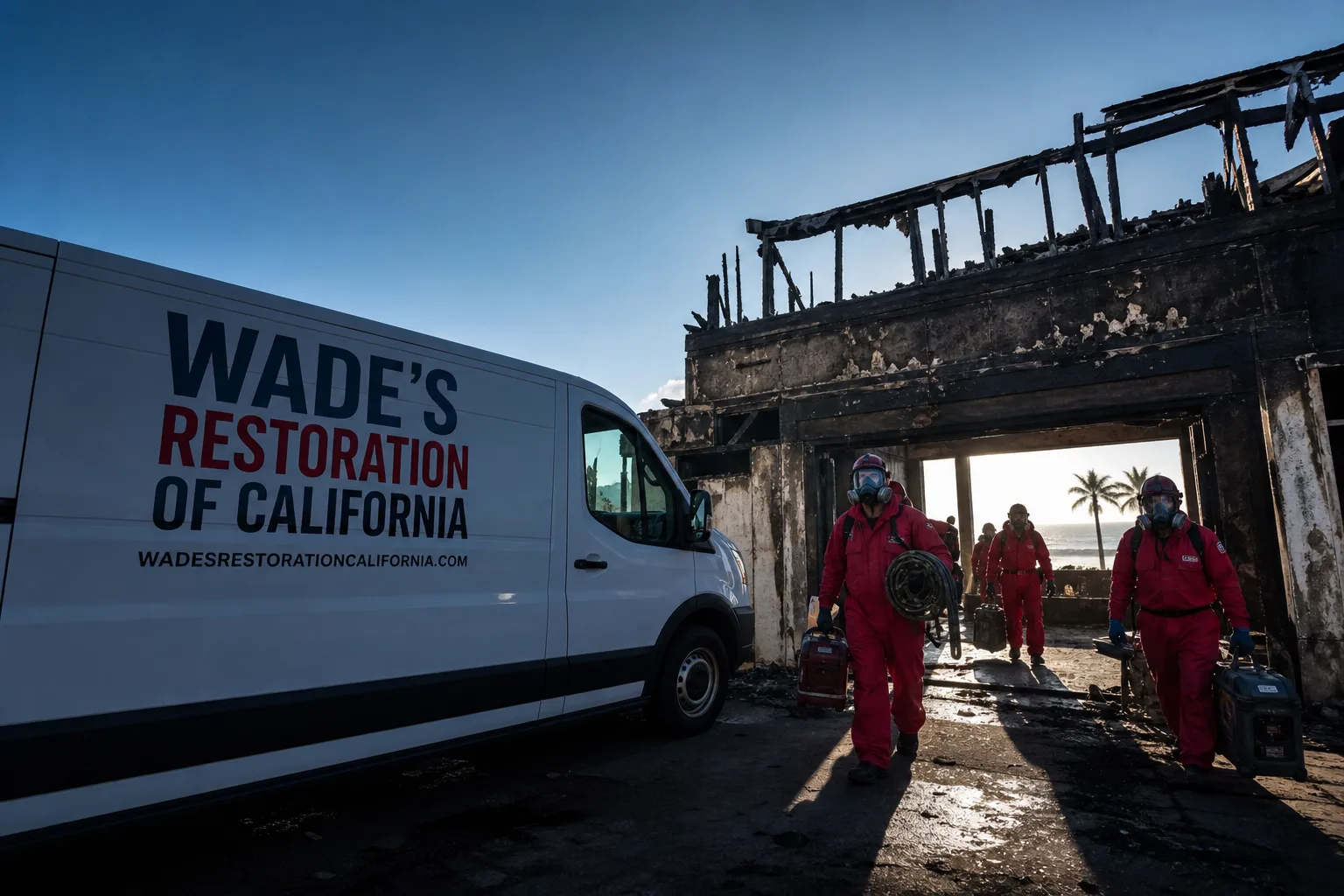
Fast, Reliable Storm & Disaster Restoration Across Granite Bay
Storm damage in Granite Bay rarely looks like the photos insurance adjusters expect. You get a custom home off Douglas Boulevard with a failed roof valley above a vaulted great room, and the real problem isn’t the water you can see. It’s what the water found on its way down. Wade Ferris has been answering calls from Granite Bay homeowners since 2007, and he still picks up the phone himself. When an atmospheric river tears through the eastern edge of the Sacramento Valley, Granite Bay gets hit differently than Rocklin or Orangevale. The granite outcroppings push water where it shouldn’t go, and the clay soil holds it there long after the rain stops. Call (855) 915-0646 and you’ll get a live person, not a queue. Usually Wade himself.
Why Wade’s Restoration of California Is Granite Bay’s Preferred Storm & Disaster Restoration Company
Ask anyone on your street in Granite Bay. Wade shows up in person. His name is on the truck, his cell number gets answered, and if something isn’t right 90 days after the job, he comes back. That’s the Storm & Disaster Restoration promise stamped in writing on every contract, not a line in a brochure. We’ve worked on custom homes throughout Granite Bay, from the four-plus-acre parcels near the lake to the gated communities off Barton Road. Wade’s crew is background-checked, uniformed, and trained on IICRC standards. The equipment is Dri-Eaz and Phoenix gear, the same commercial-grade stuff you’d find on a commercial loss. And every moisture reading gets logged daily and handed to the homeowner at job’s end. Almost no one in this trade does that.
Our Storm & Disaster Restoration Services in Granite Bay
Storm Damage Cleanup
When a winter atmospheric river drops five inches of rain on Granite Bay, the damage spreads fast. Water pools against foundations sitting on granite outcroppings, finds its way into subfloor framing, and wicks up through engineered hardwood before you notice the smell. We respond inside the hour for emergency calls in Granite Bay, set up containment, stabilize what’s salvageable, and start drying. We’re not a crew that shows up with blowers and hopes for the best. We map the moisture, document it daily, and hand you the log. On a 4,800 sq ft home off Douglas Boulevard, we ran a Dri-Eaz LGR 3500i and a Phoenix R200 simultaneously to pull water from custom millwork and hardwood after a roof valley failed above a vaulted great room. That’s the kind of job we know how to run in Granite Bay.
Flood Damage Restoration
Granite Bay homes built during the 1990s boom often carry a hidden risk. Polybutylene and early CPVC supply lines, installed when those large custom homes went up, are now failing behind natural stone and custom cabinetry. A storm leak repair can turn into a second concealed leak weeks later if the crew doesn’t know what they’re looking at. We do. Before we open a wall or pull baseboard, we check the plumbing age and material. Flood damage restoration in Granite Bay means understanding that the water you see on the floor might have been dripping behind a stone backsplash for months.
Emergency Board-Up
Wind damage on a Granite Bay custom home is rarely just a missing shingle. It’s a 30-year-old wood-framed soffit torn open, a carriage-house door blown off its track, or a window broken by a flying branch from one of the mature oaks that line the bigger lots. Emergency board-up isn’t just about covering a hole. It’s about doing it without trashing the premium door or the custom trim around it. We cut to fit, use fasteners that don’t leave permanent marks, and photograph every step for your adjuster.
Roof Tarping
Roof tarping in Granite Bay sounds straightforward until you’re on a 6/12 pitch with architectural shingles and a valley that’s been failing since the last storm season. We tarp to keep the rain out, yes. But we also document what we see underneath: non-ignition-resistant vents, wood-framed soffits, attic bypasses. Because in Granite Bay, homes permitted in the late 1990s often predate Placer County’s modern WUI construction standards, and when restoration opens the attic, code triggers follow. Better to know that on day one than to get a stop-work order two weeks into drying.
What happens when you call
- 1
A real person answersNo phone trees - you reach a local pro.
- 2
You get an upfront price rangeHonest numbers before anyone is dispatched.
- 3
A background-checked tech heads outLicensed & insured, dispatched right away.
- 4
You approve before work beginsNothing starts until you say go.
Trusted Brands We Service in Granite Bay
The homes in Granite Bay aren’t spec builds. They’re custom jobs with the finishes to match. That means the equipment we use matters just as much as the hands running it. We run Dri-Eaz dehumidifiers and air movers on every water loss, Phoenix axial fans for tight spaces behind cabinetry, and we follow IICRC, RIA, and IFA protocols on every job we touch. We don’t cut corners with rental-grade equipment or send a guy who learned restoration from a YouTube video. When your insurance adjuster asks for documentation, we hand over a moisture log that would survive scrutiny from anyone. That’s the standard.
Common Storm & Disaster Restoration Problems We See in Granite Bay Homes
- Polybutylene supply line failures that surface after a storm leak repair. We regularly find 1990s-era PB lines behind walls when we open a storm-damaged ceiling in Granite Bay. The leak you called about was just the first one. The second one was waiting behind the stone backsplash.
- Smoke infiltration that gets treated as a surface-clean job. After a Sierra Nevada smoke event, the first crew comes in, wipes the walls, and leaves. Then the HVAC kicks on and the house smells like a campfire again. Multi-zone ductwork needs real cleaning and seal work, not a filter change.
- Attic bypasses and non-ignition-resistant vents that trigger WUI code upgrades. Granite Bay homes built before Placer County adopted modern WUI standards frequently have soffit vents and attic penetrations that don’t meet current code. Once restoration exposes them, the scope expands. A homeowner should know that before work starts, not after.
- Water pooling against foundations on granite outcroppings. Granite Bay’s terrain doesn’t drain like the flatlands. Water sits against stem walls and finds its way into subfloor framing through hairline cracks that never mattered until this storm.
Pricing for Storm & Disaster Restoration in Granite Bay, CA
We Also Serve Cities Near Granite Bay
Wade’s Restoration covers the full northern Placer County and eastern Sacramento County footprint. So whether you’re in Orangevale, Loomis, Folsom, Rocklin, or right here in Granite Bay, the same crew, the same equipment, and the same owner-accountability model applies. One call brings Wade back, whether it’s a flooded basement in Loomis or a wind-damaged roof off Sierra College Boulevard.
Serving Granite Bay, CA - Our Local Coverage Area
We’re based in the Granite Bay area and know this community well. Use the map below to see our service coverage - if you’re nearby, we can almost certainly help.
FAQs - Storm & Disaster Restoration in Granite Bay
After a Sierra Nevada smoke event coats our Granite Bay custom home, do we need to have our multi-zone HVAC system cleaned as part of storm restoration?
Yes, and this is where most restoration crews in Granite Bay fall short. Smoke particles from fires like the 2020 North Complex Fire don’t just sit on surfaces. They get pulled into return ducts, coat the blower and condenser coils, and then recirculate every time the system kicks on. In a multi-zone home, you can’t treat one zone and skip the others. We pull registers, inspect each zone’s ductwork, and clean the full system, not just the visible vents. If the first crew didn’t document the HVAC cleaning, the smell will come back. That’s one of the most common callbacks we handle in Granite Bay. Call (855) 915-0646 and we’ll walk you through what a proper smoke remediation actually involves.
Why does roof tarping on our Granite Bay home sometimes lead to a mandatory attic code upgrade?
Granite Bay homes permitted in the late 1990s were built before Placer County adopted modern Wildland-Urban Interface construction standards. When a storm opens part of the roof or soffit, the exposed area often includes non-ignition-resistant vents, wood-framed soffits, or attic bypasses that don’t meet current WUI code. Once that’s visible to a building inspector, the county can require the whole penetration be brought to code before the roof is closed. That’s not a scope you want to discover two weeks into drying. We flag these conditions during the initial tarp and assessment, so you know exactly what the code path looks like before restoration starts.
Our 1990s Granite Bay home has storm water pooling against the foundation on granite outcroppings. What does that mean for restoration?
It means the water isn’t draining away from the structure, which is the single biggest predictor of a long restoration timeline. Granite Bay’s geology doesn’t absorb water the way loam does. When storm water pools against a stem wall, it sits there and works its way into any crack, cold joint, or weep-hole gap. Over days, that water migrates into subfloor framing and sill plates. Restoration has to address both the interior moisture and the drainage condition that caused the pooling in the first place. Otherwise the same storm next winter does the same damage again. Wade’s crew documents the exterior drainage failure as part of every flood loss in Granite Bay.
Will an emergency board-up on our Granite Bay custom home damage the premium wood doors or carriage-house trim?
No, if the crew doing the board-up knows what they’re covering. We cut fasteners and bracing to fit the opening without driving screws through finished surfaces. Pre-hung carriage-house doors with custom casing need a different approach than a standard entry door, and we’ve done enough of them in Granite Bay that we don’t learn on your home. We photograph every touch point before and after so your adjuster sees exactly what was covered and how. If the board-up causes any damage, it’s on us.
After a winter atmospheric river, our Granite Bay home has water stains on the vaulted great room ceiling. How is this different from a standard water loss?
A vaulted ceiling in a Granite Bay custom home isn’t like a flat ceiling in a track home. The stain you’re seeing is often the low point of water that ran down from a failed valley, through the attic, and followed the framing before it pooled above the drywall. That means the water traveled through insulation, possibly through a non-ignition-resistant soffit vent, and possibly encountered wiring or a recessed can light along the way. Drying a vaulted assembly requires containment, access panels, and targeted air movement inside the cavity. If the first crew just sanded and painted the stain, the framing is still wet. We see that misdiagnosis constantly, and it’s why second opinions exist. Call (855) 915-0646 and we’ll give you an honest read on what’s actually wet.
Call Wade’s Restoration for Storm & Disaster Restoration in Granite Bay
When a storm hits Granite Bay, you don’t need a call center. You need someone who knows the difference between a 1990s polybutylene failure and a simple storm leak, who knows which Granite Bay homes will trigger WUI code upgrades when the attic opens, and who will be there himself, not send a crew you’ve never met. Wade Ferris answers his own phone at (855) 915-0646. Same-day response in Granite Bay, written scopes before work starts, and a 90-Day Done Right Promise on every water, fire, and mold restoration job. If it’s not done right, he makes it right. That’s the deal. No trip charge inside our county, free second opinion on any written estimate, and a permanent 10% discount for seniors and veterans.
Written by Wade Ferris, Owner at Wade’s Restoration of California, serving Granite Bay since 2007.