
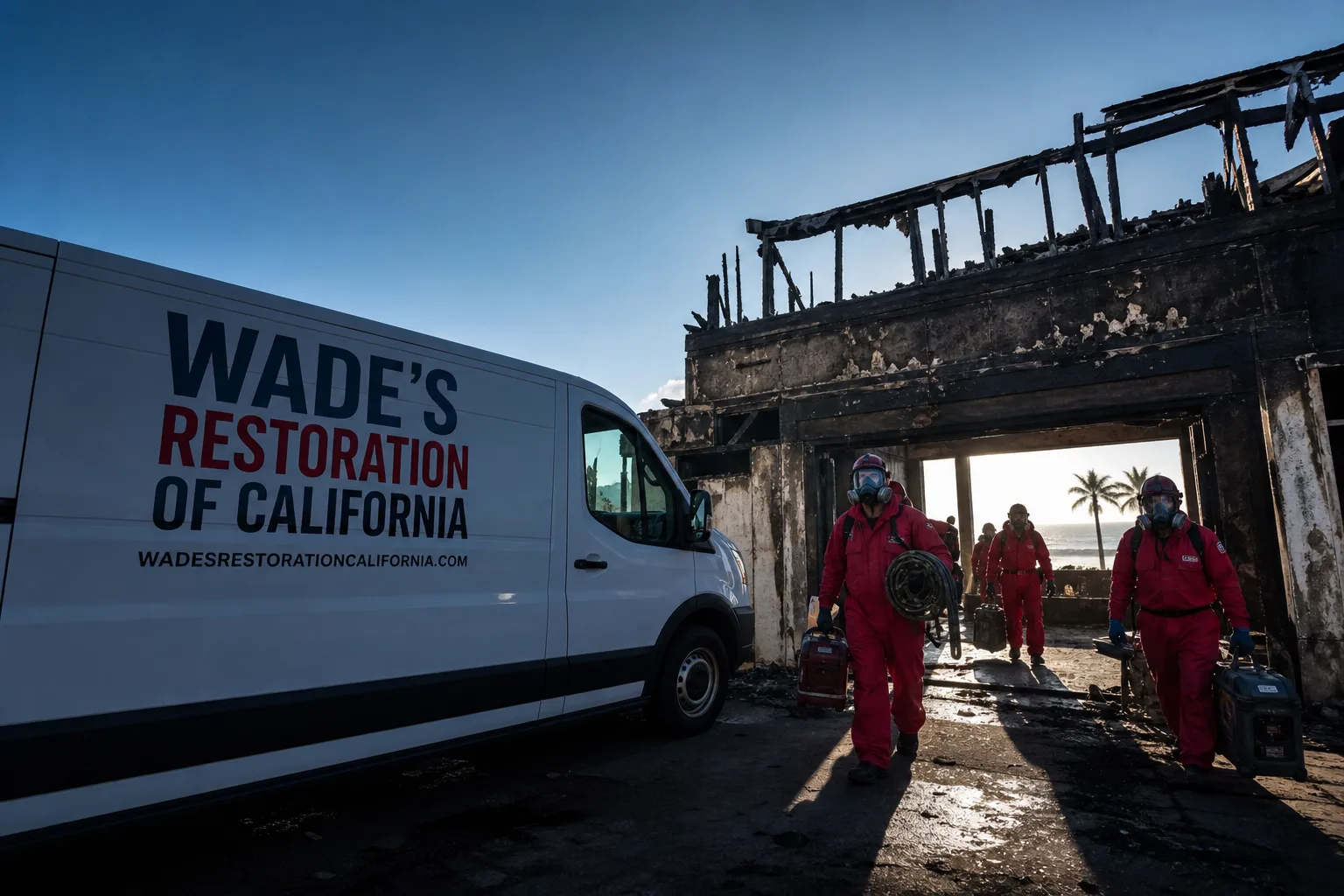
Fast, Reliable Storm & Disaster Restoration Across Goleta
Storm damage in Goleta rarely arrives as a single, clean event. It comes as a sequence: a Sundowner wind event batters roofs and fences, then the next atmospheric river sends mud and debris down from the Santa Ynez foothills, and somewhere in between, smoke from an upslope fire has already worked its way into your attic insulation. We’ve handled all three on the same property within the same season, more than once. If you’re standing in a flooded garage off Hollister Avenue or watching water seep through a wind-torn roof in the Goleta Valley, call (855) 915-0646 right now. Wade Ferris answers his own phone, and he can have extraction running inside the hour.
We’re not a national chain. We’re Storm & Disaster Restoration done the way it should be: by a local owner who publishes his address, answers his own phone, and shows up in person. Wade Ferris has built this company since 2007 on one straight principle: do the work right, document everything, and stand behind it in writing. In Goleta, that matters more than in most places, because the damage pattern here is different from anywhere else on the Central Coast.
Why Wade’s Restoration of California Is Goleta’s Preferred Storm & Disaster Restoration Company
Ask anyone on your street about storm restoration in Goleta, and you’ll hear the same frustration: a crew from down south quotes one price on the phone, shows up late, and then discovers “additional damage” that somehow doubles the bill. We’ve heard that story from homeowners in the 93117 zip code, from families off Patterson Avenue, from retirees near Goleta Slough. It’s why we do things differently.
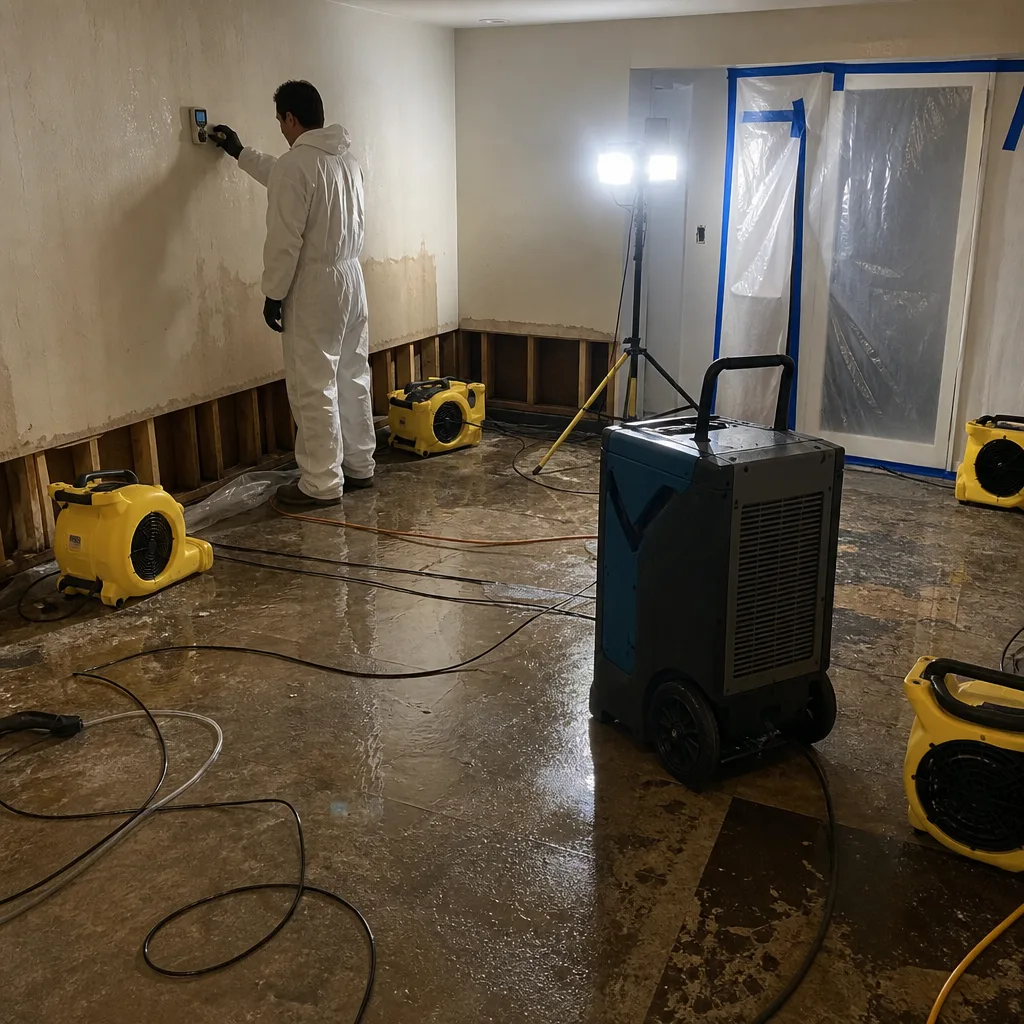
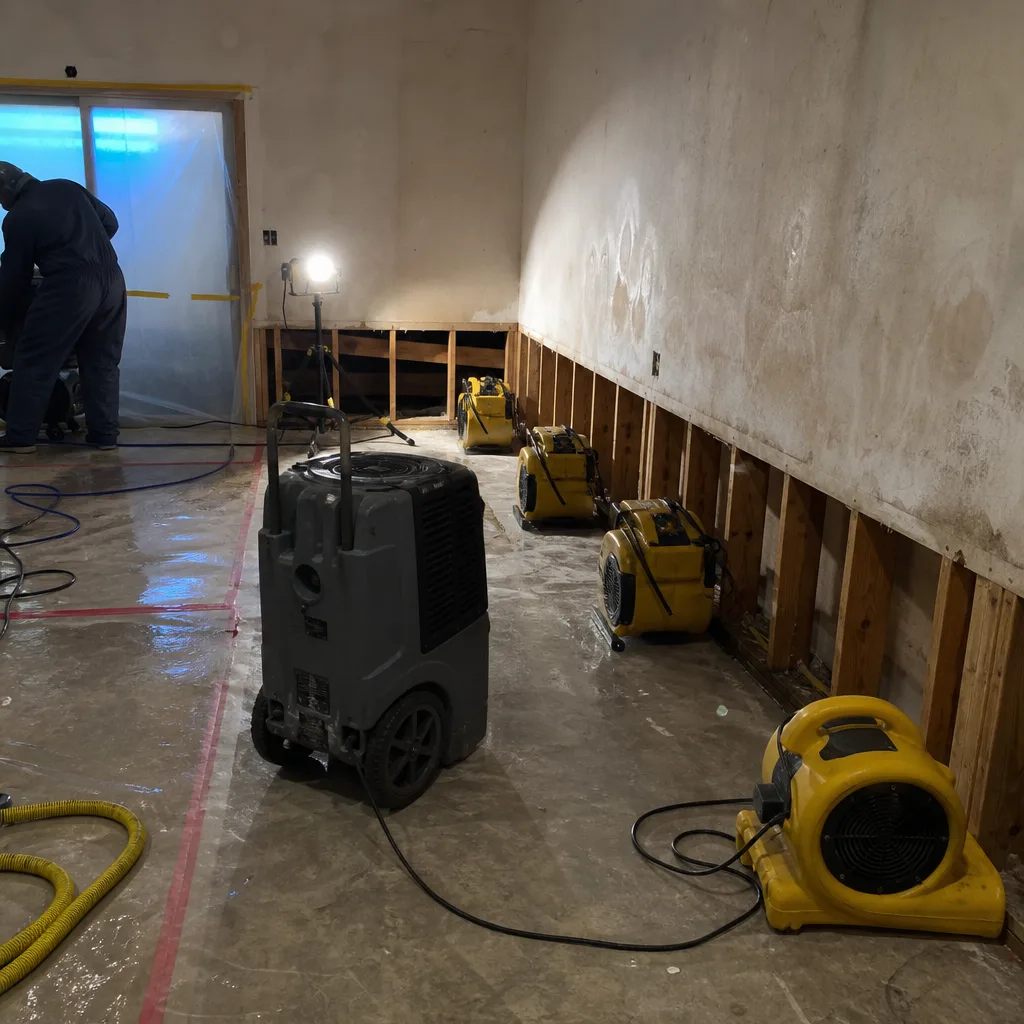
Every storm job in Goleta starts with a written scope of work and a price we both sign before a single piece of equipment comes off the truck. Wade’s crew is background-checked and uniformed, and the equipment is the same professional-grade gear you’d see on any major restoration job: Dri-Eaz dehumidifiers, Phoenix air movers, Injectidry extraction systems. The credentials are real too: IICRC-certified technicians, RIA-affiliated practices. No subcontractor roulette. The people who walk through your door are the same people Wade trained and trusts.
Response time to Goleta is measured in hours, not days. Since dispatch is coordinated from our Los Angeles office, crews are already staged to move north the moment a storm cell tracks toward the Santa Barbara Channel. That means when a tree limb punches through a roof near El Camino Real School or floodwater backs up into a garage off Storke Road, we’re there before the marine layer lifts the next morning. And Wade’s 90-Day Done Right Promise applies to every water, fire, and storm restoration job we do in Goleta: if it’s not done right, he makes it right. In writing.
Our Storm & Disaster Restoration Services in Goleta
Goleta’s storm profile is specific: Sundowner winds, mountain runoff, and a coastal humidity that keeps wet building cavities damp for days longer than inland crews expect. Here’s what we handle most often, and how Goleta changes the math on each one.
Storm Damage Cleanup
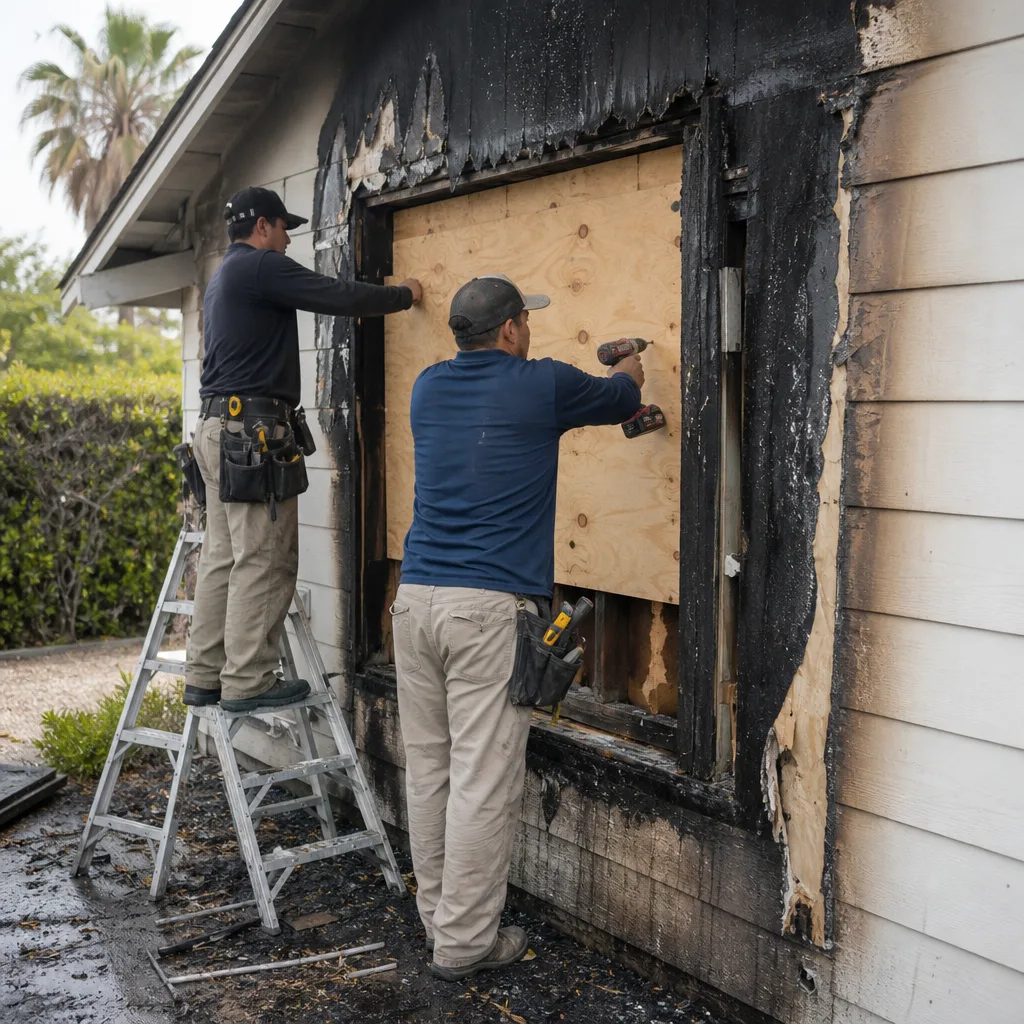
After a wind event in Goleta, the first problem is usually debris: eucalyptus branches down along Cathedral Oaks Road, fencing panels blown into driveways in the 93116 zip code, gravel and sediment pushed onto patios by runoff. We clear it, but we also look upstream. Wind damage here often leaves roof penetrations and broken vent covers that don’t look urgent on day one. Given Goleta’s marine-layer humidity, a small roof leak left unaddressed becomes a mold problem inside a week. Storm cleanup in Goleta means securing the property as much as clearing it.
Flood Damage Restoration
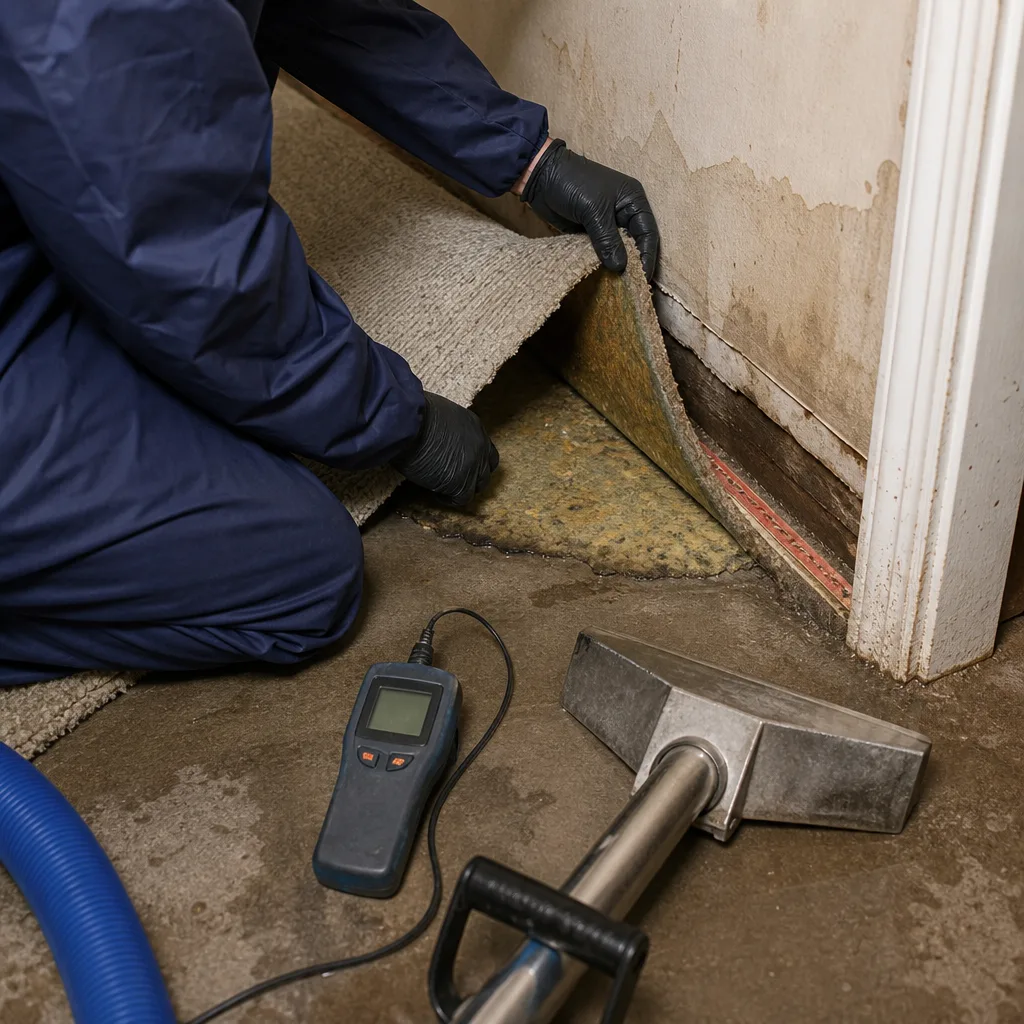
Flood calls in Goleta cluster around two patterns. The first is atmospheric-river rain overwhelming drainage near Goleta Slough and the low-lying streets around it, sending sheet flow under garage doors and into crawlspaces. The second is post-fire debris flow, where denuded slopes above the foothills release ash-laden mud that moves downhill with surprising speed. Either way, the critical window is short. In Goleta’s coastal climate, wall cavities stay damp 48 to 72 hours longer than they do inland, which means mold can establish before a standard drying timeline finishes. That’s why our Water Damage Restoration in Goleta includes daily moisture readings, and you get the full log at the end of the job. Almost nobody in this trade hands that over. Wade does.
Emergency Board-Up
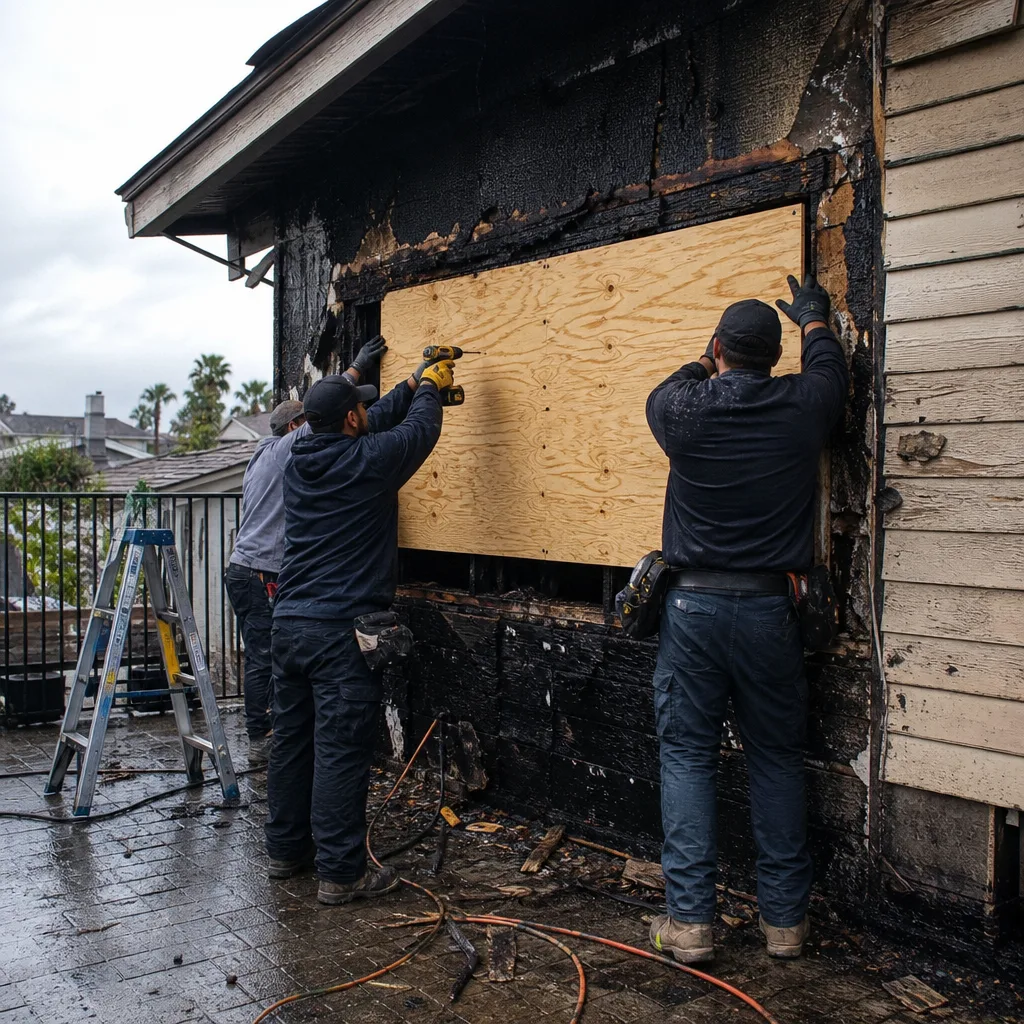
When wind tears a garage door off its track on a 1960s tract home near the Hollister corridor, the opening needs to be secured immediately. But near the coast, a generic board-up with standard plywood and untreated fasteners fails within a single winter. Salt air corrodes the hardware, and the next storm blows right through. We board openings with coated fasteners and pressure-treated materials, because in Goleta, a board-up isn’t a two-week stopgap. It’s the only thing protecting your home until Reconstruction & Cleanup - Goleta gets done.
Roof Tarping
Sundowner winds don’t just blow shingles off. The combination of dry offshore wind and ember cast from upslope fires means a compromised roof is also a fire-risk roof. Tarping in Goleta has to account for wind loads that come from the east and northeast in ways flatland roofers don’t prepare for. We anchor tarps to withstand repeated Sundowner events, not just the one storm that caused the damage. A tarp that blows off during the next wind event leaves the house worse than before.
Debris Removal
Post-storm debris in Goleta is rarely just branches and leaves. After fires like the Cave Fire in 2019 or the Refugio Fire in 2016, the same atmospheric river that floods a street also carries ash, charred organic material, and sediment down from the burn scar. That debris can’t go into standard green waste, and it shouldn’t be handled without proper containment. We provide Biohazard & Crime Scene Cleanup - Goleta protocols for safe removal, document what we hauled, and coordinate with your insurance adjuster directly so you’re not stuck relaying information between two sides.
What happens when you call
- 1
A real person answersNo phone trees - you reach a local pro.
- 2
You get an upfront price rangeHonest numbers before anyone is dispatched.
- 3
A background-checked tech heads outLicensed & insured, dispatched right away.
- 4
You approve before work beginsNothing starts until you say go.
Trusted Brands We Service in Goleta
Homeowners in Goleta don’t have time to wait on parts shipped from a warehouse in Texas. That’s why we keep a working inventory of the components that fail first in this climate: galvanized and coated torsion springs, stainless steel hinges and rollers, pressure-treated lumber for board-up, and replacement ducting materials common to 1960s and 70s tract construction. When a job requires specific equipment, we use professional-grade systems from Dri-Eaz, Phoenix, and Injectidry, because undersized hardware in a damp coastal environment loses the race against mold growth. If you’re in the 93117 or 93118 zip code and one of our techs identifies a part we don’t have on the truck, we can typically have it in hand from our Los Angeles inventory and on site the same day.
Common Storm & Disaster Restoration Problems We See in Goleta Homes
Goleta’s restoration needs are shaped by the same forces that shape everything else here: the east-west orientation of the Santa Barbara Channel mountains, the fire-then-flood cycle, and a marine layer that never really lets things dry out. Here’s what we see over and over:
- Passive smoke loading in attics and ductwork. After the 2019 Cave Fire burned the ridgeline directly above Goleta, restoration crews found ash and char infiltrated HVAC systems and attic insulation in foothill homes even where no structural fire damage occurred. Sundowner winds drive smoke micro-particulates through ridge vents and into fiberglass batts, and the smell keeps coming back every time the furnace cycles. This is a standing line item in Goleta estimates that most inland contractors don’t even quote.
- Mold establishing before drying is complete. Goleta’s coastal Mediterranean climate means the marine layer keeps interior wall cavities persistently damp through much of the year. After any water intrusion, that humidity adds 48 to 72 hours to the drying timeline compared to inland Southern California. Standard drying targets that work in Bakersfield don’t work in the 93116 zip code. Our crews factor in the moisture curve from the first day.
- Corroded garage-door hardware and failed board-ups. The older Goleta Valley core along Hollister Avenue and Patterson Avenue is heavily 1960s and 70s wood-frame stucco construction. Garage-door springs, hinges, rollers, and fasteners on those original assemblies corrode years faster in salt air than they do inland. When a storm hits, those weakened components fail first. A board-up secured with untreated hardware then corrodes within a single winter, leaving the home unsecured for the next debris flow.
- Flood damage compounded by post-fire debris. The cave fire denuded the slopes directly above Goleta. The next winter atmospheric river sent ash-laden debris flows toward foothill neighborhoods and low-lying streets near Goleta Slough. Restoration contractors here routinely handle fire/smoke remediation and post-fire mudslide flooding on the same properties within the same season. A sequential double-hit that flatland cities to the south simply don’t experience.
We were called to a 1970s wood-frame stucco home off Patterson Avenue after the Cave Fire. The homeowner reported a persistent campfire smell despite no visible soot on the walls. Our crew pulled a Dri-Eaz HEPA 500 air scrubber into the attic and found every fiberglass batt coated in micro-fine ash that had been drawn through the original ridge vents during a Sundowner event. We replaced the contaminated insulation, fogged the ductwork with an IICRC-approved antimicrobial, and finished with a full attic pressure-wash to stop the odor from re-emitting every time the furnace cycled. That’s what storm restoration in Goleta actually looks like.
Pricing for Storm & Disaster Restoration in Goleta, CA
Storm restoration pricing in Goleta depends on the scope, but here are the numbers we quote most often. Emergency board-up for a single door or window opening typically runs $400 to $800, including materials and labor. Roof tarping for a standard single-story tract home usually lands between $500 and $1,200 depending on roof pitch and the number of damaged areas. Storm debris removal from a typical residential property in the 93117 zip code runs $350 to $900, with higher ranges when post-fire sediment is involved. Flood water extraction and structural drying for a single room starts around $1,500 and scales from there. Attic decontamination after passive smoke loading, including insulation removal and duct fogging, typically costs $2,500 to $5,000 for a mid-century home along the Hollister corridor.
What drives the price? The age of the structure matters, because 1960s tract homes have original vapor barriers that complicate drying. The presence of post-fire ash in the debris stream adds disposal costs. And marine-layer humidity extends drying time, which means more equipment days. We don’t quote over the phone and change the number at the door. The estimate you get from Wade’s crew is the same price on the contract. Estimates are free. And if you have a written estimate from another company, we’ll give you a free second opinion. No charge for that.
We Also Serve Cities Near Goleta
While this page focuses on Storm & Disaster Restoration in Goleta, Wade’s crews also respond daily to Isla Vista, Santa Barbara, Montecito, and Carpinteria. The same marine-layer humidity, Sundowner wind exposure, and fire-cycle pattern applies across the whole coastal stretch. If you’re a few miles down the 101 in Santa Barbara or up in the Montecito foothills, call the same number: (855) 915-0646.
Serving Goleta, CA - Our Local Coverage Area
We’re based in the Goleta area and know this community well. Use the map below to see our service coverage - if you’re nearby, we can almost certainly help.
FAQs - Storm & Disaster Restoration in Goleta
That smell is passive smoke loading: micro-fine ash and char particulate driven into your attic and HVAC ducts by Sundowner winds, even when no structural fire damage occurred. After the 2019 Cave Fire, restoration crews documented this pattern across foothill neighborhoods in the 93117 and 93118 zip codes. The odor re-emits every time the furnace cycles because the contamination is trapped in insulation and ductwork, not on wall surfaces. The fix is attic decontamination: insulation replacement, duct fogging with an IICRC-approved antimicrobial, and pressure-washing of attic surfaces. A surface cleaning alone will not solve it. Call (855) 915-0646 and Wade’s crew will assess what’s actually in your attic.
In Goleta’s coastal climate, mold spores can begin colonizing damp building materials within 48 to 72 hours of water intrusion. That timeline is shorter than inland areas because the marine layer keeps wall cavities persistently damp and standard drying targets are harder to hit. In a 1960s tract home with original vapor barriers, the risk is higher still. If floodwater has been sitting in your home for more than 24 hours, call (855) 915-0646. Wade’s crew can have extraction running the same day, and we log moisture readings daily until the structure hits a documented dry standard.
Yes, if the ash is coating the surface of the fiberglass batts, it’s embedded in the material and will continue to off-gas odor and particulate every time air moves through the attic. Surface vacuuming doesn’t remove what’s worked into the fiber matrix. We documented this exact pattern after the Cave Fire in homes off Patterson Avenue and along the foothill corridors. Replacement insulation plus duct fogging and an attic pressure-wash is the only reliable fix. If you want a second opinion before committing, that’s free too. Call (855) 915-0646 and Wade will come look himself.
Inspect the springs, hinges, rollers, and fasteners on your garage door now. If you see rust blooming on the torsion spring or white corrosion on the hardware, replace it before the next storm event. Salt air near the coast accelerates corrosion on original 1960s and 70s assemblies, and a garage door that fails during a debris flow leaves the entire home exposed. We recommend galvanized or coated springs, stainless hinges, and nylon rollers for Goleta homes. A corrosion inspection costs nothing to have done as part of a board-up or tarping estimate. Call (855) 915-0646 to have Wade’s crew walk your property before the next storm season.
Yes, though the two areas are close, Goleta’s position at the base of the Santa Ynez Mountains exposes it to stronger and more sustained Sundowner wind gusts than most of Santa Barbara proper. Tarping in Goleta has to be anchored to withstand repeated wind events, not just the one that caused the damage. We use reinforced anchoring patterns and heavier-grade tarp materials for Goleta jobs, especially on homes along the foothill interface. If your roof is exposed after a wind event, call (855) 915-0646 for an emergency tarp. Wade can be on the road to Goleta within the hour.
Written by Wade Ferris, Owner at Wade’s Restoration of California, serving Goleta and the surrounding coastal communities with storm and disaster restoration since 2007.