
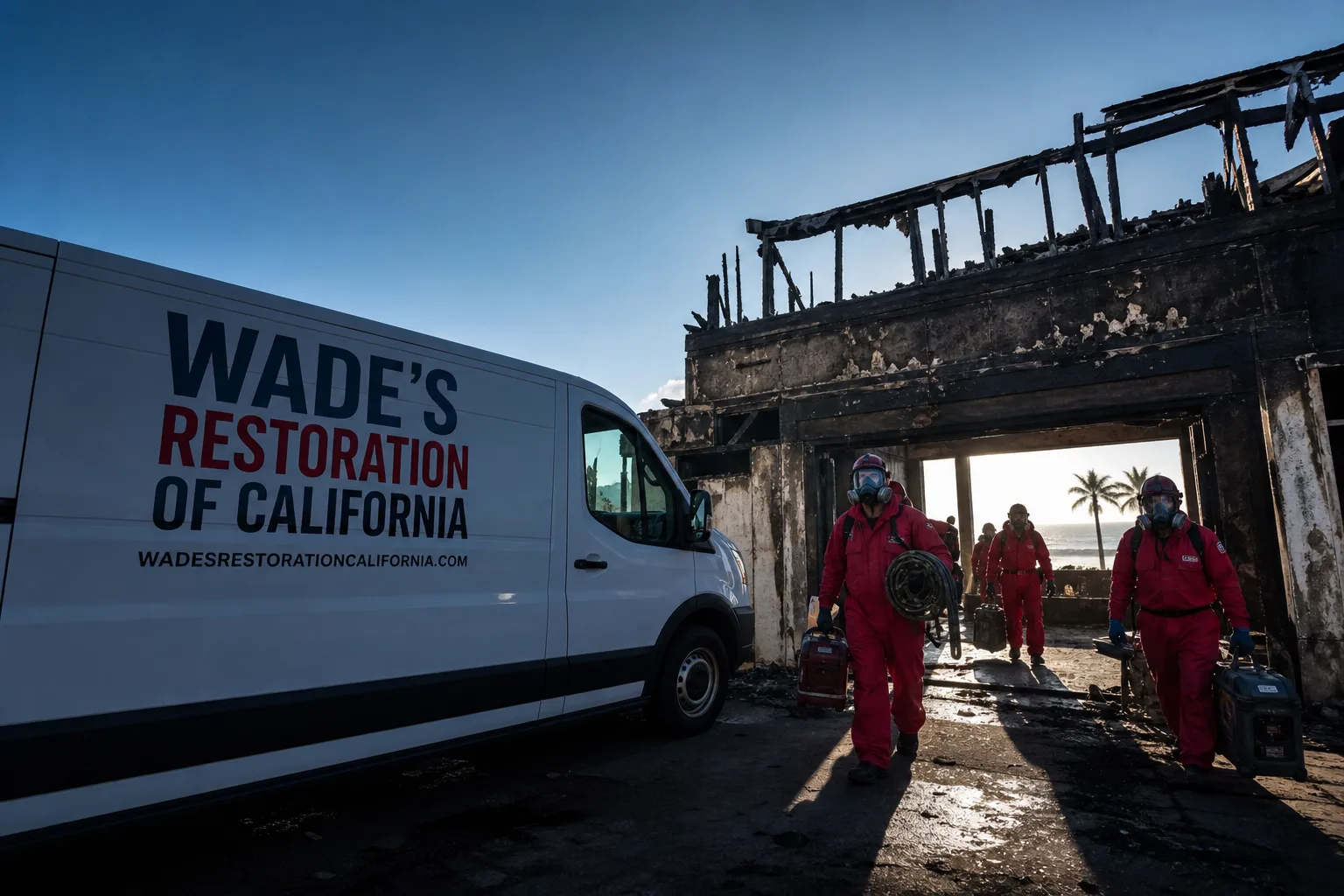
Fast, Reliable Storm & Disaster Restoration Across Gilroy
Storm damage in Gilroy rarely announces itself politely. It’s a February atmospheric river soaking through a cracked stucco wall on Mantelli Drive, or a Diablo Range wind event peeling shingles off a 1998 tract home near Christmas Hill Park. When water is moving through your house, every hour it sits multiplies the damage. That’s why we answer the phone at 2 a.m., and why Wade Ferris will be the one on the other end.
Wade’s Restoration handles the full disaster sequence in Gilroy: flood water extraction, storm debris removal, roof tarping, emergency board-up, drying, mold prevention, and rebuilding what the storm took. We know which Gilroy neighborhoods flood first, which housing stock fails in specific ways, and how to get a crew to your door fast. Call (855) 915-0646 right now if water is actively entering your home. If it’s not urgent yet, read on so you know what you’re dealing with and who you’re calling.
Why Wade’s Restoration Is Gilroy’s Storm Restoration Contractor
We’re not a franchise. We don’t have a call center in another state. Wade Ferris started this company in 2007, and he publishes his name, his license number, and his address. In Gilroy, that matters because you’ll see the same face at the job, at the follow-up, and at the hardware store on First Street. The 90-Day Done Right Promise is stamped in writing on every storm, flood, and fire job we do. If it’s not right, Wade comes back. One call.
Gilroy homeowners tell us the same story: a national company quoted one price over the phone, then showed up and doubled it before unrolling a hose. That doesn’t happen with us. Wade gives you a written scope before work starts, and when he says no trip charge inside the county, he means it. If you’ve got a written estimate from anyone else, bring it in. We’ll give you a free second opinion on it. Seniors and veterans get 10% off, always. Those aren’t gimmicks. They’re the standing offers.
Calls are answered by a live person around the clock, and Wade heads out himself on serious storm calls. He’s IICRC-certified and RIA-affiliated, and his crew runs Dri-Eaz, Phoenix, and XPOWER equipment that handles Gilroy’s specific water and moisture conditions properly. You’ll get a documented moisture log at the end of the job, daily readings included. Almost nobody else hands that over. Ask anyone on your street who has dealt with a Gilroy flood; the homeowners who know, know Wade.
Our Storm & Disaster Restoration Services in Gilroy
Flood Damage Restoration
When Uvas Creek or Llagas Creek jumps its banks, or when a winter storm sends runoff sheeting across parched, hydrophobic soil toward your slab, the water doesn’t just sit on the floor. It gets under baseboards, into wall cavities, and beneath the slab itself. Gilroy’s 95020 flood corridor has a particular problem we’ll dig into below, but the short version is this: if the water isn’t pulled out fast and the drying isn’t verified with daily readings, you’ll be fighting mold for years. We extract, dry, log moisture every day, and hand you the full record.
Storm Damage Cleanup
After a wind event off the Diablo Range, Gilroy yards and roofs fill with tree limbs, loose shingles, and debris. We clear the immediate hazards first so no one gets hurt, then we photograph everything for your insurance claim. Wade deals with the adjuster directly. You won’t be the one stuck relaying between two parties who can’t see each other’s paperwork. The cleanup leads right into packing out wet materials and setting up drying equipment if water got inside.
Emergency Board-Up
A broken window or a fallen branch through a wall turns your house into an open invitation for weather, animals, and worse. We’ll board up the opening properly and securely, then document it for your insurer. Gilroy’s summer heat means that a tarped or boarded opening left untouched for a week will bake moisture into the framing and set the conditions for mold long before reconstruction starts. We don’t leave gaps.
Roof Tarping
Roof tarping in Gilroy is its own discipline. The summer UV levels along the southern Santa Clara Valley chew through cheap tarps and generic fasteners fast. High winds off the Diablo Range take flapping tarp corners and tear them loose within hours if they’re not anchored correctly. We use commercial-grade tarping with the right fastening pattern for Gilroy’s wind and sun. It’s the difference between a temporary fix that lasts weeks and one that fails the next afternoon. If you’re near Canavese Lane or up toward the foothills, you already know the wind we’re talking about.
What happens when you call
- 1
A real person answersNo phone trees - you reach a local pro.
- 2
You get an upfront price rangeHonest numbers before anyone is dispatched.
- 3
A background-checked tech heads outLicensed & insured, dispatched right away.
- 4
You approve before work beginsNothing starts until you say go.
Trusted Brands We Service in Gilroy
We run professional-grade equipment from Dri-Eaz, Phoenix, and XPOWER on Gilroy jobs, because the hardware store dehumidifier from the neighbor’s garage won’t pull water out of a slab that’s been soaking for three days. Whether your home is a 1990s stucco tract house off Santa Teresa Boulevard or an older Craftsman down near the historic downtown core, the drying math is the same: you need commercial air movers, real dehumidification capacity, and daily moisture readings to prove the water is actually leaving. We stock common replacement parts locally, so when a fan or pump fails mid-job we’re not waiting three days on a shipment.
Common Storm & Disaster Restoration Problems in Gilroy Homes
- Hydrophobic soil runoff slamming foundations. Gilroy’s summer heat bakes the topsoil so dry it repels winter rain instead of absorbing it. The runoff sheets straight toward slab foundations and overwhelms perimeter drains that were sized for a milder climate.
- Stucco hairline cracks hiding winter leaks. The upper-90s to low-100s summer temperatures expand and contract stucco on 1990s and 2000s tract homes until hairline cracks form. Homeowners don’t notice them. Winter storms drive water behind the cladding, and by the time the stain shows inside, mold is already established in the wall cavity.
- Roof tarp failures from UV and wind. Cheap tarps and staple-gun anchoring last a few hours in Gilroy’s inland sun and Diablo Range wind. Once a tarp lifts, the exposed roof deck soaks up rain and sends moisture into the attic.
- Recurring mold near the creeks. Homes in the Uvas Creek and Llagas Creek flood corridors deal with groundwater rise that has nothing to do with plumbing. The slab itself sits on ground that swells and seeps seasonally, and drying the top surface doesn’t fix it. We’ll explain this more below, because it’s the number one thing Gilroy homeowners get wrong.
Pricing for Storm & Disaster Restoration in Gilroy, CA
What moves the number: how much water got into framing, whether asbestos or lead testing is required on older Gilroy homes near the downtown core, and whether the slab itself is wicking groundwater. We’ll give you a written quote before work begins. Estimates are free, and there’s no trip charge inside our county. Call (855) 915-0646 for an exact number.
We Also Serve Cities Near Gilroy
If you’re just outside Gilroy, we handle storm restoration in Storm & Disaster Restoration in Gilroy and the surrounding communities, including San Martin, Morgan Hill, Watsonville, and Interlaken. The same owner, the same crew, the same 90-Day Done Right Promise applies whether you’re inside the city limits or a few miles down 101.
Serving Gilroy, CA - Our Local Coverage Area
We’re based in the Gilroy area and know this community well. Use the map below to see our service coverage - if you’re nearby, we can almost certainly help.
FAQs - Storm & Disaster Restoration in Gilroy
Why does flood damage in Gilroy’s 95020 ZIP keep returning even after my slab is dried?
Because the water under the slab was never addressed. In the Uvas Creek flood corridor, post-storm moisture under homes is frequently misdiagnosed as a plumbing leak. The actual driver is seasonal groundwater rise tied to the creek’s flood plain. Surface drying removes what soaked the floor, but hydrostatic pressure under the slab keeps wicking moisture back up. On a 1990s stucco tract home off Santa Teresa Boulevard near Uvas Creek, we traced persistent slab moisture under the family room to exactly this. Our techs found no plumbing leak. We installed a Dri-Eaz dehumidification system with a perimeter drain mat and specified a vapor barrier replacement, and that broke a three-year mold remediation cycle the homeowner had been living through. If your 95020 home keeps getting mold blooms after you’ve dried out, call (855) 915-0646. The fix is under the slab, not on top of it.
How quickly does stormwater pool against Gilroy foundations compared to San Jose?
Much faster. Gilroy’s inland microclimate bakes topsoil into a hydrophobic crust during summer, so early winter rain doesn’t soak in. It sheets off. San Jose’s cooler, wetter conditions let the soil accept more water before runoff starts. In Gilroy, the same rainfall event sends water against your foundation in a fraction of the time, and perimeter drains that worked fine for years will suddenly overflow. If you’re seeing water against the slab within the first 20 minutes of a storm, that’s the Gilroy pattern.
Do I need roof tarping before the next fire season near the Diablo Range?
Yes, and ideally before the first strong winter storm, not after. Homes along the Diablo Range foothills face wind-driven embers during fire season and then wind-driven rain in the winter. A roof with lifted shingles, cracked flashing, or damaged edges is vulnerable to both. Tarping now protects the deck from the next fire ember or rain squall, and it buys you time to schedule a proper roof repair with a contractor who understands the eastern foothill wind patterns.
What causes mold in homes near Llagas Creek after a storm, when other Gilroy neighborhoods stay dry?
Groundwater. The Llagas Creek flood plain sits high, and after a heavy storm the water table rises enough to press moisture against and under slabs that are otherwise perfectly dry neighborhoods stay dry because they sit high enough above the water table. Homes near Llagas Creek need a different restoration approach: we check for hydrostatic pressure under the slab and in the crawlspace, not just for standing water on the floor. Call (855) 915-0646 and we’ll tell you if your creek-adjacent home is in the risk band.
How does wildfire smoke damage in Gilroy differ from water damage restoration needs?
They’re different animals. Wildfire smoke from the Diablo Range works its way into wall cavities, attic insulation, and HVAC ductwork as fine particulate, and it leaves a residue that water cleanup won’t touch. You need air scrubbing, duct cleaning, and sometimes insulation replacement. Water damage is about extraction, drying, and mold prevention. Gilroy’s dual-hazard exposure means a single event can hit you with both: embers damage a roof, then rain comes through the opening. Our Storm & Disaster Restoration team scopes for both risks from the first inspection. If you’re unsure what you’re looking at, we’ll come look and tell you straight. No charge for that inside the county.
Contact Wade’s Restoration in Gilroy
When the storm has already hit, don’t spend another hour reading. Call (855) 915-0646 and you’ll get a live person, not a voicemail tree. Wade answers his own phone. If it’s bad, he heads toward Gilroy immediately. We’ll give you a straight answer on what we’re looking at, what it’ll cost, and what happens next. Estimates are free. No trip charge inside the county. Seniors and veterans get 10% off. If you already have a written estimate from another contractor, bring it in and we’ll second-opinion it for free. And if you just need someone to talk through whether this is a DIY cleanup or a real restoration job, call anyway. To wade is what you do through a flooded basement at two in the morning. It happens to be his name.
Written by Wade Ferris, Owner at Wade’s Restoration of California.