
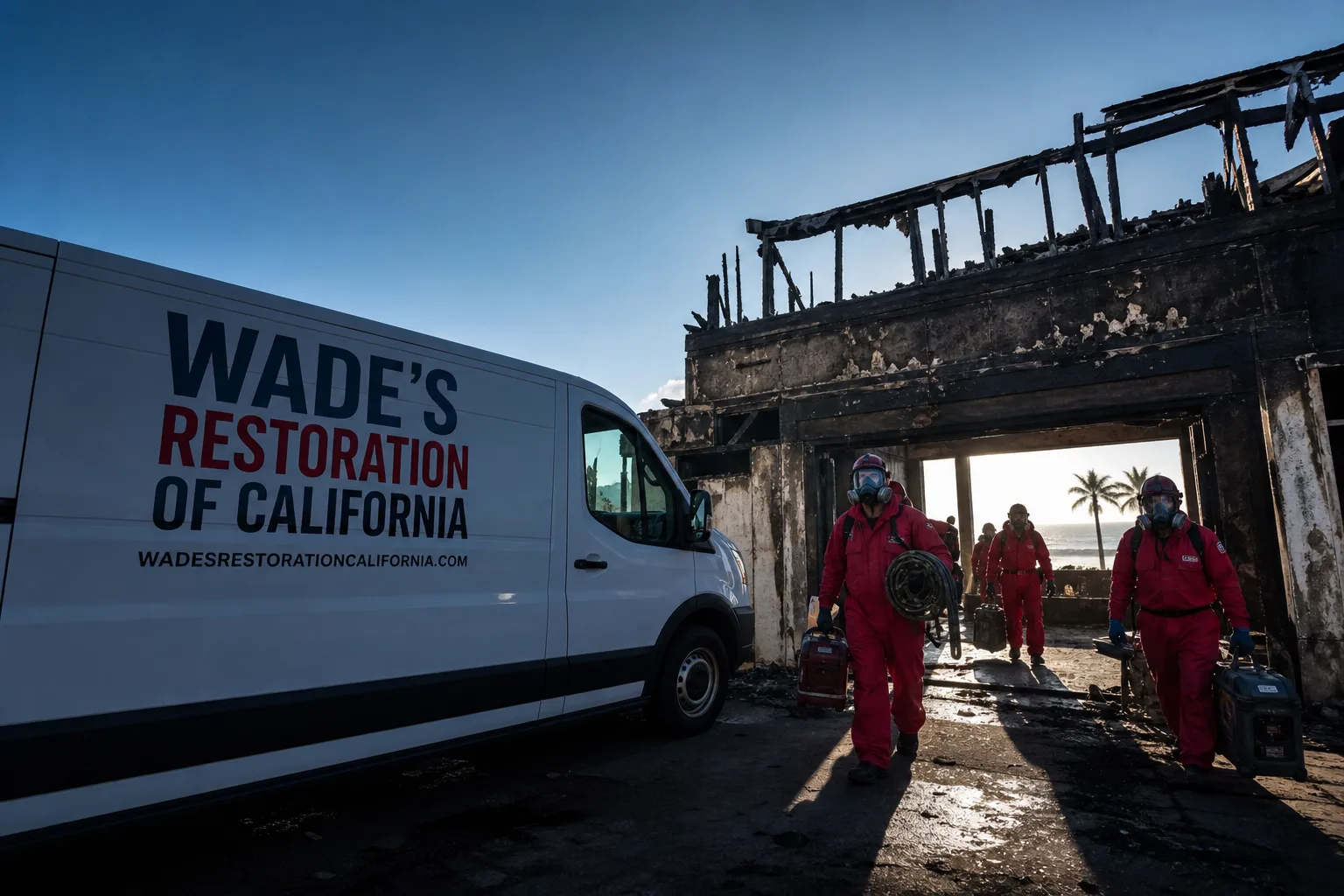
Fast, Reliable Storm & Disaster Restoration Across Fairfax
Storm damage in Fairfax doesn’t wait for business hours, and neither do we. When Fairfax Creek jumps its banks or wind tears a section of roof off a bungalow on a hillside off Bolinas Road, the first call should be to someone who knows these streets and what these old houses do when they take on water. Wade Ferris answers his own phone at (855) 915-0646, day or night. He’s been running Wade’s Restoration of California since 2007, and the crew that shows up in Fairfax will be his crew, with professional-grade Dri-Eaz and Phoenix drying equipment, background-checked and ready to work. This isn’t a call center routing you to a subcontractor. This is a neighbor who publishes his name and address because he plans to see you again at the Fairfax Festival or in line at Good Earth. Flood damage restoration in Fairfax typically runs $2,800 to $7,500 depending on how far the water traveled and whether the crawl space was already saturated from the previous storm. Emergency board-up and roof tarping usually run $450 to $1,100 for a standard Fairfax bungalow.
We know the creek. We know the hills. We know that the same addresses near downtown Broadway flood in a predictable sequence every time an atmospheric river pushes through. That’s the kind of local knowledge that saves floors, walls, and the subfloor assemblies under 1940s cottages that never fully dried from the last storm.
Why Wade’s Restoration of California Is Fairfax’s Preferred Storm & Disaster Restoration Company
Fairfax is one of the wettest towns in Marin County. The valley sits narrow between the hills, and when Pacific moisture funnels in, Fairfax Creek and its tributaries don’t just rise. They jump. That’s why Storm & Disaster Restoration work here isn’t an occasional thing. It’s an almost-annual reality for the creek-side blocks and the older wood-frame homes that line them. Wade Ferris understood this the first time he pulled a moisture meter out of a Fairfax crawl space and saw the needle peg before he’d even opened the access door.
What separates us from the national outfits is simple. Wade is the owner. He answers the phone himself. He shows up. He takes moisture readings every single day and hands you the full log when the job is done. Almost nobody else in this trade does that. His crew carries IICRC certifications and the company maintains RIA and IFA affiliations. The estimator who quotes your Fairfax job is the same person who will be on site checking dry-down progress. And every water, fire, and mold restoration job carries the 90-Day Done Right Promise in writing. If it’s not done right, Wade makes it right. That’s not a slogan. It’s stamped on the contract.
Fairfax homeowners call us because they’ve already been burned by a company that quoted one price on the phone and another at the door. When Wade gives you a price, it holds. And if there’s a second opinion on a written estimate, that’s free. No trip charge inside the county, either. Ask anyone on your street near Manor or Cascade. They’ll tell you the same thing.
Our Storm & Disaster Restoration Services in Fairfax
Flood Damage Restoration
Fairfax Creek flooding is the big one here. When the creek overtops near Broadway and the streets turn into channels, water moves fast into raised-foundation bungalows, filling crawl spaces and wicking up through floor assemblies within hours. Flood damage restoration in Fairfax starts at about $2,800 for a single-level cottage and climbs based on how much of the subfloor and wall cavities are involved. We extract first, then set up high-capacity drying with Dri-Eaz and Phoenix equipment, monitor every day, and deliver a complete moisture log so you can see the numbers dropping before we call it done.
Emergency Board-Up
A storm that drops a branch through a Fairfax bedroom window or blows a sliding door off its track leaves your home open to rain, animals, and anyone who walks by. We board up fast. Emergency board-up for a typical Fairfax home runs $450 to $800, and Wade can usually have a crew rolling within the hour if the call comes in during or right after a storm. We cut plywood to fit odd-sized older frames, secure everything properly, and make the house safe while drying and repairs get scheduled.
Roof Tarping
Fairfax sits in a funnel, so when wind comes through the valley, it yanks at roof edges on the older craftsman bungalows and mid-century cottages. Roof tarping in Fairfax typically runs $500 to $1,100 for a standard single-story house. We tarp fast and tie down properly. The goal is to stop secondary water damage before it starts. A tarped roof on a wet Fairfax night can be the difference between a dry envelope and a full interior water intrusion by morning.
Storm Damage Cleanup
After the water recedes and the wind dies, the debris stays. We handle storm damage cleanup throughout Fairfax, from the creek-side streets near Broadway up to the hillside lots off Bolinas Road and around Cascade. Debris removal, saturated insulation, ruined drywall, and downed tree material all come out. A full debris removal and cleanup job in Fairfax generally runs $1,200 to $3,500 depending on the volume and whether contents need pack-out. We don’t treat cleanup like an afterthought. We treat it like the thing that keeps mold from gaining a foothold in an already-damp town.
What happens when you call
- 1
A real person answersNo phone trees - you reach a local pro.
- 2
You get an upfront price rangeHonest numbers before anyone is dispatched.
- 3
A background-checked tech heads outLicensed & insured, dispatched right away.
- 4
You approve before work beginsNothing starts until you say go.
Trusted Brands We Service in Fairfax
When we dry a flooded Fairfax home, we use the same equipment the top restoration firms use nationwide: Dri-Eaz dehumidifiers, Phoenix air movers, Injectidry injection drying systems, XPOWER ventilation, and B-Air filtration. These aren’t rental-store fans. They’re professional-grade machines sized for the square footage and the moisture load. Wade carries this equipment because Fairfax’s older homes with unvented crawl spaces need real drying power, not a box fan pointed at a wet floor. We stock enough equipment to respond to multiple Fairfax jobs in the same week during the wet season, which matters when the creek floods ten houses in a row.
Common Storm & Disaster Restoration Problems We See in Fairfax Homes
- Creek flooding that hits the same addresses year after year. The blocks near downtown Broadway and the lower-lying streets off Bolinas Road flood in a recognizable sequence during atmospheric river events. If you live on one of those blocks, you already know the pattern. We do too, and we plan for it.
- Subfloor assemblies that never fully dried from the previous storm. Fairfax’s wet-season ground saturation means crawl spaces under older homes often stay damp well into spring. When the next storm hits, the subfloor is already compromised, and water migrates faster than it would in a dry town.
- Rapid water migration through 1920s-1950s wood-frame wall cavities. These older Fairfax bungalows mostly lack vapor barriers, and the balloon-frame construction creates channels that let water and fungal growth move quickly from the crawl space into wall cavities and behind trim. By the time you see staining upstairs, the moisture has often been moving for days.
- Wind damage on hillside lots. Homes up on the slopes around Cascade and the steeper sections of Bolinas Road take more wind than the valley floor. Lifted shingles, detached flashing, and blown-in windows are regular calls for us every winter.
Pricing for Storm & Disaster Restoration in Fairfax, CA
- Emergency board-up: $450-$800
- Roof tarping: $500-$1,100
- Flood damage extraction and drying (single-level bungalow): $2,800-$7,500
- Storm debris removal and cleanup: $1,200-$3,500
- Full crawl space flood restoration with wall cavity drying: $4,500-$10,000+
What moves the price in Fairfax specifically is whether the ground under the house was already saturated from a recent storm, whether the crawl space is accessible or tight, and how far water has wicked into the building materials. Homes with unvented crawl spaces and raised foundations often need injection drying into the wall cavities, which adds labor but prevents mold from doing worse damage later. Every Fairfax job gets a written estimate before work starts. Call (855) 915-0646 and Wade will come out himself, walk the property, and tell you straight what it needs and what it costs.
We Also Serve Cities Near Fairfax
If you’re outside Fairfax proper, we also cover San Anselmo, San Rafael, Kentfield, and Lucas Valley-Marinwood. The same owner-operator approach applies everywhere. For Storm & Disaster Restoration in Fairfax specifically, Wade coordinates scheduling and dispatch from the company’s San Francisco Bay Area office, with crews serving Fairfax locally. Same-day response is available during active storm events across the area.
Serving Fairfax, CA - Our Local Coverage Area
We’re based in the Fairfax area and know this community well. Use the map below to see our service coverage - if you’re nearby, we can almost certainly help.
FAQs - Storm & Disaster Restoration in Fairfax
Why do the same Fairfax streets flood every winter storm?
Fairfax sits in a narrow, sheltered valley where Fairfax Creek, a tributary of San Anselmo Creek, regularly overtops its banks during winter atmospheric river events. The valley funnels Pacific moisture and concentrates rainfall at rates higher than open Marin communities. Creek-side blocks near downtown Broadway flood in a predictable sequence during major storms because the creek’s capacity hasn’t changed while development around it has. The same addresses appear on restoration call logs season after season, and experienced local crews treat that recurrence as a given, not a surprise. If your home is on one of those blocks, call (855) 915-0646 before the next big storm and we’ll walk through what to expect.
How does Fairfax’s wet climate affect crawl space drying after a flood?
Fairfax’s valley location traps marine fog and rainfall more aggressively than surrounding flatland communities, so the ground under older homes is often already saturated before a flood even happens. That means a crawl space that took on creek water may be sitting on dirt that hasn’t fully dried from the previous storm. Standard three-day dry-out timelines fail here because the underlying soil keeps feeding moisture back up. We account for that with extended monitoring, daily moisture readings, and drying targets keyed to Fairfax-specific conditions rather than a generic industry baseline. Call (855) 915-0646 for a crawl space assessment.
Why do older Fairfax bungalows get mold faster after water intrusion?
The 1920s-to-1950s wood-frame bungalows and cottages that make up much of Fairfax’s housing stock were built without modern vapor barriers, and many have unvented crawl spaces that hold damp air year-round. When water enters those structures, either from creek flooding or roof leaks, the wood framing and subfloor materials are already closer to the moisture threshold where mold starts than they would be in a drier town. That’s why we treat every Fairfax water event as a potential mold event from the first day. Fast extraction, injection drying, and documented moisture levels are the only way to get ahead of it.
Do I need roof tarping if my Fairfax home only has minor ceiling stains?
Minor ceiling stains are rarely minor in Fairfax. The valley’s rainfall concentration means a small roof penetration can let a lot of water into an attic or wall cavity during a single atmospheric river event. By the time a stain shows on the ceiling, water has already saturated insulation and possibly wetted the back side of drywall. Roof tarping in Fairfax typically runs $500 to $1,100 and stops continued intrusion while you assess repairs. If you’re seeing stains after a storm, call (855) 915-0646 and Wade can look at it before the next rain arrives.
What is a realistic drying timeline for a Fairfax creek-flooded crawl space?
For a Fairfax raised-foundation bungalow with a creek-flooded crawl space, a realistic drying timeline is usually 5 to 10 days, not the 3 to 4 days you’d see in drier towns. The variable is ground saturation. If the soil under the house never dried from a November storm and a January atmospheric river hits, the drying process has to overcome moisture coming up from below as well as water that intruded from above. We run Dri-Eaz dehumidifiers and air movers around the clock, inject dry air into wall cavities with the Injectidry system, and take moisture readings every day until the numbers confirm the structure is actually dry. You get the full log when we’re done. Call (855) 915-0646 for an evaluation of your specific property.
On a creek-side block near downtown Broadway, our crew responded after Fairfax Creek jumped its banks during a January atmospheric river. We found the 1940s bungalow’s unvented crawl space fully saturated, with standing water against raised foundation piers and early mold on subfloor framing. We deployed high-capacity Dri-Eaz dehumidifiers and air movers, then injected drying into the wall cavities with our Injectidry system. Because the ground was still wet from a November storm, we extended the dry-out with moisture meters confirming the subfloor had never fully dried from the previous event. That’s the Fairfax reality. The whole town is wetter than it looks, and the houses hold it longer than anyone expects.
If a storm has already hit your Fairfax home, call (855) 915-0646 right now. Wade will answer. If he’s on a job, he’ll call you back within minutes. He’ll tell you straight what needs to happen, what it costs, and whether you even need a crew today or can wait until morning. Free estimates, free second opinions on written estimates, no trip charge inside Marin County, and a Senior & Veteran 10% discount on every job, always. To wade is what you do through a flooded basement at two in the morning, and it happens to be his name.
Written by Wade Ferris, Owner at Wade’s Restoration of California, serving Fairfax and Marin County since 2007.