
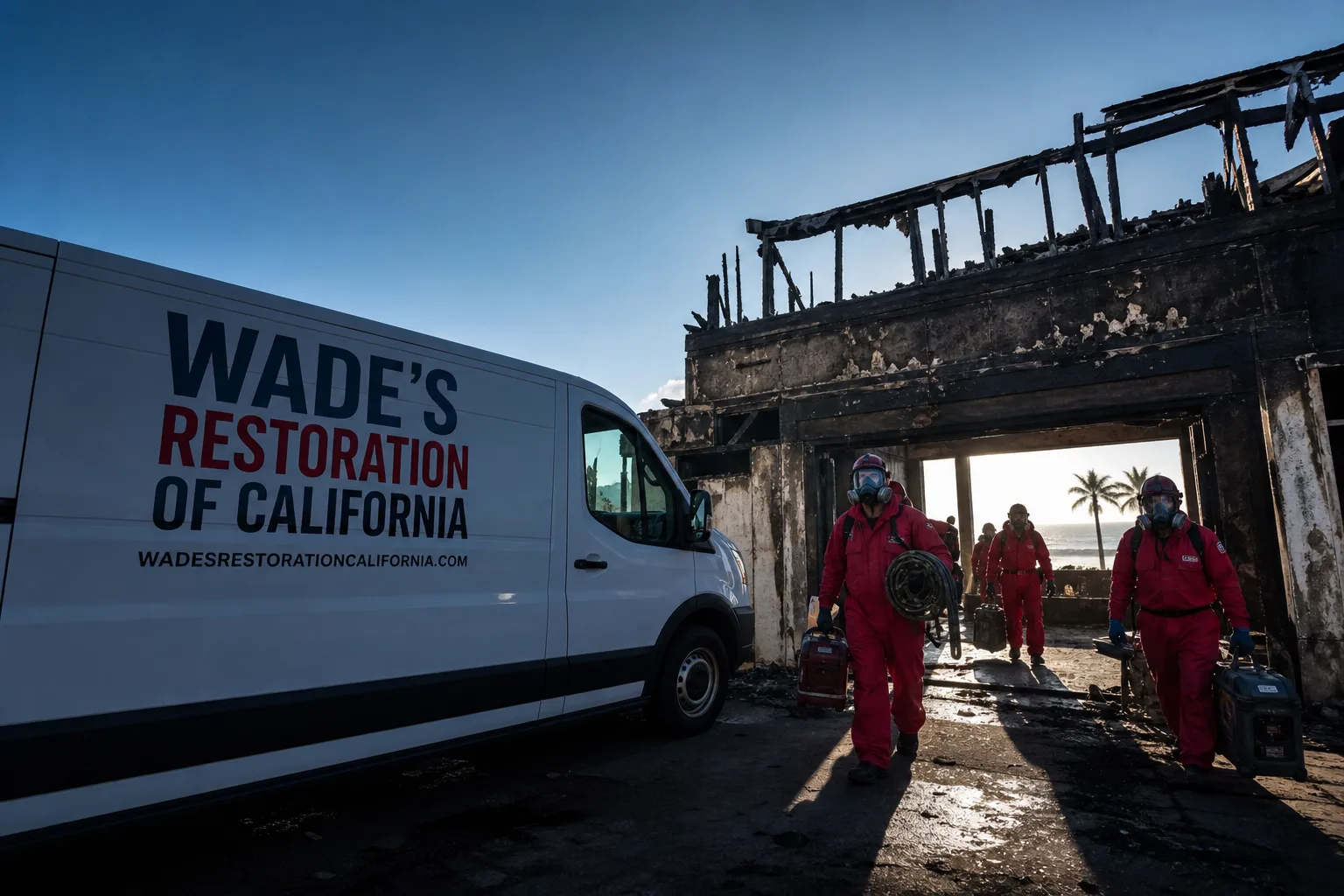
Storm & Disaster Restoration in Emeryville: What You Need to Know Right Now
Storm damage in Emeryville doesn’t behave like storm damage in Oakland or Berkeley. Most of this city sits on former San Francisco Bay tidal mudflats and industrial landfill, which puts nearly every structure in a Very High seismic liquefaction hazard zone. That means when the ground shakes or the bay surges, Emeryville homes and converted lofts fail differently than properties on stable upland soil. The restoration playbook has to start with that reality. If you’re dealing with water coming in, a damaged roof, or wind-blown debris right now, call Wade’s Restoration at (855) 915-0646 and Wade will have a crew on the road to Emeryville within the hour.
We’ve worked 45th Street, Hollis Street, the waterfront corridor, and every converted warehouse loft in between. The bay-fill soil, the flat industrial rooflines, the salt-laden marine fog, and the 1990s and 2000s adaptive-reuse construction all shape how water and wind damage play out here. This page explains what that means when the storm passes and you’re standing in the mess.
Why Emeryville’s Bay-Fill Soil Changes Everything About Flood Damage Restoration
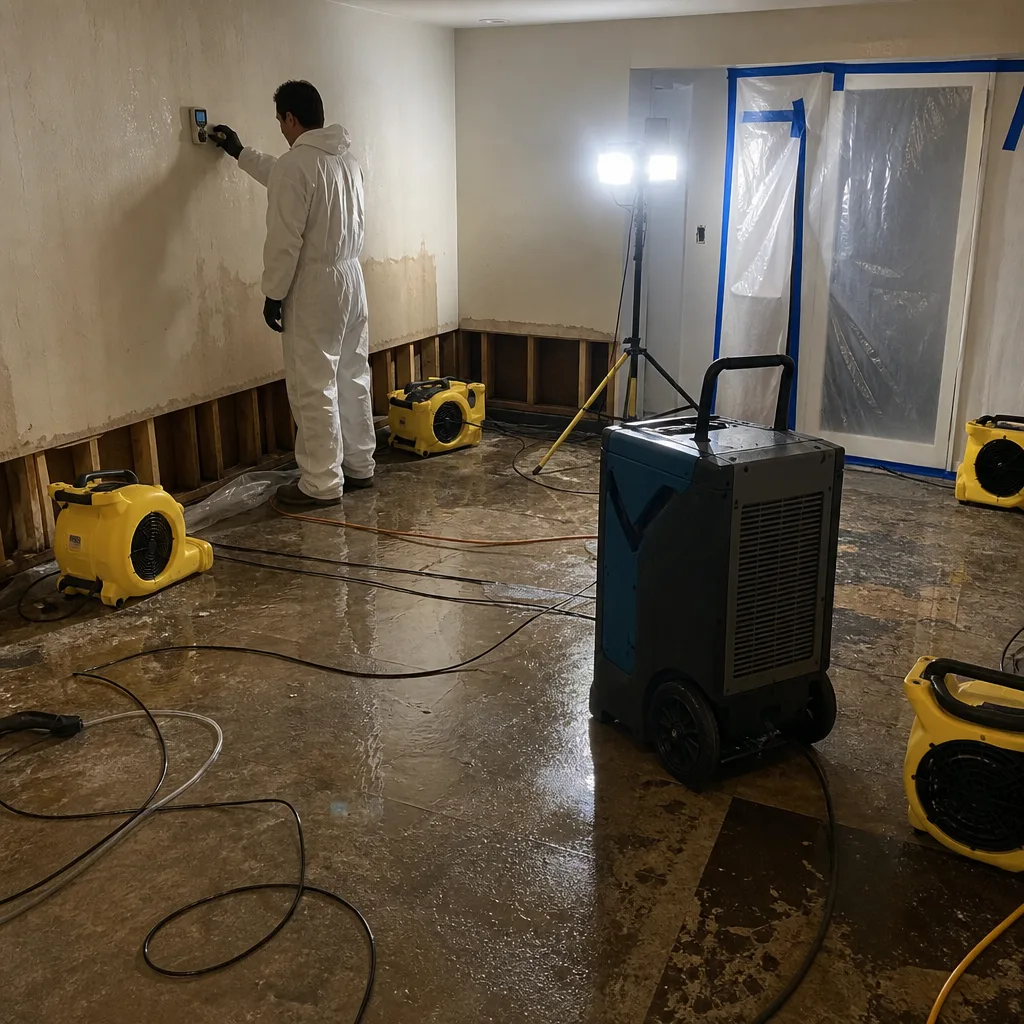
Here’s the part most restoration companies don’t tell you about Emeryville: the water table here sits close to the surface year-round because the city is built on fill. When we dry a flooded ground-floor unit in 94608, we’re not just pulling moisture out of the drywall and flooring. We’re dealing with capillary action drawing groundwater up through the concrete slab. A standard extraction and air-mover setup will leave the slab damp, and within 48 to 72 hours, mold colonizes the bottom plates and the lower wall cavities. We document moisture readings daily and hand you the full log at the end of the job, because in Emeryville, that’s the only way to prove the slab actually dried.
Compare that to Oakland or Berkeley neighborhoods on upland soil. Their slabs drain and dry faster. Emeryville’s geotechnical reality means a storm flood here carries an elevated secondary mold risk baked into the very ground the building sits on. Our Emeryville restoration work always starts with a slab moisture assessment, not just a water extraction. Skip that step and you’ll be tearing out baseboards again in six weeks.
Why Wade’s Restoration of California Is Emeryville’s Preferred Storm & Disaster Restoration Company
We’re not a national chain with a call center in another state. Wade Ferris founded this company in 2007, and he still answers his own phone at midnight. When you call (855) 915-0646 about storm damage in Emeryville, you get a live person, usually Wade himself. He’ll tell you what he thinks over the phone, what it might cost, and when he can be there. Then he shows up. That’s the whole promise, and it’s why homeowners along Hollis Street and around the Public Market call us back year after year.
Dispatch and scheduling for Emeryville are coordinated from our San Francisco Bay Area office, but the crews that arrive at your door are local to this corridor. We know the difference between a 2005 loft conversion on a former paint factory slab and a 1930s bungalow near the Oakland border. That matters when you’re choosing where to cut and where to dry. Every water, fire, and storm job carries our 90-Day Done Right Promise in writing: if it’s not done right, Wade makes it right. Ask anyone on your street.
Our Storm & Disaster Restoration Services in Emeryville
Our Storm & Disaster Restoration team handles the full mess: wind damage, roof failures, bay surge, downed trees, broken windows, and everything the morning after. These are the services Emeryville calls us for most, week in and week out.
Roof Tarping in Emeryville
Emeryville’s converted industrial buildings mostly wear flat or low-slope roofs, and those roofs are the hidden first domino in nearly every storm loss we respond to. Many were patched rather than replaced during conversion. Gravel-ballasted membranes pool water, delaminate slowly, and leak for months before you see the ceiling stain. By the time we arrive, the actual wet area is usually two or three times larger than the call suggested. We tarp the failing section same-day and start drying below immediately. If you’ve got water coming through a flat roof on 45th Street or anywhere in 94608, call before the membrane fails completely.
Storm Damage Cleanup in Emeryville
Marine-layer fog and salt air push into building envelopes all year, and when storm debris blows around a loft building with old roll-up loading doors, the damage compounds. We remove wind-blown debris, fallen limbs, broken skylight glass, soaked insulation, and anything the bay wind deposited where it shouldn’t be. Then we inspect what the storm exposed: corroded fasteners, delaminating roof membranes, failed window seals. A cleanup that stops at the visible mess leaves the hidden corrosion working against you.
Flood Damage Restoration in Emeryville
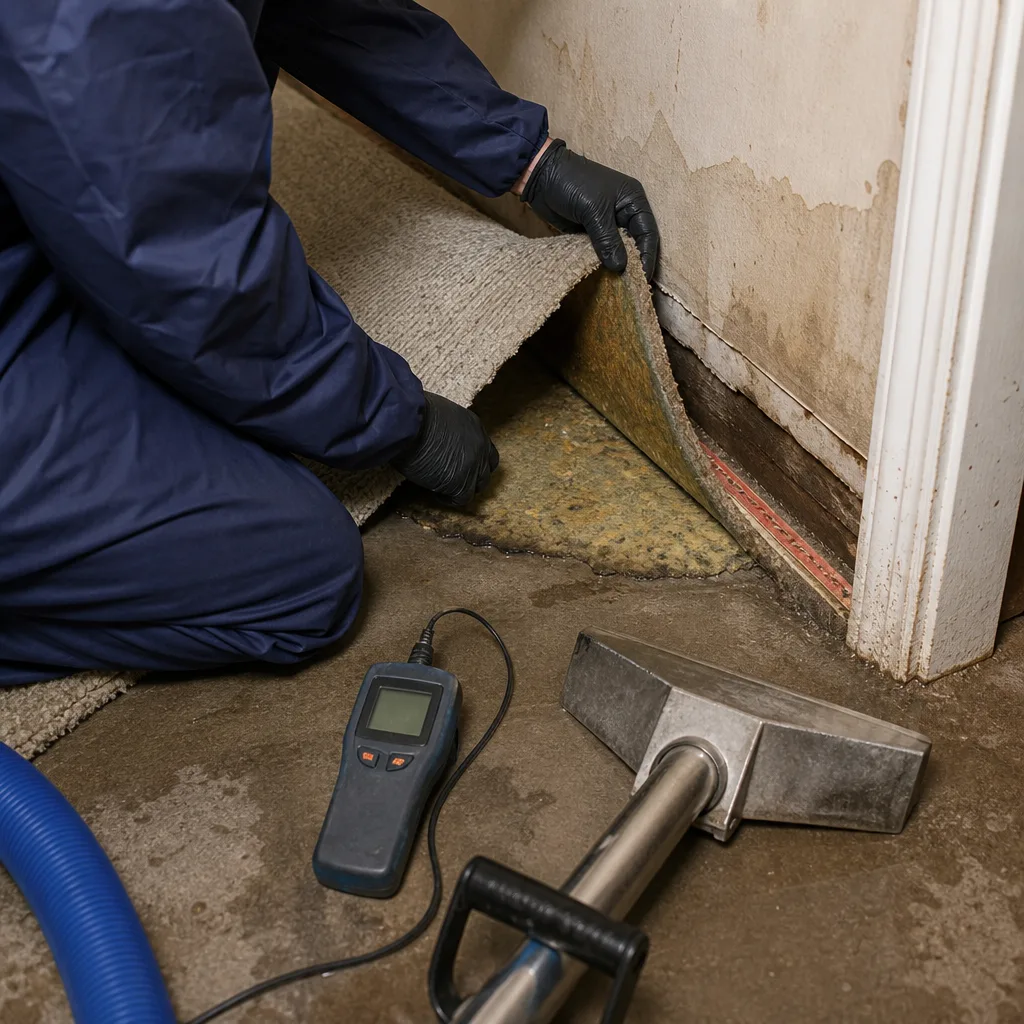
Atmospheric river events push bay surge into low-lying streets and ground-floor units. The water table is already close to grade here, so floodwater doesn’t just sit on top. It seeps into the slab and wicks upward through walls. Our flood restoration in Emeryville starts with extraction, moves into controlled demolition of saturated materials, and then runs professional-grade drying with Dri-Eaz, Phoenix, and XPOWER equipment until daily moisture readings confirm the slab and framing are dry. We hand you the full log. Nobody else in the trade does that consistently.
Emergency Board-Up in Emeryville
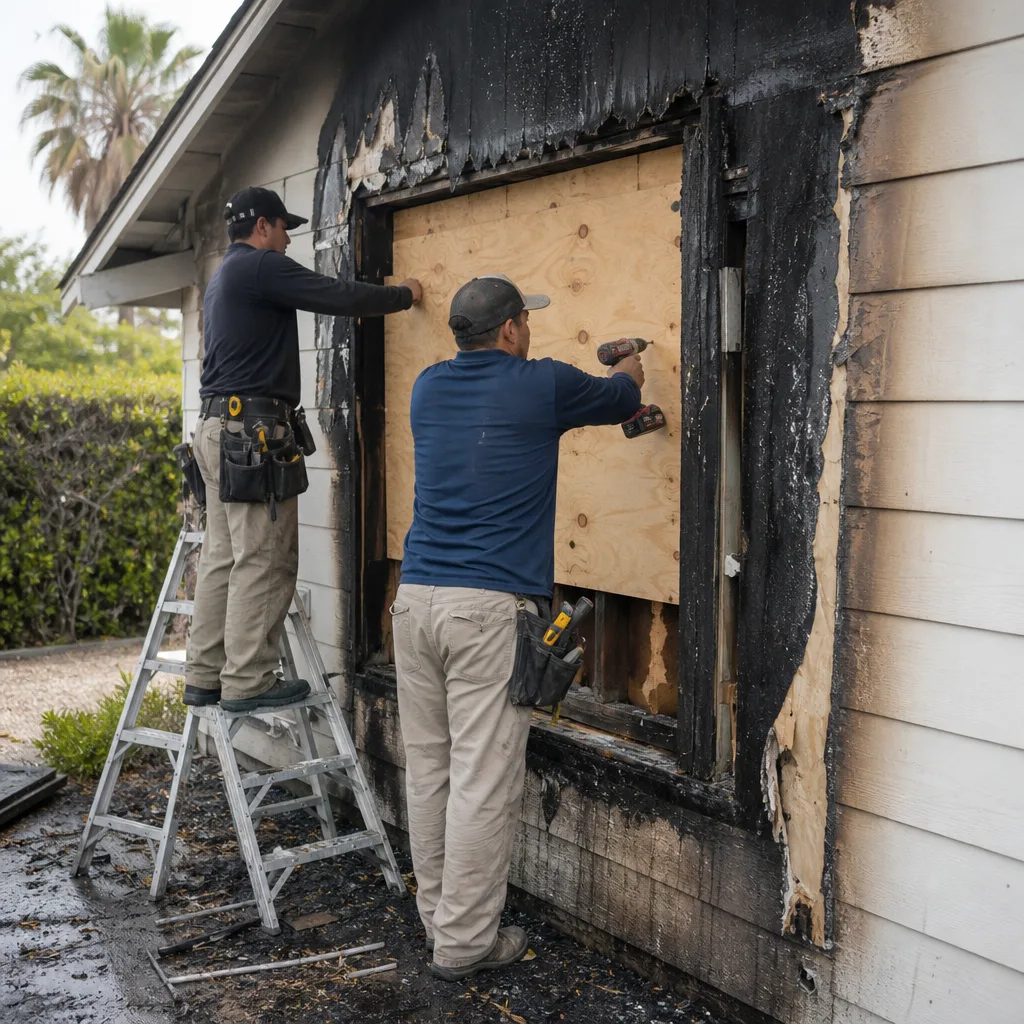
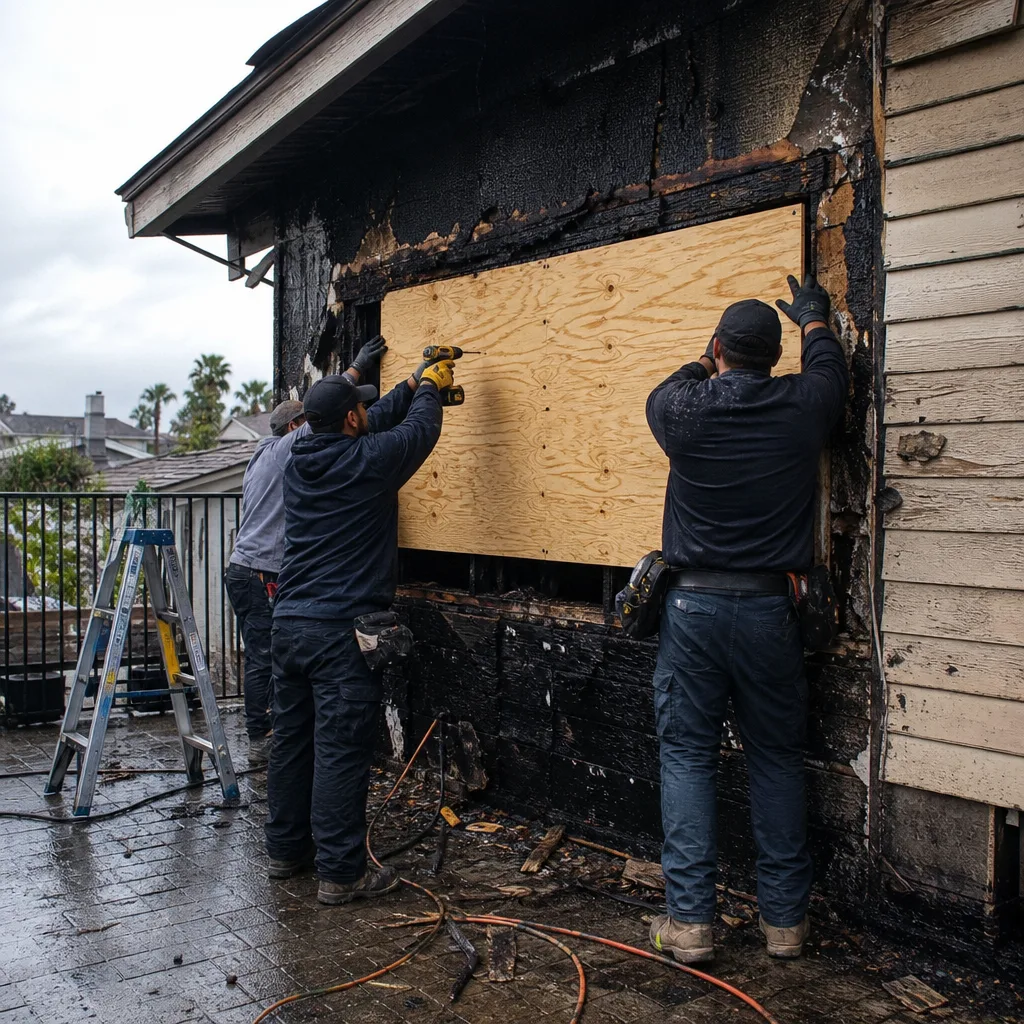
After a storm blows out a storefront window or rips a roll-up door off its track, the building is open to weather, animals, and trouble. Salt-air corrosion on Emeryville’s garage and roll-up hardware accelerates spring and hinge failure three to five times faster than inland, which means a standard board-up that doesn’t inspect the tracks often jams mid-deployment. We inspect the tracks first, then secure the opening. Properly. So the board stays until permanent repairs happen.
What happens when you call
- 1
A real person answersNo phone trees - you reach a local pro.
- 2
You get an upfront price rangeHonest numbers before anyone is dispatched.
- 3
A background-checked tech heads outLicensed & insured, dispatched right away.
- 4
You approve before work beginsNothing starts until you say go.
Trusted Equipment and Credentials Behind Our Emeryville Work
When we dry a storm-damaged loft in 94608, we run professional-grade equipment from Dri-Eaz, Injectidry, XPOWER, and Phoenix. These aren’t rental-shop units. They’re the machines restoration pros use on commercial losses. Our crew holds IICRC certification and is RIA-affiliated, which means the drying protocols we follow in Emeryville are the same ones written for hospitals and schools, just applied to your kitchen. The salt air and bay-fill conditions here demand that level of rigor. We don’t cut corners, because in this city, corners cut get found out in six months.
The Emeryville Storm Restoration Playbook: Why Flat Roofs and Bay Fog Change the Job
If you only take one thing from this page, take this: nearly all of Emeryville sits on former San Francisco Bay tidal mudflats and industrial landfill. That puts most of the city in a Very High seismic liquefaction hazard zone. Earthquake damage restoration here routinely involves differential foundation settlement, slab cracking, and failed underground utilities at a severity Oakland or Berkeley neighborhoods on stable upland soils simply don’t see. That same bay-fill substrate keeps the water table close to the surface year-round, so even a non-seismic water damage job in a ground-floor or slab-on-grade space carries an elevated secondary mold risk that restoration crews must anticipate from the first inspection.
We learned this the hard way on a late-season call to a converted factory loft on 45th Street. An atmospheric river had pushed bay surge into the ground-floor entry, and when our storm crew arrived, they found the building’s original gravel-ballasted roof had been pooling water for months, delaminating the membrane and feeding moisture into the concrete slab below. We set up Dri-Eaz LGR 7000XLi dehumidifiers and XPOWER air movers across the post-and-beam floor, but the real fix was a roof tarp and targeted Injectidry injection into the damp masonry window returns. The salt-laden fog had already turned those hidden pockets into mold incubation chambers. That job ran 11 days. It would have run three if the first responding company had checked the roof instead of just extracting the entry.
Restoration crews working Emeryville’s adaptive-reuse loft buildings quickly learn that the original flat or low-slope factory roofs, frequently patched rather than fully replaced during conversion, are the real culprit behind most “sudden” leaks. A storm doesn’t create those leaks. It reveals them. The membrane fails slowly, the insulation saturates, and only when the ceiling finally gives way does anyone notice. By then the concrete slab is wet and the mold clock has been running for weeks.
Common Storm & Disaster Restoration Problems We See in Emeryville Homes
- Salt-air corrosion on roll-up doors and hardware: Emeryville’s converted industrial lofts often retain their original roll-up loading doors. The bay’s salt-laden air eats springs, hinges, and tracks three to five times faster than inland. A storm emergency board-up that doesn’t inspect the tracks often jams mid-deployment, leaving the building exposed with a door that won’t close.
- Hidden mold from high water table on bay-fill lots: The water table stays close to grade year-round. A minor roof leak or floor flood in a ground-floor slab-on-grade unit turns into persistent hidden mold within 48 to 72 hours if the drying doesn’t address the slab’s capillary moisture. We check slab moisture daily and document it.
- Flat-roof membrane delamination on converted factory buildings: Gravel-ballasted and low-slope roofs pool water and delaminate for months before interior damage shows. The actual loss area on a storm call is almost always larger than the initial ceiling stain suggests. We look at the roof before we trust the drywall stains.
- Seismic liquefaction damage after earthquakes: Emeryville sits in a Very High seismic liquefaction hazard zone. Differential foundation settlement, slab cracking, and failed underground utilities are routine here after a significant quake. Restoration that treats the cosmetic damage without checking for foundation movement will fail.
Pricing for Storm & Disaster Restoration in Emeryville, CA
In Emeryville’s market, a typical roof tarping job runs between $450 and $1,100 depending on roof access and the size of the failing section. Emergency board-up for a broken window or door usually lands between $350 and $800. Storm damage cleanup with debris removal and controlled demolition of wet materials most often falls in the $1,200 to $4,500 range for a loft unit, and a full flood restoration with extraction, structural drying, and mold prevention on a ground-floor slab-on-grade unit in 94608 typically runs $4,000 to $12,000. Jobs on historic bungalows near the Oakland border can push higher because plaster and older framing demand slower, more careful drying. Every estimate is free, and Wade gives you a written scope before any work starts. Call (855) 915-0646 for an exact number on your situation.
We Also Serve Cities Near Emeryville
Wade’s Restoration handles storm and disaster work all around the East Bay. If you’re in Berkeley, Piedmont, Oakland, or Albany, we’re already working in your neighborhood. The same live-person phone answer, the same daily moisture logs, the same written 90-Day Done Right Promise. One call to (855) 915-0646 and Wade heads out.
Serving Emeryville, CA - Our Local Coverage Area
We’re based in the Emeryville area and know this community well. Use the map below to see our service coverage - if you’re nearby, we can almost certainly help.
FAQs - Storm & Disaster Restoration in Emeryville
The water table in Emeryville sits much closer to the surface because the city is built on former bay mud and industrial landfill. That means floodwater doesn’t just sit on top of the slab; it gets pulled upward through the concrete by capillary action. Oakland and Berkeley neighborhoods on upland soil drain and dry faster. In Emeryville, we have to monitor slab moisture daily and run dehumidification longer, otherwise mold develops inside wall cavities within 48 to 72 hours. Call (855) 915-0646 if you’re dealing with a flood now; the mold clock is already running.
Because the building materials are different. Converted factory and warehouse lofts in Emeryville are typically concrete slabs, post-and-beam frames, masonry shells, and flat industrial rooflines. Those materials absorb and hold moisture far longer than wood framing. Standard drying protocols written for wood-frame houses simply won’t dry a concrete and masonry loft adequately. We use Injectidry injection into masonry voids and Dri-Eaz low-grain dehumidifiers sized for the cubic footage, not just the floor area. The drying protocol has to match the building, and in Emeryville, that means concrete and masonry.
Check for pooling water and membrane delamination. Emeryville’s flat and low-slope roofs are frequently gravel-ballasted, and wind-driven rain can pool for months before any interior damage shows. The first thing we check is whether the membrane has separated from the substrate. A delaminated roof feeds moisture into the concrete slab below even when there’s no visible ceiling stain. If you have a flat roof and any suspicion, call us at (855) 915-0646 and we’ll inspect it. If it’s fine, there’s no charge for the trip inside the county.
Yes, and faster than most people realize. Emeryville’s exposed bayfront position funnels persistent marine-layer fog and salt-laden air directly into building envelopes. Salt attracts and holds moisture, accelerating mold colonization in cavities after any water intrusion. In converted industrial buildings, the concrete and masonry substrates stay damp far longer than wood framing would, and the salt in the air keeps those surfaces wetter longer. We account for that from the first inspection because it changes how aggressively we have to dry.
Completely different. A water heater leak is clean water from your own plumbing. Storm surge brings bay water, salt, and whatever the streets washed into your unit. Salt water is corrosive and leaves conductive residue behind even after the visible water is gone. It also pushes into the slab and up into walls through capillary action, which a standard water heater leak usually doesn’t do. We treat bay surge as a Category 3 water loss, which means more aggressive demolition, salt neutralization, and longer drying. Call (855) 915-0646 for an exact assessment; don’t just sop it up and hope.
Call Wade’s Restoration for Storm & Disaster Restoration in Emeryville
When a storm knocks out your roof, floods your ground-floor unit, or blows debris through a loft window, call (855) 915-0646. Wade answers his own phone. He’ll tell you what you’re dealing with, what it’ll cost, and when he can be there. Then he shows up with a crew, a moisture meter, and a written scope before any work begins. Every storm and water restoration job carries the 90-Day Done Right Promise in writing. If it’s not done right, Wade makes it right. That’s how we’ve worked since 2007, and that’s why Emeryville homeowners keep our number.
Free estimates. Senior and Veteran 10% discount always. No trip charge inside the county. Call (855) 915-0646 now.
Written by Wade Ferris, Owner at Wade’s Restoration of California, serving Emeryville and the East Bay since 2007.