
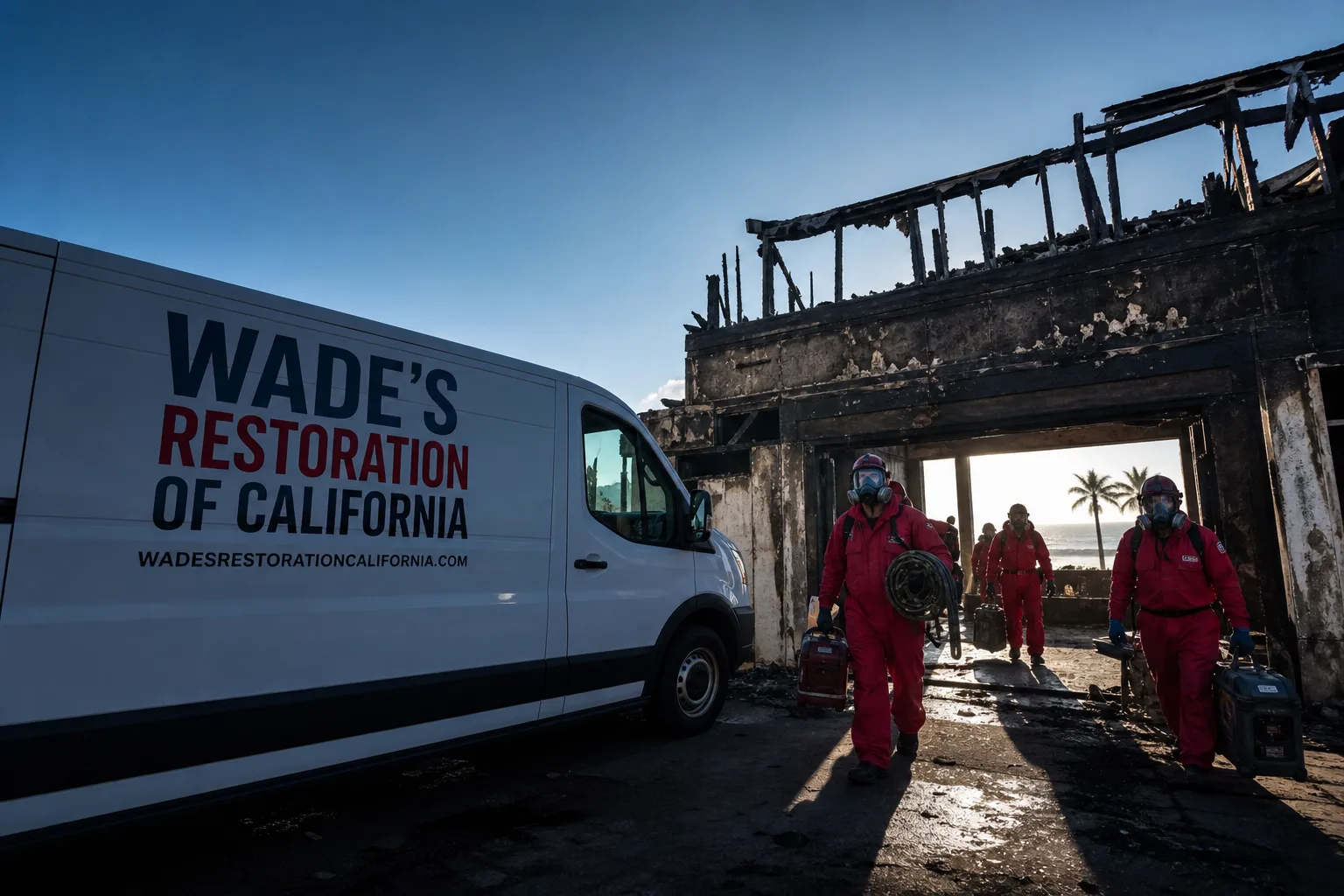
Fast, Reliable Storm & Disaster Restoration Across Dinuba
Storm damage in Dinuba moves fast, and so do we. When the tule fog finally lifts and a February windstorm rips shingles off a 1950s roof on Alta Avenue, or a summer thunderstorm sends water over a door threshold on Crawford Avenue, you need someone who knows exactly what they’re walking into. Wade Ferris has worked older Central Valley homes for nearly two decades, and his crew knows Dinuba’s housing stock better than anyone. Call (855) 915-0646 and a live person answers. Wade himself heads out, usually inside the hour.
Why Wade’s Restoration of California Is Dinuba’s Preferred Storm & Disaster Restoration Company
Wade’s Restoration isn’t a franchise. It’s Wade Ferris, his name on the truck, his cell number on your paperwork, and his reputation on the line every time he sends a crew into a Dinuba neighborhood. Ask anyone on Crawford or Sierra Way. The company has been locally owned and owner-operated since 2007, and Wade runs it the old way: he answers his own phone, he shows up on the job, and he stands behind the work with a 90-Day Done Right Promise in writing on every storm, water, and mold restoration job. If it isn’t done right, he makes it right. One call brings Wade back.
What does that mean for a Dinuba homeowner? It means you’re not a ticket number in a national call center. It means the person who quotes the job is the person who owns the company and lives in the same valley you do. And it means when his crew opens a wall on a 1940s home off El Monte Way, they know what they’re going to find: original galvanized supply lines, missing vapor barriers, and sub-floor framing that’s been breathing tule fog for sixty years. That’s a different kind of expertise, and it’s why homeowners from Dinuba keep his number saved.
Our Storm & Disaster Restoration Services in Dinuba
Storm Damage Cleanup
Wind-driven rain, downed limbs, blown-in debris: storm damage cleanup in Dinuba usually starts with water where it shouldn’t be, and ends with drywall, insulation, and flooring that has to come out. Wade’s crew handles it all, and because Dinuba sits in the raisin-grape belt, we treat any dust-generating wall or ceiling demo during the August-September harvest as a potential Valley Fever exposure site. That means full N95 respiratory protection and containment before the first sheet of drywall is pulled. Most crews trained elsewhere in California don’t even think about this. We do it automatically.
Flood Damage Restoration
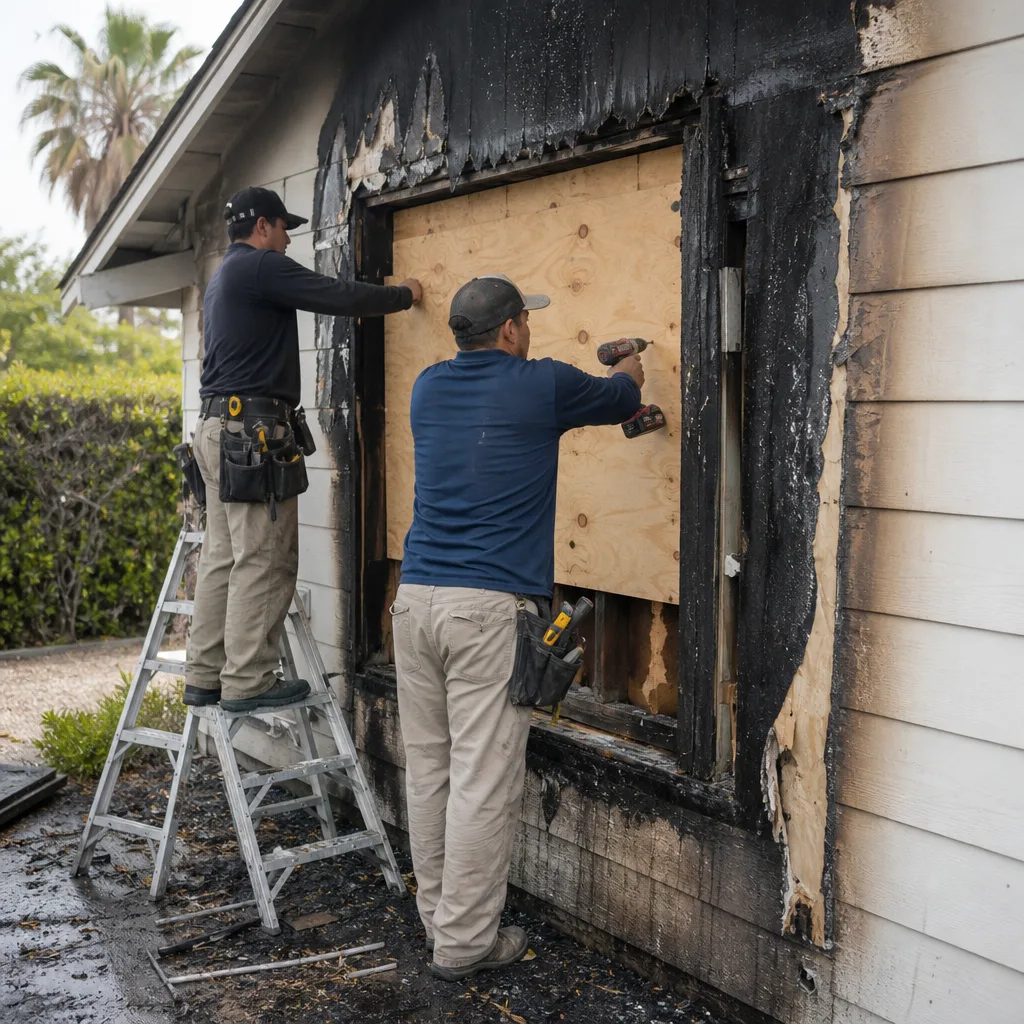
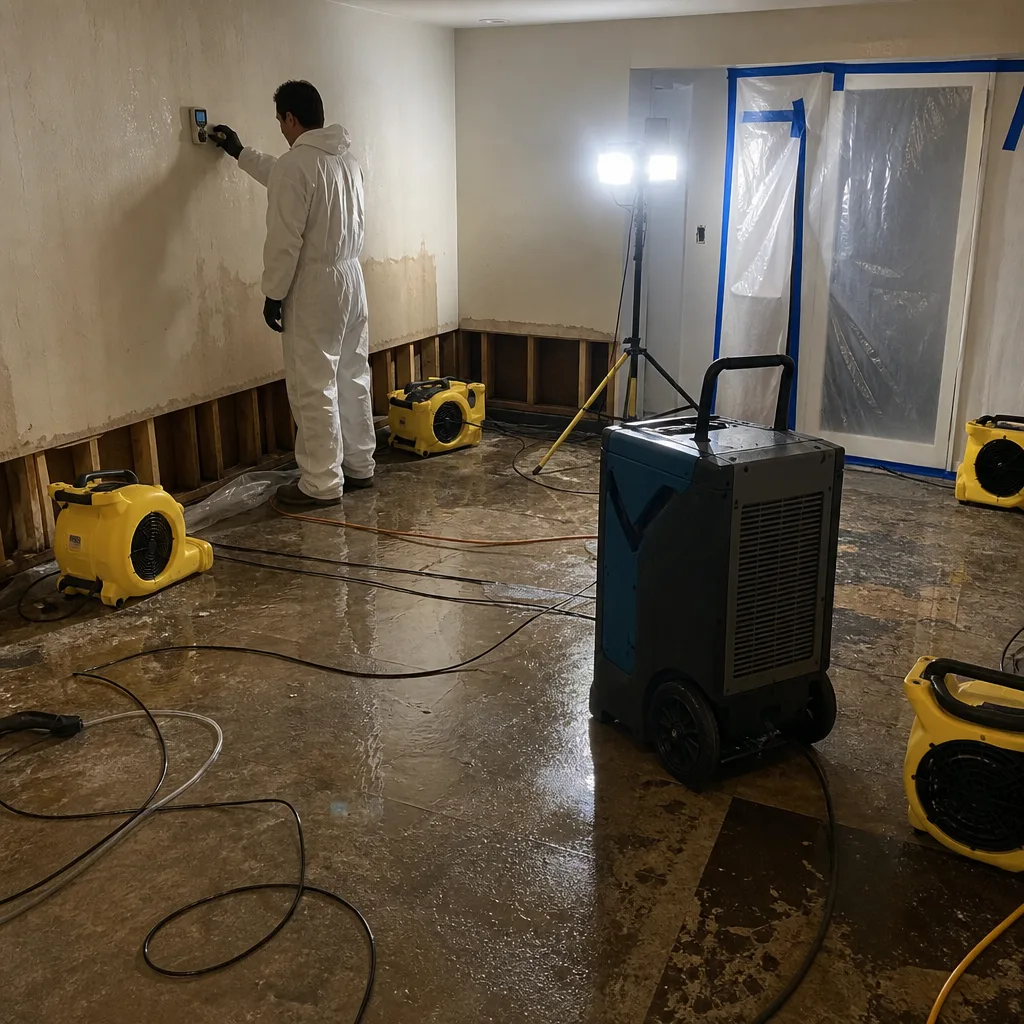
Flood damage restoration in Dinuba is a race against the tule fog that settles into the valley floor from November through February. Ground-level humidity is already near 100% for weeks at a time, so any water that gets into a crawl space or sub-floor doesn’t evaporate on its own. It lingers, feeds mold, and rots framing from below. Wade’s team runs professional-grade drying equipment from Dri-Eaz and Phoenix, and Wade takes moisture readings every single day, then hands you the full log when the job is done. Almost nobody else in the trade does that.
Emergency Board-Up
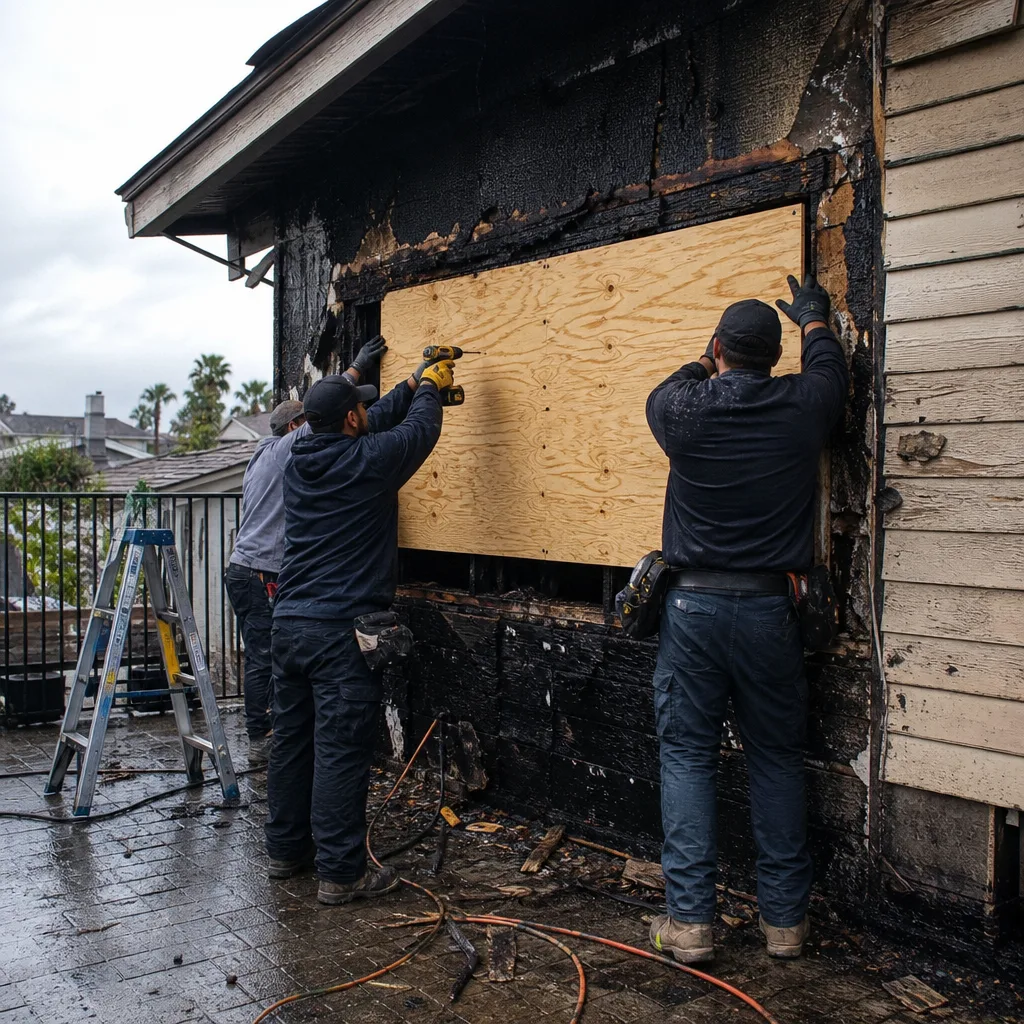
A broken window or a peeled-back wall section is an open invitation to everything from raccoons to rain. Our emergency board-up service covers the opening fast with weather-tight materials, keeping your Dinuba home secure while the full scope is assessed. We work the same neighborhoods you drive through every day, from the grid streets near downtown to the newer subdivisions on the north side. If you’re in zip code 93618, you’re in our service area, and there’s no trip charge inside Tulare County.
Roof Tarping
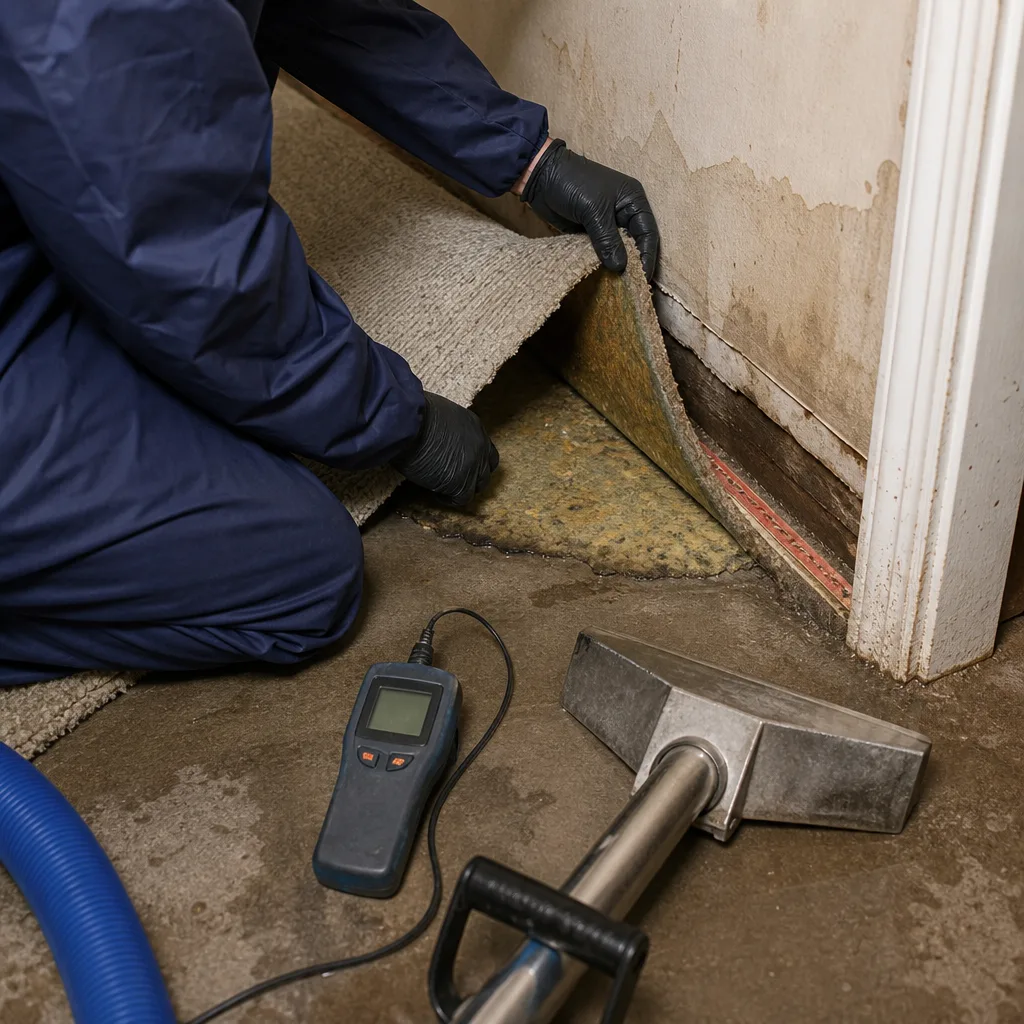
When a storm strips shingles or opens a section of roof, a properly installed tarp buys you time to file a claim and make a plan without further water getting in. In Dinuba, that matters more than in drier parts of California, because winter tule fog keeps attic spaces damp even after the rain stops. A tarp that’s loose or poorly secured will let that fog drift in for weeks. Our crew tarp-secures against the valley’s winter weather patterns, not just the next rainstorm. And we photograph everything for your insurance file before we secure it.
What happens when you call
- 1
A real person answersNo phone trees - you reach a local pro.
- 2
You get an upfront price rangeHonest numbers before anyone is dispatched.
- 3
A background-checked tech heads outLicensed & insured, dispatched right away.
- 4
You approve before work beginsNothing starts until you say go.
Trusted Brands We Service in Dinuba
Wade’s Restoration is IICRC-certified, RIA-affiliated, and IFA-recognized, and the equipment we bring into Dinuba homes reflects that. We run professional-grade drying and extraction gear from Injectidry, Dri-Eaz, Phoenix, XPOWER, and B-Air, because older slab-on-grade and pier-and-beam homes in Dinuba demand real dehumidification, not box fans from the hardware store. Because our crews work this area regularly, we keep common parts and materials stocked locally and can usually avoid the multi-day delays that come from waiting on out-of-state shipments. Fast turnaround is the point.
Common Storm & Disaster Restoration Problems We See in Dinuba Homes
- Persistent sub-floor moisture without an obvious leak. Tule fog pushes ground-level humidity to saturation from November through February, and homes with minimal pier-and-beam construction or missing vapor barriers soak it up. By the time you see a musty smell or a soft floorboard, the framing has usually been wet for weeks.
- Hidden galvanized supply line failure. Many Dinuba homes built in the 1940s through 1970s still have original galvanized supply lines. The area’s hard, mineral-laden water corrodes them from the inside, and a storm-related water-loss event is often the moment a pinhole leak finally reveals itself behind a wall that’s now open.
- Harvest-season demo dust. When a late-summer storm damages a wall or ceiling and we have to open it during August or September, the dust we’re dealing with is not ordinary construction dust. Vineyard operations around Dinuba kick concentrated alkaline valley dust into the air, and it carries Coccidioides immitis spores. We treat every dust-generating demo in that window as a Valley Fever exposure site.
- AC condensate failures during extreme heat. Dinuba summers push 105°F regularly, and residential AC systems run constantly. Condensate drain clogs and refrigerant-line sweating are a leading cause of hidden ceiling and wall moisture damage we see from June through September, often discovered only after a storm forces us to open a ceiling and we find the damage underneath.
Pricing for Storm & Disaster Restoration in Dinuba, CA
Straight numbers, because you deserve them. Emergency board-up in Dinuba typically runs $400-$800 depending on the number of openings. Roof tarping for a standard single-story home runs $500-$1,200, which includes materials and secure fastening against valley wind and fog. Storm damage cleanup and water extraction for a single room runs $1,200-$3,000, while a full flood restoration involving sub-floor drying, drywall replacement, and dehumidification in a slab-on-grade 1950s home typically lands between $5,000 and $12,000. Debris removal after a major storm usually runs $800-$2,500. Every estimate is free, and Wade’s standing offers apply in Dinuba: $40 off any repair over $200, a free second opinion on any written estimate, no trip charge inside Tulare County, and a permanent 10% discount for seniors and veterans. Call (855) 915-0646 for an exact quote.
We Also Serve Cities Near Dinuba
Wade’s Restoration handles Storm & Disaster Restoration work throughout the surrounding area, including Reedley, Cutler, Orosi, and Orange Cove. If you’re just across the Tulare County line or a few miles down the road, you’re still in our service area. Your full service page is here: Storm & Disaster Restoration in Dinuba. Same local crew, same response time, same written promise.
Serving Dinuba, CA - Our Local Coverage Area
We’re based in the Dinuba area and know this community well. Use the map below to see our service coverage - if you’re nearby, we can almost certainly help.
FAQs - Storm & Disaster Restoration in Dinuba
Yes, and any crew that tells you otherwise hasn’t been working this valley long. During and after the August-September raisin harvest, the air and every surface around Dinuba carry concentrated alkaline dust from vineyard operations, and that dust can carry Coccidioides immitis spores, the organism that causes Valley Fever. Opening a wall, clearing attic debris, or excavating around a foundation in that window kicks that dust into the air. Wade’s crew treats every dust-generating demo during harvest season as a Valley Fever exposure site with full N95 respiratory protection and containment, a protocol most restoration crews trained elsewhere in California never drill. That’s not overkill. It’s how you work in Dinuba safely. Call (855) 915-0646 if you have questions about our safety protocols.
Because the southern San Joaquin Valley floor locks into weeks of near-100% relative humidity during tule fog season from November through February, and Dinuba sits right in it. Homes with pier-and-beam foundations or missing vapor barriers absorb that ground-level moisture continuously. Once framing gets wet, it does not dry out on its own in fog season, not for months. We run Dri-Eaz dehumidifiers and take daily moisture readings until the sub-floor is actually dry, then hand you the full moisture log. Most companies don’t do that. Call (855) 915-0646 for a free assessment.
Three things, in this order. First, stop the water at the source if you can safely. Second, call Wade’s Restoration at (855) 915-0646, because every hour a sub-floor stays wet in tule fog season adds to the mold risk. Third, do not start pulling wet drywall or baseboards yourself, especially if the home was built before the 1980s and has never had a full re-pipe. Original galvanized supply lines in Dinuba are often so corroded that disturbing a wet wall can turn a contained leak into a full blowout. Wade’s team will check the plumbing while the wall is open and flag anything that needs attention. That’s part of why we ask the insurance adjuster to walk the job with us.
Tarp it now, do not wait. The rain isn’t the main threat; the fog is. From November through February, ground-level humidity stays near saturation for weeks in Dinuba, and a roof with missing shingles or an open seam lets that moisture drift directly into the attic and insulation. By the time you see ceiling stains, the damage is already spreading. A properly installed tarp costs $500-$1,200 in Dinuba and stops the fog cycle immediately. Call (855) 915-0646 and Wade can have a crew out to tarp the roof, photograph the damage for your insurance file, and talk about what the full repair will look like.
Yes, and it’s one of the most overlooked factors in this area’s older homes. Dinuba’s water is hard and mineral-laden, and it has been eating the inside of original galvanized supply lines in homes built from the 1940s through the 1970s for decades. When a storm opens a wall or a water-loss event soaks a ceiling, that’s often the moment a pinhole leak in a corroded pipe finally surfaces. We inspect the exposed plumbing on every storm restoration job in Dinuba, and if a section is failing, we’ll replace it with PEX before closing the wall. That’s the difference between cleaning up one water event and preventing the next one. To schedule an estimate, call (855) 915-0646. The estimate is free, and the second opinion is free too.
Written by Wade Ferris, Owner at Wade’s Restoration of California, serving Dinuba and surrounding Tulare County communities.
If you’ve got storm damage in Dinuba, don’t wait on it. Call (855) 915-0646 now. A live person answers, and Wade will head out himself.