
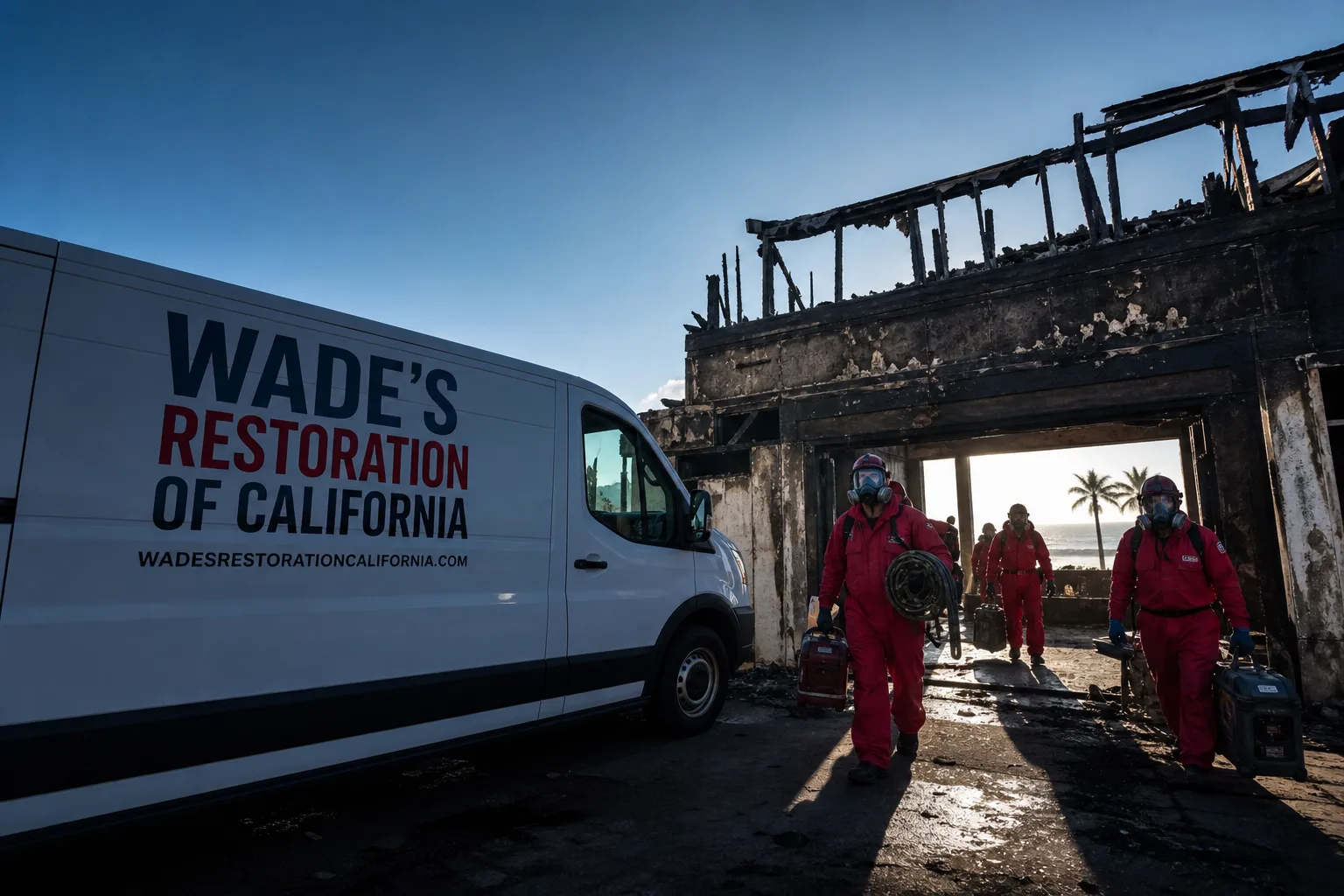
Fast, Reliable Storm & Disaster Restoration Across Dinuba
When a storm tears through Dinuba, the damage doesn’t wait, and neither should you. Storm and disaster restoration in Dinuba usually means water where it shouldn’t be, a roof that’s suddenly open to the sky, or tree limbs through a window at 2 a.m. We’re Wade’s Restoration of California, and we answer the phone around the clock. Call (855) 915-0646 and you’ll get a live person, not a voicemail queue. Wade Ferris built this company in 2007 on a simple idea: show up fast, tell the truth, and do the work right the first time. If your home in Dinuba just took a hit, we’re already on our way.
The math on storm damage in Dinuba is different from what you’ll read in a generic guide. The tule fog that settles into the valley from November through February keeps crawl spaces and slab edges damp for weeks before a storm even arrives. Then the storm hits, and now you’ve got two layers of moisture: the rain that just came through the roof and the fog-driven humidity that’s been quietly soaking your subfloor since Thanksgiving. Most restoration crews trained in coastal or foothill markets never account for that. We do, because we work here.
Why Wade’s Restoration of California Is Dinuba’s Preferred Storm & Disaster Restoration Company
Walk down any street in Dinuba’s older neighborhoods, the 1940s and 1950s homes that dominate the residential core, and you’ll find people who know what a winter storm does to a pier-and-beam floor. Ask anyone on your street about us. This is a small town. Reputation travels fast, and Wade’s name is on the truck, his address is published, and you’ll run into him at the hardware store on a Saturday. That’s the oldest accountability mechanism there is, and it matters more than any star rating from a stranger.
Wade answers his own phone. Not a call center off in another state. Wade Ferris, the owner, often picks up on the second ring, even at midnight. In Dinuba, that means he can have extraction running inside the hour when a storm blows through. His crew is background-checked and uniformed, and they show up with professional-grade equipment from Dri-Eaz, Phoenix, and Injectidry. The work carries IICRC, RIA, and IFA credentials. And every storm, water, and fire restoration job in Dinuba carries the 90-Day Done Right Promise in writing. If it’s not done right, he makes it right. That’s not a slogan. It’s stamped on the contract.
We’ve been serving Dinuba and the surrounding Tulare County communities for years, with dispatch coordinated from our Fresno, Central Valley office. But the people who show up know Dinuba. They know the tule fog, the alkaline soil, the older housing stock, and what a real storm does to homes here. That local knowledge changes how we dry, what we check, and how fast we can get out to your house when the wind dies down.
Our Storm & Disaster Restoration Services in Dinuba
Storm damage in Dinuba rarely looks like one clean problem. It’s water in the attic, mud in the crawl space, a broken window, and a sagging section of roof all at once. Here’s what we do.
Flood Damage Restoration
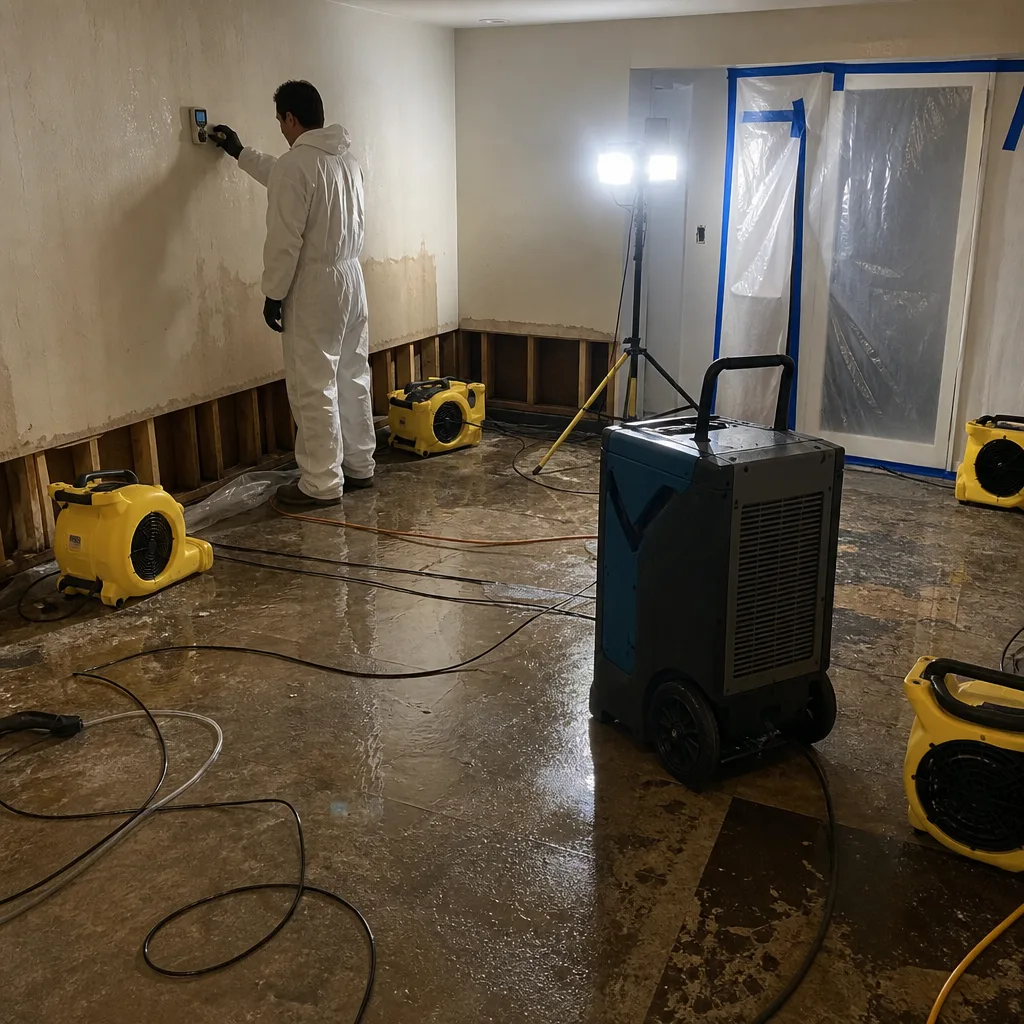
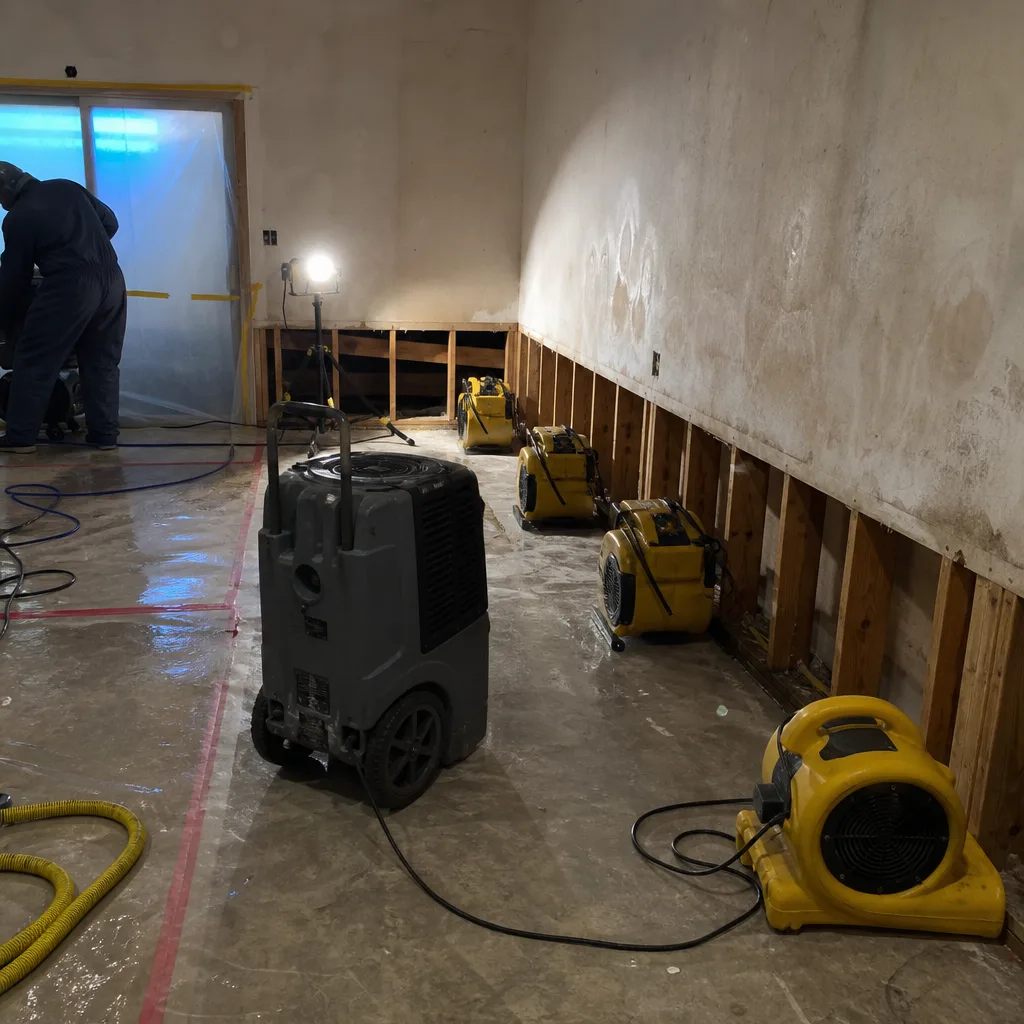
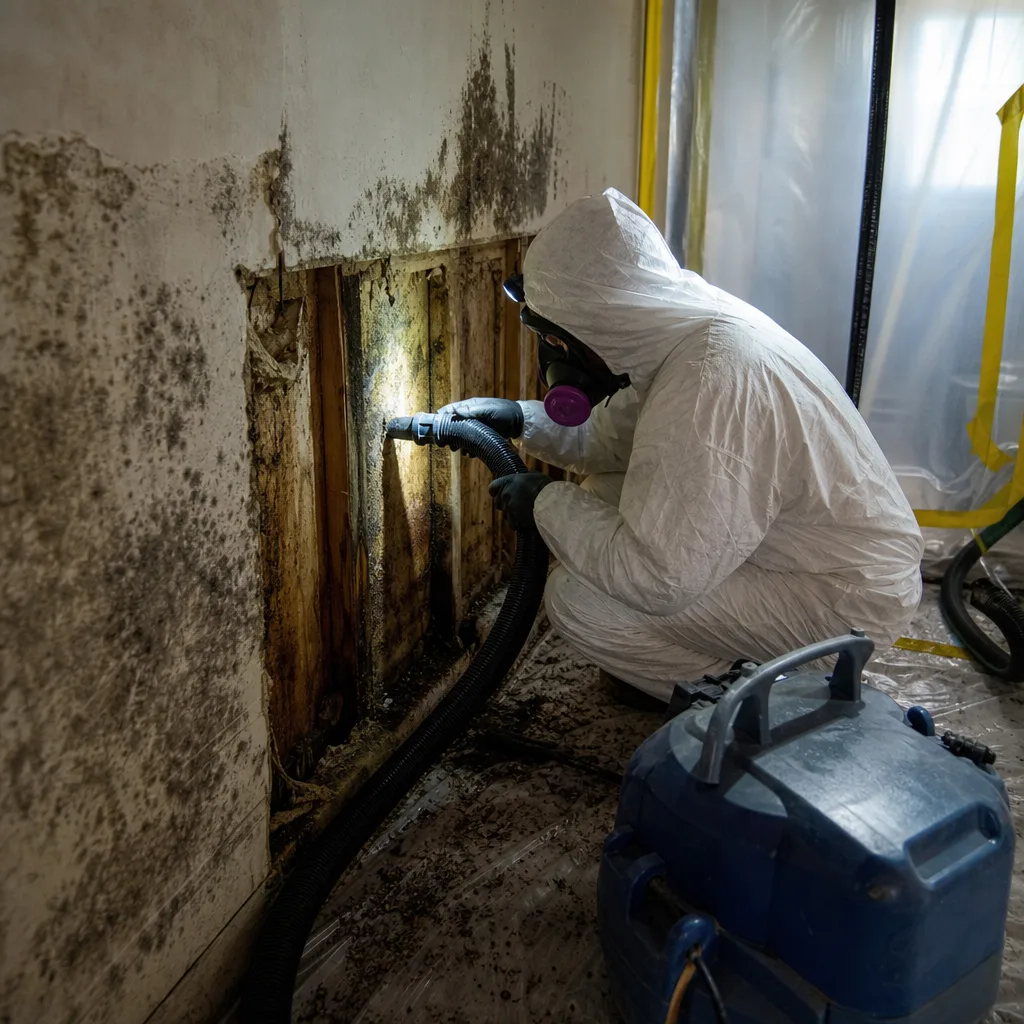
Flood restoration in Dinuba means more than pulling water off a floor. In this town, a flooded pier-and-beam home has exposed earth underneath, and that earth holds moisture from weeks of tule fog before any storm water adds to it. Our Storm & Disaster Restoration team sets up Dri-Eaz LGR dehumidifiers and Injectidry panel systems to dry the structural cavities, not just the surface. We’ll also inspect older galvanized supply lines while we’re down there. Dinuba’s hard, mineral-laden water has been corroding those pipes since the 1950s, and a water-loss event is often when they finally let go.
Emergency Board-Up
When a window blows out or a tree limb comes through a wall, your home is open to everything: weather, animals, and whoever happens to be driving by. Emergency board-up in Dinuba is about securing the structure now, so you can deal with insurance and restoration without more damage piling on. We measure, cut, and install plywood on-site, and we’re usually at your door within 60 to 90 minutes of your call depending on where you are in town and how many other homes took a hit in the same storm.
Roof Tarping
A torn-off section of shingles or a punctured roof deck will leak the next time it rains, and in Dinuba, winter rain often comes with tule fog that never really lets surfaces dry. Roof tarping done right means anchoring the tarp so it survives the next gust of valley wind. We tuck and secure tarps over the ridge line where possible, fasten them with ring-shank cap nails, and run strapping across the middle so the tarp doesn’t flap itself to shreds. It’s temporary protection until permanent repairs are scheduled, but it keeps the water out tonight.
Debris Removal
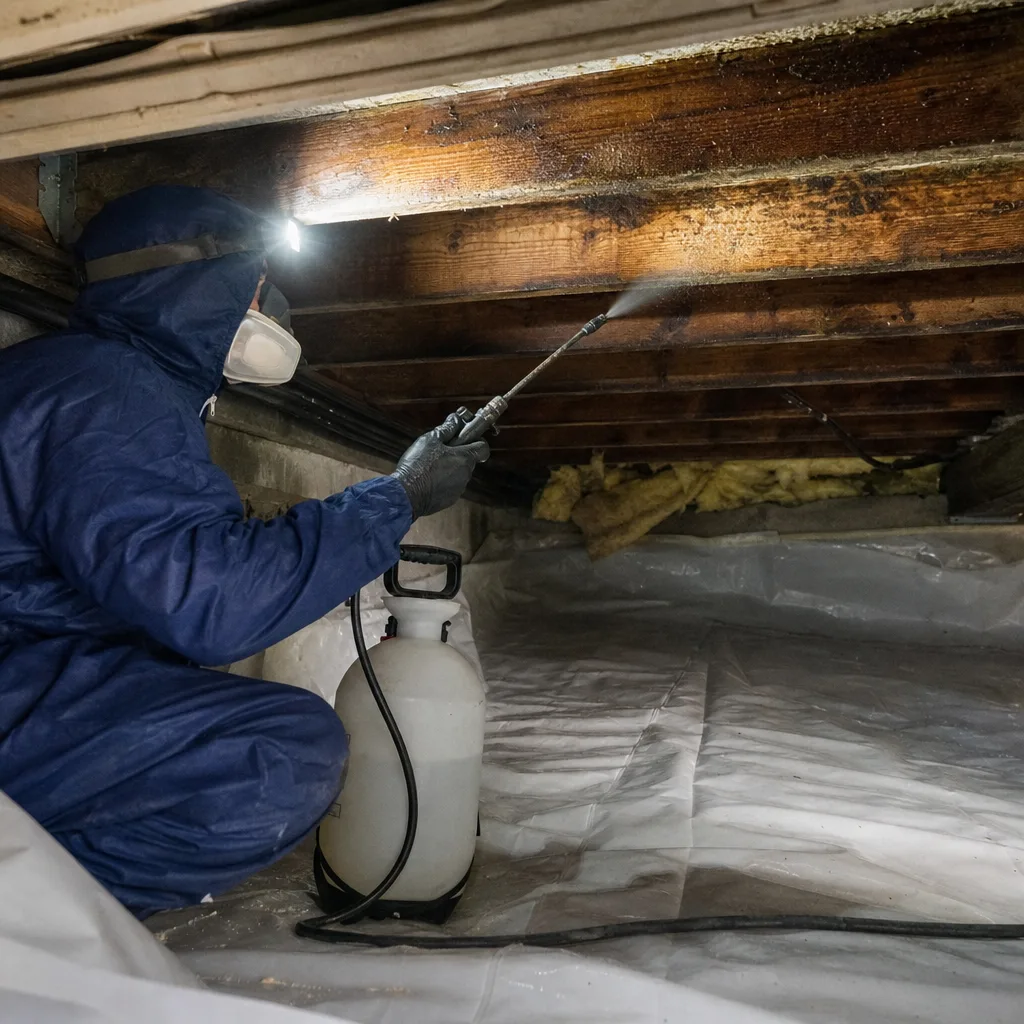
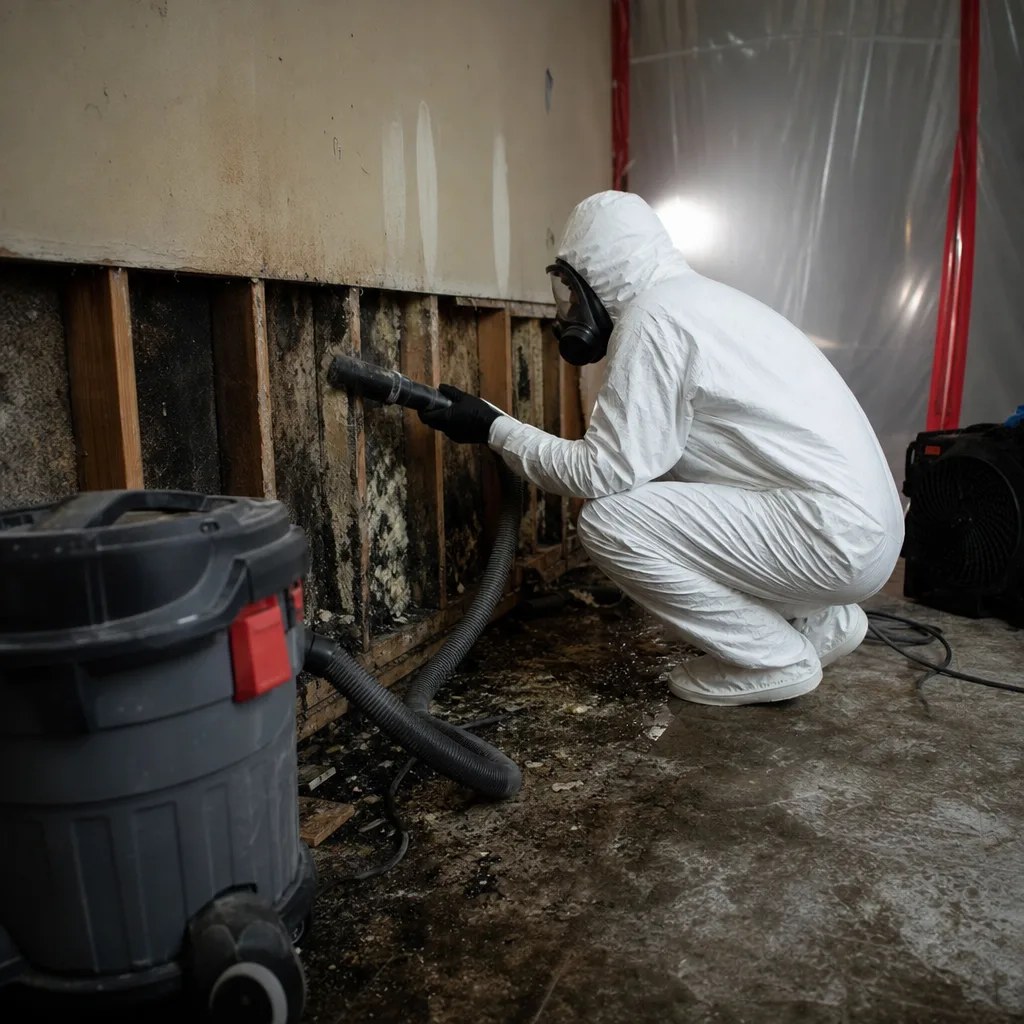
August and September in Dinuba mean harvest dust from the surrounding vineyards is thick in the air and settled on every surface. When a storm adds fallen limbs, damaged decking, or torn-off roofing to that dust, debris removal becomes more than a cleanup job. In Dinuba’s alkaline valley soil, the dust carry Coccidioides spores, which means Valley Fever is a real exposure risk whenever we’re moving soil, foundation debris, or heavily dusty structural material. We run HEPA air scrubbers during any dust-generating demo, and the crew wears N95 respiratory protection as a baseline. It’s a protocol crews trained elsewhere rarely know.
Wind Damage Repair
Dinuba sits on the valley floor, and when winter winds come through the passes, older single-pane windows and 1950s roof sheathing take the brunt. Wind damage repair around here typically means replacing torn rafters, re-framing gable ends, or resecuring sections of roof decking that got peeled back. We’ll write up a scope before the work starts, with a price you approve. No surprises at the door.
What happens when you call
- 1
A real person answersNo phone trees - you reach a local pro.
- 2
You get an upfront price rangeHonest numbers before anyone is dispatched.
- 3
A background-checked tech heads outLicensed & insured, dispatched right away.
- 4
You approve before work beginsNothing starts until you say go.
Trusted Brands We Service in Dinuba
We put our name behind the equipment we run, and our Dinuba customers see the same brands the pros use: Dri-Eaz dehumidifiers, Phoenix axial air movers, Injectidry panel drying systems, XPOWER for air circulation, and B-Air for filtration. These are the tools that dry structural cavities and control mold, not the rental-store versions that move air around without pulling moisture out. Because we’re local to the Central Valley, we stock common parts and replacement components for these units and can get additional equipment to a Dinuba job site fast, no waiting on a shipment from across the country. The IICRC, RIA, and IFA credentials behind the work mean the people running this equipment know how to use it to dry a home, not just run up an electric bill.
Common Storm & Disaster Restoration Problems We See in Dinuba Homes
We see the same patterns again and again in Dinuba. Here’s what we run into most often.
- Tule-fog moisture hiding under storm water: In Dinuba’s older slab-on-grade and pier-and-beam homes, the winter fog season keeps perimeter walls and crawl spaces damp for weeks. When storm water lands on top of that, a crew that only dries the visible water leaves behind residual moisture that feeds mold within weeks. We dry the total moisture load, not just the puddle on the floor.
- Original galvanized supply lines failing after a water-loss event: Many 1950s and 1960s homes in Dinuba still have their original galvanized plumbing. The area’s hard, mineral-rich water has been eating at those pipes from the inside for decades. A flood or leak event often triggers a second failure days later, on a different section of the same line. We check the condition of galvanized pipes during every water-related restoration.
- Valley Fever exposure risk during debris-heavy demo: In late summer and early fall, Dinuba’s surrounding vineyards kick enormous quantities of alkaline dust into the air and onto every surface. Any demo work that disturbs soil, foundation debris, or dusty structural material concentrated Coccidioides spores. We treat dust-generating storm restoration in Dinuba as a Valley Fever exposure site, with N95 respirators and HEPA filtration running.
- Roof decking that was marginal before the storm: Older Dinuba homes often have 3/8-inch plywood or skip sheathing under the shingles. A wind event that peels back shingles also breaks down sheathing that was already soft from years of fog-driven humidity and a lack of vapor barrier. The repair usually has to go deeper than new shingles. We write that into the scope before work starts.
Pricing for Storm & Disaster Restoration in Dinuba, CA
You deserve real numbers, not a phone quote that grows once the crew is inside. In Dinuba, typical pricing looks like this:
- Emergency board-up: $180-$360 for basic window and door openings, depending on size and accessibility.
- Roof tarping: $350-$800 for a typical storm-damaged section, with steeper roofs or large areas running higher.
- Flood damage restoration: $1,800-$4,500 for a standard single-room extraction and structural drying, including equipment placement and daily moisture monitoring.
- Debris removal: $250-$700 for storm debris, depending on volume and whether we’re handling soil-contaminated material requiring respiratory protocols.
- Wind damage repair: $900-$3,500 for typical rafter or sheathing repairs on a 1950s-era home, before any roof covering.
What moves the number: the age of your subfloor and whether hidden galvanized pipe corrosion shows up during the work, how much tule-fog moisture was already in the crawl space before the storm hit, and whether demo dust in the area triggers our Valley Fever protocol. Estimates are free. We’ll put the scope in writing, with a price, before the first tool comes off the truck. And remember the standing offers: no trip charge inside our own county, free second opinion on any written estimate, and a Senior and Veteran 10% discount, always.
We Also Serve Cities Near Dinuba
If you’re in Reedley, Cutler, Orosi, or Orange Cove, we handle storm and disaster restoration there too. These towns share the same valley-floor conditions: tule fog, alkaline soil, older agricultural-worker housing, and a dry season that turns the air to dust. Most of our crew has run jobs in every one of them within the last year. If you’re in Dinuba itself or anywhere nearby in Tulare County, call us at (855) 915-0646 and Wade or a member of his team will pick up.
We’re also part of the broader Storm & Disaster Restoration in Dinuba coverage we provide throughout the valley. Same owner, same crew, same equipment, no matter which of these towns you call home.
Serving Dinuba, CA - Our Local Coverage Area
We’re based in the Dinuba area and know this community well. Use the map below to see our service coverage - if you’re nearby, we can almost certainly help.
FAQs - Storm & Disaster Restoration in Dinuba
Because Dinuba’s winter tule fog keeps ground-level humidity at or near 100% for weeks at a time, which means the crawl spaces and slab-on-grade perimeter walls in older Dinuba homes are already saturated with moisture before any storm water arrives. Restoration here is not just about removing the water you can see. We’re drying the existing fog-driven moisture load plus the storm water, and that means longer equipment run times, more aggressive dehumidification, and daily moisture readings until every structural cavity hits target moisture content. It’s not a delay. It’s the only way to keep mold from coming back. Call (855) 915-0646 and we’ll give you a realistic dry-down timeline for your specific home.
Yes, and we treat it seriously. Dinuba sits in a region where Coccidioides immitis spores live in the dry alkaline soils, and during the August-September harvest window, vineyard dust puts concentrated spores on every surface, including materials inside your home. Any demolition that disturbs that dust, whether it’s wet drywall, attic debris, or soil around a foundation, is a Valley Fever exposure site. Our crew wears N95 respirators as a minimum and runs HEPA air scrubbers to keep airborne spores from spreading through the house. A coastal-trained crew may not even know to do this. We do, because we work in this soil every week.
It can, and we check for that. Dinuba’s hard water has been slowly corroding galvanized supply lines from the inside since the day they were installed. A storm-related water event, whether from a roof leak or a flooded crawl space, often shifts pressure in the system or exposes already-paper-thin pipe walls. A second leak days after the first job is closed is something we see repeatedly in older Dinuba homes. Before we close out any water restoration, we inspect visible galvanized lines and flag sections that look compromised. If you want a free second opinion on any written estimate, call (855) 915-0646.
Yes, in two ways. First, the fog keeps roofs and sheathing damp for long stretches, which means the underlayment and decking under a torn section may already be soft before you ever see a leak. The tarp has to go over a surface that may not hold fasteners the way dry wood does, so anchoring matters more. Second, the fog itself is a moisture source. A roof tarp in Dinuba’s winter is not just stopping rain. It’s also preventing condensed fog moisture from settling into exposed decking and insulation. We tarp with that in mind, using ridge-anchored placements and cap nails that hold in soft wood.
In most older Dinuba homes, the smart move is to repair what’s damaged and upgrade the moisture protection while the floor is open. A 1950s pier-and-beam floor over exposed earth has no vapor barrier, and the tule fog season means that earth stays damp for months every year. If you just replace the damaged sheathing and close it back up, the same moisture will return. We typically recommend a repair, not a full rebuild, but we’ll use the open floor to add a 6-mil vapor barrier over the crawl space earth and address any rotten sills or joist ends. That’s a retrofitted improvement that makes the next storm less damaging. The upgrade adds a few hundred dollars to the job, not thousands, and it’s a place where the math favors spending a little more now.
Written by Wade Ferris, Owner at Wade’s Restoration of California, serving Dinuba and the Central Valley since 2007.
If your home in Dinuba just took storm damage, don’t wait for the moisture to spread. Call (855) 915-0646 now for a free estimate, and Wade or a member of his crew will head your way.