
Fast, Reliable Storm & Disaster Restoration Across Clovis
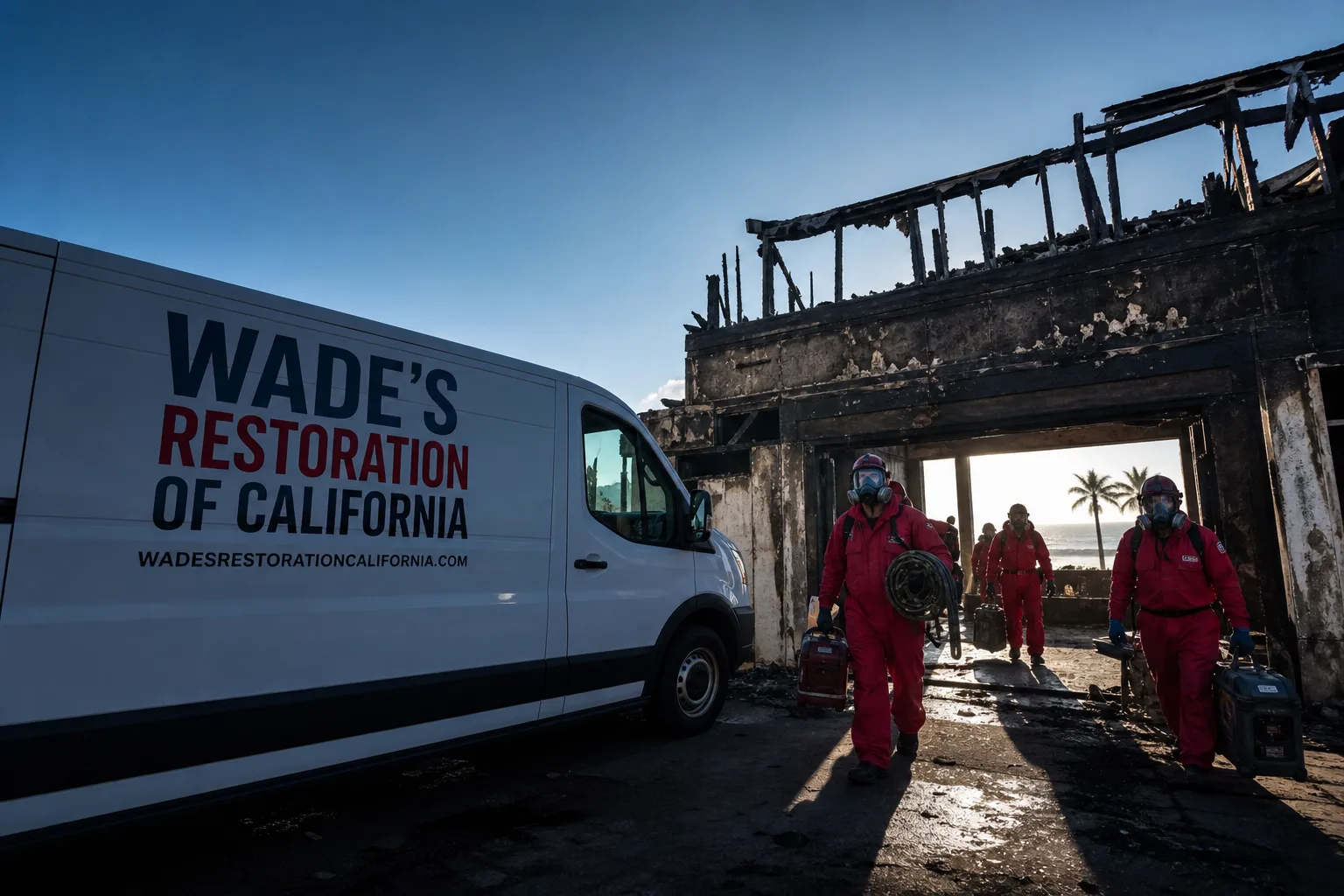
Storm damage in Clovis doesn’t wait for business hours, and neither do we. When a winter atmospheric river tears through the 93619 corridor or wind-driven rain breaches a stucco wall on a 2000s tract home, you need someone who knows Clovis construction, Clovis weather, and Clovis neighborhoods. Wade Ferris founded Wade’s Restoration of California in 2007, and he still answers his own phone at (855) 915-0646. We’re not a franchise with a call center in another state. We’re your neighbor in the Central Valley, and we respond to storm calls anywhere in Clovis fast because we know that every hour of delay in this heat means more damage behind your walls.
Our Storm & Disaster Restoration team handles everything from emergency roof tarping to full flood damage restoration, and we’ve spent nearly two decades learning exactly what Clovis homes do when storms hit. That local knowledge matters more than most people realize.
Why Wade’s Restoration of California Is Clovis’s Preferred Storm & Disaster Restoration Company
Clovis homeowners call us because Wade’s name is on the truck, his address is published, and he’s going to run into you again at the Save Mart on Shaw Avenue. That’s the oldest accountability mechanism there is, and it works. We’ve built our reputation in Clovis one job at a time since 2007, and most of our storm restoration work comes from neighbors telling neighbors. Ask anyone on your street who they’d call for a flooded garage or a wind-torn roof, and you’ll hear our name more often than not.
What Clovis customers consistently tell us they appreciate is that Wade deals with the insurance adjuster directly. You’re not stuck relaying messages between two parties who never seem to talk to each other. Wade gets on the phone with your adjuster, walks them through the moisture readings, shares the photo documentation, and makes sure the scope of work matches what’s actually damaged. That’s not something every restoration company does, and it’s why so many Clovis homeowners who’ve been burned by national chains end up calling us for a second opinion. We do free second opinions on any written estimate, by the way.
Response time to Clovis matters in ways that other cities don’t have to think about. When it’s 104°F in July and a summer storm drops two inches of rain on your attic through a compromised roof, mold colonization can begin within 24 to 36 hours. Wade and his crew can have extraction running inside the hour for emergency calls in Clovis, and that speed is the difference between a cleanup and a structural repair.
Our Storm & Disaster Restoration Services in Clovis
Storm Damage Cleanup
Storm damage cleanup in Clovis usually starts with the aftermath of wind. Clovis sits at the eastern edge of the Fresno metro, directly against the Sierra Nevada foothills, and the wind that comes down off those foothills during winter storms is different from what they get in Fresno proper. We see downed trees against fences on the 93611 corridors, wind-peeled roofing in the older 1970s ranch homes, and saturated insulation in attics that were compromised by wind-driven rain. Wade’s crew removes debris, documents what the storm did, and gets your property stabilized before secondary damage sets in.
Flood Damage Restoration
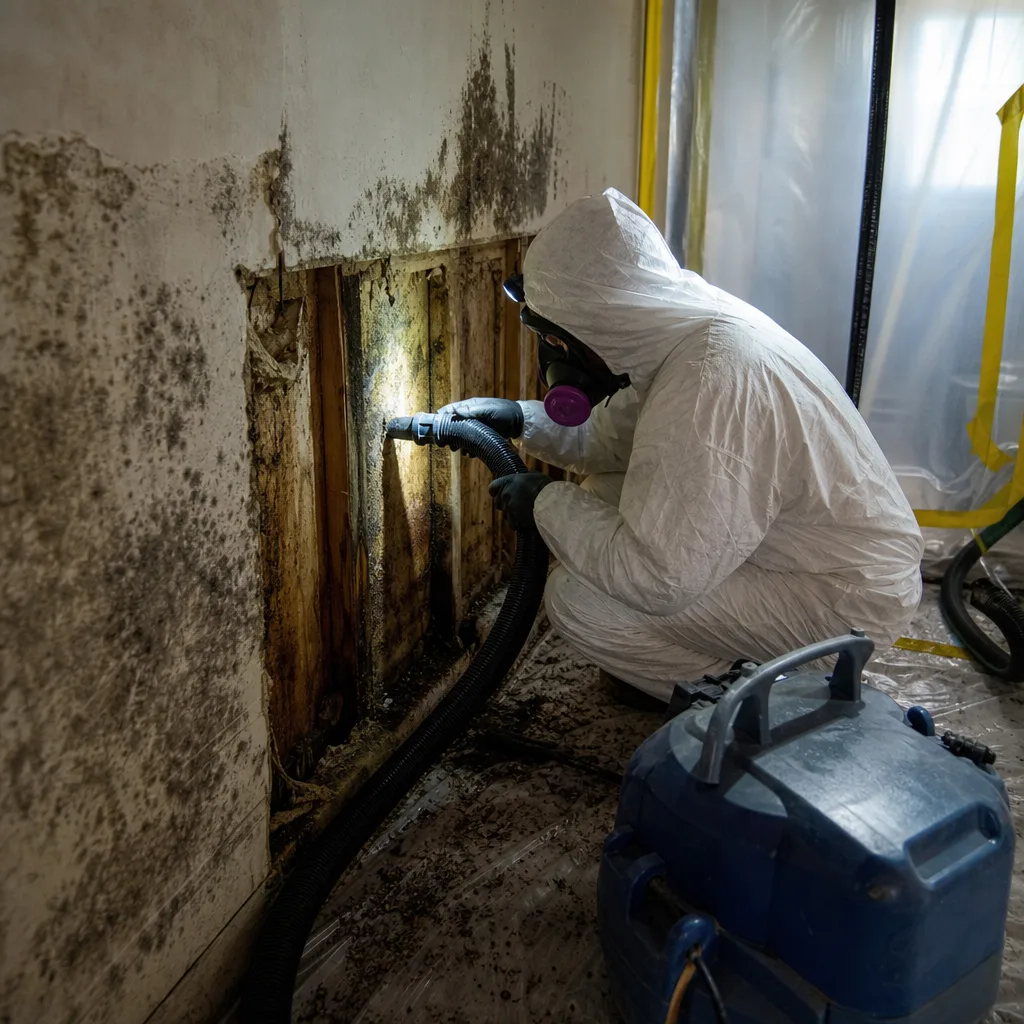
Flood damage restoration in Clovis has its own rhythm because of how the city’s drainage works. Those 100°F summers mean near-zero rainfall for months, and homeowners in neighborhoods around Temperance Avenue and Ashlan Avenue routinely neglect gutters and perimeter grading. Nobody thinks about drainage when it hasn’t rained in six months. Then a winter atmospheric river arrives, and poorly maintained drainage systems channel water directly against foundations and through stucco cracks. We extract standing water, run industrial drying equipment, and take moisture readings every single day until the structure is dry. You get the full moisture log at the end of the job. Almost nobody in this trade does that.
Emergency Board-Up
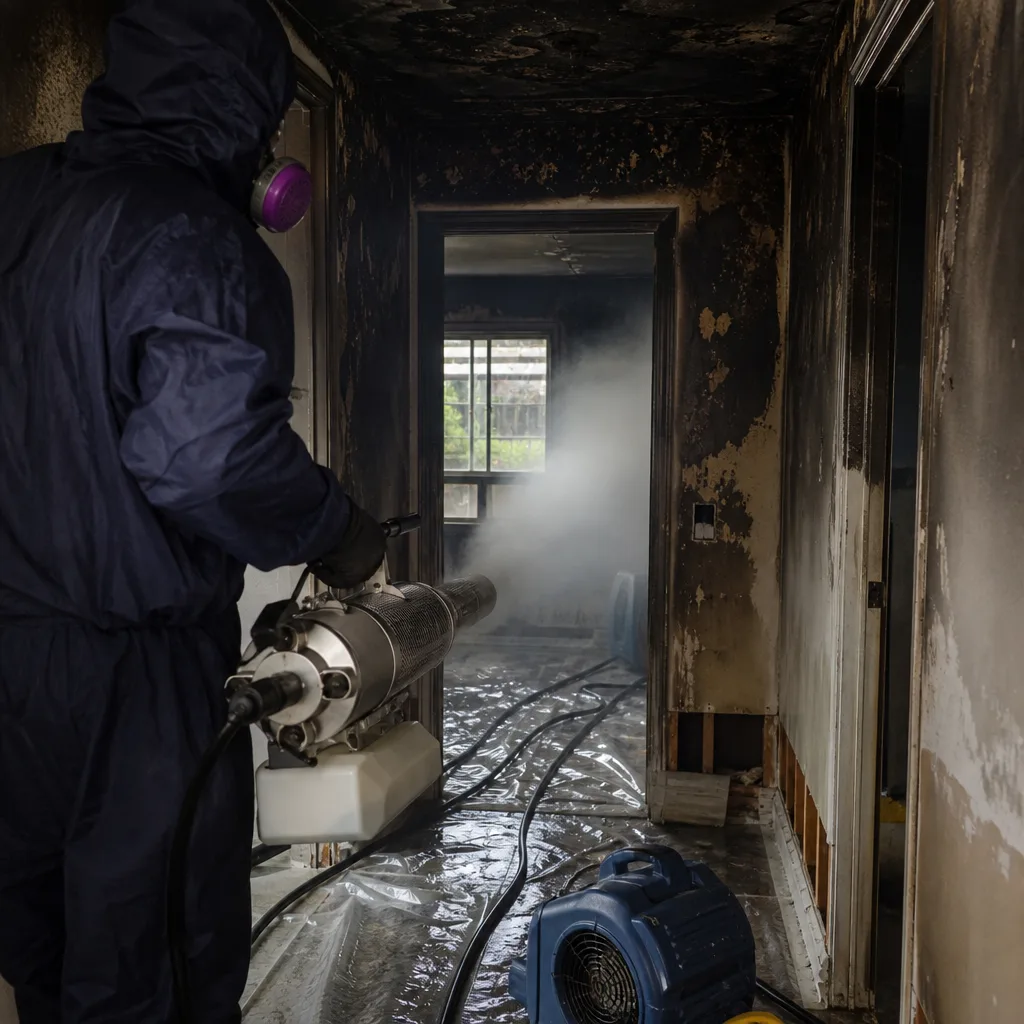
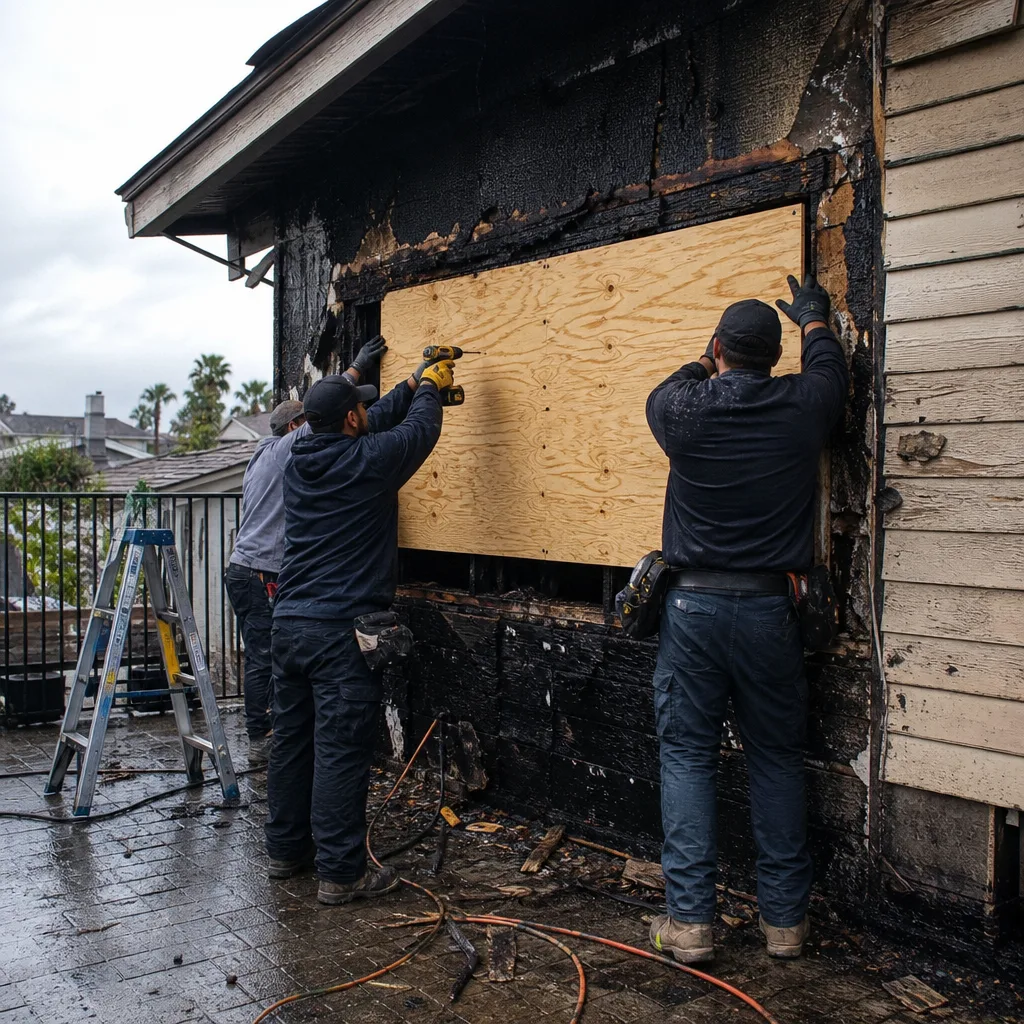
When a storm blows out a window or tears off a section of roof, your home is open to everything: more rain, animals, looters. Emergency board-up in Clovis is about securing the structure immediately so the damage stops spreading. We respond to board-up calls across all four Clovis ZIP codes, and we use materials that actually hold up to the next storm, not whatever plywood is lying around. Once the opening is secured, we can take our time doing the restoration work right instead of racing against the next weather event.
Roof Tarping
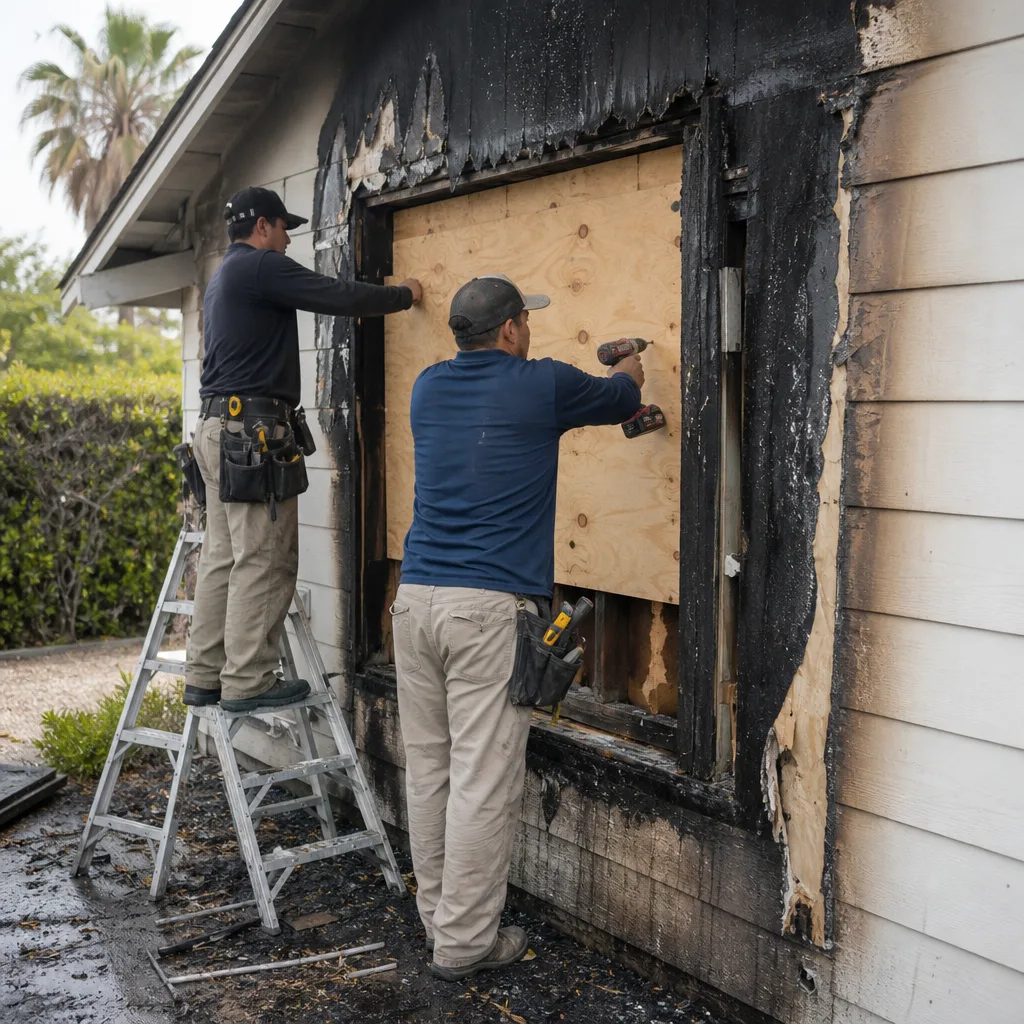
Roof tarping in Clovis is more critical than most homeowners realize, especially on those 2000s and 2010s tract homes in 93619. The builder-grade roof flashing used on many of those houses fails at valley-to-roof transitions during winter wind-driven rain, and the water doesn’t stay in the attic. It travels down wall cavities, saturates the OSB sheathing behind the stucco, and creates hidden structural damage that can take weeks to become visible. Emergency tarping stops that water at the source. We get tarps on fast, secure them properly against the next wind event, and then we assess what the water already reached.
What happens when you call
- 1
A real person answersNo phone trees - you reach a local pro.
- 2
You get an upfront price rangeHonest numbers before anyone is dispatched.
- 3
A background-checked tech heads outLicensed & insured, dispatched right away.
- 4
You approve before work beginsNothing starts until you say go.
Common Storm & Disaster Restoration Problems We See in Clovis Homes
- Hidden OSB saturation in 93619 homes. Many houses built during Clovis’s 2000s and 2010s growth boom used stucco applied directly over OSB sheathing. Winter storm moisture wicks through hairline cracks and saturates that OSB for weeks before any interior signs appear. By the time you see a stain on the drywall, the structural sheathing behind the stucco has been wicking the whole time.
- Whole-house smoke odor from a single wildfire event. The newer open-floor-plan homes in Clovis, especially in the master-planned communities of 93619, share centralized HVAC systems that distribute smoke and soot throughout the entire structure during one damage event. The 2020 Creek Fire blanketed eastern Clovis ZIP codes with weeks of hazardous smoke, and we’re still getting calls about odor that settled into ductwork and attic insulation.
- Attic mold from extreme summer heat. When a storm dumps water into a Clovis attic during summer, the 100°F+ temperatures create mold-friendly conditions almost immediately. Residential dehumidifiers can’t keep the dew point below surface temperature in that kind of heat, so mold colonization begins within 24 to 36 hours. Industrial drying equipment isn’t optional here.
- Builder-grade flashing failures on newer tract homes. The production-home neighborhoods built during Clovis’s growth boom used roofing materials that met code at the time but don’t hold up to repeated winter wind-driven rain. Valley-to-roof transitions fail first, causing hidden soffit and fascia saturation that most homeowners don’t notice until the damage is extensive.
Pricing for Storm & Disaster Restoration in Clovis, CA
Storm damage cleanup in Clovis typically runs $400 to $1,800 depending on debris volume and whether structural drying is required. Flood damage restoration usually lands between $2,500 and $7,000 for a single-room event, with full-structure floods ranging from $8,000 to $25,000 or more when multiple rooms and crawl spaces are involved. Emergency roof tarping runs $350 to $900 for a standard single-story Clovis home, and emergency board-up typically costs $250 to $600 per opening. These are the ranges we quote for Clovis work specifically, not national averages that don’t reflect Central Valley labor and material costs.
What affects your final cost: how long the water sat before we arrived, whether the OSB behind your stucco needs structural drying, how many rooms share the affected HVAC system, and whether mold colonization has already started. Want an exact number? Call (855) 915-0646 for a free estimate. We’ll walk the property with you and put everything in writing before any work begins.
We Also Serve Cities Near Clovis
While this page focuses on Clovis, our restoration crews also respond to storm calls in Storm & Disaster Restoration in Clovis and its neighboring communities. We work regularly in Fresno, Old Fig Garden, Sanger, and Fowler, bringing the same local knowledge and fast response to every storm damage call across the eastern Central Valley.
Serving Clovis, CA - Our Local Coverage Area
We’re based in the Clovis area and know this community well. Use the map below to see our service coverage - if you’re nearby, we can almost certainly help.
FAQs - Storm & Disaster Restoration in Clovis
Mold colonization can begin within 24 to 36 hours in a hot, poorly ventilated Clovis attic after water intrusion. The San Joaquin Valley’s summer temperatures create exactly the conditions mold needs: heat, moisture, and stagnant air. That’s why we run industrial drying equipment and take daily moisture readings rather than relying on residential dehumidifiers, which can’t keep up with Clovis heat. If you’ve had attic water damage and it’s been more than a day, call (855) 915-0646 for an immediate assessment.
Yes. In 93619 production homes from the 2000s and 2010s, stucco was applied over OSB sheathing, and hairline cracks let storm moisture wick into the sheathing invisibly for weeks. In older 93611 ranch homes, the stucco typically sits over plywood or solid lumber with different moisture behavior. We inspect both types differently, because the 93619 homes hide their damage longer and often need structural drying behind the stucco rather than just surface treatment.
Newer Clovis homes built with centralized HVAC systems and open floor plans distribute smoke, soot, and odor throughout the entire structure during a single event. The Creek Fire showed us exactly how this works: smoke settled into ductwork, attic insulation, and wall cavities in eastern Clovis ZIP codes, especially 93619, and standard cleaning doesn’t reach it. Smoke and soot odor restoration requires HVAC decontamination and often insulation replacement, not just surface cleaning.
Builder-grade roof flashing at valley-to-roof transitions is the most common failure we see on Clovis tract homes from the 2000s and 2010s. When winter wind-driven rain gets past that flashing, it saturates soffits and fascia and travels down wall cavities into the OSB behind your stucco. Emergency tarping stops that water at the source before we do any interior restoration, because drying the inside while water still enters from above is wasted effort.
Absolutely. Clovis gets almost no summer rainfall, so homeowners routinely skip gutter and perimeter grading maintenance for months. Then an atmospheric river arrives in winter, and blocked gutters overflow directly against the foundation, channeling water through stucco cracks and into crawl spaces. We’ve seen this repeatedly in Clovis neighborhoods where summer neglect meets winter storms. If your gutters haven’t been cleaned since spring, now is the time to call (855) 915-0646 for a pre-storm assessment.
Call Wade’s Restoration of California for Storm & Disaster Restoration in Clovis
When a storm hits your Clovis home, you don’t have time to vet a national chain or leave voicemails at an answering service. You need the guy whose name is on the truck, who publishes his address, and who answers his own phone at 2 a.m. Wade Ferris will be there himself, and his crew will bring professional-grade equipment from Dri-Eaz, Phoenix, and Injectidry to get your home dry, safe, and restored. We handle your adjuster directly, we document everything, and we back every water, fire, and mold restoration job with our 90-Day Done Right Promise in writing. Call (855) 915-0646 now for a free estimate, no trip charge inside our county, and a $40 discount on any repair over $200. Senior and veteran? You always get 10% off, no questions asked.
Written by Wade Ferris, Owner at Wade’s Restoration of California, serving Clovis since 2007.