
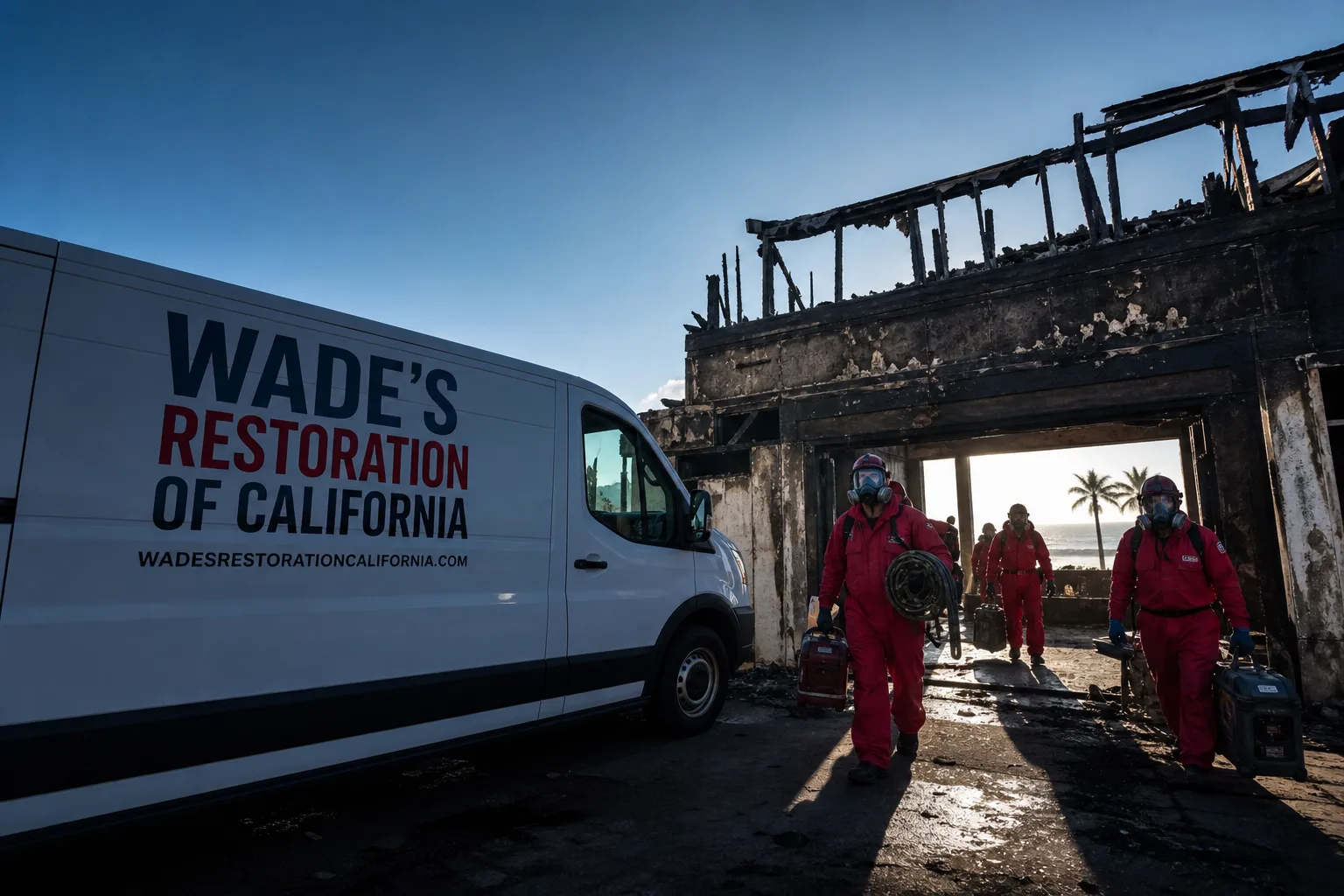
Fast, Reliable Storm & Disaster Restoration Across Chinatown
When a storm tears through Chinatown, the damage rarely stays where it started. Wind-driven rain slips into century-old brick-and-wood tenements, follows un-firestopped balloon-frame bays, and surfaces two floors below where it entered. That’s the reality of storm damage in 94133, and it’s why you need a crew that understands how these post-1906 buildings actually fail. Wade’s Restoration has been handling storm damage, flood restoration, emergency board-up, and roof tarping for homeowners throughout Chinatown for years. One call to (855) 915-0646 gets you Wade Ferris himself, and he can have a crew on Grant Avenue or Stockton Street within the hour. Not a call center. The owner, on the phone, telling you exactly what happens next.
Why Wade’s Restoration of California Is Chinatown’s Preferred Storm & Disaster Restoration Company
Ask anyone on your street. Wade’s name gets passed between neighbors in Chinatown because he does what he says he’ll do, writes the scope down before work starts, and hands you the moisture log when the job’s done. No national chain sends its CEO to your building. Wade will walk every floor himself.
Chinatown’s tenements were rebuilt after the 1906 earthquake and fire, and they were built dense. Three to five stories, shared walls, original cast-iron drain stacks, and decades of informal renovations. When a storm breach happens in one unit, water doesn’t just affect that unit. It travels. Wade’s team knows to check the diagonal bridging below a parapet leak, not just patch the visible stain. That local knowledge is why Chinatown homeowners call him first when a winter storm rolls off the Pacific.
Response time matters here because the marine layer keeps interior humidity high year-round. Dense plaster-on-lath walls can hit mold-growth thresholds within 24 to 48 hours of a storm leak. Wade’s crews stage equipment locally, and calls are answered by a live person at any hour, including Wade himself. When you call (855) 915-0646, you’re talking to the man whose name is on the truck.
Every storm restoration job comes with the 90-Day Done Right Promise in writing. If something’s not right, one call brings Wade back. No runaround. That promise is stamped on every water, fire, and mold restoration contract we write in Chinatown.
Our Storm & Disaster Restoration Services in Chinatown
Our Storm & Disaster Restoration team handles the full range of storm damage work in Chinatown, from emergency board-up to complete drying and reconstruction. Here’s what we do most often in this neighborhood.
Emergency Board-Up
When wind blows out a window on a 1920s tenement off Broadway, that opening becomes a security and weather liability immediately. Wade’s crew boards up with plywood cut to fit the original window openings, which in Chinatown are rarely standard sizes. We secure entry doors, broken storefront glass, and damaged roof sections. Board-up in Chinatown usually runs $400 to $900 depending on the number of openings and floor level, and we can typically be on site within 60 to 90 minutes of your call.
Roof Tarping
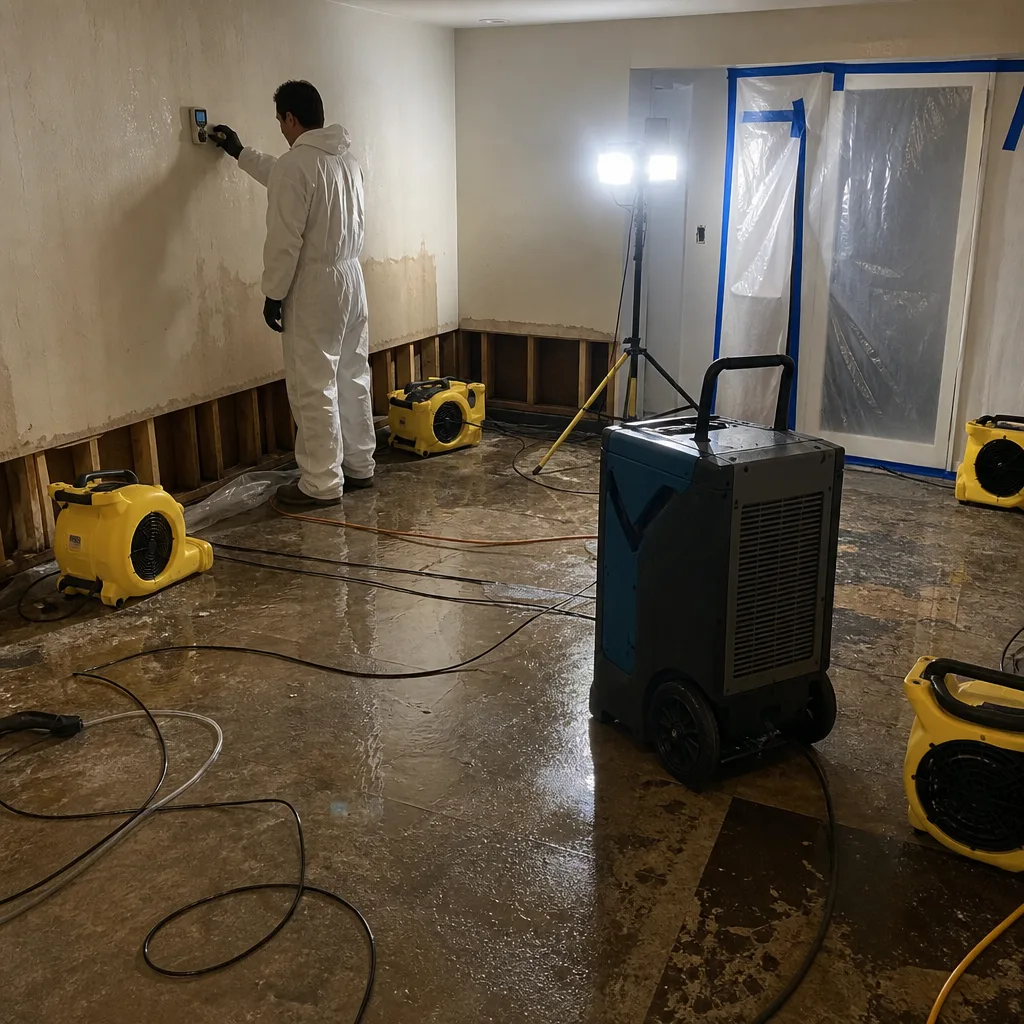
Roof tarping after a storm in Chinatown is trickier than it looks. The flat and low-slope roofs on these 1910s and 1920s buildings have parapets, and wind gets under the edges. We anchor tarps over the parapet and seal seams with batten strips, not just sandbags. Proper tarping on a Chinatown roof typically costs $650 to $1,400 depending on roof area and access. The goal is keeping the next storm from getting in while you wait for a permanent repair.
Wind Damage Repair
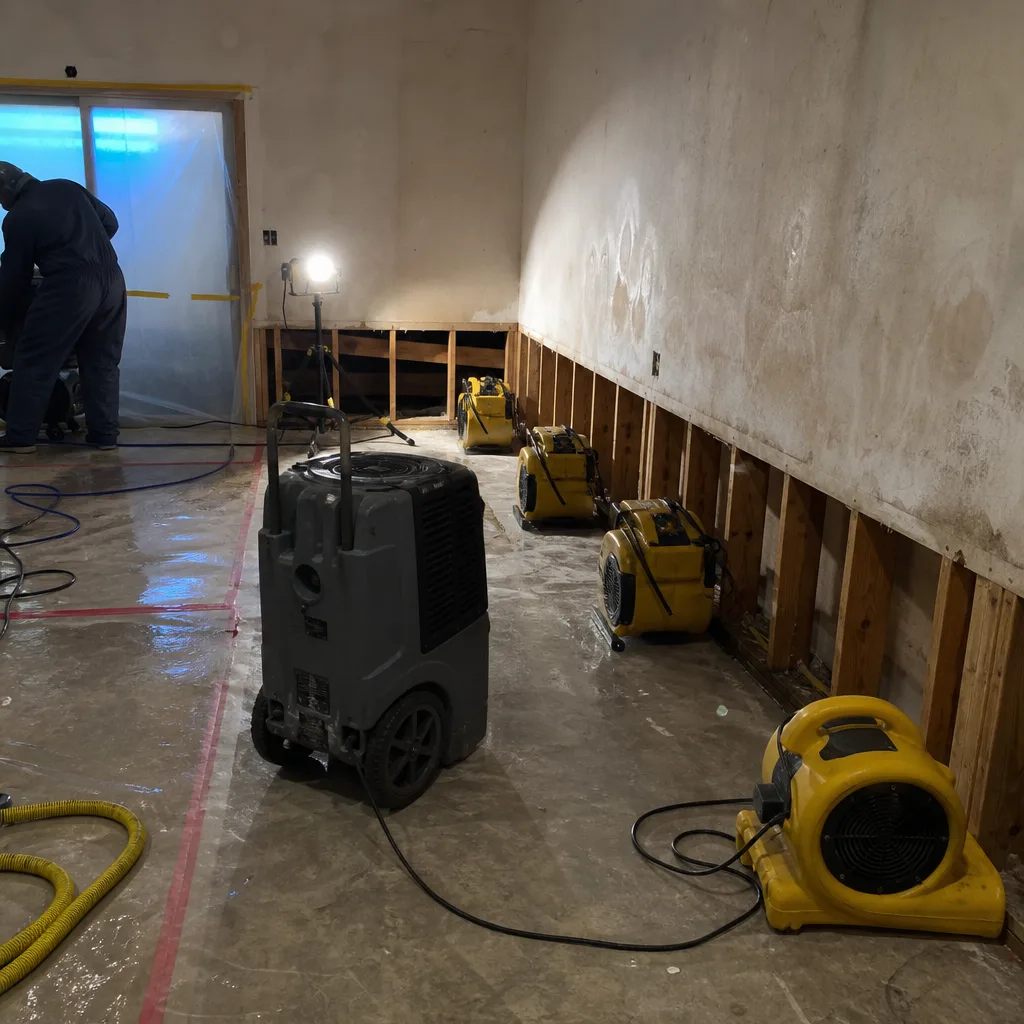
Wind damage in Chinatown often means broken windows, lifted roofing, and original wood entry doors that blew in. More on those doors later, because they’re a known failure point. Repair scope starts with a full inspection of the wind-affected elevations, including the hidden bays behind the visible damage. Wind repair work here generally starts around $800 and rises based on how far the water traveled. Wade’s crew documents everything for your insurer with photos and written scope.
Flood Damage Restoration
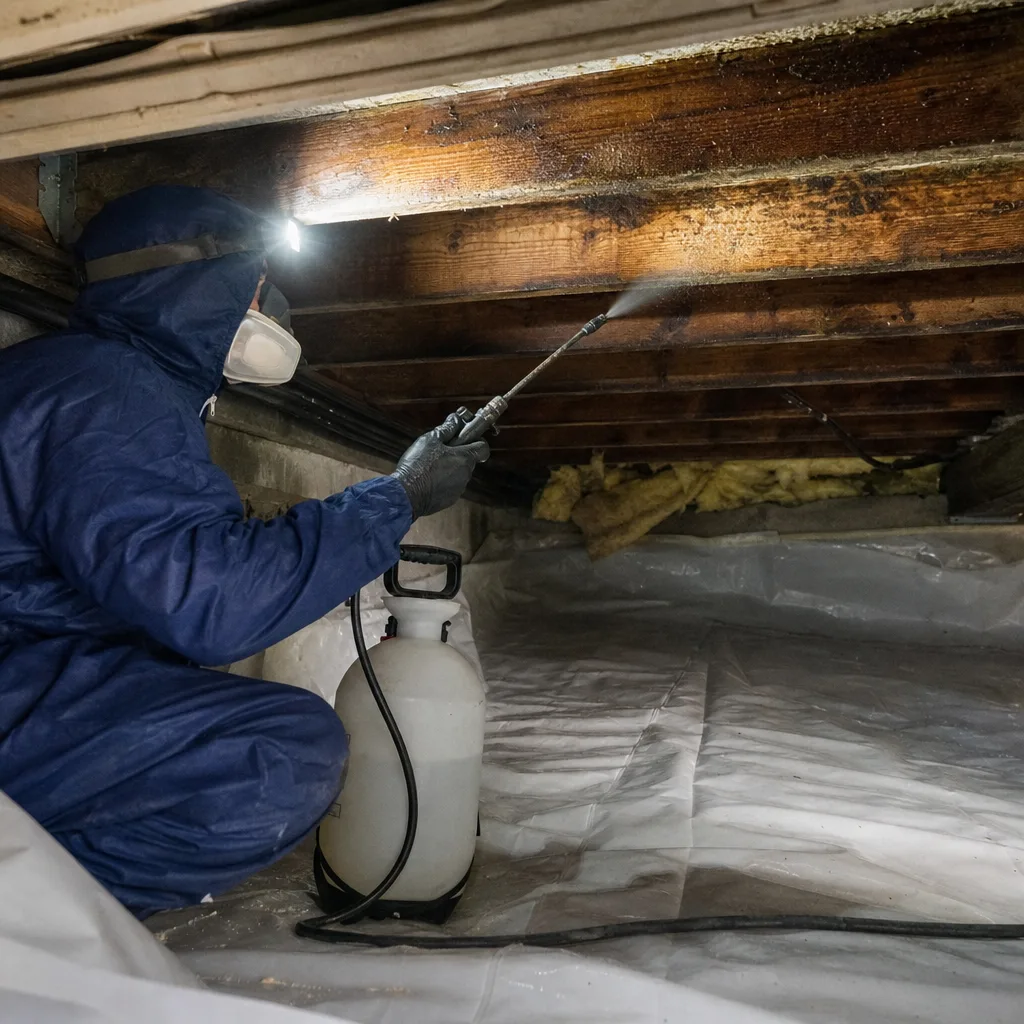
Storm flooding in Chinatown’s ground-floor units and commercial spaces comes fast, whether from street runoff or a failed drainage stack overwhelmed by heavy rain. We extract standing water, run Dri-Eaz LGR dehumidifiers and XPOWER air movers, and map moisture with thermal imaging so no hidden pocket gets missed. Flood restoration in a Chinatown tenement typically runs $3,500 to $9,000, but the exact number depends on how many units got wet and how far water traveled through shared wall cavities.
What happens when you call
- 1
A real person answersNo phone trees - you reach a local pro.
- 2
You get an upfront price rangeHonest numbers before anyone is dispatched.
- 3
A background-checked tech heads outLicensed & insured, dispatched right away.
- 4
You approve before work beginsNothing starts until you say go.
Trusted Brands We Service in Chinatown
We run professional-grade equipment from Dri-Eaz and XPOWER on every storm and flood job in Chinatown, and our techs carry IICRC, RIA, and IFA credentials. That means the drying equipment, moisture meters, and thermal imaging gear we bring into a post-1906 building on Waverly Place is the same stuff hospitals and commercial restoration firms use. We keep parts and materials stocked for common Chinatown repairs, so emergency board-up and tarping don’t wait on a warehouse order. If it’s on our truck, it’s going on your building today.
Common Storm & Disaster Restoration Problems We See in Chinatown Homes
- Wind-driven water traveling through un-firestopped balloon-frame bays. A leak at the third-floor parapet can surface in the first-floor commercial space. Thermal imaging is the only way to map the full moisture boundary, and it almost always extends further than the visible stain suggests.
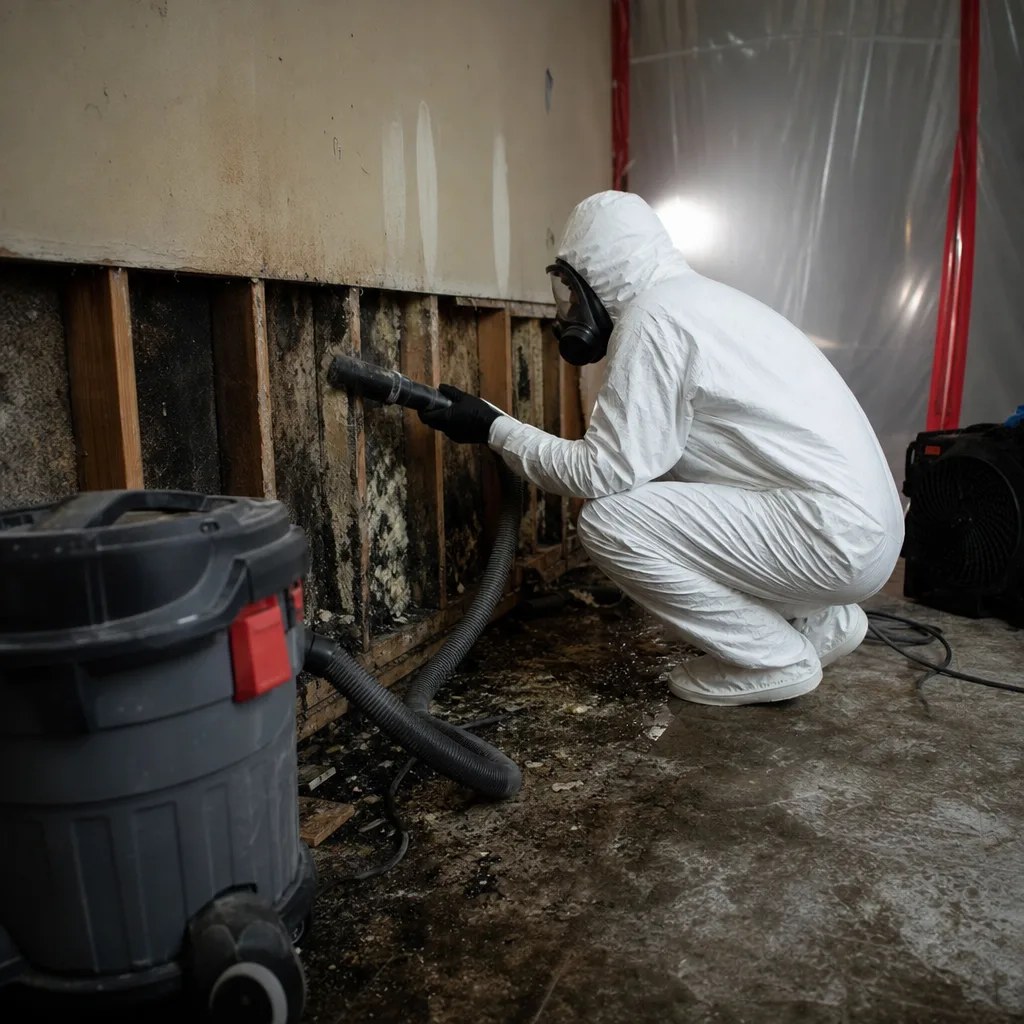
- Mold blooming behind original plaster-on-lath within 48 hours. Chinatown’s fog and marine layer keep indoor humidity elevated year-round. Once water gets behind plaster, the clock starts immediately, and it’s a faster clock here than in inland Bay Area cities.
- Original 1920s wood entry doors blowing in during winter storms. When a door fails, wind pressurizes the shared stairwell and damages multiple floors. Reinforcement before storm season is far cheaper than emergency replacement after.
- Hidden wall cavities from decades of informal renovations. Many Chinatown units have been subdivided and rebuilt over generations, creating voids and chases that don’t follow any modern framing logic. Water hides in those cavities and re-emerges weeks later if the drying wasn’t mapped properly.
Pricing for Storm & Disaster Restoration in Chinatown, CA
Storm damage in Chinatown covers a wide range depending on how far the water traveled and whether shared walls are involved. Emergency board-up here runs $400 to $900. Roof tarping runs $650 to $1,400. Wind damage repair starts around $800 and rises with the amount of hidden water damage. A full flood restoration in a Chinatown tenement typically lands between $3,500 and $9,000. The biggest cost variable in this neighborhood is the balloon-frame factor: a third-floor leak that followed diagonal bridging two floors down will triple the demo estimate versus a simple ceiling patch. That’s not overcharging. That’s what it honestly costs to open the walls and dry the building properly. Call (855) 915-0646 for a free estimate, and we’ll put the scope in writing before any work starts.
We Also Serve Cities Near Chinatown
Wade’s Restoration crews serve all of Chinatown plus the surrounding San Francisco neighborhoods. Storm damage doesn’t respect neighborhood boundaries, so our teams also respond to Mission District, Noe Valley, Visitacion Valley, and the wider San Francisco area. If your building is anywhere in the city, call us. We’ll tell you straight whether we can help.
Serving Chinatown, CA - Our Local Coverage Area
We’re based in the Chinatown area and know this community well. Use the map below to see our service coverage - if you’re nearby, we can almost certainly help.
FAQs - Storm & Disaster Restoration in Chinatown
Because these buildings were framed with balloon-frame bays that were never fire-stopped, meaning there is a continuous open channel from the roofline down to the foundation. Water entering at a third-floor parapet follows century-old diagonal bridging and hidden chases down through the wall assembly until it hits something that stops it, often on the first or second floor. Opening only the visible stain area leaves trapped water in those bays, and mold blooms behind the original plaster within 48 hours. The actual moisture boundary, mapped with thermal imaging, is almost always larger than the visible stain, which is why Chinatown storm restoration scopes frequently triple once the walls are opened. Call (855) 915-0646 for an honest assessment before you sign off on a cheap patch.
Within 24 to 48 hours, sometimes sooner. San Francisco’s marine layer keeps interior humidity elevated year-round, and the dense plaster-on-lath walls common in Chinatown’s post-1906 tenements hold moisture against the lath and framing like a sponge. Once water gets behind the plaster, the clock starts, and there is no ventilation in those hidden cavities to slow it down. This is why we run Dri-Eaz LGR dehumidifiers and XPOWER air movers immediately after extraction, and why we take moisture readings every single day until drying targets are met. If you think water got behind a wall in your unit, call (855) 915-0646 today, not next week.
Yes. San Francisco building code requires wind-rated windows and doors on replacement work, and in a historic district like Chinatown that often means custom or specialty sizing to match the original openings. Original 1920s wood entry doors rarely meet current wind-load standards, and when one fails it pressurizes the entire shared stairwell, blowing out windows on multiple floors. We reinforce original doors where possible with impact-rated hardware and weather sealing, and when full replacement is required we work with suppliers who can match the building’s period detailing. Your insurer will want documentation of code compliance, and we provide that in writing.
Most Chinatown buildings are fully occupied, often with multiple units per floor and commercial spaces at ground level. A storm breach in one unit means coordinating access, documentation, and scope across every affected unit, often with residents who speak different languages and maintain different schedules. You cannot just shut off water to one line and call it done; you have to work around live kitchens, sleeping quarters, and ongoing commerce. Wade’s team has handled this in Chinatown for years, and we coordinate directly with every affected resident and with the building owner so the work gets done without shutting down someone’s life or business.
In most cases we can reinforce the original door with impact-rated hinges, a stronger jamb, weather sealing, and a new threshold, and that work usually runs $600 to $1,200. Full replacement is only required when the door itself is rotted, warped, or no longer closes square. Given what these original doors mean to a Chinatown building’s character, Wade always tries to save them first. We’ll give you an honest read on whether your door is worth saving or whether it’s a liability waiting for the next winter storm. Estimates are free, and we’ll put the recommendation in writing.
Written by Wade Ferris, Owner at Wade’s Restoration of California, serving Chinatown with storm and disaster restoration for over 29 years.