
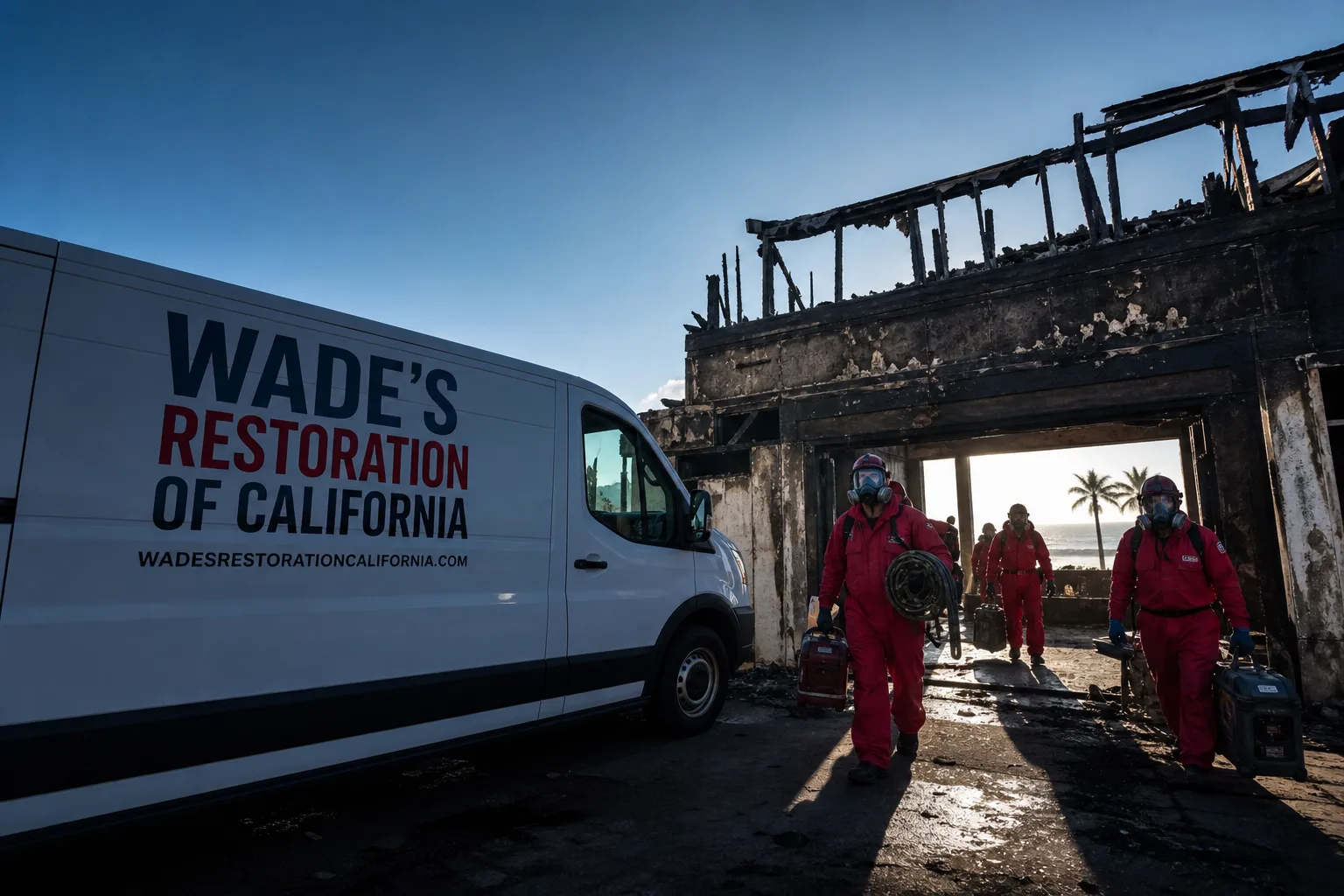
Storm & Disaster Restoration in Alameda: What It Costs and How Fast We Can Respond
Storm damage in Alameda moves fast, and so do we. Most emergency board-up calls in 94501 and 94502 get a crew on the road within 45 to 90 minutes, depending on tube traffic and storm conditions. Flood damage restoration for a typical Alameda crawlspace runs $2,800 to $7,500, while full storm damage cleanup with drying equipment averages $4,500 to $12,000. Call (855) 915-0646 and Wade Ferris will answer.
Alameda isn’t like the mainland. It’s an island, low-lying, surrounded by San Francisco Bay on all sides. When storms hit, the water comes from the shoreline, the sky, and the ground at the same time. That changes how restoration work gets scoped, priced, and scheduled. Our Storm & Disaster Restoration team works this island every week and knows what the water does here. The salt. The old foundations. The two tubes that control whether we reach your house in an hour or three.
If you’re dealing with a flooded basement, a broken window after a storm, or a roof leaking into your upstairs, call now. We answer live, 24 hours a day. Wade Ferris answers his own phone.
Key Takeaways
- Emergency board-up in Alameda typically costs $350 to $900, with most crews arriving in under two hours when the Posey and Webster tubes are clear.
- Flood restoration from bay water requires saltwater-specific drying protocols that inland restoration companies often skip. We don’t.
- Homes in Alameda’s Victorian and Craftsman stock frequently trigger lead paint and asbestos abatement during restoration, adding $1,500 to $4,500 per room to scope.
- Every water, fire, and mold restoration job from Wade’s Restoration carries the 90-Day Done Right Promise in writing.
- You’ll get a live person on the phone, not a queue. And in many cases, that person is Wade.
Why Alameda Homeowners Call Wade’s Restoration of California
Wade Ferris started this company in 2007 and never turned it into a franchise. His name is on the truck, his address is published, and he answers his own phone. That matters here because Alameda is the kind of place where you run into your neighbors at the Park Street farmers market on Sunday. Word travels. Ask anyone on Fernside Boulevard or Bay Farm Island about storm restoration, and you’ll hear about crews who showed up late, quoted one number and billed another, or cut corners on drying. Wade’s Restoration built its local reputation the old way: showing up, doing the job right, and handing you the moisture log when it’s done.
Alameda customers call us because we’re already familiar with the island’s access problem. There are only four ways on and off the island by road: the Posey Tube, the Webster Tube, the Park Street Bridge, and the Fruitvale Bridge. During a storm surge or a widespread disaster, every one of those chokepoints backs up. A restoration crew coming from Sacramento or San Jose loses an hour just sitting in traffic before they even see your house. We’re based in the Bay Area and dispatch to Alameda regularly, so we know when to route through the tubes, when the tide gates cause closures, and when to send equipment ahead of the flood. That knowledge means extraction can be running inside the hour on a normal day, and we’ll be straight with you on a heavy-storm day when the tubes are jammed.
Our Storm & Disaster Restoration Services in Alameda
Flood Damage Restoration
Flood damage restoration on Alameda almost always involves saltwater, and that changes everything. Bay water and storm surge leave behind hydroscopic salts that wick into lath-and-plaster walls and keep pulling moisture out of the air long after the standing water is gone. Standard moisture meters calibrated for fresh water miss this, which is why so many Alameda homeowners get told their house is dry when it isn’t. We use Dri-Eaz and Phoenix drying equipment and take moisture readings every single day. At the end of the job, you get the full log. Most restoration companies never hand that over. Typical flood restoration in an Alameda crawlspace runs $2,800 to $7,500. Ground-floor unit flooding in older Victorian stock with plaster walls can run higher because of the salt contamination.
Emergency Board-Up
A broken window on Bay Street during a storm is an invitation for more damage. Rain gets in, the wind tears at the opening, and anyone off the street can see right into your house. We board up openings fast to stop the loss from spreading. A standard board-up for one window runs $350 to $500. A full door and window board-up after a serious storm event runs $650 to $900. We use plywood and fastening methods that protect the framing and won’t leave you with new damage when we take the boards down. In Alameda’s older homes, we’re careful with the trim because original Victorian molding isn’t something you can just order from a catalog.
Storm Damage Cleanup
Storm damage cleanup after a big blow on the island means dealing with what the wind and water left behind. Downed branches, saturated carpet, wallboard that’s sponging up bay water, furniture that’s already starting to wick moisture. We remove the debris, cut out the wet material, and set up drying equipment that’s sized for the marine air problem. Salt-laden air slows the drying window on this island. A mainland crew might set up their equipment and leave it running for two days. We stay on top of it, check daily, and adjust. Storm damage cleanup for a typical single-family Alameda home runs $4,500 to $12,000, depending on how far the water traveled and how much of the house needs to be opened up.
Roof Tarping
When a storm rips shingles off a roof on the East End or a tree limb goes through a porch roof near Franklin Park, water starts coming in within minutes. Roof tarping is the fastest way to stop the bleeding until a full repair can be scheduled. We tarp the damaged section, seal the edges, and make sure the water is diverted away from the house. A basic roof tarp job runs $400 to $1,200 depending on roof pitch and accessibility. On Alameda’s steep Queen Anne roofs, it costs more because the work is slower and safety-rigging is required. We don’t cut corners on that. A fall off a three-story Victorian roof is a life-changing injury, and no tarp is worth it.
What happens when you call
- 1
A real person answersNo phone trees - you reach a local pro.
- 2
You get an upfront price rangeHonest numbers before anyone is dispatched.
- 3
A background-checked tech heads outLicensed & insured, dispatched right away.
- 4
You approve before work beginsNothing starts until you say go.
Trusted Brands We Service in Alameda
We service and work around the full range of home systems and materials you’ll find in Alameda’s housing stock, from 1890s Victorians to 1920s Craftsman bungalows to the newer construction at the former Naval Air Station. Our equipment comes from Dri-Eaz and Phoenix, and our team carries credentials from the IICRC and RIA. For Alameda customers, we stock the fasteners, sealants, and drying equipment needed for saltwater losses right on our trucks, so we aren’t running back to a warehouse across the Bay while your house sits wet. The 90-Day Done Right Promise covers every water, fire, and mold restoration job we do on the island.
Common Storm & Disaster Restoration Problems We See in Alameda Homes
- Saltwater wicking in lath-and-plaster walls. The original plaster in those 1910s Craftsman homes acts like a sponge. Once bay water gets into the wall cavity, the plaster wicks it upward. Fresh-water meters can read dry when there’s still enough moisture to grow mold. We use saltwater-calibrated meters and check readings daily.
- Tube and bridge traffic turning emergencies into all-day losses. An emergency board-up that should take four hours from start to finish can stretch to ten if your restoration company sits in the Posey Tube queue behind bus traffic. Crews that arrive without a routing plan for Alameda’s chokepoints lose the drying window before they even start.
- Corroded galvanized supply lines rupturing during storm repairs. Marine air on this island eats through original galvanized plumbing faster than almost anywhere else in the East Bay. We’ve seen a supply line let go inside a just-mitigated Victorian while the drywall was still open, causing a second flood on top of the first. We inspect exposed plumbing before closing walls.
- Liquefaction cracks in slab foundations near the former Naval Air Station. Large parts of the West End and the old base are mapped as high liquefaction hazard zones by the California Geological Survey. A strong earthquake can crack slab foundations across whole blocks at once. Storm flooding after that kind of event flows in through those cracks and complicates the entire restoration scope.
Pricing for Storm & Disaster Restoration in Alameda, CA
We Also Serve Cities Near Alameda
If you’re in Oakland, Piedmont, Emeryville, or San Leandro and need storm restoration work, we serve those communities too. The same crews, the same 90-Day Done Right Promise, the same live-answer phone. For a full look at our work on the island, see Alameda storm and disaster restoration. For the complete service offering, the Storm & Disaster Restoration page covers the full scope.
Serving Alameda, CA - Our Local Coverage Area
We’re based in the Alameda area and know this community well. Use the map below to see our service coverage - if you’re nearby, we can almost certainly help.
FAQs - Storm & Disaster Restoration in Alameda
No, not always, but it’s common enough that we plan for it. Most of Alameda’s Victorian and Craftsman stock dates from the 1890s through the 1920s, and any home built before 1978 is likely to have lead paint somewhere. If restoration work requires cutting into original plaster, removing old flooring, or disturbing insulation, testing for lead and asbestos happens before demolition starts. Abatement typically adds $1,500 to $4,500 per affected room to the job. We don’t skip this step. Cutting into a wall that tests hot for asbestos without abatement is illegal and dangerous. Call (855) 915-0646 if you’re unsure whether your home needs testing before restoration work begins.
For Biohazard & Crime Scene Cleanup - Alameda and other emergencies, we pre-plan routes and we stage equipment on the island when a major storm is forecast. Our trucks carry enough drying gear for a standard single-family flood loss, so we don’t need to run back to a warehouse mid-job. When both tubes are backed up or a tide-gate closure shuts down Park Street, we coordinate with Alameda city services on routing windows and use the bridge crossings at off-peak times. Sometimes we move small equipment in a pickup through a bridge lane while a larger truck waits outside the backup. The key is that we know this problem exists and we plan for it before the first raindrop falls. A crew from off-island doesn’t find out until they’re already stuck.
Yes. A cracked slab from ground movement requires two phases: first, sealing and water management to stop bay water and groundwater from entering through the crack during high tide or storm surge, and second, a structural assessment to determine whether the foundation needs to be reinforced. The California Geological Survey maps much of the West End and the area around the former Naval Air Station as high liquefaction hazard, which means earthquake ground movement can loosen the soil under the slab and open cracks that weren’t there before. We document the crack with photos for insurance purposes, seal it properly, and involve a structural engineer when the movement looks active, which is part of our Reconstruction & Cleanup in Alameda process. Call for an assessment; estimates are free.
Call (855) 915-0646. A live person answers, 24 hours a day. On a normal weather day, Wade or one of his crew can be at your door in under two hours from Alameda dispatch. During a heavy storm or a multi-block event when the Posey and Webster tubes are backed up, response can stretch to three or four hours. Tell us the address and the condition of the window opening. We’ll give you a straight answer on arrival time and board it up with methods that protect the original trim common to Alameda’s older homes. The board-up price starts at $350 for a single window.
Yes, significantly different. Rainwater is relatively clean and responds to standard drying. Bay water and storm surge carry salt, silt, and organic material that changes the drying chemistry. Salt attracts moisture from the air, meaning dried-out materials can re-absorb humidity and stay wet even after the standing water is extracted. That’s why we use saltwater-calibrated moisture meters, run longer drying cycles with Dri-Eaz and Phoenix equipment, and take daily readings for the full duration of the job. At the end of our Water Damage Restoration in Alameda, you get the moisture log in writing. Very few restoration companies on the island do this, and it’s the difference between a home that’s actually dry and one that grows mold in the walls six months later. Call for a free assessment of your bay-water flood.
Call Wade’s Restoration of California for Storm & Disaster Restoration in Alameda
When storm water is in your house, the clock is running. Damage spreads, mold starts, and every hour matters. Call (855) 915-0646 now. Wade Ferris answers his own phone. We’ll give you a straight answer on timing, walk you through what to do before the crew arrives, and quote the work honestly before we start. No surprise billing. No answering service. The 90-Day Done Right Promise in writing on every water, fire, and mold restoration job. If something isn’t right, Wade comes back and makes it right. That’s the deal on every job we do in Alameda.
Written by Wade Ferris, Owner at Wade’s Restoration of California, serving Alameda and the surrounding Bay Area since 2007.