
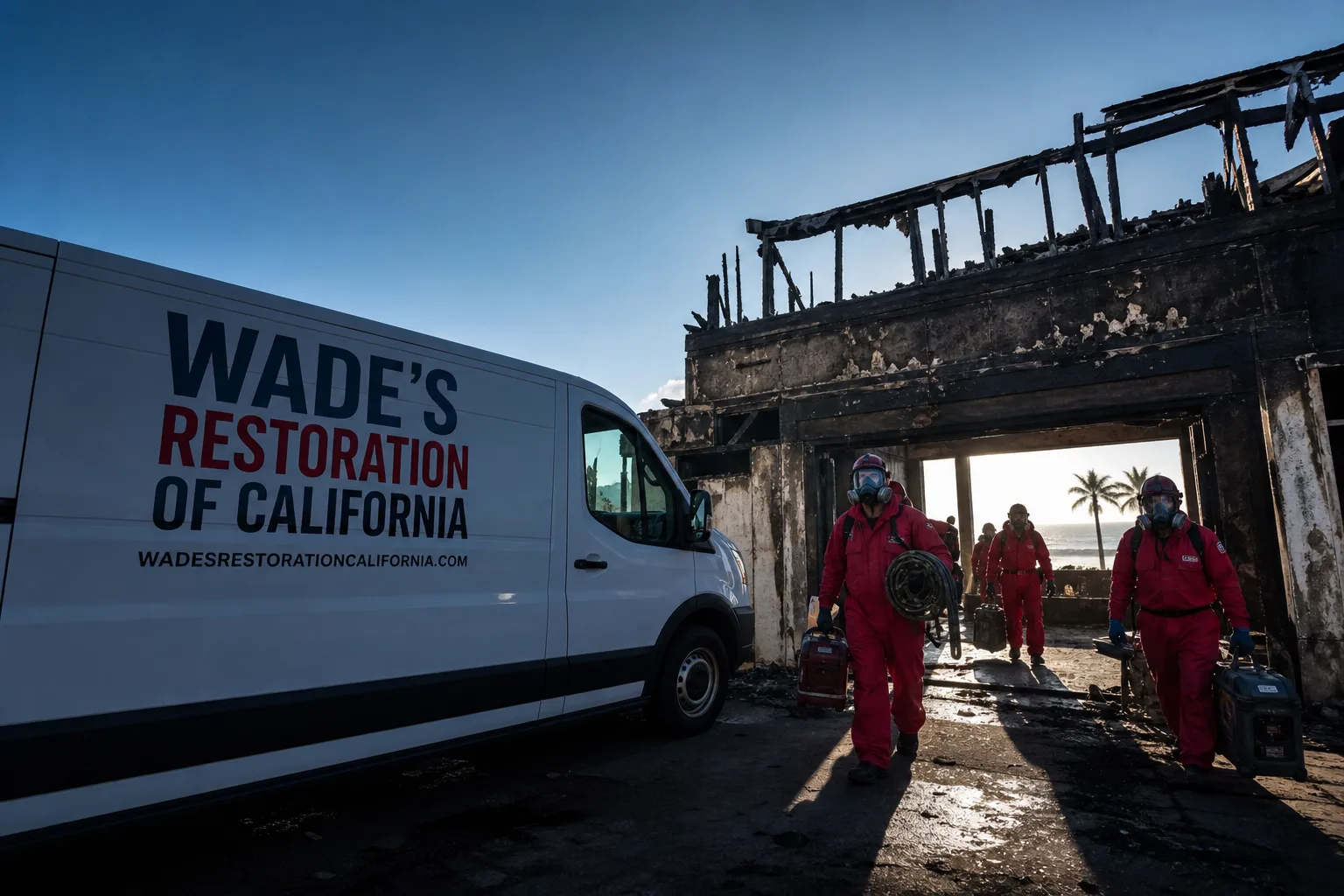
Fast, Reliable Sewage Cleanup Across Thousand Oaks
A sewage backup inside a Thousand Oaks home is a health hazard and a property threat that compounds by the hour. In most Thousand Oaks neighborhoods, a trained crew can be on site within 60 to 90 minutes of your call. Wade Ferris answers his own phone at (855) 915-0646, and he’ll tell you straight what you’re dealing with before anyone rolls a truck.
Thousand Oaks is our backyard. We know the Conejo Valley’s hillside tracts, the older 91360 and 91362 subdivisions, and the newer developments off the 101 corridor. When black water is backing into a lower-level bathroom off Lynn Road or a crawl space under a 1970s ranch, you don’t need a call center in another state. You need someone who understands local plumbing, local soil, and what Woolsey Fire debris still does to sewer laterals every winter.
Why Wade’s Restoration of California Is Thousand Oaks’s Preferred Sewage Cleanup Company
Wade Ferris founded this company in 2007 and put his name on the truck, his address on the website, and his cell number in the hands of every homeowner he serves. That’s not marketing. That’s the oldest accountability mechanism there is: he’s going to run into you again at the hardware store, and he knows it.
Ask anyone off Westlake Boulevard or up in the hillside tracts above Avenida de Los Arboles what it’s like working with a national restoration chain. Then ask what it’s like when the owner is the one standing in your flooded hallway at 2 a.m. with a moisture meter. That’s the difference. Wade doesn’t hand your job to a rotating cast of subcontractors. He’s on the road himself, with background-checked, uniformed people he’s trained personally, running Dri-Eaz extraction equipment and Phoenix air movers that belong to his shop, not a rental yard.
Every sewage job we do in Thousand Oaks comes with the 90-Day Done Right Promise in writing. If it’s not done right, Wade makes it right. No fine print, no “that’s a different department.” One call brings him back.
Our Sewage Cleanup Services in Thousand Oaks
Our Sewage Cleanup team handles every category of black water intrusion common to Thousand Oaks homes, from simple toilet overflows to full septic failures on hillside lots. Here’s what we see most often.
Sewage Backup Cleanup
A sewage backup in Thousand Oaks often isn’t a simple clog. In the older 91360 and 91362 neighborhoods, cast-iron laterals laid in the 1960s and 1970s have gone brittle through decades of drought cycles. When a backup happens, we scope the line, determine whether you’re dealing with a soft clog or a collapsed pipe, and then extract and sanitize whatever came back into the house. You get a straight answer about the cause before any remediation begins.
Toilet Overflow Cleanup
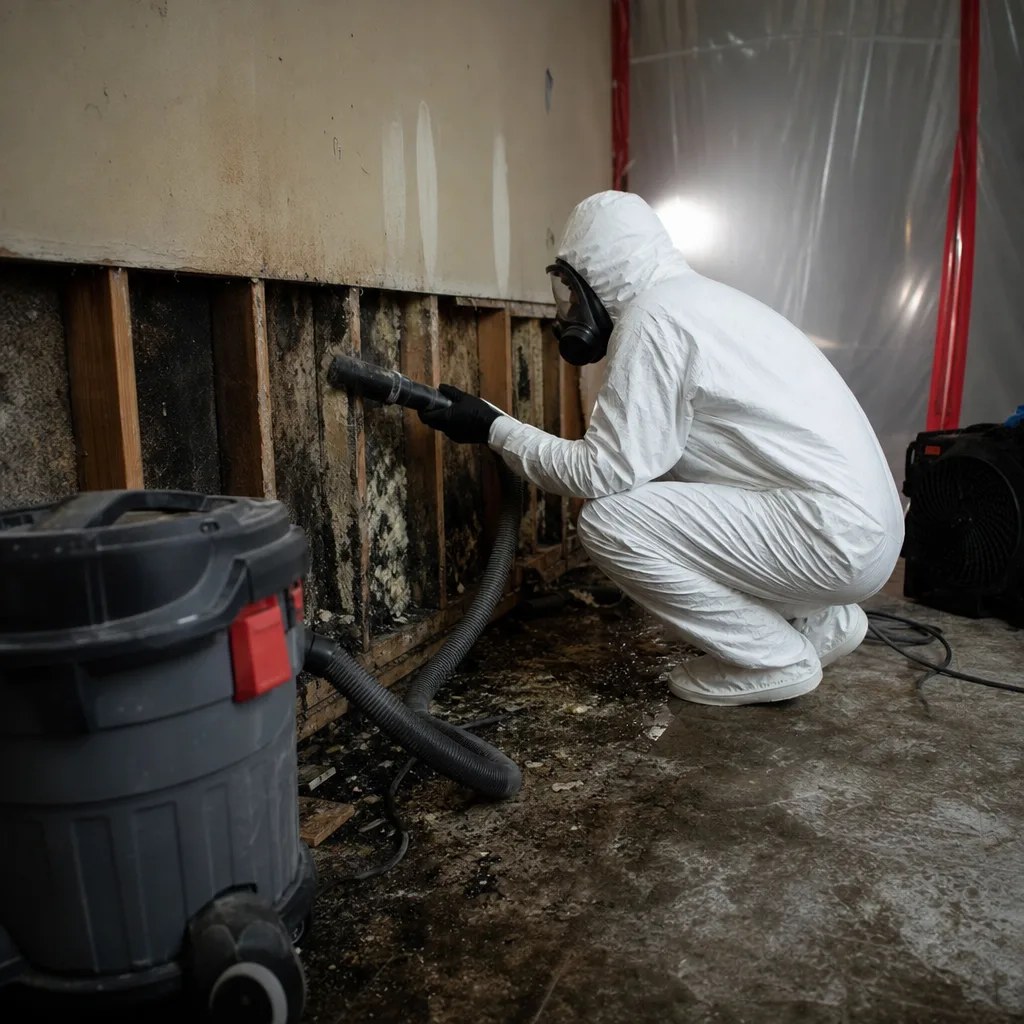
Toilet overflows in Thousand Oaks tract homes are frequently the first visible sign of a deeper problem: a blocked cleanout, a failing septic leach field, or roots in an old clay lateral. We extract the standing black water, remove and dispose of contaminated flooring and drywall, and treat every affected surface with IICRC-compliant disinfectants. Then we dry the structure properly with professional-grade equipment, not a box fan from the garage.
Septic Failure Cleanup
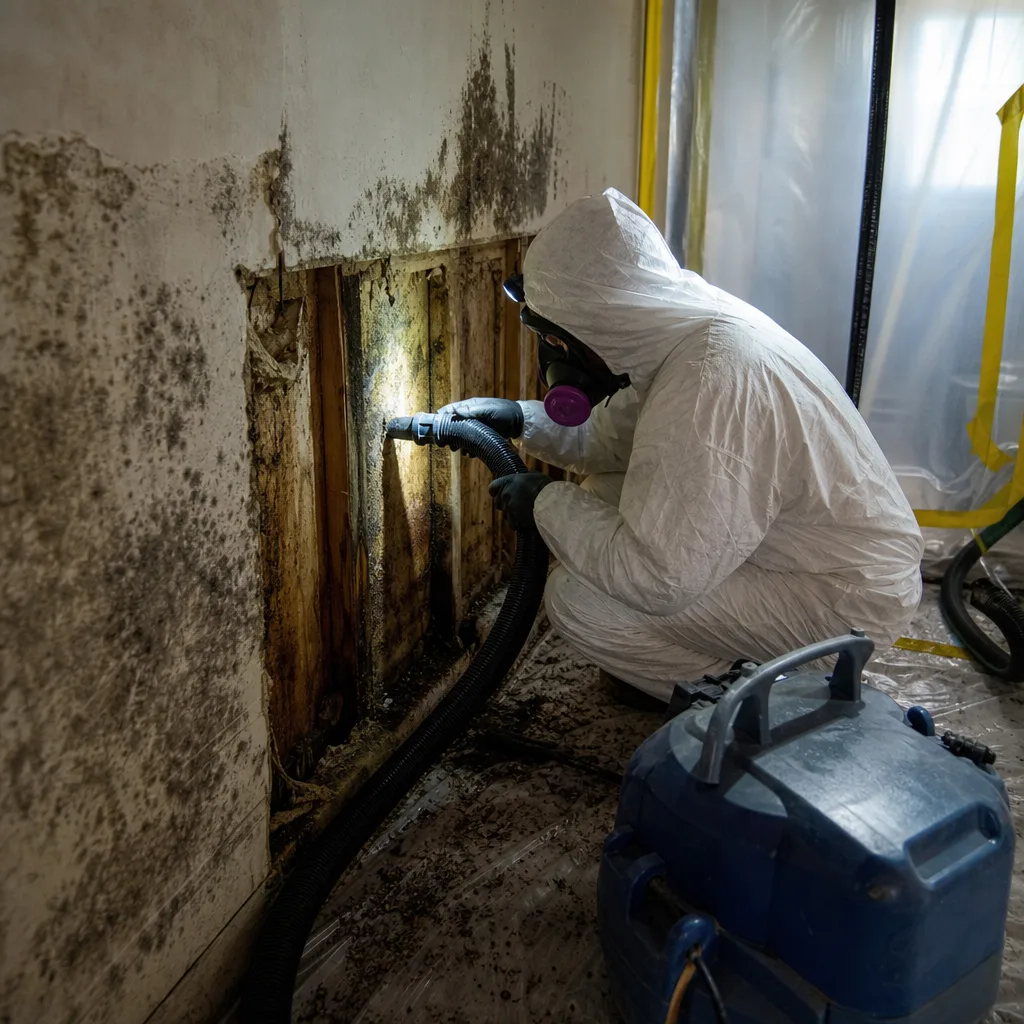
Hillside properties in Thousand Oaks, particularly in the wildland-urban interface zones that burned in 2018, have a problem flatland towns don’t: ash-laden stormwater migration into leach fields. When drain rock gets coated with fine Woolsey Fire ash, percolation drops, effluent surfaces in the yard, and sewage backs up into the house. We clean up the mess, but we also document the exact condition of the system so your adjuster understands what actually happened. That distinction matters on a claim.
Black Water Extraction
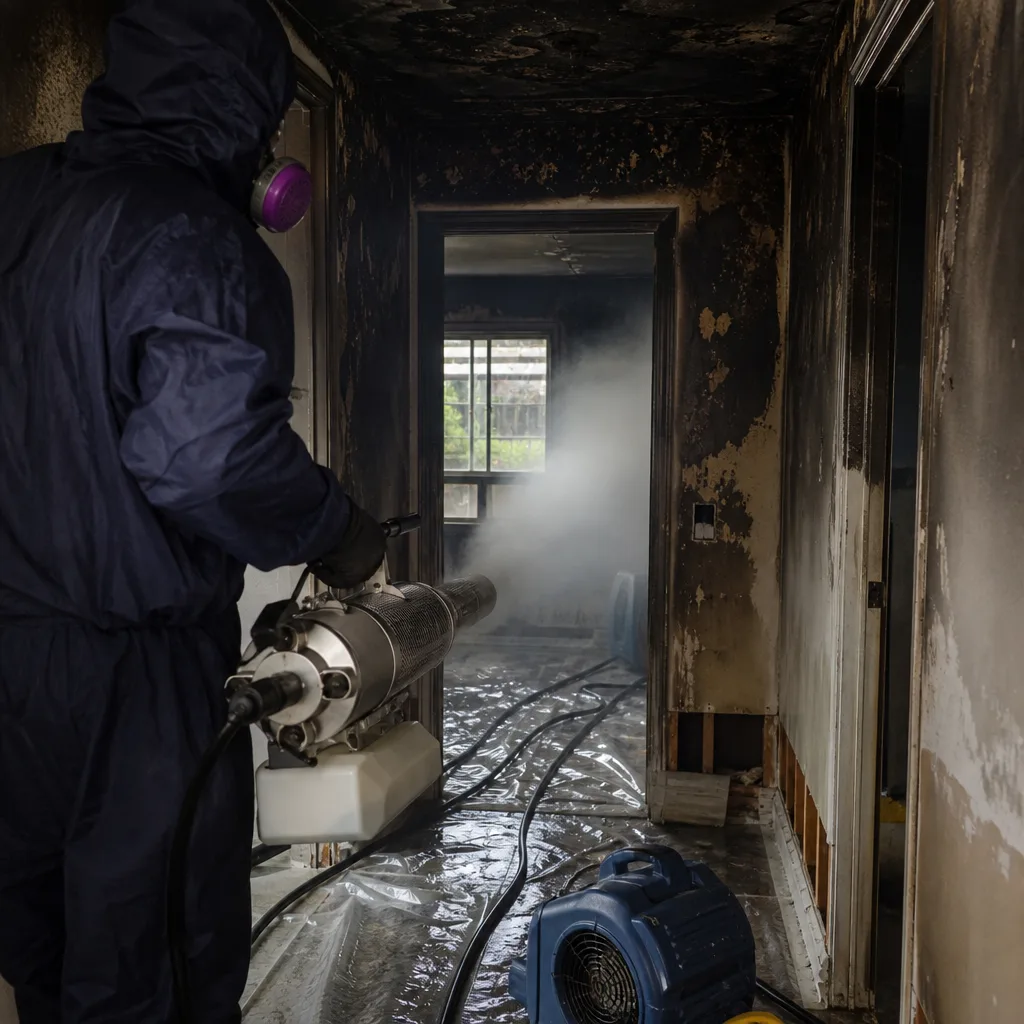
Black water is the most dangerous category of water damage, carrying bacteria, viruses, and whatever the sewage picked up along the way. In post-fire Thousand Oaks neighborhoods, black water sometimes carries a second hazard: caustic fire ash that etches tile and eats at concrete. Our extraction process accounts for that. We test, we neutralize, we sanitize, and we never rush the dry-out just because the standing water is gone.
What happens when you call
- 1
A real person answersNo phone trees - you reach a local pro.
- 2
You get an upfront price rangeHonest numbers before anyone is dispatched.
- 3
A background-checked tech heads outLicensed & insured, dispatched right away.
- 4
You approve before work beginsNothing starts until you say go.
Trusted Brands We Service in Thousand Oaks
Wade’s crew runs Dri-Eaz extraction units, Phoenix axial fans, and IICRC-standard sanitizing agents on every Thousand Oaks sewage job. We stock the consumables needed for mid-century tract homes and hillside properties so we’re not waiting on a parts run when your bathroom floor is already open. RIA and IFA standards guide our documentation, which means the paperwork we hand your insurance company holds up to scrutiny.
Common Sewage Cleanup Problems We See in Thousand Oaks Homes
- Offset buried cleanouts after post-fire debris flows. In the 1950s-1980s tracts, original cleanouts were often set shallow. When ash-laden mud moves downhill, it shifts those cleanouts enough to misalign the line, and sewage backs into lower-level bathrooms on the first heavy rain.
- Brittle cast-iron laterals cracking under mudflow weight. Thousand Oaks has thousands of homes on cast-iron sewer lines laid before PVC became standard. Post-Woolsey mudflows add ground pressure that cracks those pipes, sending black water into crawl spaces where it can pool for weeks before anyone notices the smell.
- Septic leach fields choked with fire ash. Fine ash washes downhill each winter and coats the drain rock in hillside septic systems. Percolation drops, the tank overflows, and sewage surfaces in the yard. Homeowners often call a plumber first and get told it’s a simple clog. It usually isn’t.
- Caustic residue on flooring and drywall. Normal sewage cleanup involves extraction and sanitization. But when Woolsey Fire ash is in the black water, the standard cleaning chemistry doesn’t fully break down the residue. That ash is alkaline and leaves surfaces etched. It requires a chemical neutralization pass before disinfection can properly take hold.
Pricing for Sewage Cleanup in Thousand Oaks, CA
| Service | Typical Thousand Oaks Range |
|---|---|
| Toilet overflow extraction and sanitization (small, contained) | $750-$1,400 |
| Sewage backup cleanup with drywall/flooring removal | $2,500-$6,000 |
| Black water extraction in a crawl space | $1,800-$4,200 |
| Septic failure cleanup with yard excavation (minor) | $3,000-$8,500 |
| Full sanitization and dry-out after ash-contaminated backup | $4,000-$10,000+ |
These are real ranges for Thousand Oaks, not national averages. The biggest variables are square footage affected, whether sewage reached wall cavities, and whether fire-ash neutralization is required. You’ll get a written scope and an honest price before any work starts. No trip charge inside our own county, a free second opinion on any other company’s written estimate, and 10% off always for seniors and veterans. Call (855) 915-0646 for the exact number.
We Also Serve Cities Near Thousand Oaks
Our Thousand Oaks crews regularly work in Westlake Village right next door, Oak Park over the Ventura County line, and up through Agoura Hills and Agoura. We’re in these neighborhoods most days of the week, which means we can get to the eastern Conejo Valley quickly when sewage is backing up. Wherever you are in our service area, the same crew, the same standards, and the same owner’s phone number apply.
Serving Thousand Oaks, CA - Our Local Coverage Area
We’re based in the Thousand Oaks area and know this community well. Use the map below to see our service coverage - if you’re nearby, we can almost certainly help.
FAQs - Sewage Cleanup in Thousand Oaks
If the backup happens during or within a few days after heavy winter rain, and you live on or below a hillside that burned in 2018, the odds tilt strongly toward debris intrusions rather than a routine clog. A plumber who scopes the line can tell you what’s in there, but the real tell is the pattern: a clog from normal use backs up gradually, while a debris flow hits all at once after the storm. If the black water has a fine gray silt that smells almost metallic, that’s fire ash. Call (855) 915-0646 and we’ll scope it and tell you straight.
Yes. Ash doesn’t just sit where it fell. Each rainy season, fine Woolsey ash migrates downhill into drainages, storm channels, and eventually into the soil around hillside septic systems. It coats the drain rock in the leach field, reduces percolation, and pushes effluent backward into the tank and then the house. We’re still seeing these failures in Thousand Oaks winters, years after the fire. The fix usually involves pumping, leach field remediation, and sometimes a full system evaluation, not just a sewer rodding.
It is a multi-step process that starts with extraction, moves through controlled waste disposal, and only then begins sanitization, because the ash changes the chemistry of the black water. In a Thousand Oaks crawl space, we typically remove all standing sewage and contaminated soil, apply a chemical neutralization pass for the alkaline ash residue, then run Phoenix axial fans with dehumidification until the crawl space’s relative humidity stabilizes. Only after that does the IICRC-compliant disinfectant application happen. Rushing that order leaves a contaminated space that smells fine for a month and then turns bad.
Yes, and they mostly relate to the age of the structure. In homes built before 1978, any demolition that disturbs painted surfaces triggers lead-safe work practices. In homes with popcorn ceilings or old blown-in insulation, as is common in 1960s and 1970s Thousand Oaks tract homes, removal of damaged ceiling materials can require asbestos testing before disposal. A licensed restoration contractor who works in Thousand Oaks knows these rules and handles the testing and documentation as part of the scope. We don’t cut corners on pre-1978 lead protocols, and we won’t put your family or our crew at risk by skipping them.
Because mudflow sewage is a two-contaminant problem. You have the normal sewage-borne bacteria and viruses, plus the caustic ash residue that demands a separate neutralization step before disinfectants will work properly. Concrete slabs, tile, and drywall all absorb the ash residue differently, so we test multiple surfaces rather than treating the whole area uniformly. The dry-out timeline also stretches because mudflow water carries fine sediment that clogs air pathways in wall cavities and under flooring. A normal pipe burst might dry in 3 to 5 days. A mudflow backup in the same room can take 7 to 10 days or longer. We’d rather take the time and hand you a moisture log showing the job was done right than rush it and hand you a mold problem in 90 days.
Call Wade’s Restoration of California for Sewage Cleanup in Thousand Oaks
If black water is in your home right now, call (855) 915-0646. Wade answers. He’ll ask you a few direct questions, tell you what to do while you wait, and get a crew moving toward your Thousand Oaks address immediately. Free estimate, no trip charge inside the county, and a written 90-Day Done Right Promise on every job. The ash in Thousand Oaks isn’t done with your sewer line. We’ll make sure it’s done with your house.
Written by Wade Ferris, Owner at Wade’s Restoration of California, serving Thousand Oaks since 2007.