
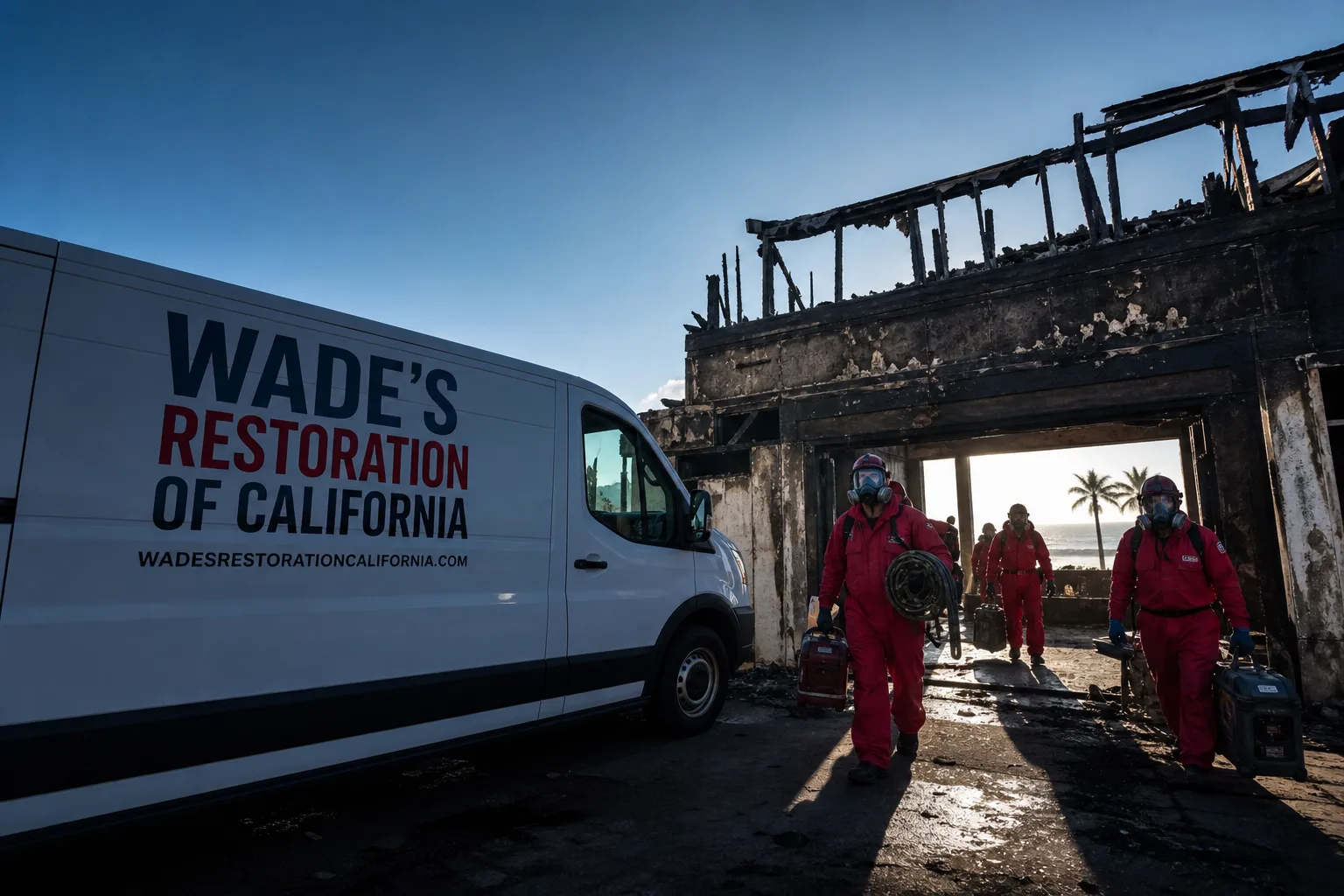
Fast, Reliable Sewage Cleanup Across Stanford
A sewage backup in Stanford is not something you can wait on. Raw sewage carries bacteria, viruses, and parasites that spread fast through porous materials, and in Stanford’s older university-owned homes, a slow seep under a slab or in a crawl space can go unnoticed for weeks until the smell hits or someone gets sick. Wade’s Restoration answers the phone 24/7 and can have a crew on the Stanford campus most days in under an hour. Call (855) 915-0646 the minute you see standing water, bubbling drains, or sewage smell coming through the floors.
Here is what actually matters: sewage cleanup in the 94305 ZIP typically runs $1,400-$4,600 depending on how far the black water traveled and what got saturated. The longer you wait, the more drywall, subfloor, and insulation gets cut out and replaced. The faster you call, the less it costs. That is the whole math.
If you live in faculty housing, a grad student complex like Escondido Village, or anywhere else within the Stanford CDP, you already know that most of this repair work goes through the university’s Facilities Management office. Wade’s crew has worked inside that system for years and knows how to schedule, document, and complete work that satisfies Stanford’s vendor requirements without stalling your cleanup. You deal with the mess. We deal with the paperwork.
Why Wade’s Restoration of California Is Stanford’s Preferred Sewage Cleanup Company
Wade Ferris founded this company in 2007 and he still answers his own phone. Not a call center, not a national franchise queue. When you call at 2 a.m. with sewage backing up through a floor drain in a mid-century faculty house, the person who picks up is the person who owns the trucks. That matters in Stanford, where the university’s approved-vendor process already adds a layer of bureaucracy. You do not need another one between you and the guy holding the extraction wand.
We have cleaned sewage out of crawl spaces under 1950s faculty homes off Santa Teresa Street, behind unit blocks in Escondido Village, and in university-owned infill housing near Campus Drive. Each of those jobs required different access coordination, different containment strategies, and different documentation for Stanford’s Facilities Management. A chain company that drops a crew from San Jose cannot move through that system the way we do. We know the front-office contacts, the work-hour restrictions, and the paperwork Stanford expects before they approve payment.
Wade’s crew is background-checked, uniformed, and IICRC-certified. We use Dri-Eaz and Injectidry equipment that pulls water out of structural cavities rather than just drying the surface. And every water, fire, and mold restoration job we do carries the 90-Day Done Right Promise in writing. If it is not done right, Wade makes it right. One call brings him back. We also do not charge a trip fee inside our home county, and we offer a free second opinion on any written estimate from another company.
Our Sewage Cleanup Services in Stanford
Sewage Backup Cleanup
A sewage backup in Stanford usually comes from one of two places: a municipal line issue on University Avenue or Campus Drive, or a private lateral failure on university-owned property. Either way, the raw sewage enters the structure fast and spreads horizontally under baseboards and into wall cavities. We contain the affected area with plastic sheeting and negative air pressure, extract the standing black water, cut out the saturated drywall and carpet pad, and dry the structure to IICRC standards. A typical backup cleanup in a Stanford faculty home runs $1,800-$4,200.
Toilet Overflow Cleanup
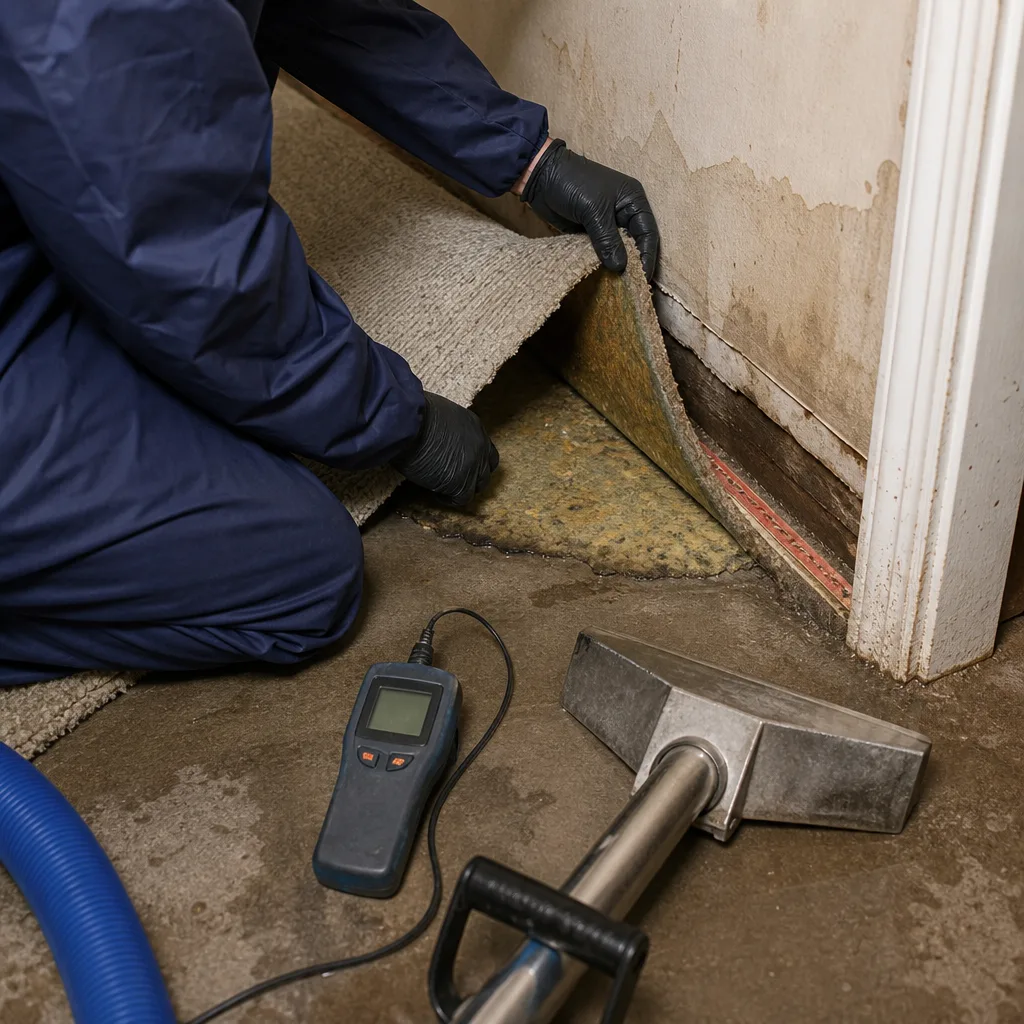
Toilet overflows are usually the “least bad” category of sewage cleanup, but they are still category 2 or 3 water, not something you mop up and forget. In Stanford’s older faculty housing, the vinyl sheet flooring from the 1960s and 1970s often hides moisture that wicks underneath into the subfloor. We lift the flooring, check the substrate with a moisture meter, and treat the area with an IICRC-approved disinfectant. If we get there before the water sat overnight, cleanup often lands in the $900-$1,800 range. After 24 hours, you are looking at flooring replacement too.
Septic Failure Cleanup
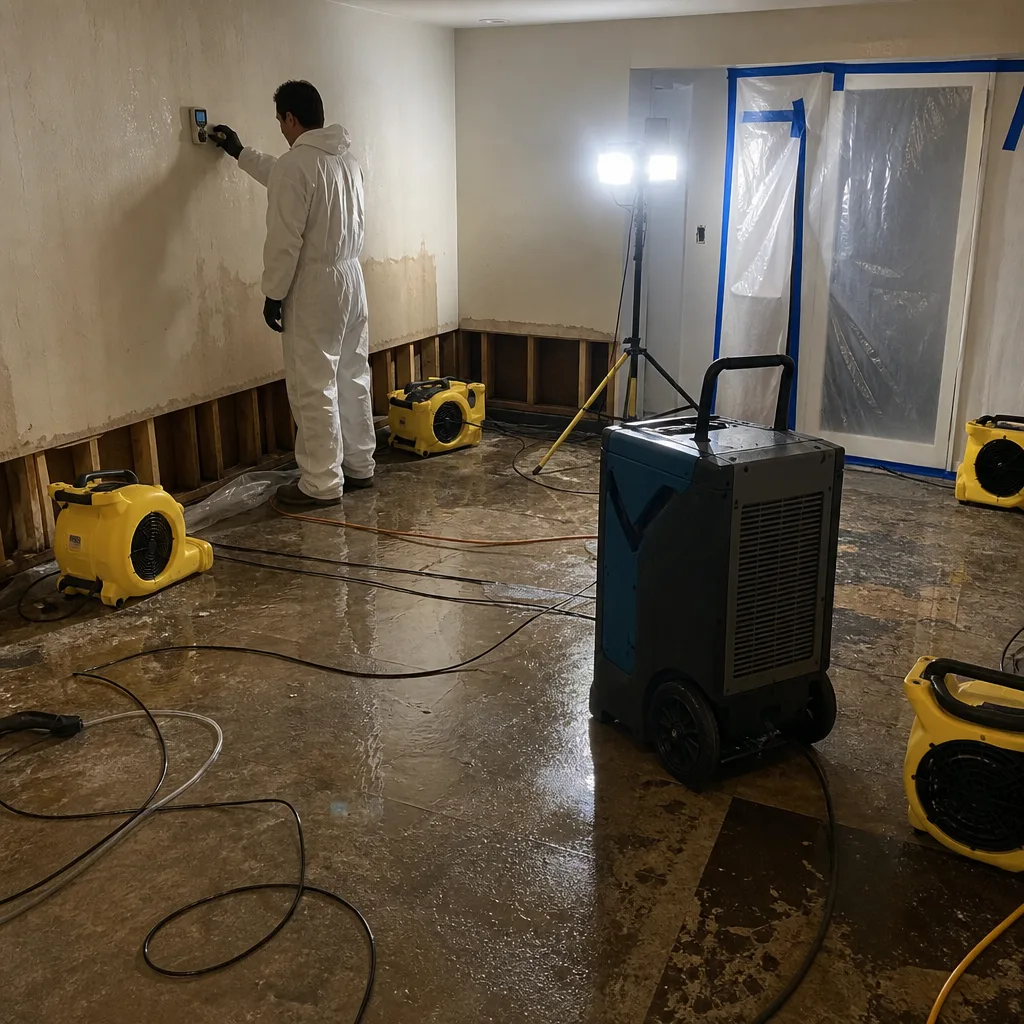
Most of Stanford’s CDP is on municipal sewer, but some peripheral university-owned parcels and older residential lots near the foothills still carry septic or holding-tank systems. When a septic field fails, effluent can surface in the yard and find its way into the home through floor slabs or crawl-space vents. This is a health hazard that needs immediate containment and extraction, plus assessment of whether the plumbing itself is failing. Septic-related cleanup in the Stanford area typically runs $2,000-$5,500 because it usually involves both extraction and yard contamination.
Black Water Extraction
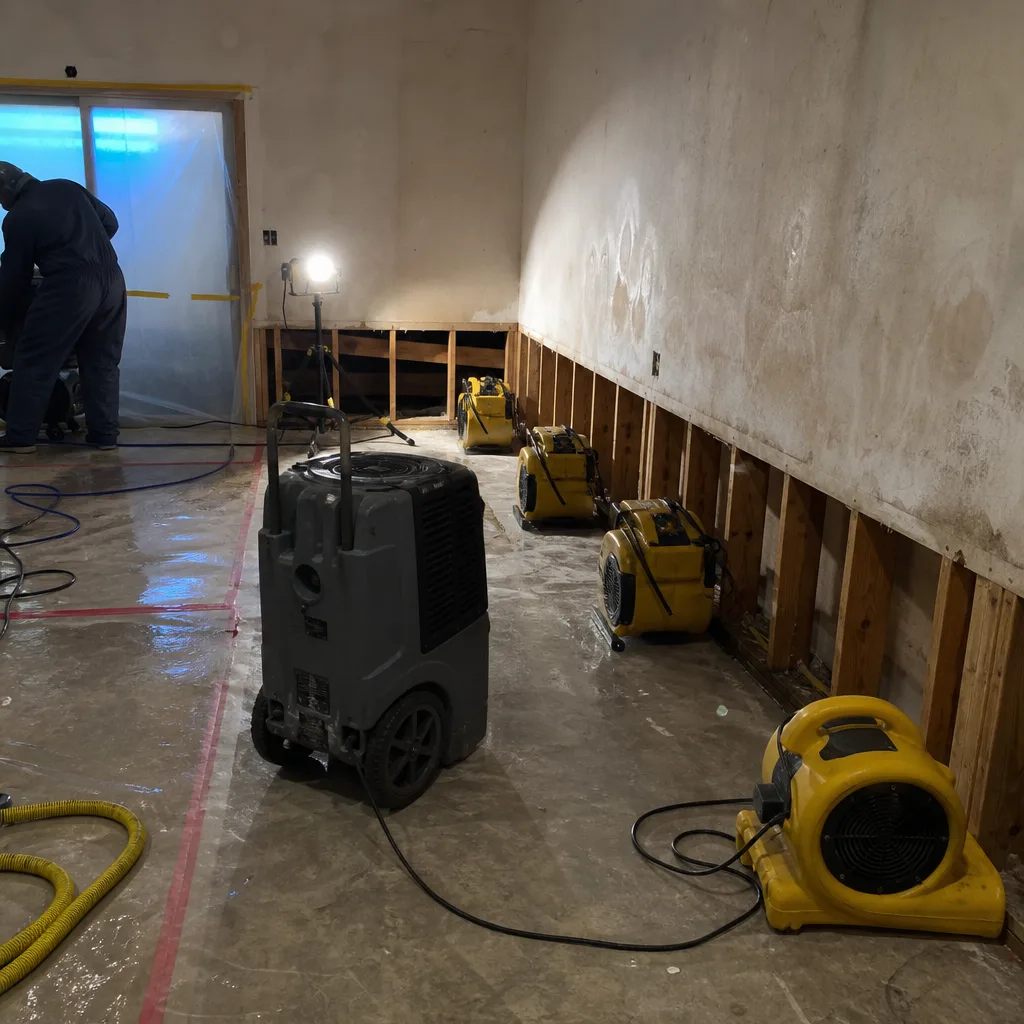
Black water is the technical classification for water containing human waste or other highly contaminating material. In Stanford’s postwar slab-on-grade faculty homes, black water from a broken cast-iron drain line under the slab often travels through the crawl space, soaking joists and insulation before anyone notices. We use Dri-Eaz HydraSensors to map exactly how far the moisture migrated, then deploy Injectidry vacuum and mat systems to pull the contaminated water out of the structural cavities. Extraction alone usually starts around $1,200 and the full job, including demolition of soaked materials and drying, often lands between $2,800 and $6,000 depending on how much of the crawl space got wet.
Crawl Space Sewage Removal
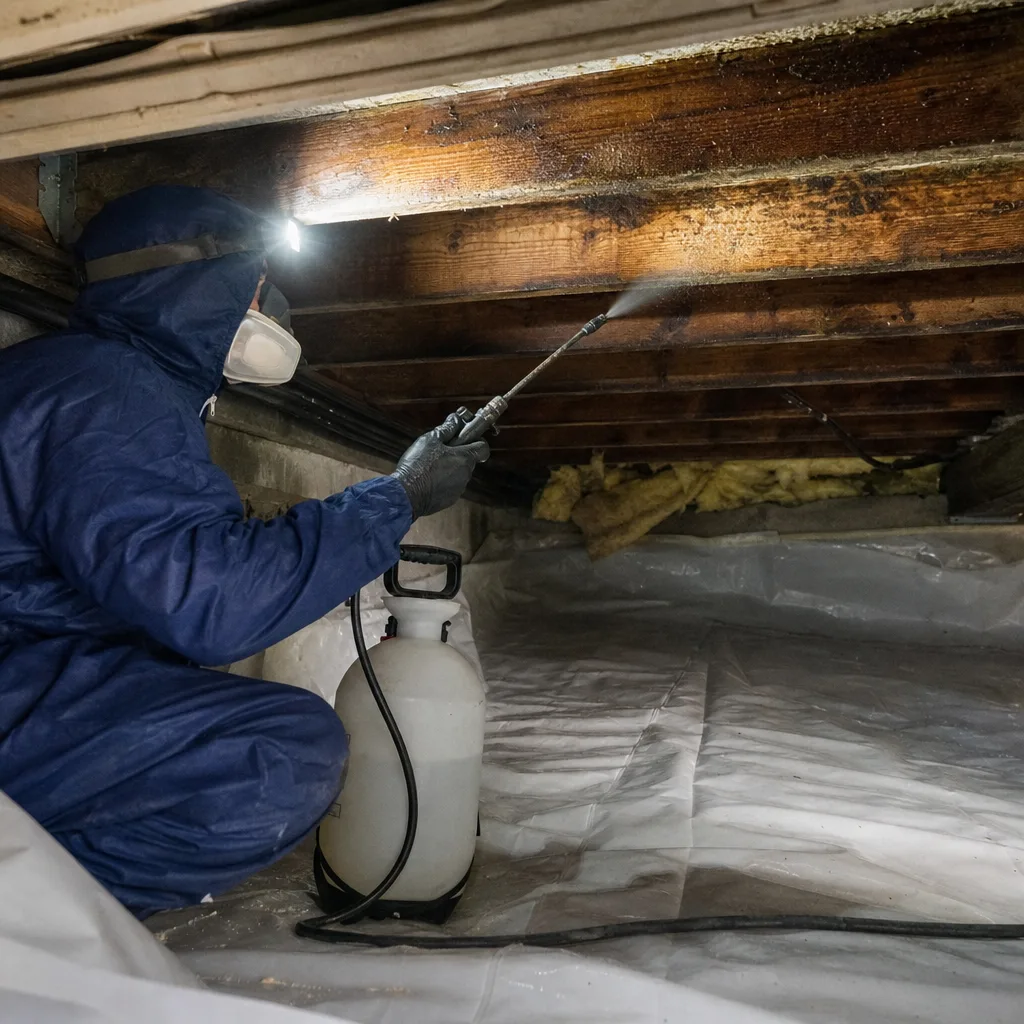
Stanford’s mid-century faculty housing was built with crawl spaces that are now 60 to 80 years old. The cast-iron drain lines running through those crawl spaces have been corroding for decades. When one fails, the sewage pools in the confined space under the house, and because nobody goes down there, it can sit for days or weeks. Our team suits up in full PPE, extracts the standing waste, removes and bags contaminated insulation, sanitizes the framing and subfloor, and dries the space to a level that prevents mold regrowth. This is one of the more expensive jobs we do in Stanford because of the confined-space work: $3,000-$7,500 is a realistic range.
Sanitization & Disinfection
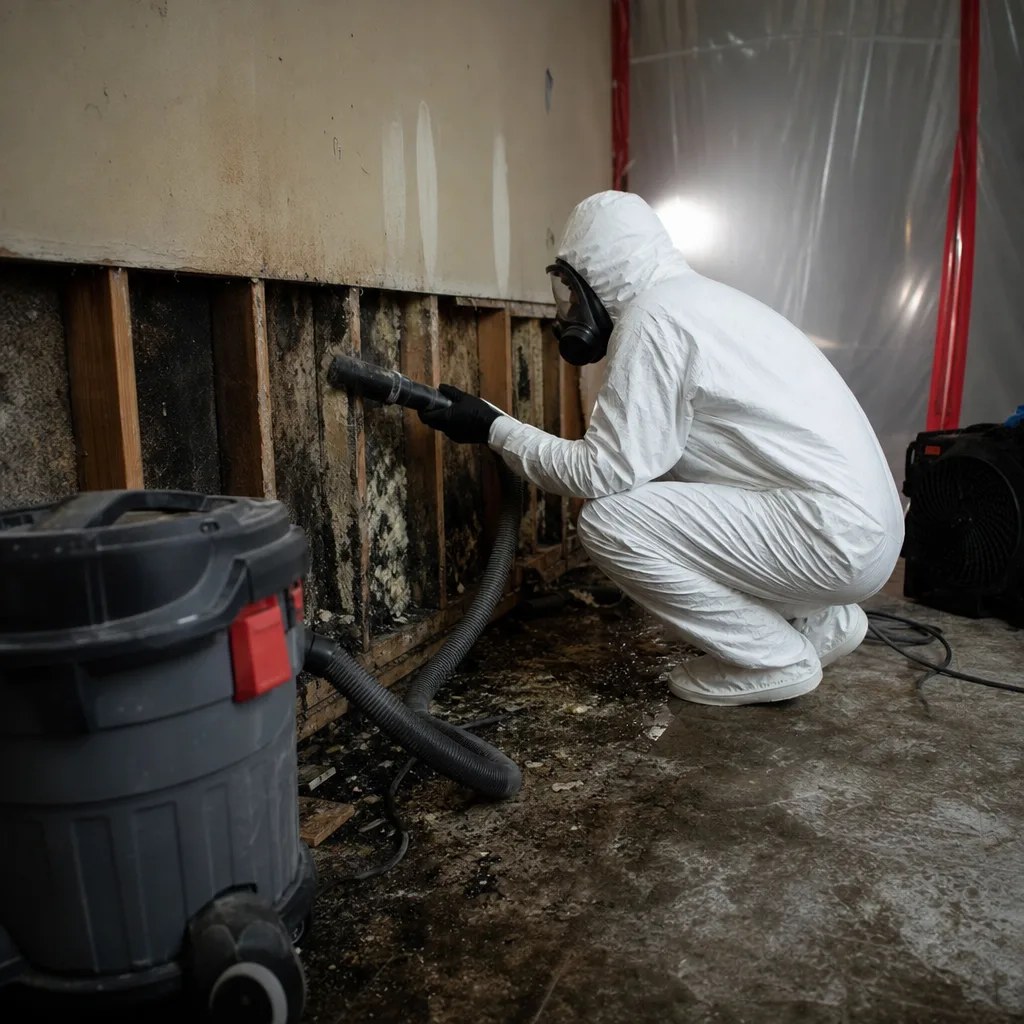
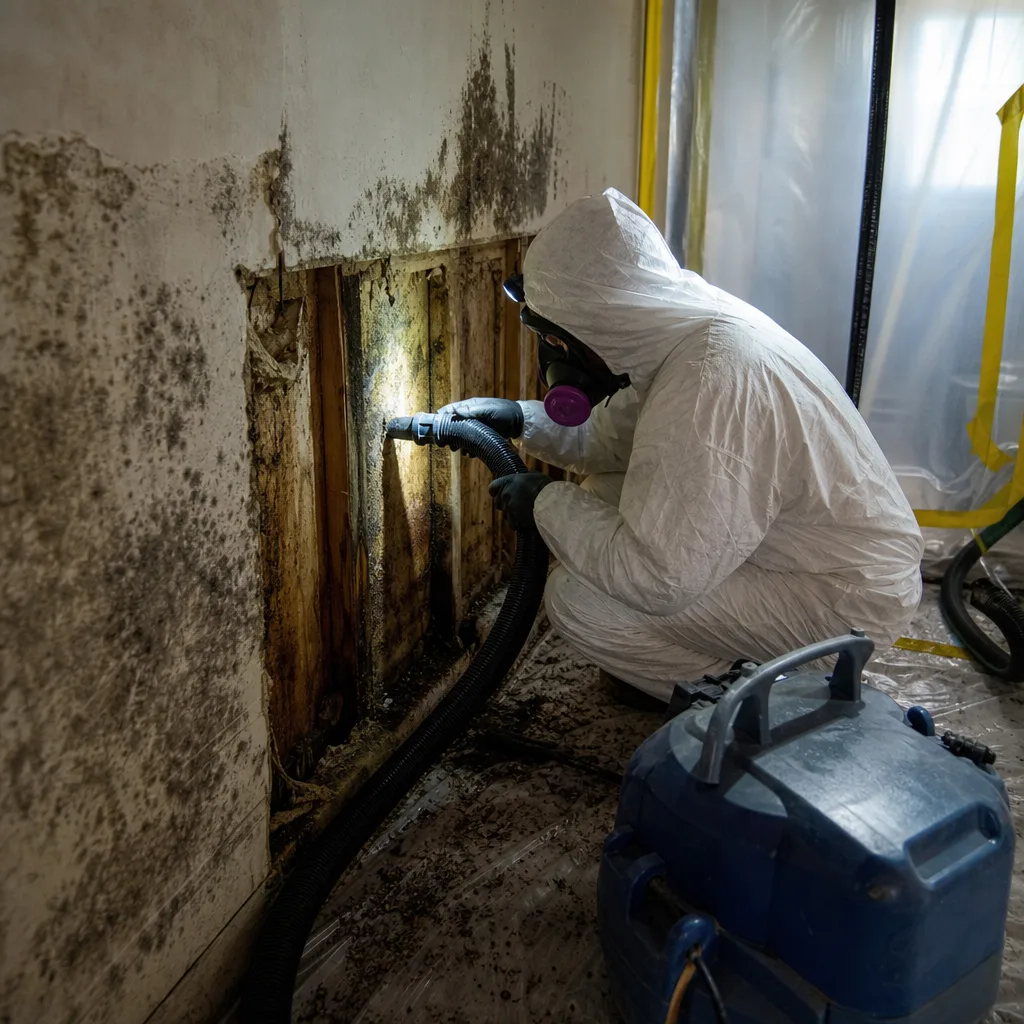
Removing standing sewage is not enough. The bacteria and pathogens left behind survive in porous materials long after the water is gone. We apply IICRC-approved antimicrobial and disinfectant treatments to every surface the black water touched, including stud cavities, subflooring, and the underside of floor joists. In Stanford’s university-managed housing, Facilities Management requires documented sanitization logs before they sign off on a restoration. We provide that documentation as standard practice, whether the job is in a single-family faculty home or a multi-unit graduate complex.
What happens when you call
- 1
A real person answersNo phone trees - you reach a local pro.
- 2
You get an upfront price rangeHonest numbers before anyone is dispatched.
- 3
A background-checked tech heads outLicensed & insured, dispatched right away.
- 4
You approve before work beginsNothing starts until you say go.
Trusted Brands We Service in Stanford
We run Dri-Eaz dehumidifiers, Phoenix air movers, and Injectidry extraction systems on Stanford jobs because they are the tools that hold up under real workloads. The university’s vendor system cares about documentation and repeatability, and so do we. If you are in a Stanford home and the adjuster or Facilities Management wants equipment specs, drying logs, or moisture readings, we hand those over in a clean package. Wade is not running rented gear from a parking lot. He owns his equipment and maintains it like a man whose name is stenciled on the side of the trailer.
Common Sewage Cleanup Problems We See in Stanford Homes
- Deferred maintenance hiding slow leaks. University-owned homes in Stanford run on maintenance schedules that don’t always catch a slowly weeping cast-iron drain joint under the slab. By the time the problem surfaces, the crawl space is fully contaminated and the repair scope doubled.
- Seismic damage hiding in old walls. The 1989 Loma Prieta earthquake cracked unreinforced masonry in several Main Quad and older campus structures. Those hidden fractures open pathways for water and sewage pipe movement, and a “routine” leak can be far worse than it looks once you open the wall.
- Access restrictions slowing response. Stanford’s vendor process means we can not just roll a truck onto university property without the right approvals. For graduates in Escondido Village or families in faculty housing, that delay can mean Category 1 water becomes Category 3 sewage contamination before we can legally start work.
- San Francisquito Creek flood pressure. Stanford sits at the base of the foothills, and when atmospheric rivers push San Francisquito Creek over its banks, low-lying campus structures take water fast. Floodwater is not clean water. It carries sewage, agricultural runoff, and whatever it picked up on the way. Homes near the creek need sewage-grade sanitization even if the water “looked clear.”
Pricing for Sewage Cleanup in Stanford, CA
Sewage cleanup in Stanford is not a single number. Here is what we actually see. A contained toilet overflow in a bathroom: $900-$1,800. A full sewer backup that spreads across a hallway and into two rooms: $2,500-$4,500. A crawl-space sewage failure with soaked insulation and joist contamination: $3,000-$7,500. Full black water extraction plus demolition and drying after a prolonged leak in a multi-unit building: $6,000 and up. What drives the cost: how long the sewage sat, how far it traveled through the structure, what materials got saturated, and whether mold has already started. Stanford’s older flooring and plaster walls absorb more than modern drywall homes, which pushes costs toward the higher end.
We give you a written scope before any work starts. No surprise add-ons when the crew is inside. If another contractor already wrote an estimate, bring it to us and we will give you a free second opinion. Call (855) 915-0646 and Wade will talk you through what the job actually needs.
We Also Serve Cities Near Stanford
Our crews handle Sewage Cleanup across the Mid-Peninsula. If you are in Palo Alto, Atherton, East Palo Alto, or Los Altos Hills, we can get a truck to you just as fast, and the same pricing structure and 90-Day Done Right Promise apply. Stanford is our home base for campus coordination, but we are running jobs throughout the neighboring communities every week.
Serving Stanford, CA - Our Local Coverage Area
We’re based in the Stanford area and know this community well. Use the map below to see our service coverage - if you’re nearby, we can almost certainly help.
FAQs - Sewage Cleanup in Stanford
Yes. Stanford’s CDP is almost entirely university-owned, so virtually every sewage cleanup job in faculty housing, graduate student complexes, or academic buildings must go through the university’s centralized Facilities Management and approved-vendor system. This means documentation, access scheduling, and compliance steps that a private homeowner in Palo Alto would never face. Wade’s Restoration is already familiar with that system and can handle the university’s requirements without delaying your cleanup. Call (855) 915-0646 and we will confirm the process for your specific building.
The single-family faculty homes built in the 1940s through 1960s almost all have original cast-iron drain lines that have been corroding under the slab for 60 to 80 years. Once those lines fail, sewage pools in the crawl space beneath the house, where university maintenance schedules rarely look. The leak can go undetected for weeks. If you smell sewage in a Stanford faculty home, do not wait. The contamination is already spreading under your floor.
The Main Quad’s sandstone Romanesque Revival structures date to the 1890s and carry landmark-preservation restrictions that change how we work inside them. You can not just open a wall the same way you would in a drywall home. Add in unreinforced masonry and past seismic movement, and a sewage pipe fracture behind a historic wall can hide black water leaks for months before visible signs appear. Our team has navigated preservation requirements on campus and can coordinate the right documentation for Stanford’s approval chain. Call (855) 915-0646 to talk through a specific building.
Indirectly, yes. Diablo wind events in the dry season push embers and smoke into buildings across the Stanford campus. When that happens, we often find that smoke and soot intrusion has forced us to open walls, revealing pre-existing plumbing failures or sewage seepage that was previously hidden. The wind event itself does not cause a sewage backup, but it frequently uncovers one. We are often the first crew to see it.
Yes, we handle sewage cleanup across all Stanford graduate student complexes, including Escondido Village. These buildings add a coordination layer because Facilities Management must approve vendor access, and work is usually restricted to certain hours to avoid disrupting students and academic schedules. We have worked inside those constraints for years and know how to schedule so the job actually gets done instead of stalling. Call (855) 915-0646 and we will start the paperwork with Facilities Management the same day.
Turn off the water source if you can reach it safely, keep everyone out of the affected area, and call (855) 915-0646. Do not use a plunger repeatedly, do not run more water down the drains, and do not try to vacuum standing sewage with a shop vac. Raw sewage carries pathogens that can make you seriously sick. A trained professional with proper PPE and containment equipment needs to handle it. Wade answers his phone 24/7 and can have a crew moving toward Stanford immediately.
Key Takeaways:
- Sewage cleanup in Stanford costs $900-$7,500 depending on scope, source, and how long the waste sat.
- Stanford’s university-owned housing stock means almost every job goes through Facilities Management and an approved-vendor process.
- Older cast-iron drain lines in 1940s-1960s faculty homes are the most common failure point we see.
- Speed matters. The longer black water sits, the more demolition and replacement gets added to the bill.
- Every job gets a written scope before work starts and a 90-Day Done Right Promise in writing.
If you need sewage cleanup in Stanford today, call (855) 915-0646. You will talk to Wade or a member of his team, not a call center. We will get a truck moving toward the campus, and we will handle the university paperwork so you do not have to.
Written by Wade Ferris, Owner at Wade’s Restoration of California, serving Stanford and the Mid-Peninsula since 2007.