
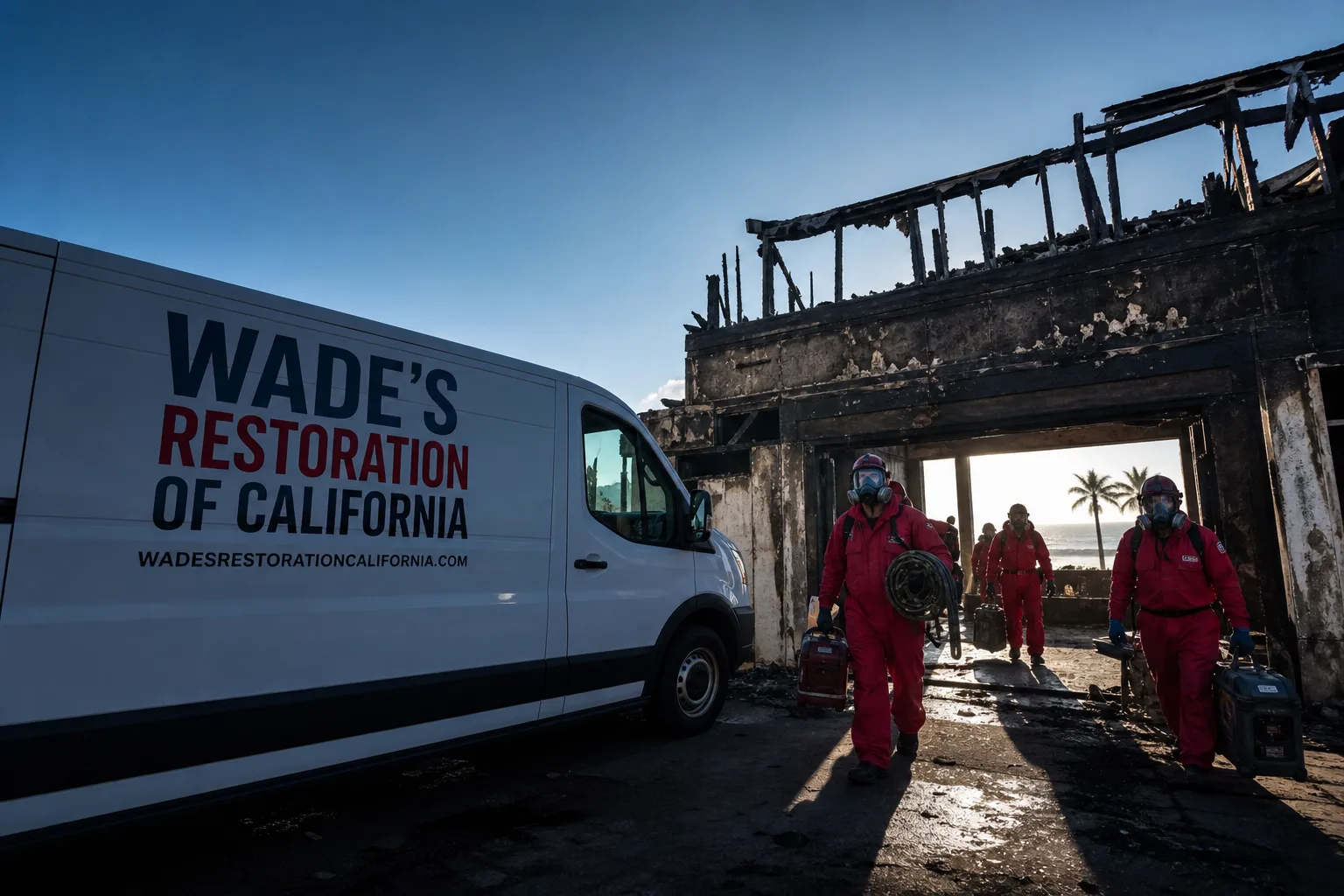
Fast, Reliable Sewage Cleanup Across San Francisco
A sewage backup in San Francisco needs a same-day response. Not tomorrow, not after a callback, not once a crew finishes another job. Raw sewage carries bacteria, viruses, and parasites that move fast through wall cavities and under flooring. In a city where lath-and-plaster walls hide moisture for days before you see a stain, speed is the difference between a contained cleanup and a full gut job. Wade Ferris and his team at Wade’s Restoration of California handle sewage cleanup across San Francisco, from the Mission to the Sunset to the Embarcadero. Call (855) 915-0646 right now and Wade heads out himself.
We know San Francisco’s quirks: tight alley-load entries, stairwells you can’t fit a standard air mover through, fog-baseline moisture that never really goes away. That’s why our Sewage Cleanup approach here isn’t the same template we’d run in Sacramento or Fresno. A Victorian flat on Capp Street and a SoMa loft conversion might as well be on different planets when it comes to drying time and access.
Why Wade’s Restoration of California Is San Francisco’s Preferred Sewage Cleanup Company
Wade started this company in 2007 and never turned it into a franchise. His name is on the truck, his phone number rings in his pocket, and when you call about sewage in a Chinatown SRO or a Visitacion Valley crawl space, you’re talking to the man who’ll show up. That matters in San Francisco, where homeowners have seen every slick pitch there is. They’ve also seen crews who quote one number on the phone and a different one at the door. Wade doesn’t work that way. The price he gives you is the price on the written scope before any work starts.
San Francisco customers call us because they’ve heard the same thing from neighbors: Wade deals with the insurance adjuster directly. You don’t get stuck as the middleman relaying damage reports and drying logs between two parties who won’t talk to each other. Wade takes moisture readings every single day and hands you the full log when the job’s done. Almost nobody else in this trade does that. It’s why people around Noe Valley and the Mission keep our number.
We answer calls 24/7 with a live person. Not a voicemail. Not an answering service. Wade answers his own phone. If you’re wading through sewage at two in the morning, that’s exactly who you want on the line.
Our Sewage Cleanup Services in San Francisco
Sewage Backup Cleanup
A sewage backup in San Francisco can come from a city main line failure, a collapsed lateral, or a blockage in a shared line in multi-unit buildings. The older the building, the more likely the failure. Many of the Victorians and Edwardians in the Mission (94110) and Noe Valley still run on original clay or cast-iron waste lines that have been in the ground for a century or more. When they fail, sewage comes up through floor drains, tubs, and toilets on the lowest level. We extract, remove contaminated materials, sanitize, and dry the structure to San Francisco’s fog-baseline, not some inland standard that doesn’t hold up here.
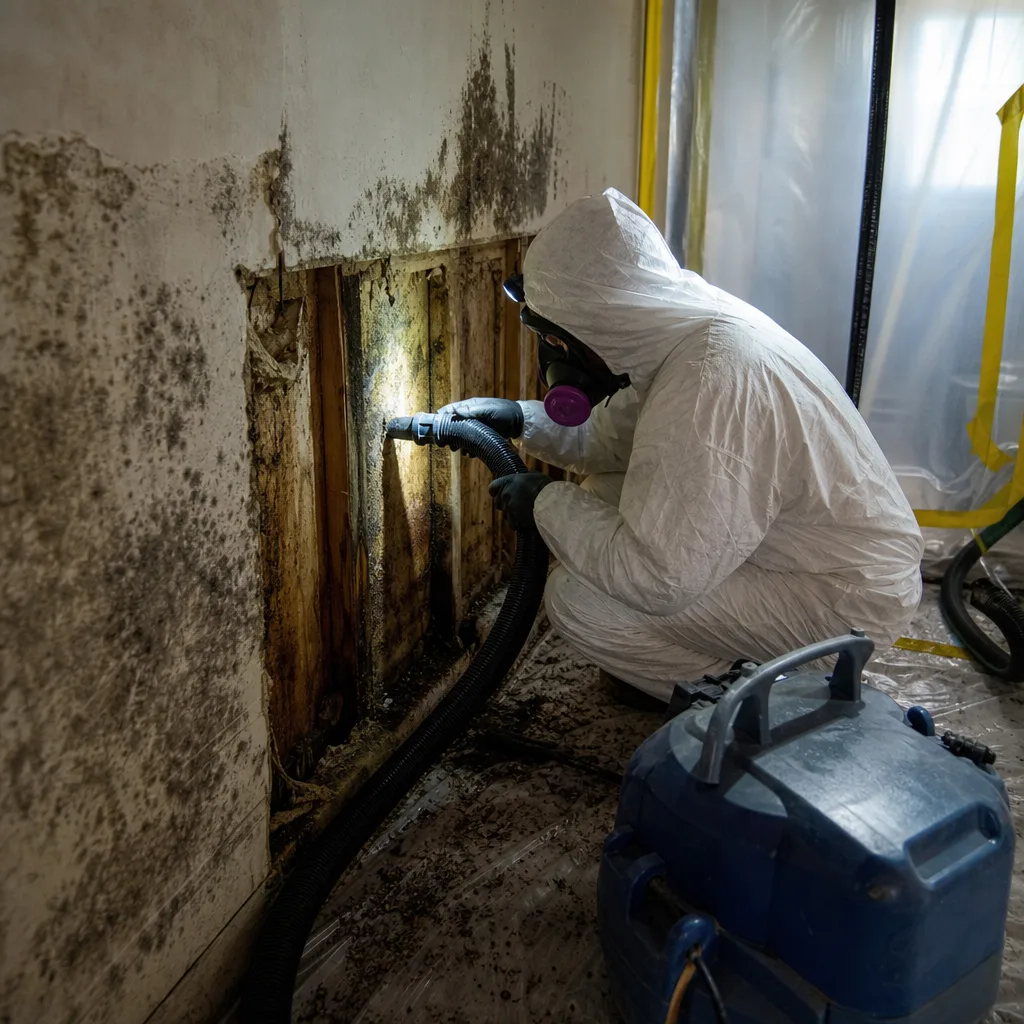
Toilet Overflow Cleanup
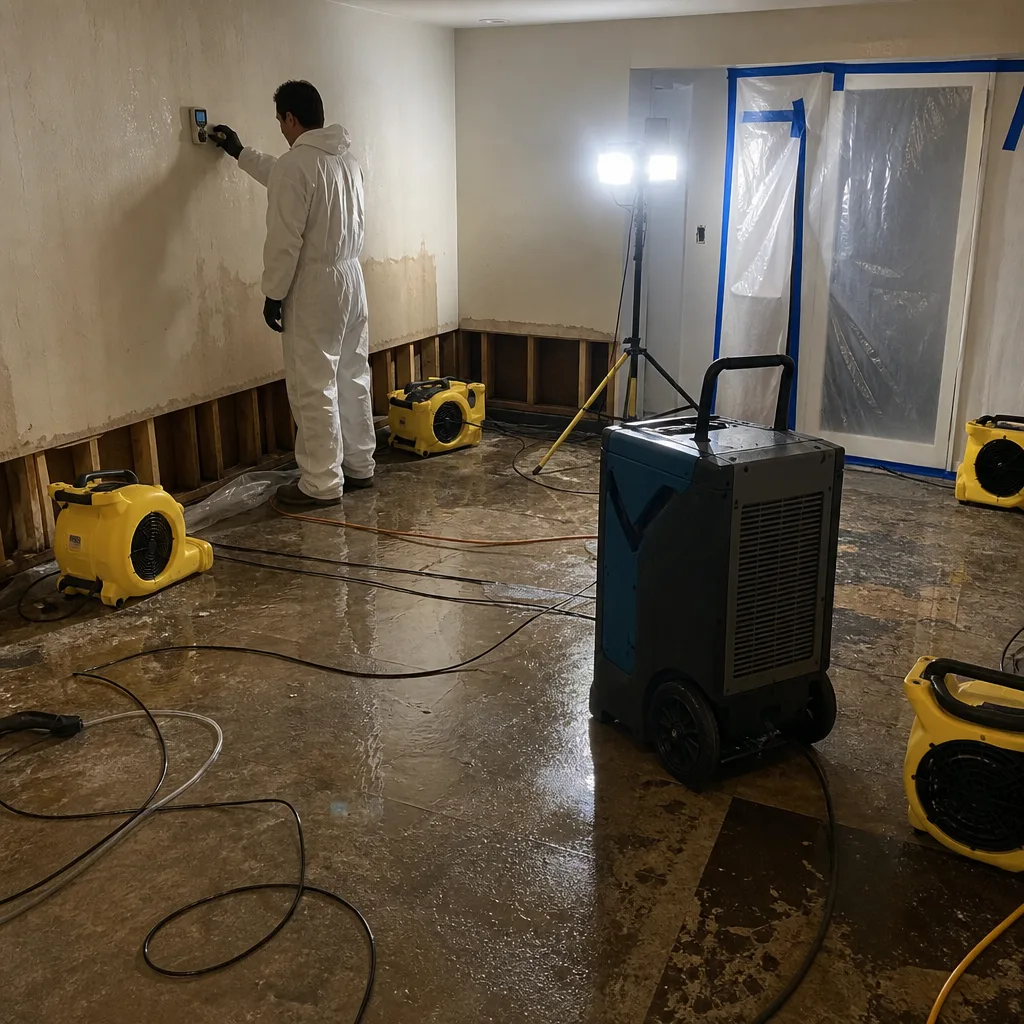
A toilet overflow in a second-floor flat in a San Francisco Victorian isn’t just a bathroom cleanup. Gravity carries contaminated water down through original lath-and-plaster ceilings into the unit below. We saw exactly this on Capp Street: a failed wax ring saturated the walls and ceiling of the lower floor, and because thermal imaging can’t see through dense plaster and wood lath, we cut small inspection ports along the stud bays to confirm moisture levels before closing anything back up. That’s the kind of San Francisco-specific judgment you won’t get from a crew that only knows drywall construction.
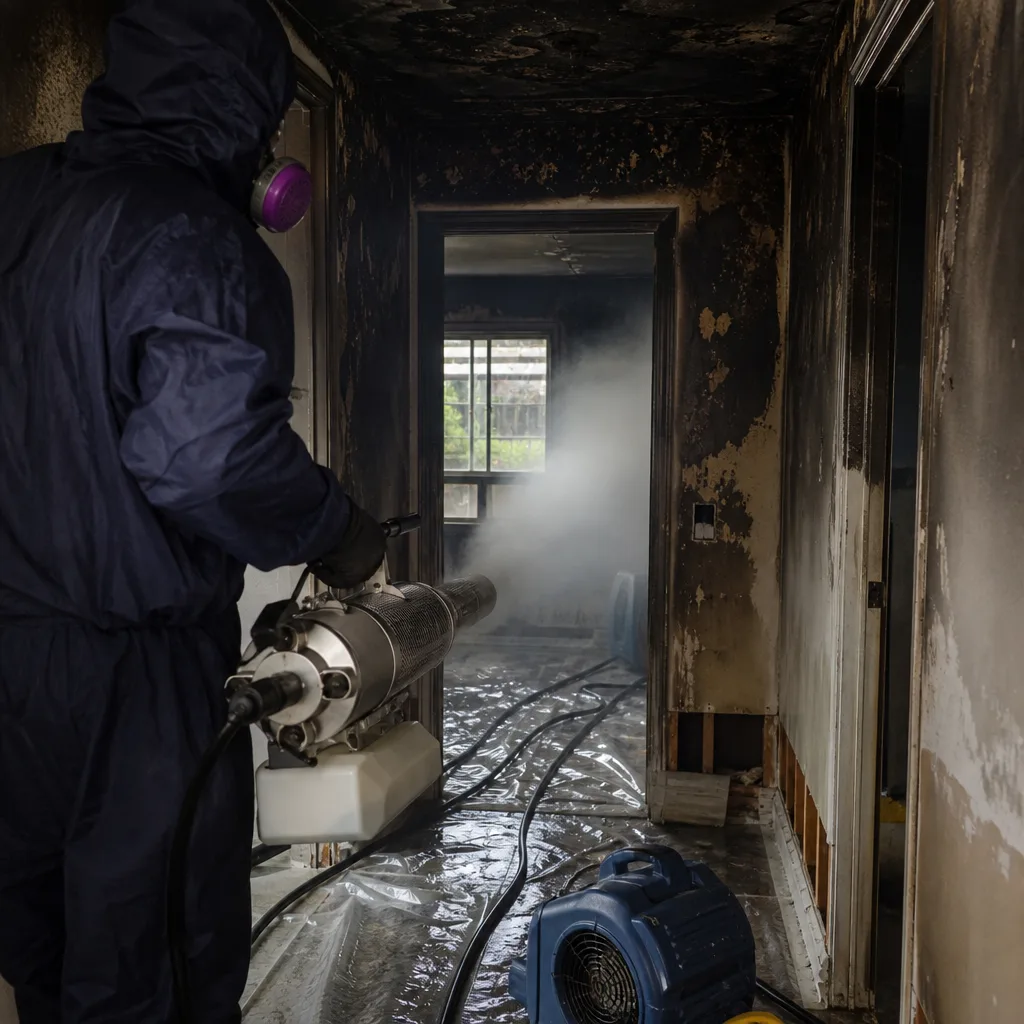
Septic Failure Cleanup
Septic failures in San Francisco are less common than in rural counties, but they happen on the city’s edges and in older properties that were never tied into the municipal system. When a septic system backs up into a home, the contamination is black water: untreated human waste, bacteria, and whatever else was in the tank. We remove it, dispose of it properly, and sanitize every surface it touched. If you’re in Visitacion Valley or another part of the city with older infrastructure, this is the kind of failure that spreads under flooring fast.
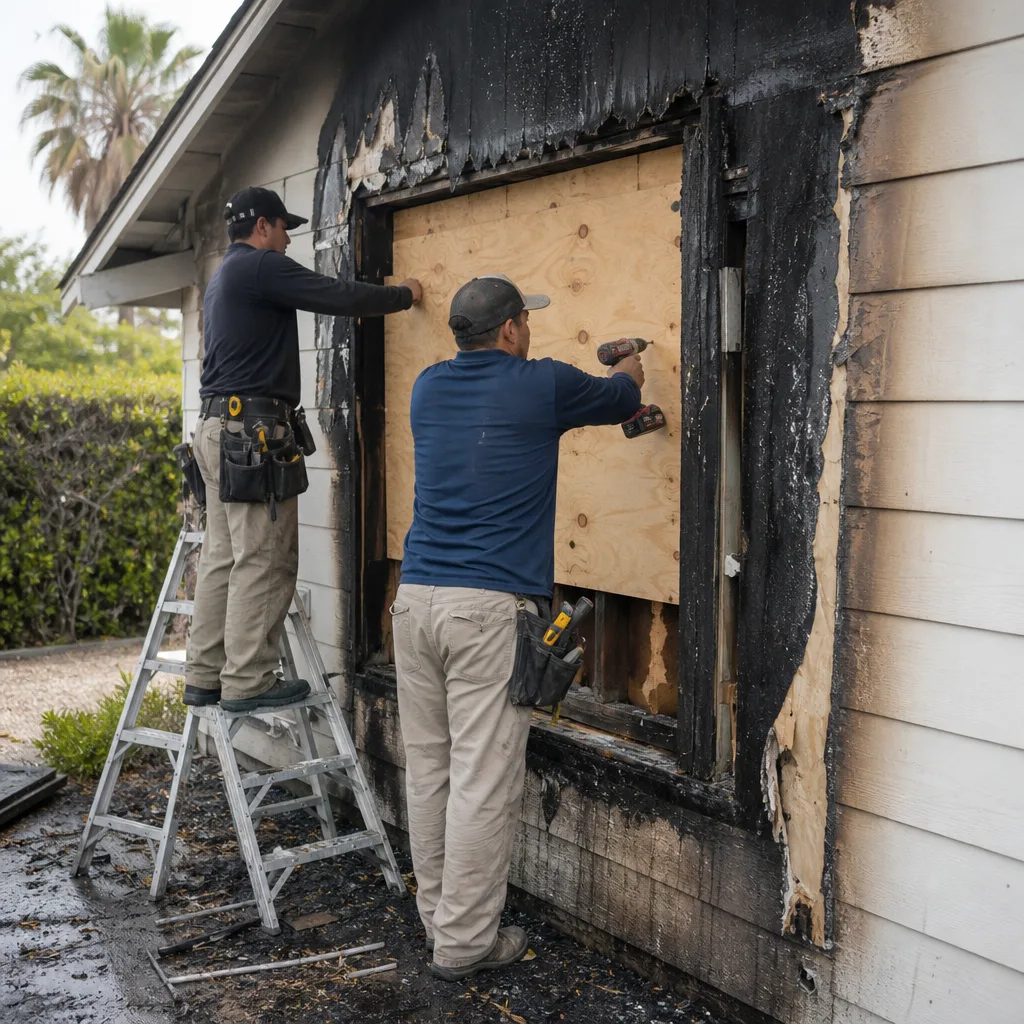
Black Water Extraction
Black water is the category for anything containing human waste or sewage. It’s not gray water from a washing machine. It requires full PPE, proper disposal, and aggressive antimicrobial treatment. In San Francisco’s dense housing stock, the challenge is often access: a Tenderloin residential hotel means carrying extraction equipment up narrow stairwells and coordinating with the front desk, not pulling a truck up to a driveway. We plan for that. Our crews are background-checked and uniformed, and they know how to work discreetly in buildings where residents and security staff are watching.
Crawl Space Sewage Removal
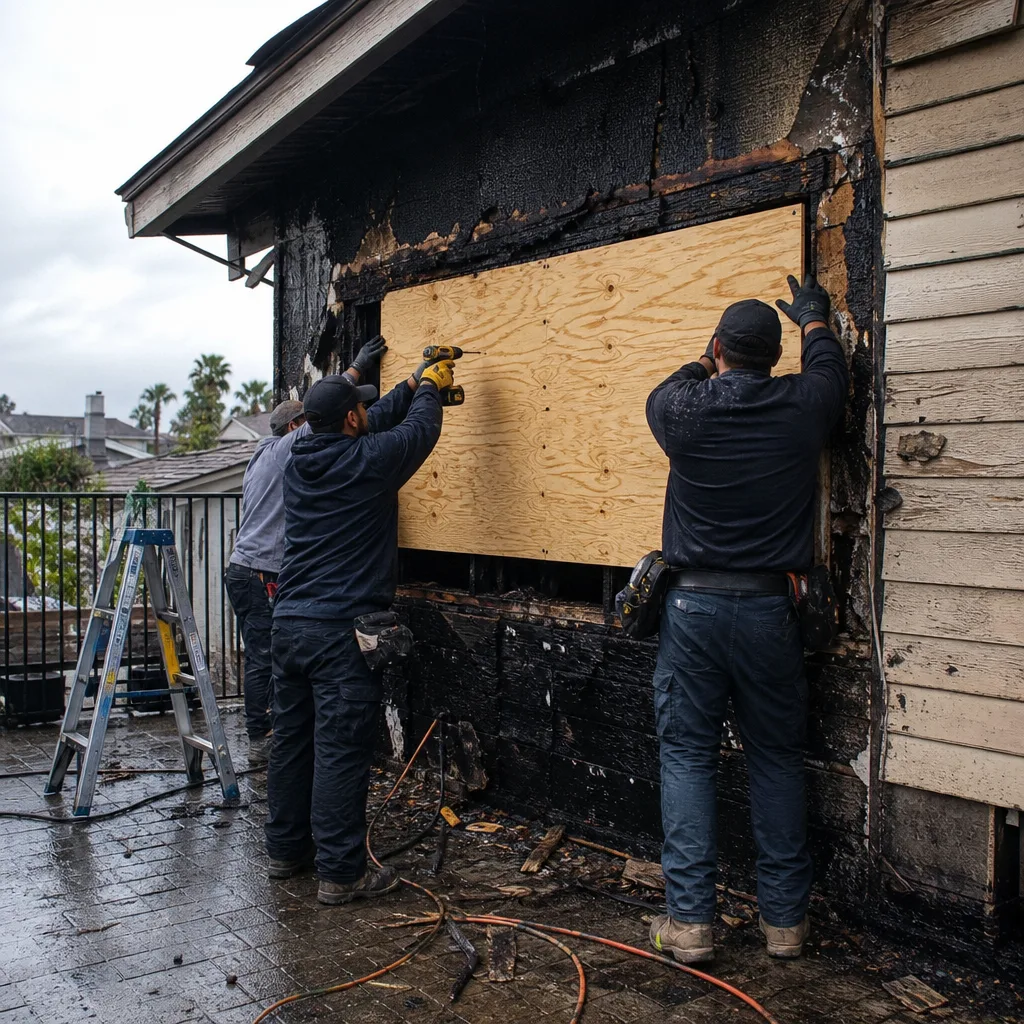
San Francisco has thousands of homes with raised foundations and crawl spaces. A sewer line break under a Victorian can fill that crawl space with raw sewage before anyone notices the smell inside the house. We remove the sewage, the contaminated soil, and any damaged insulation or vapor barrier. Then we sanitize the cavity and dry it with professional-grade equipment from Dri-Eaz and Phoenix, positioned through the access hatch no matter how tight it is.
Sanitization & Disinfection
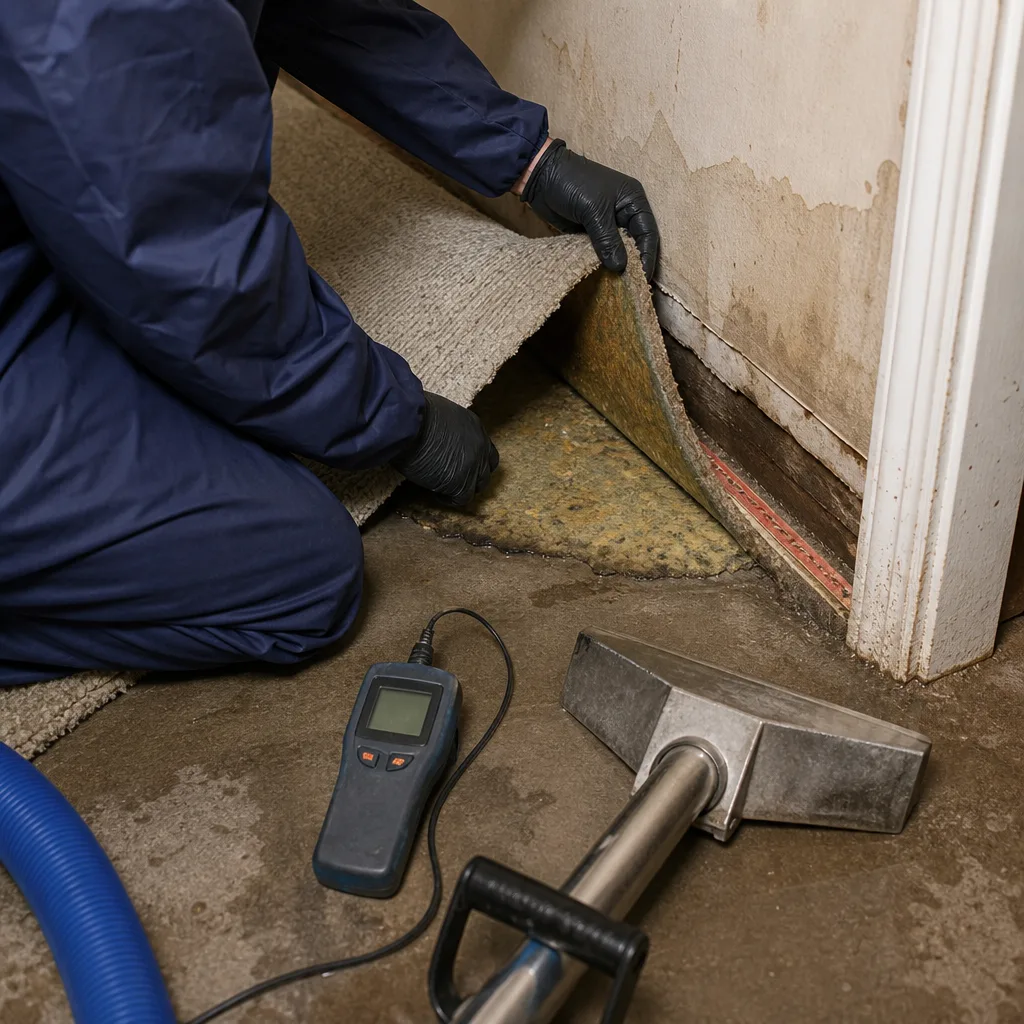
Cleaning visible sewage is not the same as sanitizing. Pathogens survive in wood, concrete, and grout long after the visible contamination is gone. We use IICRC-standard antimicrobial applications and verify with post-treatment testing. In San Francisco’s fog-baseline homes, this step matters even more: residual moisture that would be considered “dry enough” in Sacramento can restart bacterial growth here within days.
What happens when you call
- 1
A real person answersNo phone trees - you reach a local pro.
- 2
You get an upfront price rangeHonest numbers before anyone is dispatched.
- 3
A background-checked tech heads outLicensed & insured, dispatched right away.
- 4
You approve before work beginsNothing starts until you say go.
Trusted Brands We Service in San Francisco
We don’t push one manufacturer. We use the right tool for the job, and that means equipment from Dri-Eaz for low-grain refrigerant dehumidifiers, Phoenix for high-capacity drying, and XPOWER for low-profile air movement in tight spaces. San Francisco’s housing stock demands flexibility: a Sunset-side walkout basement and a SoMa loft conversion need completely different airflow plans. Our techs carry the equipment and know how to adapt it to the room they’re standing in, not the room they planned for on paper. We keep parts stocked locally and can get extraction running within the hour of Wade arriving.
Common Sewage Cleanup Problems We See in San Francisco Homes
- Lath-and-plaster walls hiding sewage for days. Thermal imaging can’t reliably see through the dense plaster and wood lath common in San Francisco’s Victorians and Edwardians. That means contamination travels farther before it’s caught, and drying requires opening inspection ports rather than relying on surface readings.
- Fog-baseline moisture fooling “dry” readings. San Francisco’s marine layer condenses on building envelopes year-round. A moisture content that would pass final inspection in Sacramento can still signal ongoing risk in an SF structure. We dry to the local baseline, not the textbook number.
- Bay-fill liquefaction complicating sewer lines. In the Financial District and Embarcadero ZIP codes (94105, 94111), buildings sit on 19th-century bay landfill with documented liquefaction potential. After an earthquake above roughly M5.5, a sewage backup may be ground deformation, not pipe failure. That changes how the damage gets documented, especially for insurance.
- Access constraints in multi-unit buildings. Sewage cleanup in a Chinatown SRO (94108) or a Tenderloin residential hotel means no driveway, no loading dock, no elevator wide enough for a full-size dehumidifier. Crews carry equipment up narrow stairwells and coordinate with building management and security. Experience with those logistics is part of the job.
In San Francisco’s bay-fill corridors, one thing separates local crews from outsiders: knowing the difference between a sewer failure and liquefaction-driven ground intrusion. After a moderate earthquake, a sewage backup in 94105 or 94111 can be the ground shifting under the building and cracking the waste line, not just tree roots or a clog. That distinction matters for insurance claims, because a policy that covers sewer backups may not cover earthquake-driven damage. Wade documents what he sees, writes it plainly, and talks to your adjuster directly. It’s a liability judgment no Oakland or San Jose crew routinely faces.
Pricing for Sewage Cleanup in San Francisco, CA
Sewage cleanup in San Francisco runs higher than most of the state because access is harder, buildings are older, and disposal costs are up. Here are the numbers we see most often:
- Toilet overflow (single room): $900-$1,800
- Sewage backup (multi-room, ground floor): $2,500-$6,000
- Black water extraction with sanitization (whole lower level): $4,000-$9,500
- Crawl space sewage removal and decontamination: $3,500-$8,000
- Lath-and-plaster wall opening, drying, and closing after sewage intrusion: $1,500-$4,000 depending on stud bay access
What moves the number: how far sewage traveled, whether walls need to be opened, how tight the access is, and what the drying baseline looks like in your specific neighborhood. Wade gives you a written scope before any work starts. The price on that scope is the price you pay, end of story. Call (855) 915-0646 for a free estimate.
We Also Serve Cities Near San Francisco
Wade’s Restoration handles Sewage Cleanup in San Francisco and the surrounding neighborhoods, including Mission District, Noe Valley, Chinatown, and Visitacion Valley. If you’re in one of those areas and dealing with a backup, same story: call (855) 915-0646 and Wade heads out.
Serving San Francisco, CA - Our Local Coverage Area
We’re based in the San Francisco area and know this community well. Use the map below to see our service coverage - if you’re nearby, we can almost certainly help.
FAQs - Sewage Cleanup in San Francisco
Buildings mid-way through the city’s URM retrofit program often have exposed framing and new penetrations that create water-intrusion pathways the original construction never had. During sewage cleanup, those retrofitted areas need extra inspection, because contaminated water can travel along new steel or anchor plates and end up somewhere far from the original backup. Knowing which buildings in your ZIP are under active retrofit lets us predict where sewage went, not just where it pooled.
SoMa loft conversions were built as industrial or commercial structures, then carved into residential units. Plumbing is shared, routed through concrete floors, and often impossible to access without cutting. Sewage from one unit can migrate through slab penetrations into neighboring units. Cleanup means coordinating with the HOA, the property manager, and sometimes the building’s structural engineer, because cutting access holes in concrete requires knowing what’s beneath. Call (855) 915-0646 if you’re dealing with this, and Wade will walk you through the scope before anyone touches a saw.
Yes. The Embarcadero sits on 19th-century bay landfill with documented liquefaction potential. After a moderate earthquake, the ground can shift enough to crack waste lines, offset pipe joints, or reverse the slope of a sewer lateral. The backup you see is sewage, but the cause is seismic ground movement. Wade documents this carefully, photographs everything, and speaks directly with your adjuster so the claim reflects what actually happened, not just what the damage looked like.
Because the fog condenses on cold west-facing building surfaces year-round, adding ambient moisture to the air inside wall cavities. If we dry a structure to an inland standard and call it done, that residual fog-load moisture can restart mold growth within days. Our equipment calculations account for San Francisco’s chronic marine-layer moisture, and Wade hands you the full daily moisture log so you can see the numbers yourself. It’s a discipline most crews skip because it takes time. Wade doesn’t skip it.
By coordinating with building management and security before any equipment moves, and by assuming that every shared drain stack is a potential contamination pathway. A backup on the third floor of an SRO may present first on the first floor through a common line. We isolate the affected line, protect adjoining units, and carry equipment through whatever access exists, including stairwells that no full-size dehumidifier was ever designed for. Wade’s crew is background-checked and uniformed, so building staff know at a glance who belongs in the hallway.
Call Wade’s Restoration for Sewage Cleanup in San Francisco
If you’ve got sewage backing up into a Mission Victorian, a Sunset crawl space, or a SoMa loft, don’t wait. The longer it sits, the farther it travels through lath-and-plaster walls and under flooring. Wade Ferris answers his own phone, shows up in person, and gives you a written scope before any work begins. The 90-Day Done Right Promise applies, in writing, to every sewage cleanup we do: if it’s not done right, Wade makes it right. Call (855) 915-0646 now.
Written by Wade Ferris, Owner at Wade’s Restoration of California, serving San Francisco with sewage cleanup and restoration since 2007.