
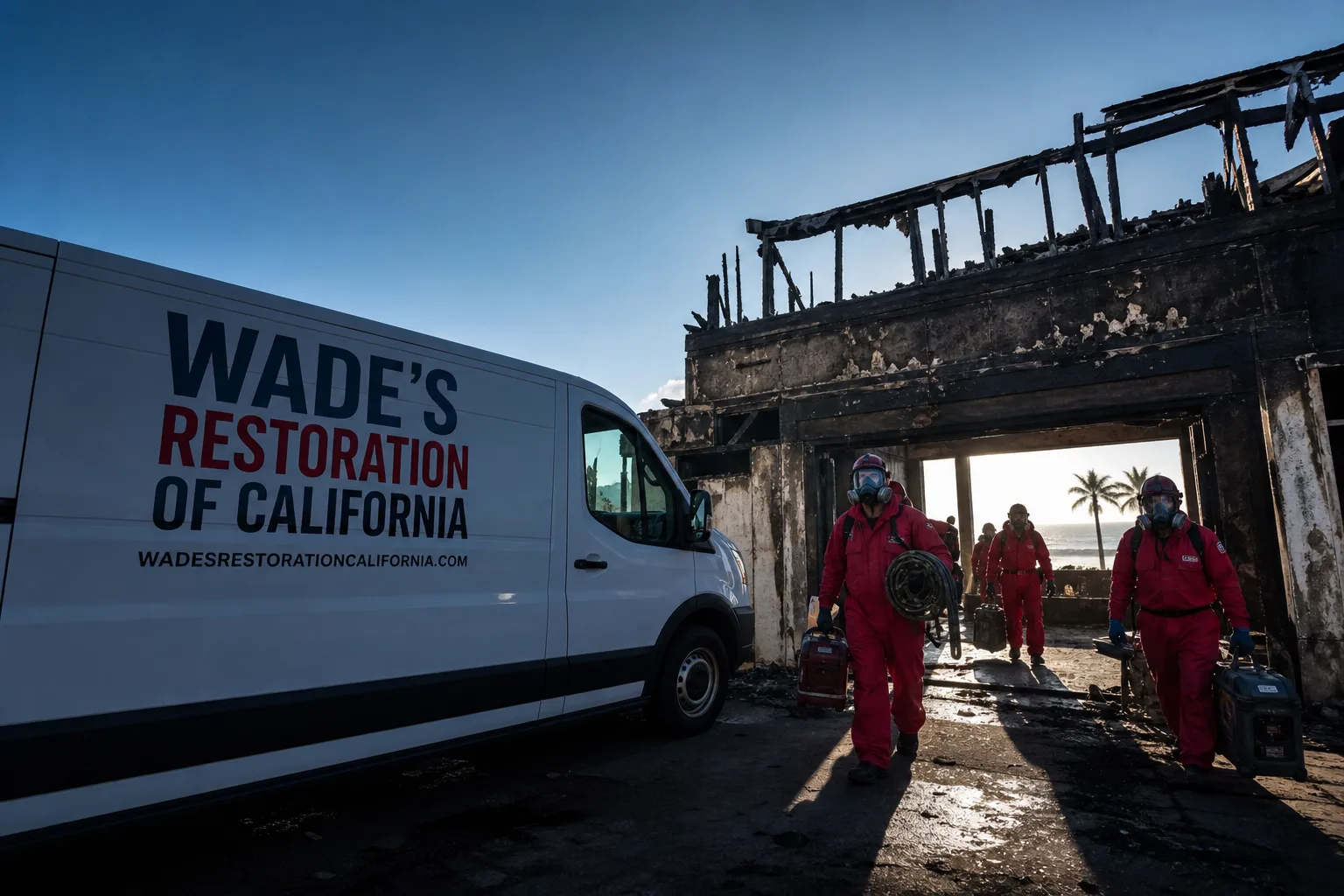
Fast, Reliable Sewage Cleanup Across Port Hueneme
When raw sewage backs up into a Port Hueneme home, you need someone who understands what that water is doing inside your walls, not just someone with a pump. Sewage cleanup in Port Hueneme typically runs $1,800-$4,200 depending on how far Category 3 water has traveled, and the worst cases, the ones involving original plaster-and-lath from the 1940s and shared chases in Navy-era buildings, can go higher. We answer the phone ourselves, day or night. Call (855) 915-0646 and Wade will head out to your street, not a call center in another state.
Wade’s Restoration of California is owner-operated, not a franchise. Wade Ferris has been doing this since 2007, and he still takes the calls. If you’re in 93041 or 93044 and dealing with a toilet overflow at midnight or a septic failure near the harbor, he’s the one you’ll talk to first, and the one who shows up with a truck full of Dri-Eaz pumps and a plan that’s actually based on what Port Hueneme does to a water-damaged house.
Why Wade’s Restoration of California Is Port Hueneme’s Preferred Sewage Cleanup Company
Port Hueneme is a small town. Ask anyone on your street. Wade’s name gets passed around here the way a good mechanic’s does, because he’s the guy who shows up when he says he will, does what he says he’ll do, and hands you the documentation at the end instead of making you ask for it. That matters when you’re standing in a house that smells like a sewer line let go.
We’ve worked homes near the beachfront, in the streets around the base, and across the older tracts that run up toward Channel Islands Boulevard. We know that a sewage backup in a 1950s slab-on-grade house near the harbor perimeter behaves differently than the same event three miles inland in Oxnard. The salt air, the persistent fog, the original plaster walls, the aging copper drains, the shared framing between units. None of that shows up in a generic restoration playbook. It shows up in ours.
When you call us from Port Hueneme, Wade can typically be on-site within the hour. Not a technician dispatched from a regional hub. Wade himself, or one of his background-checked, uniformed crew members who he’s trained on exactly what coastal conditions do to a sewage cleanup. And every water, fire, and mold restoration job we do comes with the 90-Day Done Right Promise in writing. If it’s not done right, he makes it right. It’s that simple.
Our Sewage Cleanup Services in Port Hueneme
Not every sewage problem is the same, and Port Hueneme neighborhoods throw their own curveballs at each type. Here’s what we handle most often, and what we’ve learned about how it plays out here specifically.
Black Water Extraction
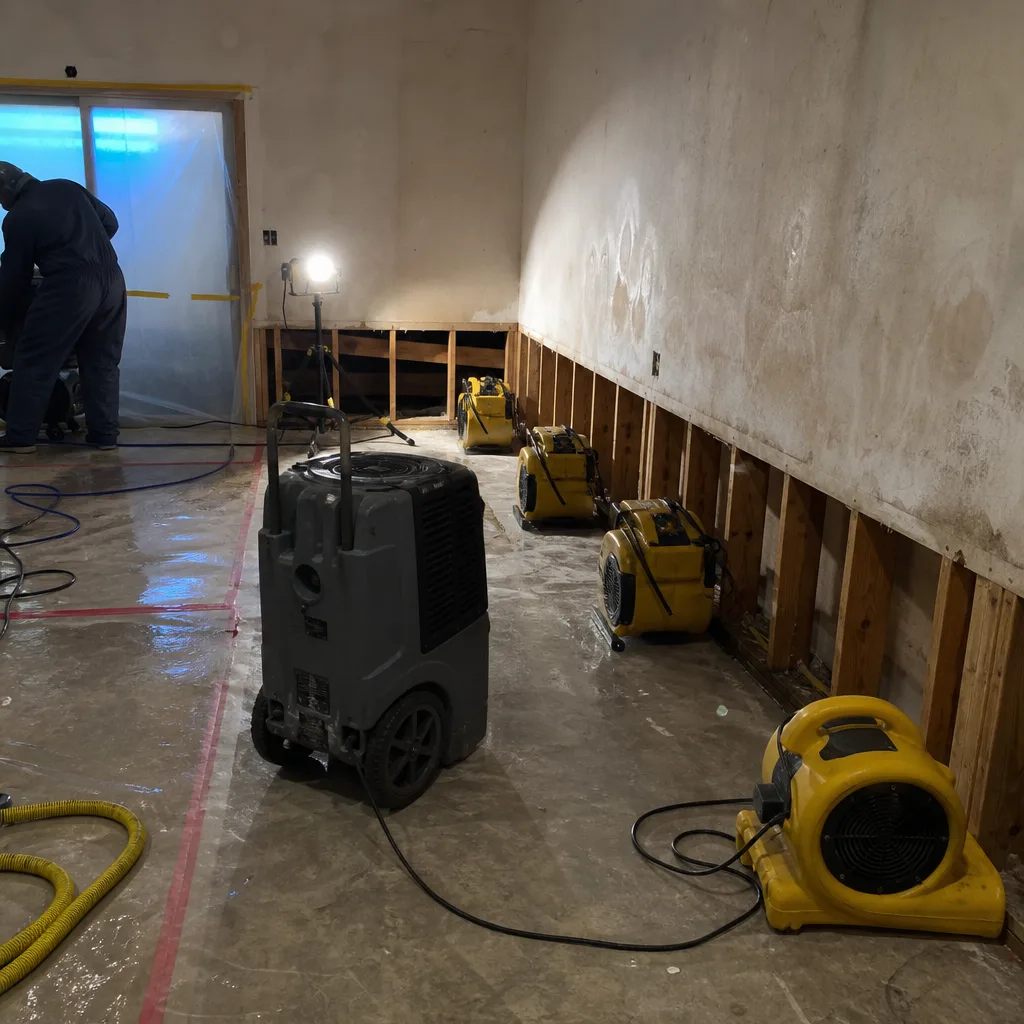
Category 3 water is the technical term for what comes back up out of a sewer line, and it’s not something to mop up with towels. In Port Hueneme, where the marine layer keeps indoor humidity high year-round, extracted black water leaves moisture in the slab and wall cavities that dries 30-40% slower than standard IICRC psychrometric targets assume. We run our Dri-Eaz pumps and truck-mounted extractors longer, and we take moisture readings every single day until we know it’s actually dry, then we hand you the full log. Almost nobody else does that.
Crawl Space Sewage Removal
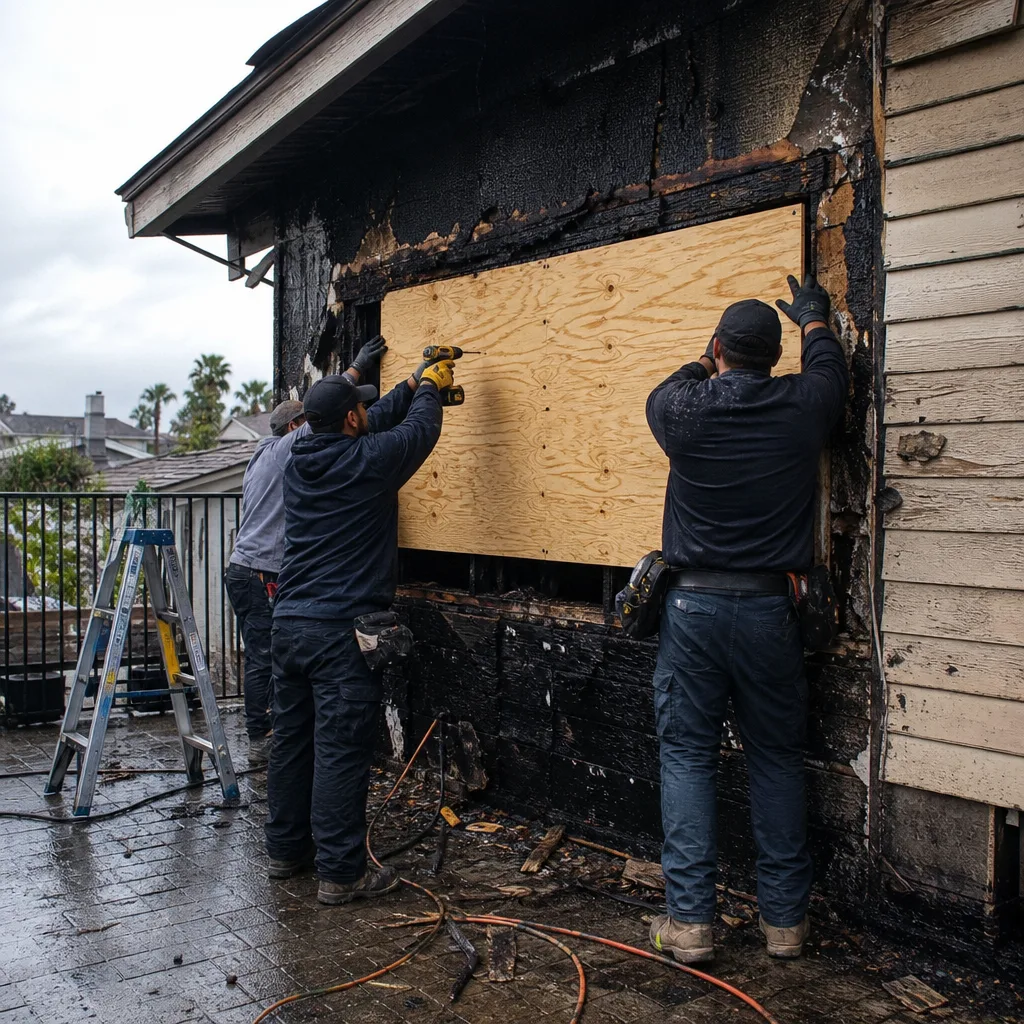
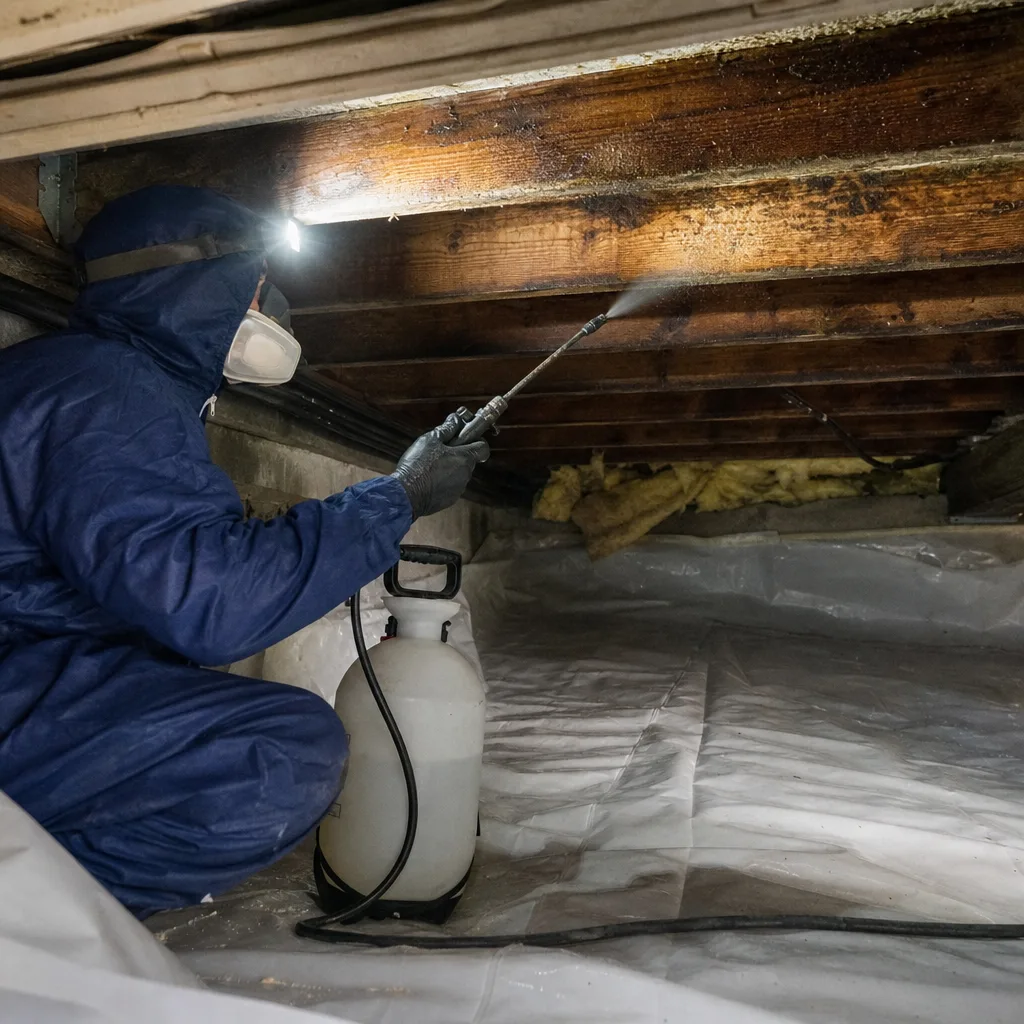
Crawl spaces in Port Hueneme’s older homes are already fighting the salt air that corrodes galvanized fasteners and electrical boxes. Add raw sewage to that environment and the deterioration accelerates fast. Our Sewage Cleanup team extracts the waste, removes the contaminated insulation, flushes the area with fresh water to cut the salt residue, and applies anti-corrosion treatment to anything structural. Salt residue left behind keeps pulling moisture indefinitely. You can’t just pump it and walk away.
Sanitization & Disinfection
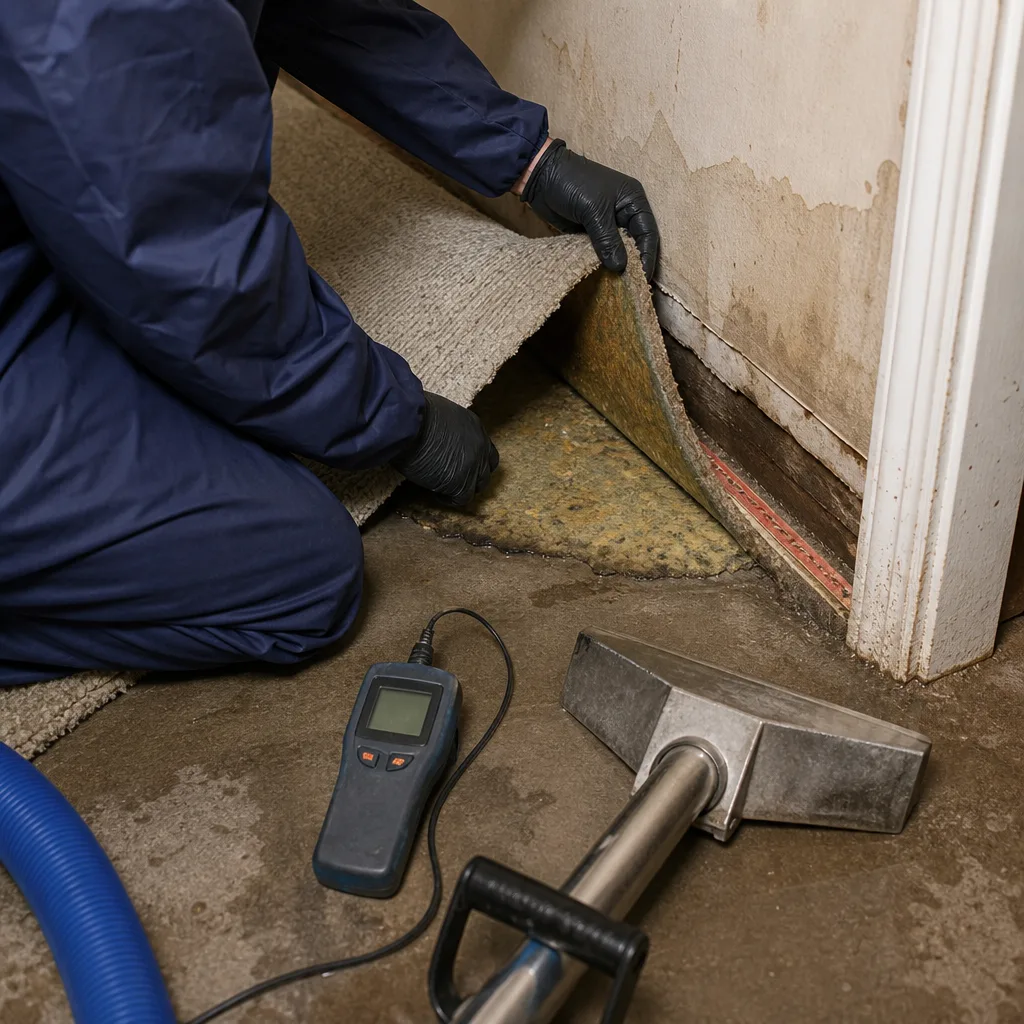
After sewage is extracted, the space still isn’t safe. We apply EPA-registered antimicrobials, fog hard-to-reach cavities, and run HEPA air scrubbers to pull airborne contaminants down. In the tight wall cavities of Port Hueneme’s plaster-and-lath construction, sewage wicks upward fast, contaminating insulation you can’t see. We treat what’s visible and what isn’t. If we can’t verify a surface was reached, we don’t claim it was.
Toilet Overflow Cleanup
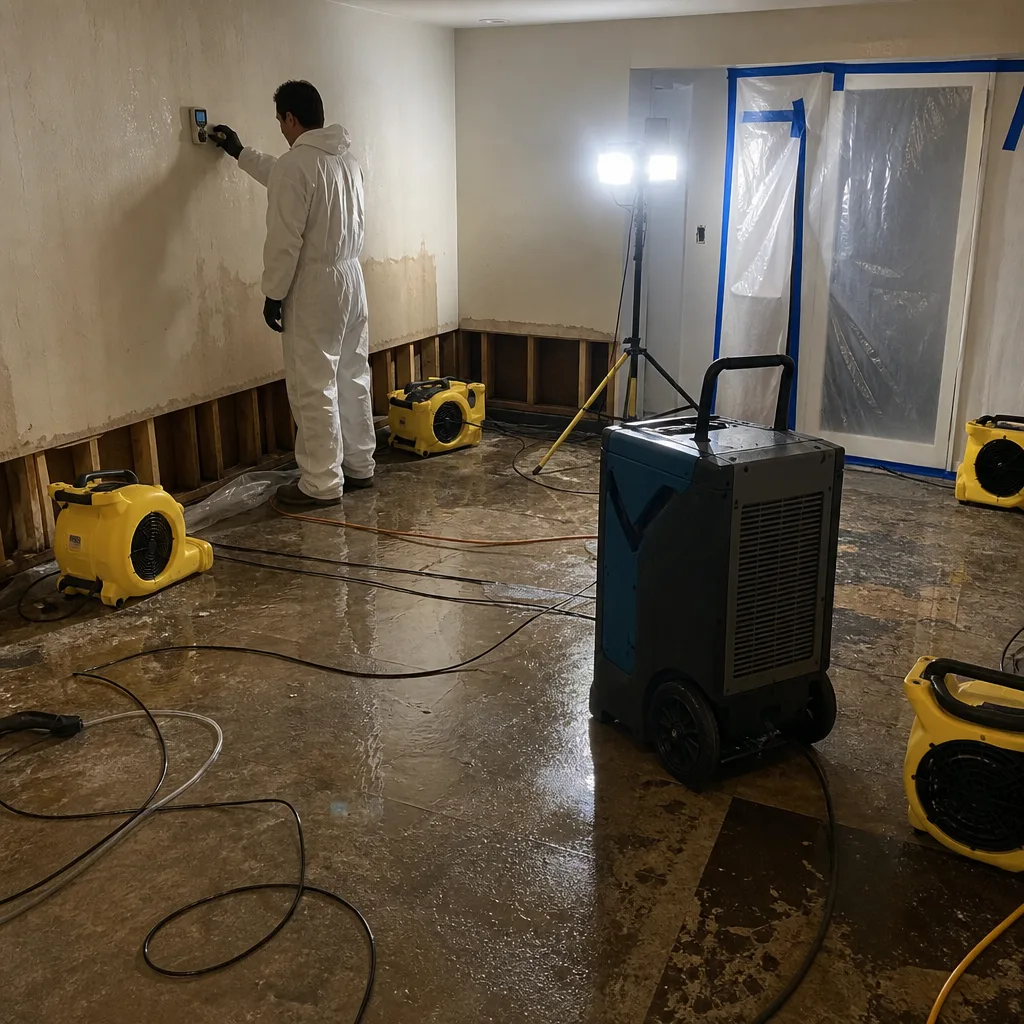
A toilet overflow sounds simple until it’s on the second floor of a 1960s multi-unit building near the base, running black water down a shared chase into the unit below. Then it’s a multi-family contamination event. We’ve handled those. We extract immediately, open the affected wall cavities at the right points, and coordinate with the building owner or property manager so the adjacent unit gets inspected too. A one-unit backup should not become a whole-building problem because someone missed the chase.
Septic Failure Cleanup
Septic failures in Port Hueneme’s older residential pockets release black water that carries not just waste but whatever has been percolating in the system. We pump it out, contain the affected area, remove and bag the contaminated materials, and dry the rest with the extended-cycle approach this coastal climate demands. The goal is a space that tests clean, not a space that looks clean.
What happens when you call
- 1
A real person answersNo phone trees - you reach a local pro.
- 2
You get an upfront price rangeHonest numbers before anyone is dispatched.
- 3
A background-checked tech heads outLicensed & insured, dispatched right away.
- 4
You approve before work beginsNothing starts until you say go.
Common Sewage Cleanup Problems We See in Port Hueneme Homes
- Plaster-and-lath wicking: The original plaster walls from the 1940s-1960s construction era pull sewage upward far faster than modern drywall. Category 3 water climbs wall cavities and contaminates insulation before you can even see staining on the surface. By the time a Port Hueneme homeowner notices the problem, the damage is usually several feet higher than it looks.
- Cross-unit contamination in Navy-era buildings: Shared plumbing chases in multi-unit buildings near the old naval base mean one toilet overflow can migrate black water into the unit next door or the one below. We map the chase, not just the room where the backup happened, and we check the neighbors before they even know they have a problem.
- Salt-corroded crawlspace infrastructure: The salt air off the Pacific gets into everything. Galvanized fasteners, junction boxes, strap hangers. After a sewage event, that corrosion accelerates. If equipment tests dry on a first pass but the fasteners are rusting through, the structural problem is just getting started. We flush the salt, treat the corrosion, and document it.
- The re-wetting plateau: Salt residue in concrete slabs near the harbor keeps pulling moisture back even after readings level off. If you run a standard drying protocol and call it done, you’re leaving wet material behind. We extend the drying cycle, run Phoenix desiccants, and validate with repeated moisture mapping until the readings stay down.
How Port Hueneme’s Coastal Environment Changes Sewage Cleanup
Here’s the thing most restoration outfits that serve Port Hueneme from a distance don’t fully account for. This city sits essentially at sea level directly on the Pacific. The marine layer here is denser and more persistent than it is even a few miles inland in Oxnard or Camarillo. That fog keeps ambient relative humidity abnormally high, which means structural drying timelines get stretched. A job that would dry in three days in El Rio can take five days in Port Hueneme because the air itself is saturated.
On top of that, the salt. After any coastal storm event or even a routine sewage backup near the harbor, salt residue left behind in crawlspaces and on concrete slabs continues to pull ambient moisture indefinitely. We’ve watched equipment readings appear to plateau while the salt keeps re-wetting materials. You can’t trust the first good reading. You have to map moisture content well past the point where it first looks acceptable. That’s the Port Hueneme difference.
This page is built to explain what actually changes on a sewage cleanup when the job is within blocks of a persistent marine layer and salt air. Slower drying. Salt re-wetting. Cross-unit contamination in Navy-era housing. If you’re comparing companies, ask them how they handle those three things. If they don’t have an answer, they’re working from an inland playbook.
Trusted Brands We Service in Port Hueneme
We’re IICRC-certified and affiliated with the RIA and IFA, which means the work is held to real industry standards, not whatever the guy with the wet-vac is doing. Our equipment is professional grade: Dri-Eaz for extraction, Injectidry for wall-cavity drying, XPOWER air movers, Phoenix desiccants, B-Air filtration. The brands matter because Port Hueneme’s conditions punish cheap equipment fast. Salt air corrodes exposed metal fittings and housings, so after every job near the beach we rinse and coat our gear. That’s maintenance most companies never think about until their equipment fails mid-job.
For Port Hueneme customers, we carry the parts and supplies needed for local conditions: stainless fasteners for marine exposure, anti-corrosion treatments for crawlspace hardware, and the long-run HEPA filters this foggy air clogs faster than inland. We don’t make you wait on a parts order from across the country.
Pricing for Sewage Cleanup in Port Hueneme, CA
Here’s honest pricing for the Port Hueneme market. A straightforward toilet overflow contained to one bathroom typically runs $1,200-$2,400. A sewage backup that has spread across a slab or into wall cavities runs $2,500-$5,500 depending on how many feet of wall we have to open and whether insulation and baseboards come out. A crawl space sewage removal with salt-flush and anti-corrosion treatment usually lands between $3,000 and $6,500. Septic failure cleanups with full sanitization and extended coastal drying start around $4,000 and can reach $9,000 when multiple rooms or shared chases are involved.
What moves the number: how far the black water traveled, whether plaster-and-lath walls are involved, whether salt re-wetting extends the drying cycle, and whether adjacent units or crawlspaces need work. We give you a written scope before we start. No pricing surprises after the fact. And we offer a free second opinion on any written estimate you’ve received, plus no trip charge inside our own county. Seniors and veterans get 10% off, always. Call (855) 915-0646 and we’ll give you numbers that mean something.
We Also Serve Cities Near Port Hueneme
If you’re just over the line in Oxnard, El Rio, Ventura, or Camarillo, we work there too. Same owner, same equipment, same promise. Port Hueneme gets our attention like a hometown should, but the crew serves the whole coastal stretch, so point your neighbors our way when the sewer line lets go.
Serving Port Hueneme, CA - Our Local Coverage Area
We’re based in the Port Hueneme area and know this community well. Use the map below to see our service coverage - if you’re nearby, we can almost certainly help.
FAQs - Sewage Cleanup in Port Hueneme
Drying in Port Hueneme takes 30-40% longer than standard IICRC psychrometric targets assume because the marine layer keeps ambient relative humidity so high that extracted water has nowhere to go. We run desiccants and extended air-movement cycles to compensate. Call (855) 915-0646 for a site assessment.
Those multi-unit buildings share plumbing chases and framing, so black water from one unit’s toilet overflow travels through the shared cavities into adjacent units before anyone notices visible damage. We inspect the chases, not just the unit where the backup started.
No. Saltwater intrusion is Category 1 or 2 water depending on what it contacts, but it requires salt-flush and corrosion mitigation that a standard sewage job may not need if it’s fresh-water based. If storm surge pushes saltwater through a slab, we flush the concrete with fresh water and coat the exposed metal. Sewage backup is always Category 3 and requires full antimicrobial treatment plus removal of contaminated materials.
We use Dri-Eaz pumps and extractors for removal, XPOWER air movers for air flow, Phoenix desiccants for deep-slab drying, and Injectidry systems for wall-cavity drying. Because salt re-wetting extends drying needs near the harbor, we run these systems longer than inland jobs and validate with daily moisture mapping.
You can’t stop what’s already wicked upward. We open the wall at the right height, remove the contaminated plaster and lathe, bag it, and treat the remaining framing with antimicrobials. We then dry the cavity with Injectidry mats. Delaying this lets the contamination climb higher, so speed matters as much as technique.
Dealing with sewage in Port Hueneme right now? Call Wade at (855) 915-0646. He answers the phone himself. If it’s an emergency, he’s on the road to your street, not waiting for a call center to forward a ticket. Free estimates, no trip charge in the county, and a written promise on every job.
Written by Wade Ferris, Owner at Wade’s Restoration of California, serving Port Hueneme since 2007.