
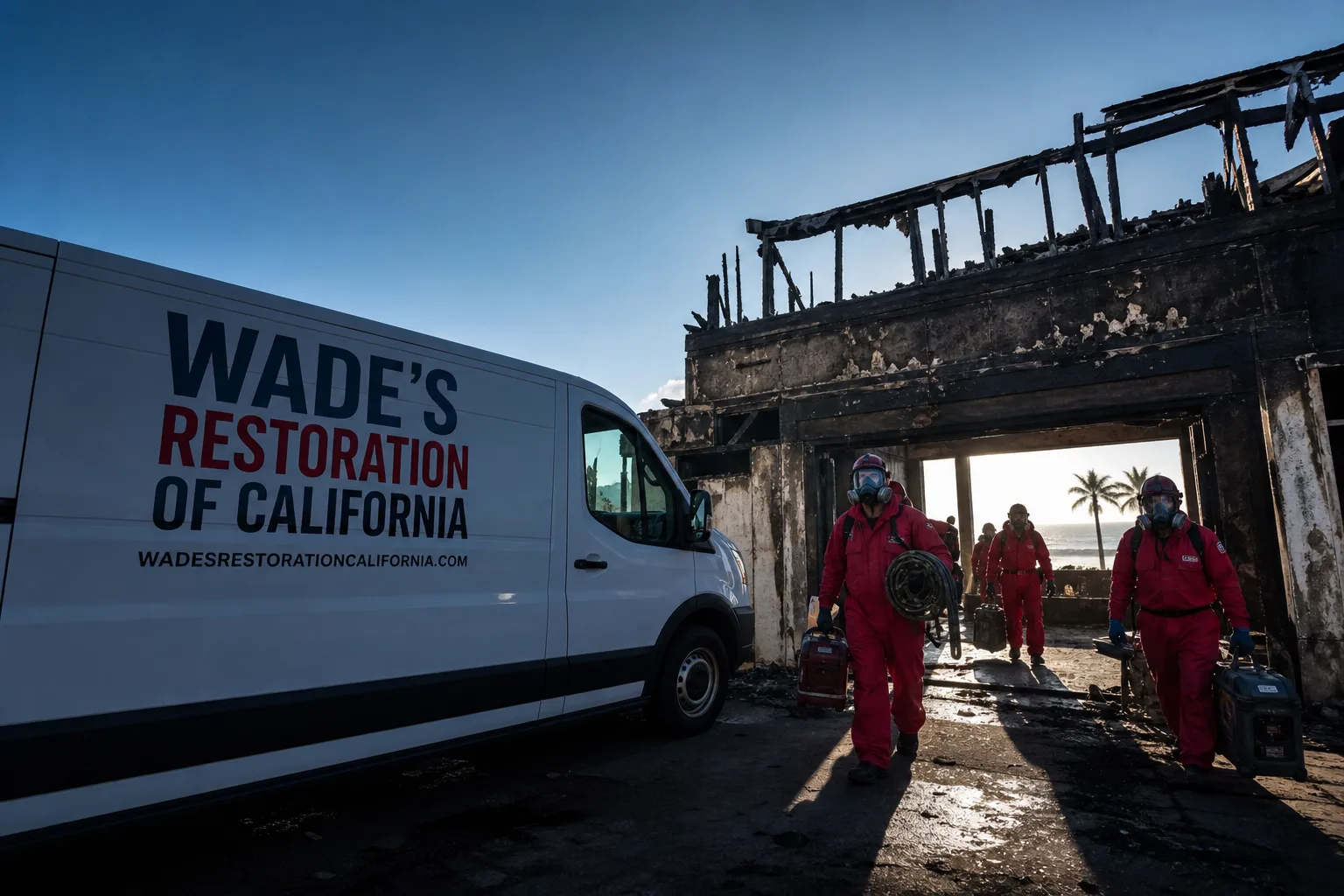
Fast, Reliable Sewage Cleanup Across Live Oak
Sewage cleanup in Live Oak, CA typically runs $850-$3,200 for a standard backup, and most jobs can be started the same day you call. We know that a sewage backup in a 1950s pier-and-beam home on Pennington Road is a different animal than one in a newer slab house. If you’re standing in contaminated water right now, call Wade at (855) 915-0646 and he’ll tell you exactly what happens next.
Live Oak sits in the low-lying Sutter Basin, protected from the Feather River by aging levees. That geography changes how sewage behaves here. When the ground is saturated, older sewer laterals shift, septic fields lose capacity, and black water finds its way into crawl spaces that stay damp all winter from the surrounding rice fields. We’ve been handling those exact problems since 2007, and Wade Ferris still answers his own phone.
Why Wade’s Restoration of California Is Live Oak’s Preferred Sewage Cleanup Company
Wade Ferris put his name on the truck in 2007 and never looked back. When you call about sewage cleanup in Live Oak, you’re calling a local, owner-operated outfit, not a national franchise with a call center in another state. Wade answers his own phone at midnight. He’ll be the one who shows up, and he’s the one who signs the 90-Day Done Right Promise on your contract. If it’s not done right, he makes it right. In writing.
Live Oak homeowners call us because we understand what happens under these specific houses. The post-WWII homes here, many built on vented pier-and-beam foundations, sit close to grade. The rice fields surrounding Live Oak get intentionally flooded every October through February for waterfowl habitat. That keeps the local agricultural water table abnormally high for five straight months. Crawl spaces under those older homes stay damp all winter even without a direct flood event. When sewage backs up into that environment, the contamination doesn’t just sit on the surface. It wicks into subfloors, soaks insulation, and gets into wall cavities. A generic extraction job misses all of that. Wade’s crew doesn’t.
Ask anyone on Pennington Road or over near the high school. We’ve done the work, we’ve documented it with daily moisture readings, and we’ve handed the homeowner the full log at the end of the job. Almost nobody else in this trade does that. Our Sewage Cleanup team carries IICRC credentials, and we run Dri-Eaz extraction equipment and B-Air air movers on every job in the 95953 ZIP code.
Our Sewage Cleanup Services in Live Oak
Every sewage backup in Live Oak starts with the same first step: get the contaminated water out and stop it from spreading. What comes after that depends on your house, your foundation type, and how long the water sat. Here’s what we handle most often in Live Oak.
Sewage Backup Cleanup
When a sewer line backs up into a Live Oak home, the clock starts immediately. Raw sewage carries bacteria, viruses, and parasites that can make a family sick within hours. We extract the standing black water, remove contaminated materials that can’t be sanitized, and treat every affected surface with EPA-registered disinfectants. In Live Oak’s older homes, that often means pulling baseboards and drilling out wet drywall to check what’s happening behind it.
Toilet Overflow Cleanup
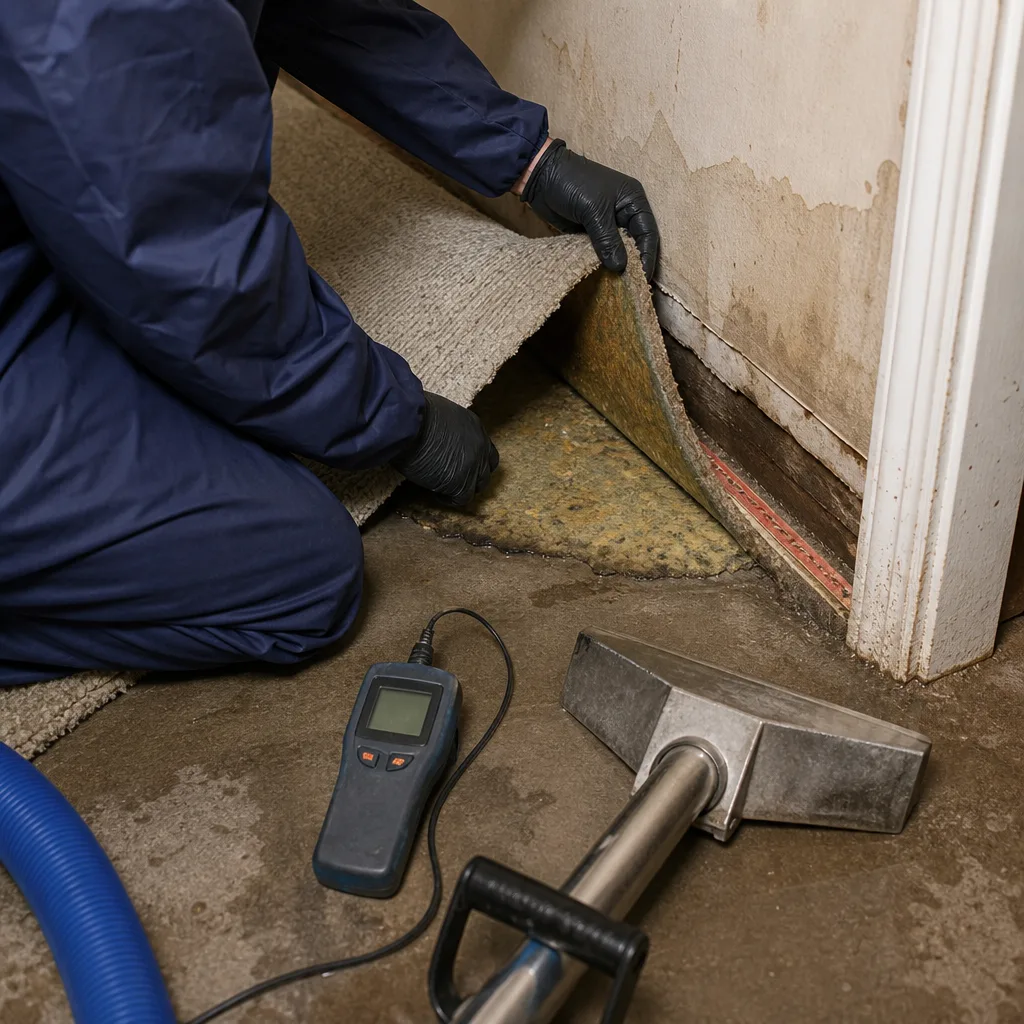
A toilet overflow is usually the first visible sign of a bigger problem, especially in the 1950s-1970s houses that dominate Live Oak’s housing stock. Cast-iron sewer laterals from that era crack under the ground stress that comes with levee-stress events. Water seeps in, the line loses capacity, and the next flush comes back up. We don’t just clean the bathroom floor. We scope the line, find where it failed, and fix the root cause so it doesn’t happen again next winter.
Septic Failure Cleanup
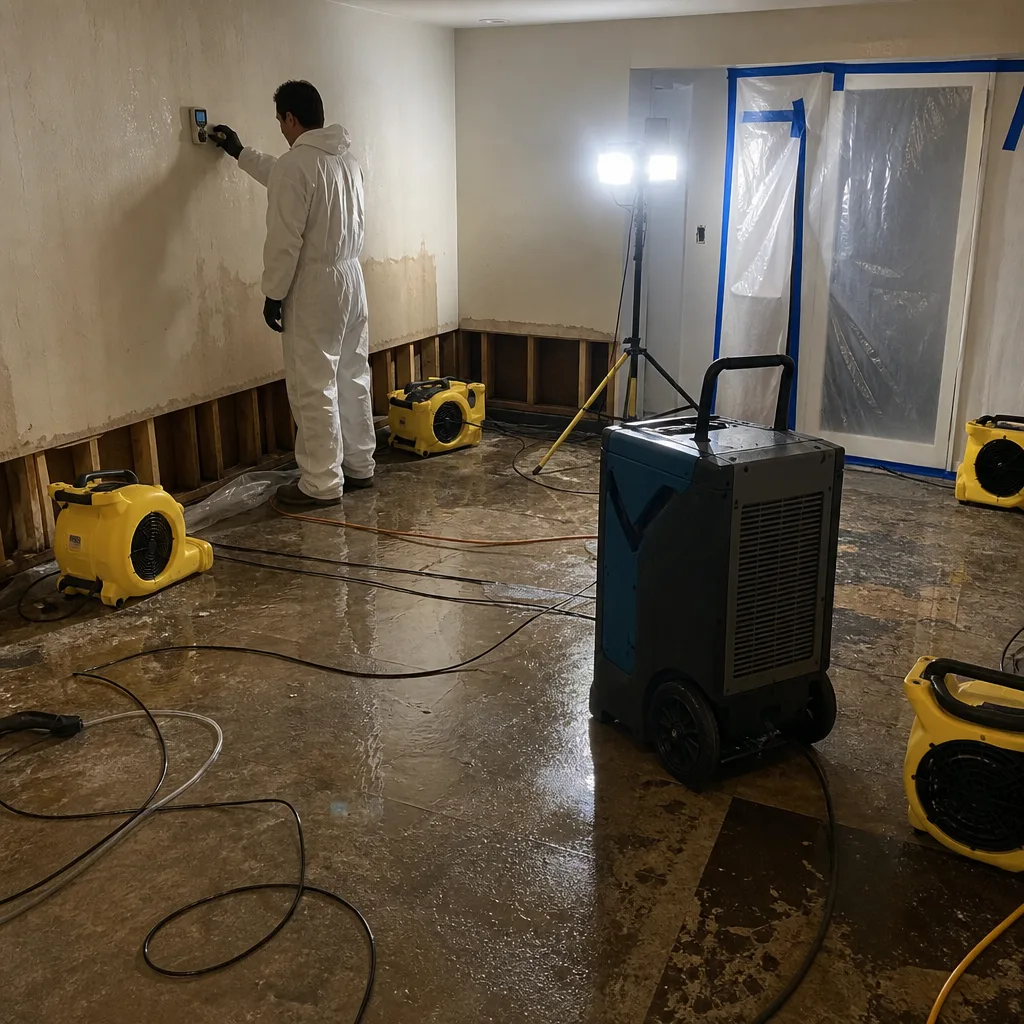
Septic failures in Live Oak are rarely simple. The Sutter Basin’s high winter water table means drain fields that worked fine in July can be saturated and non-functional by January. Surrounding rice-canal tailwater makes it worse. When a septic field fails, sewage doesn’t just pool in the yard. It forces back through floor drains and into the lowest point of the house, which in Live Oak is usually the crawl space. We handle the full scope: extraction, contaminated soil removal where required, structural disinfection, and coordination with your septic contractor to make sure the repair actually holds.
Black Water Extraction
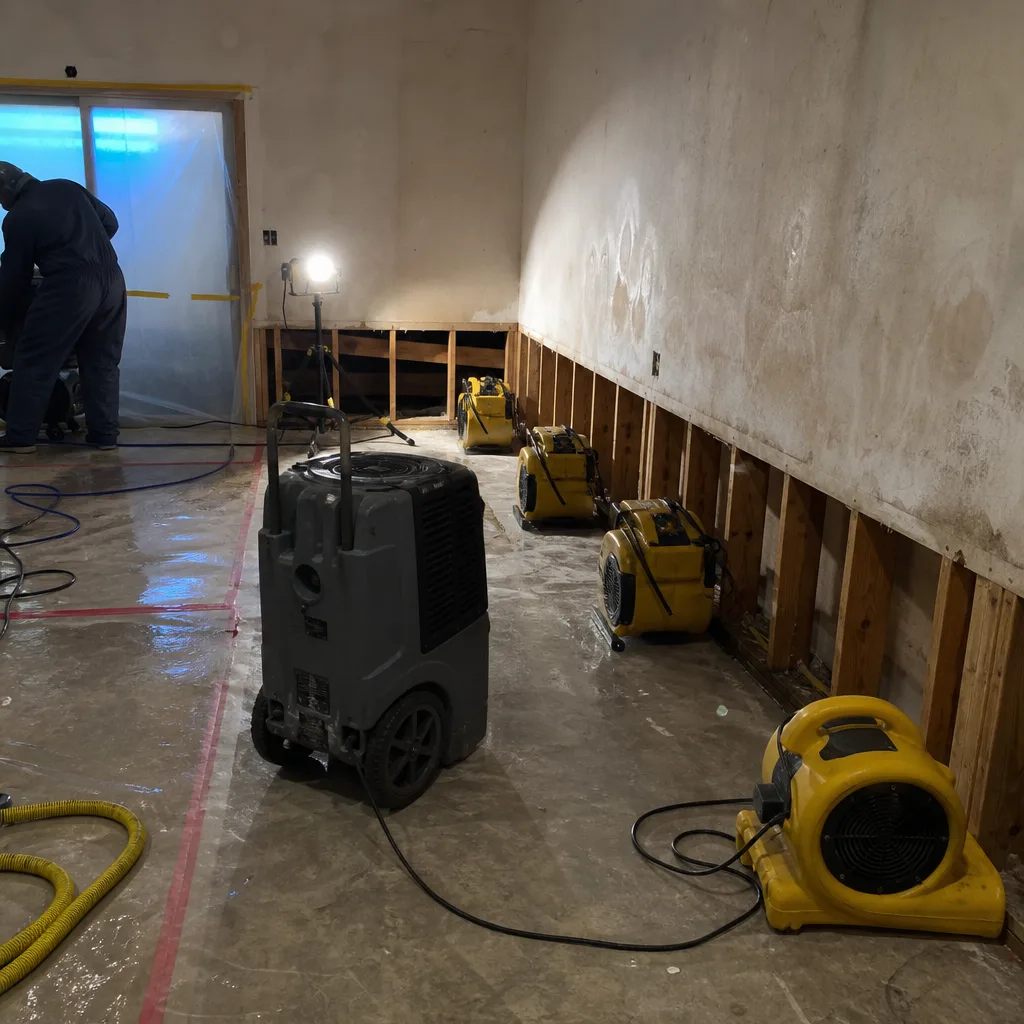
Black water is the classification for water containing human waste. It’s not something you clean up with a shop vac and some bleach. We use professional-grade extraction equipment from Dri-Eaz and high-volume air movers from B-Air to pull standing sewage out of floors, carpet, and subfloor cavities. In Live Oak’s pier-and-beam homes, that means going into the crawl space under the house, removing wet insulation, and treating the framing itself. The goal is a structure that’s not just dry, but safe to live in.
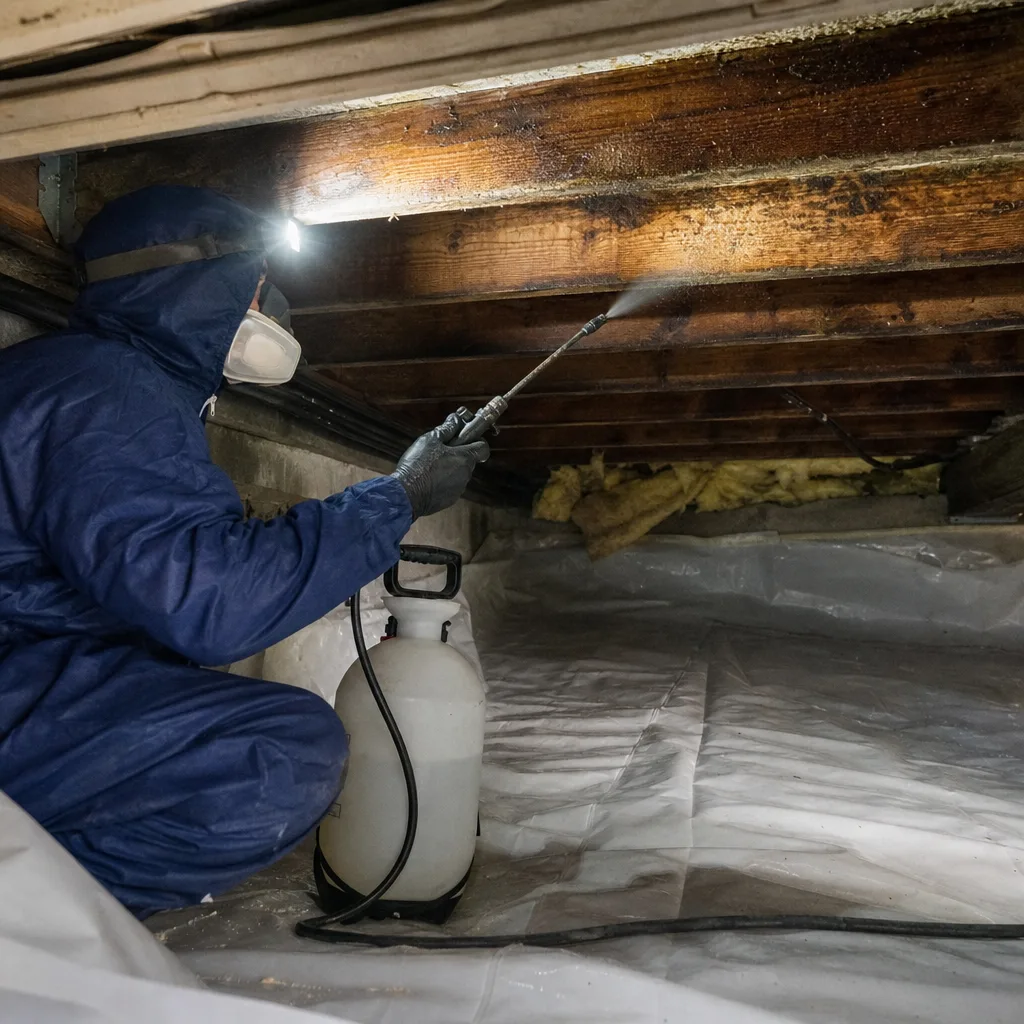
Crawl Space Sewage Removal
Live Oak’s pier-and-beam homes hide a lot of problems. When sewage backs up into a crawl space, homeowners often don’t know it until the odor comes up through the floorboards or mold starts showing on the subfloor. We remove the contaminated material, sanitize the entire under-floor area, and run drying equipment until moisture readings are back to normal. Wade takes those readings every single day and hands you the log at the end.
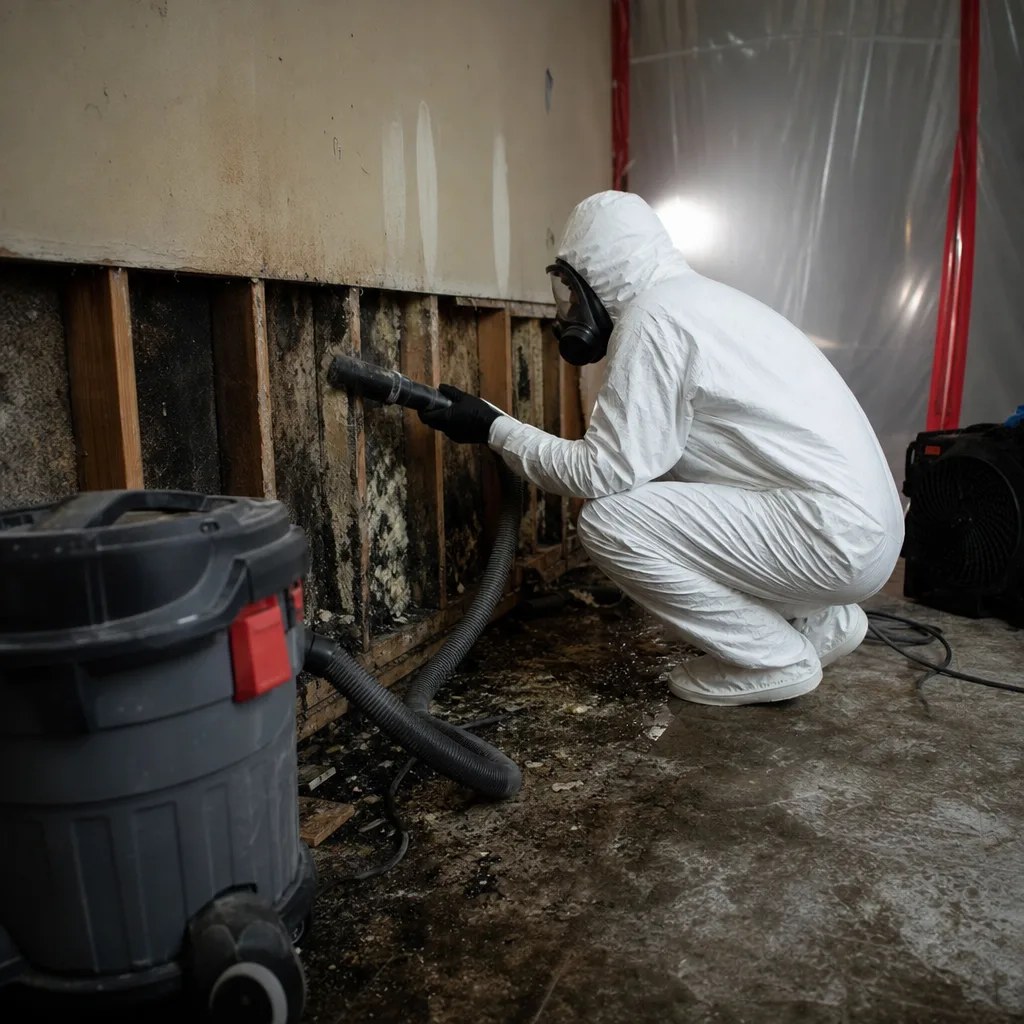
Sanitization & Disinfection
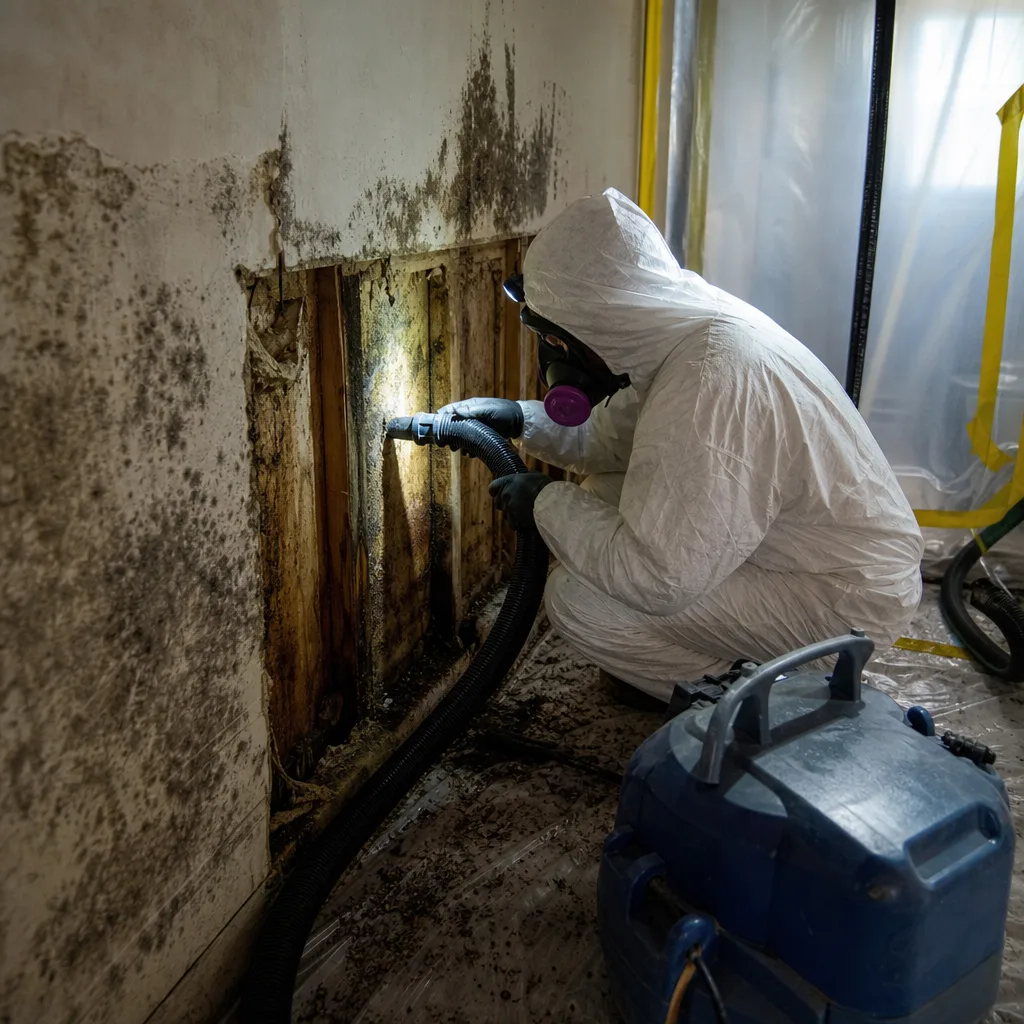
Extraction is only half the job. What’s left behind in the surfaces, the framing, and the air is what makes people sick later. We apply EPA-registered disinfectants to every affected surface, including lath-and-plaster walls, original hardwood subfloors, and the framing under pier-and-beam homes. Then we verify with moisture readings and air sampling where needed. If sewage touched it, it gets treated. No short cuts.
What happens when you call
- 1
A real person answersNo phone trees - you reach a local pro.
- 2
You get an upfront price rangeHonest numbers before anyone is dispatched.
- 3
A background-checked tech heads outLicensed & insured, dispatched right away.
- 4
You approve before work beginsNothing starts until you say go.
Trusted Brands We Service in Live Oak
Live Oak’s older homes have their own quirks. Original lath-and-plaster walls, older vapor barriers, and post-WWII plumbing fixtures all react differently to sewage exposure. We service all makes and models of residential plumbing and septic systems, and we stock the parts that matter for Live Oak’s housing stock specifically. Because we’re local, we don’t wait three days for a part to ship from a warehouse. If your 1960s floor drain needs a replacement that’s been out of production for years, we know where to find it. Our equipment is the same standard you’d expect from any IICRC-certified firm: Dri-Eaz for extraction, B-Air for air movement, and EPA-registered chemistry for disinfection.
Common Sewage Cleanup Problems We See in Live Oak Homes
- Cracked cast-iron laterals. Live Oak’s post-WWII homes were built with cast-iron sewer lines that have been in the ground for 60-70 years. Levee-stress ground movement and saturated soil crack them. The result is raw sewage saturating the soil around your foundation, then finding its way inside during the next high-water event.
- Damp crawl spaces that hide contamination. The rice fields around Live Oak are flooded from October through February for waterfowl habitat. That keeps the water table high and crawl spaces damp all winter. A sewage backup into that environment doesn’t dry out on its own. It sits there, soaking into subfloors and framing, colonizing mold long before you smell anything upstairs.
- Septic fields that fail in high-water years. The Sutter Basin floods. It’s the geography. When the ground saturates, septic systems lose capacity. Sewage backs through floor drains, floods the lowest point of the house, and contaminates everything it touches. This isn’t a clog you can snake. It’s a whole-home event.
- Summer mold after incomplete winter drying. Sacramento Valley summers routinely hit 100°F. If a sewage backup in January isn’t fully dried and disinfected before June, that heat accelerates mold colonization in wall cavities and subfloors. What starts as a water loss becomes a mold remediation job within weeks. We dry to IICRC standards the first time so you’re not paying twice.
Pricing for Sewage Cleanup in Live Oak, CA
Here are the ranges we see for Live Oak specifically:
- Toilet overflow cleanup: $400-$1,100 depending on how far the water traveled and what materials need removal.
- Standard sewage backup (single room): $850-$2,400 including extraction, disposal, disinfection, and drying.
- Crawl space sewage removal: $1,500-$4,200 for pier-and-beam homes where sewage entered the under-floor area, including insulation removal, framing disinfection, and drying.
- Septic failure cleanup (whole-home): $2,800-$7,500 when a saturated septic field forces sewage through multiple rooms, including subfloor removal, lath-and-plaster sanitation, and full structural drying.
What drives the cost up in Live Oak is the same thing that drives it up everywhere in the Sutter Basin: how long the sewage sat, whether it reached the crawl space, and whether the original subfloor or lath-and-plaster can be saved. We give you a written scope before any work starts, so you know the number before we start cutting. Estimates are free. Call (855) 915-0646 and Wade will walk you through it. No trip charge inside our own county, and we honor a Senior & Veteran 10% discount on every job.
We Also Serve Cities Near Live Oak
If you’re in Gridley, South Yuba City, Tierra Buena, or Marysville, we handle sewage cleanup there too. The same owner, the same equipment, the same 90-Day Done Right Promise. Call us from anywhere in the Sutter Basin and Wade will tell you straight what he can do and how fast he can get there. Serving Live Oak and the surrounding communities is what we do every day.
Serving Live Oak, CA - Our Local Coverage Area
We’re based in the Live Oak area and know this community well. Use the map below to see our service coverage - if you’re nearby, we can almost certainly help.
FAQs - Sewage Cleanup in Live Oak
Live Oak sits entirely within the low-lying Sutter Basin, protected from the Feather River by aging levees, which means the water table here runs higher in winter than in Yuba City’s better-drained areas. When the ground is saturated, septic drain fields lose capacity, and sewage backs up into the house through floor drains instead of percolating into the soil. In a pier-and-beam home, that sewage ends up in the crawl space, where it contaminates the subfloor and framing. Yuba City homes on slab foundations or higher ground simply don’t face the same risk profile. Call (855) 915-0646 if you suspect a septic backup. Wade will tell you what to do right now.
You’ll usually smell it first, a persistent sewage odor that doesn’t go away after you’ve cleaned the visible areas. You might also notice soft spots in the subfloor, warped hardwood above the crawl space, or mold starting to appear at the base of walls. But the only way to know for sure is to get under the house with a moisture meter and inspection light. Wade does that on every sewage job in the 95953 ZIP code, takes daily moisture readings, and hands you the full log. Free estimates include the crawl space inspection. Call (855) 915-0646.
The risk is significant. Live Oak’s summer heat routinely exceeds 100°F, and that heat accelerates mold colonization in any wall cavity or subfloor that wasn’t dried and disinfected to IICRC standards. If sewage contaminated your crawl space in January and it wasn’t properly dried, mold will be established by June. You’ll end up paying for sewage cleanup and mold remediation instead of just the sewage. The sooner you call, the less it costs. (855) 915-0646.
Yes. The post-WWII homes in Live Oak were built with cast-iron sewer laterals that have been underground for six or seven decades. Levee-stress events put pressure on the ground, and saturated soil shifts. Cracks form. Raw sewage saturates the soil around the foundation, and the next high-water event pushes it inside. We see this pattern every winter in Live Oak’s older neighborhoods. If you suspect a lateral failure, call (855) 915-0646. We’ll scope the line and show you exactly what’s happening.
Yes. Lath-and-plaster walls in Live Oak’s 1950s-1970s homes absorb sewage contamination differently than modern drywall. The plaster itself can be sanitized in many cases, but the lath behind it often can’t be saved. Wade and his team will give you a written scope that tells you which sections can be cleaned and which need to come out before we start. You won’t be guessing. Call (855) 915-0646 and ask for Wade directly. He’ll walk you through it, and he’ll be the one who shows up.
Written by Wade Ferris, Owner at Wade’s Restoration of California, serving Live Oak and the Sutter Basin since 2007.