
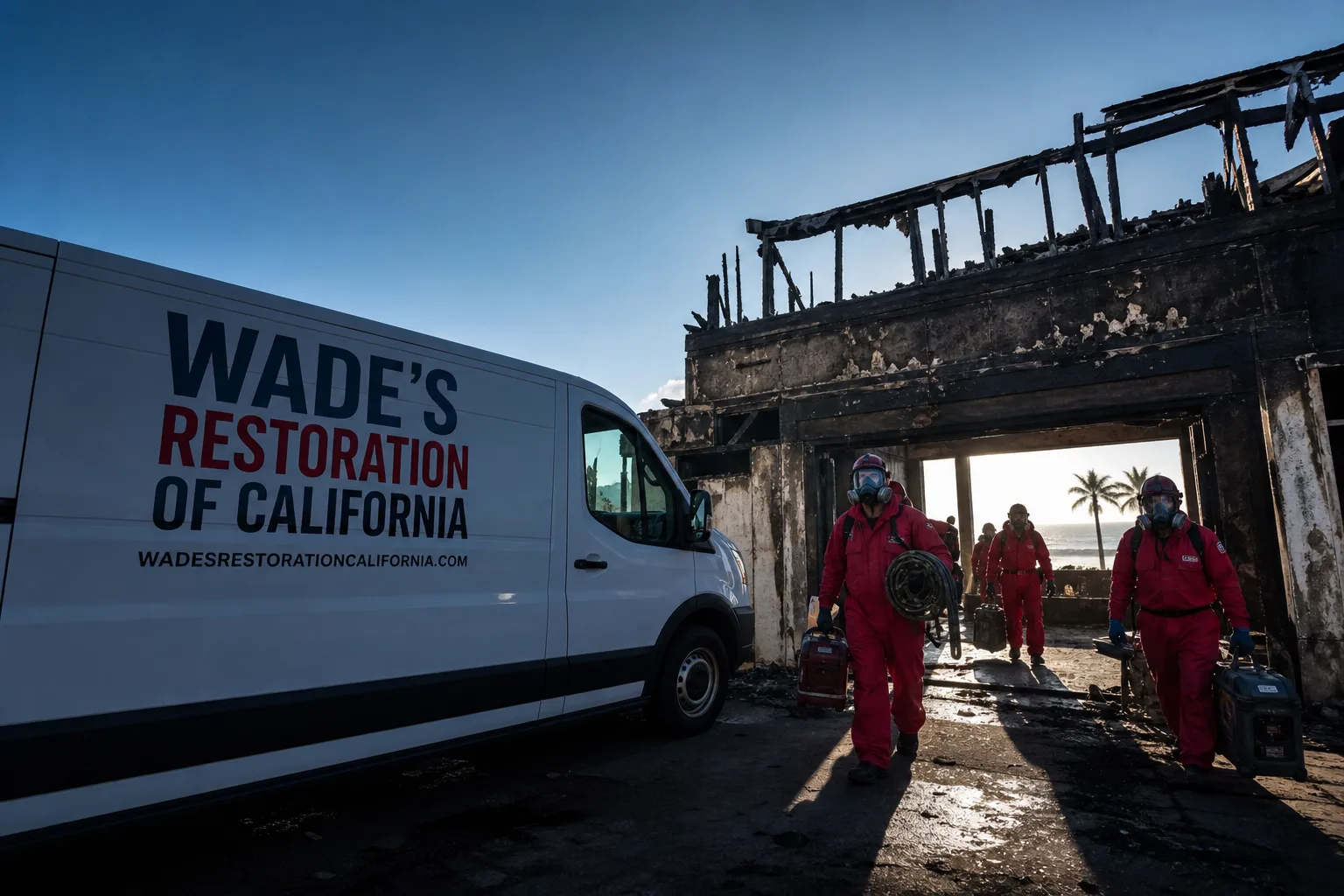
Fast, Reliable Sewage Cleanup Across Chinatown
A sewage backup in a Chinatown tenement is not the same job as one in a suburban tract home. The buildings here are 100-plus years old, stacked floor after floor, with hidden wall cavities that carry contaminated water far from the original break. That’s why response speed matters more in 94133 than almost anywhere else in the Bay Area. Wade’s Restoration answers calls around the clock, and the owner himself is the one who picks up. Call (855) 915-0646 and a live person talks you through the first steps, then Wade heads out. No voicemail, no runaround, no waiting for a call center in another state.
If you’re reading this while standing in water, stop reading and call. We’ll walk you through shutting off the source, and we’ll be on the road while you’re still on the line.
Why Wade’s Restoration of California Is Chinatown’s Preferred Sewage Cleanup Company
Chinatown residents have every reason to be skeptical of restoration outfits. Too many national franchises quote one price on the phone and show up with a different number at the door, then hand the work to subcontractors who’ve never seen a balloon-frame wall cavity. Wade Ferris built his company in 2007 on the opposite model: his name is on the truck, his address is published, and he’s going to run into you again on Stockton Street or Grant Avenue on a Saturday. That’s the oldest accountability mechanism there is, and it works.
We’ve cleaned sewage from basement storage rooms, crawl spaces under ground-floor restaurants, and third-floor bathroom overflows that migrated two floors down through un-firestopped framing. The reviews from Chinatown customers mention the same things repeatedly: fast response, documented process, and Wade handling the adjuster directly so the homeowner isn’t stuck relaying information between two sides. We don’t have a star-rating to quote you, because we’d rather you ask anyone on your street. People here remember who showed up when the pipe broke at 1 a.m.
Wade’s crew works with background-checked, uniformed technicians using Dri-Eaz extraction equipment, XPOWER air movers, and thermal imaging. The work is IICRC-certified and RIA-affiliated. And every sewage cleanup carries the 90-Day Done Right Promise in writing: if it’s not done right, Wade makes it right. That’s not marketing language. It’s stamped on the contract.
Our Sewage Cleanup Services in Chinatown
Sewage Cleanup work in this neighborhood demands more than a mop and a fan. Here’s what we handle here most weeks:
Sewage Backup Cleanup
When a drain line backs up in a Chinatown building, the black water doesn’t stay in one unit. It travels through shared walls, down through subfloor cavities, and into spaces nobody has opened in decades. We extract the water, remove contaminated drywall and insulation, sanitize the affected cavities, and dry everything to documented moisture levels. In a narrow-lot tenement, that often means working in tight hallways and stairwells with equipment sized to fit through 30-inch doors and up steep interior stairs.
Toilet Overflow Cleanup
A toilet overflow on the fourth floor of a mixed-use brick building can reach the ground-floor restaurant before anyone notices the ceiling stain. We respond fast because in this marine-layer climate, plaster-on-lath walls hit mold-growth thresholds within 24 to 48 hours. We extract, sanitize, and dry the full moisture boundary, not just the visible puddle. That means running meters in adjacent units too, because the water didn’t respect the property line.
Septic Failure Cleanup
Septic systems are rare in the core of Chinatown, but some of the outer blocks of 94133 still have legacy systems and holding tanks that fail during wet years. When a septic backup pushes black water into a basement or crawl space, we remove the sewage, sanitize the concrete or soil, and dry the space to prevent long-term odor. We also document everything in writing, which matters when the adjuster starts asking questions.
Black Water Extraction
Black water is the most dangerous category of water damage, and it moves through century-old wall cavities exactly the way gravity and diagonal bridging let it. Our extraction approach here starts with a full containment and source stop, then uses truck-mounted and portable Dri-Eaz units to pull standing sewage out of basements, crawl spaces, and hidden wall pockets. Then comes the sanitization step, which is where cheap outfits cut corners and where we don’t.
Sanitization & Disinfection
Getting the water out is only half the job. Sewage leaves behind bacteria, and that bacteria hides in porous materials like plaster, wood lath, and unsealed concrete. We apply professional-grade antimicrobial agents to every contaminated surface, then verify with moisture meters and ATP testing where needed. In a dense building, that includes the shared stairwell, the hallway outside the door, and the wall cavities between units.
Crawl Space Sewage Removal
Crawl spaces under Chinatown’s older buildings are notoriously tight, dark, and poorly ventilated. When a sewer line fails under the floor, sewage pools in a space that’s hard to reach and even harder to dry. We’ve done this work under restaurants, laundries, and residential buildings, and we bring the right low-profile extraction equipment and humidity control to get it done without leaving contamination behind.
What happens when you call
- 1
A real person answersNo phone trees - you reach a local pro.
- 2
You get an upfront price rangeHonest numbers before anyone is dispatched.
- 3
A background-checked tech heads outLicensed & insured, dispatched right away.
- 4
You approve before work beginsNothing starts until you say go.
Trusted Brands We Service in Chinatown
We don’t care what brand of water heater, dishwasher, or toilet caused the problem, but we do know that some equipment shows up here more than others. Chinatown’s older buildings have plenty of original cast-iron drain stacks, which crack after a century, and plenty of replacement fixtures shoehorned into spaces they weren’t designed for. Our Chinatown crews carry parts and fittings sized for older plumbing configurations, so we’re not waiting on a supply house run while sewage sits in your basement. We run Dri-Eaz and XPOWER equipment on every job, because restoration-grade gear is the difference between a space that’s actually dry and one that smells fine for three weeks before the mold bloom.
Common Sewage Cleanup Problems We See in Chinatown Homes
- Contamination traveling through un-firestopped balloon-frame bays. Chinatown’s post-1906 rebuild was fast and dense. Diagonal bridging and open wall cavities let sewage from a third-floor break surface two floors down. If we don’t map the full moisture boundary, you’re left with hidden contamination that smells for months.
- Plaster-on-lath walls that hold moisture and grow mold fast. San Francisco’s fog and marine layer keep interior humidity high year-round, and Chinatown’s century-old tenements were built before mechanical ventilation was a thing. Sewage water in plaster hits mold-growth conditions within 24 to 48 hours, not the 72 hours you might get inland.
- Multiple occupied units in the same building. A sewage backup in one Chinatown apartment affects the units around it, and access often requires coordinating with tenants, landlords, and a ground-floor business. We handle multilingual communication and coordinate access so the cleanup doesn’t stall while someone’s at work.
- Basement and crawl space contamination in narrow-lot buildings. The lots here run narrow and deep, and the basements often have dirt floors, low clearances, and no floor drains. Sewage pools instead of flowing out, and drying takes longer than it would in a modern slab foundation.
In a 1910s Tenement on Waverly Place
We got a call from a landlord whose restaurant tenant reported a sewage smell coming up through the basement floor. The source was a cracked cast-iron drain stack on the third floor, and the black water had traveled through hidden wall cavities all the way to the basement storage room. Our techs used thermal imaging to trace the contamination along century-old diagonal bridging, then brought in Dri-Eaz extraction and XPOWER air movers to dry the plaster-on-lath assemblies before mold could set in. All of this happened while we coordinated with three occupied residential units above and the restaurant below. The demolition estimate tripled once we mapped the actual moisture boundary, but the alternative was tearing open one wall, patching it, and leaving sewage hidden in two more. That’s the Chinatown-specific problem most restoration companies never look for.
Pricing for Sewage Cleanup in Chinatown, CA
Several things affect the final number: how many floors of wall cavities the sewage passed through, whether the plaster needs to be removed or can be dried in place, and whether a ground-floor business is involved. We give a written scope before work starts, not a phone estimate that changes when the crew walks in. If you have a written estimate from another company, bring it in. We’ll give you a free second opinion. And if you’re 55 or older or a veteran, you get 10% off, always. Call (855) 915-0646 for an exact figure.
We Also Serve Cities Near Chinatown
We work throughout this part of the Bay Area, including San Francisco, the Mission District, Noe Valley, and Visitacion Valley. Many of those neighborhoods share Chinatown’s dense housing and century-old construction, which means the same careful moisture mapping and fast response apply. We’ve also handled sewage jobs in neighboring communities where the building stock is newer but the access is just as tight.
Serving Chinatown, CA - Our Local Coverage Area
We’re based in the Chinatown area and know this community well. Use the map below to see our service coverage - if you’re nearby, we can almost certainly help.
FAQs - Sewage Cleanup in Chinatown
We answer live, 24/7, and we can usually be on site in Chinatown within an hour of your call. Wade himself answers the phone, and he heads out immediately after getting the details. In a dense building where contamination is spreading through shared walls, that hour matters. Call (855) 915-0646 and we’ll be moving while you’re still on the line.
Yes. We regularly work in Chinatown buildings with several occupied residential units, ground-floor businesses, and tenants who speak Cantonese, Mandarin, Tagalog, or Spanish. We coordinate access and explain the process so everyone knows what’s happening, and we document everything for the property owner and the insurance adjuster. The cleanup doesn’t stall because someone can’t be reached or can’t read an English form.
We use thermal imaging and moisture meters to map the actual contamination boundary before we start cutting. In Chinatown’s post-1906 buildings, sewage often travels through un-firestopped balloon-frame bays and diagonal bridging far from the original break. Mapping it properly means we open only the surfaces that are actually contaminated, not every wall in the building. That saves you money and keeps the restoration scope focused.
We run Dri-Eaz dehumidifiers and XPOWER air movers, paired with moisture meters and thermal imaging to verify the plaster is drying. Plaster-on-lath holds water deep in the lath strips and keyed plaster, and in Chinatown’s fog-driven humidity it dries slowly on its own. The equipment gets the assembly below mold-growth thresholds before microbial activity can take hold, usually within 48 hours of extraction.
Yes. Chinatown basement spaces are often tight, low-ceilinged, and poorly ventilated, with dirt or cracked concrete floors that soak up contamination. We bring low-profile extraction equipment, set up negative air to keep airborne bacteria from drifting into occupied units, and sanitize the floor itself, not just the standing water. Drying a Chinatown basement takes longer than a suburban garage slab, and we plan for that from the first hour.
Get Help Now - Call Wade Directly
Sewage problems in Chinatown don’t get better by waiting. Every hour the contaminated water sits in a wall cavity or basement, the cleanup gets more expensive and the health risk grows. Call (855) 915-0646 and talk to a real person. We’ll tell you what to do right now, give you a straight answer on cost, and get a crew rolling toward your block. No trip charge inside our county. No pressure, no double-talk, and a written scope before any work begins.
Written by Wade Ferris, Owner at Wade’s Restoration of California. Wade founded the company in 2007 and still answers his own phone.