
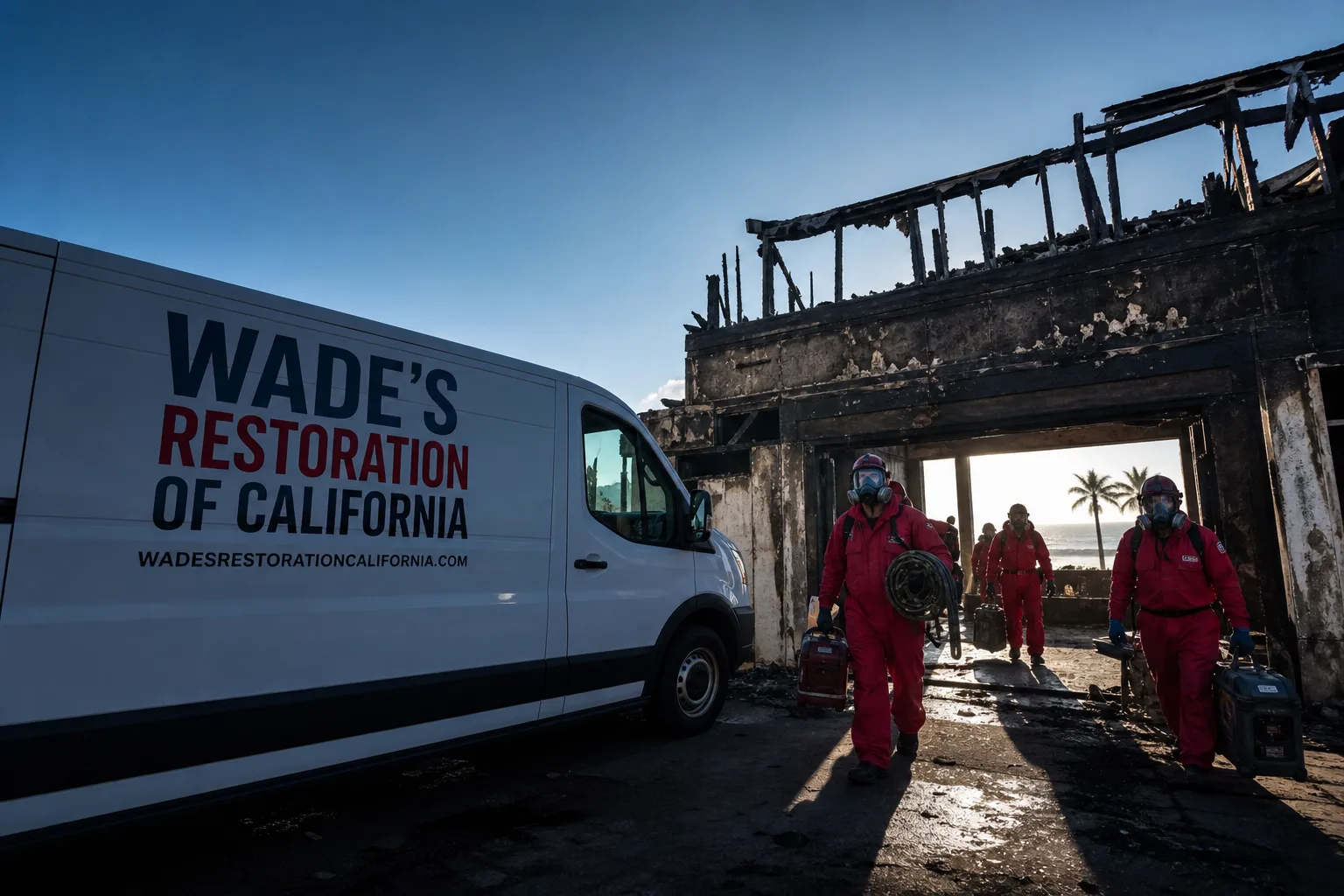
Fast, Reliable Reconstruction & Cleanup Across Chinatown
Reconstruction and cleanup in Chinatown means rebuilding after water, fire, or storm damage inside buildings that were rebuilt once already, after 1906, and have been holding their breath ever since. We’re Wade’s Restoration, and we know these blocks. When a pipe fails on the third floor of a Waverly Place tenement, the water doesn’t stay on the third floor. It follows century-old framing and lands two floors down. That’s the work we do here, and we do it with a written scope, daily moisture logs, and direct adjuster coordination. Call (855) 915-0646 and Wade will answer.
Why Wade’s Restoration of California Is Chinatown’s Preferred Reconstruction & Cleanup Company
Wade Ferris founded this company in 2007 because he got tired of watching national outfits quote one number on the phone and another at the door. That’s a known problem in this trade, and it’s worse in a neighborhood like Chinatown, where a single claim can involve multiple units, language barriers, and a building manager who has seen every trick. Wade publishes his name, his address, and his license number. He answers his own phone. If something on a job isn’t done right, the 90-Day Done Right Promise says he makes it right, in writing. That’s not a slogan. It’s stamped on every contract.
In Chinatown, we’ve rebuilt drywall after sewage backups, dried out plaster-on-lath walls behind family altars, and documented wind damage for adjusters who’d never set foot on a Grant Avenue walk-up. Customers here tend to hear about us from a neighbor, not a search ad. That suits us fine. Ask anyone on your street. And if you want a second opinion on a written estimate you’ve already received, that’s free. No charge for that.
Key takeaways:
- Locally owned and owner-operated since 2007; Wade Ferris answers calls himself, 24/7.
- Live person on the phone, always. No voicemail, no answering service.
- Every Reconstruction & Cleanup job in Chinatown gets a written scope before work starts.
- IICRC-certified, RIA-affiliated, IFA-recognized. Dri-Eaz and Phoenix equipment on site.
- Free second opinion on any written estimate. Senior & Veteran 10% discount, always.
How Much Does Reconstruction & Cleanup Cost in Chinatown?
Reconstruction in Chinatown typically runs $7,500-$22,000 for a single-unit rebuild after water or fire damage, depending on how far the moisture traveled. Drywall and flooring repair alone in a 1920s tenement usually lands between $3,200 and $9,800, because the old plaster and lath are heavier to remove and the subfloors under original tongue-and-groove almost always need sectioned replacement. Contents pack-out and cleaning for a one-bedroom unit runs $1,800-$4,500. Post-construction cleanup after a rebuild runs $600-$1,900 for a typical Chinatown unit. Carpet and upholstery cleaning is $150-$450 per room, depending on what’s embedded in the fibers. These are real ranges for this neighborhood, not national averages pulled from a pricing table. Call (855) 915-0646 for an exact quote. Estimates are free, and there’s no trip charge inside our own county.
Our Reconstruction & Cleanup Services in Chinatown
Full-Service Reconstruction
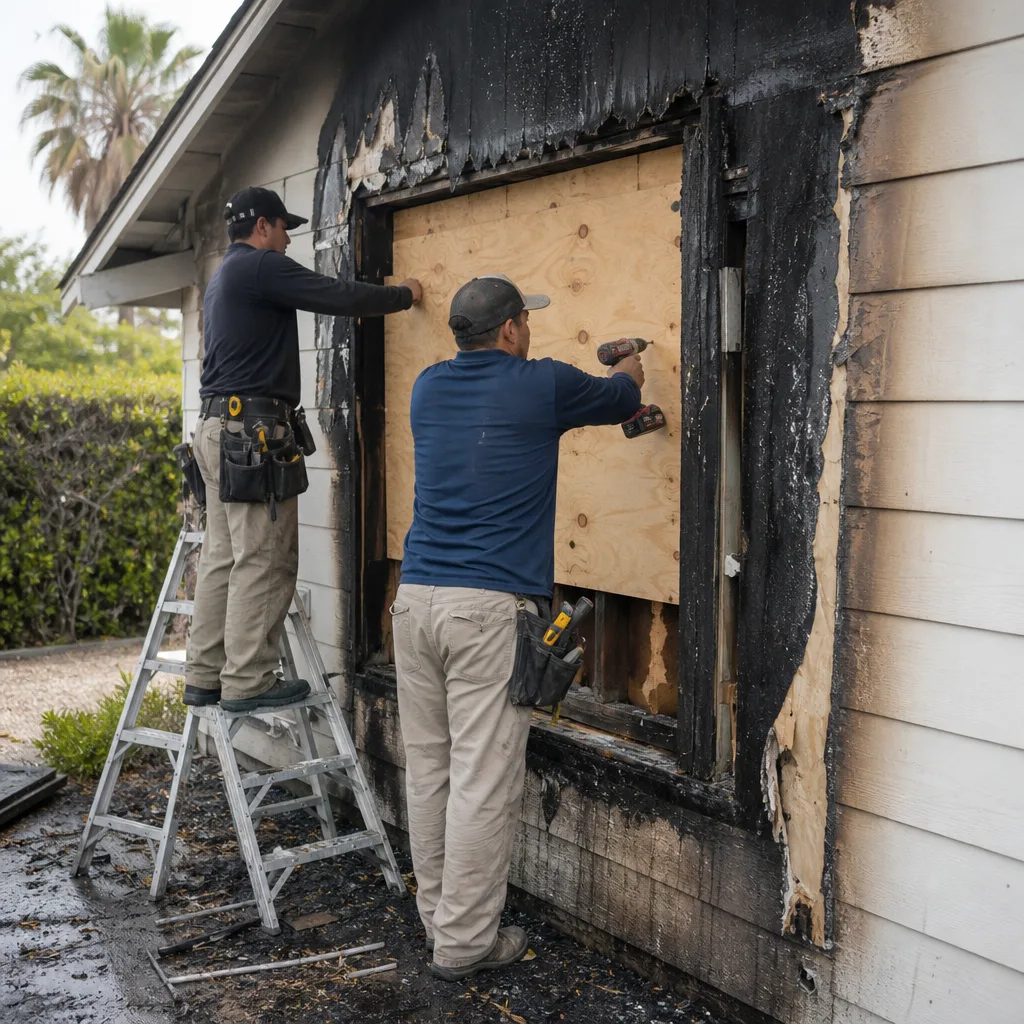
After a fire or major water loss in a Chinatown building, we rebuild from the studs out. That means framing repair, insulation replacement, drywall, paint, trim, and flooring, all coordinated with the building manager and the adjuster. In these post-1906 tenements, we’ve learned to expect the unexpected: hidden cavities that don’t match modern framing, old wire that should have been retired decades ago, and flooring transitions that were never level to begin with. We don’t patch over those. We document them, scope them, and fix them.
Drywall & Flooring Repair
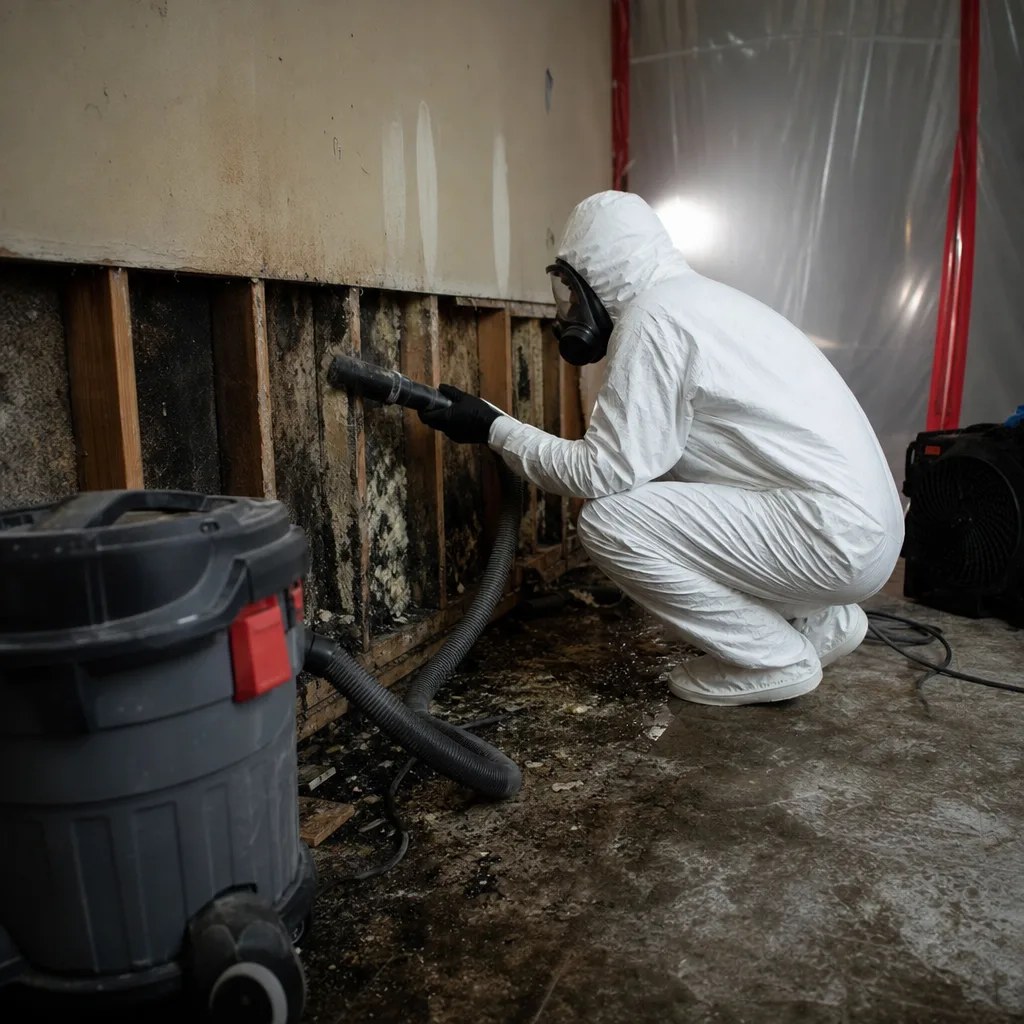
Dense plaster-on-lath walls are the rule in Chinatown, not the exception. When they get wet, they hold moisture like a sponge, and the 24-to-48-hour window for mold growth gets very tight when fog keeps the humidity up. We cut out the damaged sections, dry the cavities with Dri-Eaz and Phoenix equipment, and rebuild to match the original wall thickness. Flooring work in Chinatown usually means sectioned replacement rather than full-room float, because the old subfloors rarely tolerate full tear-out without disturbing the neighbors below.
Contents Restoration & Pack-Out
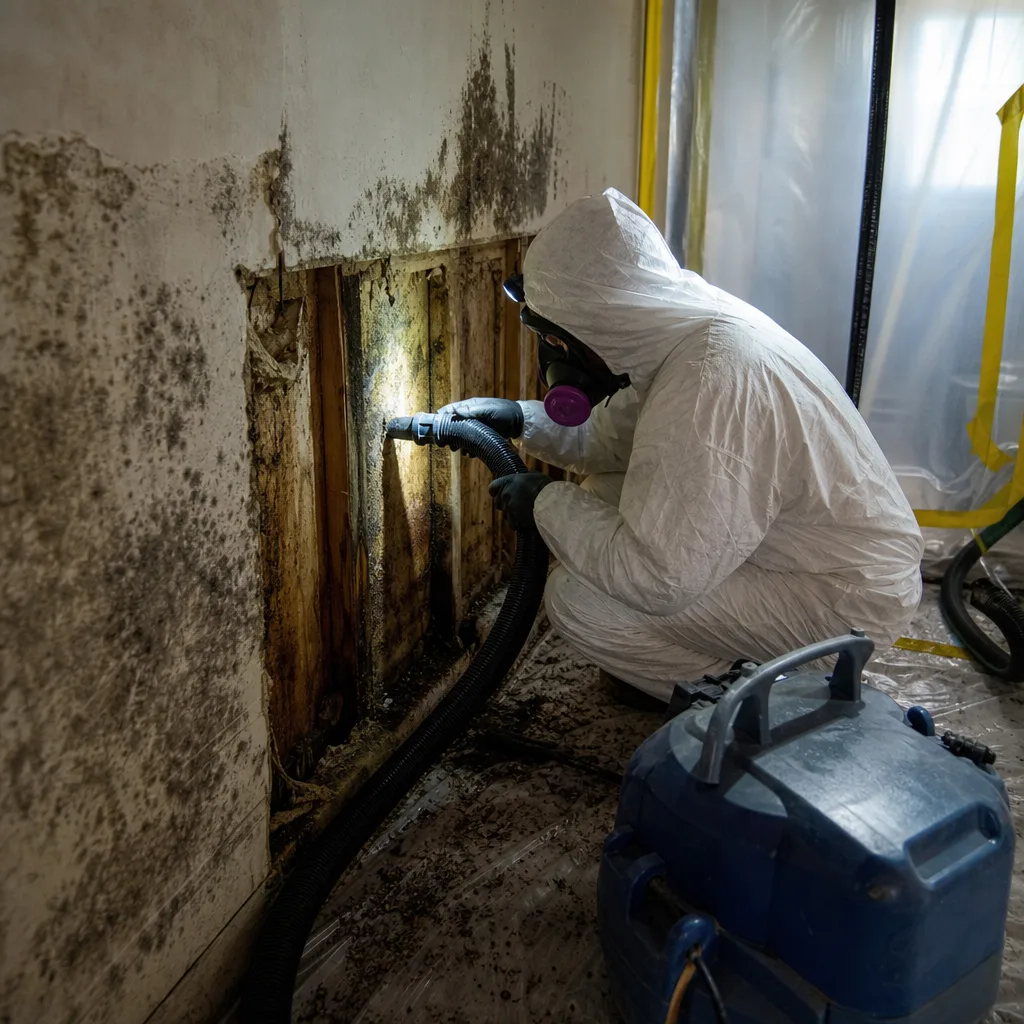
When a unit floods in a mixed-use building, the family’s things need to leave the unit before the rebuild starts. We pack out, inventory, clean, store, and return contents, photo-documenting every step for the claim. In Chinatown, where units are small and every square foot is occupied, the pack-out has to be fast and careful. We’ve packed out entire third-floor walk-ups on Stockton Street without blocking the stairwell for more than an afternoon.
Carpet & Upholstery Cleaning
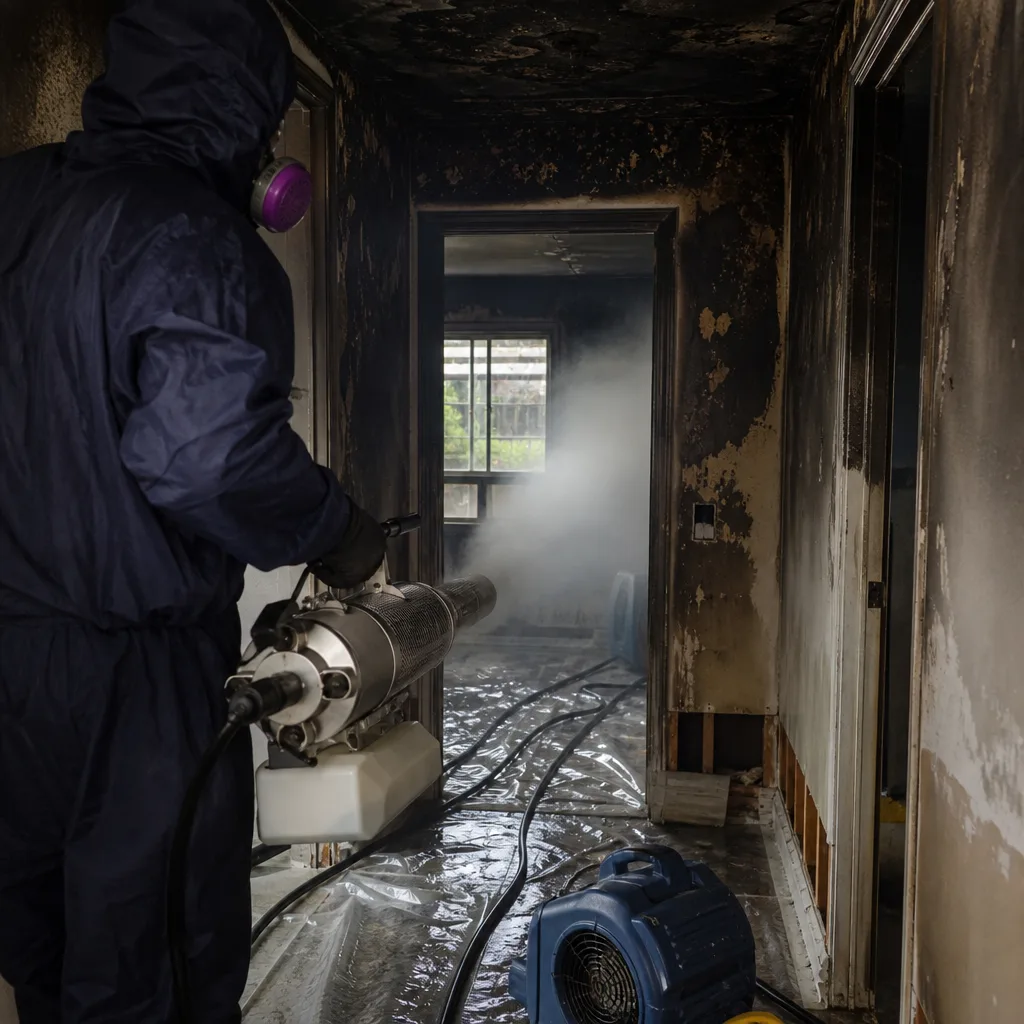
Post-reconstruction cleanup includes getting the soft surfaces back to livable. We clean carpet, area rugs, sofas, and mattresses using extraction equipment that actually pulls the water back out, not just a shampoo that hides the stain for a week. In a Chinatown unit with limited ventilation, we set up air movers after cleaning to keep the dry time short and the mold risk low.
What happens when you call
- 1
A real person answersNo phone trees - you reach a local pro.
- 2
You get an upfront price rangeHonest numbers before anyone is dispatched.
- 3
A background-checked tech heads outLicensed & insured, dispatched right away.
- 4
You approve before work beginsNothing starts until you say go.
Storm-Wind Resilience: Why Chinatown Buildings Fail Before the Rain Even Arrives
Here’s something most restoration pages won’t tell you. Chinatown’s post-1906 tenements mostly lack modern wind-load-rated enclosures. When the Financial District’s steel-and-glass towers and North Beach’s newer condo buildings face a winter storm with factory-tested impact doors and DP-rated windows, a 1920s Chinatown walk-up is still relying on original double-hung windows and a single-panel entry door that were never engineered for wind load at all. The result is predictable: frame racking, glass blow-in, or panel blow-out. Our first job after a storm event in this neighborhood is usually to document the missing or outdated wind-rated components before the next front arrives, because the insurance claim needs that documentation to justify the upgrade. That’s the difference between a repair that lasts and a repeat failure next season.
On Waverly Place, we responded after a winter squall blew in a second-floor window in a 1927 mixed-use building. The sash track had pulled away from the sill, and the single-strength glass shattered across the tenant’s bedroom. We installed a temporary Plexiglas panel, then measured and ordered a wind-rated retrofit window, DP 50 and impact-rated. We replaced the rotted sill and sash cords, and coordinated with the building manager to schedule a full window-by-window upgrade for the street-facing units. Preventing a repeat failure during the next storm requires that kind of systematic thinking, not just a patch job.
Common Reconstruction & Cleanup Problems We See in Chinatown Homes
- Water traveling through un-firestopped balloon-frame bays: A burst pipe on the third floor can follow century-old diagonal bridging down two floors before it shows up on a ceiling. Mapping the actual moisture boundary almost always triples the initial demolition estimate. We use thermal imaging to find the real edge, not the visible stain.
- Frame racking on original double-hung windows and single-panel doors: Wind storms push these past their limits, and the damage often isn’t obvious until the next front arrives. We inspect tracks, hinges, and frames after every wind event, even when the glass survived.
- Surface-mounted storm shutters or plywood failing under gust loads: Improperly anchored plywood over windows can rip off and cause secondary damage. We see this every storm season in Chinatown, and it’s almost always an insurance claim problem because the “repair” wasn’t engineered.
- Plaster-on-lath walls hitting mold-growth thresholds fast: The marine layer keeps interior humidity high in these old buildings. Wet plaster can start growing mold within 24-48 hours. Speed matters here more than in inland Bay Area cities.
Can You Retrofit a 1920s Chinatown Entry Door Without Replacing the Whole Frame?
Sometimes, yes. But it’s rarely as simple as pulling the old door and hanging a new one. A 1920s Chinatown entry door usually sits in a frame that was set when the building was rebuilt after 1906, and the rough opening doesn’t match any modern door dimension. To retrofit properly, we remove the old door, assess the frame for rot and racking, then decide whether to keep the original frame with new jamb reinforcement or replace the frame entirely to accept a wind-rated unit. The permit process matters here too: San Francisco requires calcs for wind-load ratings on street-facing openings in buildings of this age. We handle the permit, the retrofit, and the storm-damage documentation for the claim. That’s the part a generic restoration page ignores.
Trusted Brands We Service in Chinatown
We work on equipment from Dri-Eaz and Phoenix, and our crew carries IICRC, RIA, and IFA credentials. For Chinatown customers, that means the drying equipment on your job is the same gear used by commercial restoration teams, not a rental unit from a hardware store. We stock common replacement parts for these machines, so a failed sensor or pump doesn’t stall a dry-out for three days while someone orders a part online. Turnaround on parts and service is measured in hours, not weeks.
We Also Serve Cities Near Chinatown
Our Reconstruction & Cleanup team covers the whole Bay Area from our Los Angeles dispatch office. We serve Chinatown and the surrounding neighborhoods including San Francisco, the Mission District, Noe Valley, and Visitacion Valley. If you’re in any of those areas and dealing with storm damage or a rebuild, call the same number and you’ll get the same owner on the line.
Serving Chinatown, CA - Our Local Coverage Area
We’re based in the Chinatown area and know this community well. Use the map below to see our service coverage - if you’re nearby, we can almost certainly help.
FAQs - Reconstruction & Cleanup in Chinatown
Within the hour for water or fire mitigation in most cases. Wade answers his own phone and can have a crew heading to Chinatown immediately. For reconstruction work, we don’t promise same-day service because that work is scoped, scheduled, and priced in writing like a remodel. Call (855) 915-0646 and we’ll tell you honestly which situation you’re in.
Most homeowner and commercial policies cover wind and storm damage, but the claim has to be documented properly. We take photo records of every damaged assembly before demolition, work directly with your adjuster, and provide the documentation adjusters actually need to approve the full scope rather than the cheapest patch. That’s how we get rebuild claims approved for wind-rated upgrades, not just like-for-like replacement.
That depends entirely on what the moisture or fire actually did to the structure. In Chinatown’s old tenements, water damage behind a wall typically extends far beyond the visible stain, and patching over wet framing creates a mold farm. We’ll tell you if a targeted repair is sufficient. If it’s not, we’ll show you the readings and the photos before we ask you to approve any additional scope. No overselling, ever.
We assess the existing frame and opening, determine what can be reinforced versus what needs full replacement, and handle the permit paperwork for San Francisco’s wind-load requirements on street-facing openings. The installation itself is the fast part. The assessment, permitting, and documentation are what take time, and we manage all three.
Wade does. You don’t relay messages between two parties. We present the scope, the moisture logs, the photos, and the pricing directly to the adjuster, and we advocate for the full correct repair. This is the single biggest trust unlock in this niche, and Wade’s been doing it since 2007.
Contact Wade’s Restoration of California in Chinatown
If you’re dealing with storm damage, a failed window, water in the walls, or a rebuild that needs doing right, call (855) 915-0646. We’ll answer. We’ll come out, take a look, and give you a written scope before any work starts. No trip charge inside our own county. No voicemail. Just Wade and his crew, showing up and doing the work. To wade is what you do through a flooded basement at two in the morning, and it happens to be his name.
Written by Wade Ferris, Owner at Wade’s Restoration of California, since 2007.