
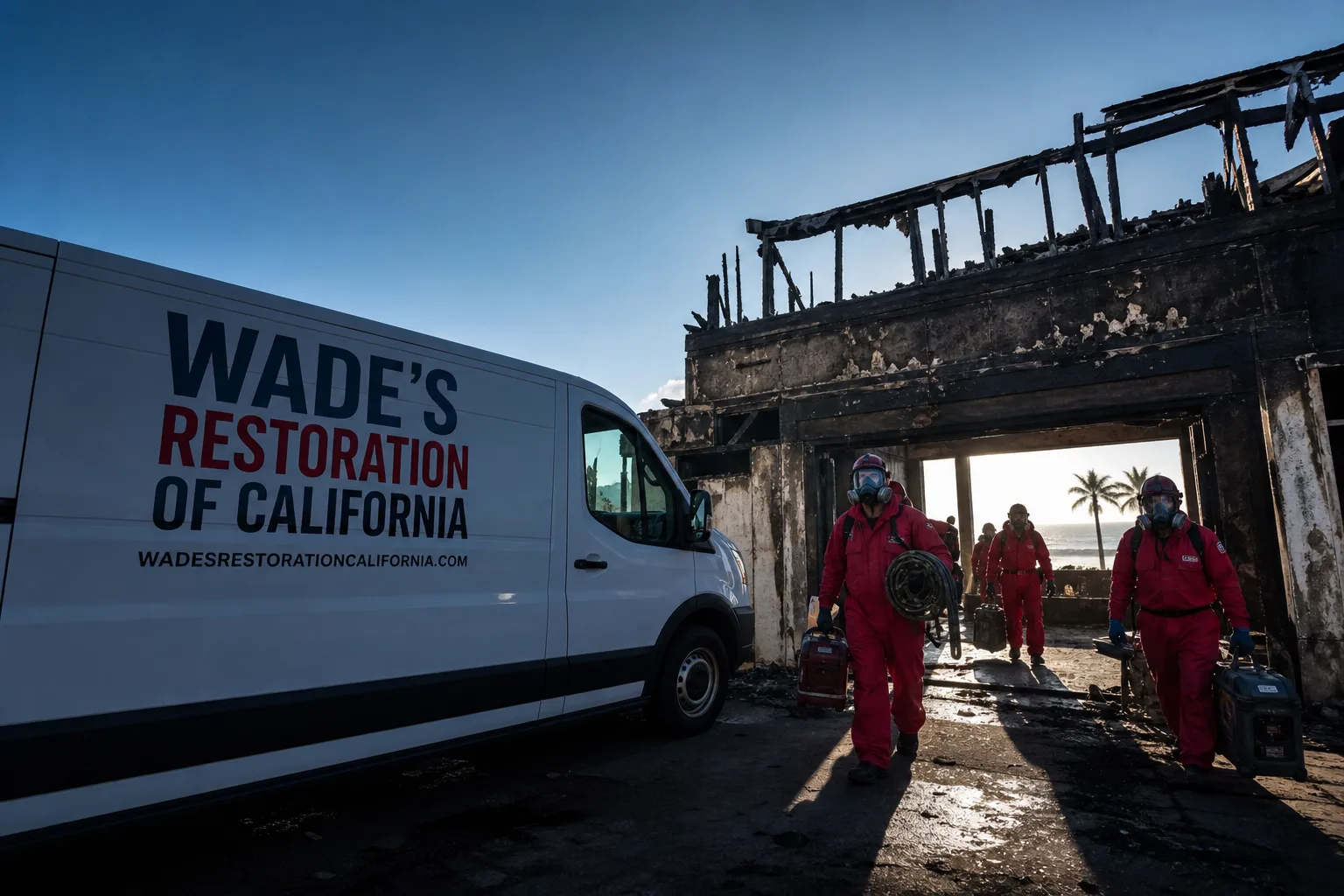
Fast, Reliable Mold Remediation Across Union City
Mold remediation in Union City typically runs $1,800-$6,500 depending on how far the colony has spread and whether crawlspace or attic treatment is needed. Most jobs we scope in Union City are done within 3-7 days, with initial inspection and moisture mapping available same week. If you’ve got a wet crawlspace off Decoto Road or black staining creeping up a bedroom wall near Alvarado, call Wade’s Restoration of California at (855) 915-0646. Wade Ferris answers his own phone, and he’ll tell you straight whether you need full remediation or just moisture control.
Union City homes sit on ground that fights back. Bay mud holds water. The Hayward Fault shifts slabs. Homes built in the 1960s and 1970s still have original galvanized pipes weeping behind walls. That combination means mold work here is different from mold work in Fremont or Hayward, and we’ll get into exactly why below. Short version: we separate the mold from the moisture source, document both, and keep your insurance claim clean while we do it.
Why Wade’s Restoration of California Is Union City’s Preferred Mold Remediation Company
Wade Ferris founded this company in 2007 and put his name on the truck. He still answers his own phone at 2 a.m. when a Union City homeowner finds a black bloom behind the water heater. That’s not a slogan. That’s how he’s run the business for nearly two decades, and it’s why people in the Alvarado district, near James Logan High, and out toward the 880 corridor keep his number saved.
Our crew is background-checked and uniformed. They run Dri-Eaz and Phoenix drying equipment, not rental-store fans. And every mold job comes with the 90-Day Done Right Promise in writing: if mold returns within 90 days because we missed something, Wade comes back and makes it right. No argument, no invoice. That promise is stamped on the contract before work starts.
But the thing that actually sets us apart in Union City is the documentation. Wade takes moisture readings every single day and hands you the full log at the end. Almost nobody in this trade does that. It matters here more than anywhere because insurance adjusters reviewing Union City mold claims need to see proof that the moisture source was actually resolved, not just masked. We give them that proof.
Wade also deals with your adjuster directly. You don’t relay messages between two parties. He sends photos, moisture logs, and the written scope. Then he picks up the phone and walks the adjuster through what he found. That single step keeps more Union City claims from being denied than any piece of equipment we own.
Our Mold Remediation Services in Union City
Mold Inspection & Testing
A proper mold inspection in Union City starts with figuring out where the water is coming from, because mold doesn’t grow without it. We take moisture readings on the slab, inside wall cavities, and through the crawlspace. When testing is warranted, we pull air and surface samples and send them to an independent lab. You get results you can read, not a scare report. In Union City’s 1960s and 1970s tract housing, we pay extra attention to plumbing chases and original roof flashing, because those are the two most common hidden moisture sources we find.
Mold Removal
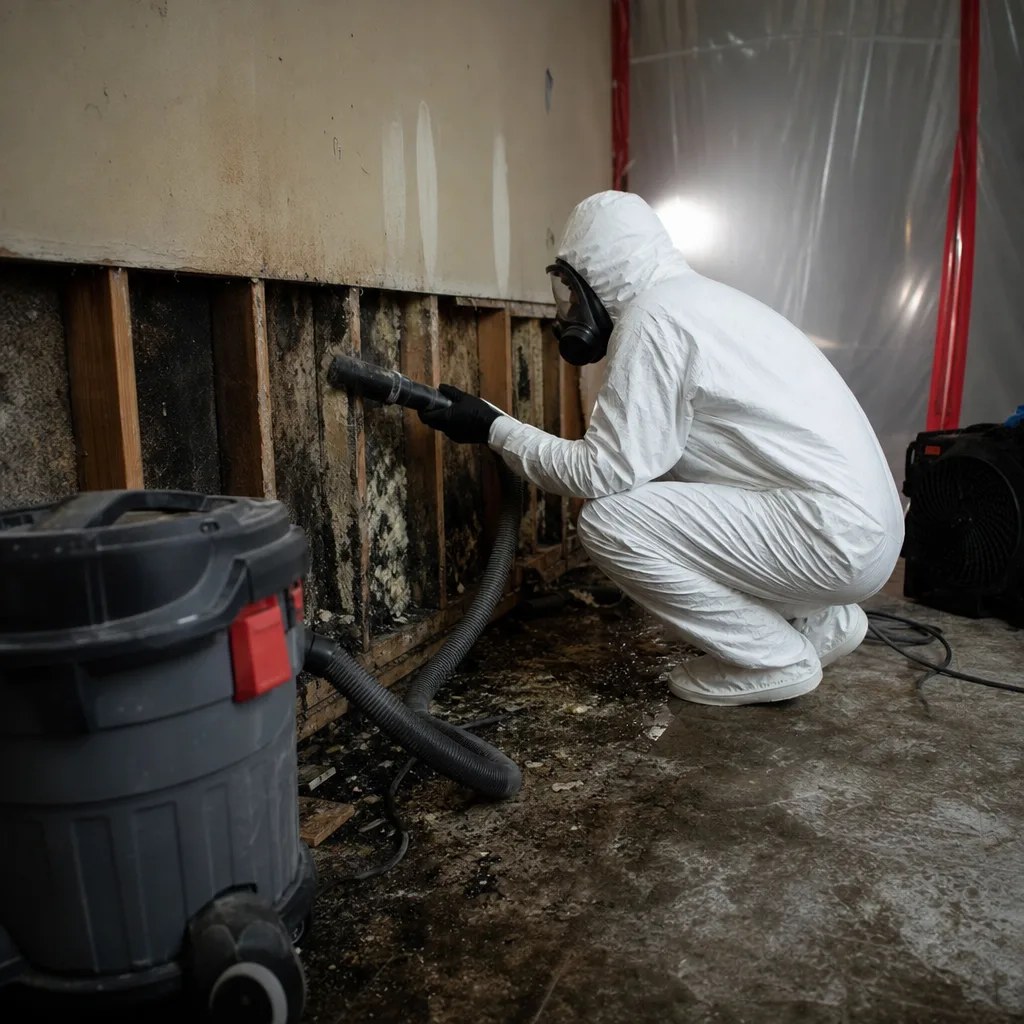
Our Mold Remediation team in Union City contains the affected area with negative air pressure, removes contaminated drywall and insulation, and cleans framing with EPA-registered antimicrobials. We then dry the structure to verified readings, not a guess. The bay mud under western Union City’s flatlands releases moisture slowly, so we run drying equipment longer than manufacturer specs suggest for typical slab homes. Cutting corners on dry time is exactly why mold comes back, and it’s the most common failure we fix after another company walked away early.
Black Mold Remediation
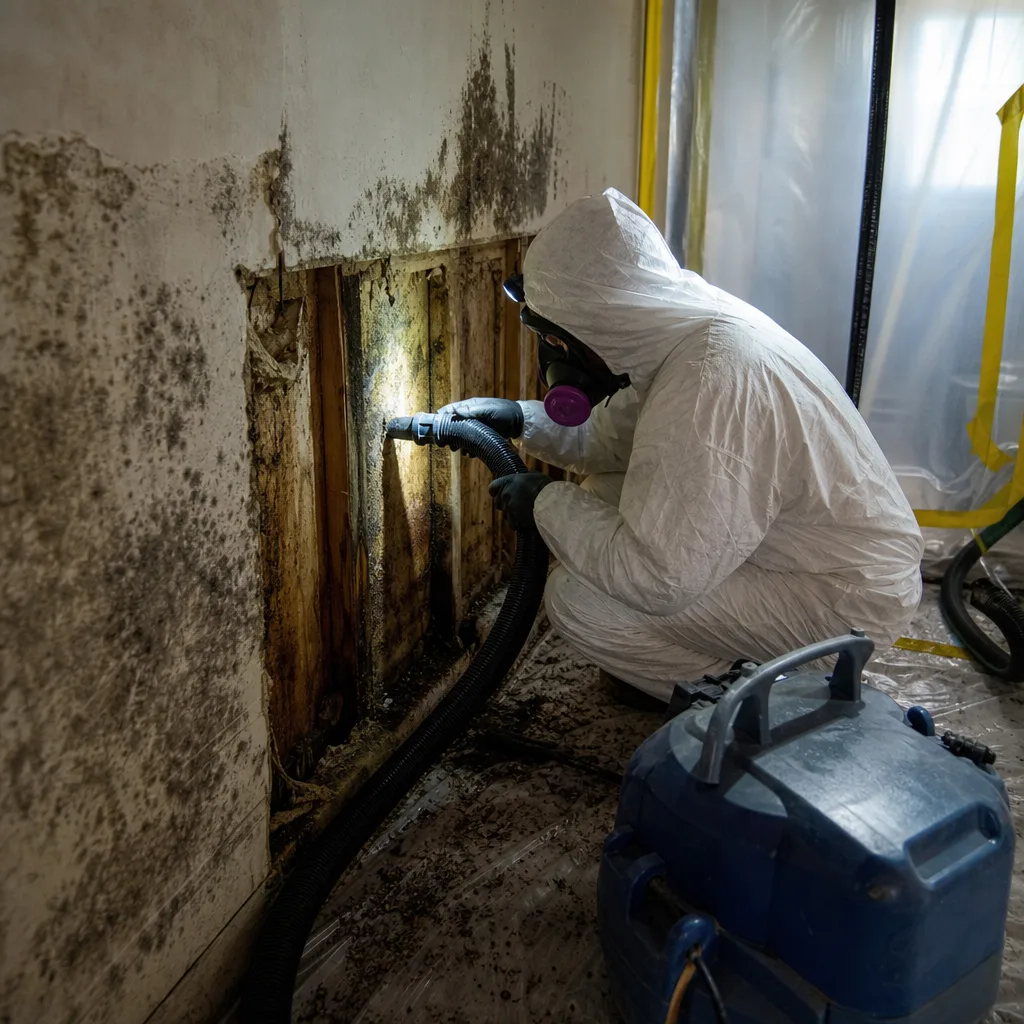
Black mold, or Stachybotrys, gets all the headlines, and in Union City it most often shows up where drainage against the slab has failed or where a slow plumbing leak has been feeding drywall for months. We treat it the same way we treat every mold: correct the moisture, remove the affected material, clean the framing, verify the air. The color doesn’t change the protocol. What changes is the containment level, and we use full containment with HEPA air scrubbers whenever black mold coverage exceeds ten square feet.
Air Quality Restoration
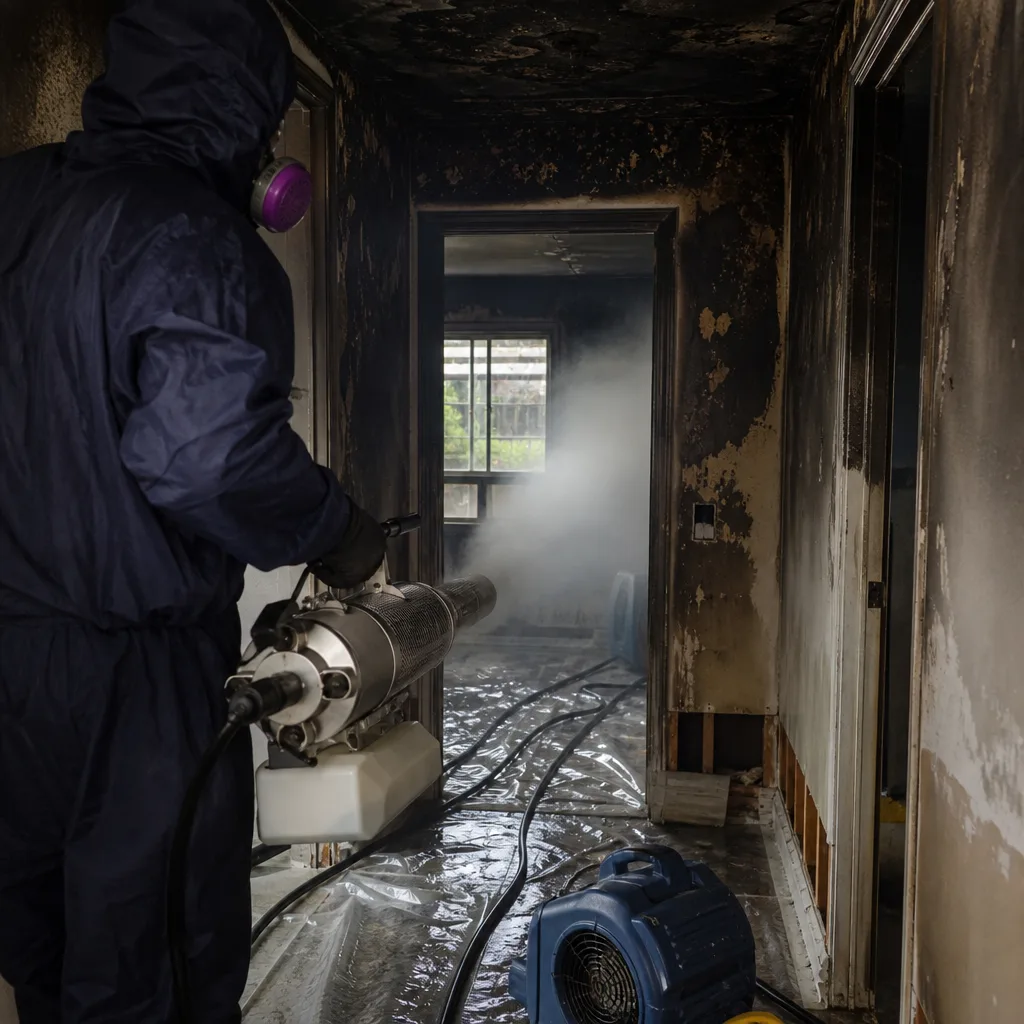
After physical removal, the air in a Union City home still carries spores. We run HEPA air scrubbers during remediation and for a day or two after, then take clearance samples before we pull containment. You should be able to walk back into your house and not smell anything. If you do, the job’s not done. We also check that bathroom exhaust fans and kitchen range vents actually exhaust to the outside, because a depressurized crawlspace in a slab-on-grade house will pull moldy air up through the wall cavities. That’s a Union City-specific pattern, and fixing it takes an afternoon.
Crawl Space Treatment & Moisture Control
Union City crawlspaces are a different animal. The soil under the western neighborhoods is bay mud, and it holds water like a sponge. Even with a vapor barrier installed, humidity swings in a crawlspace can keep wood moisture content high enough for mold growth year-round. We install and repair vapor barriers, seal foundation vents where appropriate, and set up dehumidification when the readings call for it. The goal is to get your crawlspace dry enough that mold can’t grow, then keep it that way. We don’t spray and leave.
What happens when you call
- 1
A real person answersNo phone trees - you reach a local pro.
- 2
You get an upfront price rangeHonest numbers before anyone is dispatched.
- 3
A background-checked tech heads outLicensed & insured, dispatched right away.
- 4
You approve before work beginsNothing starts until you say go.
Trusted Brands We Service in Union City
We’re not tied to any manufacturer, which means we specify the equipment that actually fits the job. Our trucks carry Dri-Eaz dehumidifiers and air movers, Phoenix axial fans, and Injectidry systems for hard-to-dry cavities. Our techs hold IICRC certifications and the company is RIA-affiliated. That’s not trophy wall stuff for us. It means when we write a drying plan for a Union City crawlspace, we’re writing it to an industry standard an adjuster will recognize. The equipment matters because bay mud rewets a slab slowly, and you need gear that moves air at the right vapor pressure to actually pull that moisture out.
Common Mold Remediation Problems We See in Union City Homes
- Regrowth from seismic slab cracks. Hairline cracks from Hayward Fault creep let moisture wick up from the saturated bay mud below. If a restorer cleans the visible mold but never addresses that secondary moisture pathway, the sill plates re-wet and mold returns within 90 days. We flag those cracks during scoping so the real source gets fixed, not just painted over.
- Attic mold from wind-driven coastal rain. Union City’s original 1960s roof flashing gaps let driving rain into attic insulation during atmospheric river storms. Scoping only for a visible ceiling stain misses the attic bloom entirely. We inspect the attic on every water-loss job, and more than a few in Union City have needed attic mold treatment the homeowner never knew was there.
- Portable drying equipment that can’t keep up. A standard dehumidifier spec sheet assumes a concrete slab that drains and dries. Union City’s western flatlands sit on compressible bay mud, which holds moisture and releases it slowly. We extend the drying window accordingly and verify with daily moisture readings, which prevents premature equipment removal and trapped moisture behind baseboards.
- Asbestos-era building materials. A large share of Union City’s housing stock was built between 1960 and 1985. Popcorn ceilings, old vinyl floor tiles, and duct wrap from that era can contain asbestos. If remediation requires cutting into those materials, state law mandates testing and possibly abatement before mold removal proceeds. We identify those materials during inspection so there are no surprises mid-job.
Pricing for Mold Remediation in Union City, CA
Here’s what we actually see in Union City, no vague language. A crawlspace mold cleaning with vapor barrier repair typically runs $2,200-$4,800. A contained black mold removal in a single bathroom runs $1,800-$3,500. Full attic mold remediation with insulation removal runs $3,500-$7,500. Whole-house air quality restoration after a major water event runs $5,000-$12,000 depending on square footage and containment needs. What moves the price is square footage of affected material, whether asbestos testing or abatement is triggered, and how long drying equipment needs to run. You’ll never get a lowball phone quote from us and then a different number at the door. Wade writes the scope, walks you through it line by line, and charges exactly that. Call (855) 915-0646 for a free estimate, and ask about the Free Second Opinion on any written estimate you already have. There’s no trip charge inside our own county.
We Also Serve Cities Near Union City
Our crews run mold jobs across the East Bay every week. If you’re in Newark, Fremont, Fairview, or Hayward, the same crew that handles Union City mold remediation will come to you. Same pricing, same 90-Day Done Right Promise, same owner picking up the phone. We coordinate scheduling from our San Francisco Bay Area office, and Wade makes sure every job in the area gets his attention, not a rotating cast of subcontractors.
Serving Union City, CA - Our Local Coverage Area
We’re based in the Union City area and know this community well. Use the map below to see our service coverage - if you’re nearby, we can almost certainly help.
FAQs - Mold Remediation in Union City
Because the moisture source wasn’t fully killed. In Union City specifically, the most common missed source is a hairline slab crack that lets moisture wick up from the bay mud beneath. A contractor cleans the visible mold, sprays a biocide, and leaves, but the sill plates keep getting wet from below. Within 90 days, mold is back. That’s why we document daily moisture readings and flag any crack that could act as a secondary moisture pathway before we close up. If mold has come back after someone else’s job, call (855) 915-0646 and Wade will take a look himself.
We look at the crack pattern and the moisture profile. Water damage from a leak creates localized elevated moisture that drops off as you move away from the source. Seismic creep from Hayward Fault movement creates stair-step or hairline cracks in the slab and foundation walls, and the moisture reading stays uniformly elevated because it’s coming from the soil below, not a pipe. On a 1970s tract home near Decoto Road in the Alvarado district, our crew traced persistent crawlspace dampness to a failed original galvanized supply line weeping into the bay mud, while hairline slab cracks were pre-existing seismic creep, not water damage. We documented both separately to protect the homeowner’s claim from denial. That distinction is exactly what a generic mold company misses, and it’s the difference between a covered claim and a denied one.
Yes, and it’s mostly about the ground, not the air. The biggest difference is that Union City’s western flatlands were built over former bay marsh and tidal fill. That compressible bay mud holds water and releases it slowly, so crawlspaces and slab-on-grade homes stay damp longer after any water event. The drying window extends beyond what portable equipment manufacturers assume, which means a contractor who pulls equipment too early leaves moisture trapped. That’s why we run longer dry times and verify with daily readings. The coastal air adds humidity load, sure, but the ground is the real variable.
If remediation requires cutting into, scraping, or removing those materials, then yes. California law requires testing for asbestos before disturbing suspect building materials in homes built before 1981. Popcorn ceilings, vinyl floor tiles, and even old duct wrap from that era commonly contain asbestos. We identify those materials during the initial inspection and arrange testing through a certified lab before any containment is opened. It adds a few days to the schedule, but it prevents a stop-work order and keeps everyone safe. If your mold problem is in a wall cavity and we don’t need to touch the popcorn or tile, testing may not be required. Wade will tell you straight which applies to your job.
Usually, yes. We treat the framing and sill plates with EPA-registered antimicrobials, run drying equipment to verified moisture levels, and replace only the subfloor sections that have lost structural integrity from rot. A slab-on-grade house means the subfloor sits directly on the concrete slab, so mold typically grows on the wood sleepers and sill plates, not deep into a traditional floor assembly. Most Union City crawlspace jobs we handle involve cleaning and treating, not full subfloor replacement. After treatment, we run HEPA air scrubbing to clear spores, then take clearance samples so you know the air is clean before we close up.
Get a Straight Answer About Mold in Your Union City Home
If you’re staring at a dark patch on drywall or smelling that musty crawlspace smell every time the furnace kicks on, don’t wait. Mold in a Union City home won’t self-resolve. It feeds on the moisture this ground never stops giving up. Call Wade’s Restoration of California at (855) 915-0646. Wade answers his own phone, he’ll ask a few questions, and he’ll tell you honestly whether you need a full remediation or just a moisture fix. Estimates are free. The 90-Day Done Right Promise is in writing. And you’ll deal with the owner from the first call to the final moisture log, not a rotating cast of strangers. Ask anyone on your street. Works every time.
Written by Wade Ferris, Owner at Wade’s Restoration of California, serving Union City and the surrounding East Bay since 2007.