
Fast, Reliable Mold Remediation Across South El Monte
Mold remediation in South El Monte typically costs between $1,800 and $6,500 depending on how far the growth has spread and whether the slab-on-grade foundation is wicking moisture from the Rio Hondo corridor. Most jobs in the 91733 zip code can be started within 24 to 48 hours once we complete an inspection. If you’re seeing dark patches on baseboards, smelling something musty that won’t air out, or dealing with a water event that happened months ago, call Wade’s at (855) 915-0646. Wade Ferris will answer or call you right back. He knows South El Monte’s housing stock and the drainage issues that come with living this close to the river channel. We’re not a franchise operation. We’re a local crew that shows up, tells you straight what you’re dealing with, and writes the scope down before any work begins.
Key Takeaways
- Mold remediation in South El Monte runs $1,800-$6,500 for typical residential jobs; crawl space treatment adds $800-$2,200.
- South El Monte’s low-lying position east of the Rio Hondo means subsurface moisture keeps mold alive long after surface flooding recedes.
- Post-WWII slab foundations and 1950s building materials mean asbestos and lead testing are often required before walls get opened.
- Industrial neighbors along Garvey Avenue and Tyler Avenue can introduce chemical cross-contamination that changes the remediation scope.
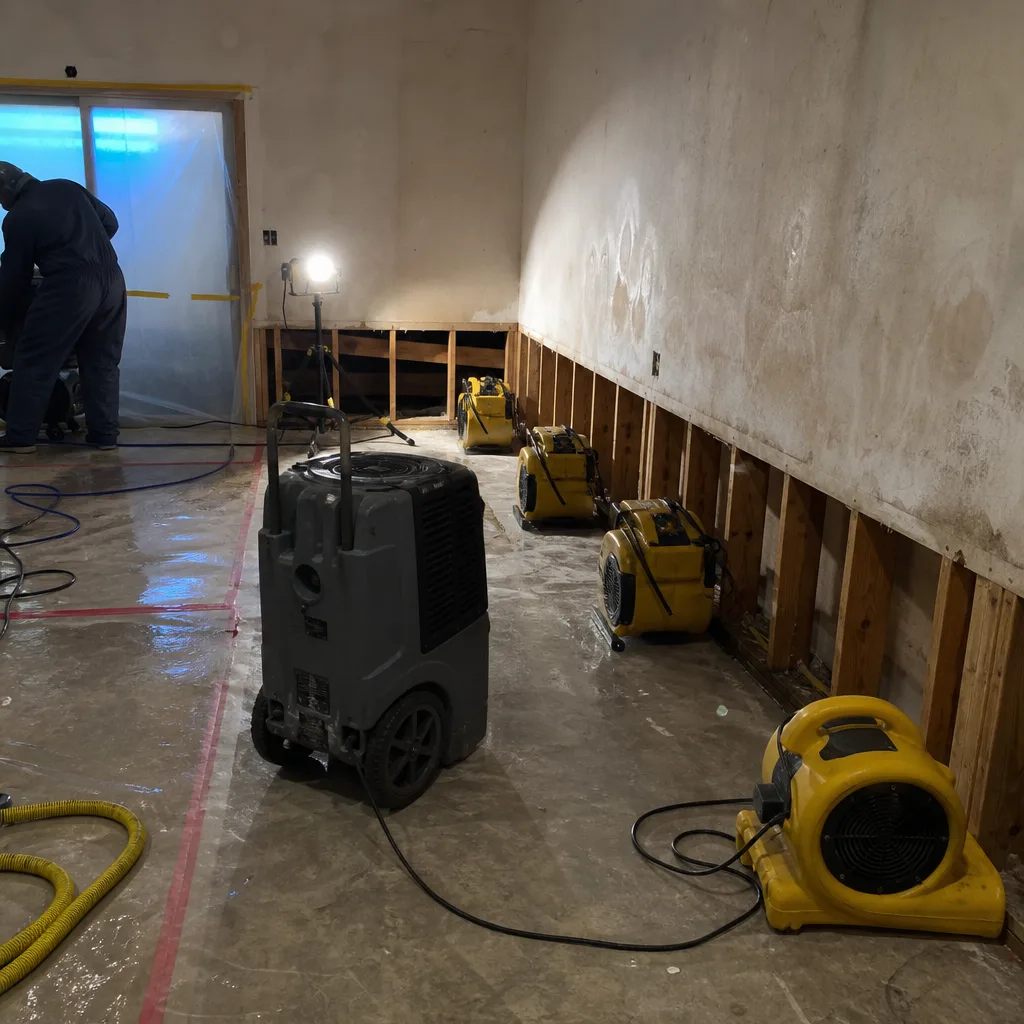
- Wade’s Restoration crews are IICRC-certified and use Dri-Eaz drying equipment and B-Air containment on every South El Monte job.
Why Wade’s Restoration of California Is South El Monte’s Preferred Mold Remediation Company
Wade Ferris has been running restoration crews since 2007, and in that time he’s built a reputation in South El Monte the old way: his name is on the truck, his phone number is on the estimate, and he’s going to run into you again at the mercado or the hardware store. That’s the accountability a national chain can’t offer. Our South El Monte customers talk about two things most often: Wade answers his own phone at any hour, and the moisture logs we hand over at the end of every job show readings taken every single day. Almost nobody in the trade does that. It keeps us honest and gives you a record of exactly when your home hit dry standard.
We’re not a call center. When you call for Mold Remediation, you speak with a person who knows South El Monte, not an operator in another state. Wade has worked homes along Durfee Avenue, near the Peck Road corridor, and through the older neighborhoods around Garvey and Rush Streets. He understands the specific headache of a 1950s tract home with a slab foundation that never quite dries out after a wet winter. Response time to South El Monte is typically 60 to 90 minutes for emergency water stops, and inspections can usually be scheduled same day or next morning.
Every job gets the 90-Day Done Right Promise in writing. If mold comes back or the drying wasn’t done right, Wade makes it right. One call brings him back. No fine print games. No arguing about what the contract said. His name is on the line every time.
Our Mold Remediation Services in South El Monte
Mold Inspection & Testing
Before any remediation work starts in South El Monte, we figure out what you’re actually dealing with. That means moisture readings across affected walls and floors, visual inspection behind baseboards where possible, and surface or air sampling when the situation warrants it. Given South El Monte’s position on the alluvial plain east of the Rio Hondo, we pay close attention to slab moisture levels that may signal groundwater wicking from below, not just a plumbing leak. Inspections in the 91733 area typically run $300-$600 depending on the number of rooms and sample types. You get the full report, not a sales pitch.
Mold Removal
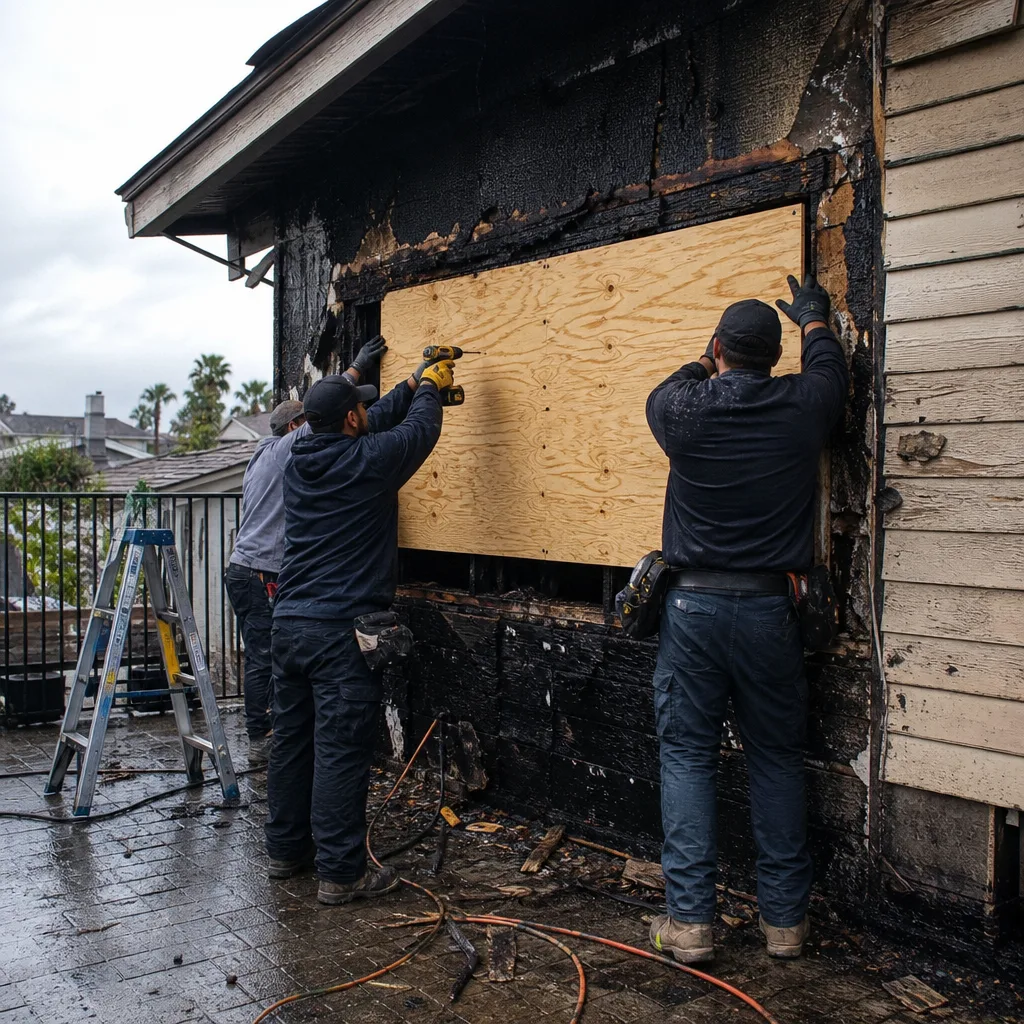
Mold removal in South El Monte usually runs $1,500-$4,500 for contained areas like a single bathroom, closet, or laundry wall. When growth has spread behind drywall into multiple rooms, the job often lands in the $4,500-$6,500 range. The work includes HEPA-filtered air scrubbers, negative air containment, physical removal of affected drywall or framing, and antimicrobial treatment of remaining surfaces. We use RIA-approved procedures and document every step with photos. If your home was built in the 1950s or 1960s, we’ll flag potential asbestos-containing popcorn ceilings or floor tiles before cutting into anything.
Black Mold Remediation
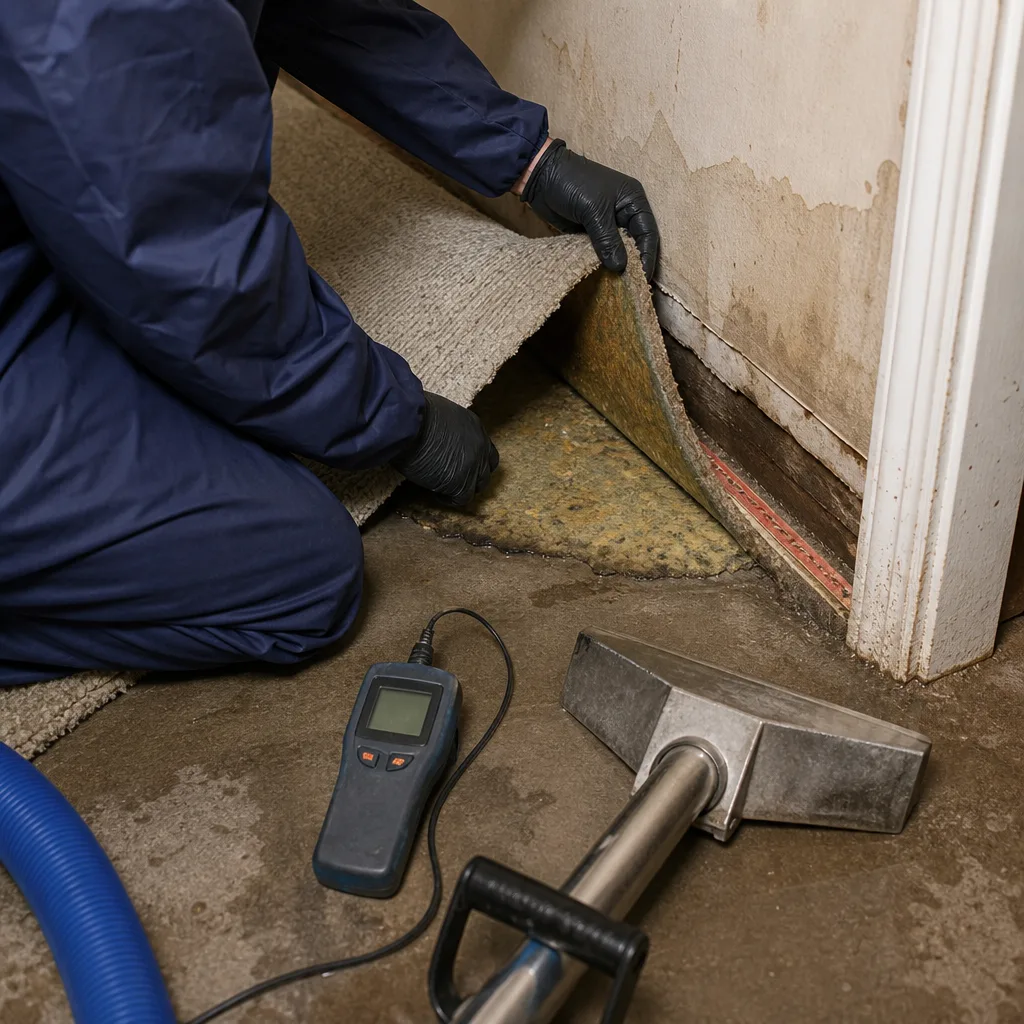
Black mold, or Stachybotrys chartarum, gets a lot of attention, and for good reason in South El Monte’s climate. The inland San Gabriel Valley’s wet season runs December through March, and when water intrudes into a dark, warm wall cavity in a flat, slow-draining neighborhood, black mold can colonize within days. Remediation for confirmed black mold in South El Monte homes typically runs $2,200-$6,000 depending on square footage and containment complexity. We treat every unknown mold growth with full containment and PPE protocols regardless of species. Getting a definitive species ID requires lab analysis of a sample, which we can arrange.
Air Quality Restoration
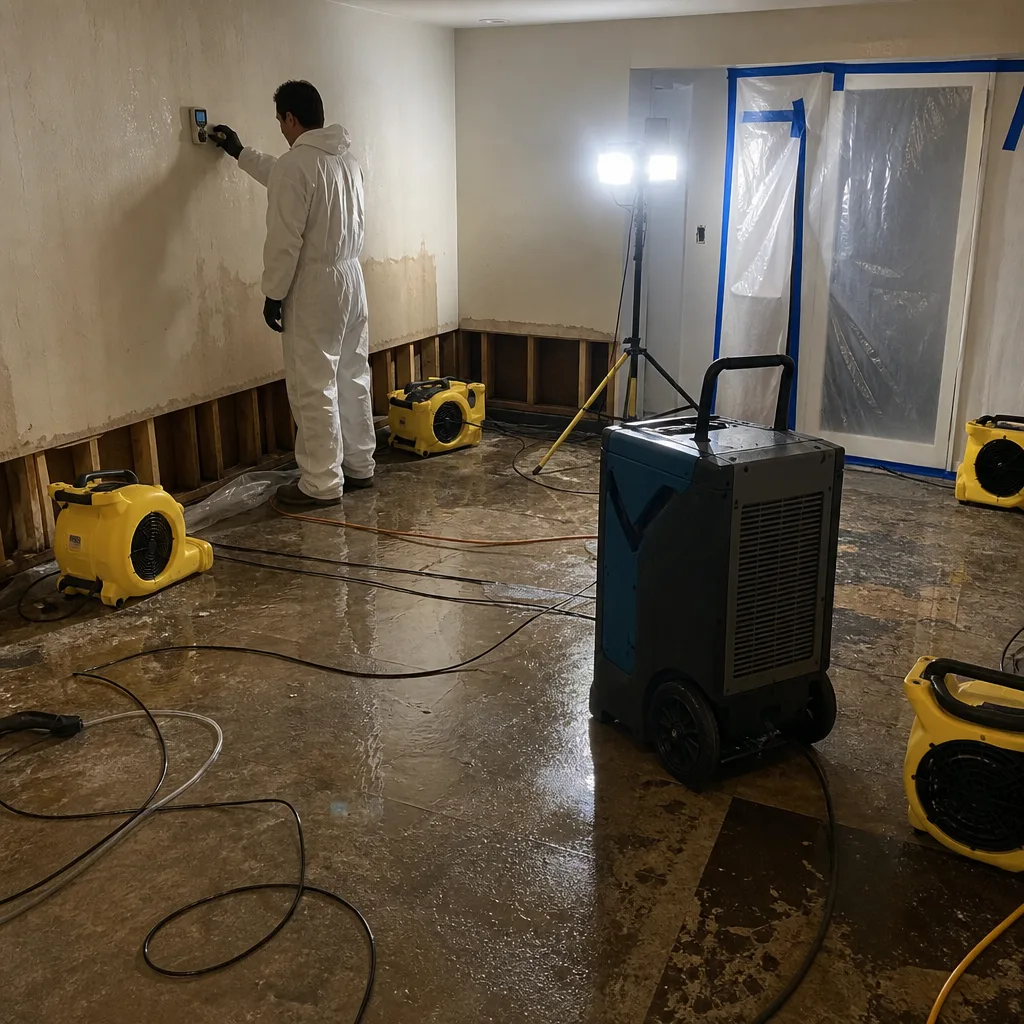
After physical mold removal, the air inside a South El Monte home needs to be cleaned, not just masked. We run HEPA air scrubbers during remediation and use post-remediation verification to confirm spore counts have dropped to acceptable ranges. Air quality restoration usually adds $400-$900 to a job but is the difference between a mold problem that’s actually solved and one that lingers as a smell nobody can place. Given the light-industrial density around Garvey Avenue and Tyler Avenue, we also screen for non-mold airborne irritants that can complicate breathing issues. The goal is air you don’t think about.
What happens when you call
- 1
A real person answersNo phone trees - you reach a local pro.
- 2
You get an upfront price rangeHonest numbers before anyone is dispatched.
- 3
A background-checked tech heads outLicensed & insured, dispatched right away.
- 4
You approve before work beginsNothing starts until you say go.
Common Mold Remediation Problems We See in South El Monte Homes
- Slab-on-grade wicking from Rio Hondo subsurface moisture. Many South El Monte tract homes sit on concrete slabs with no vapor barrier. When winter rain saturates the soil, moisture rises through the slab and keeps floor coverings, baseboards, and bottom plates wet for months. Mold removal that doesn’t address this source fails within a year.
- Shared drainage and chemical cross-contamination. Residential blocks mix with light-industrial warehouses along Garvey Avenue and Tyler Avenue. Runoff from warehouse areas can carry solvents, machine oils, or industrial coatings into shared drainage systems, then migrate through soil into crawl spaces or under slabs. Treating a mold loss without screening for chemical contaminants misses half the problem.
- Asbestos and lead in post-WWII construction. Popcorn ceilings, vinyl asbestos floor tiles, and lead-based paint are common in South El Monte’s 1950s and 1960s homes. Opening walls or removing flooring for mold remediation triggers state testing requirements. Skipping this step puts your family at legal and health risk and can shut a job down mid-scope.
- Slow-draining flat terrain extending drying times. South El Monte’s low elevation and flat layout means surface water sits longer than in neighboring cities with better grade. Drying timelines stretch beyond the typical three-to-five-day benchmark. We plan for extended drying in every South El Monte scope, often using additional Dri-Eaz dehumidifiers and air movers in crawl spaces and under-slab cavities.
Pricing for Mold Remediation in South El Monte, CA
Here’s what South El Monte homeowners can expect to pay for common mold remediation scopes:
- Mold inspection with basic moisture mapping: $300-$600
- Contained mold removal (single room, closet, or bathroom): $1,500-$4,500
- Whole-home or multi-room remediation: $4,500-$6,500
- Crawl space mold treatment: $800-$2,200 depending on access and square footage
- Air quality restoration following remediation: $400-$900
- Moisture and humidity control system installation: $1,800-$4,000 depending on crawl space size and dehumidifier capacity
What moves the price up: asbestos and lead abatement, multiple containment zones, structural drying of slab-on-grade foundations, and hazmat-adjacent cross-contamination from industrial neighbors. What holds it steady: a written scope before work starts, no trip charge inside Los Angeles County, and the free second opinion offer on any written estimate from another contractor. Call (855) 915-0646 and Wade will give you a straight number.
We Also Serve Cities Near South El Monte
Wade’s crews work across the San Gabriel Valley. If you’re in El Monte, Rosemead, Temple City, or Avocado Heights, you’re inside our regular service area, and the same no-trip-charge policy applies. We know these neighborhoods well and don’t treat them like a map pin. For more about our work across the region, see Mold Remediation in South El Monte and the surrounding communities.
Serving South El Monte, CA - Our Local Coverage Area
We’re based in the South El Monte area and know this community well. Use the map below to see our service coverage - if you’re nearby, we can almost certainly help.
FAQs - Mold Remediation in South El Monte
Homes in South El Monte near the Rio Hondo channel often need three to seven additional days of drying compared to homes in adjacent cities because subsurface soil moisture keeps reintroducing water vapor through slab foundations. The concrete-lined channel system handles normal rain, but sustained winter storms can saturate the surrounding alluvial soil and create a slow, invisible reservoir under your house. We account for this from the start by running moisture logs daily and extending drying targets rather than calling a job done when surface readings look good. It prevents the mold from coming back in six months. Call (855) 915-0646 for an assessment of your specific property.
Yes, for most 1950s and 1960s South El Monte homes, you need asbestos and lead testing before any mold removal that involves opening walls, removing popcorn ceilings, or pulling up original floor tiles. State regulations require testing and abatement when these materials will be disturbed. If a contractor skips this step, they’re exposing you to liability and health risk, and the work may not pass inspection. We flag suspected materials during our initial walkthrough and coordinate testing before cutting into anything. The testing is a small line item compared to what getting it wrong costs.
Yes. South El Monte’s residential blocks sit interwoven with light-industrial warehouses along Garvey Avenue and Tyler Avenue, and their runoff can migrate through shared drainage systems, contaminated soil, or even under adjacent slabs. That moisture and chemical load can reach your crawl space or sub-slab area and feed mold growth that has nothing to do with a plumbing leak. On a Tyler Avenue residential job, our crew found that a neighbor’s warehouse runoff had wicked through the slab, turning a routine mold claim into a hazmat-adjacent scope. We used Dri-Eaz drying equipment and B-Air containment to isolate the crawl space before removing mold and treating the contaminated groundwater source. The home’s 1950s asbestos-containing popcorn ceiling required testing and abatement before we could fully open walls, extending the timeline but ensuring safety. If you live near an industrial corridor, mention it when you call. It changes how we screen the job.
For slab-on-grade homes in South El Monte, we recommend full crawl space encapsulation where a crawl space exists, paired with a commercial dehumidifier sized for the square footage, and in many cases a vapor barrier repair or replacement. Homes built in this area often have partial crawl spaces, and vapor barriers installed 60 years ago have degraded. When the Rio Hondo corridor saturates the soil, that missing barrier lets ground moisture move directly into your sub-slab or crawl space. Full encapsulation with drainage matting and a sealed vapor barrier typically runs $1,800-$4,000 in South El Monte depending on access. It’s the most durable fix for recurring mold in this specific geography.
You can often tell the source by where the mold appears and what the moisture pattern looks like. Plumbing leaks produce mold that stays in a localized band near a pipe run, under a sink, or around a toilet flange. Flooding or stormwater intrusion from South El Monte’s flat terrain and slow drainage usually shows up along exterior walls, baseboards at floor level across a wide area, and in crawl spaces or under slabs anywhere water pooled. Surface flooding from December through March is common in the 91733 zip code, but subsurface wicking can keep feeding mold months after the visible water is gone. Our moisture mapping and daily readings pinpoint the actual source before we write the scope. Call (855) 915-0646 and we’ll tell you what you’re looking at.
What Makes South El Monte Mold Work Different
South El Monte sits on a low-lying alluvial plain immediately east of the Rio Hondo River channel. That geographic fact shapes almost everything about mold remediation here. The flat, low-elevation terrain drains slowly, and properties near the river corridor are prone to subsurface moisture migration long after surface flooding recedes. During any sustained winter rain event, the concrete-lined channel system can reach capacity, and ground saturation pushes water into the soil profile under homes that were never designed to stay dry in those conditions. If a remediation company treats your South El Monte mold job like a standard valley job, you’ll be calling them back by the following winter.
The city’s unusually dense concentration of light-industrial warehouses packed alongside post-WWII residential blocks adds another layer. Restoration techs working the industrial corridors along Garvey Avenue and Tyler Avenue frequently find that adjacent warehouse tenants storing flammable or caustic materials have altered the scope of a neighboring residential claim. What starts as a routine water loss can escalate when shared drainage systems or contaminated soils are involved, a complication uncommon in purely residential San Gabriel Valley cities. Our crews screen for chemical cross-contamination before treating anything that looks like a normal mold loss. That’s not a service upgrade. It’s knowing the city where the work happens.
The housing stock matters too. The residential core of South El Monte is largely modest single-story wood-frame tract homes built in the 1950s and 1960s, many with original slab-on-grade foundations, asbestos-containing floor tiles and popcorn ceilings, and lead-based paint. Virtually any mold job that requires opening walls or floors triggers mandatory testing and abatement protocols before standard remediation can begin. We plan for that in our scopes and timelines from the first walkthrough. If you’re looking at a remediation quote that doesn’t mention testing on a home this old, ask why.
Contact Wade’s Restoration of California
If you’ve got mold in your South El Monte home, or you suspect you do, call (855) 915-0646. You’ll reach a live person, and often it’s Wade himself. He’ll talk through what you’re seeing, tell you if it’s worth an inspection, and schedule a time that works. Estimates are free. There’s no trip charge for South El Monte. And if you’ve already got a written estimate from another company, bring it in. Wade will give you a second opinion at no cost. That’s the way it should work when a neighbor shows up.
Written by Wade Ferris, Owner at Wade’s Restoration of California. Wade has answered his own phone and stood behind his work since 2007.