
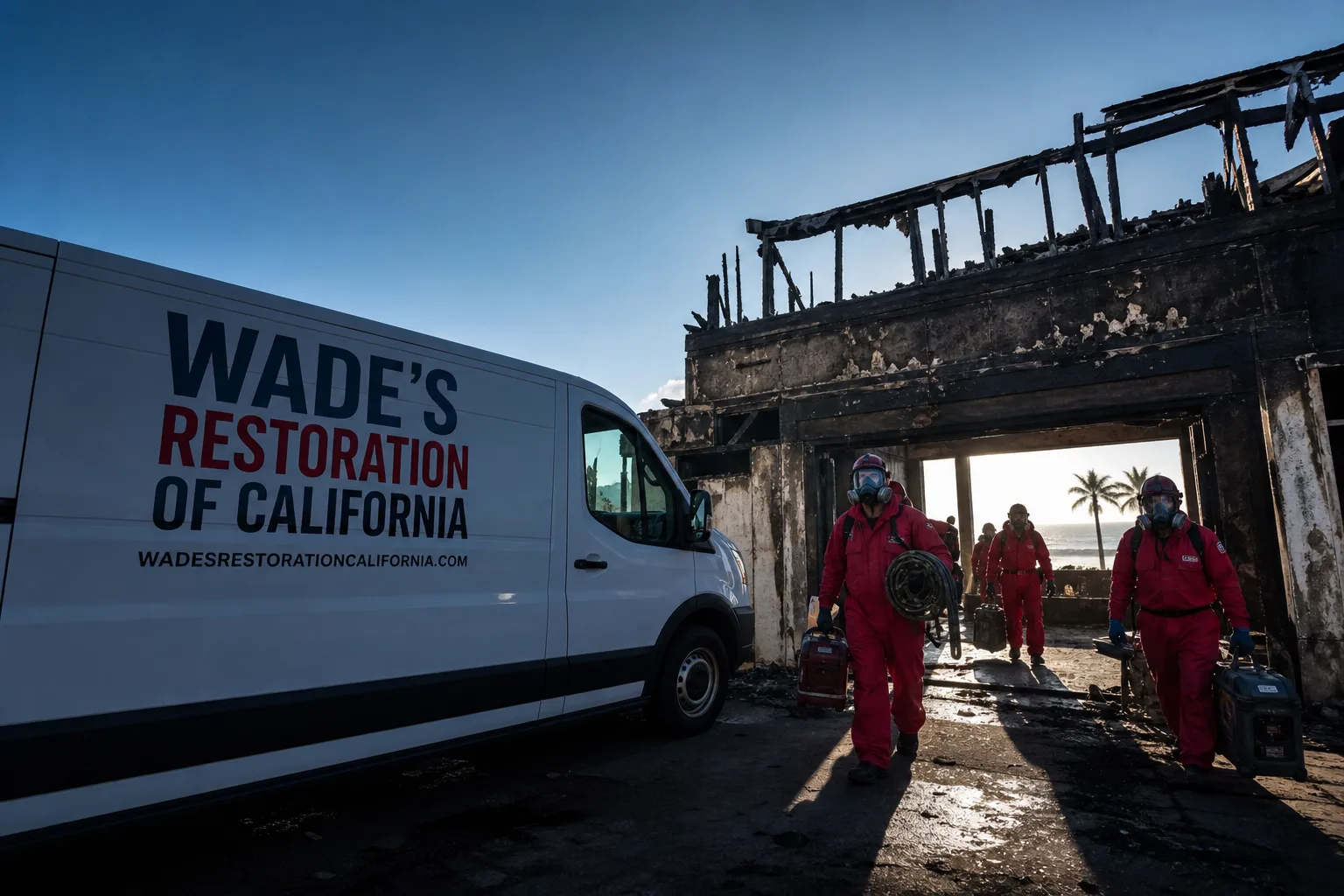
Fast, Reliable Mold Remediation Across Shadow Hills
Mold remediation in Shadow Hills typically costs $2,800 to $6,500 for a standard crawl space and containment job, with inspection and testing starting around $400. Most homes here need same-week service because moisture hides in places that don’t dry on their own after fire season or winter rain. If you’ve noticed a musty smell near your horse barn, peeling paint on a wood-framed outbuilding, or condensation on custom wood doors, call Wade’s Restoration at (855) 915-0646 and Wade will talk through what’s actually going on before you spend a dime.
Why Wade’s Restoration of California Is Shadow Hills’s Preferred Mold Remediation Company
Wade Ferris started this company in 2007 and has been answering his own phone since. That matters in Shadow Hills, where homeowners have large lots, equestrian outbuildings, and custom homes that national franchises treat like a checkbox job. Wade’s crew knows the difference between a tack room that needs drying and a tack room that just needs surface cleaning. They also know the properties off McBroom Street, the ranch estates along Wheatland Avenue, and the hillside homes near Sunland Boulevard where debris flow follows fire with depressing regularity.
Shadow Hills homeowners tend to be skeptical of big-box restoration outfits. A lot of them have already been quoted one price over the phone and a different one at the door. Wade does the opposite: he shows up, takes moisture readings with his own equipment, and hands you a written scope before any work begins. Every mold job gets the 90-Day Done Right Promise in writing. If it’s not done right, Wade comes back and makes it right, no lawyer needed.
Response time to Shadow Hills is measured in hours, not days. Wade’s Los Angeles office coordinates dispatch, and crews serve Shadow Hills directly. For active moisture problems, he heads out fast because he knows what happens to a wood-framed barn wall when water sits behind it for a weekend.
Key Takeaways:
- Mold in Shadow Hills is rarely a standalone problem. It follows fire, smoke, mud, and firefighting water.
- Crawl space treatment and air quality restoration are the two most overlooked parts of local mold jobs.
- Wade deals with your insurance adjuster directly and documents everything with daily moisture logs.
- Free estimates, no trip charge inside the county, and a Senior & Veteran 10% discount on every job.
Our Mold Remediation Services in Shadow Hills
Mold Inspection & Testing
Before we remove anything, we find out what’s actually growing and where the water came from. In Shadow Hills, that often means checking crawl spaces under mid-century ranch homes, behind stall walls, and inside hay storage where moisture from debris-flow runoff collects quietly. Inspection and testing in Shadow Hills generally runs $400 to $900, depending on how many structures sit on the lot and whether we’re sampling indoor air in the main house only or also testing barns and outbuildings.
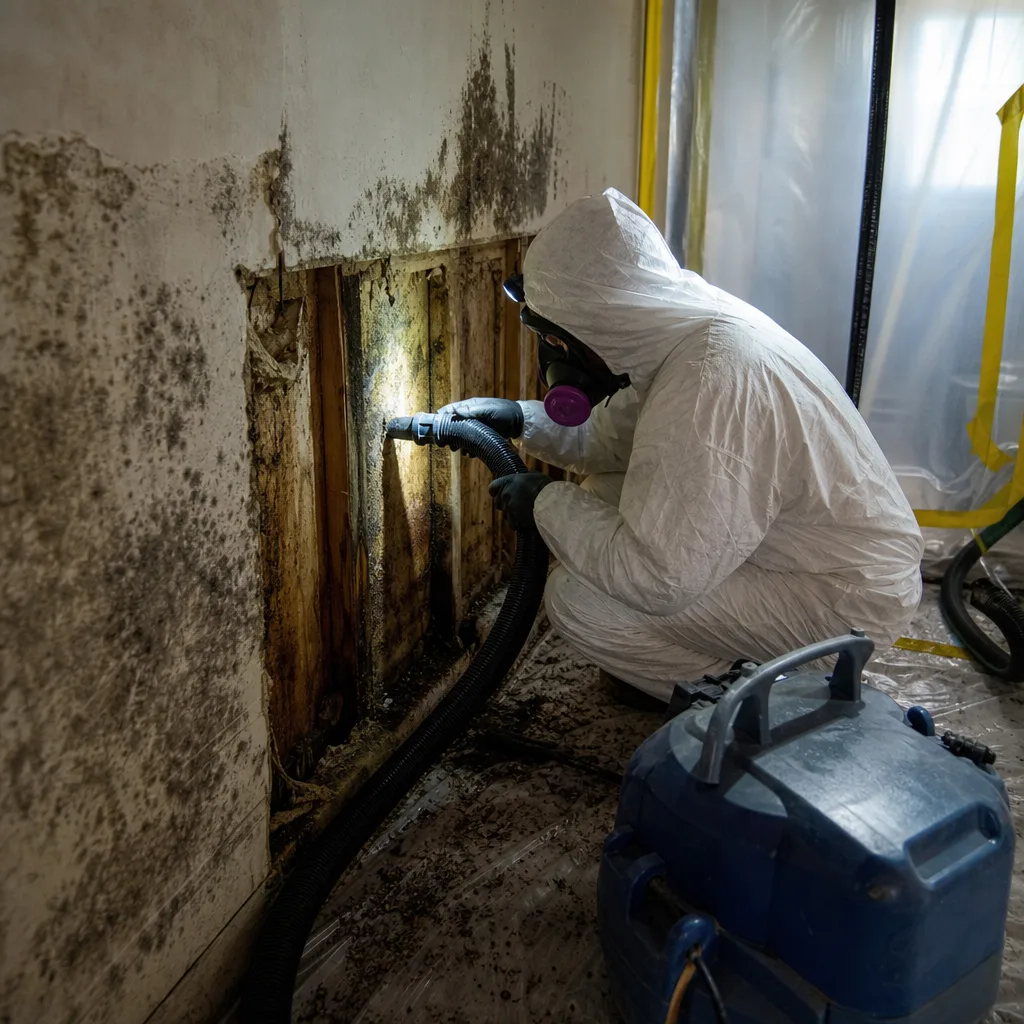
Mold Removal
Removal means containment, negative air pressure, physical removal of contaminated drywall and insulation, and HEPA vacuuming. Wade’s team handles houses with custom wood doors, carriage-house detailing, and finish work that a careless crew would destroy. We don’t rip out more than necessary. Typical mold removal in Shadow Hills runs $2,500 to $6,000 depending on square footage, number of outbuildings, and whether the mold has spread behind custom trim or into subflooring.
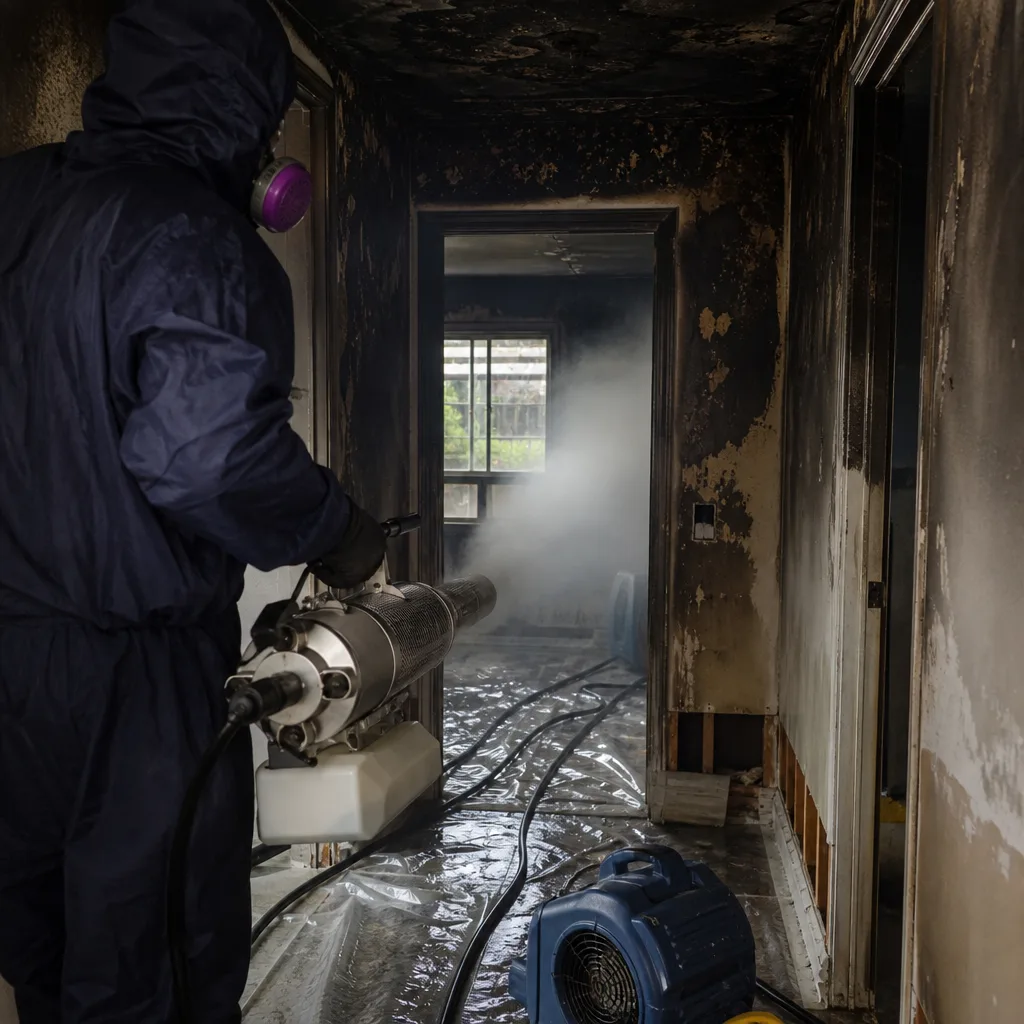
Black Mold Remediation
Black mold, or Stachybotrys, grows where water has sat for days or weeks. Shadow Hills sees it after firefighting water soaks through ceilings, after tarped roofs leak during winter rain, and after mud pushes into lower-level rooms. Remediation for black mold in a Shadow Hills home runs $3,200 to $8,000. That includes full containment, removal, antimicrobial treatment, and post-remediation verification. Wade takes moisture readings every single day and gives you the log when the job’s done, so you know the structure actually dried.
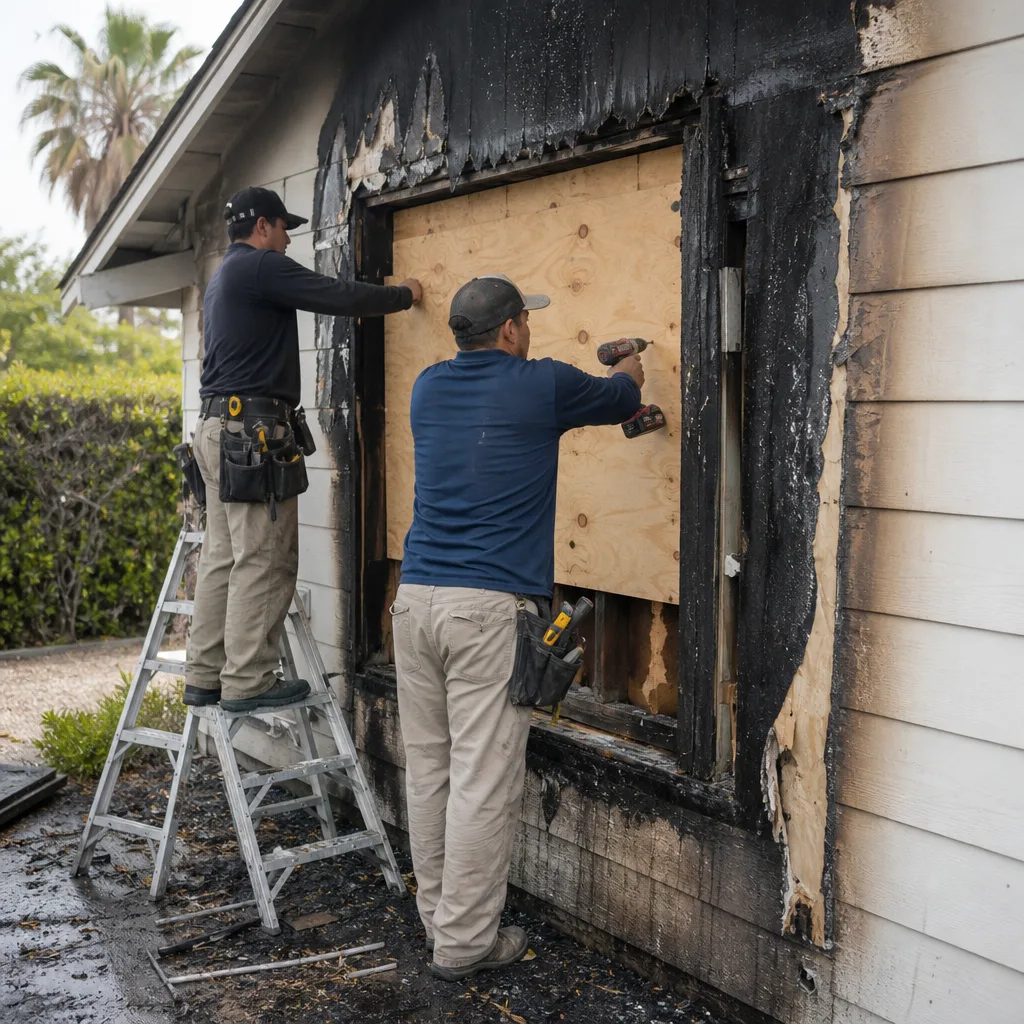
Air Quality Restoration
Mold doesn’t just grow on walls. It releases spores into the air, and those spores settle in ductwork, carpet, and furniture. In Shadow Hills homes with central air, a mold problem in a crawl space can push spores through every room. Air quality restoration includes HEPA air scrubbing, duct cleaning where needed, and post-remediation air sampling. It typically adds $600 to $1,500 to a remediation job, and in Shadow Hills it’s usually necessary because homes sit tight against the foothills where outdoor spore counts already run high.
Mold Remediation in Shadow Hills is not a surface cleaning job. It’s finding the water, drying the structure, removing the contamination, and proving the air is clean afterward. Wade’s crew does all four.
What happens when you call
- 1
A real person answersNo phone trees - you reach a local pro.
- 2
You get an upfront price rangeHonest numbers before anyone is dispatched.
- 3
A background-checked tech heads outLicensed & insured, dispatched right away.
- 4
You approve before work beginsNothing starts until you say go.
Common Mold Problems We See in Shadow Hills Homes
- Water hiding under stall mats and inside hay storage. After a debris flow, water creeps under rubber stall mats and wicks into hay bales. The visible drywall gets treated, but the real moisture source sits in the barn for months. Nobody notices until mold appears behind custom wood doors or trim.
- The fire-debris-flow cycle. A home cleaned for mold in October gets re-contaminated by January mudflows. Property owners near the state-designated Very High Fire Hazard Severity Zone deal with this every year. Contractors who don’t flag the address for a second call leave homeowners with a recurring problem.
- Crawl space humidity spikes that smart-home sensors catch but contractors ignore. High-end Shadow Hills homes often have whole-house humidity monitors. The data shows a crawl space sitting at 70% relative humidity for weeks, but a generic mold crew treats the upstairs bath vent and calls it done. The mold returns.
- Outbuildings left out of the scope. A standard remediation quote covers the main house. It doesn’t cover the wood-framed horse barn, the detached garage with custom door, or the tack room. In Shadow Hills, leaving outbuildings out means leaving active mold on the property.
Pricing for Mold Remediation in Shadow Hills, CA
| Service | Typical Shadow Hills Price Range |
|---|---|
| Mold Inspection & Testing | $400 - $900 |
| Standard Mold Removal (single room) | $1,800 - $3,500 |
| Crawl Space Treatment | $2,500 - $6,000 |
| Black Mold Remediation | $3,200 - $8,000 |
| Air Quality Restoration (with duct cleaning) | $600 - $1,500 add-on |
| Barn / Outbuilding Mold Treatment | $1,500 - $4,000 per structure |
What moves the number: how many structures sit on the lot, whether custom wood doors and trim need protection during removal, how far the moisture traveled, and whether the crawl space needs full encapsulation. Wade’s estimate is free, in writing, and itemized. The standing offers apply in Shadow Hills: $40 off any repair over $200, free second opinion on any written estimate, and a Senior & Veteran 10% discount. Call (855) 915-0646 and Wade will walk you through it.
The Fire-Debris-Flow Cycle: Why Mold in Shadow Hills Is a Different Animal
Shadow Hills sits entirely inside a state-designated Very High Fire Hazard Severity Zone, directly beneath the Verdugo Mountains and the San Gabriel foothills. That zoning changes the whole shape of mold remediation here. A standard mold job elsewhere starts with a plumbing leak or a roof failure. Here, it often starts with a wildfire that never touched the house but still introduced a moisture problem: water dropped from air tankers and firefighting crews, roofs tarped for weeks, and hillsides stripped of vegetation that used to hold the soil and absorb rainfall. Then the winter rains come, and those denuded slopes above Hansen Dam’s watershed channel mud and debris down into Shadow Hills estates, through the same gates and living spaces that just had drywall replaced.
That’s why mold in Shadow Hills is almost never a standalone issue. It is the second wave. The first wave is fire and smoke. The second is mud, debris flow, and trapped moisture in places nobody thinks to check: under stall mats, behind hay storage, inside crawl spaces beneath mid-century ranch homes, and behind the custom wood carriage-house doors that define this community’s architecture.
On a custom ranch estate off McBroom Street, we traced a mold bloom inside a wood-framed tack room to water that had wicked into the hay storage after a winter debris flow. The homeowner had already had the main house dried by another company. The barn was never touched. Using Dri-Eaz dehumidifiers and XPOWER air movers, we dried the crawl space and stall walls, then applied IICRC mold remediation protocols to restore the custom wood doors and preserve high-value saddles, tack, and feed. That job took four extra days because the moisture had been sitting for months. The homeowner keeps calling us because we’re the only crew that checked the barn.
Why Crawl Space Treatment and Moisture Control Matter More Here
Shadow Hills is a low-density equestrian community of mid-century and custom ranch homes on large lots. Those lots come with wood-framed barns, detached stalls, hay storage, and outbuildings that hold expensive equipment. They also come with crawl spaces that run humid during the wet season and dry out during Santa Ana winds. That boom-bust cycle stresses wood framing and creates condensation inside walls. When mold appears in a Shadow Hills home, it’s usually because moisture got trapped somewhere wood touches soil or where a debris flow pushed water against a foundation line.
Moisture and humidity control in Shadow Hills isn’t an upsell. It’s the difference between a job that holds and a job that fails the first winter after it’s finished. Wade’s crew takes moisture readings in the crawl space, under stall mats, and inside hay storage, then hands you the full log at the end of the job. Almost nobody else in the trade does that, and in this community it matters, because the problem is usually not where the homeowner first saw mold. It’s somewhere lower, darker, and damper.
Trusted Equipment, Real Credentials, No Runaround
Wade’s crew runs professional-grade equipment: Dri-Eaz dehumidifiers, Phoenix air movers, and XPOWER ventilation. The work follows IICRC standards for mold remediation, and Wade holds RIA and IFA affiliations that back up the warranty he puts in writing. Shadow Hills homeowners have every incentive to ask about credentials before letting a crew inside, and Wade would rather you ask than assume. He publishes his license number and his address, and he answers his own phone at midnight when a winter storm pushes mud into a lower-level room.
Insurance claims are part of most mold jobs in Shadow Hills, given the fire-debris-flow cycle. Wade deals with your adjuster directly. He documents everything with photos, moisture logs, and a written scope before work starts. You are not stuck relaying information between two parties, and you are not left holding an invoice the adjuster won’t approve.
We Also Serve Cities Near Shadow Hills
Wade’s Restoration handles mold remediation in Shadow Hills and the surrounding foothill communities, including Sunland, Tujunga, La Crescenta-Montrose, and Burbank. The same crew, the same equipment, and the same written warranty apply across the whole service area. Call (855) 915-0646 and Wade will tell you straight what the job needs.
Serving Shadow Hills, CA - Our Local Coverage Area
We’re based in the Shadow Hills area and know this community well. Use the map below to see our service coverage - if you’re nearby, we can almost certainly help.
FAQs - Mold Remediation in Shadow Hills
Mold appears weeks after a wildfire because firefighting water, tarped roofs, and compromised drainage introduce moisture that never fully dries. The fire doesn’t need to reach your house to create the conditions for mold. Water dropped from air tankers soaks into roofing and insulation. Tarps left over damaged sections trap humidity. Burned hillsides above Shadow Hills stop absorbing rain, so winter storms push mud and water against foundation walls and into lower-level rooms. That trapped moisture is what mold feeds on, weeks after the smoke clears. If you’re seeing mold after fire season, call us at (855) 915-0646 and Wade will trace the water source before recommending anything.
Living within Hansen Dam’s watershed means post-fire debris flows are a near-certain seasonal event. When the slopes above Shadow Hills lose vegetation to fire, winter rain channels sediment and mud directly down established drainage paths into residential properties. That mud carries water into barns, stalls, crawl spaces, and outbuildings. Remediation has to account for that secondary moisture source, not just the interior drywall. We flag Shadow Hills addresses for a second call after significant foothill fires because we know the same properties routinely need follow-up work in January or February.
Yes, custom wood carriage-house doors can be preserved during mold remediation if the crew protects them before containment and removal begins. Wood doors warp when they’re exposed to negative air pressure for days without protection. Wade’s team seals and wraps non-affected wood surfaces before starting remediation, and we dry the structure gradually to prevent cracking. In Shadow Hills, where these doors are part of the home’s character and resale value, that extra protection is standard procedure, not an add-on.
Mold removal in horse barns and tack rooms is different because the structures are wood-framed, unsealed, and full of organic material, hay, feed, leather tack, and livestock equipment. Those surfaces hold moisture differently than drywall and carpet. They also require specialized contents restoration if the tack and feed have been exposed to mold or mycotoxins. A standard residential mold scope doesn’t include stall mats, hay storage, or the seams between wood framing and soil. Missing those means leaving active mold behind. Wade’s crew treats outbuildings as part of the property, not an afterthought. Call (855) 915-0646 for an assessment that covers everything on the lot.
Shadow Hills mold jobs require both moisture control and air quality restoration because the contamination source is usually not just on visible surfaces. Moisture hides under stall mats, inside hay storage, and below crawl spaces. Spores from those hidden pockets circulate through the home’s HVAC system. If you only clean the visible mold and skip the moisture source or the air scrub, you’re paying for a temporary fix. That combination is why our written scopes for Shadow Hills include crawl space treatment and post-remediation air sampling as standard. Estimates are free, and Wade will show you the moisture readings before anything starts.
Written by Wade Ferris, Owner at Wade’s Restoration of California. To wade is what you do through a flooded basement at two in the morning, and it happens to be his name. Serving Shadow Hills and surrounding foothill communities since 2007.
Call Wade for Mold Remediation in Shadow Hills
If you’ve got a musty smell in a barn, visible mold behind a custom wood door, or a crawl space that’s been wet for months, call (855) 915-0646. Wade answers his own phone. He’ll tell you whether the job needs full remediation or just drying and monitoring. Free estimate, written scope before any work starts, and the 90-Day Done Right Promise on every mold job. If it’s not done right, he makes it right.