
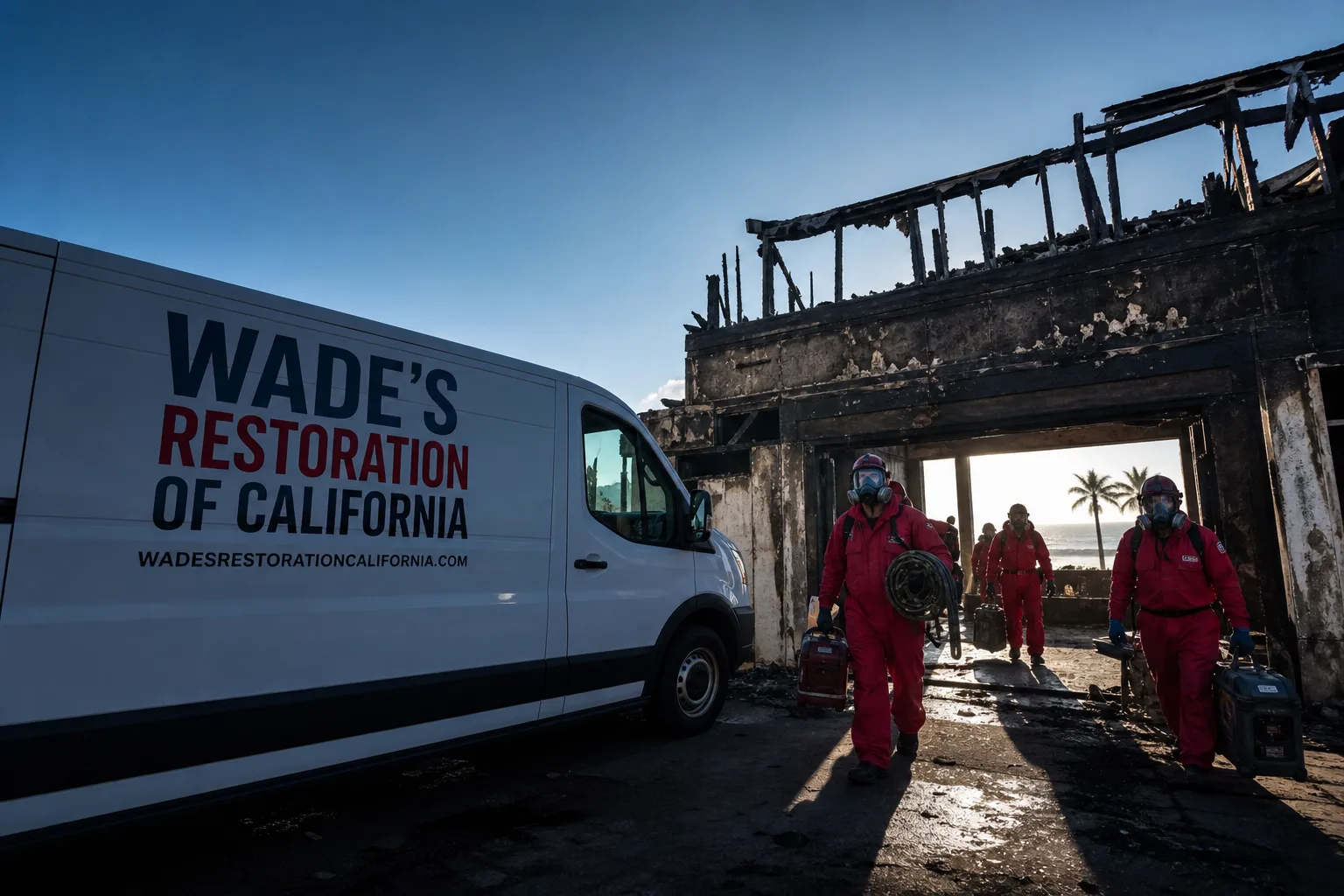
Fast, Reliable Mold Remediation Across Santa Barbara
Mold remediation in Santa Barbara typically runs $1,800 to $6,200 for a standard contained removal, and Wade’s crew can usually be on site within a few hours of your call. The houses here hide moisture differently than almost anywhere else on the California coast, which is why we treat every Santa Barbara job as its own puzzle rather than a template. Call (855) 915-0646 and you’ll get Wade himself on the phone, not a call center. He’ll ask the right questions, tell you straight what he thinks, and head out to look.
Most homeowners in the 93105, 93106, 93107, and 93108 ZIP codes don’t call us the day they see mold. They call us weeks after a rain event, when a smell has drifted in from a wall cavity or a crawl space has turned musty. By then the moisture has usually been working behind stucco for a while. That’s not a failure on your part. It’s how moisture behaves here, and it’s exactly why a local crew that knows Santa Barbara’s buildings beats a generic team with a sprayer.
Why Wade’s Restoration of California Is Santa Barbara’s Preferred Mold Remediation Company
Wade Ferris has been in the restoration trade since 2007, and his name sits on every contract. When you call about mold in a Santa Barbara home, you’re not getting a rotating cast of subcontractors. Wade runs the job, Wade answers the phone, and if you’re in our county, there’s no trip charge to come look. That’s a standing offer, not a seasonal special.
Every mold job we take on is covered by the 90-Day Done Right Promise, in writing. If the mold comes back or the containment wasn’t done properly, Wade makes it right. He also keeps a daily moisture log and hands you the full record when the job is done. Almost nobody in this trade does that, and it matters here because Santa Barbara homes don’t dry out on a predictable schedule. You’ll see the readings yourself, day by day.
When the first big December or January storm hits Mission Canyon or the San Roque foothills, the phones ring for weeks. Our response time to Santa Barbara neighborhoods is measured in hours, not days. Wade can have extraction and drying equipment running the same day you call, and if your insurance adjuster needs documentation, Wade talks to them directly. You’re not the messenger between two parties who don’t answer each other’s calls.
Our Mold Remediation Services in Santa Barbara
Mold Inspection & Testing
Before we touch a wall, we find out what’s actually going on inside it. In Santa Barbara, that means checking behind stucco, pulling switch plates, and using moisture meters to map where water has traveled. A surface patch of mold on drywall in a Mission Revival home is rarely the whole story. We test, we document, and we show you the readings before anyone opens a wall.
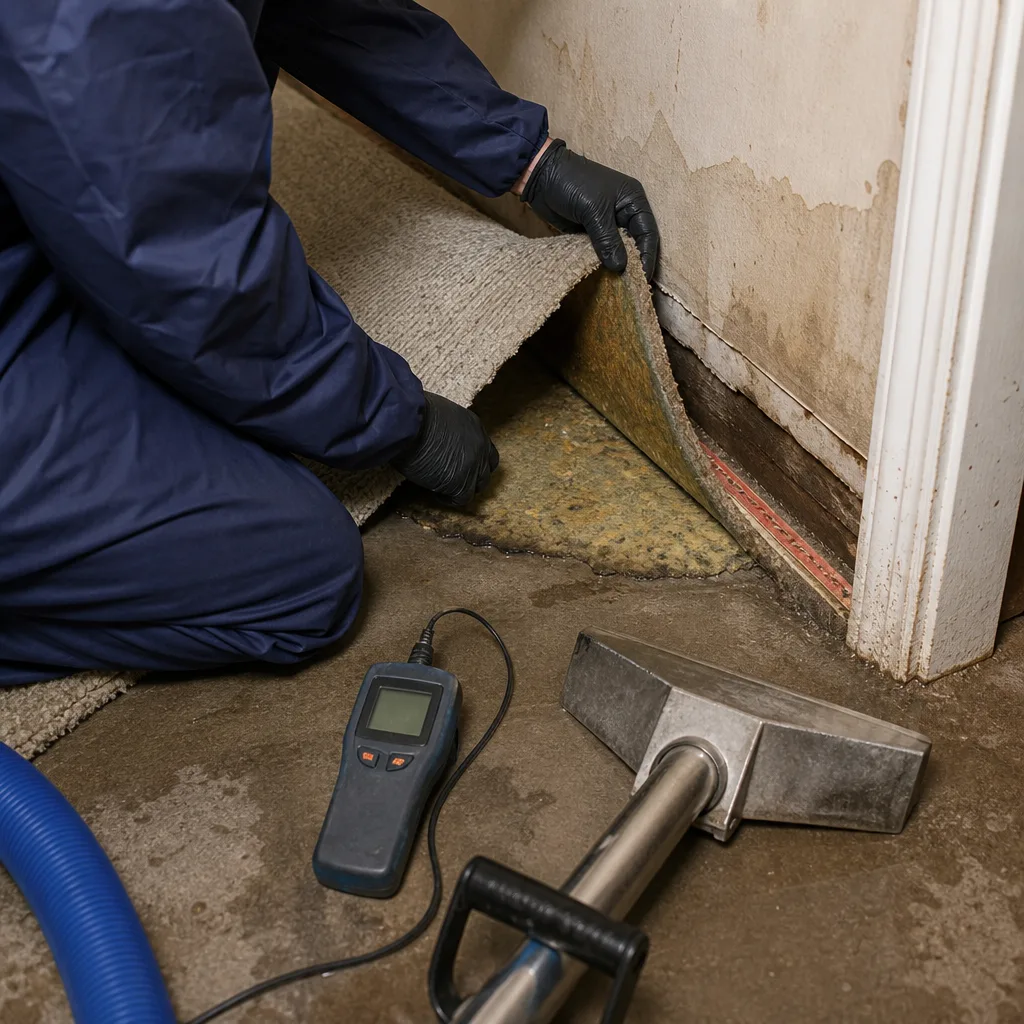
Mold Removal
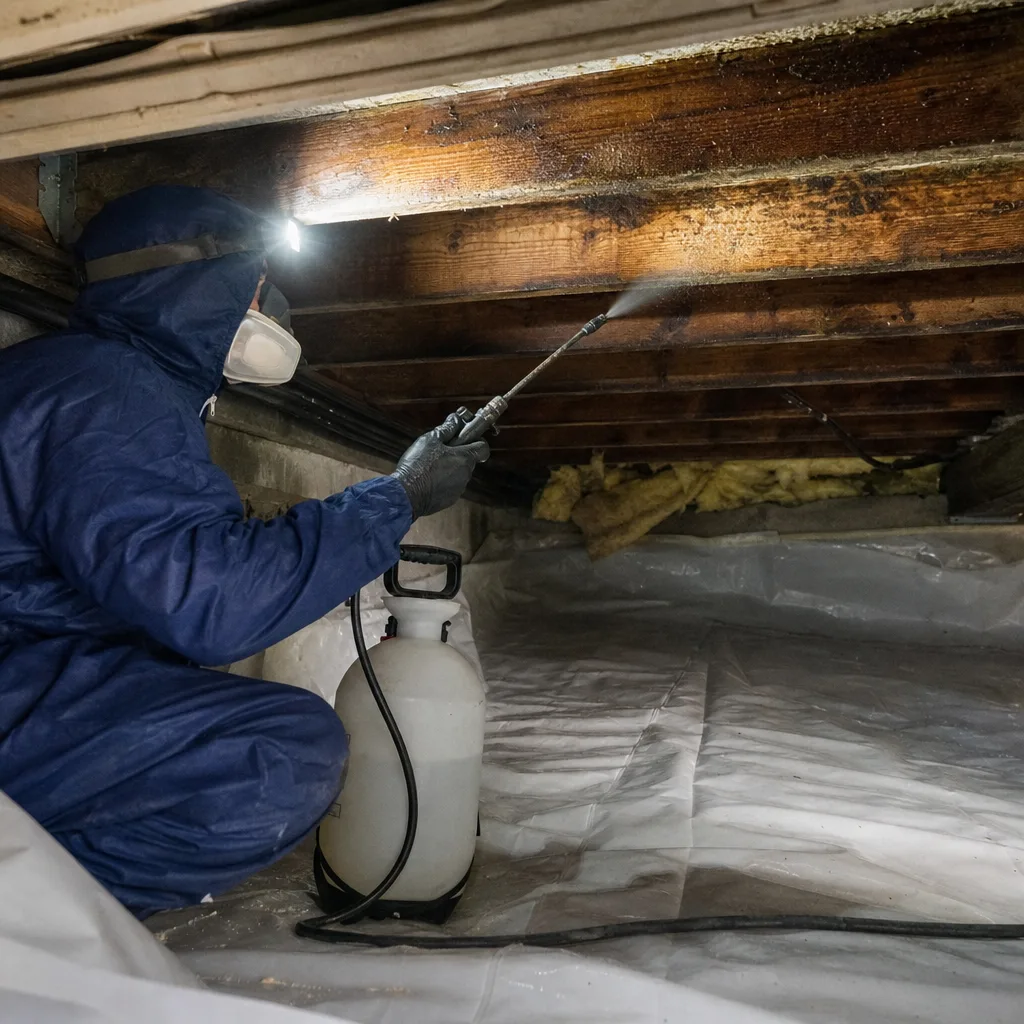
Once we know the extent, we contain the area with negative air pressure and remove affected material with HEPA filtration running. In Santa Barbara houses, this often means removing lath-and-plaster or drywall from wall cavities that have been wicking moisture from hairline stucco cracks or failed tile grout. We cut precisely, so the repair patch stays as small as it can while still getting everything that’s contaminated.
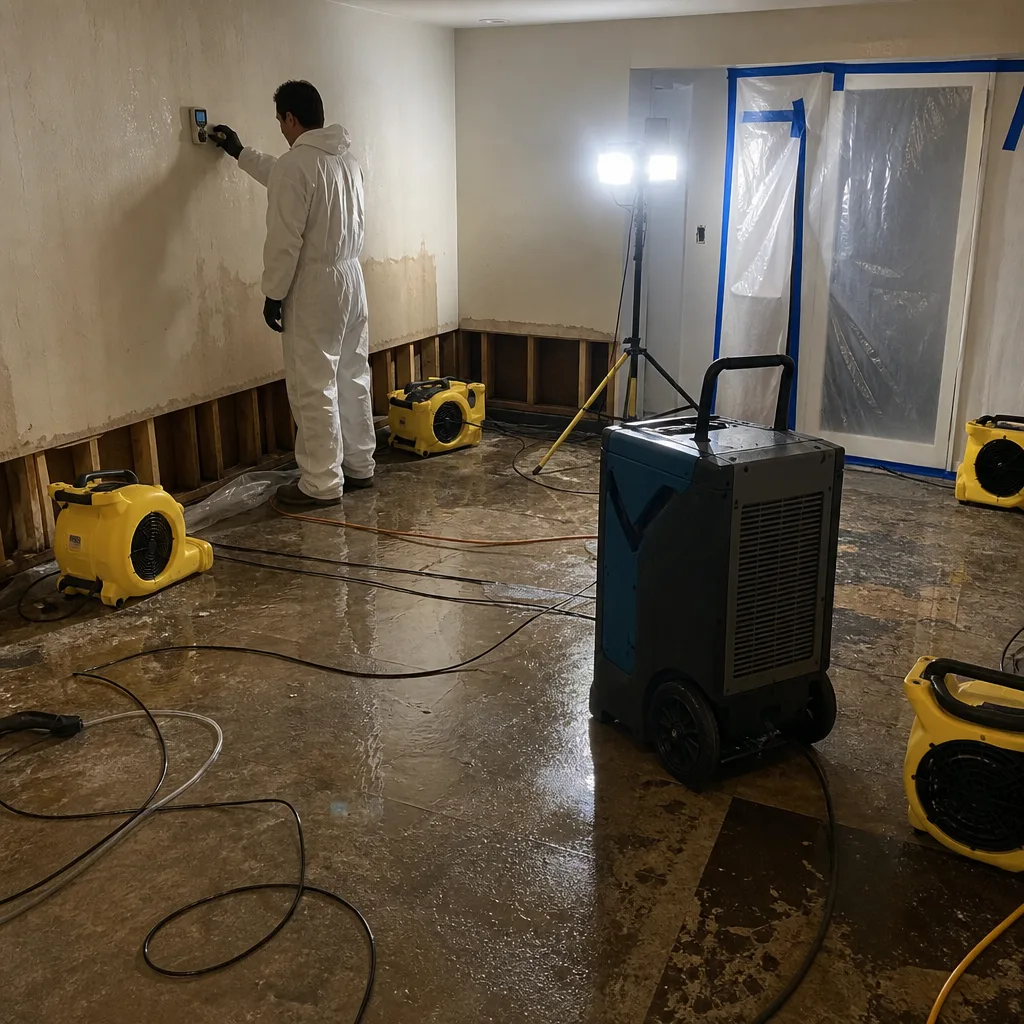
Black Mold Remediation
Black mold gets people’s attention fast, and for good reason. But the black staining you see isn’t always the toxic species people read about. Either way, we treat it the same: full containment, HEPA air scrubbing, and removal to the structural framing with spore-kill treatment on exposed wood. In Santa Barbara’s older stucco homes, black mold often starts in the wall cavity behind a leaking window flashing or a cracked mission tile valley, and you won’t know until it’s advanced. We find the source before we call the removal done.
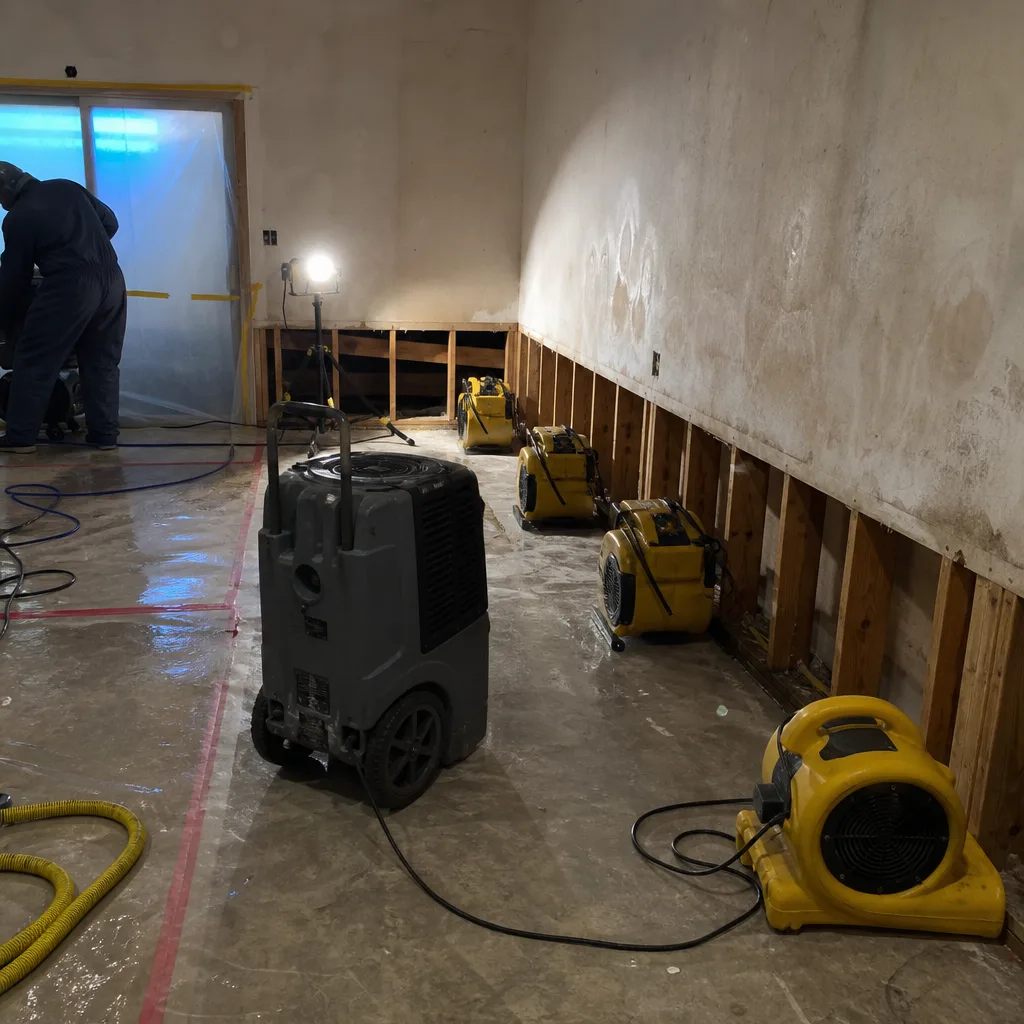
Air Quality Restoration
After the removal, the air still holds what the demolition kicked up. We run HEPA-scrubbed negative air until post-remediation air samples show the spore load has dropped to normal outdoor background levels. In a sealed-up Spanish Colonial Revival house with thick stucco walls, air moves differently than in a wood-frame bungalow. We understand how to flush those spaces and verify the numbers. That’s the IICRC standard, and it’s what we do on every job.
What happens when you call
- 1
A real person answersNo phone trees - you reach a local pro.
- 2
You get an upfront price rangeHonest numbers before anyone is dispatched.
- 3
A background-checked tech heads outLicensed & insured, dispatched right away.
- 4
You approve before work beginsNothing starts until you say go.
Trusted Brands We Service in Santa Barbara
We run professional-grade equipment from Dri-Eaz, Phoenix, and XPOWER, and we’re IICRC-certified and RIA-affiliated. That’s not a marketing line; it’s the gear and the training that let us dry Santa Barbara’s stucco wall cavities properly instead of guessing. Our Mold Remediation team stocks replacement gypsum, antimicrobial treatments, and containment supplies locally, so we’re not waiting on a warehouse in another county when your job is open. We also keep ARB-appropriate matching stucco and tile contacts ready for the exterior repairs that almost every Santa Barbara job eventually needs.
Common Mold Remediation Problems We See in Santa Barbara Homes
- Hidden moisture behind stucco. The post-1925 rebuild left Santa Barbara with thick earthen plaster exteriors across most neighborhoods. Water seeps in through hairline cracks and travels deep inside the wall assembly before any exterior staining appears. By the time you smell it, the mold has usually been growing for weeks or months.
- Mission tile roof failures. Fired clay mission tiles crack, shift, and separate over the dry summer months. When the first atmospheric river hits in December, water pours into attic spaces and wall cavities, feeding mold that stays hidden behind ceiling plaster. We see this repeatedly in the 93108 foothill lots along the San Ysidro and Romero creek drainages.
- Post-wildfire debris contamination. After a burn, the hydrophobic soil crust turns ordinary rain into high-velocity debris flows. Sediment from those flows contains fire-ash-laden material that CalRecycle classifies as potentially hazardous. A standard water-damage mold protocol doesn’t handle it. We test for it, and we use the correct spore-kill chemistry and disposal manifests when it’s present.
- ARB compliance surprises. If a contractor replaces a cracked mission tile or damaged stucco with non-matching material, the city’s architectural review board can issue a stop-work order. That stalls your mold remediation mid-job. We plan for ARB-approved matching materials from the start, so the work doesn’t grind to a halt.
Pricing for Mold Remediation in Santa Barbara, CA
Mold inspection and testing in Santa Barbara generally runs $350 to $750 depending on the size of the home and how many air samples you need. A contained removal in a single room or wall cavity runs $1,800 to $4,200. A full crawl space remediation with vapor barrier replacement typically lands between $3,500 and $6,500. Black mold jobs that require full containment across multiple rooms can push toward $8,000, especially when ARB-matching exterior repairs are part of the scope. What moves the number is how far the moisture traveled, what’s behind the walls, and whether fire-ash debris is in the mix. Wade gives you a written scope before anyone opens a wall. Call (855) 915-0646 for a free estimate, and if you’ve already got a written quote from someone else, bring it in. Wade offers a free second opinion on any written estimate, and seniors and veterans always get 10% off.
We Also Serve Cities Near Santa Barbara
Wade’s crew covers Santa Barbara and the surrounding coastal foothill communities: Montecito, Goleta, Isla Vista, and Carpinteria. If you’re in any of those areas, the same crew, the same moisture logging, and the same written promise apply. We know the creeks, the burn zones, and the stucco. That local knowledge is the whole job out here.
Serving Santa Barbara, CA - Our Local Coverage Area
We’re based in the Santa Barbara area and know this community well. Use the map below to see our service coverage - if you’re nearby, we can almost certainly help.
FAQs - Mold Remediation in Santa Barbara
The first atmospheric river after a long dry season finds every hairline crack the summer opened up in your stucco and tile grout, and the water travels deep inside the wall before the surface ever stains. You notice it after that first rain because that’s when the moisture finally reaches the interior drywall or plaster and feeds spores that were dormant all summer. The mold didn’t start that week. The rain just completed the path. Call (855) 915-0646 and Wade will trace where the water actually entered, not just treat the visible patch.
Yes, it does. Post-fire debris sediment is chemically hydrophobic and often carries fire-ash-laden residues that CalRecycle classifies as potentially hazardous. Standard flood-water mold protocols don’t account for that chemistry. We test for ash debris and use the correct spore-kill treatments and disposal manifests when we find it. If you’re in 93108 near the San Ysidro or Romero creek drainages, we’ll check for this specifically.
If the replacement tile doesn’t match the original in material, color, and profile, you can trigger a stop-work order from the architectural review board. Santa Barbara’s Spanish Colonial Revival mandate is one of the oldest in California, and it applies to nearly every home in the city. We source ARB-appropriate matching materials before we start, so the mold work doesn’t get stalled by a code compliance issue. You can call (855) 915-0646 and we’ll tell you what’s involved for your specific tile and roof slope.
Insurers often try to separate mold damage from the water event that caused it, especially when the original water source was a wildfire-related debris flow or a storm that happened months before the mold appeared. In Santa Barbara, that gap between the triggering event and the visible mold is normal, and your adjuster may need documentation showing the moisture source and the timeline. Wade deals with the adjuster directly, provides photo documentation and moisture logs, and makes sure the claim reflects what actually happened in your home.
After a burn, the hydrophobic soil crust reduces water absorption, so rain runs off fast and hard, carrying debris sediment into low-lying drainage paths and crawl spaces. The sediment holds moisture differently than ordinary runoff and creates ideal mold conditions in the weeks after the storm. If you’re downstream of Mission Canyon or Sycamore Canyon, that’s why the crawl space smells musty only after those specific rain events. Call (855) 915-0646 and we’ll inspect the crawl space, check for ash debris, and give you a written scope for what’s actually needed.
Written by Wade Ferris, Owner at Wade’s Restoration of California. Call (855) 915-0646 for mold inspection, testing, and remediation in Santa Barbara and the surrounding foothill communities.