
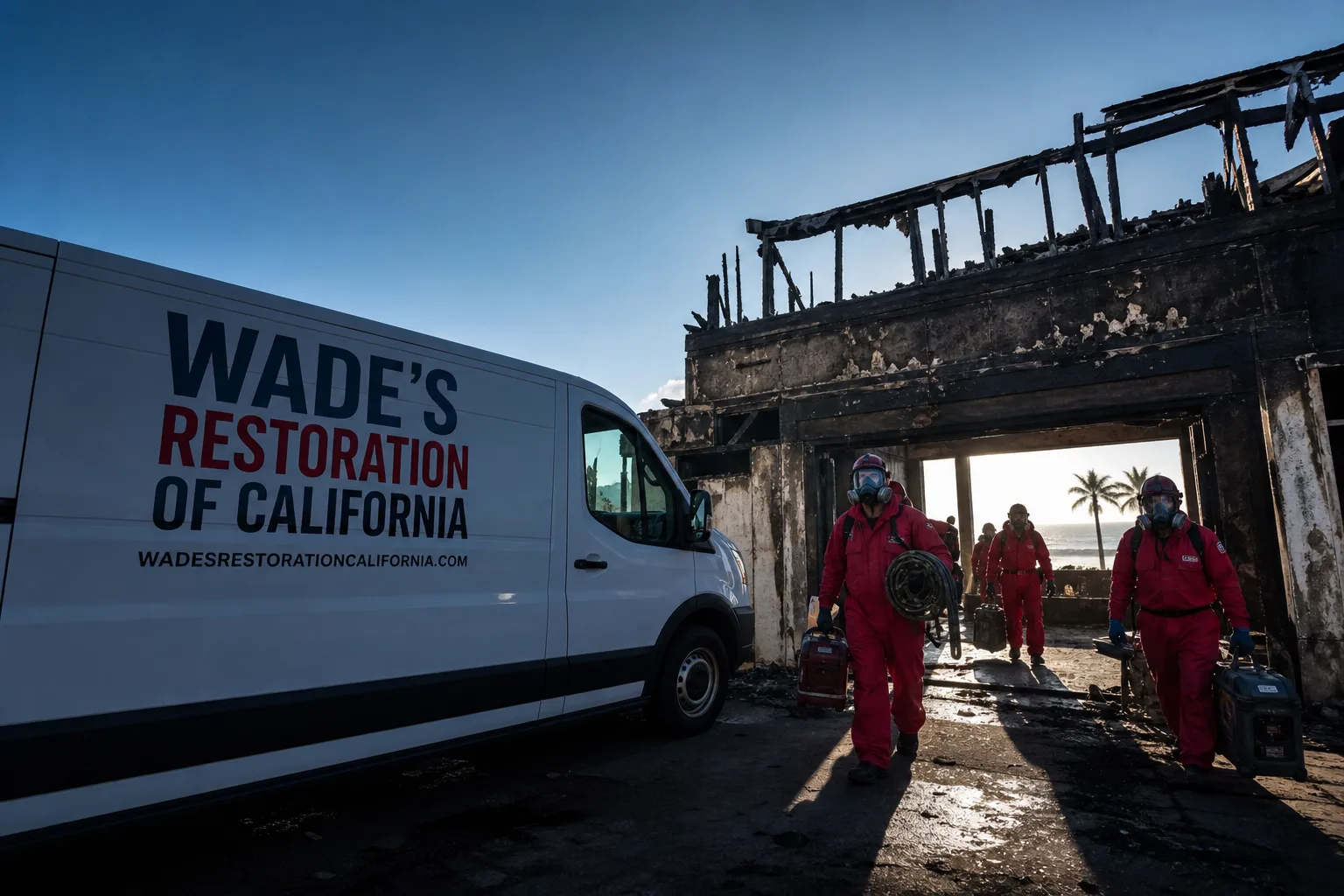
Fast, Reliable Mold Remediation Across Pinole
Mold remediation in Pinole typically costs $1,800 to $6,500 depending on how far the colony has spread and whether crawl spaces or subfloor framing are involved. Most jobs in Pinole’s 94564 ZIP take two to five days from containment to clearance testing. If you’re seeing dark staining on drywall, smelling something musty that won’t fade, or standing water under the house after rain, call Wade’s Restoration at (855) 915-0646. Wade answers his own phone and can have a crew at your Pinole home the same day.
We work the flatland blocks near Pinole Creek and the hillside tracts above I-80 constantly. These two zones fail differently, and knowing which one you’re in changes how we attack the job. That local knowledge is the difference between a mold problem that’s actually gone and one that comes back after the next storm.
Why Wade’s Restoration of California Is Pinole’s Preferred Mold Remediation Company
Wade Ferris founded this company in 2007 and put his own name on the truck. He’s not a franchise manager reading from a corporate playbook. He’s the guy who shows up at your door in Pinole, walks your crawl space himself, and hands you a written scope of work before anything gets torn out. That matters to homeowners who’ve already been burned by an outfit that quoted one number on the phone and a different one at the door. There’s no bait-and-switch here. There’s a real person with a published address and license number.
Pinole customers call us because we answer live at midnight, not with a call center script. When a winter atmospheric river pushes water up through your slab perimeter near Pinole Creek, you want someone on the road, not someone promising a callback in two business days. Wade heads out. That’s the whole operational model. Ask anyone on your street. The name keeps coming up for a reason.
Every mold job we do in Pinole carries the 90-Day Done Right Promise. If it’s not done right, Wade makes it right, in writing, on the contract before work starts. And here’s something almost nobody in this trade does: Wade takes moisture readings every single day and hands you the full log when the job’s done. You can see the numbers dropping. You can see exactly when your house hit dry-standard. No mystery. No “trust us.” Just documentation.
Our crews are IICRC-certified, RIA-affiliated, and background-checked. Uniformed. Professional-grade equipment from Dri-Eaz, Phoenix, and Injectidry. Not rental-shop fans pointed at wet drywall. We’re the local alternative to the big franchised outfits, and the difference shows in how we treat your house.
Our Mold Remediation Services in Pinole
Mold in Pinole homes rarely announces itself. It starts quietly, under the subfloor or behind a bathroom wall, and by the time you see staining on the drywall, the colony is already established. Here’s how we handle the most common calls in this city.
Mold Inspection & Testing
We inspect first. Every time. That means moisture mapping with thermal imaging, visual inspection of crawl spaces and attic framing, and air or swab sampling when we need to identify the specific species. In Pinole’s older tract homes along San Pablo Avenue, we routinely find mold activity in crawl spaces that have never flooded visibly but sit above a water table that rises every winter. The inspection is where we find it before drywall gets cut.
If you already have a written estimate from another company, bring it to us. We’ll give you a free second opinion, no charge. Wade will walk the same spaces and tell you honestly whether that scope is accurate or whether you’re being oversold.
Crawl Space Treatment
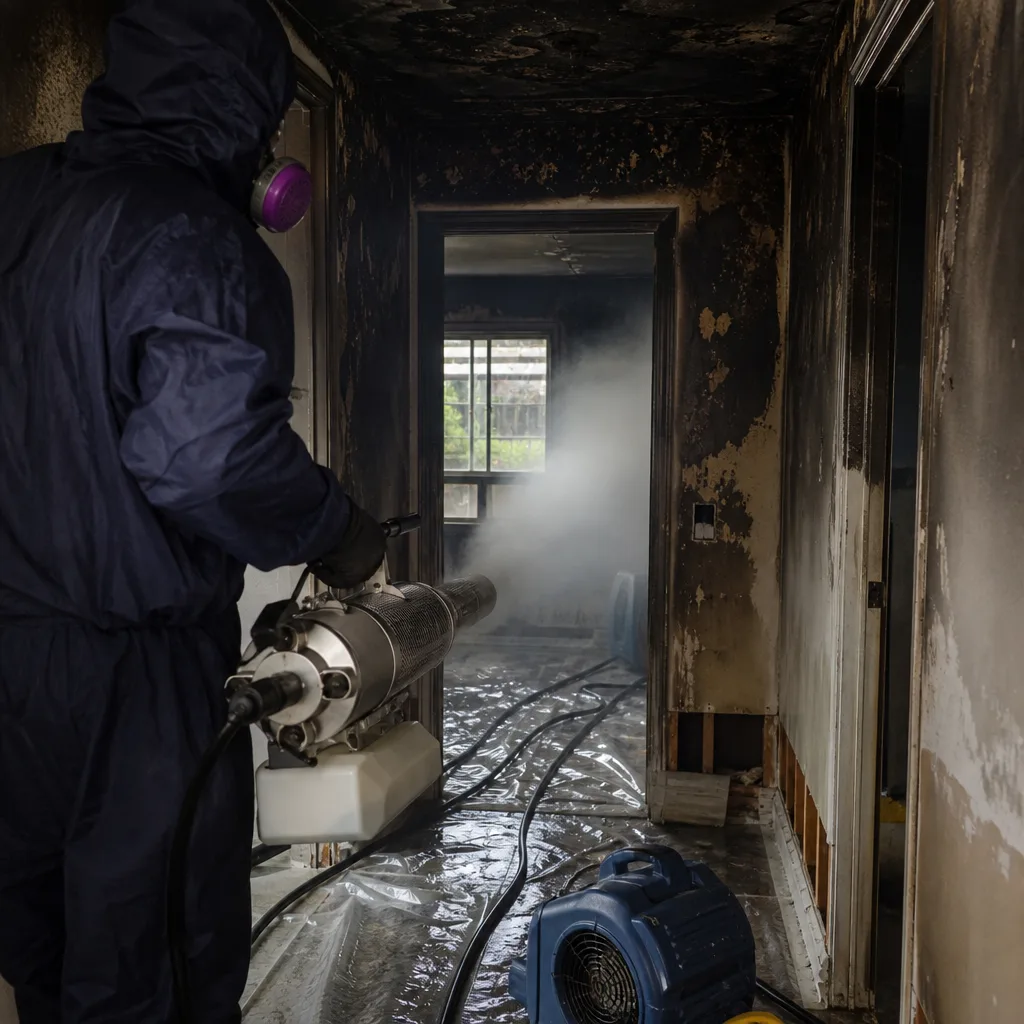
Crawl space mold is the most common remediation call we get in Pinole, and it’s the one most homeowners never see coming. Standing water under a house doesn’t need a storm to appear. In the flatland blocks where Pinole Creek drains toward San Pablo Bay, the water table rises fast enough during winter storms to push moisture up through slab perimeters and vapor barriers. You’ll never see it from the living room. But the subfloor is getting wet, and mold starts on the framing within 48 to 72 hours under those conditions.
Our Mold Remediation team handles crawl space treatment with containment, HEPA air scrubbing, removal of saturated insulation, antimicrobial treatment of framing, and then the real fix: vapor barrier repair or replacement, drainage correction, and humidity control so it doesn’t come back. In Pinole, skipping that last part is the mistake that leads to relapse jobs. If the water has a path in, mold has a future there.
Mold Removal
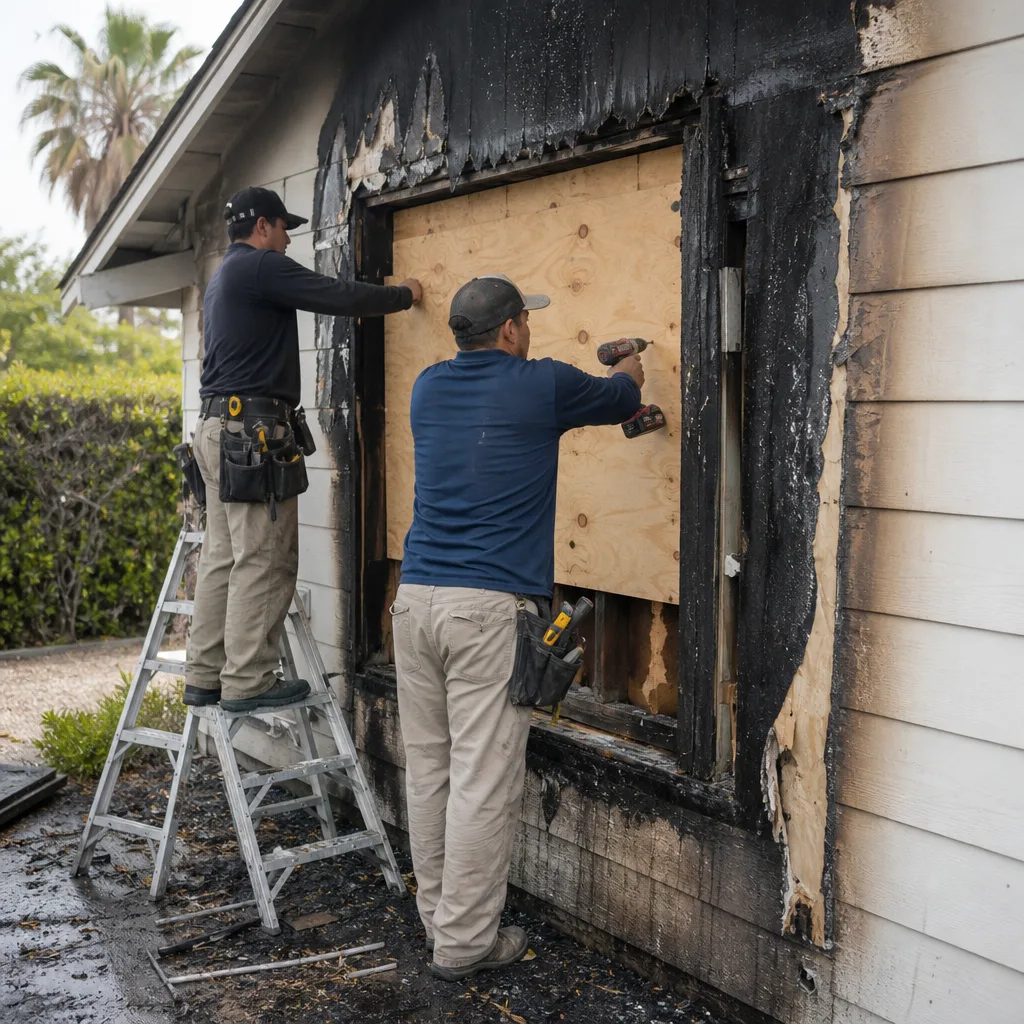
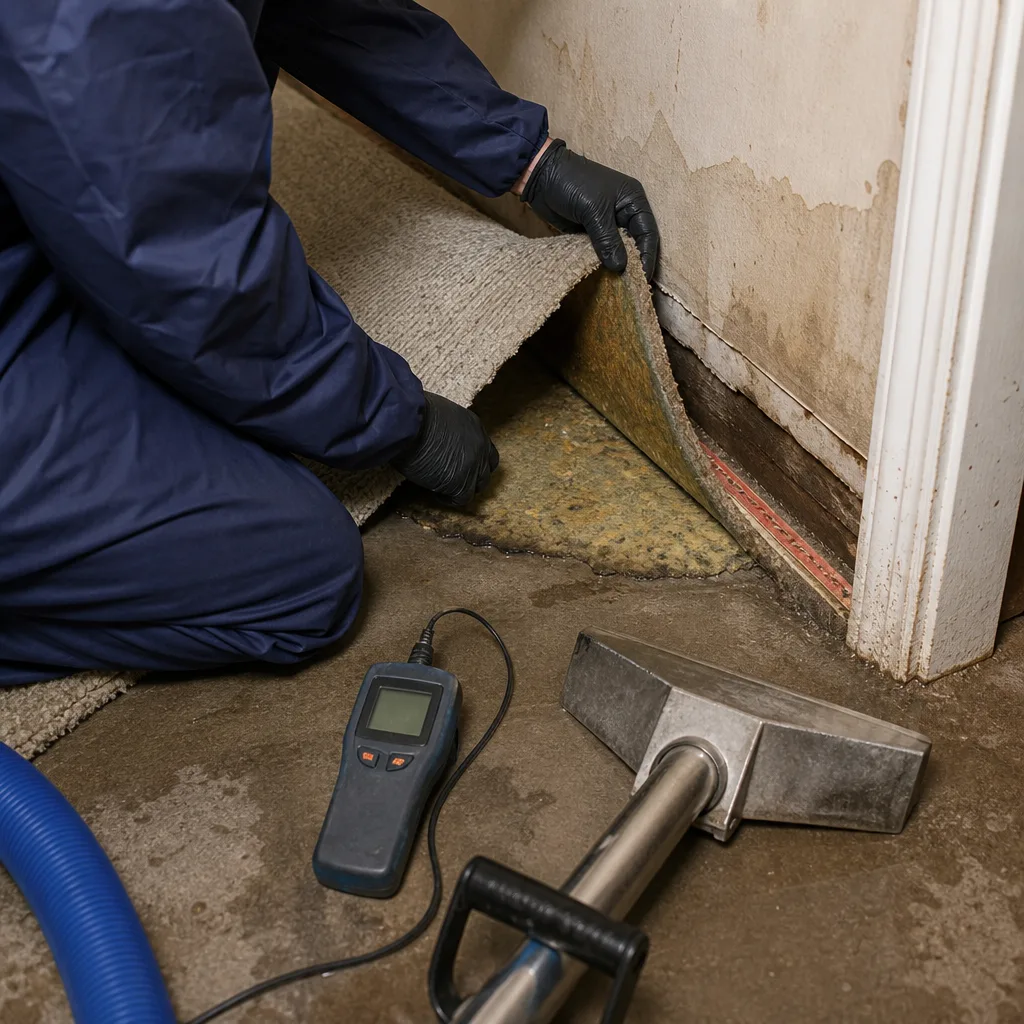
Removal means physically taking out contaminated material. Drywall. Insulation. Sometimes sections of subfloor or baseboards. It’s not bleaching a surface and calling it done. We set up containment with negative air pressure so spores don’t spread through your Pinole home during demolition, bag and remove everything, then HEPA-vacuum and wipe down the remaining framing. After that, we dry to industry standards, not to what feels dry to the touch. Moisture meters tell us the truth.
Black Mold Remediation
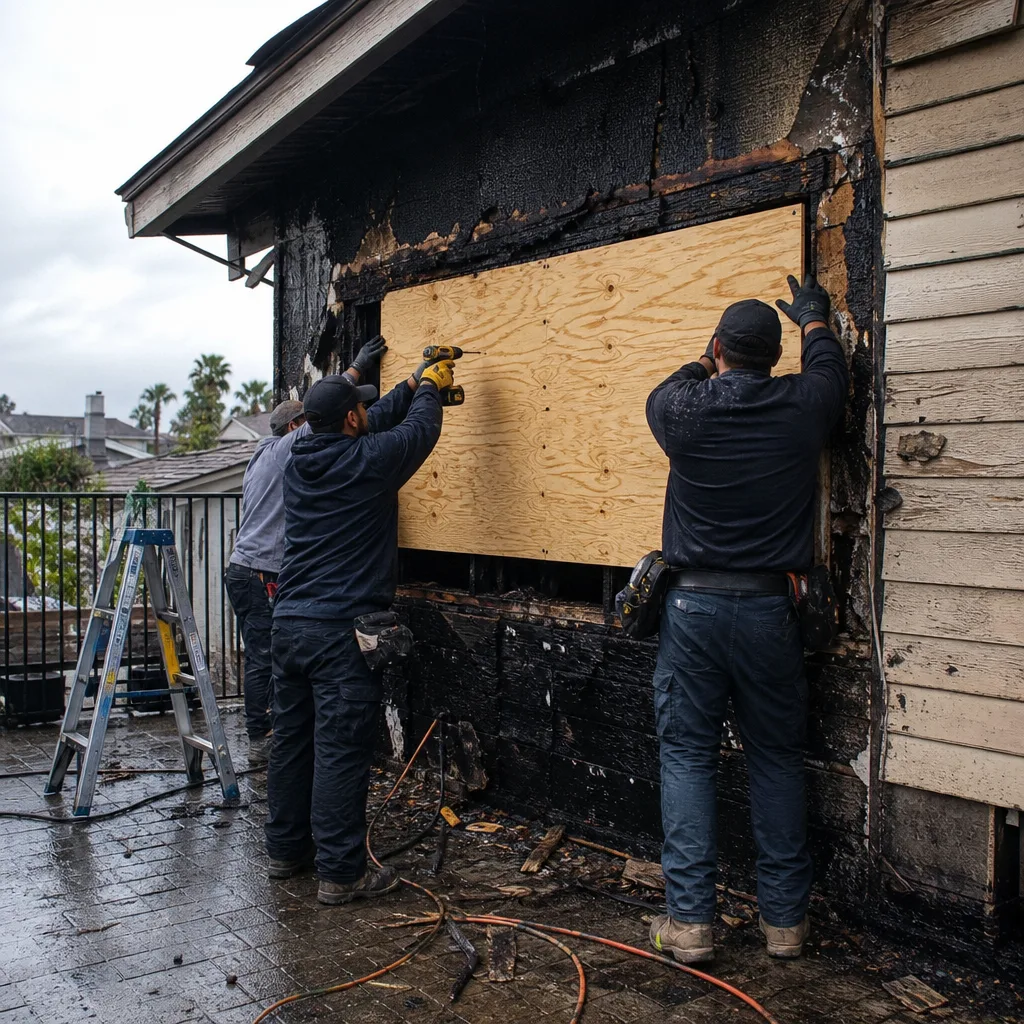
“Black mold” is the term that sends people searching, and in Pinole’s hillside homes above I-80, we do find Stachybotrys more often than you’d expect. That’s because hillside runoff dripping into a foundation wall for weeks creates exactly the persistent, high-moisture environment it prefers. Black mold in those homes usually means a drainage problem at the exterior, not just a patch of mold inside. If we only treat the visible colony and ignore the water running toward the foundation every time it rains, we’ve done half a job. So we fix both. The remediation and the water path.
Air Quality Restoration
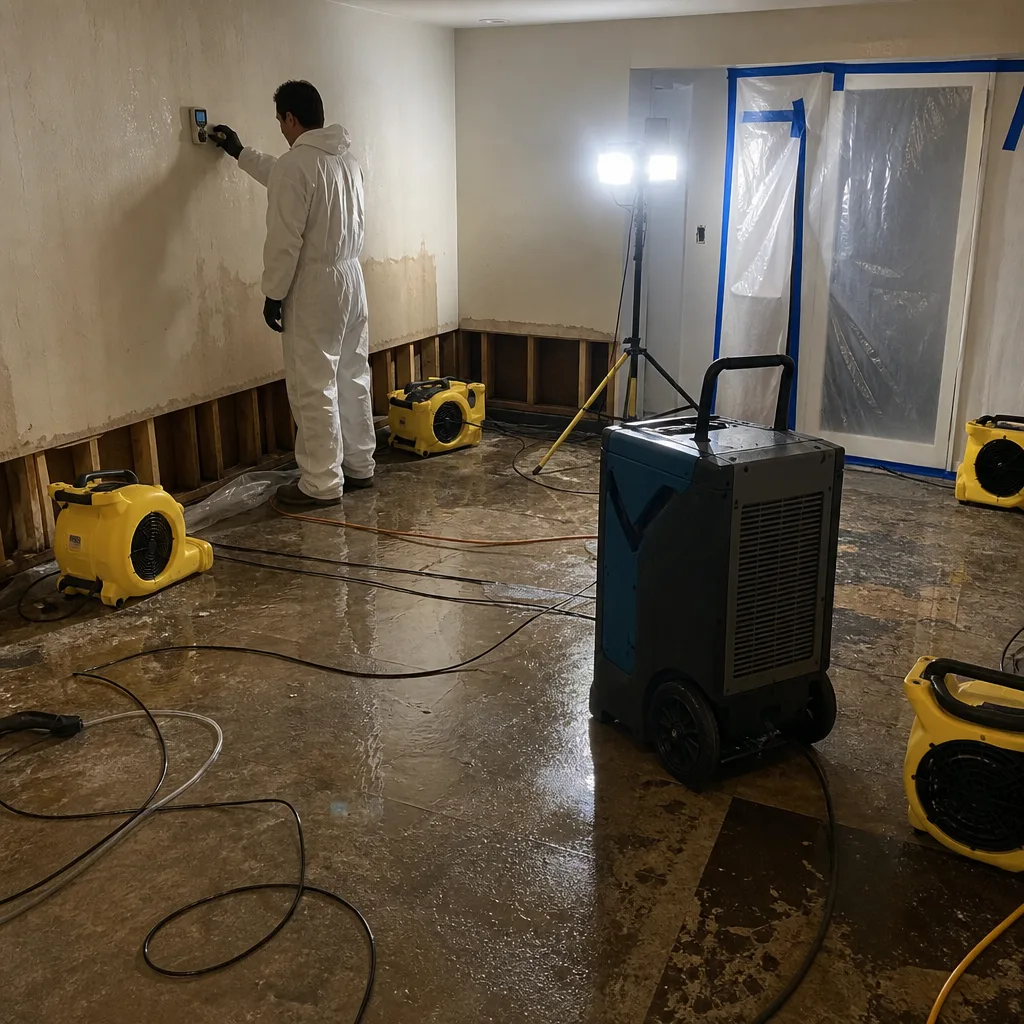
After the physical removal is done, the air in your home still carries whatever the demolition stirred up. We run HEPA air scrubbers during the job and do a final air sampling before we call the job complete. In Pinole’s older craftsman-era homes near Old Town, plaster-and-lath walls hold moisture differently than drywall, and they need longer drying times to hit clear-air standards. We account for that. Clearance means testing confirms the air is safe to breathe, not just that the visible mold is gone.
What happens when you call
- 1
A real person answersNo phone trees - you reach a local pro.
- 2
You get an upfront price rangeHonest numbers before anyone is dispatched.
- 3
A background-checked tech heads outLicensed & insured, dispatched right away.
- 4
You approve before work beginsNothing starts until you say go.
Common Mold Remediation Problems We See in Pinole Homes
Pinole throws a particular set of challenges at homeowners, and we see the same failure patterns repeat across the 94564 ZIP:
- Flatland crawl spaces that flood without any visible exterior water. Pinole Creek’s drainage corridor sits inside documented FEMA flood zones. When the bay-level water table rises during winter storms, it pushes moisture up through slab perimeters and vapor barriers, even on blocks where the street stays dry. Homeowners assume no visible flood means no water problem. The crawl space says otherwise.
- Hillside runoff being mistaken for a simple leak. The terraced post-WWII tracts above I-80 channel rainwater downhill in a hurry. It doesn’t just find a crack and stop. It finds every crack, every weep hole, every tiny gap in the foundation, and it keeps coming for weeks after a storm. Treating that as a one-time leak means you’ll be back again next season.
- Mold on subfloor framing that never shows on drywall. By the time you see staining on a wall, the colony underneath may have been active for weeks. Pinole’s 1950s and 1960s tract construction features minimal subfloor ventilation, so moisture trapped under the house finds the framing before it finds your drywall. If you smell must but see nothing, check the crawl space.
- Post-storm “finished” jobs that relapse. We hear this from people who’ve had other companies out before. The crew dries what’s wet, treats what’s moldy, and pulls out. But they never checked the water table or the hillside drainage path. The next atmospheric river arrives, the same conditions return, and mold is back within weeks. In Pinole, the water source is the job. The mold is just the symptom.
Pricing for Mold Remediation in Pinole, CA
What you’ll pay depends on where the mold is and how far it’s traveled, and here are honest ranges for the Pinole market. A basic crawl space mold treatment with containment and antimicrobial fogging runs $1,800 to $3,500 for a standard tract home. Full mold removal involving drywall demolition, subfloor repair, and structural drying runs $3,500 to $6,500. Whole-home air quality restoration after a large-scale contamination event can reach $8,000 to $12,000, especially in hillside homes where drainage correction is part of the job.
| Service | Typical Range in Pinole |
|---|---|
| Mold inspection with moisture mapping | $250-$500 |
| Crawl space treatment (tract home) | $1,800-$3,500 |
| Mold removal with drywall/surface demo | $3,500-$6,500 |
| Black mold remediation (hillside home with drainage fix) | $4,000-$8,000 |
| Post-remediation air quality clearance testing | $400-$800 |
Every estimate is free and in writing before work starts. Better yet: if you have a written estimate from another company, Wade will review it with you and give his honest read, no charge. There’s a Senior & Veteran 10% discount on every job, always. And there’s no trip charge if you’re inside Contra Costa County. Call (855) 915-0646 and Wade will walk it with you over the phone before anyone puts boots in your crawl space.
We Also Serve Cities Near Pinole
Our Pinole crews work the whole stretch of the east bay shoreline. We take mold calls in Tara Hills, Hercules, El Sobrante, and Rodeo every week. Same response time, same written-scope-before-we-start policy, same 90-Day Done Right Promise. If you’re a few minutes up the road, you get the same service. No trip charge for any of these nearby cities.
Serving Pinole, CA - Our Local Coverage Area
We’re based in the Pinole area and know this community well. Use the map below to see our service coverage - if you’re nearby, we can almost certainly help.
FAQs - Mold Remediation in Pinole
The water table in Pinole’s creek corridor rises fast during winter storms, pushing moisture up through slab perimeters and vapor barriers. That moisture sits in the crawl space where subfloor framing soaks it up, even when the street outside looks dry. If you live near Pinole Creek or anywhere in the FEMA-designated flood zone, assume the crawl space is part of any mold investigation. Call (855) 915-0646 and we’ll check it before you spend money on wall repairs you don’t need.
Faster. Pinole sits directly on the San Pablo Bay shoreline, which means higher ambient marine humidity than inland Contra Costa cities like Concord or Walnut Creek. Under those conditions, mold colonization can begin in 48 to 72 hours after a water event, compared to four to five days in drier areas. That compressed window is why aggressive drying protocols, the kind some contractors would call over-spec, are actually standard practice here. If you’ve had water, get on it fast. We answer live at (855) 915-0646, even at midnight.
Hillside homes get water from runoff, not rising water tables. The terraced post-WWII tracts above I-80 channel rainwater downhill directly into foundations. That means the mold we find is usually behind foundation walls and on floor framing where water has been entering consistently, not just after one big storm. The remediation has to include exterior drainage correction or the internal work won’t hold. If a contractor only treats the indoor mold and ignores the hill, they’re leaving the water source in place.
Yes. Plaster-and-lath walls, which are common in the older homes near Old Town Pinole, hold moisture differently than drywall and take longer to dry. That means we set longer drying cycles and monitor with daily moisture readings before we declare the job done. Some of these homes also still have lead paint under newer layers, which changes how we do demolition and disposal. If your house predates 1960, we factor that in before we cut anything.
Yes, and it’s one of the most common calls we get each winter. A crawl space that was bone dry in August can have standing water in February just from the water table rising. That water doesn’t come through the walls; it comes up through the ground. A proper vapor barrier helps, but if the barrier is old or torn, the moisture gets through. If you live in the flatland blocks near Pinole Creek, check your crawl space after every major storm. We’ll come out and check it with you. First inspection call is free: (855) 915-0646.
Written by Wade Ferris, Owner at Wade’s Restoration of California, serving Pinole and the surrounding East Bay communities since 2007. To wade is what you do through a flooded crawl space at two in the morning, and it happens to be his name.