
Fast, Reliable Mold Remediation Across Northridge
Mold remediation in Northridge typically costs $1,800-$6,500 depending on the size of the affected area and whether the growth is isolated or tied to deeper moisture problems. Most jobs are completed within 3-5 days. If you’ve found mold, call (855) 915-0646 and Wade Ferris will answer the phone himself. He’ll tell you straight what needs to happen, what it should cost, and whether you’re dealing with a surface problem or something hiding inside a wall cavity. Northridge homes have a specific vulnerability most people never see until the mold shows up: the earthquake legacy from 1994, and we’ll get into that below.
Why Wade’s Restoration of California Is Northridge’s Preferred Mold Remediation Company
Wade Ferris started this company in 2007 because he saw how restoration work was done in the Valley and didn’t like it. Too much rushing, too little documentation, and homeowners left guessing. That’s why every job gets a written scope before we start, daily moisture readings you get to see, and the full log handed to you when we finish. Nobody else in this trade does that in Northridge. Ask anyone who’s had a crew out and didn’t get to see a single number from the drying equipment.
We’re locally owned and owner-operated. Wade lives here, works here, and you’ll run into him at the hardware store. That’s the accountability mechanism a national chain can’t offer. When you call (855) 915-0646, Wade answers. Not a call center. Not a voicemail tree. He’ll talk through what you’re seeing and tell you if it’s urgent or if it can wait a day. And if he needs to be out there, he heads out. Every water, fire, and mold restoration job carries the 90-Day Done Right Promise in writing. If it’s not done right, he makes it right.
Northridge customers also get honest options. We offer a free second opinion on any written estimate. Show us what another company quoted and Wade will tell you if it’s fair, inflated, or missing something important. No charge for that.
What Makes Local Knowledge Matter Here
Northridge isn’t like other San Fernando Valley cities. This is the epicenter of the 1994 Northridge earthquake, and three decades later, restoration contractors here routinely encounter the downstream consequences: post-quake patch repairs that have become chronic water-intrusion points, stucco facades with undetected micro-fractures that funnel moisture into wall cavities, and soft-story apartment buildings that were hastily repaired, or under-remediated, in the insurance rush of 1994-1996. No neighboring city carries this specific legacy of hidden structural and moisture damage tied directly to a named disaster. A mold problem in a Northridge home often traces back to that history, and if you don’t know to look for it, you miss the source.
Our Mold Remediation Services in Northridge
Our Mold Remediation team handles everything from a small bathroom outbreak to full containment and rebuild. Here’s what that looks like in Northridge specifically.
Mold Inspection & Testing
Before we remove anything, we need to know what we’re dealing with and where it’s been traveling. In Northridge, that means checking the usual places: under sinks, around windows, behind stucco walls that show hairline cracks from decades of settling and seismic history. A typical mold inspection in Northridge runs $250-$500 and includes moisture mapping with a thermal camera and air sampling when needed. We don’t test for the sake of billing you extra. We test because it tells us whether the mold is localized or whether spores have spread through the HVAC system.
Mold Removal
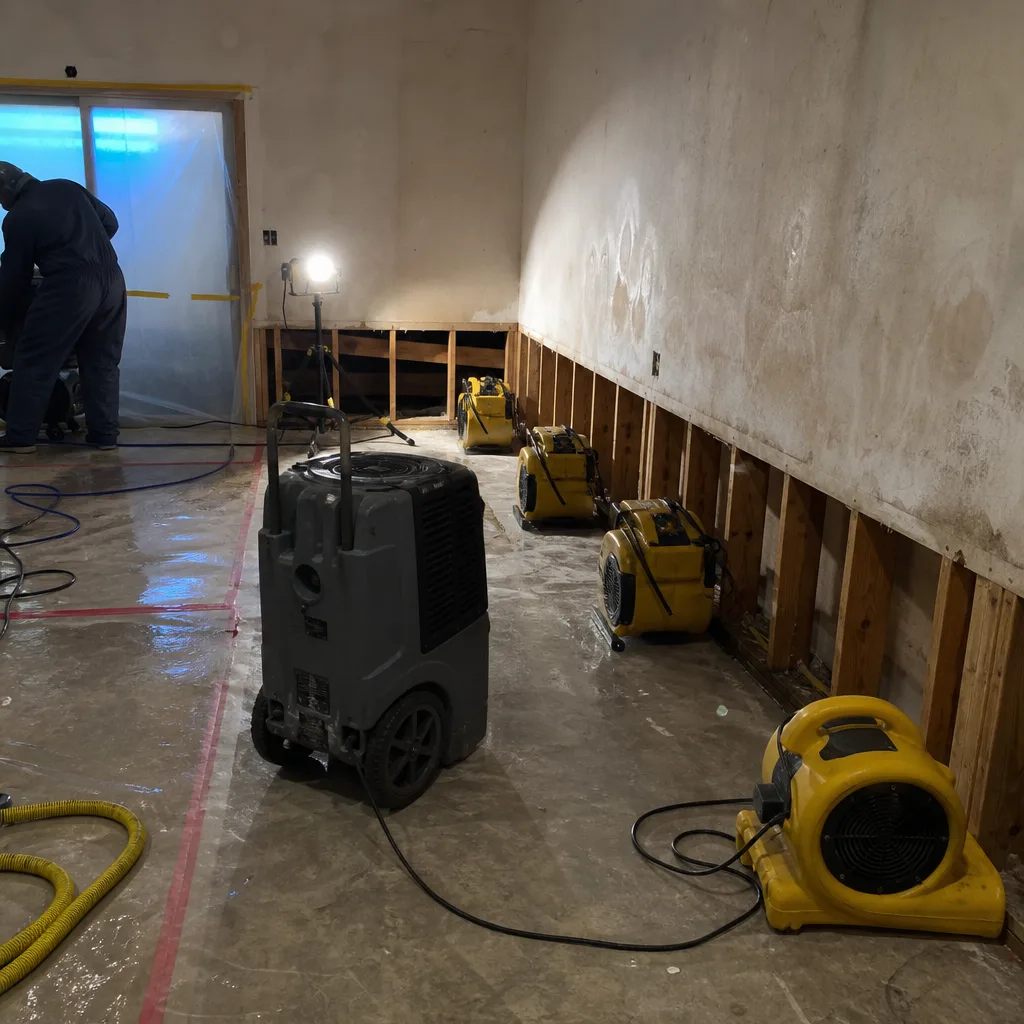
Mold removal in Northridge generally runs $1,500-$4,500 for a contained area like a bathroom, closet, or section of drywall. The work involves physical removal of affected materials, not just spraying something on top. We set up containment, run HEPA air scrubbers, remove the contaminated drywall or insulation, and dry the cavity completely before anyone rebuilds. That last part matters. If the studs go back behind new drywall still damp, the mold returns in a month. We measure moisture daily until it reads dry, and you see the log.
Black Mold Remediation
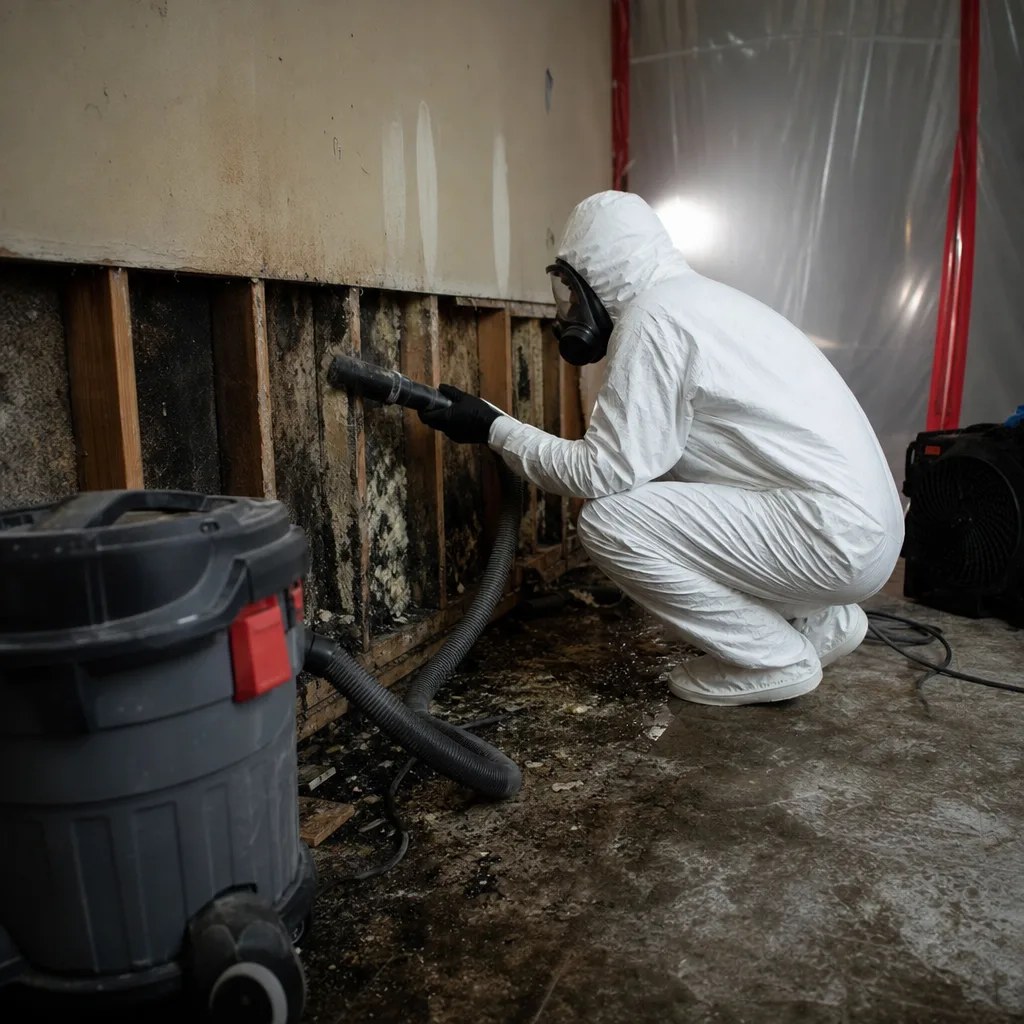
Black mold, or Stachybotrys, gets a lot of attention and it is serious, but the truth is any mold that’s been growing on wet material for long enough can cause health problems. In Northridge homes, we commonly find black mold inside wall cavities where a post-quake stucco patch has been slowly leaking for years. Black mold remediation typically runs $2,000-$6,000. The process is the same as standard Mold Remediation but we double down on containment: negative air pressure, full HEPA filtration, and post-remediation verification with air sampling. You get the lab results. If the numbers don’t clear, we’re not done.
Air Quality Restoration
After any mold job, the air inside the house carries spores from the demolition work. We run HEPA air scrubbers, like the Dri-Eaz HEPA 500, throughout the job and for a period after to bring spore counts back to normal outdoor baseline levels. Air quality restoration as part of a Northridge mold job usually adds $400-$900. During Santa Ana season it’s especially important, because wind-driven smoke and particulate intrusion can compound indoor air quality problems while remediation is underway.
Crawl Space Treatment
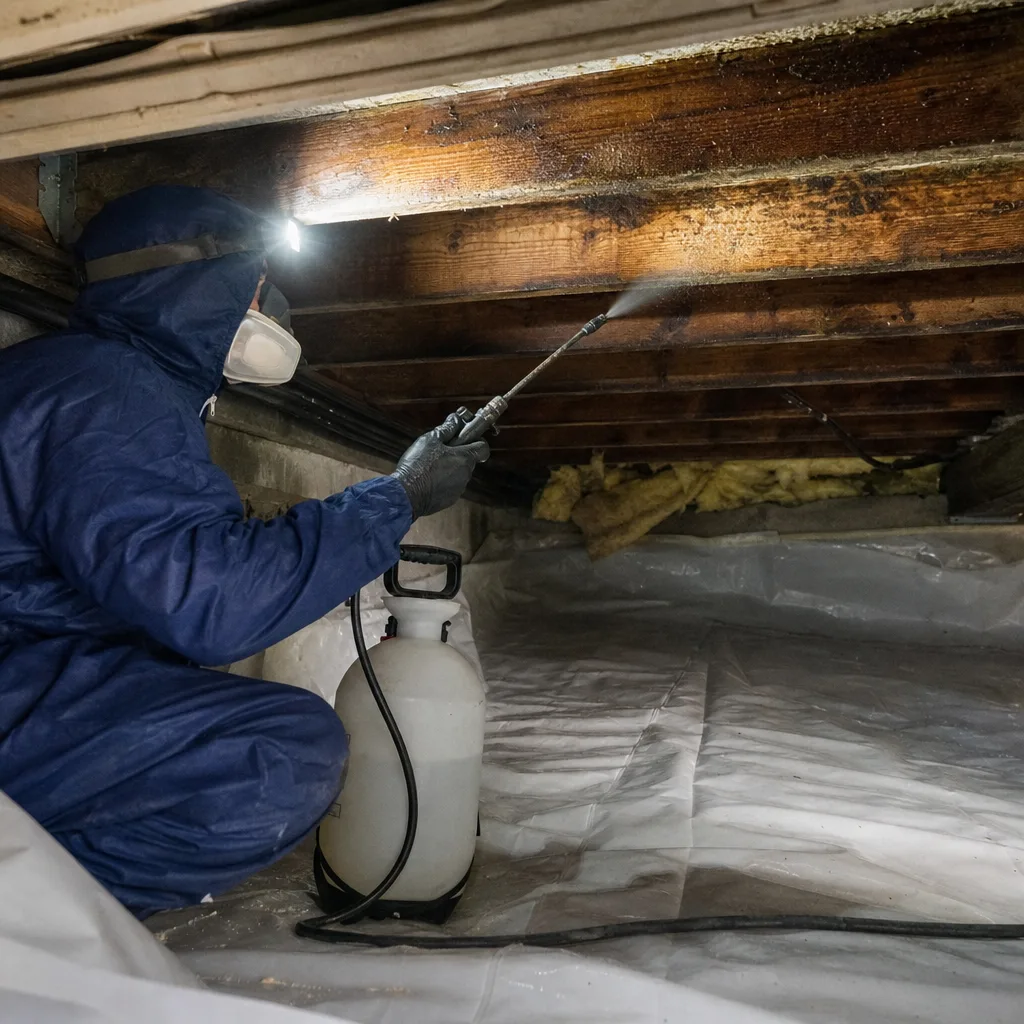
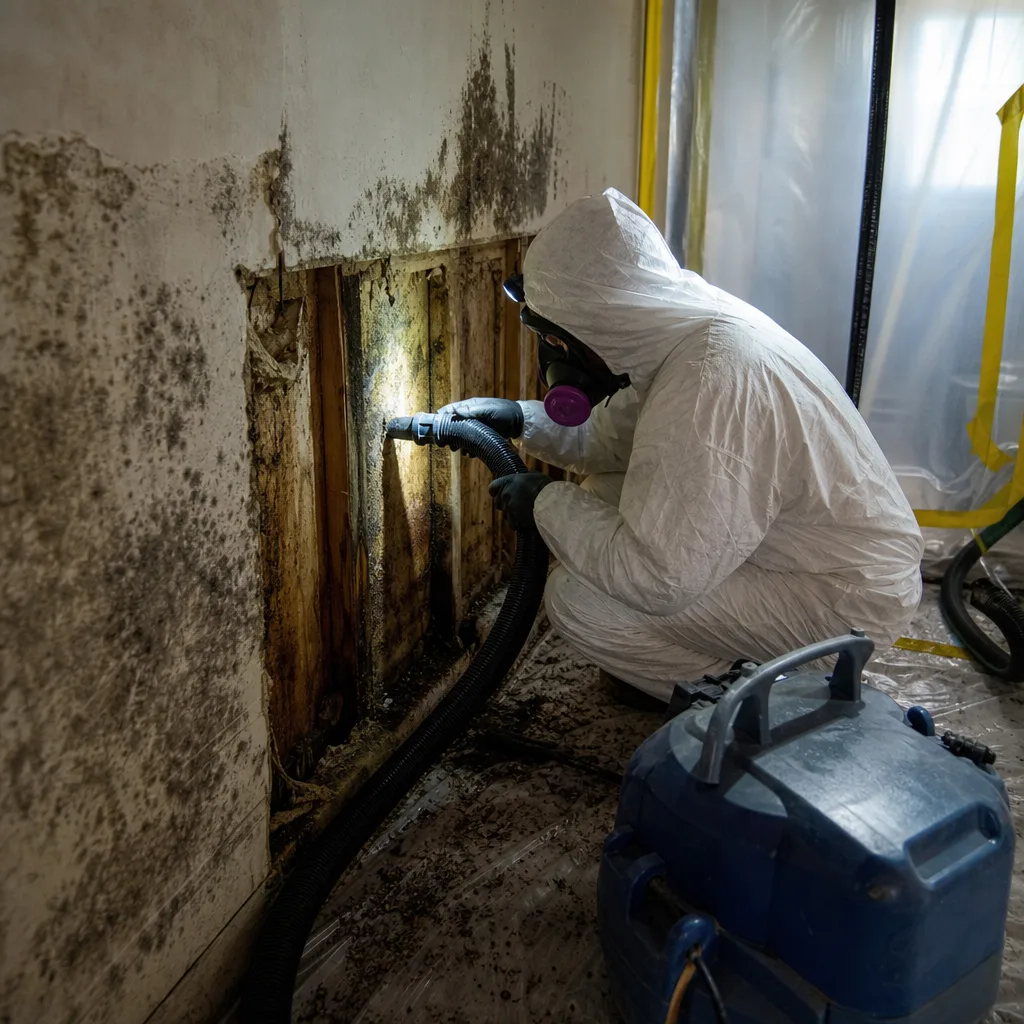
Northridge’s 1950s-1970s tract homes often have crawl spaces that were never properly sealed or ventilated, and moisture from irrigation or rain events collects there. Crawl space mold treatment typically runs $1,200-$3,800 depending on square footage and whether we’re installing a vapor barrier. It’s not glamorous work but ignoring a crawl space mold problem means the spores get pulled into the living space through floor penetrations and return registers.
Moisture & Humidity Control
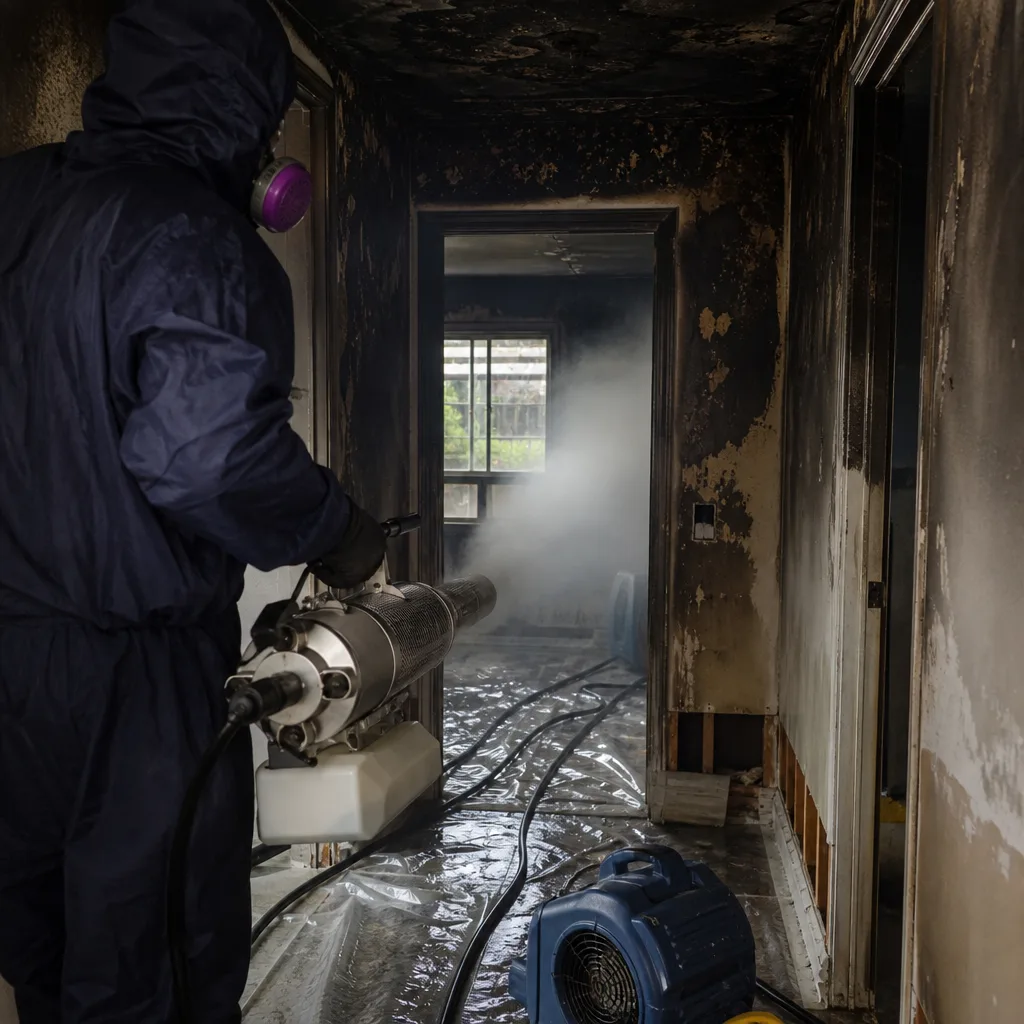
Mold grows where moisture sits. If we don’t fix the moisture source, we haven’t fixed anything. In Northridge, that often means repairing stucco cracks, re-routing downspouts, or adding ventilation to enclosed spaces. Moisture control work ranges from $300 for a simple fix to $3,000+ for drainage corrections. This is where the real remediation happens. The mold removal is what you see; the moisture control is what keeps it from coming back.
What happens when you call
- 1
A real person answersNo phone trees - you reach a local pro.
- 2
You get an upfront price rangeHonest numbers before anyone is dispatched.
- 3
A background-checked tech heads outLicensed & insured, dispatched right away.
- 4
You approve before work beginsNothing starts until you say go.
Common Mold Remediation Problems We See in Northridge Homes
- Post-quake stucco micro-fractures. Hairline cracks in stucco look cosmetic but channel water directly into wall cavities every time it rains or when sprinklers hit the wall. The mold grows behind the paint, invisible until it’s extensive.
- 1994-1996 rebuild failures. Homes rebuilt fast after the earthquake are now 29-30 years old, and original roofing membranes, flashing, and plumbing repairs are hitting a simultaneous failure window. Clustered mold outbreaks in these homes spike during El Niño years.
- Soft-story apartment water travel. In Northridge’s mandatory retrofit soft-story buildings, post-retrofit moment frames alter how water moves through floor assemblies. Mold colonizes in cavities that standard inspection protocols miss entirely.
- Valley heat acceleration. Northridge regularly hits 105°F+ in summer, which accelerates mold growth inside any wall cavity that holds moisture. A slow leak that would take months to colonize in a coastal climate explodes in a single Valley summer week.
Trusted Brands We Service in Northridge
We use professional-grade equipment from Dri-Eaz, Phoenix, Injectidry, XPOWER, and B-Air because homeowner-grade machines don’t have the sustained drying capacity for Valley conditions. Our crews are IICRC-certified and the company holds RIA and IFA affiliations. What that means for you in Northridge: we stock the parts and equipment locally, so we’re not waiting on a warehouse in another state when your job needs another air scrubber. When the Santa Anas are blowing and half the Valley needs drying equipment, we already have what we need staged for our Northridge jobs.
Pricing for Mold Remediation in Northridge, CA
Here’s what you should expect to pay in Northridge, honestly:
- Mold inspection only: $250-$500
- Small isolated removal (bathroom, closet): $1,500-$2,500
- Mid-size remediation (full room, some wall cavity work): $2,500-$4,500
- Large or multi-room remediation (including HVAC treatment): $4,500-$6,500
- Crawl space treatment: $1,200-$3,800
- Air quality restoration add-on: $400-$900
What moves the number is square footage, how deep the mold goes into the wall assembly, whether the HVAC system needs sanitizing, and how long the structure takes to dry. We’ll put it in writing before work starts, and you’ll get a line-item scope, not a round number pulled out of the air. Estimates are free. Call (855) 915-0646.
We Also Serve Cities Near Northridge
We work throughout the San Fernando Valley. Our Mold Remediation in Northridge crews regularly serve customers in North Hills, Chatsworth, Canoga Park, and Encino. If you’re just over the city line, call and ask. There’s no trip charge inside the county.
Serving Northridge, CA - Our Local Coverage Area
We’re based in the Northridge area and know this community well. Use the map below to see our service coverage - if you’re nearby, we can almost certainly help.
FAQs - Mold Remediation in Northridge
The 1994 earthquake left hairline fractures in thousands of Northridge stucco facades, and many patch repairs from that era were cosmetic rather than structural. Those cracks let water into wall cavities every time it rains or sprinklers run, feeding mold growth behind intact-looking paint. That means mold in a Northridge home is often deeper and more widespread than the visible patch would suggest, and the source is a wall assembly problem, not just surface mold. If you’re seeing recurring mold in the same wall, it’s worth having us inspect the stucco and the cavity. Call (855) 915-0646 for a real assessment.
Northridge’s mandatory soft-story retrofit program added moment frames that change how water travels through floor assemblies, creating drain paths and cavities that standard mold inspection protocols don’t account for. Water from a unit leak can pool in floor framing far from the visible damage, and conventional inspection misses it. In these buildings, we adapt our moisture mapping to follow the altered structural paths. If you own or manage a soft-story building in Northridge, we should inspect any water event with that specific lens before you accept a standard remediation quote.
Homes rebuilt rapidly after the 1994 earthquake used the code standards and contractor capacity of that specific post-disaster moment, and many were built with improperly dried wall assemblies from the start. That means original moisture damage can still be present 30 years later, now compounded by aging roofing membranes and original post-quake plumbing repairs reaching failure age simultaneously. Remediation in these homes requires treating both the current mold and the legacy moisture history. We’ve opened walls in Northridge rebuilds and found moisture from the 1990s still trapped behind vapor barriers.
Yes. Santa Ana events push wildfire smoke and particulate matter into homes across the Valley, including the CSUN campus corridor and surrounding residential neighborhoods, and they spike indoor particulate counts at exactly the moment post-remediation air scrubbing is most needed. Running HEPA filtration during and after mold work is already standard for us. During fall wind events, we extend air quality restoration so the air you’re left with is actually cleaner than what’s outside. For Northridge homes near open hillside exposure, it’s worth scheduling remediation with wind season in mind.
Look for paint bubbling or discoloration along exterior stucco walls, especially below windows and at wall-to-roof intersections, and for a persistent musty smell in rooms on the exterior wall side of the house. In Northridge specifically, any home with visible stucco patch lines from the 1994 era should be checked with a moisture meter inside the corresponding wall cavity. We can do that during a standard inspection without opening the wall. If the reading comes back elevated, we’ll show you the number and walk you through what it means before anyone opens anything.
Written by Wade Ferris, Owner at Wade’s Restoration of California, serving Northridge and the San Fernando Valley since 2007.