

Fast, Reliable Mold Remediation Across North Auburn
Mold remediation in North Auburn typically runs $1,800 to $6,500 depending on how far the growth has spread and whether crawlspaces or ductwork are involved. Most jobs in the 95603 zip code are done within two to five days once we’ve mapped the moisture source. If you’re seeing black spots on drywall, smelling mustiness that won’t fade, or noticing warped baseboards in a hillside home off Highway 49, call Wade at (855) 915-0646. We serve North Auburn with crews who know exactly what this foothill climate does to older ranch homes, and we’re not strangers to the mess wildfire debris leaves behind.
Why Wade’s Restoration of California Is North Auburn’s Preferred Mold Remediation Company
Wade Ferris started this company in 2007 and still answers his own phone. That matters in a place like North Auburn, where a handshake at Bell Road Hardware still means something and people want to know who’s coming through the front door. We’re not a national chain with a call center in another state. Wade lives in this region, publishes his name and license number, and if the work isn’t done right, you call him back directly. That’s the 90-Day Done Right Promise, put in writing on every mold job we take.
North Auburn homeowners ask the same question before hiring anyone: will you actually show up? We answer calls live, 24/7, and Wade heads out himself when the situation is urgent. He brings background-checked crews, uniformed and polite, running Dri-Eaz dehumidifiers and HEPA equipment that’s built for serious contamination, not rental-store gear. IICRC certification backs the work. Ask anyone on your street off Luther Road who’s had a mold problem after a wet winter. They’ll likely tell you the owner came out, took moisture readings himself, and didn’t leave until the job was scoped in writing.
Our Mold Remediation Services in North Auburn
Mold Inspection & Testing
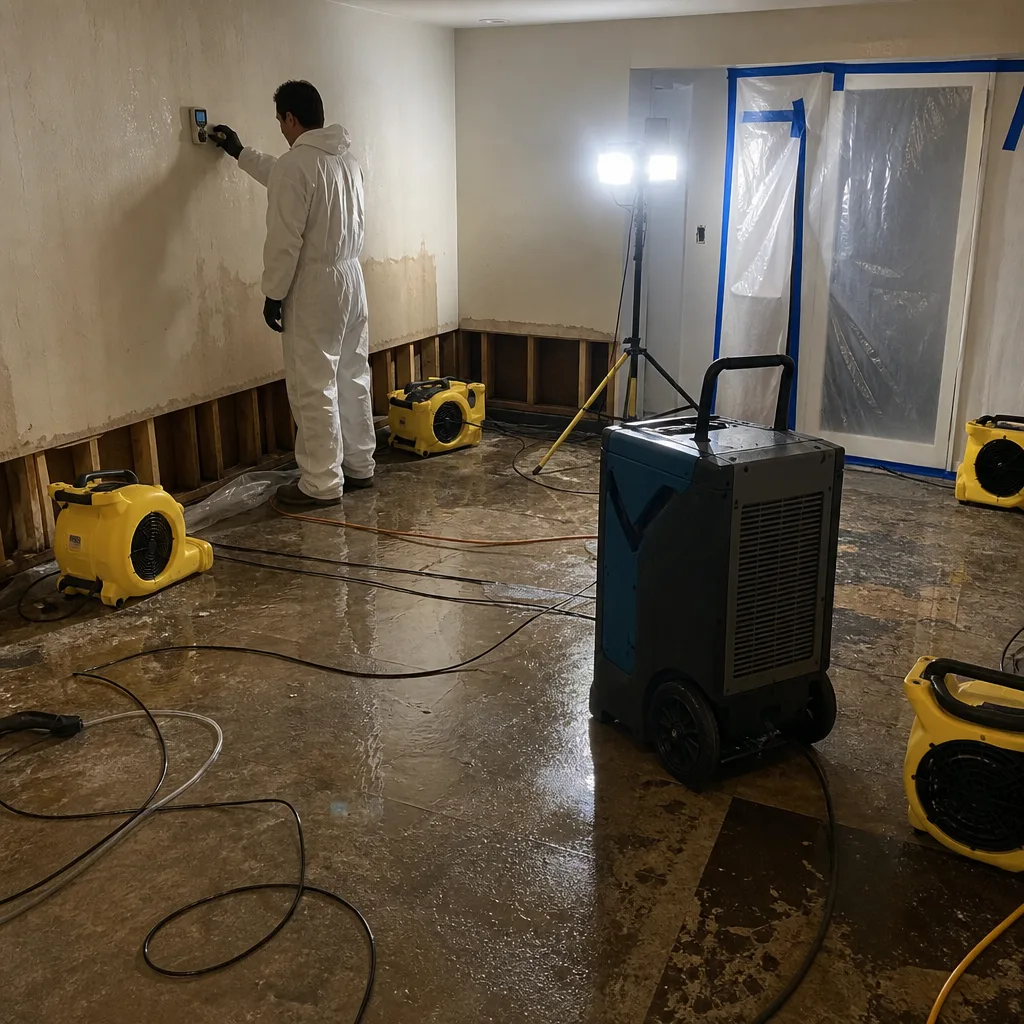
Before we tear out drywall, we find out what you’re actually dealing with. North Auburn homes built in the 1960s through 1980s often hide mold in places you’d never think to look: behind baseboards on downhill-facing walls, inside pier-and-beam crawlspaces that collect granitic-clay runoff, and around unscreened soffit vents that pull in damp foothill air all winter. We test so we know the species and the spread, then hand you a written scope before any demo starts. No mystery charges, no “we found more so it costs more” surprises after we’ve opened a wall.
Mold Removal
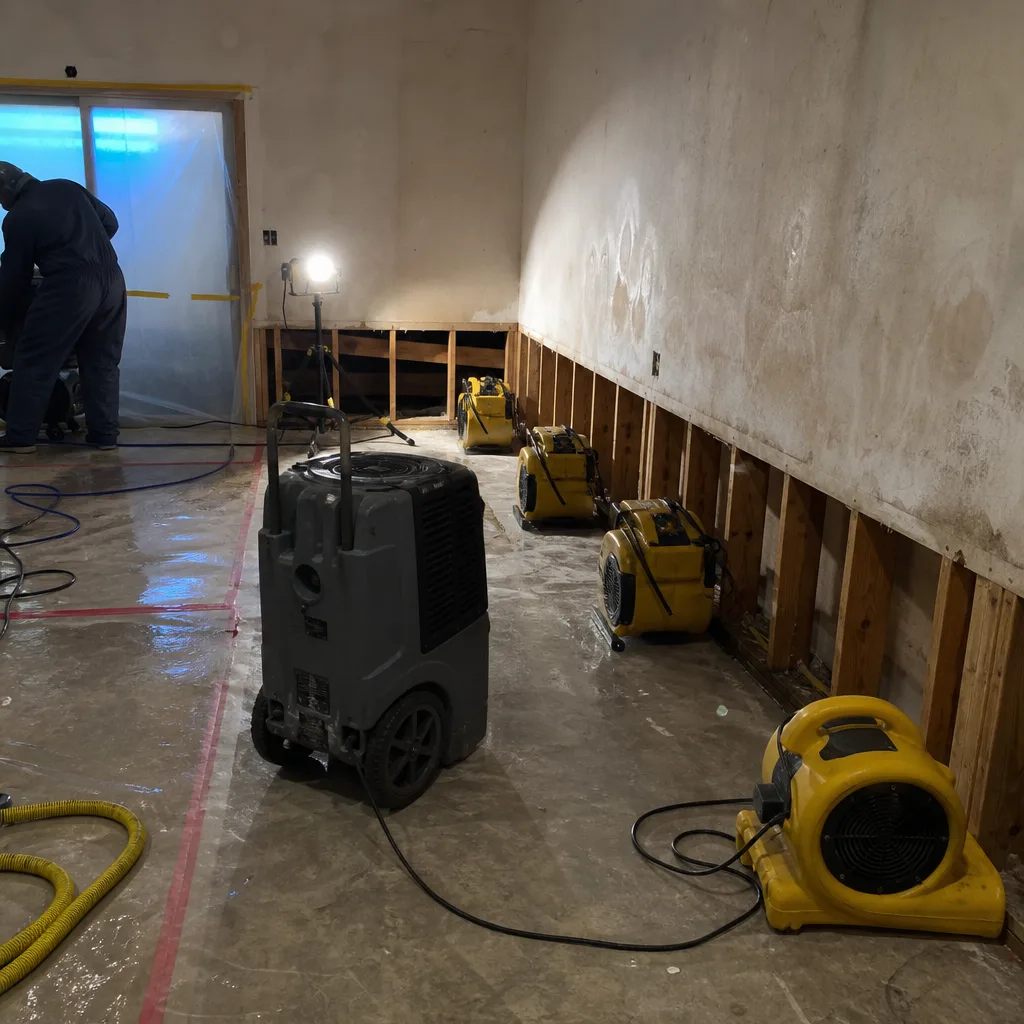
Surface mold on a bathroom ceiling is one thing. Mold that’s colonized the framing behind a 1970s wood-panel wall off Dry Creek Road is another. We contain the affected area, remove contaminated material, bag it properly, and HEPA-vacuum every surface before treating what remains. In North Auburn’s older hillside homes, we routinely find mold traveling from the crawlspace straight up into wall cavities, so removal often starts below the floor joists, not at the visible stain.
Black Mold Remediation
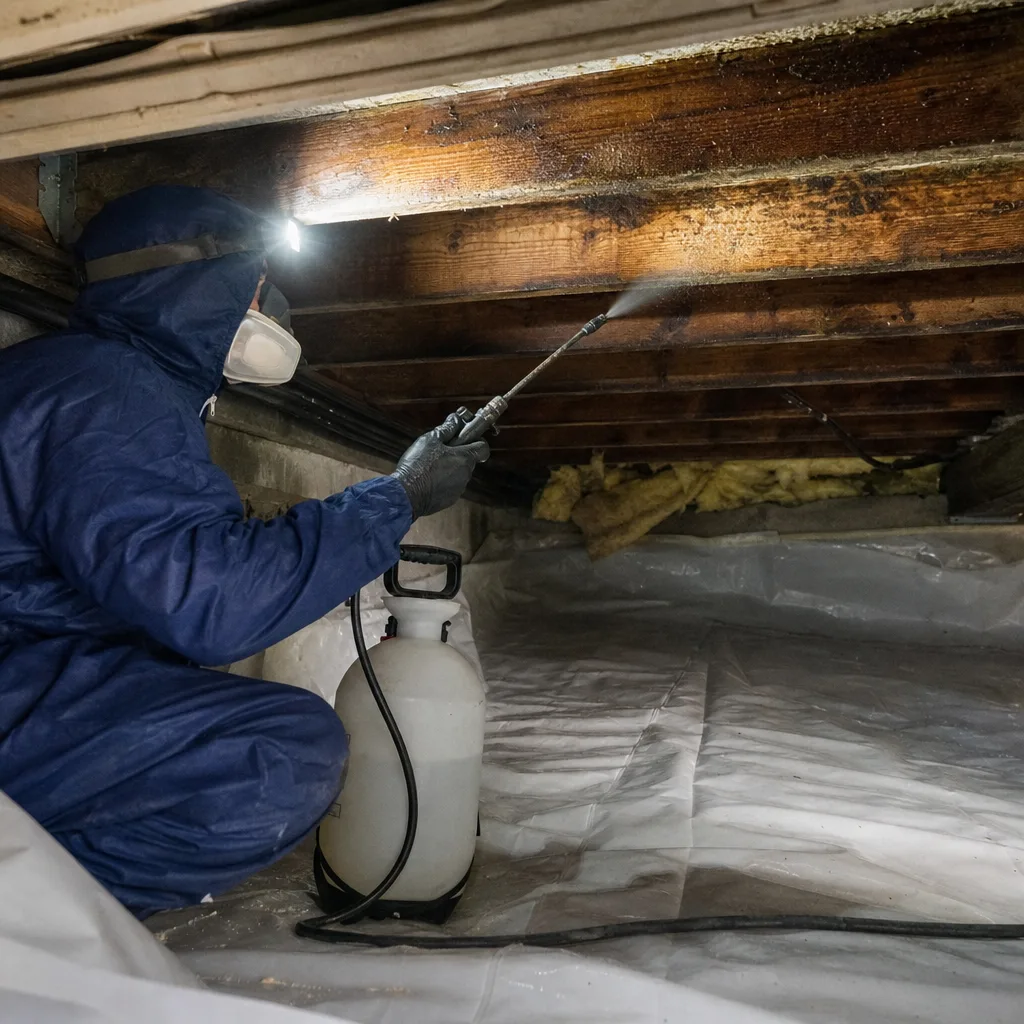
Black mold, or Stachybotrys, tends to show up in North Auburn after prolonged moisture exposure: a slow pipe leak under a sink, a crawlspace that never dried after February storms, or a roof valley that directed snowmelt into the attic for weeks. We treat it as the serious job it is. Full containment, negative air pressure, HEPA filtration, and antimicrobial treatment on all affected surfaces, not just a bleach wipe-down. We’ll also tell you plainly if what you have is nuisance mold, because not every dark patch is black mold and you shouldn’t pay for a scare tactic.
Air Quality Restoration
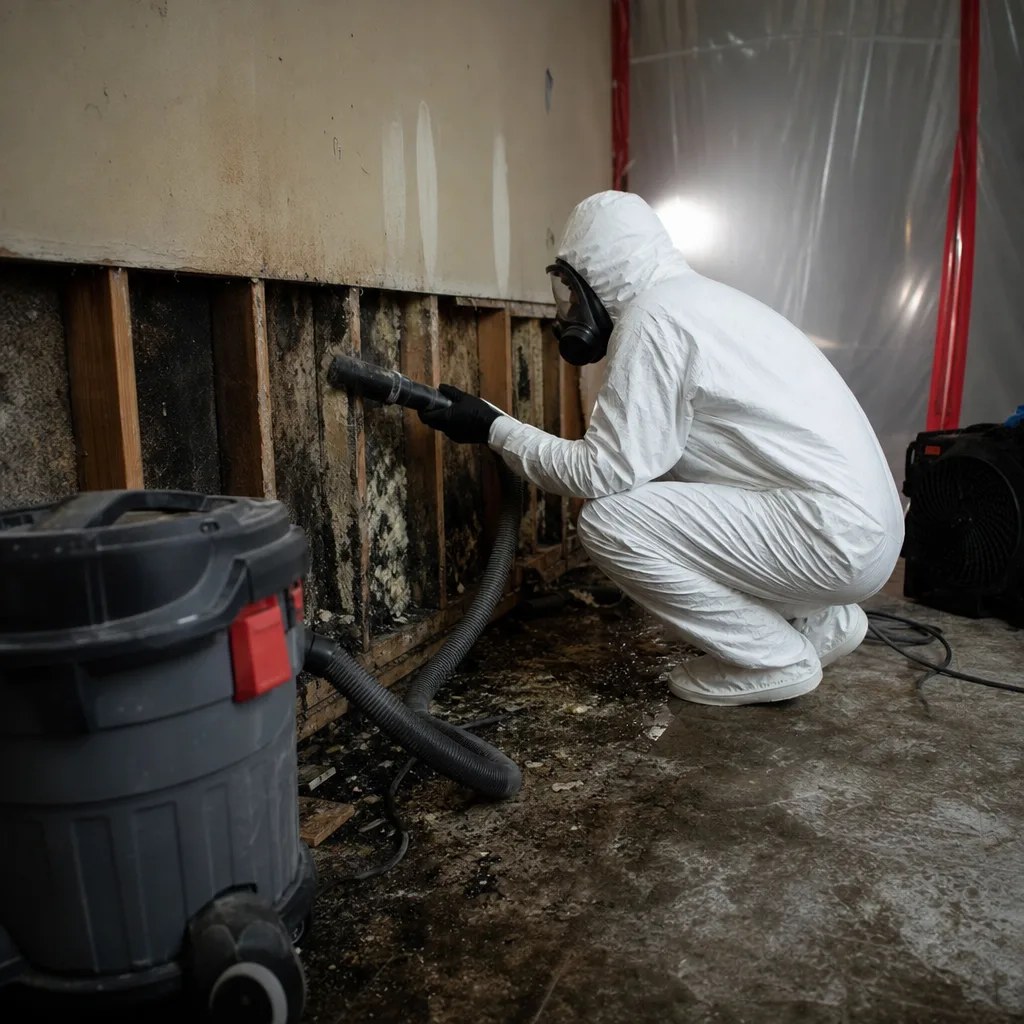
After wildfire season, North Auburn homes carry a load of smoke particles, ash dust, and sometimes mold spores stirred up by the same moisture that followed the fire cycle. Air quality restoration means cleaning the ducts, scrubbing surfaces, replacing filters, and running air scrubbers long enough that the air inside your home is actually cleaner than what’s coming through the windows. For older homes with decades of accumulated dust in return ducts, this is often the step that eliminates the “old house smell” even after visible mold is gone.
What happens when you call
- 1
A real person answersNo phone trees - you reach a local pro.
- 2
You get an upfront price rangeHonest numbers before anyone is dispatched.
- 3
A background-checked tech heads outLicensed & insured, dispatched right away.
- 4
You approve before work beginsNothing starts until you say go.
Why Our Process Works for North Auburn’s Foothill Climate
North Auburn sits at roughly 1,200 feet in the Sierra Nevada foothills, right in the wildland-urban interface where wildfire risk and winter storm runoff collide. That specific geography creates a mold problem valley-floor contractors just don’t see. During fire season, smoke and ash push into homes through ridge vents and soffits. Then atmospheric-river storms hit those upstream burn scars, and the runoff carries charred organic material and granitic silt straight into crawlspaces and foundation areas. That slurry hardens almost like concrete when it dries, locking moisture against wood framing and feeding mold from below for months. A contractor from Sacramento who’s never worked a debris-flow home won’t recognize what he’s looking at until the mold returns. We do, because we’ve cleaned it out of North Auburn crawlspaces more times than we can count.
On a 1970s hillside ranch home off Bowman Road, our crew found a crawlspace caked with that exact combination: ash, silt, and charred debris hardened into a cement-like layer after an atmospheric-river storm. We pressure-washed the foundation, HEPA-vacuumed every square foot, and applied antimicrobial treatment before staging a single Dri-Eaz dehumidifier. That sequence cut the drying timeline by days and saved the homeowner from a second remediation cycle. Standard equipment alone would have read the space as dry while the silt kept wicking moisture into the joists above.
Common Mold Problems We See in North Auburn Homes
- Crawlspace mold from debris-flow silt. When granitic-clay sediment and ash wash under a pier-and-beam home, they hold water against floor joists for weeks. We remove the contamination first, then dry. Skipping step one guarantees regrowth.
- Mold behind old vapor barriers. Homes built off Bell Road and Luther Road in the 1970s often have torn polyethylene sheeting under the house. Ground moisture moves straight up through the tears, and mold takes root on the subfloor. We repair or replace the barrier as part of the job.
- Attic mold from snowmelt and poor venting. North Auburn gets occasional winter snow, and when it melts slowly on roofs with inadequate venting, the attic becomes a terrarium. Sheathing on the north side of the roof rots first, and mold follows the moisture line.
- Bathroom and laundry mold in slab-on-grade additions. Those 1980s ranch homes often had bathrooms added on slabs, and the plumbing runs under the concrete. A slow hot-water leak sends moisture through the slab and up into walls, showing up as mold at the baseboard long after the leak started.
What Mold Remediation Costs in North Auburn, CA
A mold inspection with air or surface testing in North Auburn generally runs $300 to $600, depending on how many samples we pull. If remediation is needed, a contained bathroom or closet job lands around $1,800 to $3,200. A full crawlspace remediation under a 1,500-square-foot hillside ranch home typically runs $4,000 to $6,500, including silt removal, antimicrobial treatment, and vapor barrier replacement. Black mold containment with duct cleaning and air scrubbing pushes the higher end, usually $5,000 to $8,500 depending on square footage. We give you a written scope before work starts, and we hold to it. The estimate is free. Call Wade at (855) 915-0646 and he’ll come out, take readings, and tell you straight what you’re looking at.
Trusted Brands We Use in North Auburn
We run professional-grade equipment on every job, not the plastic dehumidifier you’d rent from a big-box store. Our crews use Dri-Eaz low-grain refrigerant dehumidifiers, Phoenix axial air movers, and HEPA air scrubbers that actually change the air in a contained space. The work is backed by IICRC and RIA standards, and Wade’s team trains on this equipment every year. For North Auburn homeowners, that means we’re not guessing at dry times or mold clearance, we’re measuring with the same tools the industry’s certification bodies require.
Crawl Space Treatment: North Auburn’s Most Overlooked Mold Source
If you live in a 1960s to 1980s North Auburn ranch home, your crawlspace is probably the reason your house smells musty in summer. The older homes along the Bowman Road corridor and the hillside streets off Luther Road sit on steep lots where even moderate rain channels water under the foundation. When crawlspaces stay damp, mold colonizes the floor joists and the subfloor above, and every time your furnace kicks on, it pulls that air up through the floor registers and into your living room. Crawl space treatment here isn’t optional, it’s the first thing we check when someone calls about “that smell” they can’t place. We encapsulate where it makes sense, install proper drainage on the uphill side when needed, and treat the framing so mold doesn’t come back next winter.
Serving All of North Auburn and Nearby Communities
If you’re searching for Mold Remediation anywhere around North Auburn, we’ve got you covered. We work throughout the 95603 zip code and regularly serve homes in North Auburn neighborhoods from the Bell Road commercial corridor to the residential streets off Bowman Road and Highway 49. Our crews also handle jobs in Auburn, Loomis, Lincoln, and Rocklin. Same local knowledge, same owner on call.
Serving North Auburn, CA - Our Local Coverage Area
We’re based in the North Auburn area and know this community well. Use the map below to see our service coverage - if you’re nearby, we can almost certainly help.
Frequently Asked Questions About Mold Remediation in North Auburn
Wildfire smoke deposits fine ash and carbon particles inside HVAC systems, attics, and wall cavities, and those particles hold moisture when winter rains arrive. That moisture, concentrated on the ash, creates micro-environments where mold can grow even in otherwise dry framing. The pattern we see in North Auburn is fire season laying down contamination in late summer, then winter storms providing the moisture that turns it into mold by February. That’s why post-fire homes need air quality restoration, not just a visible-mold check. Call (855) 915-0646 if you had smoke intrusion this year and want us to check what’s growing in your ducts.
The older ranch homes were built with unscreened soffit vents, wood shake roofs, and pier-and-beam crawlspaces over steep granitic-clay lots, none of which the newer WUI-code homes have. Those three features mean water finds its way into places the 1990s and 2000s homes were engineered to keep dry. We’ve found mold in older North Auburn homes spreading from the crawlspace up through wall cavities for years before anyone noticed, because the subfloor hid it. Newer homes present their own issues, mostly roof-ventilation and vapor-drive condensation, but the worst mold problems we see are consistently in that 50-to-60-year ranch stock.
Yes, and it’s one of the most distinctive mold drivers in this part of the foothills. When winter storms hit burn scars upstream from North Auburn, the runoff carries a mix of ash, charred organic material, and granitic silt down the drainage corridors. When that slurry settles in a crawlspace and dries, it hardens into a dense layer that wicks moisture from the ground and holds it against the floor framing. We’ve chipped it out with shovels in crawlspaces off Bowman Road. Standard mold treatment won’t touch it. The debris has to be pressure-washed, HEPA-vacuumed, and treated before any drying equipment goes in.
Usually yes, because the two problems feed each other. Smoke drives fine particles into ductwork, carpet, and wall cavities, and those particles absorb moisture from the air. When winter storms raise indoor humidity, that moisture activates mold spores that were already present. Mold remediation removes the visible growth, but air quality restoration cleans the reservoirs where spores and smoke particles linger: ducts, coils, blower compartments, and wall cavities. Skipping the air quality work means you’ll likely smell mustiness again within months. We’ll tell you honestly if your home needs both, and if it doesn’t, we won’t sell you the extra work.
Fast is the whole game in the hillside neighborhoods where water channels under slab edges and saturates wood framing within 48 hours. Mold begins colonizing wet wood in 24 to 72 hours, and once it’s established in the framing, the job moves from cleaning to tear-out. If you saw water in your crawlspace, garage, or lower-level walls during the last storm, don’t wait for the smell. Wade can have a crew at your North Auburn home the same day you call, and the moisture mapping and scope come before any work begins. Everything’s in writing, and the estimate is free. Call (855) 915-0646 now if you suspect water got somewhere it shouldn’t have.
Get Honest Mold Help in North Auburn, Today
If you’re seeing mold, smelling it, or just worried about what’s been growing since the last storm, call Wade. He answers his own phone, 24/7, and he’ll walk you through whether you need an inspection or a full remediation. No pressure. No scare tactics. Just a straight answer from someone who’s been doing this in the foothills for nearly two decades. The estimate is free, the scope is in writing, and the work is backed by our 90-Day Done Right Promise. Call (855) 915-0646 and speak directly with the person who will be on your job, not a call center in another state.
Written by Wade Ferris, Owner at Wade’s Restoration of California, serving North Auburn and surrounding foothill communities since 2007.