
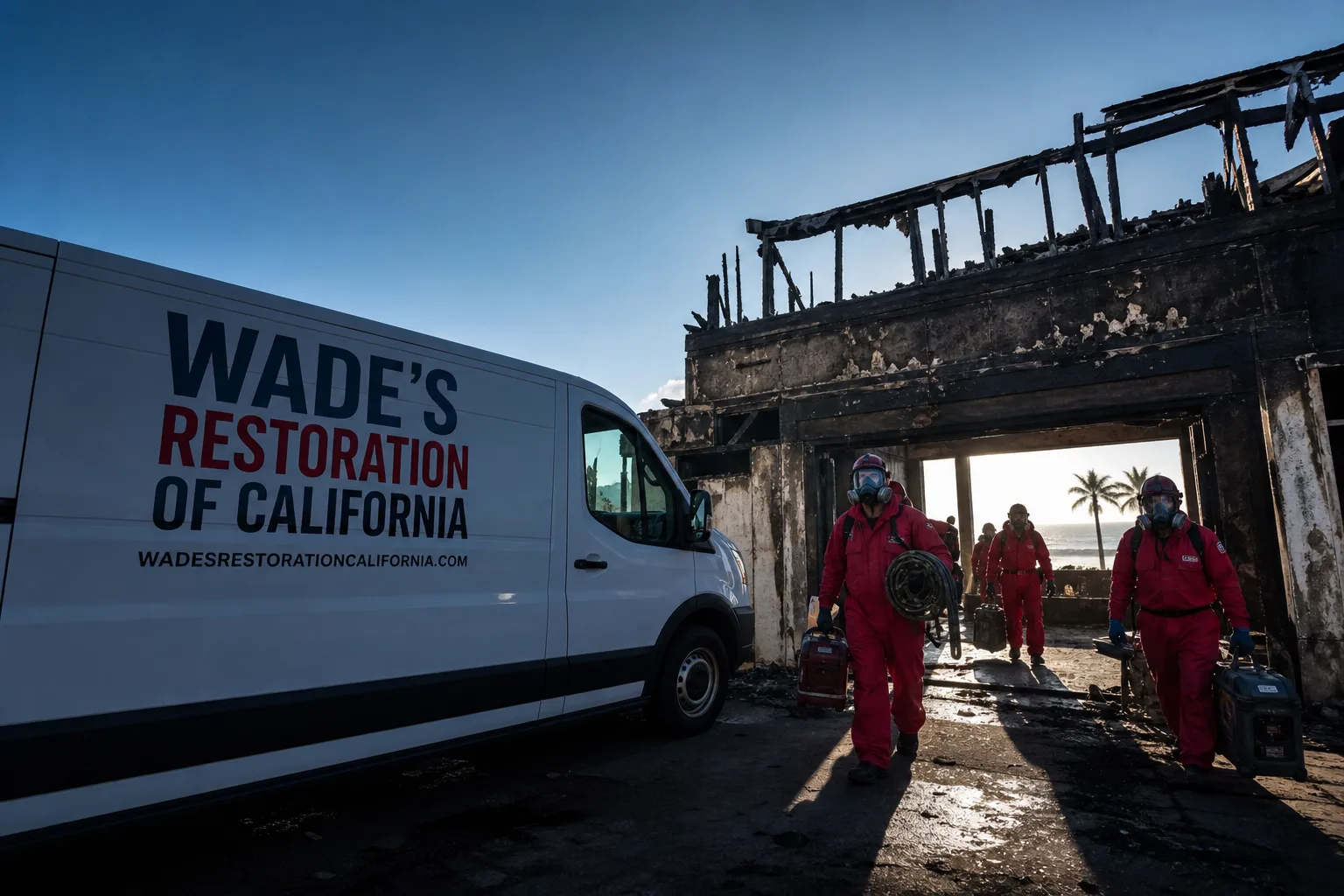
Fast, Reliable Mold Remediation Across Mission District
Mold in a Mission District Victorian doesn’t behave like mold in a modern condo across town. Those 1890s lath-and-plaster walls hold moisture for weeks, hiding growth behind surfaces that look perfectly intact. If you’ve spotted staining on a ceiling, caught a musty smell in a back bedroom, or found moisture in a ground-floor unit near Cesar Chavez Street, you need a crew who understands what’s actually inside these walls before opening them up. Wade’s Restoration of California has remediated mold in Mission District flats, single-family Victorians, and soft-story buildings long enough to know the difference between a surface issue and a hidden cavity problem. Call (855) 915-0646 and Wade Ferris will answer. He’s been doing this since 2007, and he’ll tell you straight what you’re dealing with.
Fast, Reliable Mold Remediation Across Mission District
Most Mission District mold jobs take two to five days from containment to clearance, depending on how far the growth has spread through the wall cavities. That’s the honest answer. Some surface-level jobs on modern drywall wrap up faster. The older the building, the longer the drying timeline because lath-and-plaster simply holds moisture longer than drywall ever will. We don’t cut corners on drying time to hit an artificial deadline. That’s how mold comes back. What you get with us is a written scope before we touch anything, daily moisture readings you can see, and a 90-Day Done Right Promise in writing on every mold job. If it’s not done right, Wade makes it right. That’s the whole agreement.
Why Wade’s Restoration of California Is Mission District’s Preferred Mold Remediation Company
Wade Ferris publishes his name, his address, and his license number. You can look him up. You’ll probably run into him on Valencia Street on a Saturday. That’s the kind of accountability a national chain can’t fake. When you call about mold in your Mission District flat, you’re not getting a call center or a rotating cast of subcontractors. You’re getting Wade’s crew: background-checked, uniformed, IICRC-certified, and equipped with Dri-Eaz and Phoenix gear that actually dries lath-and-plaster properly. Wade has walked through more 94110 basements than most people have walked through their own garages. He knows what a soft-story building does after water intrusion. He knows which blocks near the old Mission Creek corridor get groundwater seepage into basements every winter. And he’ll tell you if you need full remediation or if a targeted clean and dry will do the job. No upsell. No scare tactics. Just straight answers.
Our Mold Remediation Services in Mission District
Mold Inspection & Testing in Mission District
Before anyone swings a hammer, you need to know what’s behind the plaster. Our Mold Remediation team starts every Mission District job with a moisture survey using thermal imaging and penetrating moisture meters. In pre-1920s flats, we’re specifically looking for elevated readings behind intact lath-and-plaster: the hidden reservoir that keeps re-contaminating a room after every surface cleaning. We also test for lead paint and asbestos-containing materials when the building predates 1920, because disturbing those materials without a hazmat assessment can trigger a stop-work order and a much bigger project than you signed up for.
Mold Removal in Mission District
Mold removal means cutting out affected material, not just bleaching the surface. In Mission District Victorians, that often means removing sections of lath-and-plaster back to the studs, sanding and treating the framing, and then rebuilding with modern materials that match the wall depth. We preserve what’s salvageable. On a Shotwell Street two-unit Victorian, we cut back only the affected plaster to save the original wall, treated the framing with an EPA-registered antimicrobial, and left the room structurally sound and mold-free without gutting the whole wall. That kind of surgical work matters when you’re trying to keep a 1906 flat livable through a remediation.
Black Mold Remediation in Mission District
Black mold, Stachybotrys chartarum, thrives in the slow-damp conditions Mission District basements are famous for: groundwater seepage, poor ventilation, and organic material like old wood lath and horsehair plaster. We contain the affected area under negative pressure before disturbing anything, run HEPA air scrubbers throughout the job, and remove contaminated material in sealed bags. Black mold remediation in a shared-party-wall Victorian requires extra attention because spores can travel through wall cavities into an adjoining unit. We seal and test both sides of the wall before we call it done.
Air Quality Restoration in Mission District
After physical removal, the air inside your flat still carries whatever spores were released before containment went up. We run HEPA air scrubbers during and after remediation, then perform post-remediation air sampling to confirm spore counts have returned to normal background levels for 94110. For Mission District residents with asthma, allergies, or compromised immune systems, we can also recommend whole-flat dehumidification for the damp months when the old Mission Creek drainage basin pushes groundwater toward lower-block basements.
Crawl Space Treatment in Mission District
Most Mission District Victorians sit over crawl spaces that have been damp for a hundred years. We install vapor barriers, seal foundation vents where appropriate, and treat structural wood that’s been holding moisture for decades. A mold problem in a ground-floor flat often traces back to a crawl space nobody has looked at in years. We go down there. We document what we find with photos, and we show you exactly what the moisture readings say before recommending any work.
Moisture & Humidity Control in Mission District
Mold remediation in Mission District is incomplete without addressing the moisture source. Whether that’s a slow supply-line leak, roof flashing failure, groundwater intrusion, or just the neighborhood’s famous damp basement conditions, we track the source and fix it. We hand you the full moisture log at the end of every job: daily readings, drying curves, and final numbers. Almost nobody in the trade does this. Wade does.
What happens when you call
- 1
A real person answersNo phone trees - you reach a local pro.
- 2
You get an upfront price rangeHonest numbers before anyone is dispatched.
- 3
A background-checked tech heads outLicensed & insured, dispatched right away.
- 4
You approve before work beginsNothing starts until you say go.
Trusted Brands We Service in Mission District
We don’t bring rental-store junk into Mission District homes. Every job runs on professional-grade equipment: Dri-Eaz dehumidifiers, Phoenix axial air movers, Injectidry injection drying systems for wall cavities, XPOWER air scrubbers, and B-Air filtration units. Wade’s team is IICRC-certified, RIA-affiliated, and IFA-recognized, which means the industry standards are the floor, not the ceiling. For Mission District customers, that means drying equipment sized for lath-and-plaster timelines, not drywall timelines. It means HEPA filtration that actually clears air in a two-unit flat with shared walls. And it means you’re getting the same equipment a hospital remediation crew would run, in your own building.
Common Mold Remediation Problems We See in Mission District Homes
- Hidden growth behind lath-and-plaster. A wall can look dry and clean while the cavity behind it is blooming. We use penetrating moisture meters to find what eyes can’t, then open only what needs opening.
- Shared party walls between units. Mold in one flat’s wall cavity often extends into the neighbor’s framing. We test both sides, contain both sides, and document everything for property owners and insurance adjusters.
- Groundwater seepage near the old Mission Creek corridor. Basements along the lower blocks near Cesar Chavez Street get seasonal groundwater push-through that never dries out on its own. Dehumidification alone won’t fix it; the water has to be managed at the foundation level.
- Hazmat complications in pre-1920s buildings. Lead paint and asbestos materials are common in Mission District Victorians. Disturbing them without assessment means stop-work orders, fines, and an abatement project on top of a mold project. We test before we cut.
Pricing for Mold Remediation in Mission District, CA
We Also Serve Cities Near Mission District
Wade’s Restoration handles mold remediation across the broader San Francisco Bay Area, including Mold Remediation in Mission District and the surrounding neighborhoods: Noe Valley, San Francisco proper, Visitacion Valley, and Chinatown. If you’re in 94110 or any adjacent zip code, the same crew, the same equipment, and the same 90-Day Done Right Promise apply. Same live phone answer, same written scope, same Wade.
Serving Mission District, CA - Our Local Coverage Area
We’re based in the Mission District area and know this community well. Use the map below to see our service coverage - if you’re nearby, we can almost certainly help.
FAQs - Mold Remediation in Mission District
How does mold remediation in the Mission District account for shared party walls in multi-unit Victorians?
Mold remediation in Mission District multi-unit buildings requires testing and containment on both sides of every shared wall because growth travels through the stud bays and lath cavities between units. We seal the affected unit under negative pressure, test the adjacent unit’s side of the wall for hidden moisture and growth, and remediate both sides when necessary. In practical terms, this means a job that looks like a single-flat problem is often a two-flat problem, and we document everything for both property owners and insurance adjusters.
Do I need a hazmat assessment before mold remediation in a pre-1920s Mission District building?
Yes, in almost every case. Pre-1920s Mission District buildings commonly contain lead-based paint and asbestos-containing materials in wall plaster, flooring adhesive, and pipe insulation. Disturbing those materials during mold remediation without assessment can trigger a stop-work order and a separate abatement project. Wade’s Restoration includes hazmat testing as a standard first step on any pre-1920s Mission District building before containment or demolition begins.
Why does my Mission Victorian’s basement keep getting mold even without visible leaks?
Much of the Mission District sits over the buried corridor of Mission Creek, and the old drainage basin still pushes groundwater toward basements along the lower blocks near Cesar Chavez Street. That water seeps through slab cracks and foundation joints, keeping the air damp enough for mold to grow on organic materials like wood lath and old plaster even when no pipe has ever leaked. The fix is usually foundation-level moisture management: vapor barriers, drainage improvements, and dehumidification sized for the space.
Can you remediate mold in a soft-story Mission building without triggering a seismic retrofit?
Mold remediation itself doesn’t trigger a seismic retrofit. But if the remediation reveals structural water damage in a soft-story building, the city may require a racking assessment before repair work can proceed. We coordinate that assessment and design the mold remediation to work within whatever structural constraints the building’s condition requires. The mold work gets done; the seismic conversation happens only if structural damage is actually present.
What drying equipment is appropriate for lath-and-plaster walls in an old Mission flat?
Lath-and-plaster walls need slower, longer drying than modern drywall. That means running Dri-Eaz dehumidifiers and Phoenix axial air movers on extended cycles, often with Injectidry systems pulling moisture from inside wall cavities where the plaster meets the lath. Rushing that process leaves hidden moisture behind, and the mold returns. We monitor daily and show you the drying curve. When the numbers say dry, we close the wall. Not before.
Call Wade’s Restoration of California for Mold Remediation in Mission District
If you’ve got mold in a Mission District Victorian, a soft-story flat, or a ground-floor unit near the old creek bed, call (855) 915-0646. Wade answers. He’ll walk through the building, take moisture readings, and tell you what’s actually going on, whether that’s a small surface job or full cavity remediation with hazmat assessment. Written scope before work starts. Daily moisture logs. 90-Day Done Right Promise in writing. And if you’re a senior or veteran, you get 10% off, always. No trip charge inside the county. Free second opinion on any written estimate. That’s the deal.
Written by Wade Ferris, Owner at Wade’s Restoration of California.