
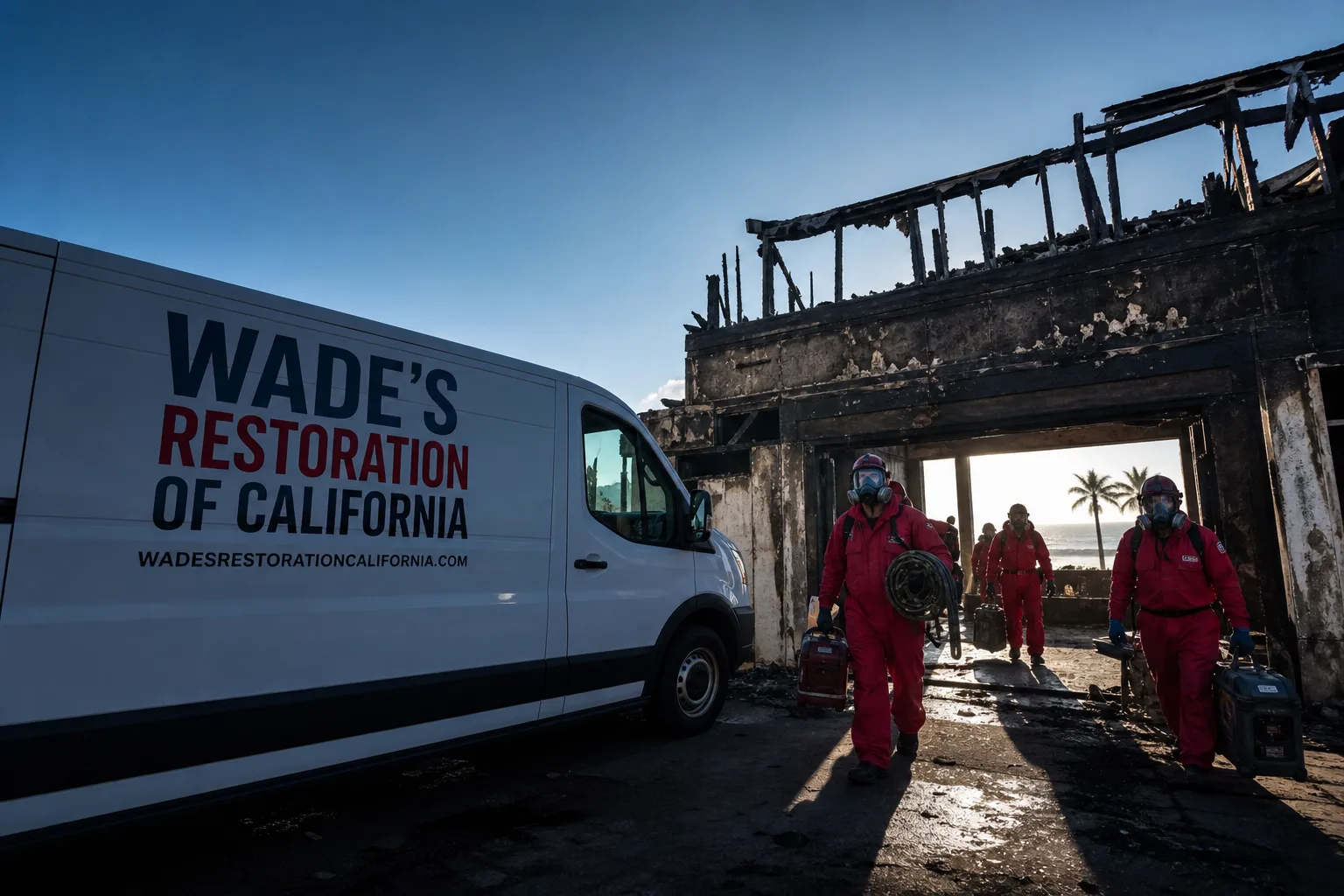
Fast, Reliable Mold Remediation Across Koreatown
Mold remediation in Koreatown typically runs $1,800-$4,200 for a contained single-unit job, and we can usually have a crew on-site within 90 minutes for emergencies in the 90005 ZIP. Koreatown’s older apartment stock and post-retrofit building changes mean mold here rarely stays in one unit. Call (855) 915-0646 and you’ll reach a live person, day or night, including Wade himself.
We know Koreatown’s buildings. We know the courtyard apartments off Western Avenue, the dingbat walk-ups near Wilshire, and the 1960s blocks tucked behind Vermont. When a galvanized pipe fails inside a shared wall cavity, mold doesn’t respect property lines. We’ve been called into buildings where the visible patch of growth in one bathroom turned out to be a colony spanning three stacked units. That’s the work we do here.
Why Wade’s Restoration of California Is Koreatown’s Preferred Mold Remediation Company
Wade Ferris founded this company in 2007 because he got tired of watching restoration outfits treat homeowners like claim numbers. He publishes his name and license number. He answers his own phone. Ask anyone on your street, or in your building, whether the crew that showed up actually finished the job. In Koreatown, where a single call can turn into a multi-unit, multi-landlord, multi-insurer situation, that kind of accountability matters more than anywhere else in Los Angeles.
Our Mold Remediation team works in Koreatown every week. We understand the access constraints: gated courtyards, alley-loaded parking, narrow stairwells, tenant schedules. We stage equipment without blocking building entrances. We coordinate with property managers who have 40 tenants to notify. And we don’t hand you a bill that looks nothing like the quote.
Wade’s crew is background-checked and uniformed. We use Dri-Eaz dehumidifiers and XPOWER air movers, and our technicians carry IICRC and RIA credentials. Every mold job comes with the 90-Day Done Right Promise in writing. If it’s not done right, we make it right. That’s not a slogan. It’s stamped on the contract.
Our Mold Remediation Services in Koreatown
Mold Inspection & Testing
In Koreatown’s 1920s-1940s courtyard apartments, mold hides behind post-retrofit framing penetrations and inside shared wall cavities where galvanized lines have been weeping for months. Our inspection starts with a moisture meter sweep across baseboards, behind refrigerators, and under sinks. We take readings, log them, and hand you the full moisture log when the job ends. Almost nobody in this trade does that. We do, because you’re entitled to see what we saw.
Mold Removal
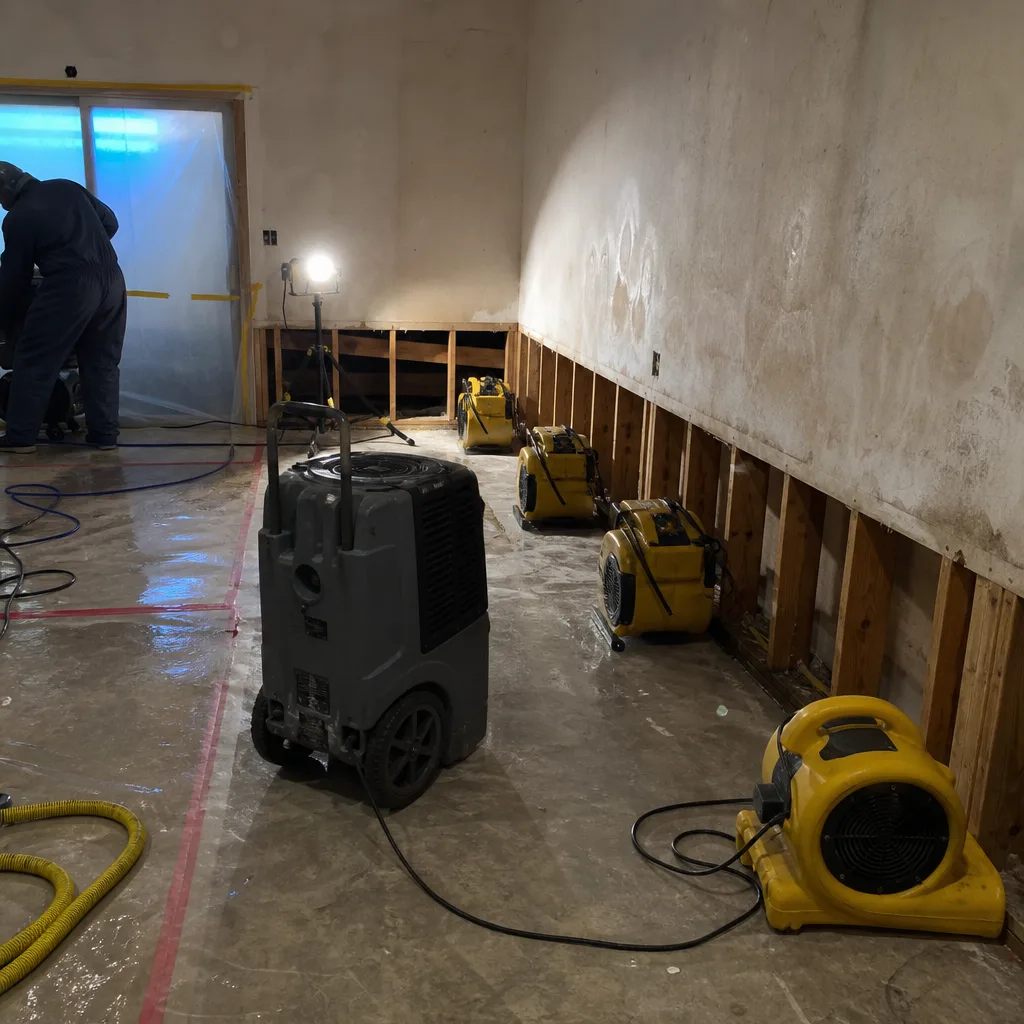
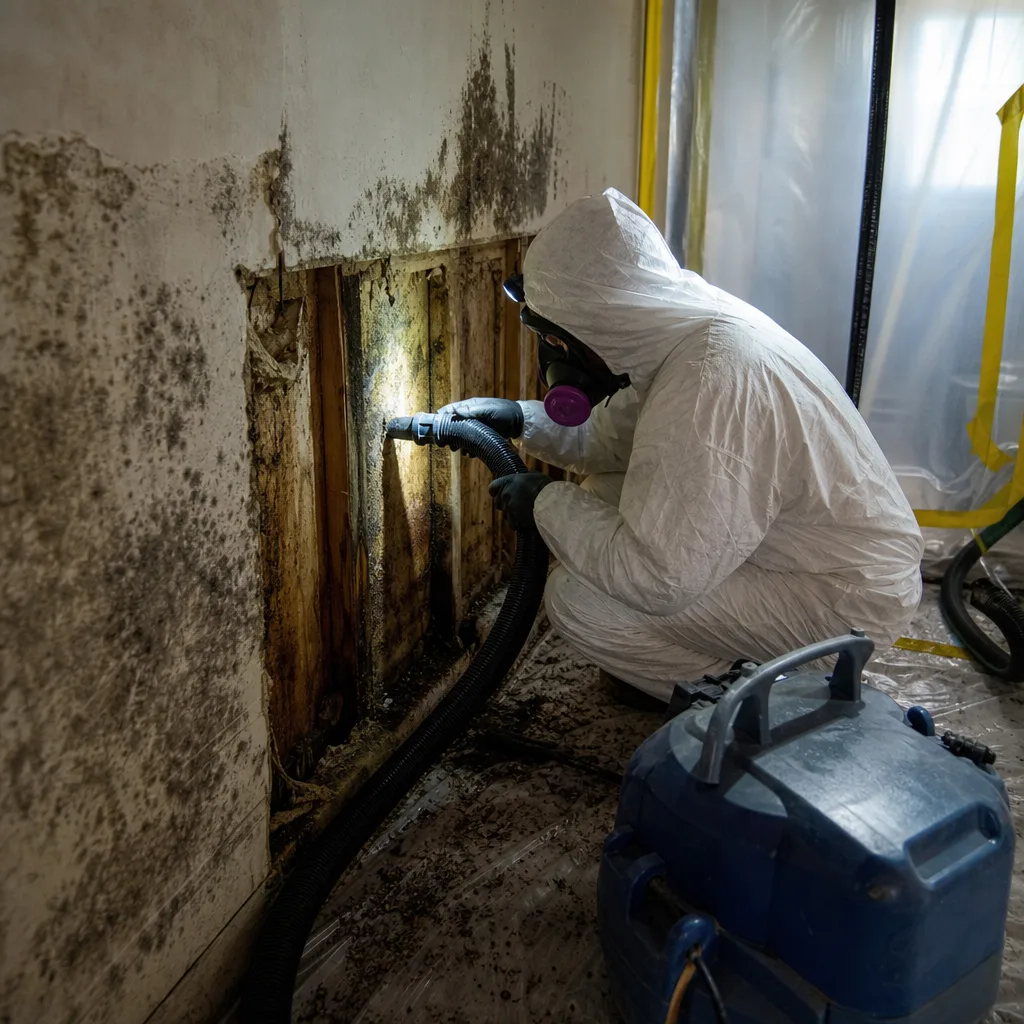
We contain the affected area before we cut anything open. In a Koreatown dingbat with shared walls, containment is the difference between cleaning one unit and triggering complaints from three neighbors. We set negative air pressure, remove affected gypsum and insulation, HEPA-vacuum the framing, and treat the cavity. Then we dry the structure to below the mold-growth threshold before closing it back up.
Black Mold Remediation
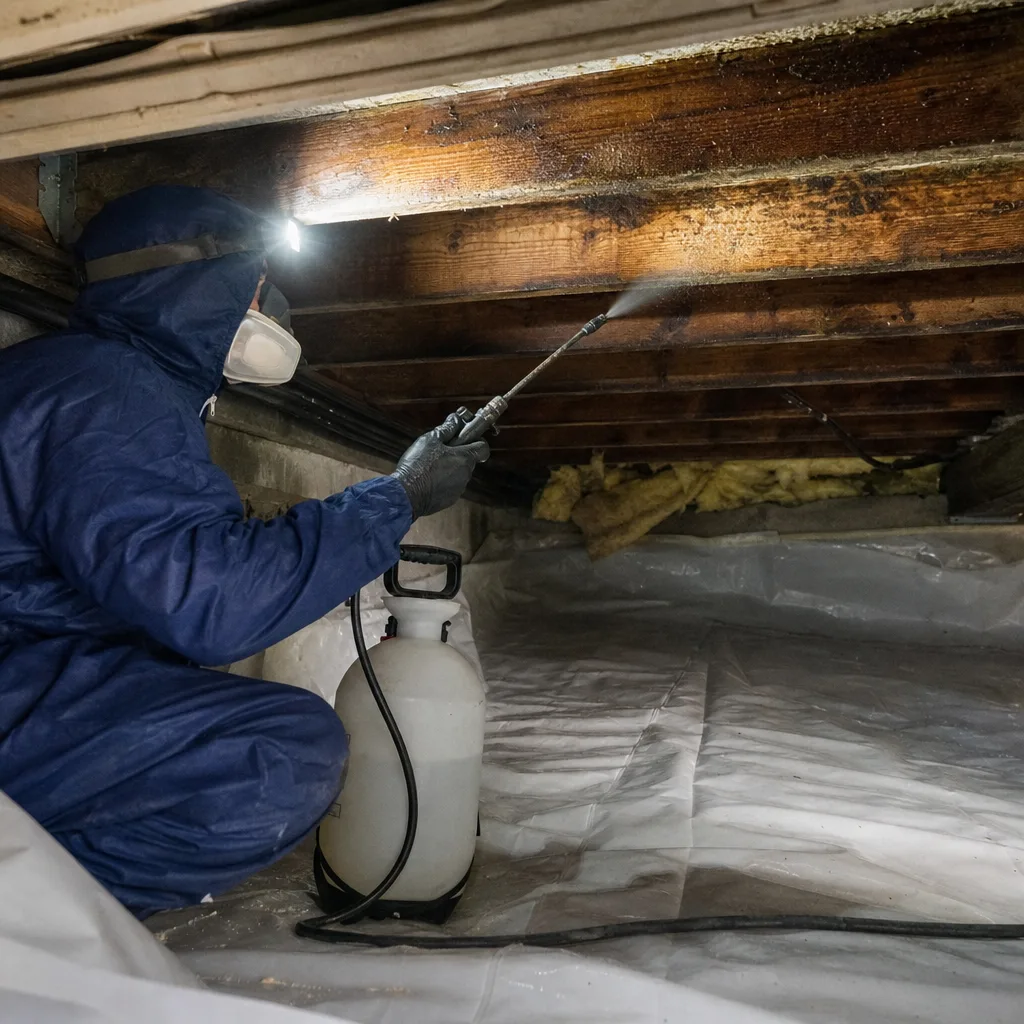
Black mold, or Stachybotrys, loves damp cellulose: drywall paper, subfloor OSB, ceiling tiles. In Koreatown buildings with flat roofs that pond water after winter storms, we see it in ceiling cavities above top-floor units. A slow roof drain failure gives mold a head start for days before anyone sees a stain. We remove the affected material, treat the surrounding area with antimicrobial agents, and document everything for your adjuster.
Air Quality Restoration
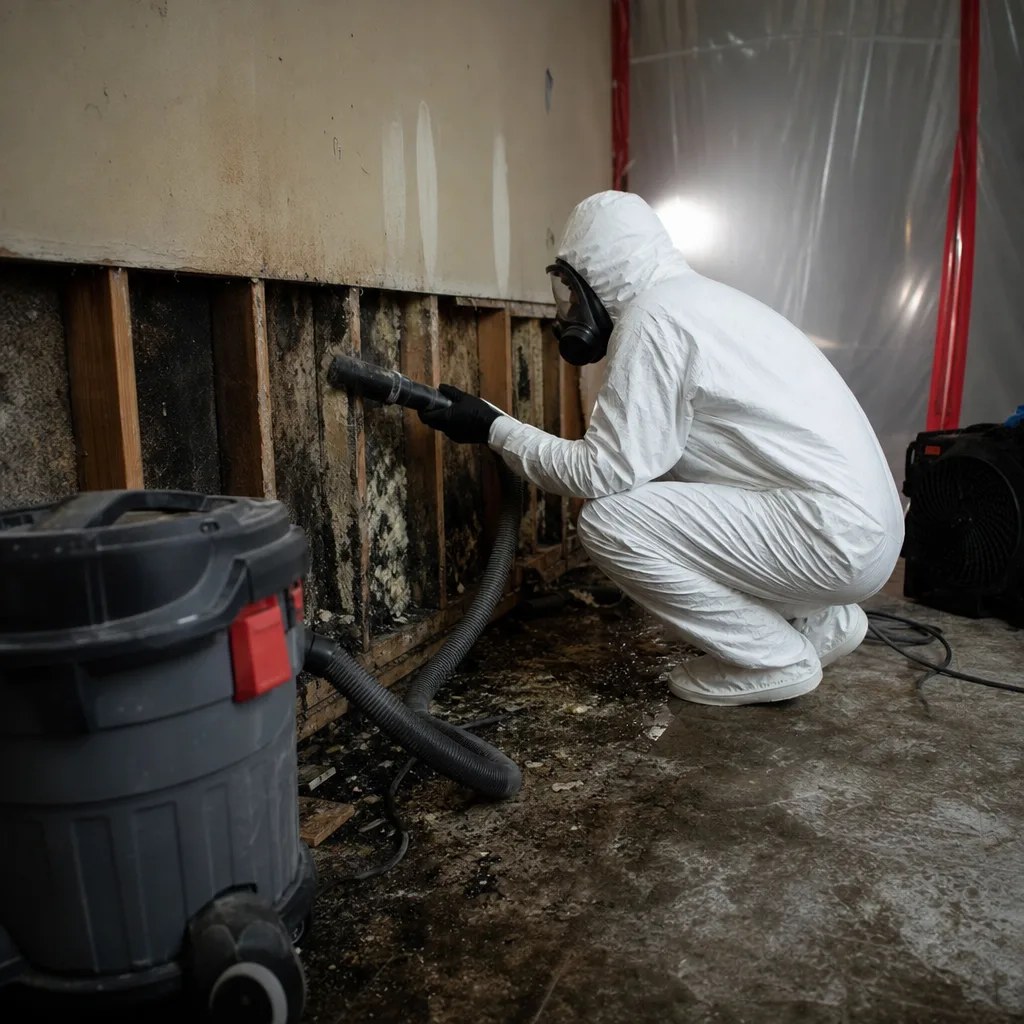
After physical mold removal, the air still carries spores. In a tight Koreatown unit with minimal cross-ventilation, those spores settle into carpet, upholstery, and duct work. We run HEPA air scrubbers during and after remediation, then verify with post-remediation air sampling. If you can still smell mold after a cleanup, the colony is still releasing gases. That’s a call we make every week in this neighborhood.
What happens when you call
- 1
A real person answersNo phone trees - you reach a local pro.
- 2
You get an upfront price rangeHonest numbers before anyone is dispatched.
- 3
A background-checked tech heads outLicensed & insured, dispatched right away.
- 4
You approve before work beginsNothing starts until you say go.
Trusted Brands We Service in Koreatown
Wade’s Restoration works on every brand of dehumidifier, air scrubber, and moisture meter you’re likely to find in a Koreatown building, and we stock Dri-Eaz desiccant units and XPOWER air movers for immediate deployment. Our IICRC, RIA, and IFA credentials mean the work gets done to the industry’s actual standard, not whatever a national chain’s subcontractor felt like doing that day. We keep equipment staged for Koreatown jobs, not for somewhere in Orange County. When your building needs extraction and drying, we’re not checking a warehouse in Riverside.
Common Mold Remediation Problems We See in Koreatown Homes
- Mold behind post-retrofit framing penetrations. LA’s mandatory soft-story retrofit ordinance required cutting into existing floors and walls to add steel moment frames and hold-downs. Every one of those penetrations is a new path for water. We find colonies growing behind patched stucco and inside rim-joist cavities in retrofitted Koreatown buildings that otherwise look dry.
- Shared wall cavities spreading spores between units. In a 1930s courtyard apartment, the wall between unit A and unit B is often one assembly with porous plaster and unsealed framing. When we remediate one side, we have to check the other. Airborne spores migrate through electrical boxes, baseboard gaps, and plumbing chases. Leaving the adjacent unit untouched is how you get a callback.
- Flat-roof drain failures after winter storms. Koreatown’s older flat-roof apartment buildings sit through long dry spells with clogged roof drains and dried-out membrane seams. When a real storm hits, water ponds and finds a seam that’s been waiting to fail. By the time a tenant on the top floor reports a ceiling stain, the mold has been growing in the roof assembly for a week or more.
- Galvanized supply line corrosion inside wall cavities. LA’s mineral-heavy water eats galvanized pipe from the inside out over decades. In Koreatown’s concrete-and-wood hybrids, a pinhole leak behind a wall can saturate subfloor spanning two or three units below before anyone notices. Mold colonies are already established across multiple tenancies by the time a restoration crew gets the call.
Pricing for Mold Remediation in Koreatown, CA
A contained single-unit mold removal and dry-out in Koreatown typically runs $1,800-$3,200 when we catch it early. A multi-unit spread behind shared walls, which is common in this neighborhood, runs $4,200-$8,500 depending on the number of affected units and whether subfloor replacement is required. Mold inspection and testing alone runs $350-$700, and air quality restoration with HEPA scrubbing adds $400-$900 per unit. Black mold remediation in a ceiling cavity with roof-drain damage runs $2,500-$5,000 per affected area.
What moves the number: how many units are involved, whether we need to open shared wall cavities, how long the moisture has been sitting, and whether the building has post-retrofit penetrations that need sealing. We’ll give you a written scope before any work starts, no trip charge inside our own county, and a free second opinion on any written estimate you’ve already received. Call (855) 915-0646 and we’ll give you a real number, not a range pulled from a website.
We Also Serve Cities Near Koreatown
Wade’s Restoration handles mold jobs across Koreatown and the surrounding LA neighborhoods. We’re regularly in Los Angeles proper, Echo Park, Silver Lake, and Hollywood. If you’re in any of those areas and you smell mold or found a ceiling stain, call us. Same local crew, same written scope, same 90-Day Done Right Promise.
Serving Koreatown, CA - Our Local Coverage Area
We’re based in the Koreatown area and know this community well. Use the map below to see our service coverage - if you’re nearby, we can almost certainly help.
FAQs - Mold Remediation in Koreatown
It means we almost never treat a single unit in isolation. In courtyard buildings from the 1920s-40s, shared wall cavities, common ceiling assemblies, and stacked plumbing lines create direct pathways for moisture and spores to travel between units. We always check the units above, below, and beside the affected area. If we find moisture there, containment expands and so does the scope. Call (855) 915-0646 and we’ll walk the building with you before we recommend anything.
Yes. LA’s soft-story retrofit ordinance required seismic upgrades in thousands of Koreatown buildings. Each upgrade meant cutting into floors and walls to install steel frames, hold-downs, and anchor bolts. Those cuts were patched, but they remain penetrations. Water finds them. We regularly trace mold colonies back to post-retrofit framing. If your building was retrofitted in the last 15 years, have us inspect the areas around those steel columns and hold-downs.
Call us for an inspection. A musty smell with no visible mold in a Koreatown apartment usually means the colony is behind a wall, under flooring, or in a ceiling cavity. The source is often a pinhole leak in a galvanized supply line inside a shared wall. Don’t paint over it, don’t bleach it, don’t wait. The longer a hidden colony grows, the more units it affects and the more it costs to fix. Reach us at (855) 915-0646 and we’ll bring moisture meters and a thermal camera to trace it.
Yes, in most cases. We use negative air pressure and sealed containment to isolate the affected unit while work is underway. Tenants in adjacent units typically stay. If subfloor replacement or ceiling cavity work requires opening walls that affect neighboring units, we coordinate with property management to schedule the work during daytime hours and minimize disruption. We’ve done hundreds of occupied-building remediations in Koreatown without mass displacement. Wade and his team will tell you straight what’s possible before we start.
We can have a crew on-site in Koreatown within 90 minutes of your call, including weekends. After a winter storm hits our flat-roof stock, we prioritize calls where water is still actively entering the building. Extraction and drying start immediately. Mold takes 24-48 hours to establish after water intrusion, so speed in the first two days is everything. Call (855) 915-0646 and a live person answers, day or night.
Written by Wade Ferris, Owner at Wade’s Restoration of California, serving Koreatown and greater Los Angeles since 2007.