
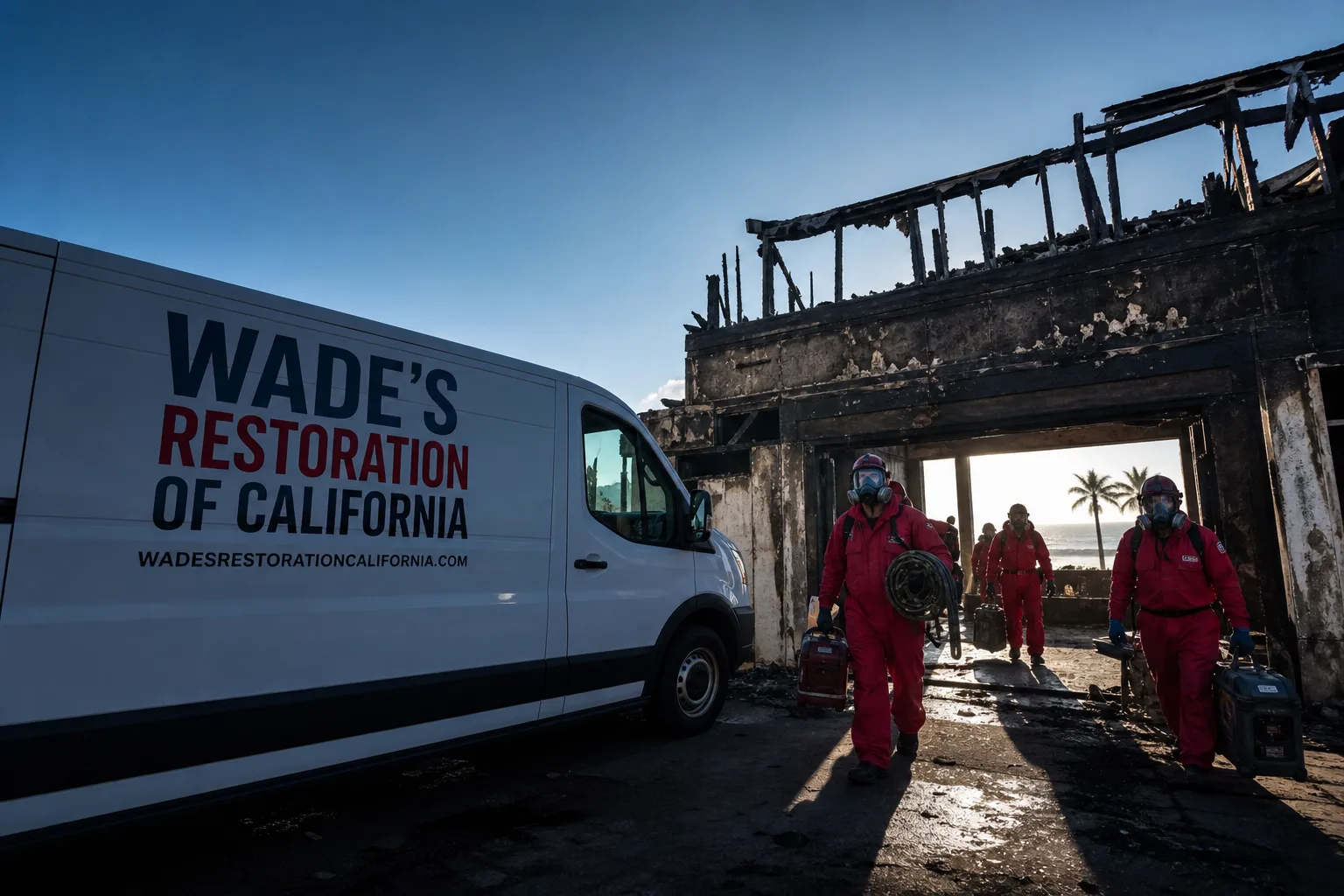
Fast, Reliable Mold Remediation Across Jamul
Mold in a Jamul home rarely starts where you can see it. It starts in the crawlspace after a wet winter, behind 1970s wood paneling, or inside a wall cavity that’s been holding moisture since the last debris flow came off the canyon. If you’re seeing black spots on drywall, smelling that musty odor in a hallway, or noticing warped flooring near a foundation wall, we need to talk. Wade’s Restoration of California has been answering calls from Jamul homeowners for years, and we head out fast. Call (855) 915-0646 and Wade or one of his crew will walk you through what’s actually going on before anyone shows up at your door.
Key Takeaways for Jamul Homeowners
- Mold remediation in Jamul typically runs $1,800-$6,500 depending on the square footage and whether crawlspace treatment is required.
- Jamul’s fire-then-flood cycle produces a specific mold pattern that standard water-damage companies misdiagnose. We don’t.
- We answer live, 24/7. Wade Ferris answers his own phone. Calls from Jamul get a crew out the same day in most cases.
- Every mold job comes with the 90-Day Done Right Promise, in writing. If it’s not done right, Wade makes it right.
- Crawlspace work is the most common mold source in Jamul’s older custom homes. We handle it with the same care as your living room.
Why Wade’s Restoration of California Is Jamul’s Preferred Mold Remediation Company
Wade Ferris founded this company in 2007, and he still answers his own phone. That matters in Jamul because the restoration work here isn’t a volume business. It’s long driveways off Deerhorn Valley Road, homes built on canyon slopes, and neighbors who talk. When a Jamul homeowner calls, Wade picks up. He knows the roads, knows the fire history, and knows that the mold problem you’re looking at probably didn’t start with a simple leak. It may have started with the Mold Remediation work a previous contractor only half-did after a mudslide, or with a roof system that’s been compromised since the last Santa Ana season.
Our crew is IICRC-certified and we pull from 29 years of restoration trade experience across San Diego County. But the credential that matters most to the people we serve in Jamul is this: Wade publishes his name, his license number, and his address. He’s going to run into you at the feed store or the post office. He has no interest in overselling you a line item you don’t need. He’ll hand you a moisture log every single day of the job. Almost nobody in this trade does that.
Mold Remediation Services We Provide in Jamul
Jamul’s housing stock is older, custom, and built on slopes. The mold problems here follow certain patterns, and our services are built around those patterns. Here’s what we actually do, and how it applies to a Jamul home.
Mold Inspection & Testing
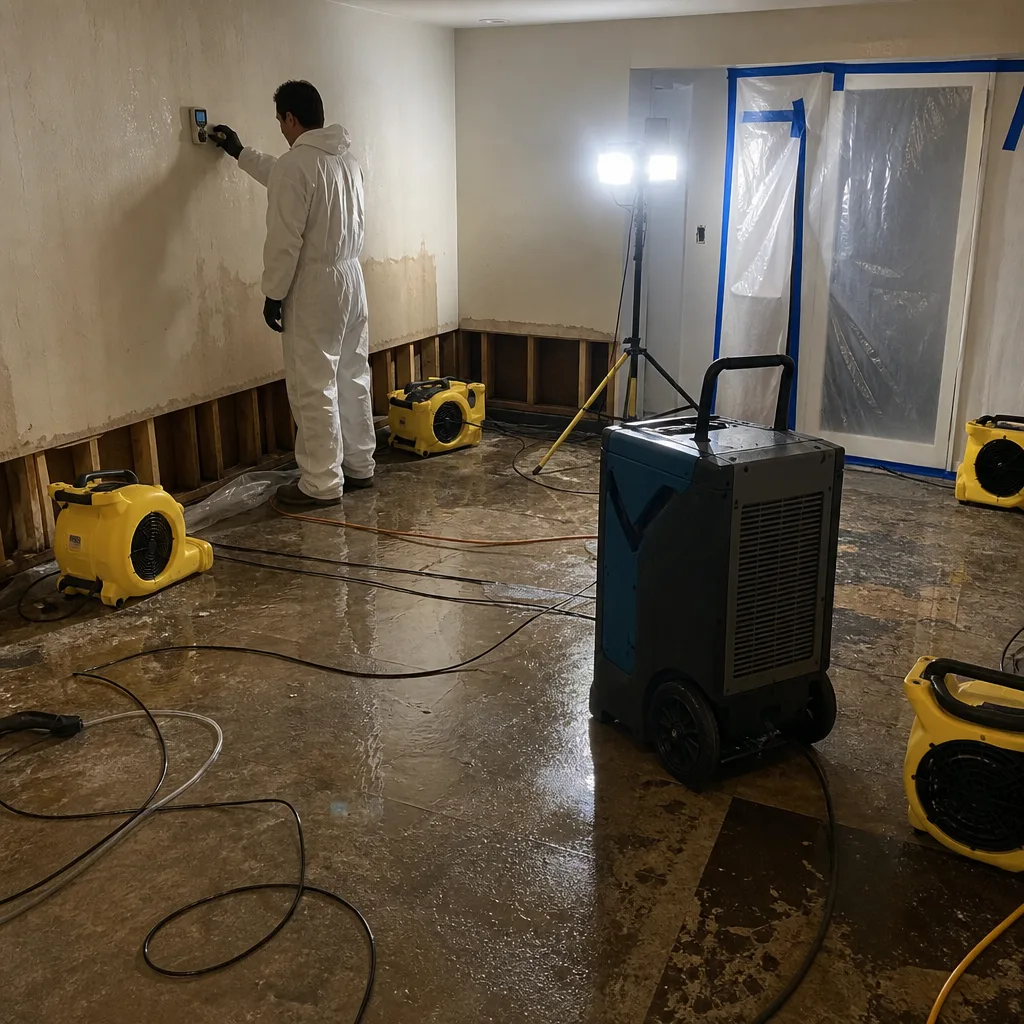
You can’t fix what you haven’t found. In Jamul, that means looking beyond the obvious drywall stain. We inspect crawlspaces, wall cavities, attic framing, and areas behind original 1970s and 1980s wood paneling. Many Jamul homes were built before current ventilation standards, so hidden moisture has had decades to accumulate. We take moisture readings throughout the structure, document everything in writing, and give you a clear scope before any remediation begins.
Mold Removal
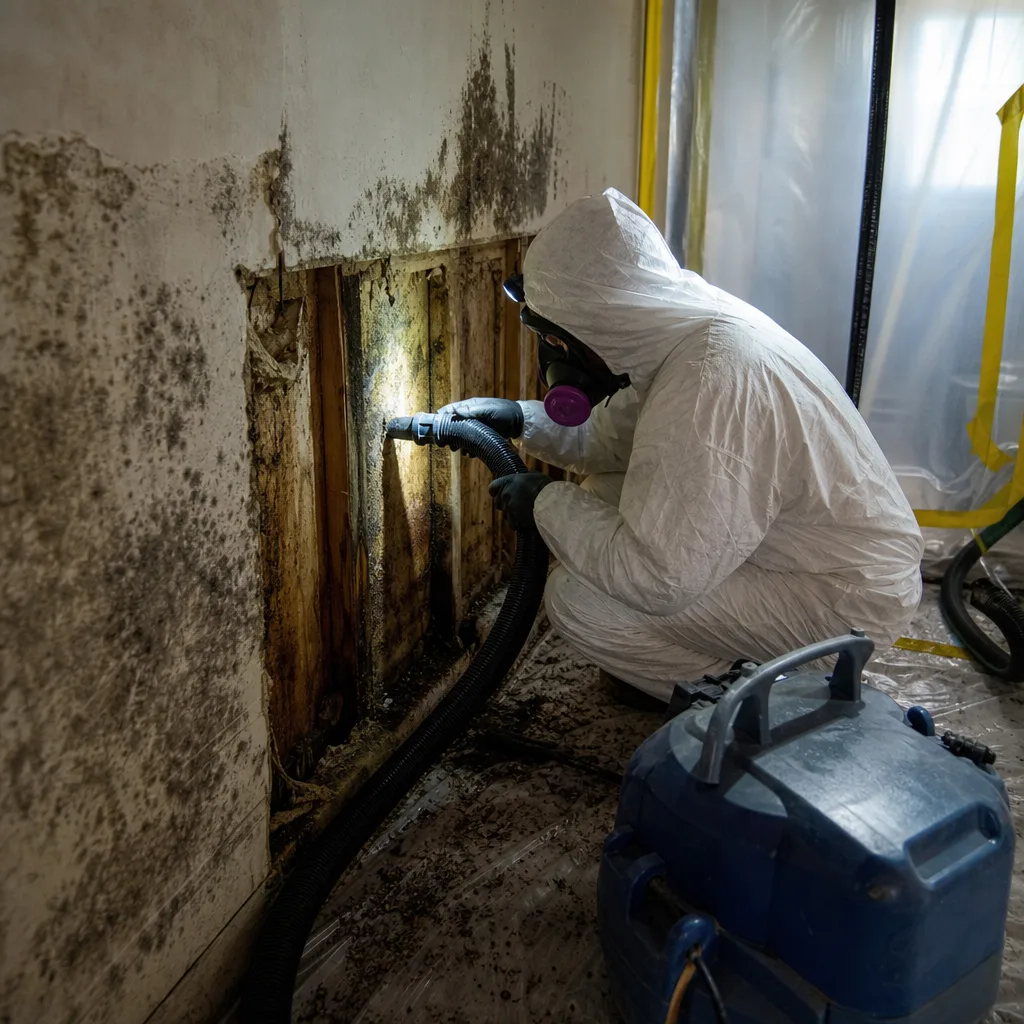
This is the core of the work: HEPA vacuuming, antimicrobial treatment, and physical removal of contaminated materials where needed. For Jamul custom homes, this often means working carefully around hand-built Douglas fir beams, original built-in cabinetry, and custom wood trim that can’t be replaced from a big-box store. We treat those finishes with the same respect we’d give our own homes. If the mold is confined and materials are salvageable, we salvage them.
Black Mold Remediation
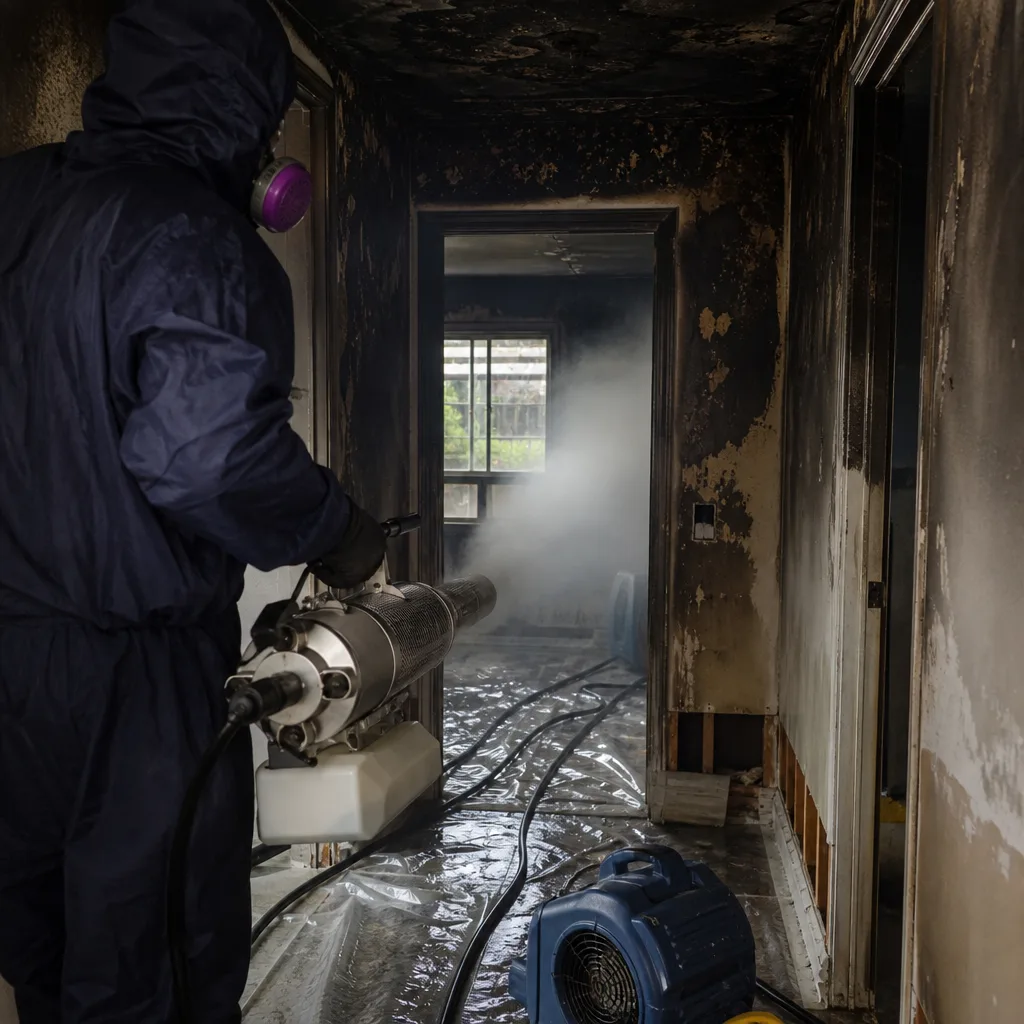
Black mold, or Stachybotrys, is what people fear most, and we treat it seriously. That said, the color of mold tells you very little on its own. What matters is the moisture source, the extent of the growth, and the structure’s ventilation. In Jamul, we frequently find black mold in crawlspaces after debris flows have pushed ash and silt against foundation walls. The ash holds moisture against the wood for months, and that’s exactly where this mold thrives. We address the structural issue and the mold together, because fixing one without the other means you’ll be calling us again in six months.
Air Quality Restoration
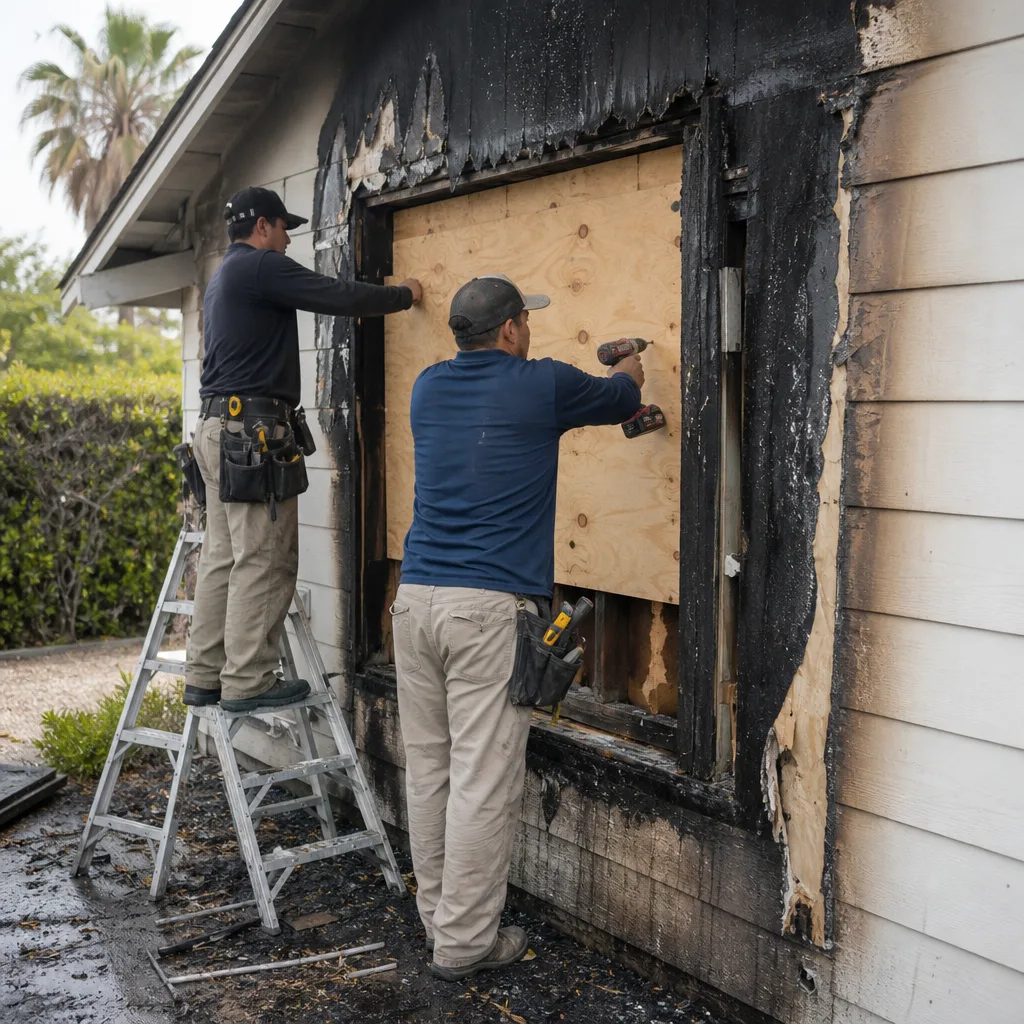
After remediation, the air inside your home needs to be clean. We run professional air scrubbers, re-test, and confirm that spore counts are back to normal levels. In Jamul, where homes sit dry and locked up through long summers, indoor air can hold onto mold spores for a long time. We measure the results, not just the process. The final moisture log and air quality report come with every job.
Crawl Space Treatment
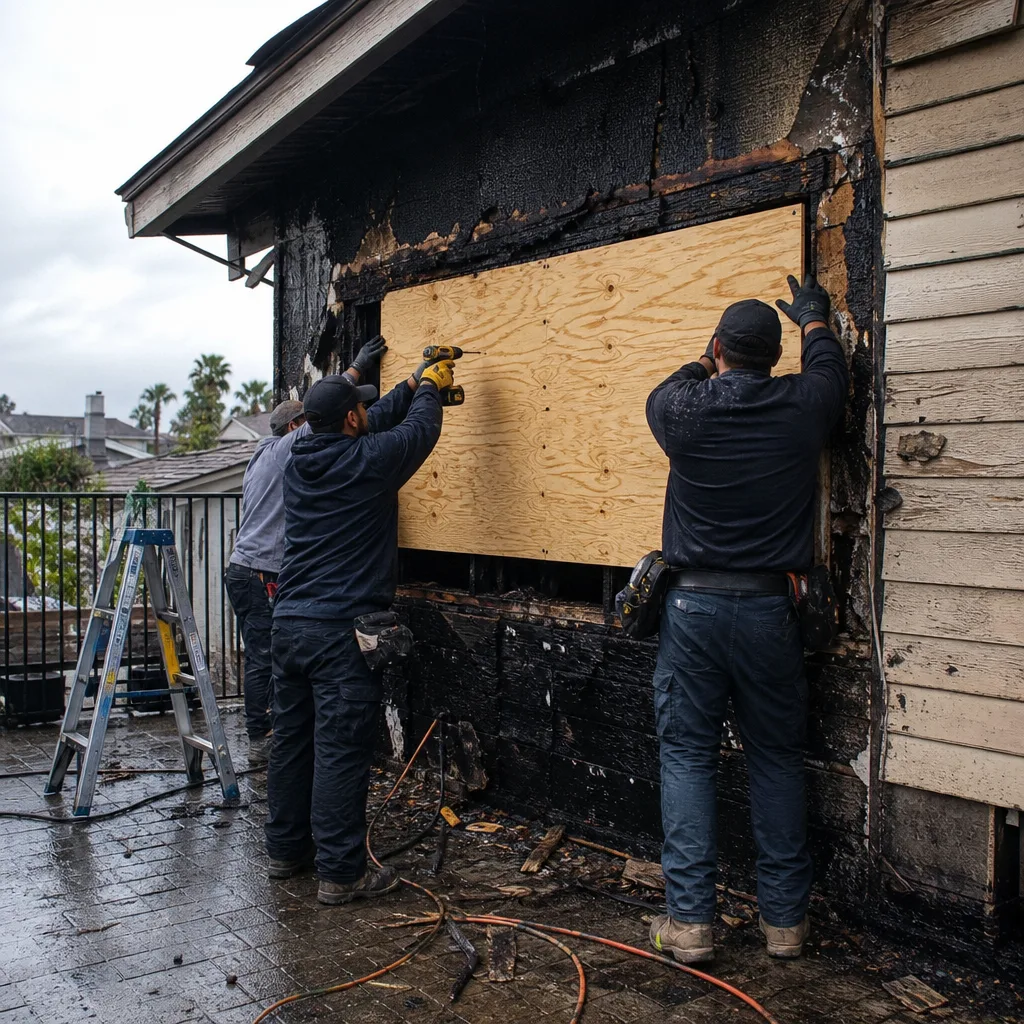
This is where we spend a lot of our time in Jamul. Custom ranch homes on sloped lots often have crawlspaces that stay damp, and after a mudslide or heavy El Niño rain, they can become a breeding ground for mold. We clean the space, dry it with Dri-Eaz and Injectidry equipment, treat the framing, and then look at encapsulation or vapor barriers where they make sense. If you have a post-debris-flow crawlspace, this is not a standard water job. The ash and silt load changes everything. We pre-clean aggressively before any encapsulation material goes in.
Moisture & Humidity Control
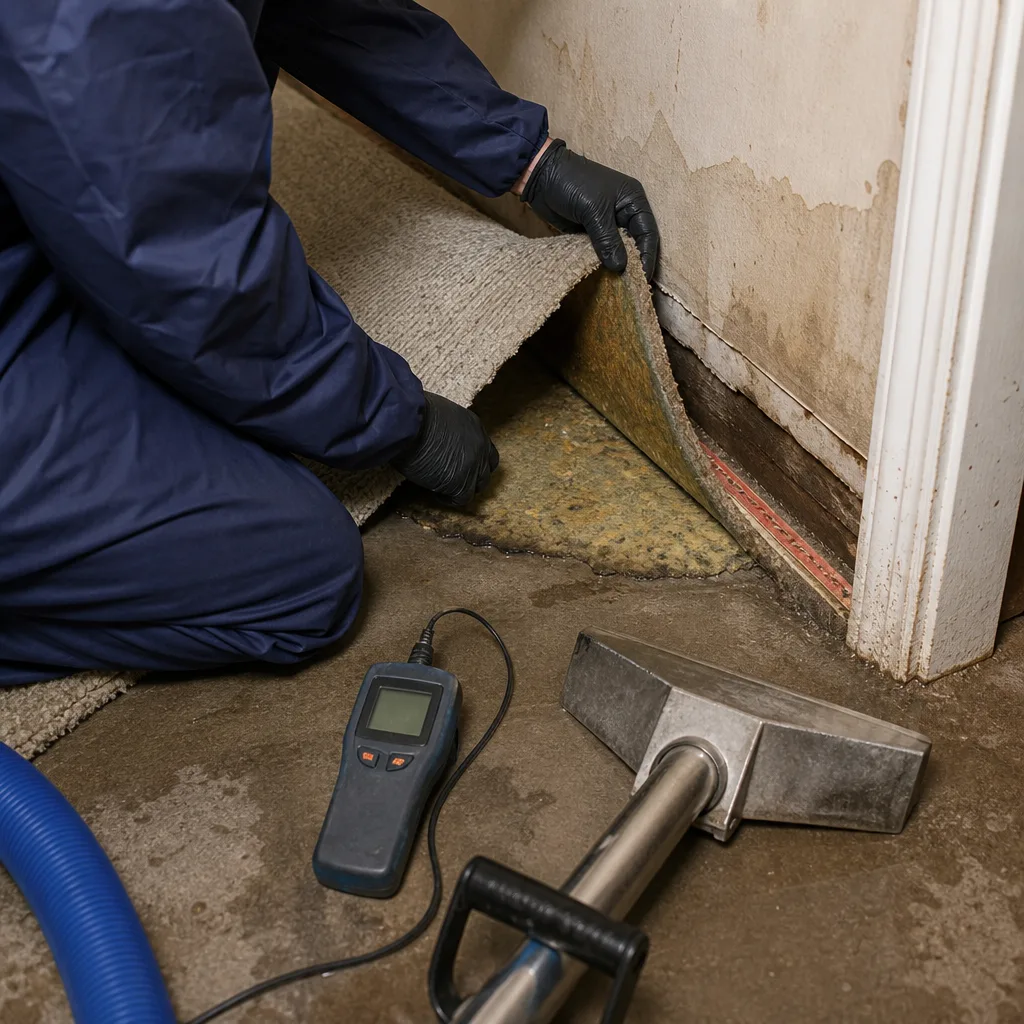
Mold is a moisture problem before it’s anything else. In a Jamul home, we look at the whole picture: the gutters, the slope of the land, the attic ventilation, the crawlspace humidity, and the condition of the roof. Older wood shake roofs and ember-damaged attic vents let moisture in during the wet months and hold it there through the dry ones. We identify and fix those entry points so the mold doesn’t come back. That’s the whole point of the work.
What happens when you call
- 1
A real person answersNo phone trees - you reach a local pro.
- 2
You get an upfront price rangeHonest numbers before anyone is dispatched.
- 3
A background-checked tech heads outLicensed & insured, dispatched right away.
- 4
You approve before work beginsNothing starts until you say go.
The Jamul Wildfire-to-Debris-Flow Mold Cycle
Here’s the part that applies only to Jamul, and it’s the reason a generic mold company gets it wrong out here. Jamul sits inside San Diego County’s Very High Fire Hazard Severity Zone. The 2007 Harris Fire tore through these hills and destroyed hundreds of structures. What happened next is the part people don’t talk about: winter rains hit the bare hillsides, and ash-laden mud and debris flowed down into the canyons. Homes that survived the fire took a second hit from mudslides and debris flows. That’s the “second-hit claim” we see all over Jamul.
What does that have to do with mold? Everything. The same house that took smoke and soot damage in October gets a crawlspace full of ash and silt in January. The soot residue binds with the new moisture inside wall cavities and behind wood paneling. The crawlspace stays damp for months. The result is a distinct fire-then-flood mold pattern: growth that starts low, behind the knee walls and under the floor, fed by the combination of smoke residue and post-fire moisture. If you call a standard water-damage company that only looks at the visible drywall stain, they’ll miss the crawlspace entirely. We won’t.
We know this cycle because we’ve worked it. Our crew recently remediated a 1980s custom ranch on Deerhorn Valley Road after a January mudslide pushed ash and silt into the crawlspace. We used an Injectidry system and Dri-Eaz dehumidifiers to dry the space, then performed HEPA vacuuming and antimicrobial treatment on the custom wood framing. The owner’s hand-built Douglas fir support beams were preserved, and moisture readings came down to below 15% throughout. That’s the Jamul job. It’s not a standard water leak. It’s the aftermath of a fire season and a wet winter showing up in the same wall cavity.
This page is the only Jamul-specific mold remediation resource that maps the full wildfire-to-debris-flow moisture cycle onto your custom home’s actual construction. Not a generic checklist for “black mold removal.” We built it because we work here, and we know what’s actually happening inside these walls.
Pricing for Mold Remediation in Jamul, CA
Let’s talk numbers, because you deserve straight answers. A contained mold job in Jamul, something like mold behind a bathroom wall in a standard ranch home, typically runs $1,800-$3,200. If the crawlspace is involved, which it often is out here, you’re looking at $3,500-$6,500 depending on square footage, the extent of the contamination, and whether full encapsulation is needed. Black mold remediation that requires removal of drywall, insulation, and custom wood finishes tends to fall in the $4,000-$7,000 range. Air testing before and after a job typically adds $300-$600.
What affects the price in Jamul specifically: the age of the home, whether it’s post-and-beam construction with hard-to-reach framing, whether the crawlspace has been compromised by debris flow, and whether ember-damaged vents or roofing have created an ongoing moisture path. We give you a written scope before work starts, and we walk you through every line. No surprises. Estimates are free. Call (855) 915-0646 and we’ll give you an exact number for your house.
Trusted Equipment and Standards We Use in Jamul
We don’t cut corners on equipment, because a 40-year-old Jamul crawlspace doesn’t respond to a box fan and hope. We run Dri-Eaz dehumidifiers and Injectidry drying systems, which let us pull moisture out of framing and wall cavities without tearing out more than we have to. Our technicians are IICRC-certified, and the company maintains RIA affiliation. We stock what we need for the local housing stock, not a generic suburban build, so when we show up at a Jamul property, we’re ready for the actual construction we’re about to touch.
Common Mold Problems We See in Jamul Homes
- Post-debris-flow crawlspace contamination. Ash and silt from the canyons push into crawlspaces during heavy winter rains, and the abrasive material holds moisture against floor joists for months. This creates mold growth that starts below the floor and often gets missed by standard inspections.
- Mold behind original wood paneling. Many Jamul custom homes built in the 1970s and 1980s still have original wood paneling, and post-fire soot residue behind the paneling binds with moisture to feed fungal growth you can’t see from the room.
- Ember-damaged attic ventilation. Older attic vents and aging wood shake roofs get compromised during fire season. Moisture enters through those gaps in the wet months, and the mold starts in the attic and upper wall cavities before showing up anywhere visible.
- Foundation and crawlspace water intrusion from steep canyon slopes. The same canyon geography that makes Jamul beautiful also concentrates flash flooding and accelerates water intrusion during heavy El Niño rain. Homes on slopes take water at the foundation level, and that’s where the mold begins.
Homeowners in Jamul Often Ask Us
How does wildfire smoke and soot residue in my Jamul home increase the risk of mold growth after a debris flow?
Smoke and soot residue is organic material, and when it settles inside wall cavities or behind wood paneling, it absorbs moisture from the air. After a debris flow or heavy winter rain introduces that moisture, the soot acts like a food source for mold. The growth starts faster and spreads further than it would in a home that never took smoke damage. If your home went through the Harris Fire or any other burn event, even if the damage seemed minor at the time, you need a mold inspection that accounts for that residue. Call (855) 915-0646 and we’ll walk you through what to look for.
Can mold grow in my Jamul crawlspace after a mudslide even if I didn’t see standing water inside the house?
Yes, and this is one of the most common calls we get from Jamul homeowners. The water doesn’t have to reach your living space. Ash and silt pushed into the crawlspace hold moisture for months, and the elevated humidity alone is enough to support mold growth on floor joists and subflooring. By the time you notice a smell or see warping in your floors, the growth is already established. Crawlspace inspection is part of every mold assessment we do in Jamul, because the terrain here makes it a near-certain risk after heavy rain.
I live in a Jamul custom home with original wood paneling and built-in cabinetry. How do you remediate mold without damaging those finishes?
We treat those finishes as if they’re original to the house, because they are, and you can’t replace them from a catalog. The approach starts with careful containment and selective removal. We don’t tear out paneling unless the mold has penetrated the wood itself. In most cases, we can dry the wall cavity, HEPA vacuum the surface, and apply antimicrobial treatment without removing the paneling. When removal is necessary, we cut precisely and reinstate what we can. The goal is always to save the craftsmanship, not demo the wall. Call (855) 915-0646 and we’ll give you a straight read on what your paneling can and can’t handle.
After the Harris Fire, my Jamul property had smoke damage and then a mudslide the next winter. Do I need a different mold inspection than a normal water-damage home?
Yes, and this is exactly the mistake we see other companies make. A home that’s been through both a wildfire smoke event and a post-fire debris flow needs an inspection that looks for mold in places a standard water-damage assessment skips. That means the crawlspace, the spaces behind wall cavities where soot settled, the attic framing, and the roof-to-wall connection where embers may have compromised the seal. A standard inspection looks at visible water damage. Your home has been through a two-phase event, and the mold that follows that event lives in different places. We inspect for it specifically.
My Jamul home was built in the 1980s with an old wood shake roof. How does that affect mold after a brushfire and rains?
Old wood shake roofs are a problem for two reasons. First, they’re porous, so they absorb moisture during the wet season and hold it against the roof deck. Second, after decades of sun and fire risk, the shakes are often cracked or lifted, which lets water reach the roof sheathing and eventually the attic. If your home also took smoke or ember damage during a brushfire, the gaps let additional moisture in. The mold then forms in the attic and along the top plates of the exterior walls. We check the roof-to-wall connection on every Jamul mold job, because it’s one of the most reliable indicators of where the moisture entered.
We Also Serve Cities Near Jamul
We work throughout the backcountry and foothills around Jamul, and we’re also out in Mold Remediation in Jamul neighboring communities like Rancho San Diego, El Cajon, Bostonia, and Winter Gardens. If you’re in one of those areas and dealing with mold after a wet winter, call the same number: (855) 915-0646. Same owner, same standard, same written promise.
Serving Jamul, CA - Our Local Coverage Area
We’re based in the Jamul area and know this community well. Use the map below to see our service coverage - if you’re nearby, we can almost certainly help.
Call Wade’s Restoration of California for Mold Remediation in Jamul, CA
You don’t need a call center. You need someone who knows Jamul’s back roads, knows what a post-fire debris flow does to a crawlspace, and will hand you a moisture log with his name on it. Wade Ferris founded this company in 2007, and he still takes calls himself. He’ll talk you through what’s going on, tell you if it’s serious or not, and get a crew out to your property fast. No charge for the estimate. No trip charge inside the county. And if you’re a senior or a veteran, we take 10% off, always. Call (855) 915-0646 now. If it’s mold, don’t wait for the next rain to make it worse.
Written by Wade Ferris, Owner at Wade’s Restoration of California, serving Jamul and surrounding San Diego County communities since 2007.