
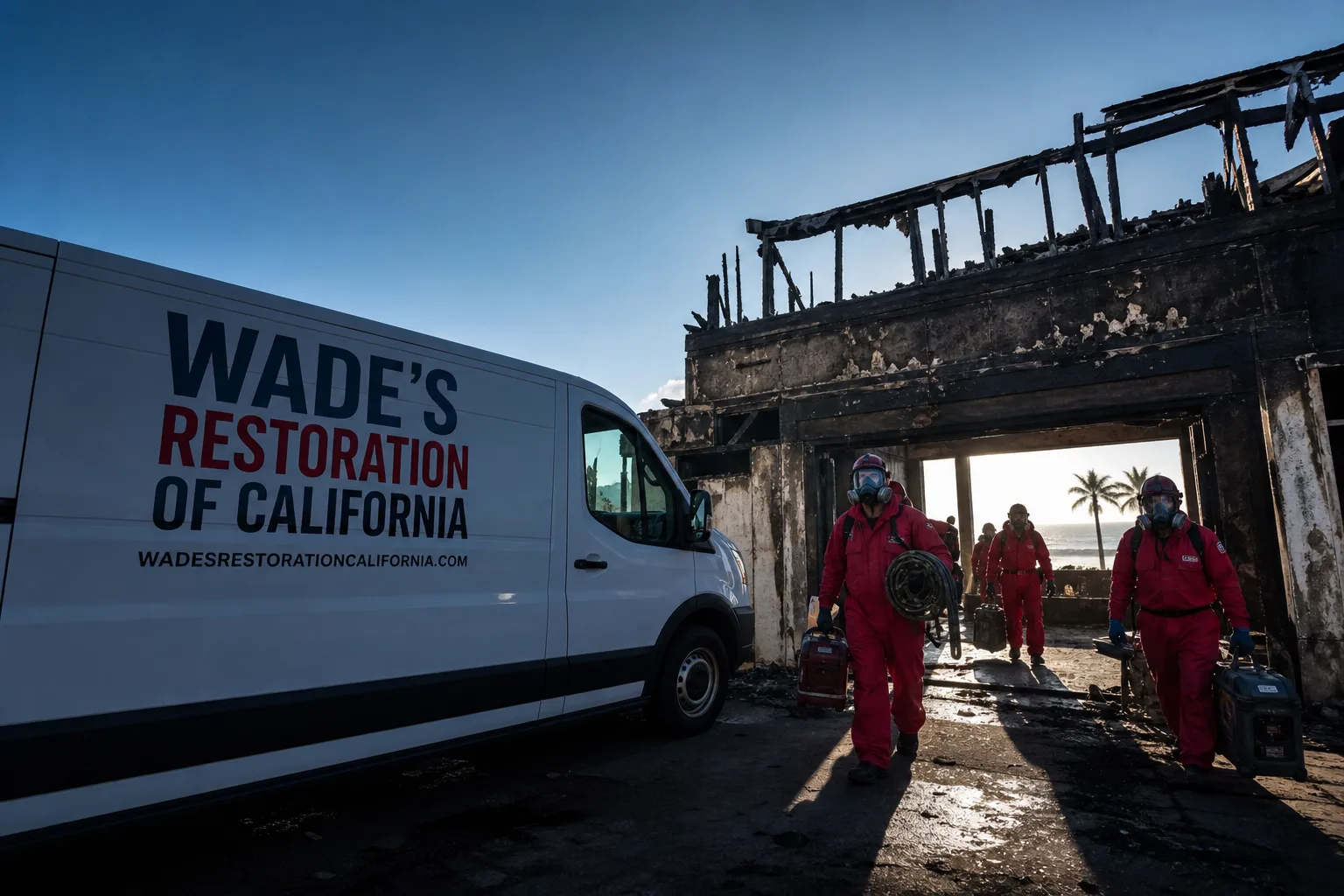
Fast, Reliable Mold Remediation Across Escondido
Mold remediation in Escondido typically costs $1,800-$6,500 depending on the square footage affected, the type of mold, and whether crawlspaces or ductwork are involved. Most jobs in Escondido wrap up in 2-5 days once we get started. If you’ve found mold or smell that musty, earthy odor in your home, call Wade’s Restoration at (855) 915-0646 and Wade will head out himself to take a look.
We work the neighborhoods from central Escondido’s 1950s ranch tracts off El Norte Parkway up through the Harmony Grove corridor in 92029, and down into the San Pasqual Valley. Our crews live here. We know what Escondido’s heat, hard water, and fire-scarred hillsides do to a house. That local knowledge changes how we treat the problem, and it’s why homeowners call us instead of a national chain that sends a crew from an hour away.
Why Wade’s Restoration of California Is Escondido’s Preferred Mold Remediation Company
Wade Ferris started this company in 2007 and he still answers his own phone. Not an answering service, not a call center. When you call about mold in an Escondido home, you’re talking to the man whose name is on the truck. That matters to people here. Ask anyone on your street, the old accountability thing still works.
Wade’s crew is IICRC-certified and RIA-affiliated, background-checked, and they show up in uniform with professional-grade Dri-Eaz and Phoenix equipment. More than that, Wade takes moisture readings every single day on a mold job and hands you the full log when the work is done. Almost nobody in this trade does that. You get to see the numbers drop day by day until the structure is actually dry, not just “looks fine to us.”
Every Mold Remediation job we do in Escondido is covered by the 90-Day Done Right Promise, in writing. If the mold comes back or the moisture wasn’t handled right, Wade makes it right. No arguments, no re-quoting. He also deals with your insurance adjuster directly, so you’re never stuck relaying messages between two sides. That’s a big deal when a claim is already stressful.
Our Mold Remediation Services in Escondido
Mold Inspection & Testing
Before we tear out drywall, we figure out exactly what you’re dealing with. In Escondido, that means testing for Stachybotrys (the “black mold” people worry about), Aspergillus, Penicillium, and Cladosporium, the four we see most in this valley. We take air samples inside and outside the home so you get a real comparison, not just a lab number with no context. Escondido homes built in the 1950s through 1970s often have hidden pockets of growth behind walls where galvanized supply lines have been sweating or slowly leaking for years.
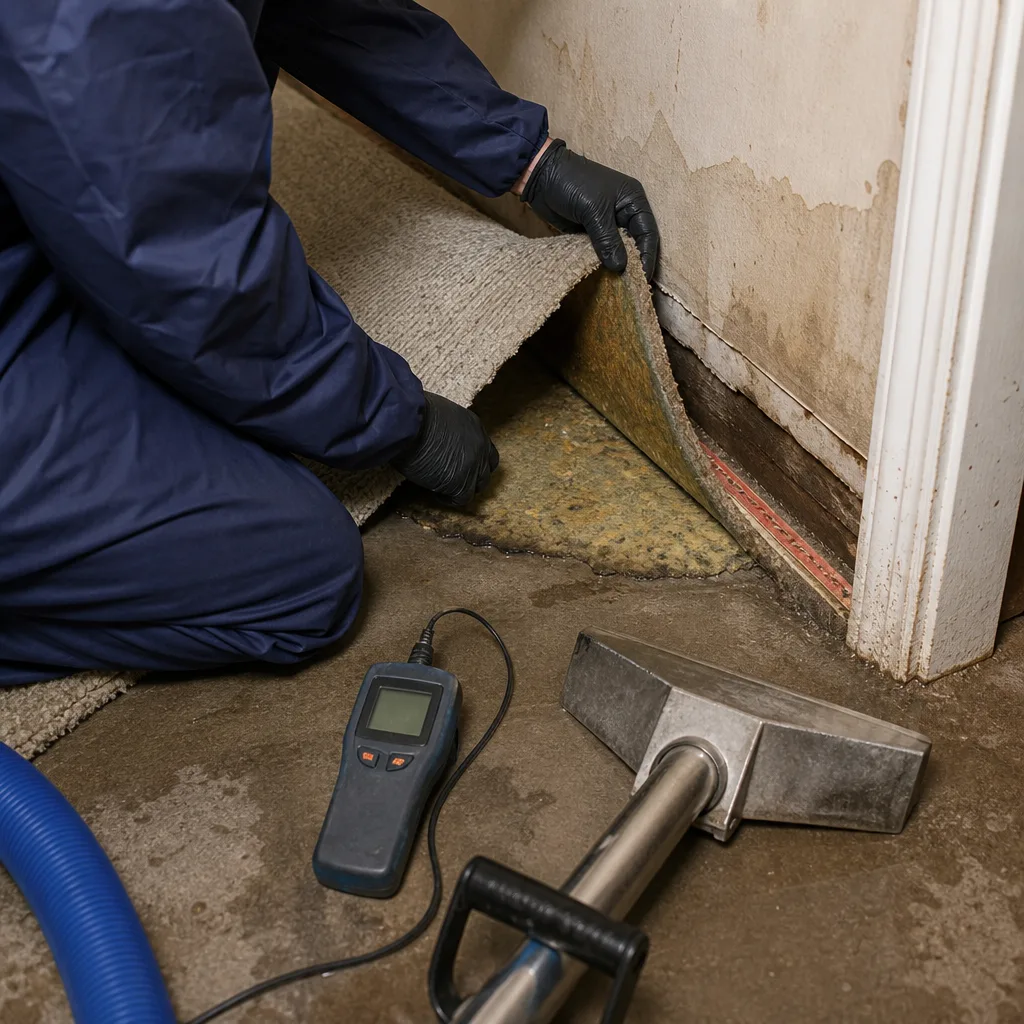
Mold Removal
Once we know what’s growing, we contain the affected area with negative air pressure so spores don’t blow into the rest of the house while we work. We remove contaminated drywall, insulation, and trim, then treat the framing with an EPA-registered antimicrobial. Every bit of debris gets bagged and sealed before it leaves the containment zone. In Escondido’s older ranch homes, this often means cutting into walls that haven’t been opened since Nixon was in office, and we’re ready for whatever’s back there.
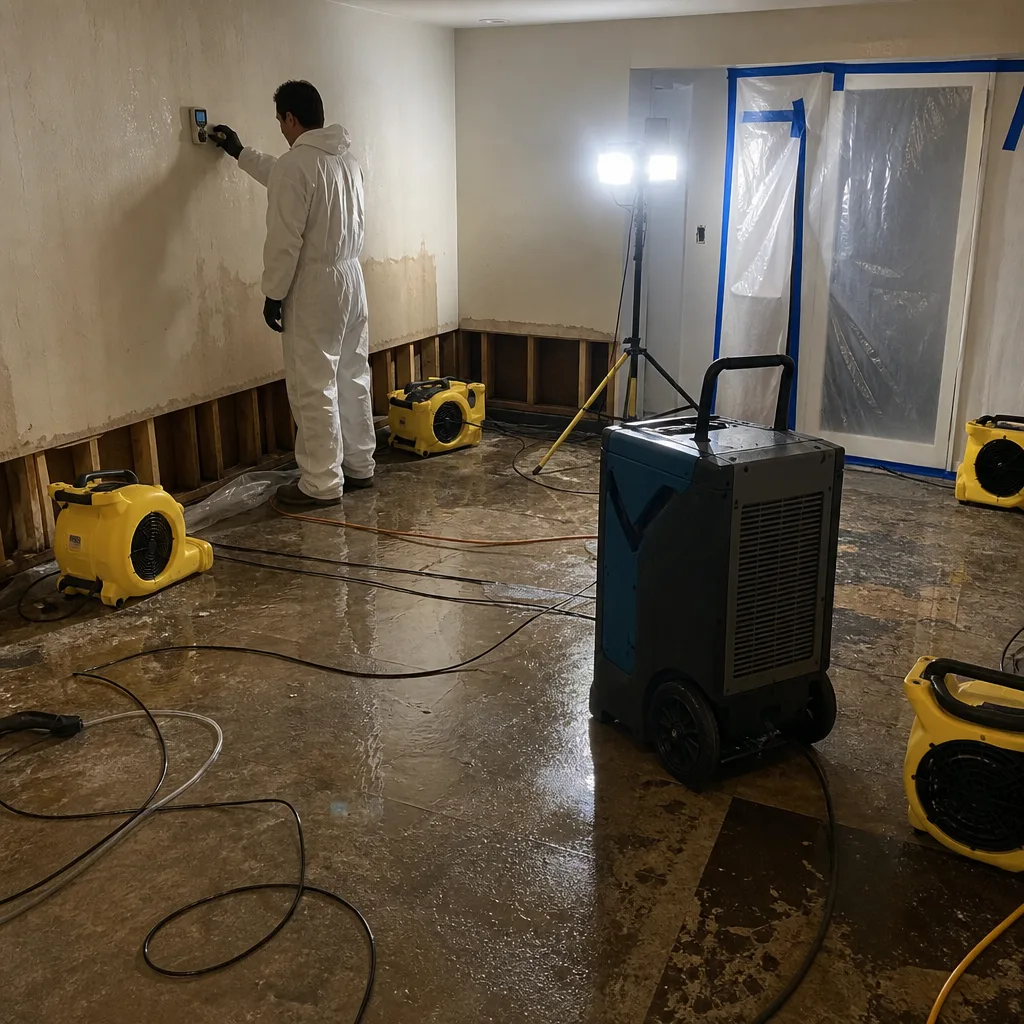
Black Mold Remediation
Black mold in an Escondido home is serious, and not something to brush off or paint over. Stachybotrys needs constant moisture to thrive, which means there’s usually a hidden leak behind it, a supply line, a roof penetration, a crawlspace with poor drainage. We find the moisture source, fix the water problem, then remove the contaminated material and treat what remains. The goal is not just a house that looks clean. It’s a house that tests clean.
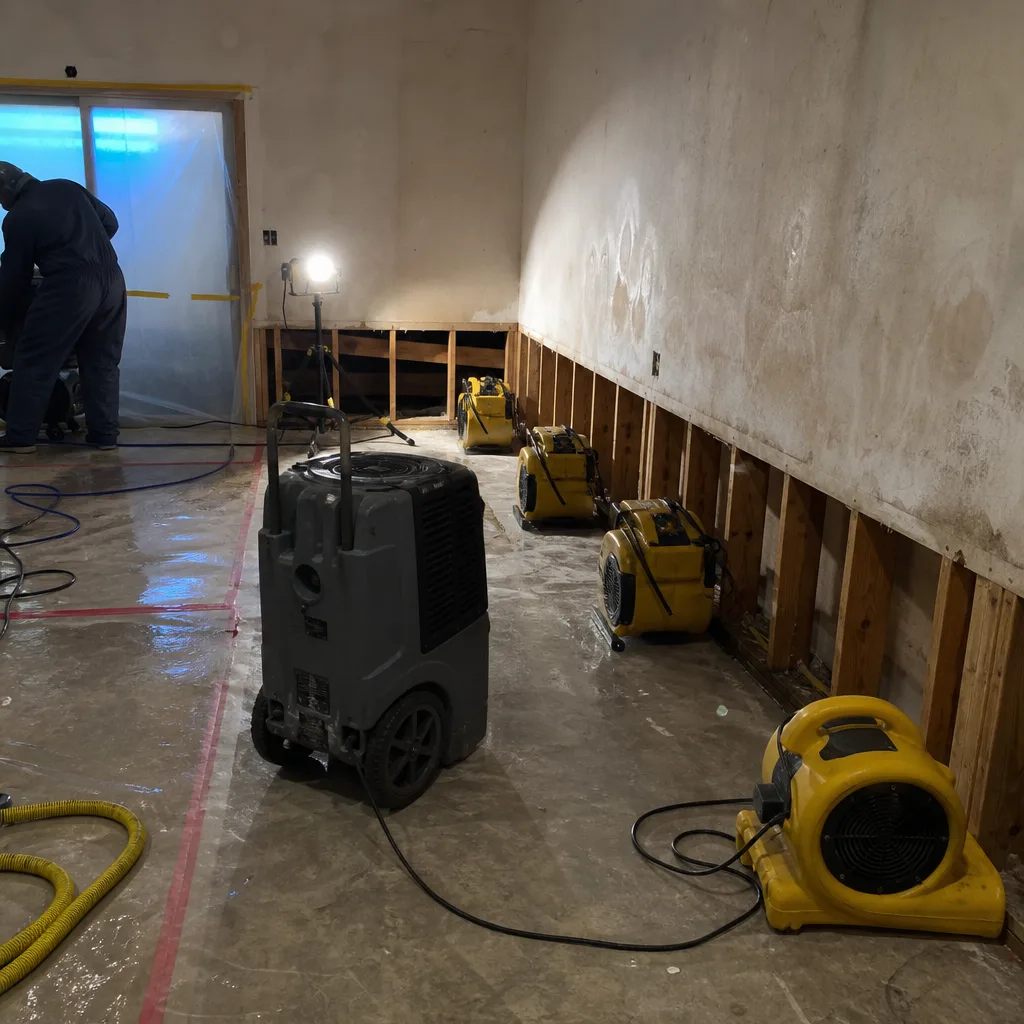
Air Quality Restoration
Mold doesn’t just live on walls. It gets into the air, into ductwork, into the places you can’t see but breathe every day. After the source removal, we run HEPA air scrubbers, clean the ductwork if needed, and re-test until indoor spore counts match outdoor baseline or come in under it. In Escondido’s summer heat, a closed-up house with AC running becomes a recirculation loop for spores. We break that cycle before we call the job done.
What happens when you call
- 1
A real person answersNo phone trees - you reach a local pro.
- 2
You get an upfront price rangeHonest numbers before anyone is dispatched.
- 3
A background-checked tech heads outLicensed & insured, dispatched right away.
- 4
You approve before work beginsNothing starts until you say go.
Trusted Brands We Service in Escondido
We run Dri-Eaz HEPA air scrubbers and dehumidifiers, Phoenix drying systems, and treat every surface with EPA-registered antimicrobials. These aren’t rental-store machines. They’re commercial units we own and maintain, sized for the crawlspaces and tight wall cavities common in Escondido’s 1950s-1970s ranch homes. We carry our own parts and filters, so a jammed condensate pump or a clogged HEPA filter doesn’t stall your job for two days while somebody waits on a shipment. For Escondido homeowners, that means we’re in and out in one trip, not four.
Common Mold Remediation Problems We See in Escondido Homes
- Hidden leaks from corroded galvanized supply lines: Escondido’s hard Colorado River water eats galvanized pipe from the inside. By the time a pinhole leak shows as a stain on the ceiling or baseboard, the mold has often been growing for weeks inside the wall cavity.
- Post-wildfire debris-flow moisture in Harmony Grove (92029): Burn-scarred hillsides shed water instead of absorbing it. Ash-laden runoff works its way into crawlspaces and exterior wall cavities months after a fire, long after the insurance claim on the original fire has closed.
- Stucco hairline cracks on newer hillside homes: The stucco-and-tile construction in 92029 looks solid, but hairline cracks from heat expansion or fire exposure let humidity drive moisture into the wall cavity. It doesn’t take much water behind stucco to start a mold bloom you can smell before you can see.
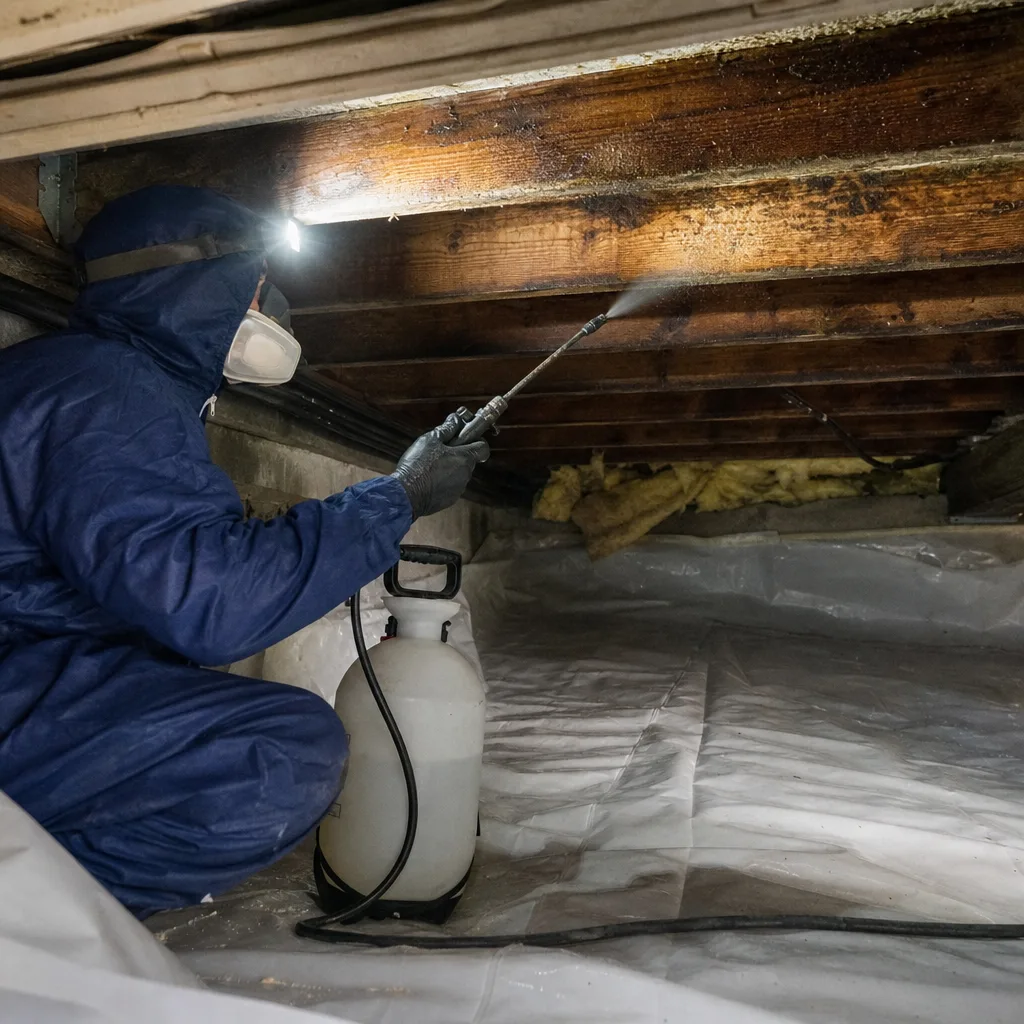
- Crawlspaces with standard vapor barriers that don’t stand up to ash runoff: A 6-mil plastic barrier is fine for normal ground moisture. It is not fine when hydrophobic ash-laden water pushes through after a heavy rain on a burn scar. Those crawlspaces need a reinforced liner and sump backup, not the standard treatment.
Pricing for Mold Remediation in Escondido, CA
For a typical Escondido home, here’s what you’re looking at:
- Mold inspection with air sampling: $350-$650, depending on how many rooms and whether crawlspace or attic testing is needed.
- Contained mold removal (single room, moderate growth): $1,800-$3,200.
- Full crawl space treatment with reinforced vapor barrier: $2,500-$5,000, higher in Harmony Grove if post-fire debris-flow mitigation is required.
- Whole-house mold remediation with duct cleaning and air quality restoration: $5,000-$12,000 for larger homes or multi-room contamination.
These are real ranges for this market, not national averages. What moves the number: how far the mold has spread, whether ductwork is involved, and whether the moisture source is an active leak or a past event now gone. Estimates are free. Call (855) 915-0646 and Wade will give you a written scope before any work starts. No trip charge inside San Diego County, and a free second opinion on any written estimate you’ve already got.
We Also Serve Cities Near Escondido
Wade’s crews handle Escondido plus San Marcos, Valley Center, Vista, and Poway. If you’re on the edge of one of those cities and wondering if it’s in our service area, call and ask. Chances are good we’re already working a job within ten minutes of you.
Serving Escondido, CA - Our Local Coverage Area
We’re based in the Escondido area and know this community well. Use the map below to see our service coverage - if you’re nearby, we can almost certainly help.
FAQs - Mold Remediation in Escondido
Most homes in the Harmony Grove corridor that needed mold remediation after the Cocos Fire showed symptoms 3-9 months after the fire itself, when the first heavy winter rains hit the burn-scarred hillsides above them. The burned soil had become hydrophobic, shedding water instead of absorbing it, and the ash-laden runoff pushed into crawlspaces and wall cavities of homes that never had a single ember touch them. By the time homeowners smelled the musty odor, the moisture had been working for weeks. If you’re in 92029 and haven’t had a deferred water-damage assessment since a nearby hillside fire, call (855) 915-0646 and Wade will take a look.
The heat itself doesn’t create mold, but it supercharges the conditions mold needs. When outdoor temperatures push past 100°F in Escondido, AC systems run constantly, pulling humid air through wall cavities and chasing it across cold surfaces like uninsulated pipes and poorly sealed sheathing. On a hillside stucco home, the west-facing walls absorb brutal afternoon sun, and any hairline crack from heat expansion becomes a path for warm, damp air to drive moisture into the wall cavity. The result is condensation that never fully dries, which is exactly what Stachybotrys and Aspergillus need to bloom. If a room smells musty in summer and not in winter, it’s likely a heat-driven moisture issue.
A debris-flow crawlspace is different from a standard water intrusion. The ash and sediment that pushed in is slightly alkaline and carries fine particulate that standard plastic vapor barriers let pass through over time. The right treatment is: remove the contaminated soil and debris, install a reinforced vapor barrier rated for chemical resistance, add a sump pump with battery backup, and in some cases install a French drain on the uphill side to intercept future runoff before it reaches the foundation. Skip the reinforced liner or the sump backup, and you’ll be re-treating the same crawlspace after the next heavy rain. Call Wade at (855) 915-0646 and he’ll walk you through what your specific crawlspace actually needs.
Yes, and it happens more than people realize. Santa Ana winds in Escondido blow hard and dry, and they pick up dust, soil, and mold spores from any open source: a neighbor’s rotting shed, an overgrown hillside, a neglected pool with standing water. Those spores ride the wind and find their way into your house through vents, window seals, and even the gap around an exterior door. The dry wind itself doesn’t grow mold, but it delivers the spores, and when they land in a humid bathroom, a kitchen with a slow leak, or a crawlspace with ground moisture, they colonize. Good interior air quality starts with stopping outside air from leaking in during wind events.
The short answer: the original water source was never fully killed. In a 1950s or 1960s ranch home in 92025 or 92027, the galvanized supply lines hidden in the walls are often still leaking slowly even after the initial mold removal. We’ve worked a job on El Norte Parkway where corroded lines had been leaking inside a wall for weeks before anyone noticed, feeding hidden Stachybotrys growth. We set up a Dri-Eaz HEPA 500 air scrubber with negative-air containment, removed the wet drywall, treated the framing with an EPA-registered antimicrobial, and ran a Phoenix drying system until moisture content dropped under 15%, all in one trip. But if a crew removed the mold and ignored the slow leak behind it, the clearance test fails because the moisture never stopped. That’s why we trace the water source before we ever cut a hole. Call (855) 915-0646 for an exact assessment, estimates are free.
Written by Wade Ferris, Owner at Wade’s Restoration of California, serving Escondido and all of San Diego County. Wade has answered his own phone since 2007.