
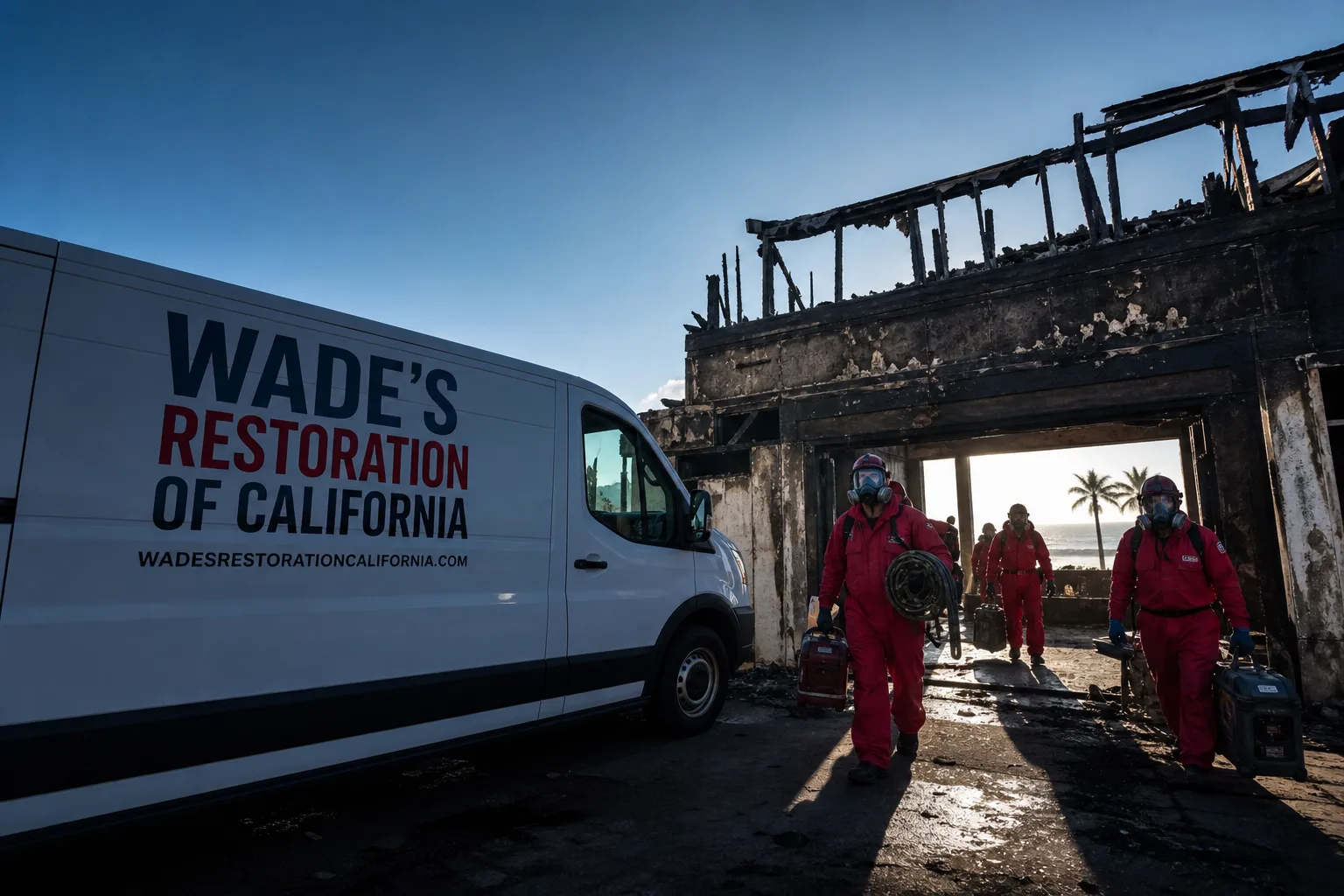
Fast, Reliable Mold Remediation Across Diamond Springs
Mold remediation in Diamond Springs typically costs $1,800-$6,500 depending on how far the growth has spread and whether your crawlspace or attic is involved. Most jobs in the 95619 ZIP code take two to five days, and we can usually have a crew on site within 24 hours of your call. Diamond Springs sits at 1,700 feet in the Sierra foothills, which means the mold problems we walk into here are different from what a flatland crew in Sacramento ever sees. If you’ve got a musty smell that won’t quit or visible growth on walls or joists, call Wade’s Restoration at (855) 915-0646 and we’ll tell you straight what you’re dealing with.
Why Wade’s Restoration of California Is Diamond Springs’s Preferred Mold Remediation Company
Wade Ferris has been running Wade’s Restoration since 2007, and the reason people in Diamond Springs call us is simple: they get the owner, not a franchise script. We publish our license number and address, and Wade answers his own phone. If you’re on Pleasant Valley Road or China Garden Lane with a crawlspace that smells like a damp basement after the last storm, you’re talking to someone who knows exactly what that means. We’re not a national chain that flies a crew in from two counties over. Our people live and work in El Dorado County, and we’ve been inside enough Diamond Springs ranch homes to know where mold hides here: rim joists, attics under those aging cedar shake roofs, and the crawlspace side of foundation vents that let debris-flow water into homes after the Caldor Fire burned the hillsides bare. When you call, Wade heads out himself. One call brings the owner, not a dispatcher who’s never seen your street. Our customers in Diamond Springs keep our number because when a second problem shows up, they call the same person again. Ask anyone on your street. We’ve done the work.
Our Mold Remediation Services in Diamond Springs
Mold Inspection & Testing
Before we tear anything out, we find the moisture source. In Diamond Springs that usually means checking rotted attic sheathing under shake roofing that took ember damage back in 2021, or a crawlspace that never dried after a winter storm. We take moisture readings every day and hand you the full log when the job’s done. Almost nobody in this trade does that. We also test the air so you know whether the mold you can see is the mold you’re breathing. In Diamond Springs, lab results matter because post-fire homes often carry soot residues that complicate what a visual inspection alone will tell you.
Mold Removal
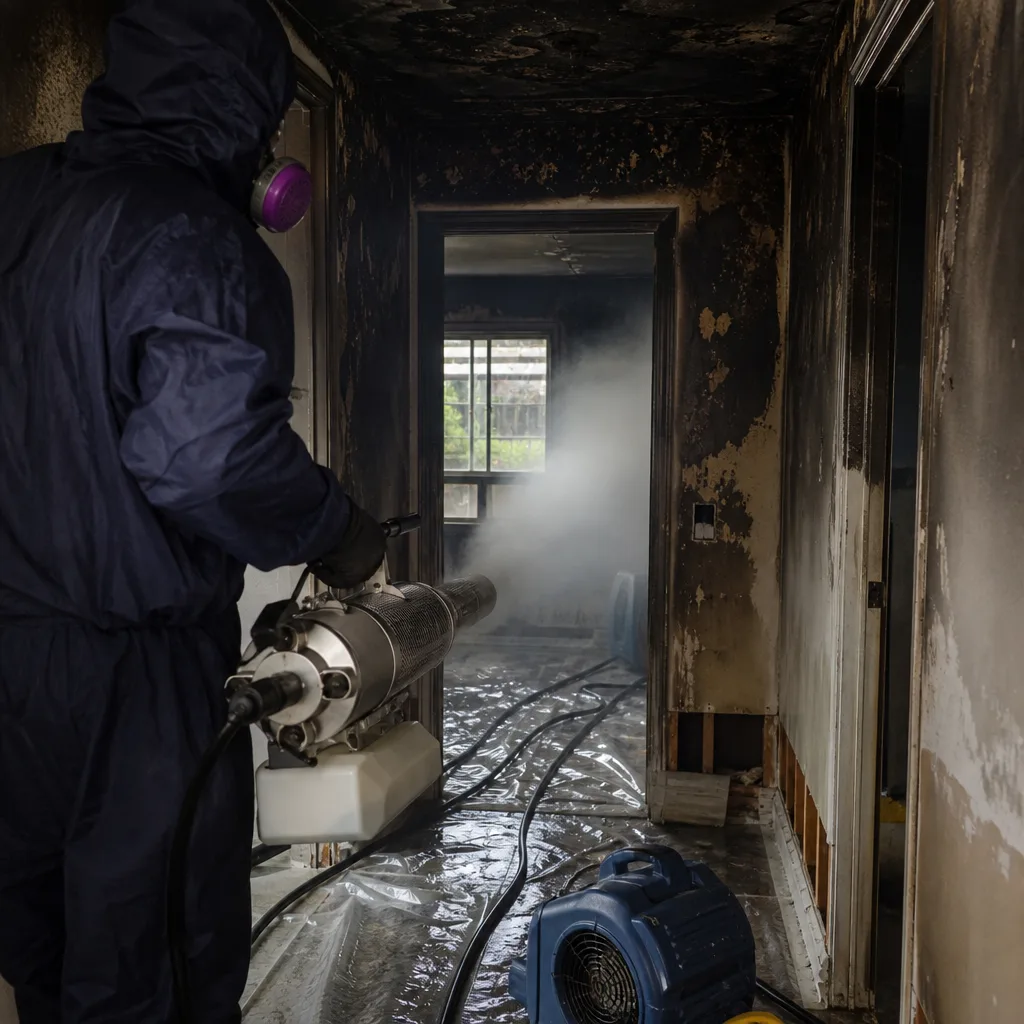
Our Mold Remediation team removes contaminated drywall, insulation, and framing the right way: contain the work area, run HEPA air scrubbers, and dispose of the material so spores don’t spread through your house. Diamond Springs homes built in the 1950s through 1970s often have multiple additions and shared framing between garage and living space, which means mold can travel along common wall cavities. We trace it, cut it out, and dry the cavity before rebuilding. You get a written scope before we start, so there’s no surprise pricing at the end.
Black Mold Remediation
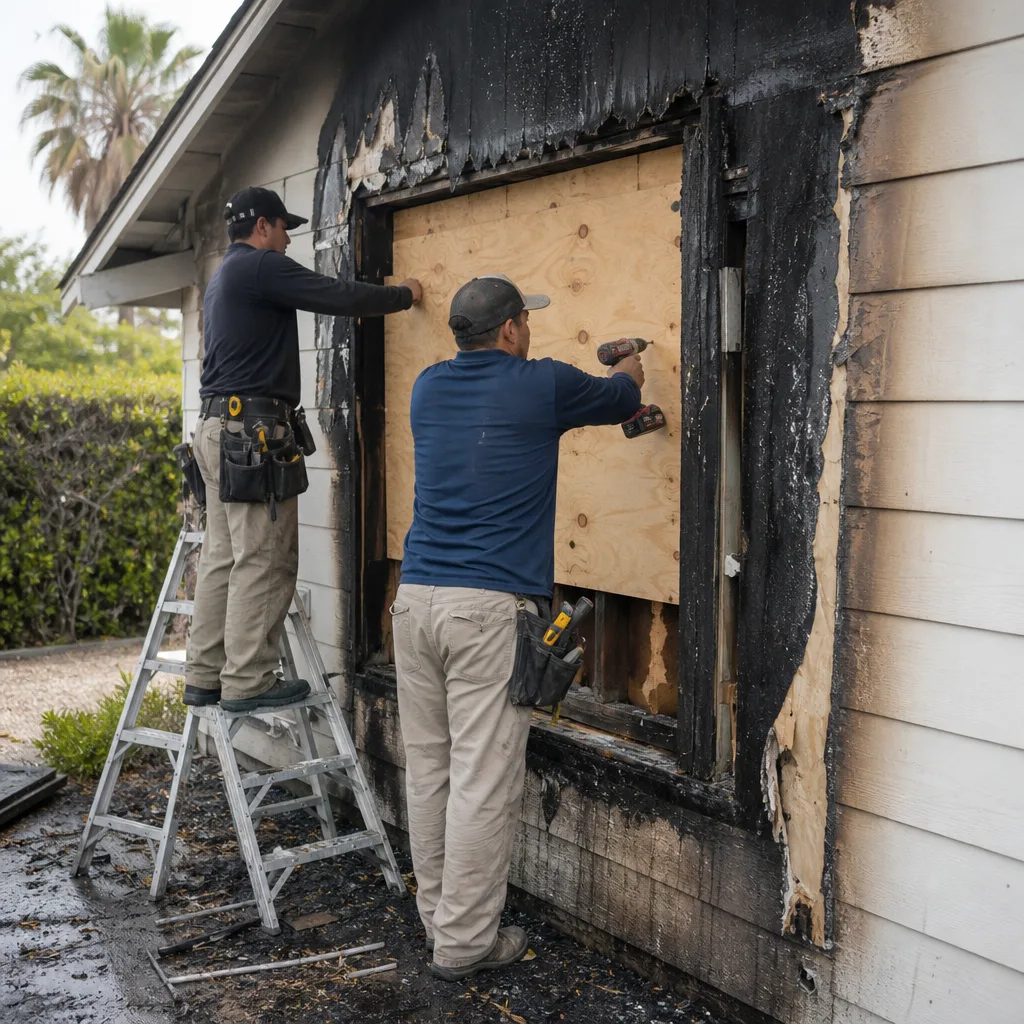
Stachybotrys chartarum, the mold people call black mold, shows up in Diamond Springs after standing water sits on organic material like drywall or ceiling tile. We’ve pulled it off rim joists in crawlspaces where Caldor Fire suppression water and the following winter’s debris flows both soaked the same framing. Our crews treat the surface, remove what can’t be cleaned, and run drying equipment from Dri-Eaz and XPOWER until the wood reaches an acceptable moisture level. This isn’t a bleach-spray job. It’s a scope-and-verify job, and we do it to IICRC standards.
Air Quality Restoration
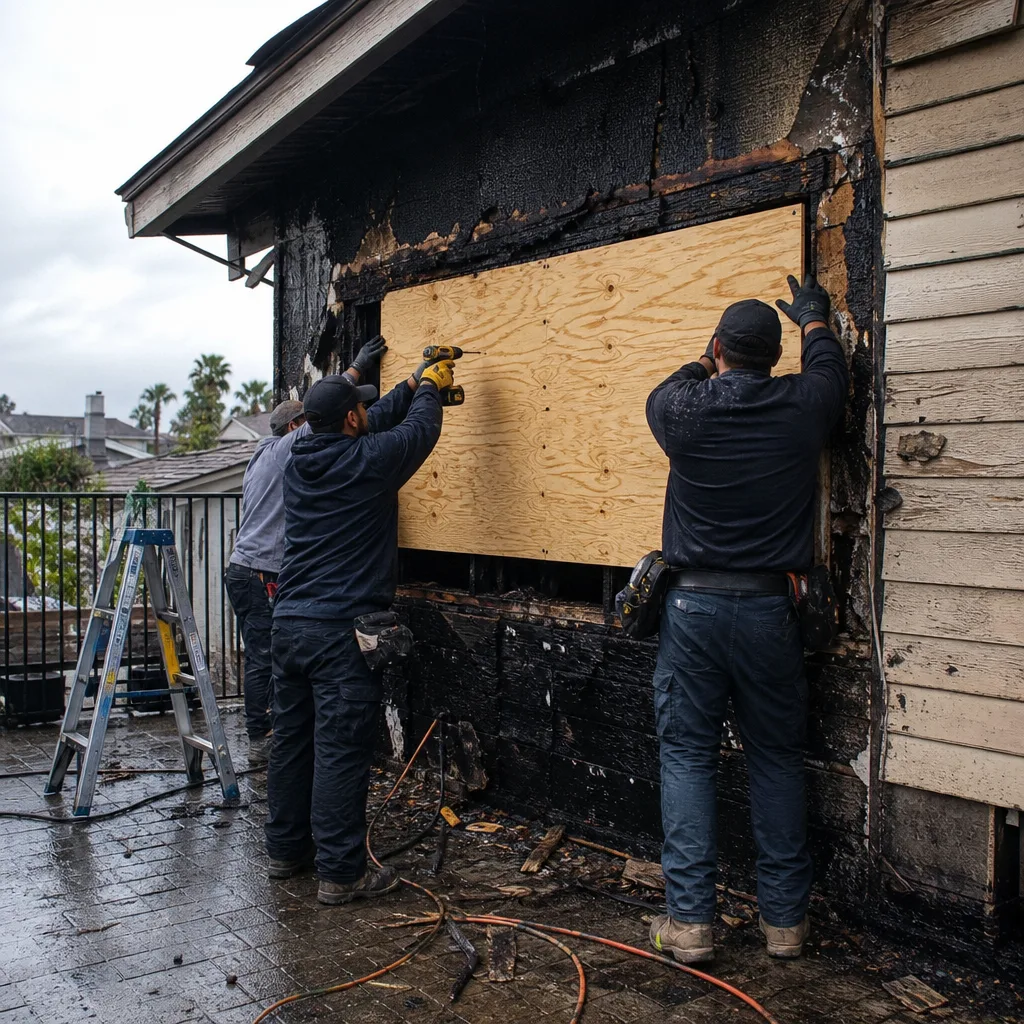
After a fire season in Diamond Springs, the air inside your house can test worse than the air outside. Soot and fine particulates from wildfire smoke settle into the HVAC system, ductwork, and attic insulation, and then mold feeds on those carbon particles once moisture arrives. We clean the ductwork, swap filters, run HEPA air scrubbers during remediation, and leave you with air testing before and after. For Diamond Springs homes with forced-air systems, this is the step that keeps the musty odor from returning two months later. This matters more at 1,700 feet than in the valley because of how smoke settles into foothill canyons and lingers.
Crawl Space Treatment
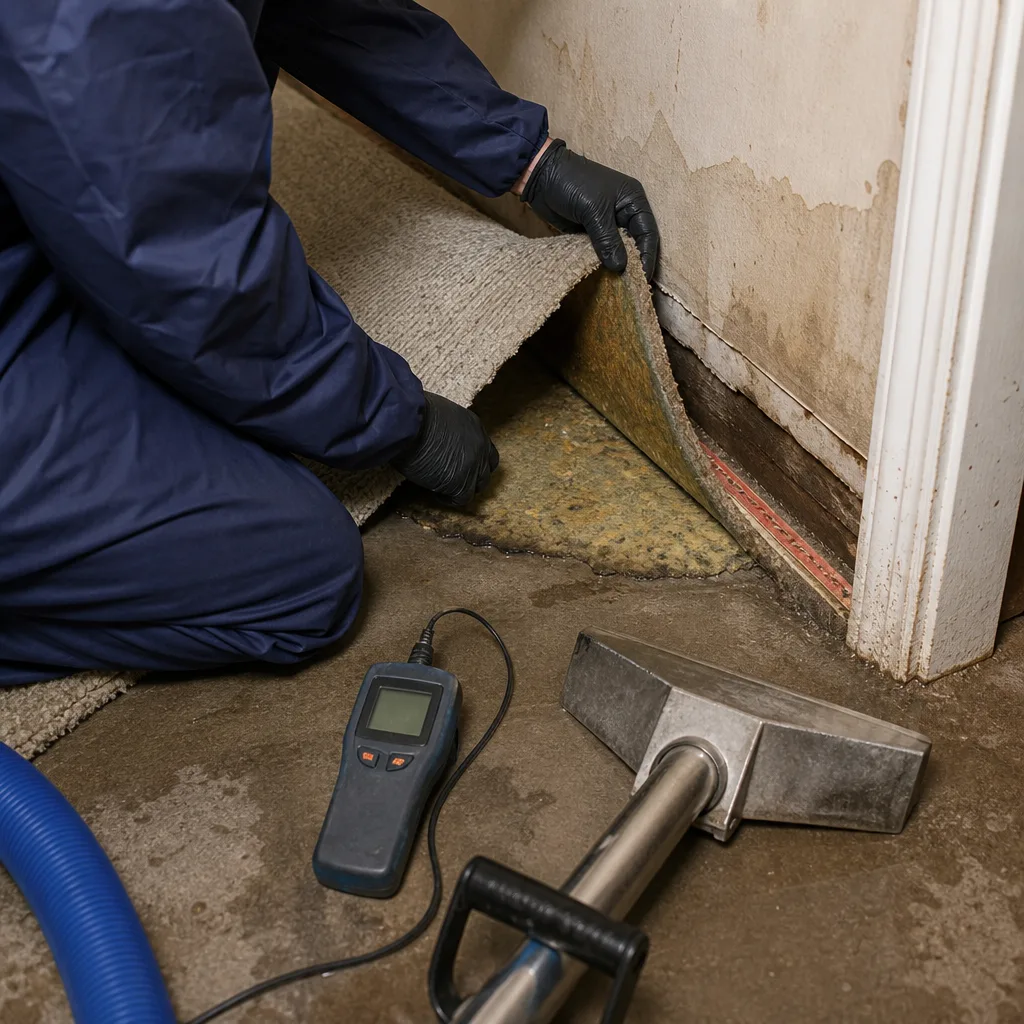
Crawlspaces in Diamond Springs are where most of our mold work happens. Rural parcels without storm drains mean hillside runoff re-saturates the ground under your home for weeks after big storms. We treat the mold, then dry the space with a Dri-Eaz dehumidifier and install or repair a vapor barrier so the next rain doesn’t restart the same problem. On Pleasant Valley Road after the 2021 fire, we worked a home where stormwater from denuded hillsides pushed mud through the foundation vents and soaked the crawlspace for a second time. We treated the visible mold on the rim joists, dried the space, and sealed the barrier. The homeowner’s well-water test came back clean, but we replaced the pressure-tank filter housing that had wicked moisture anyway. You don’t want a clean crawlspace re-inoculated by your own well system.
Moisture & Humidity Control
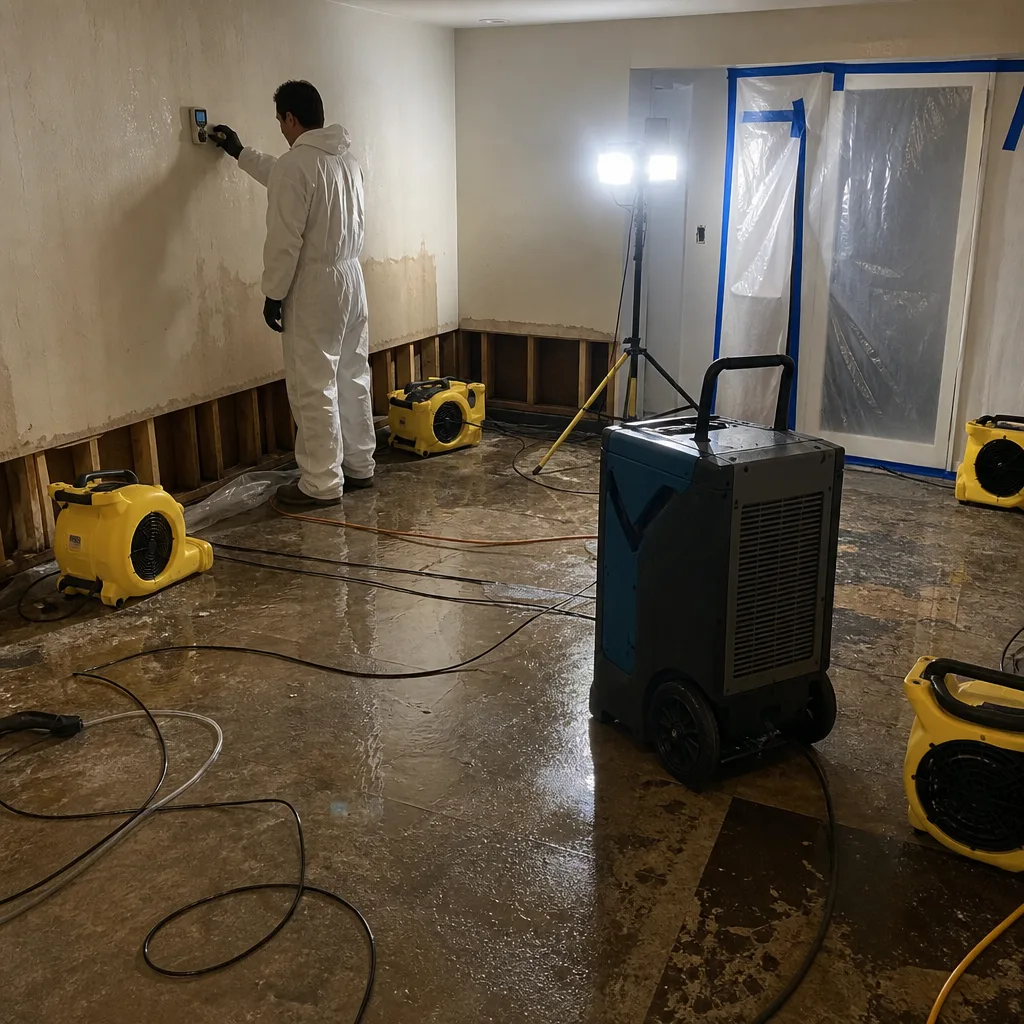
This is the service that keeps mold from coming back, and in Diamond Springs it’s more important than in El Dorado Hills or Folsom because of the fire-then-flood cycle we’ve dealt with since 2021. We install and calibrate dehumidifiers, check your ventilation, and give you a written record of the moisture numbers at every step. For homes with crawlspaces, a simple humidity control step can mean the difference between a one-time mold job and a recurring problem every December when atmospheric rivers start hitting the foothills.
What happens when you call
- 1
A real person answersNo phone trees - you reach a local pro.
- 2
You get an upfront price rangeHonest numbers before anyone is dispatched.
- 3
A background-checked tech heads outLicensed & insured, dispatched right away.
- 4
You approve before work beginsNothing starts until you say go.
Trusted Brands We Service in Diamond Springs
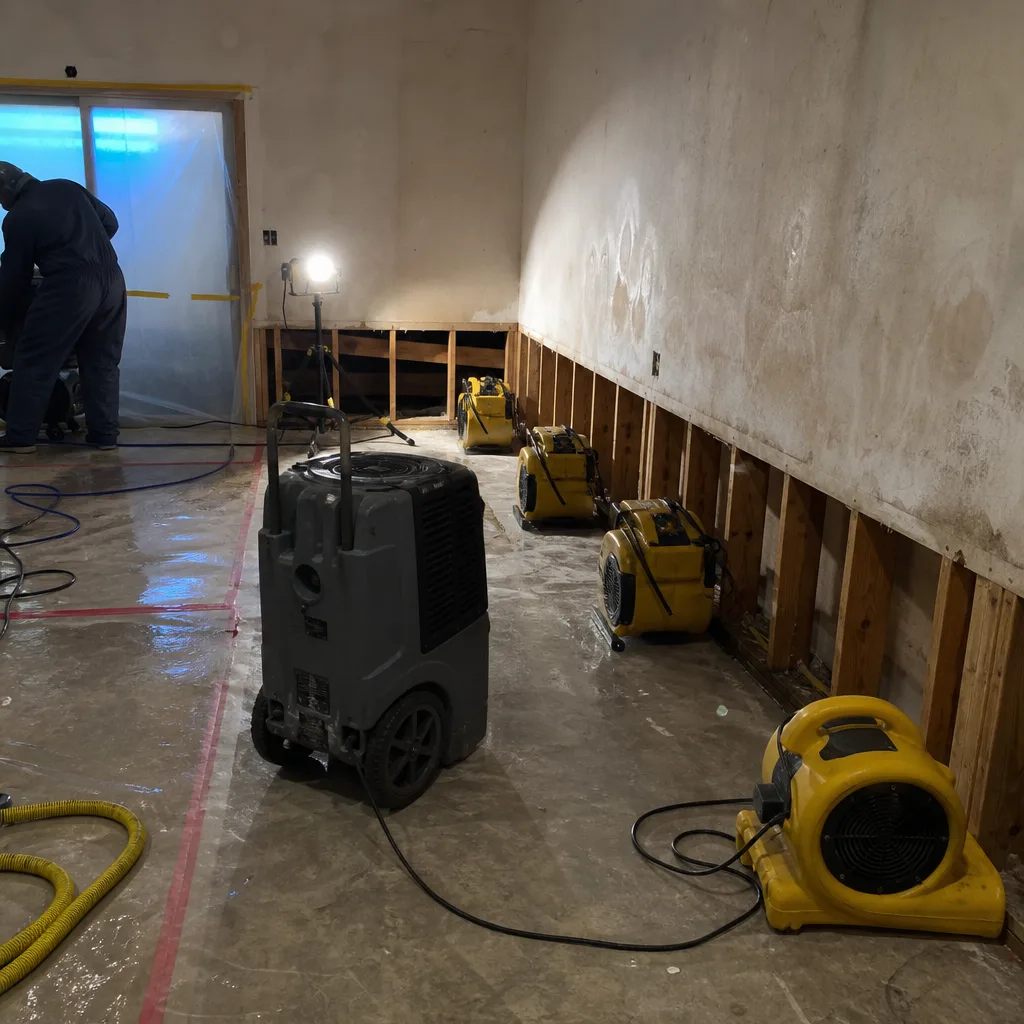
We use professional-grade equipment from Dri-Eaz, Phoenix, Injectidry, XPOWER, and B-Air on Diamond Springs jobs. Dri-Eaz dehumidifiers and XPOWER air movers are standard on our trucks because they hold up on rural job sites where the crawlspace is half dirt and the power panel is fifty feet from the house. For a Diamond Springs home with a low-clearance crawlspace, we’ll often run Injectidry systems when the framing needs directed drying in tight spots. We’re IICRC-certified and RIA-affiliated, which means the equipment and the people running it meet a standard, not just a marketing claim. If your current remediation company shows up with a couple of box fans from the hardware store, that’s a sign.
Common Mold Remediation Problems We See in Diamond Springs Homes
- Ember-damaged roof vents and shake roofing: Fire season leaves small holes and cracked shakes that then take in winter rain. The water soaks attic insulation and feeds mold hidden above the ceiling, which nobody sees until it’s spread across half the attic deck.
- Well systems that re-infect a finished crawlspace: Diamond Springs properties on private wells and septic need a different checklist after a flood event. If the well casing takes in debris-flow water and the pressure-tank filter housing holds moisture, that damp air recirculates and re-humidifies the crawlspace. We check the well side of the system on every flood-related job.
- Half-dried rural subfloors: Homes without storm drains sit on parcels where runoff keeps moving under the house for weeks. You dry the visible floor surface, but hillside water saturates the subfloor again from underneath. We’ve seen this after every major winter since 2021, especially on larger parcels off Pleasant Valley Road and along Missouri Flat Road.
- Attic mold from lingering Caldor Fire smoke residue: Soot and smoke particulates that settled into attic insulation in late summer 2021 become a carbon food source for mold once the wet season arrives. Diamond Springs homes that kept their original insulation are among the worst for this.
Pricing for Mold Remediation in Diamond Springs, CA
A straightforward mold inspection with air testing in Diamond Springs runs $350-$600. A single-room mold removal job, like a bathroom ceiling or a closet adjacent to a leaking chase, typically costs $1,200-$2,800. Whole-crawlspace remediation with vapor barrier replacement runs $3,500-$6,800 depending on square footage and access. Black mold remediation involving underfloor framing and joist treatment usually lands between $2,500 and $5,400. The biggest cost factors in Diamond Springs are crawlspace clearance, how far the mold has traveled through shared wall cavities in those mid-century ranch designs, and whether your well system needs pressure-tank or filter work before the space will stay dry. Every estimate is free, in writing, and includes the daily moisture log. If you’re a senior or veteran, take 10% off automatically. Call (855) 915-0646 for a free estimate.
We Also Serve Cities Near Diamond Springs
If you’re just outside the 95619 ZIP, we’re on the road to Placerville, Cameron Park, El Dorado Hills, and Pollock Pines on the same schedule. Diamond Springs is our local anchor for foothill work, and the drive from our Sacramento office means we can reach every one of those communities the same day. Learn more about how we approach Mold Remediation in Diamond Springs and the surrounding foothill area.
Serving Diamond Springs, CA - Our Local Coverage Area
We’re based in the Diamond Springs area and know this community well. Use the map below to see our service coverage - if you’re nearby, we can almost certainly help.
FAQs - Mold Remediation in Diamond Springs
Smoke residue in Diamond Springs homes acts as a carbon source that mold feeds on once moisture arrives, typically in the first or second wet season after a fire. Soot that settled into attics, wall cavities, and insulation during the 2021 Caldor Fire didn’t go anywhere; it sat in those spaces until winter rain found a way in. Then mold grew faster and on more surfaces than it would have in a home with clean insulation. Remediation in our area means cleaning the soot you can’t even see, not just the mold. Call (855) 915-0646 if you smell must in a home that survived the fire; we’ll test it.
The fire-then-flood pattern means a Diamond Springs home takes smoke and ember damage first, then gets hit with debris flows and stormwater the following winter as bare hillsides shed water instead of absorbing it. The same house that had soot pushed into its attic later has mud and runoff forced through foundation vents and into the crawlspace. The combination of organic soot, saturated wood, and standing water creates a mold load far beyond what a standard flatland home in El Dorado Hills ever deals with. We treat the whole sequence: soot cleanup, drying, mold remediation, and vapor barrier repair.
Yes, homes on private wells in Diamond Springs need a well-casing and pressure-tank check as part of any flood-related mold job, because contaminated water in the system can re-humidify the crawlspace and reintroduce mold spores even after the space is cleaned. We include that check when water intrusion originated from storm runoff or debris flow. If your pressure-tank filter housing has wicked moisture, we recommend replacing it before the crawlspace work is finished.
Crawlspace mold persists in Diamond Springs because rural parcels without storm drains let hillside runoff migrate under the home for weeks after every wet season, and the freeze-thaw cycles at this elevation can crack foundation vents and let that water in. A home on a flat lot in Folsom drains and dries out. A Diamond Springs home on a slope keeps absorbing ground moisture from uphill. Without a sealed vapor barrier and active dehumidification, the mold comes right back.
Freeze-thaw cycles at 1,700 feet do two things: they crack supply pipes and foundation vents, and they create condensation inside uninsulated crawlspaces that then feeds mold on floor joists and sheathing. It’s not just a plumbing issue. The same cold snap that bursts a line in January also leaves moisture sitting on wood surfaces for weeks because the ground under the house stays cold longer than the air. Call (855) 915-0646 and we’ll talk you through what you’re seeing before you spend a dime.
Written by Wade Ferris, Owner at Wade’s Restoration of California, serving Diamond Springs and the El Dorado County foothills since 2007.