
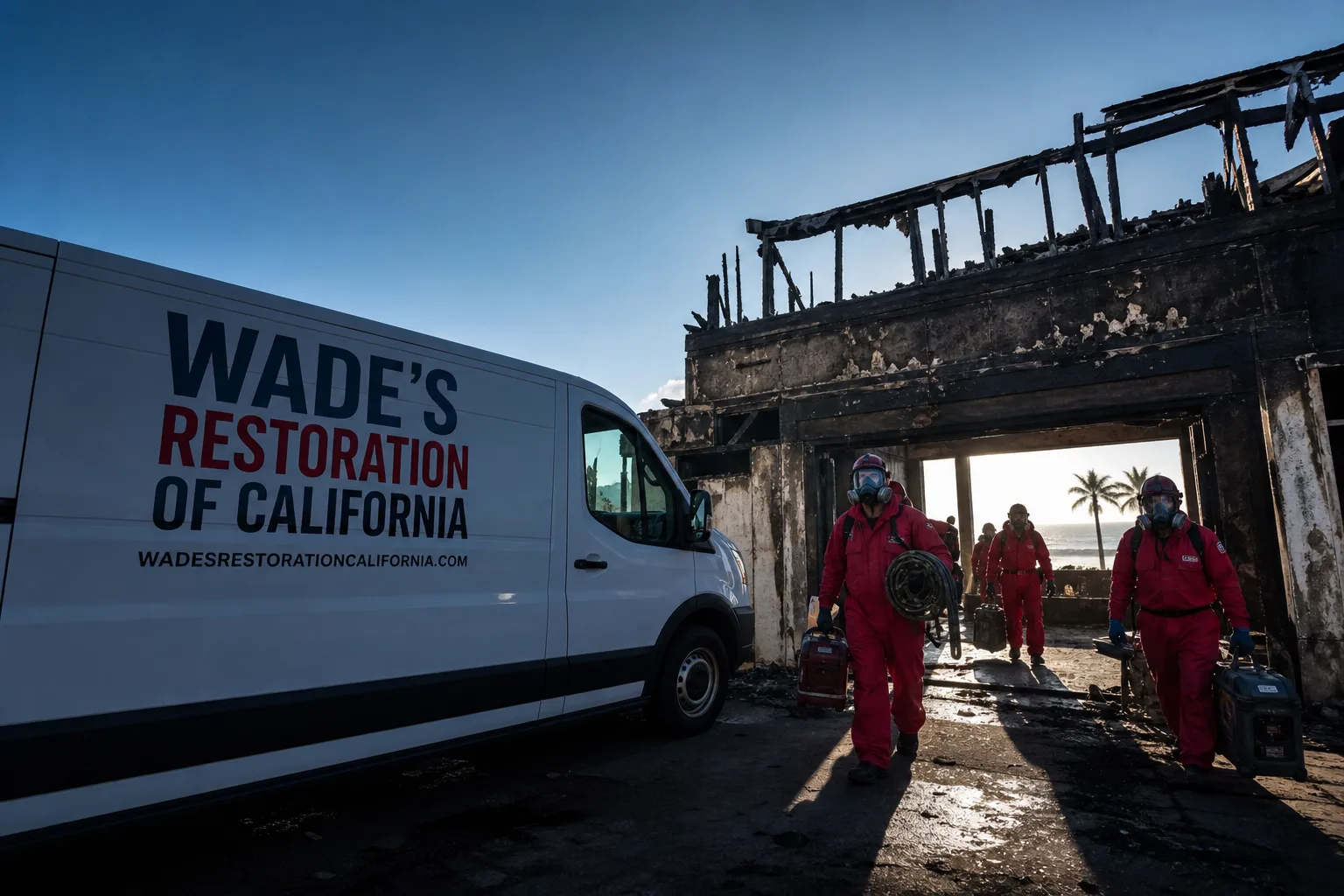
Fast, Reliable Mold Remediation Across Claremont
Mold remediation in Claremont typically runs $1,800-$4,200 for a contained removal job, and most foothill homes north of Baseline Road need both a fire-season and a storm-season assessment. If you’ve got visible mold, a musty smell that won’t quit, or a crawl space that stayed wet after the last debris flow, call Wade’s Restoration at (855) 915-0646. Wade Ferris answers his own phone, and he can have his crew in Claremont the same day.
We know Claremont’s rhythm: the dry Santa Ana gusts pushing smoke and ash through ridge vents in October, then the mountain runoff and mud finding the same foundation cracks in February. That means real mold work here is not a one-visit job. It’s sequential, and we treat it that way. Whether you’re off Indian Hill Boulevard near the colleges or up against the canyon mouths above the 210, we know the housing stock, the microclimates, and the specific ways mold hides in this ZIP code.
Mold in Claremont does not wait, and it does not self-correct. Soot from a mountain fire settles in ductwork. Winter rain follows. That’s the exact sequence we see repeat in 91711. Call us now and Wade will tell you straight what needs to happen, what it’ll cost, and when his crew can be there. No answering service, no call center. You get the owner.
Why Wade’s Restoration of California Is Claremont’s Preferred Mold Remediation Company
Wade’s Restoration has been family-owned and owner-operated since 2007. The owner’s name is on the truck, his address is published, and he still answers calls at two in the morning. In a community like Claremont, that accountability matters. You are going to see us again at the farmer’s market or on Foothill Boulevard, and that’s the oldest accountability mechanism there is. Ask anyone on your street. Chances are someone nearby has already had Wade in their crawl space.
Our crews working Claremont are background-checked, uniformed, and trained on IICRC standards, with RIA affiliation behind them. They run Dri-Eaz dehumidifiers, air scrubbers, and moisture meters that log readings every day. At the end of the job, you get the full moisture log. Almost nobody in this trade does that. Wade started doing it in 2007 and never stopped, because a homeowner who sees the daily numbers knows exactly what got dried and why. For Claremont homes with original 1920s plaster walls and old framing, that documentation matters more than the mold report itself.
Response time to Claremont: Wade heads out the same day for active mold growth, and can usually have a crew on-site within one to two hours of your call. For foothill homes dealing with post-debris-flow moisture, we prioritize your ZIP code because we know a wet crawl space in Claremont does not stay contained for long. The mud sits against the foundation, the Santa Anas return, and suddenly you’ve got spores in the living space. Speed is not a selling point here; it’s the remediation strategy.
We also deal with your insurance adjuster directly. You are not the one stuck relaying information between two sides. We document everything with photos, send the adjuster the moisture log, and sit on the call if you want us there. That’s been our way since the beginning, and it’s one reason Claremont homeowners who’ve done this once call us again when the next fire season rolls around.
Our Mold Remediation Services in Claremont
Every mold job in Claremont starts with the same question: where is the moisture coming from, and is this the first event or the second? In 91711, the answer is often both. Here’s what we do, and how the local conditions shape each service.
Mold Inspection & Testing in Claremont
We start with a full property walkthrough, not just the visible patch. In Claremont, that means checking return-air ducts for soot residue from the last mountain fire, lifting the crawl space access, and scanning wall bases on the windward side. Many Claremont homes built above Baseline Road take direct wind-driven rain through aging window seals and vent gaps. A surface inspection that misses that is incomplete. We test air and surface samples, map the humidity readings, and give you a written scope with real numbers before any removal starts.
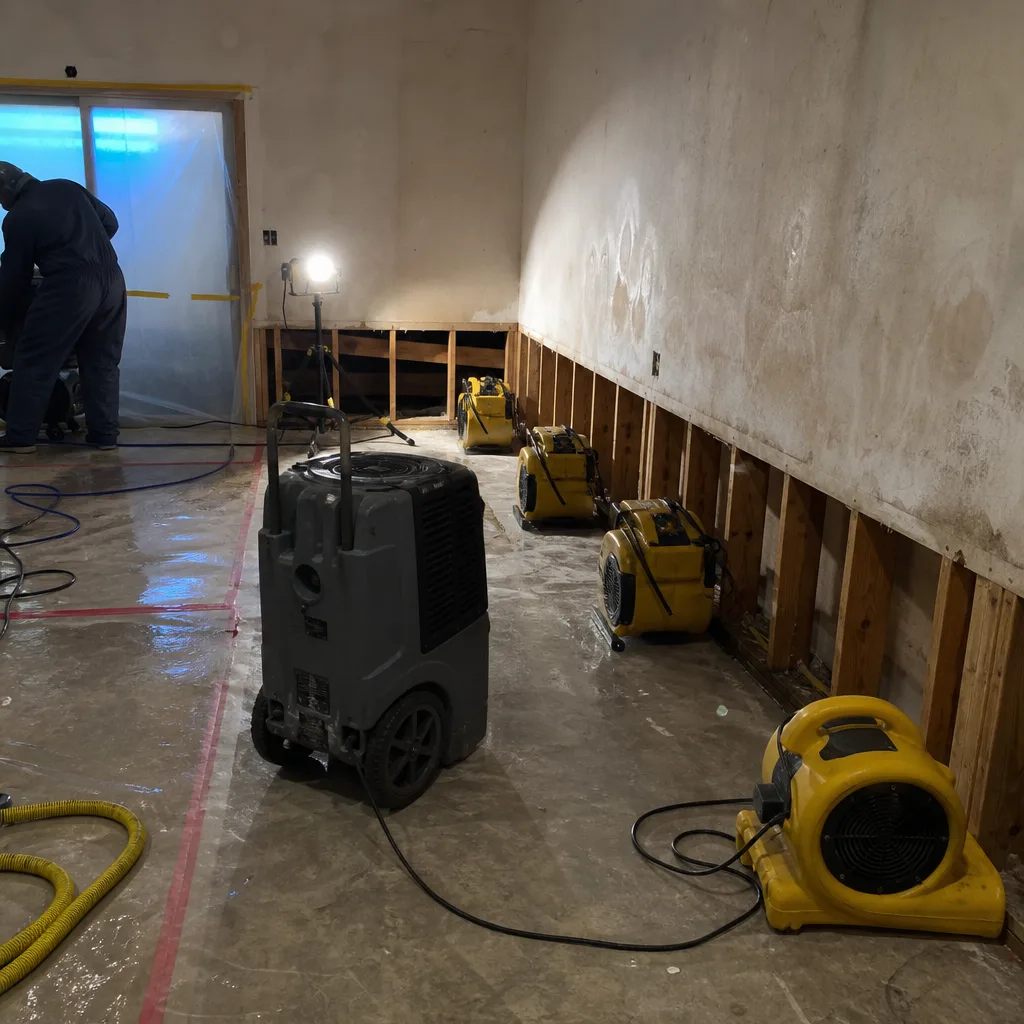
Mold Removal in Claremont
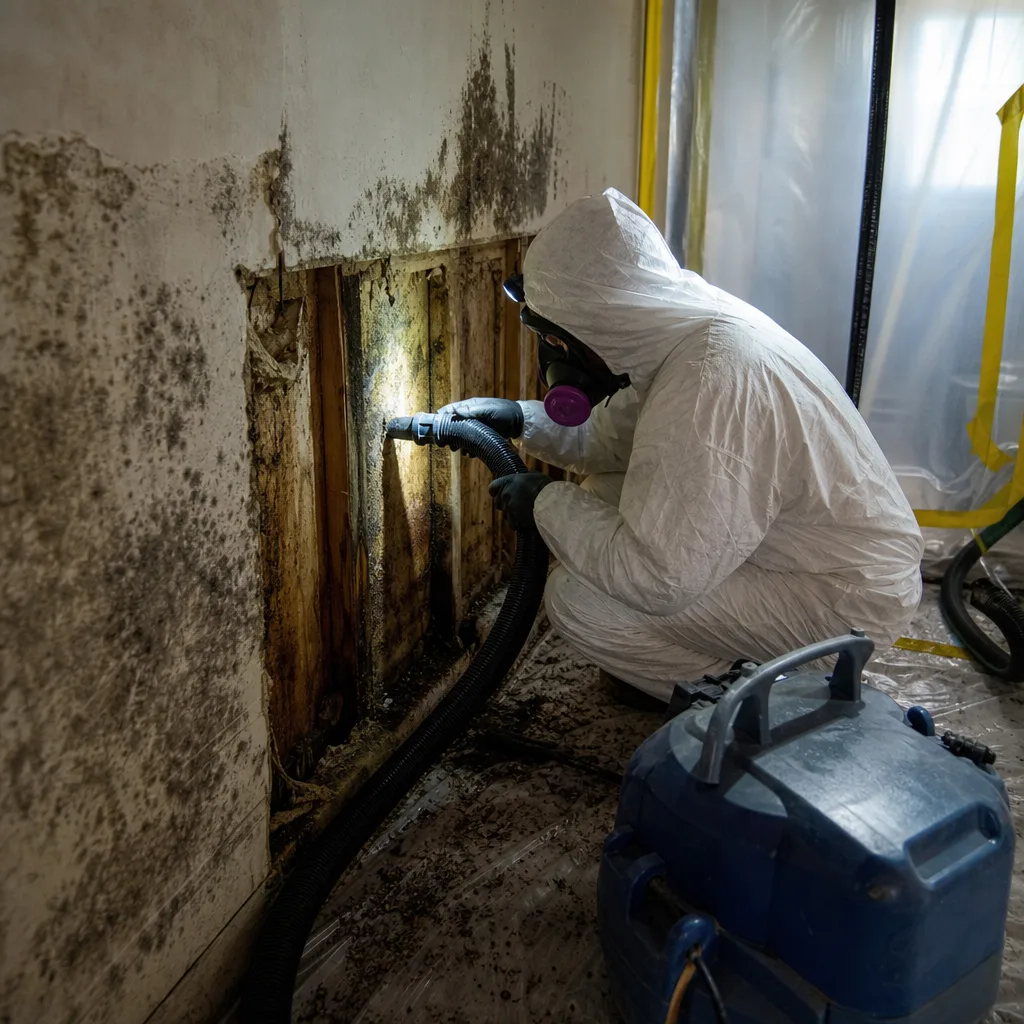
Removal means containment, not just scrubbing. We isolate the affected area, run negative air pressure, and remove contaminated material the right way. For Claremont’s older Craftsman and Spanish Colonial homes near the colleges, that often means cutting out original plaster and lath rather than treating the surface. Plaster holds water differently than drywall, and a cosmetic fix on a 1930s wall will fail within months. We tell you before we cut, we show you the moisture readings, and we give you a written scope and price before any work starts.
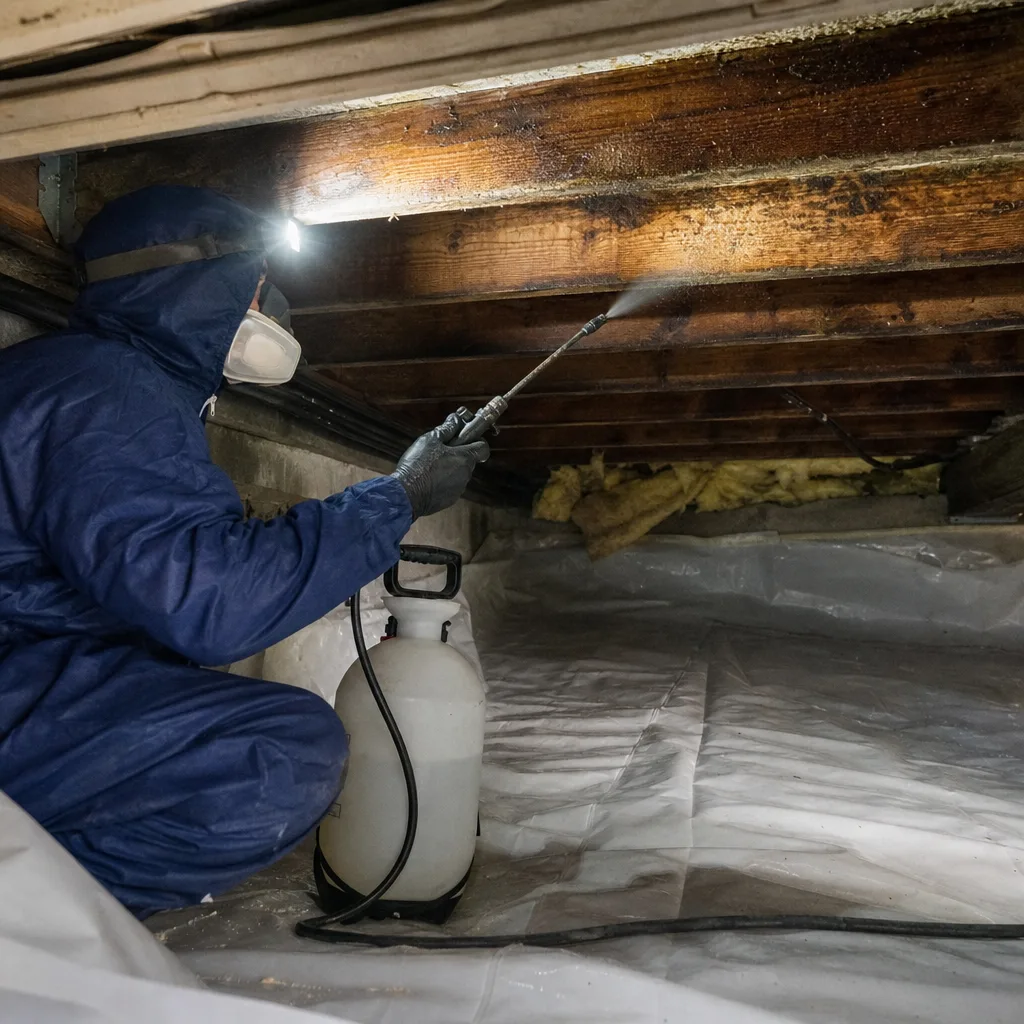
Black Mold Remediation in Claremont
Black mold has a reputation, and for good reason. If we confirm it in your Claremont home, we don’t rush you or scare you. We contain it, remove the affected material, and treat the surrounding framing and surfaces. In foothill homes, black mold frequently shows up in return-air ducts after soot and ash from a fire season settled there. That’s the first place we look on any north Claremont job. Then we trace the moisture source, because killing the mold without fixing the leak or the mud intrusion just means paying twice.
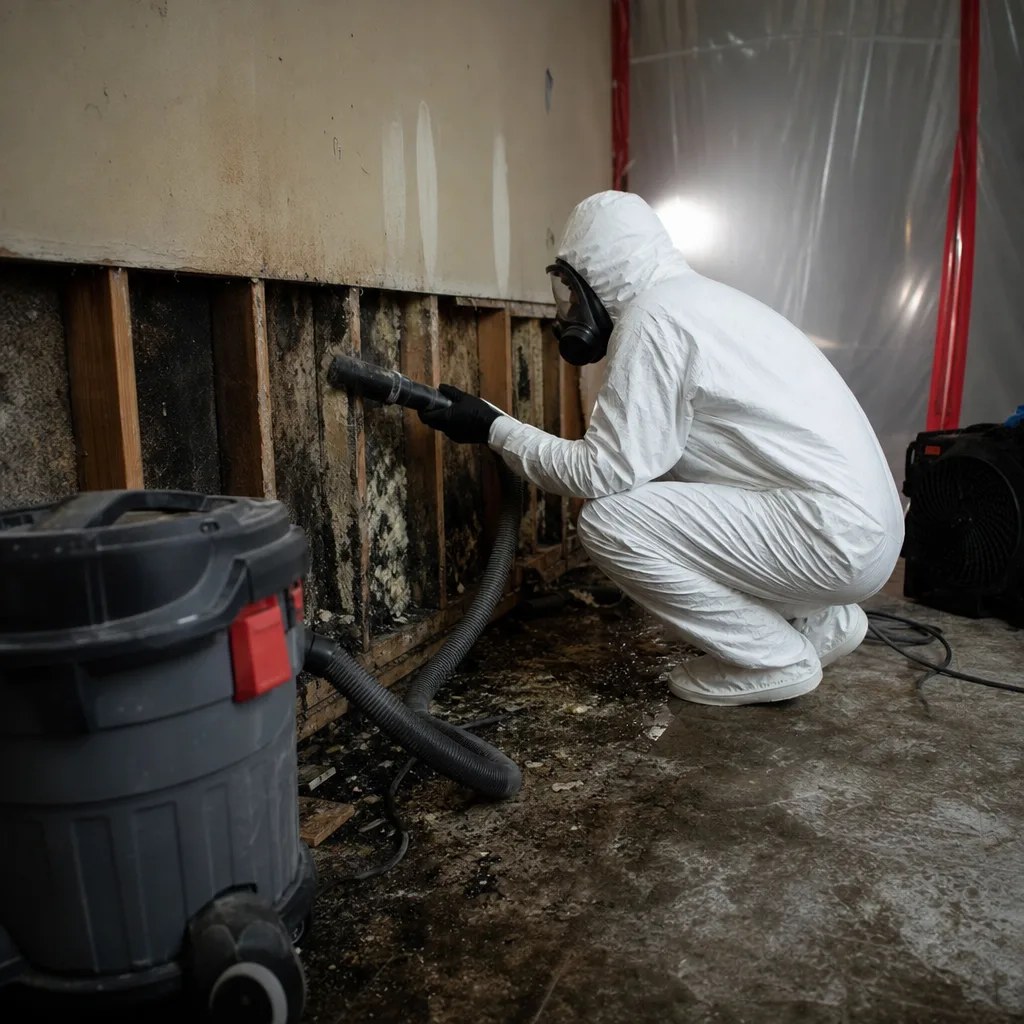
Air Quality Restoration in Claremont
After any mold removal, the air matters. Our crews run HEPA air scrubbers and dehumidifiers sized for Claremont’s specific conditions: thick adobe-heavy walls in the older homes, tight crawl spaces in the canyon-adjacent tracts, and wind-driven particulate that finds gaps you didn’t know you had. We clear the air, verify with air sampling, and hand you the log. No vague “air feels cleaner.” Numbers.
What happens when you call
- 1
A real person answersNo phone trees - you reach a local pro.
- 2
You get an upfront price rangeHonest numbers before anyone is dispatched.
- 3
A background-checked tech heads outLicensed & insured, dispatched right away.
- 4
You approve before work beginsNothing starts until you say go.
Common Mold Remediation Problems We See in Claremont Homes
Claremont has a specific set of mold failure modes. Here’s what we actually find, and why generic checklists keep missing them:
- Soot-packed HVAC internals from the prior fire season. A mountain fire coats your attic and ductwork with ash. A contractor treats the visible mold after the winter debris flow but never opens the return-air plenum. Mold comes back within weeks. We see this on nearly every north Claremont foothill job.
- Mud intrusion behind stucco at the base of foothill homes. Post-debris-flow mud photographs badly, so it gets hosed off and forgotten. But water trapped behind stucco against original plaster feeds hidden colonies for months. We probe and meter those base walls every time.
- Crawl spaces that never get isolated before insulation removal. When a crew yanks water-damaged insulation from a crawl space without sealing it off, mold spores travel through the HVAC return path into living areas. We isolate first, always.
- Single-pane windows leaking wind-driven rain on the Santa Ana side. Older Claremont homes near the colleges have original single-pane windows that fail under repeated wind load. That’s not a window problem, it’s a mold trigger. We identify those entry points during the inspection.
Pricing for Mold Remediation in Claremont, CA
Straight numbers for Claremont. A contained mold removal in a single room or crawl space section typically runs $1,800-$3,200. Whole-crawl space remediation with encapsulation lands between $3,500-$6,500 depending on square footage and access. Air quality restoration with full scrub-and-clear ranges $900-$2,400. Black mold jobs with confirmed Stachybotrys usually sit at $2,400-$5,000 because containment is more involved. Mold inspection and testing alone starts around $350-$600 for a full Claremont property.
What moves your number: whether we’re pulling plaster or drywall, whether the HVAC internals need cleaning, and whether the crawl space needs full encapsulation or just drying. You are never guessing. Wade writes the scope, you approve it, work starts. And if you already have a written estimate from anyone else, he will give you a free second opinion. No charge for that.
Trusted Brands We Service in Claremont
We don’t play favorites with equipment. Our Claremont crews run Dri-Eaz dehumidifiers and air scrubbers, Phoenix fans, and the same professional-grade gear we’d use on any large commercial restoration job. Why does the brand of equipment matter to you? Because IICRC, RIA, and IFA standards require documented drying performance, not just noisy fans. We maintain our own equipment, stock the filters and desiccants that Claremont jobs typically need, and back every water, fire, and mold job with our 90-Day Done Right Promise. If it’s not done right, Wade makes it right, in writing. One call brings him back.
We Also Serve Cities Near Claremont
While this page is focused on Mold Remediation in Claremont, Wade’s crew regularly works in Montclair, La Verne, Upland, and Pomona. If you’re just over the city line, the same Mold Remediation team is still available, same-day for active growth. No trip charge inside our own county, and the Senior & Veteran 10% discount applies everywhere we go.
Serving Claremont, CA - Our Local Coverage Area
We’re based in the Claremont area and know this community well. Use the map below to see our service coverage - if you’re nearby, we can almost certainly help.
FAQs - Mold Remediation in Claremont
It makes remediation two-phase: first, soot and ash removal from HVAC internals and attic spaces after a mountain fire, then moisture-driven mold treatment after winter debris flows. If you skip the first phase and only treat visible mold after the flood event, mold returns within weeks because the spores were never removed from the ductwork. In Claremont’s northern foothill neighborhoods above Baseline Road, we document properties twice in the same fire season: once for smoke and ash infiltration, then again after the first wet season’s mud and runoff. That sequencing is not optional here; it’s the defining pattern of this ZIP code. Call (855) 915-0646 and Wade will explain what phase you’re in and what phase comes next.
Yes. Plaster walls absorb moisture slowly and release it slowly, meaning mold can grow behind the surface for months before you see any staining. The dense concentration of Craftsman bungalows and Spanish Colonial Revivals near the Claremont Colleges has original plaster over wood lath, and that assembly holds water against framing longer than gypsum board. By the time mold shows on the surface, the stud cavity is usually deeply involved. We probe, meter, and often open those walls from the reverse side or the crawl space to confirm what’s really there before quoting.
Santa Ana winds drive rain and embers through gap seals, roof vents, and aging window frames on the windward side of the home. That wind-driven moisture gets inside wall cavities and saturates insulation, creating a mold condition that has nothing to do with a plumbing leak. In Claremont, the sustained 60 MPH downslope gusts common in the corridor above Baseline Road are themselves a water intrusion mechanism. When we inspect, we walk the windward elevation first, because that’s where Claremont mold usually starts.
Because they treat it as a cosmetic smoke job. They clean surfaces, replace a filter, and leave. A contractor who works Claremont’s foothill streets learns that the same property needs re-documentation months later when winter storms move mud against the foundation. Out-of-area crews quote one phase, complete one phase, and miss the second entirely. We saw it on a 1970s custom home near Mills Avenue above Baseline: our crew found black mold blooming inside return-air ducts after the prior fire season’s soot and ash settled there, then re-treated the same crawl space after a winter debris flow pushed mud against the foundation. That is the job cycle up there, and if your contractor does not know it, you will pay twice.
Yes. Mud and water in a crawl space raise humidity, and if the crawl space is not isolated before water-damaged insulation is removed, mold spores travel through the HVAC return path into every room. We isolate the crawl space, set up negative air, and run Dri-Eaz dehumidifiers and air scrubbers until the space reads below 50% relative humidity. Then we consider encapsulation. If you’ve had a debris flow touch the base of your home anywhere in 91711, call us before the air starts moving through the vents. Estimates are free: (855) 915-0646.
Written by Wade Ferris, Owner at Wade’s Restoration of California, serving Claremont since 2007.