
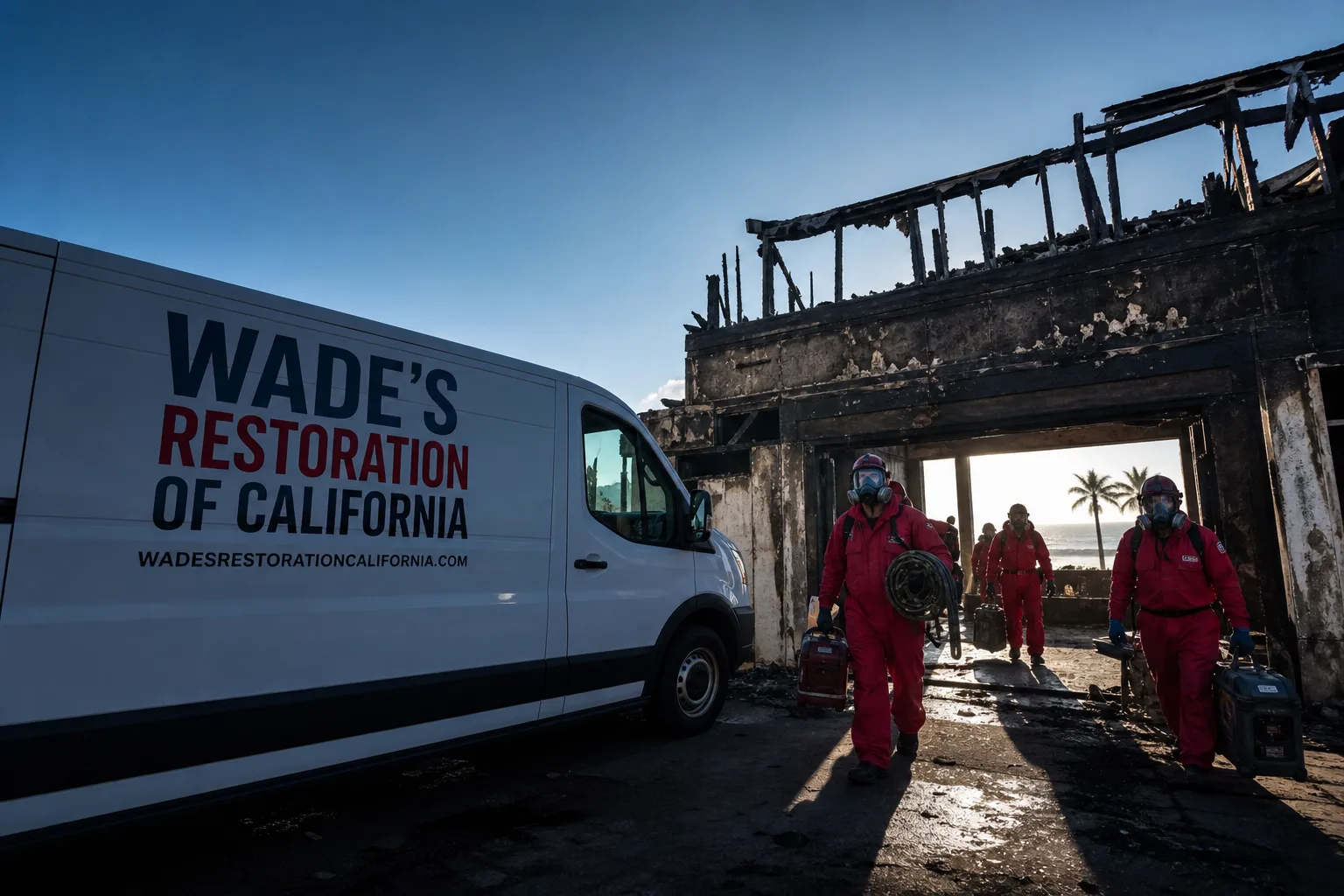
Fast, Reliable Mold Remediation Across Citrus Heights
Mold remediation in Citrus Heights usually runs between $1,800 and $6,500 depending on how far the contamination has spread, and most jobs in the 95610, 95611, and 95621 ZIP codes can be started within 24 to 48 hours. We’re Wade’s Restoration of California, and we work in Citrus Heights every week, so we know the houses here, the way moisture moves through them, and what it takes to get mold out without making things worse. If you’re seeing dark spots on walls, smelling something musty that won’t go away, or dealing with a water event that never got properly dried, call us at (855) 915-0646 and Wade himself will talk you through what’s happening.
Most of the mold problems we see in Citrus Heights trace back to the housing stock itself. That’s not a knock on the homes here. It’s just what happens when thousands of single-story ranch houses built between 1955 and 1980 get decades of Sacramento Valley weather thrown at them. We’ll explain exactly what we mean below.
Why Wade’s Restoration of California Is Citrus Heights’s Preferred Mold Remediation Company
Wade Ferris started this company in 2007, and his name is on the truck, the contract, and the phone line. When a Citrus Heights homeowner calls us about mold, they’re not handed off to a call center in another state. Wade answers. If you want him on the job, he’ll be on the job. That’s the whole point of being locally owned and owner-operated. Ask anyone on your street. People around here know who shows up when their neighbor has a water heater blow in the middle of the night.
We’ve worked on tract homes near Sunrise Boulevard, ranches tucked into neighborhoods off Greenback Lane, and post-and-beam carport additions throughout Citrus Heights. The crews Wade sends are background-checked and uniformed, and they use professional equipment from Dri-Eaz and Phoenix, not rented fans from a big-box store. Every mold remediation job we do in Citrus Heights carries our 90-Day Done Right Promise in writing. If it’s not done right, we make it right.
We also deal with insurance adjusters directly. If your mold issue in Citrus Heights stems from a covered water loss, we document everything with photos and moisture readings, then coordinate with your adjuster so you’re not the one stuck relaying information between two sides. That’s a huge deal when you’re already stressed out about what’s growing behind your drywall.
Our Mold Remediation Services in Citrus Heights
Mold remediation isn’t one thing. It’s a process, and the order matters. Here’s what we do for Citrus Heights homeowners, starting with the step everyone skips and then regrets ignoring.
Mold Inspection & Testing
Before we tear anything apart, we figure out what kind of mold you’re dealing with and where it’s hiding. In Citrus Heights, that usually means checking crawl spaces, wall cavities around original slab-on-grade foundations, and the underside of old vinyl flooring. We take moisture readings every single day during a job and hand you the full log when we’re done. Almost nobody in this trade does that. It tells you exactly what we found, what we did, and that the job actually dried out.
Mold Removal
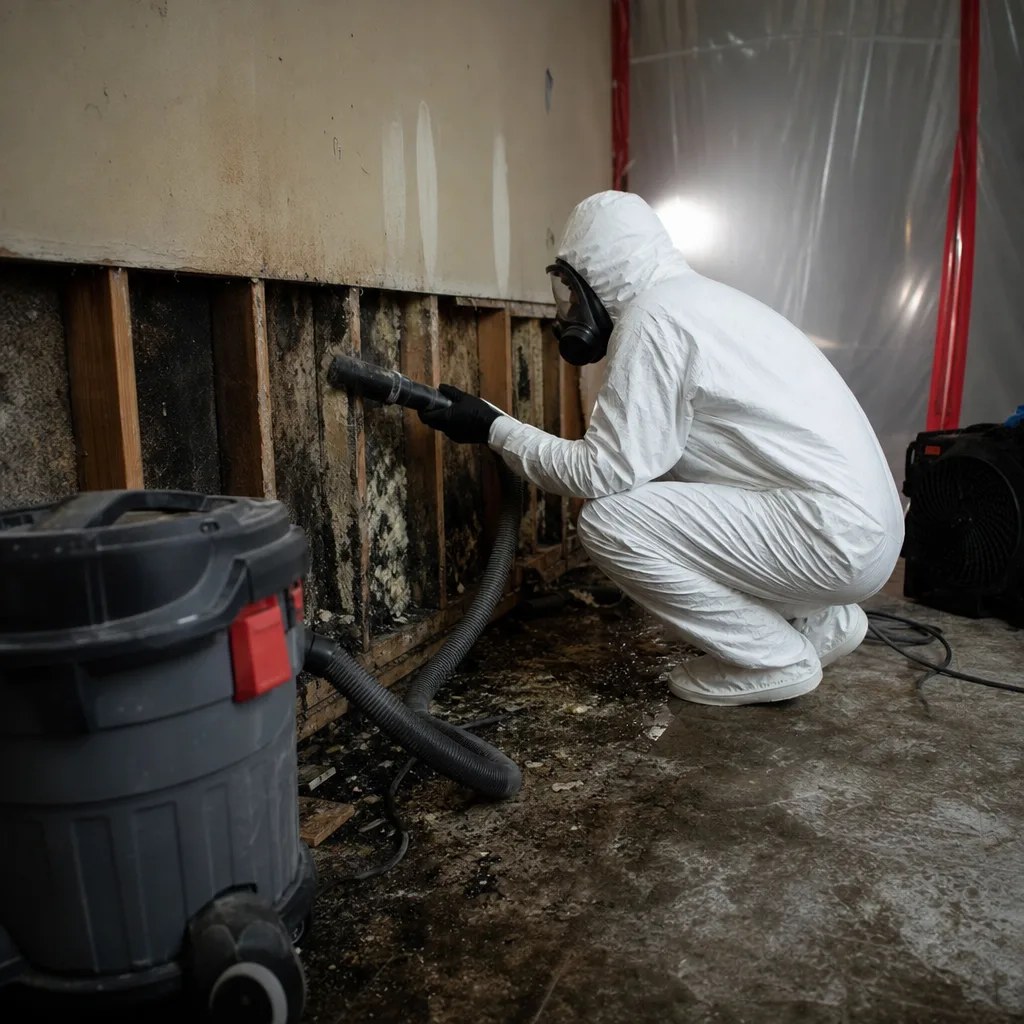
The removal itself involves containment, air filtration, and careful demolition of contaminated materials. In a 1960s Citrus Heights ranch, that often means pulling up flooring layers that have been there since Johnson was president. We set up Dri-Eaz negative air machines and HEPA filtration so mold spores don’t spread through the rest of your house while we work. Then we remove what can’t be saved and treat what can.
Black Mold Remediation
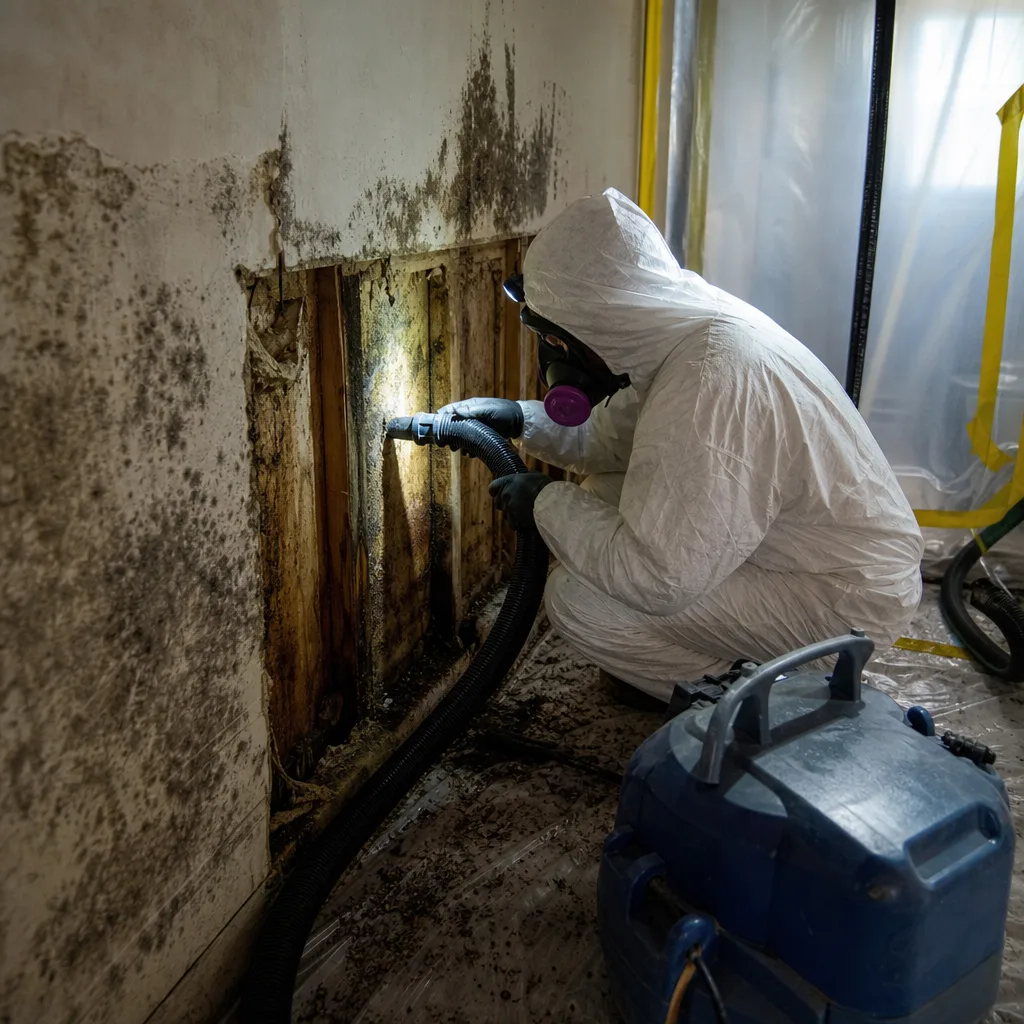
Black mold, or Stachybotrys, gets the headlines and the fear. Here’s the truth: black mold in Citrus Heights is treated the same way as any other toxic mold, which is carefully. The color doesn’t change the process as much as people think. What matters is the extent. A small patch behind a bathroom vanity is one thing. A full wall cavity colonized after a slab leak off Auburn Boulevard is another. Either way, you want a trained professional handling it, not a handyman with bleach and a spray bottle. Bleach does not kill mold at the root, and it can make things worse by adding moisture back into porous surfaces.
Air Quality Restoration
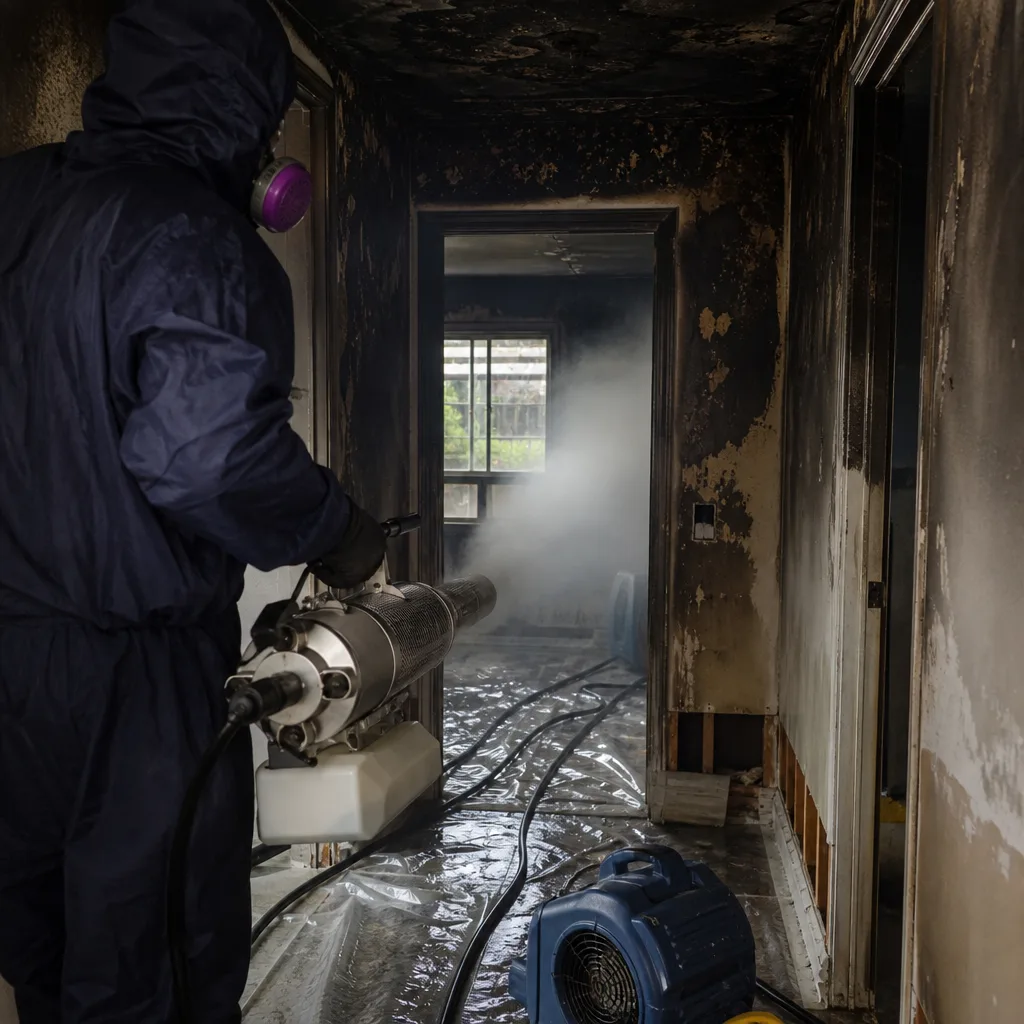
After the contamination is removed and the affected area is treated, the air inside your Citrus Heights home has to be cleaned too. We run HEPA air scrubbers for as long as needed, then verify with post-remediation air sampling when the job calls for it. This matters even more in Citrus Heights during late summer and fall, when wildfire smoke from the Sierra foothills settles over the entire city for weeks at a time and gets pulled into HVAC systems and wall cavities.
What happens when you call
- 1
A real person answersNo phone trees - you reach a local pro.
- 2
You get an upfront price rangeHonest numbers before anyone is dispatched.
- 3
A background-checked tech heads outLicensed & insured, dispatched right away.
- 4
You approve before work beginsNothing starts until you say go.
Common Mold Remediation Problems We See in Citrus Heights Homes
Citrus Heights has a specific problem profile, and it’s worth knowing what you’re up against before you call anyone. Here are the four most common situations we walk into:
- Asbestos tile hiding under newer flooring. The tract homes along the Sunrise corridor and the older neighborhoods near Auburn Boulevard often have original 1960s-era asphalt floor tile beneath multiple layers of vinyl. When water damage forces floor removal, that bottom layer almost always tests positive for asbestos, and the job turns into a regulated abatement project overnight. Contractors who skip testing end up with the job shut down, the home torn apart, and mold still actively spreading.
- Slab-on-grade moisture wicking. Most Citrus Heights homes sit on original slab-on-grade foundations. When atmospheric river storms dump inches of rain in 24 to 48 hours, storm drains overwhelm, and water saturates the ground around the foundation. That moisture wicks up through the concrete, through any cracks, and into the walls and flooring above. Mold remediation that treats only the visible surface and ignores what’s coming through the slab will fail within months.
- Post-and-beam carport additions with hidden crawl spaces. Those low-pitch carport conversions you see all over Citrus Heights were added decades ago, and many have tight, awkward crawl spaces underneath. Water intrusion from the low-pitch roof feeds mold growth in those spaces, and because nobody goes under there, it re-contaminates the living area over and over again until someone treats the actual source.
- Compressed wet seasons, sudden activation. The Sacramento Valley’s Mediterranean climate means Citrus Heights gets most of its rain in short, intense bursts driven by atmospheric river events. Months of dry weather dry out and contract the framing, then several inches of rain in 48 hours saturate everything at once. Mold that’s been dormant in wall cavities suddenly activates, and homeowners who never noticed a problem are suddenly smelling it everywhere.
Trusted Brands We Service in Citrus Heights
We’re IICRC-certified and affiliated with the RIA and IFA, and that matters when you’re comparing companies. But what matters more is the equipment we show up with. We run Dri-Eaz and Phoenix drying systems, not rental-grade fans from a home improvement store, and our dehumidification and air-scrubbing equipment is industrial strength. For Citrus Heights homeowners, that means faster dry-outs, more thorough air cleaning, and a final result that holds up through next winter’s storms. If your mold problem came from a water loss your insurance is covering, our photo documentation and moisture logs make the adjuster’s job easier, which makes your life easier.
Pricing for Mold Remediation in Citrus Heights, CA
Here are the real numbers for this area, based on the kinds of homes we actually work in across 95610, 95611, and 95621:
- Mold inspection with moisture mapping: $250-$450 depending on square footage and whether air sampling is needed.
- Containment and targeted removal (small areas, like a bathroom or closet): $1,200-$2,800.
- Full-room remediation with drywall removal and treatment: $3,500-$6,500.
- Crawl space mold treatment and moisture control: $1,800-$4,200, and more if encapsulation is required.
- Asbestos-containing floor or ceiling removal coordination: This is a pass-through cost that depends on the abatement contractor’s bid, but in Citrus Heights it typically adds $2,000-$5,000 when the original 1960s tile or popcorn ceiling is involved.
The biggest cost driver in Citrus Heights is whether the job requires abatement coordination before we can do our work. Older tract homes here have layered hazards, and doing it right costs more than doing it fast. We’ll give you a written scope before any work starts, and the estimate is free. Call (855) 915-0646 and Wade will walk you through what your specific situation is likely to cost.
We Also Serve Cities Near Citrus Heights
If you’re just outside Citrus Heights, we make the trip regularly. We handle mold remediation for homeowners in Fair Oaks, Orangevale, Foothill Farms, and Roseville, and we bring the same equipment, the same written promise, and the same standard of work to every job. You can learn more about the broader service area on our Mold Remediation page, or if you’re in the heart of Citrus Heights, our Mold Remediation in Citrus Heights hub page has more neighborhood-level detail.
Serving Citrus Heights, CA - Our Local Coverage Area
We’re based in the Citrus Heights area and know this community well. Use the map below to see our service coverage - if you’re nearby, we can almost certainly help.
FAQs - Mold Remediation in Citrus Heights
It complicates it significantly, because the dense concentration of 1960s and 1970s tract homes throughout Citrus Heights brings a layered hazard profile that newer construction simply doesn’t have. On nearly every mold job involving structural disassembly, we encounter original asbestos-containing floor tile beneath later flooring layers, aluminum branch wiring, and galvanized supply lines, all in a single room. Newer Roseville neighborhoods were built under different code requirements, so mold remediation there often proceeds without abatement coordination. In Citrus Heights, testing and sequencing for those older materials changes the timeline, the budget, and the order of operations on virtually every job.
Mold problems spike after atmospheric river storms because Citrus Heights receives several inches of rain in 24 to 48 hours after months of dry weather, overwhelming storm drains and saturating the slab-on-grade foundations that define the area’s ranch homes. The dry-season contraction opens tiny gaps at the slab-to-wall connection, and that concentrated rainfall wicks moisture up through the concrete and into wall cavities, where dormant mold spores activate rapidly. Homes that sat through the summer with no visible problems suddenly smell musty within days of a big storm.
The signs include a persistent musty odor that gets stronger near floor vents, visible staining or white fuzzy growth on floor joists and subflooring, warped or buckling hardwood floors above the crawl space, and a general increase in humidity that you can feel on humid mornings. In post-and-beam carport additions, water intrusion from low-pitch roofs feeds mold in the crawl space, and the contamination cycles up into the living area repeatedly. If you’re seeing any of that in a 95610, 95611, or 95621 home, call us at (855) 915-0646 and we’ll inspect it properly.
Wildfire smoke itself does not cause mold growth, but the weeks of smoke blanket the city with no rain for long stretches, and the effect on HVAC systems, air filters, and the way people keep windows shut with minimal ventilation creates conditions where existing minor moisture problems get worse. Smoke particles settle into porous surfaces and can carry organic material that feeds microbial growth when relative humidity rises. For Citrus Heights homes that already have elevated moisture from slab wicking or roof leaks, the combination of smoke residue and trapped humidity accelerates mold activation. Air quality restoration after smoke season is not a separate issue, it’s part of managing the same indoor environment.
We stop work immediately and coordinate a certified abatement contractor to handle the regulated material before our crew continues with any mold removal or drying work. On a ranch home off Auburn Boulevard near the old Sunrise corridor, our crew found mold hidden beneath a 1970s vinyl floor where a slab leak had gone undetected for weeks. The bottom tile layer tested positive for asbestos, so we paused extraction, set up Dri-Eaz containment and negative air while the abatement crew removed the hazardous material, then finished our mold remediation and moisture control before rebuilding. Skipping that step is not optional, and it protects you, our crew, and the entire job.
Written by Wade Ferris, Owner at Wade’s Restoration of California, serving Citrus Heights and the surrounding areas since 2007.