
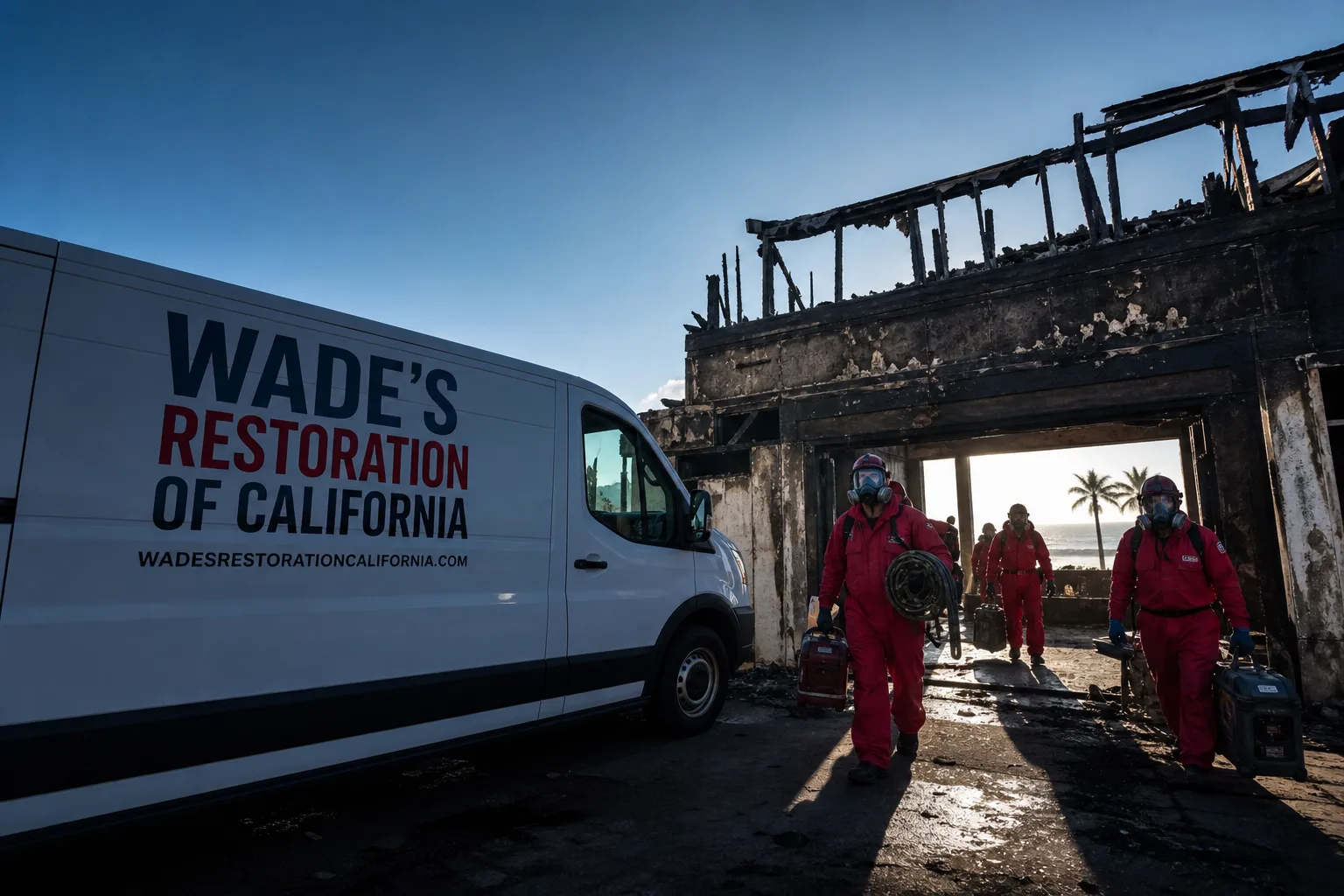
Fire & Smoke Damage Restoration in Simi Valley: Direct Answer
Fire and smoke damage restoration in Simi Valley typically runs $2,800-$8,500 for a standard room-and-contents cleanup, with whole-house smoke mitigation from a hillside fire event landing between $9,000 and $28,000 depending on square footage and ductwork scope. Emergency board-up and tarping after a fire starts around $850-$1,600, and most crews can be on-site in Simi Valley within 60-90 minutes of a call. The two factors that drive cost here more than anywhere else are the age of the home’s forced-air ductwork and whether the property sits near a ridgeline drainage corridor, which changes the restoration plan entirely.
Fire & Smoke Damage Restoration That Knows Simi Valley’s Terrain
Simi Valley sits in a bowl-shaped valley ringed by dry chaparral hillsides, and the Santa Ana winds funnel directly through the Santa Susana Pass. That geography doesn’t just start fires near residential streets, it holds smoke and ash over neighborhoods for days after the flames are out. Our Fire & Smoke Damage Restoration crew has worked homes from the 93063 flats near Sinaloa Lake up to the ridgeline-adjacent streets of the 93065 ZIP, and we plan every job around what the valley’s wind patterns and drainage corridors will do next.
Wade Ferris started this company in 2007, and he still takes the calls himself. When a homeowner near the western hills calls at 2 a.m. because smoke is working its way through the vents, Wade answers. That’s the difference between a restoration company that treats Simi Valley like a dot on a dispatch map and one that treats it like home.
Need someone headed your way right now? Call (855) 915-0646. A live person answers, day or night.
Our Fire & Smoke Damage Restoration Services in Simi Valley
Fire Damage Cleanup
After the fire department leaves, what remains is a mix of charred building material, water from suppression efforts, and particulate that settles into every porous surface. In Simi Valley’s tract homes from the 1960s through the 1980s, that often means carpet, drywall, and insulation all need sectioned removal before drying equipment makes sense. We scope the demo, document it for your adjuster, and never start cutting until the written scope is in your hand.
Smoke & Soot Removal
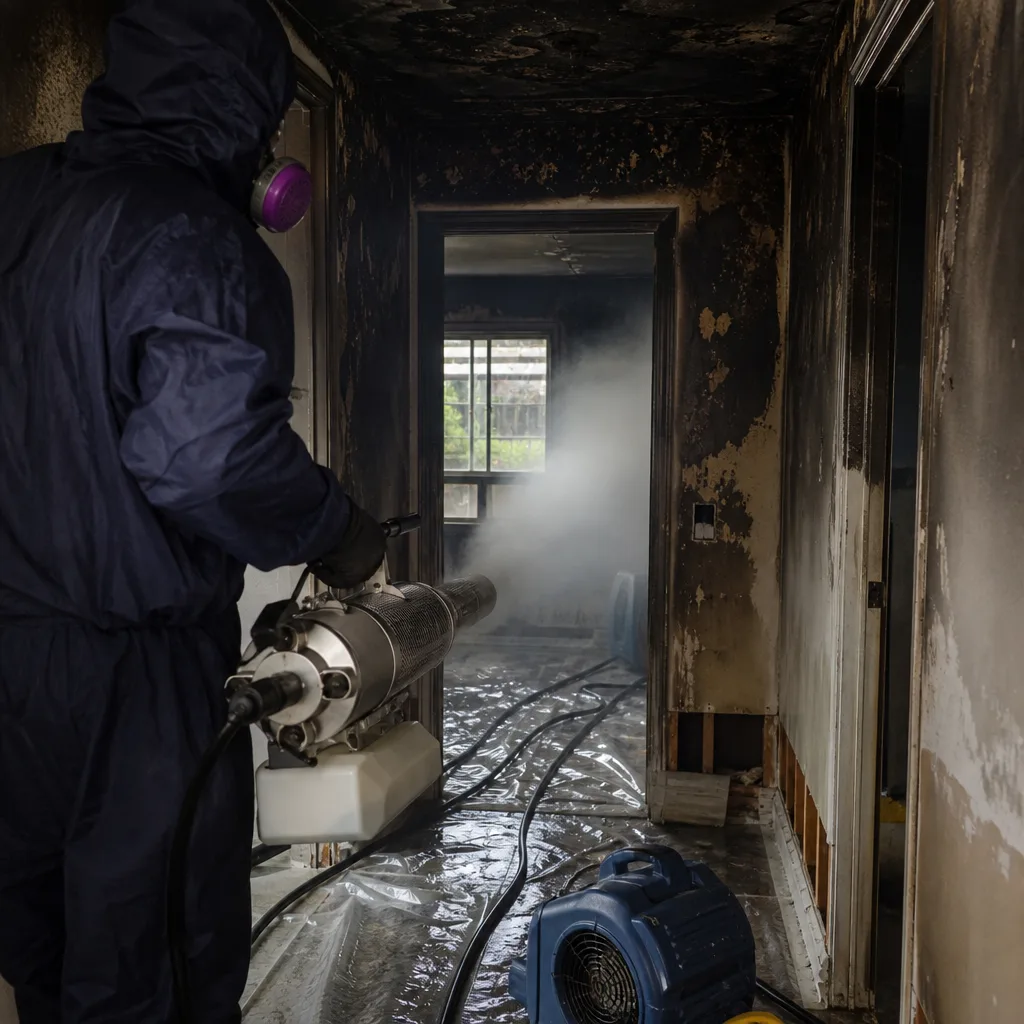
Soot from a chaparral fire is different from a kitchen grease fire. It’s finer, travels farther, and bonds to painted drywall differently. Homes in the 93065 ZIP near the western ridgeline get a specific kind of smoke infiltration when the Santa Anas push embers and particulate through the Santa Susana Pass corridor, and we clean for that specifically, not just for the visible smudging. Walls, ceilings, trim, and hard surfaces all get chemical-sponged and HEPA-vacuumed before any sealing or repainting happens.
Odor Removal & Deodorization
Smoke odor in Simi Valley homes almost always hides in the original forced-air ductwork. Those galvanized ducts installed between the mid-1960s and mid-1980s have decades of accumulated dust, and after a fire event, that dust carries smoke particulate that re-releases odor for months. We run HEPA air scrubbers and hydroxyl generators, but the real fix is interior duct cleaning with an XPOWER brushing system and, in stubborn cases, duct sealing. If the odor comes back, so do we. That’s the 90-Day Done Right Promise, in writing on every job.
Contents Cleaning & Pack-Out
Clothing, furniture, electronics, children’s toys, the box of Christmas ornaments in the garage. Smoke gets into all of it. We do on-site contents cleaning for what can be saved in place and full pack-out for what needs to go to our cleaning facility. Everything is inventoried, photographed, and documented for your insurance claim. When the job’s done, Wade hands you the full moisture log and contents manifest, not a summary.
Emergency Board-Up & Tarping
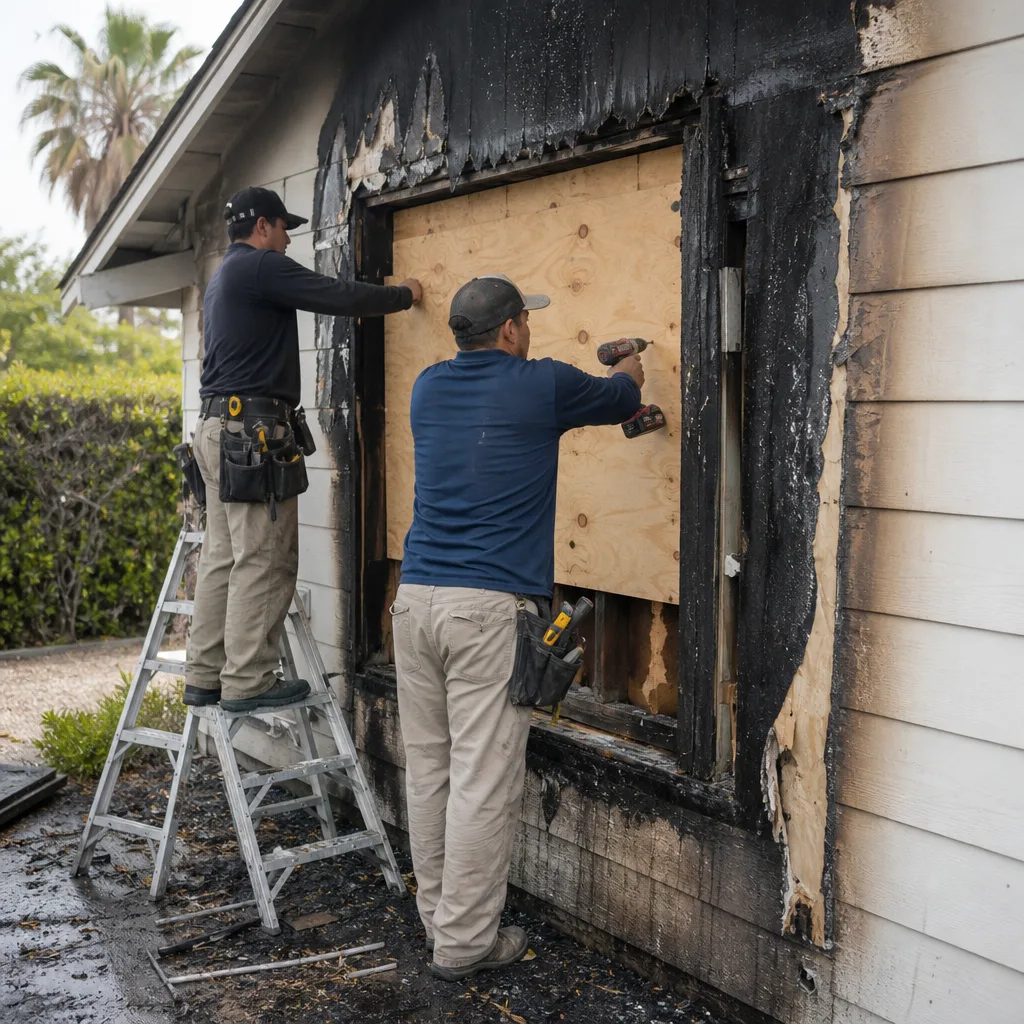
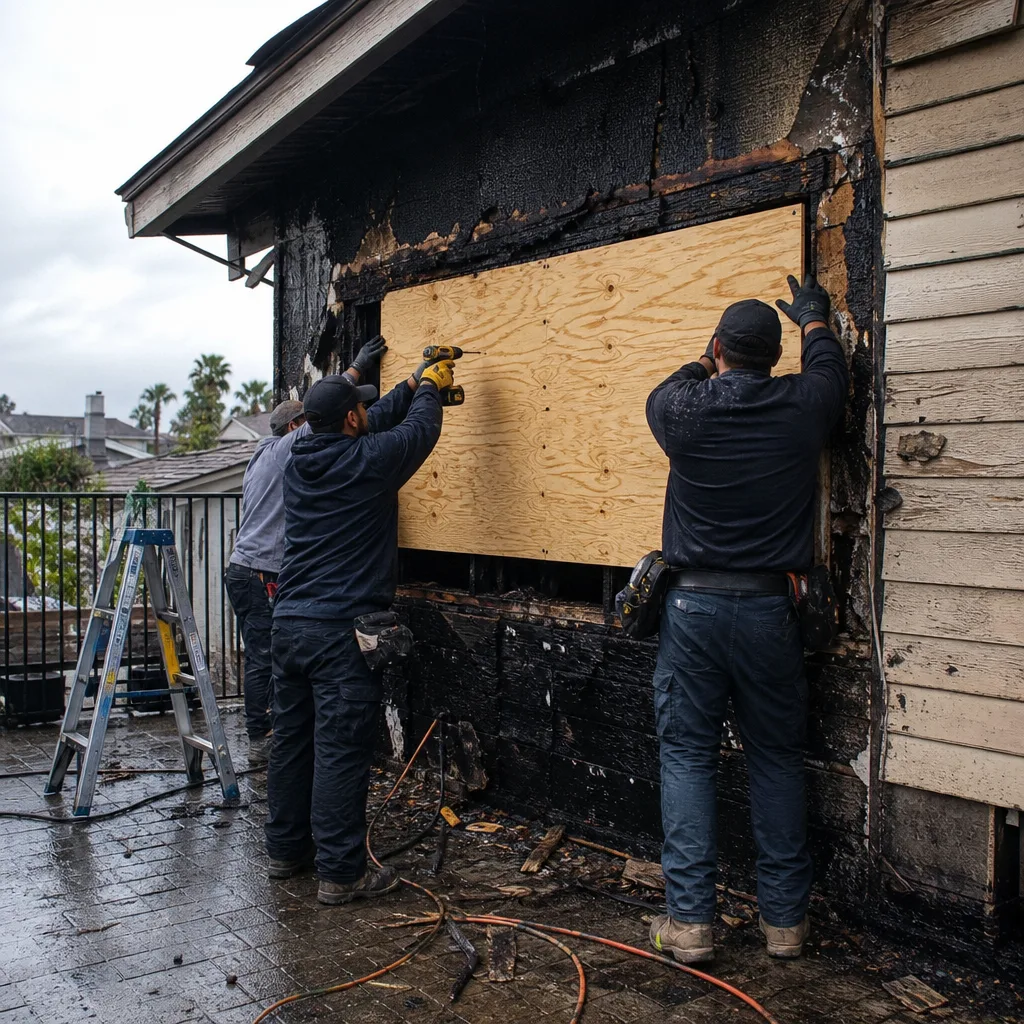
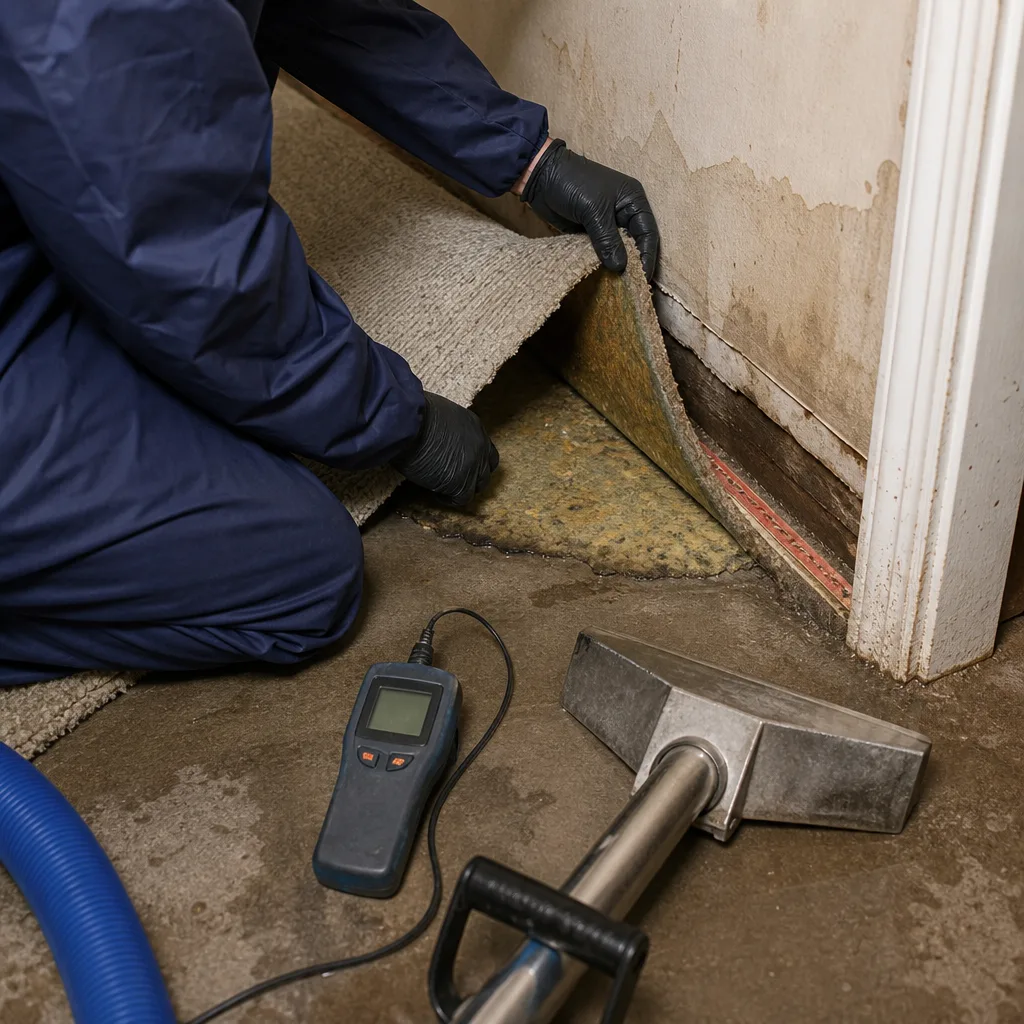
A house with a broken window or a burned-out wall section is an open invitation to looters, animals, and the next Santa Ana wind event. We board up and tarp within hours of a fire loss in Simi Valley, and we don’t charge a trip fee anywhere in the county. That’s a standing rule, not a promotion.
What happens when you call
- 1
A real person answersNo phone trees - you reach a local pro.
- 2
You get an upfront price rangeHonest numbers before anyone is dispatched.
- 3
A background-checked tech heads outLicensed & insured, dispatched right away.
- 4
You approve before work beginsNothing starts until you say go.
Why Simi Valley Homes Need a Different Fire Restoration Approach
Here’s what most restoration contractors miss about Simi Valley, and it’s the single most important paragraph on this page. The valley’s fire season doesn’t end when the flames die. Simi Valley fires, especially those near the north and west ridgelines, strip the chaparral that holds the hillsides together. When winter rains finally arrive on those denuded slopes, debris flows channel directly through the valley’s drainage corridors into established neighborhoods. A house that suffered smoke damage from a hillside fire in October can be dealing with subfloor water intrusion by January. If the restoration plan didn’t anticipate that second loss, the homeowner gets to watch mold grow inside what was supposed to be a completed fire restoration. We flag every ridgeline-adjacent property for this before cleanup even starts. That’s not a upsell. That’s knowing the terrain.
Last October, our crew responded to a house near the western ridgeline in the 93065 ZIP after embers from a hillside fire caused smoke infiltration through the aging forced-air ducts. We sealed the envelope, ran Dri-Eaz HEPA 500 air scrubbers and Phoenix hydroxyl generators for three days, and cleaned the duct interiors with an XPOWER brushing system. When January rains triggered a debris flow down the drainage behind the property, our techs were already monitoring and caught the subfloor water intrusion early, preventing a full mold remediation.
That’s the kind of thing you only learn by working this valley year after year. Simi Valley isn’t a service area to us. It’s where our customers live.
Common Fire & Smoke Damage Problems in Simi Valley Homes
- Sequential fire-then-debris-flow losses near ridgeline drainages. Homes near the north and west ridgelines face a second-loss risk within months of a fire event, when winter rains send debris flows into downslope neighborhoods. Ignoring this means a water and mold claim stacked on top of a fire claim.
- Post-fire pressure changes stressing original galvanized supply lines. Many Simi Valley homes still run on galvanized pipe installed decades ago. Fire suppression efforts and the heat of the event itself can shift pressure and expose corrosion-weakened pipe walls, causing hidden leaks behind fire-damaged drywall.
- Smoke contamination inside original 1960s, 1970s, and 1980s ductwork. The vast majority of Simi Valley’s housing stock was built as tract developments in that era, and the forced-air systems are often original. Smoke that recirculates through those ducts re-deposits odor for months after the visible cleanup is done.
- Asbestos testing delays before restoration demo. Pre-1978 acoustic popcorn ceilings are standard in Simi Valley’s older tract homes, and California law requires asbestos testing before any restoration demolition touches them. Skipping the test stops the job cold and puts your contractor out of compliance.
Pricing for Fire & Smoke Damage Restoration in Simi Valley, CA
Here are real ranges for Simi Valley’s market, not national averages. Emergency board-up and tarping runs $850-$1,600 depending on openings and roof damage. Smoke and soot removal for a single room starts around $2,800 and lands closer to $5,500 when ceilings, walls, and contents are all involved. Full duct cleaning with HEPA air scrubbing and hydroxyl treatment in a 1,800-square-foot tract home typically runs $3,200-$6,000. Contents pack-out and off-site cleaning adds $4,000-$9,000 depending on volume. Whole-house fire restoration after a hillside fire event, including demo, drying, duct treatment, sealing, and reconstruction prep, falls between $9,000 and $28,000. The two biggest cost drivers in Simi Valley are ductwork age and proximity to ridgeline drainages. Call (855) 915-0646 and Wade will walk you through a written scope before any work begins. Estimates are free. There’s no trip charge inside the county.
Trusted Brands and Credentials Behind Our Simi Valley Work
The equipment on our Simi Valley jobs comes from names the industry actually respects: Dri-Eaz for HEPA air scrubbers and dehumidifiers, Phoenix for hydroxyl and drying technology, and XPOWER for duct brushing and air movement. Wade and his crew hold IICRC certification, and the company maintains RIA affiliation and IFA recognition. Background-checked, uniformed technicians show up with professional-grade equipment on every job, not rental-store gear. When your adjuster asks about our process, the documentation answers for us.
We Also Serve Cities Near Simi Valley
Our crew regularly works in Oak Park, Moorpark, Thousand Oaks, and West Hills. If you’re in any of those communities and dealing with smoke, soot, or fire damage, the same crew that handles Simi Valley jobs can be at your door. Same live-answer phone line, same 90-Day Done Right Promise, same owner who picks up at midnight.
Serving Simi Valley, CA - Our Local Coverage Area
We’re based in the Simi Valley area and know this community well. Use the map below to see our service coverage - if you’re nearby, we can almost certainly help.
FAQs - Fire & Smoke Damage Restoration in Simi Valley
Yes. The Santa Susana Pass funnels Santa Ana winds directly into Simi Valley’s bowl-shaped terrain, carrying fine smoke particulate and embers miles beyond the fire perimeter. Homes in the 93063 and 93065 ZIPs frequently show smoke infiltration through attic vents, window seals, and forced-air intake registers even when flames never crossed a street. If you smell smoke after a hillside fire, the contamination is already inside. Call (855) 915-0646 for an assessment, free estimate included.
Yes, it’s not only possible, it’s common. If the original forced-air ductwork was never cleaned after the Easy Fire smoke event, that particulate can sit in the duct lining for years, re-releasing odor whenever the system cycles. Homes with 1960s-to-1980s original ducts are the worst offenders because the duct interiors are rough with decades of accumulated dust that smoke bonds to. We use XPOWER brush systems and HEPA air scrubbers to pull that residual out, not mask it. Call (855) 915-0646 and Wade will scope it for you.
Because Simi Valley’s sequential disaster cycle means a fire loss in the fall often becomes a water loss in the winter. When hillside chaparral burns, it no longer holds soil in place, and seasonal rains push debris and mud through the valley’s drainage corridors into downslope neighborhoods. A property near the north or west ridgeline that had a fire loss in October should be monitored for subfloor water intrusion through winter. We check the drainage pattern before we start fire cleanup so the plan includes that second-risk window from day one.
If the home was built before 1978 and the popcorn ceiling is original, yes. California requires asbestos testing before any restoration demolition disturbs those materials, and most of Simi Valley’s tract housing predates the ban. We handle the testing coordination and build the timeline into the written scope so the demo isn’t delayed. Skipping it isn’t an option for a licensed contractor, and it shouldn’t be for you either.
Yes. The semi-arid climate, roughly 14 inches of rain a year, keeps the surrounding chaparral in a near-permanent fire-ready state. When fires ignite in the hills, the topography that funnels winds through the Santa Susana Pass also traps smoke and ash over residential streets for days. Smoke infiltration through attic vents and HVAC systems can cause contamination and odor in homes that are nowhere near the burn zone. If you smell smoke after a fire event, don’t wait it out. Call (855) 915-0646.
Written by Wade Ferris, Owner at Wade’s Restoration of California, serving Simi Valley and all of Ventura County since 2007.