
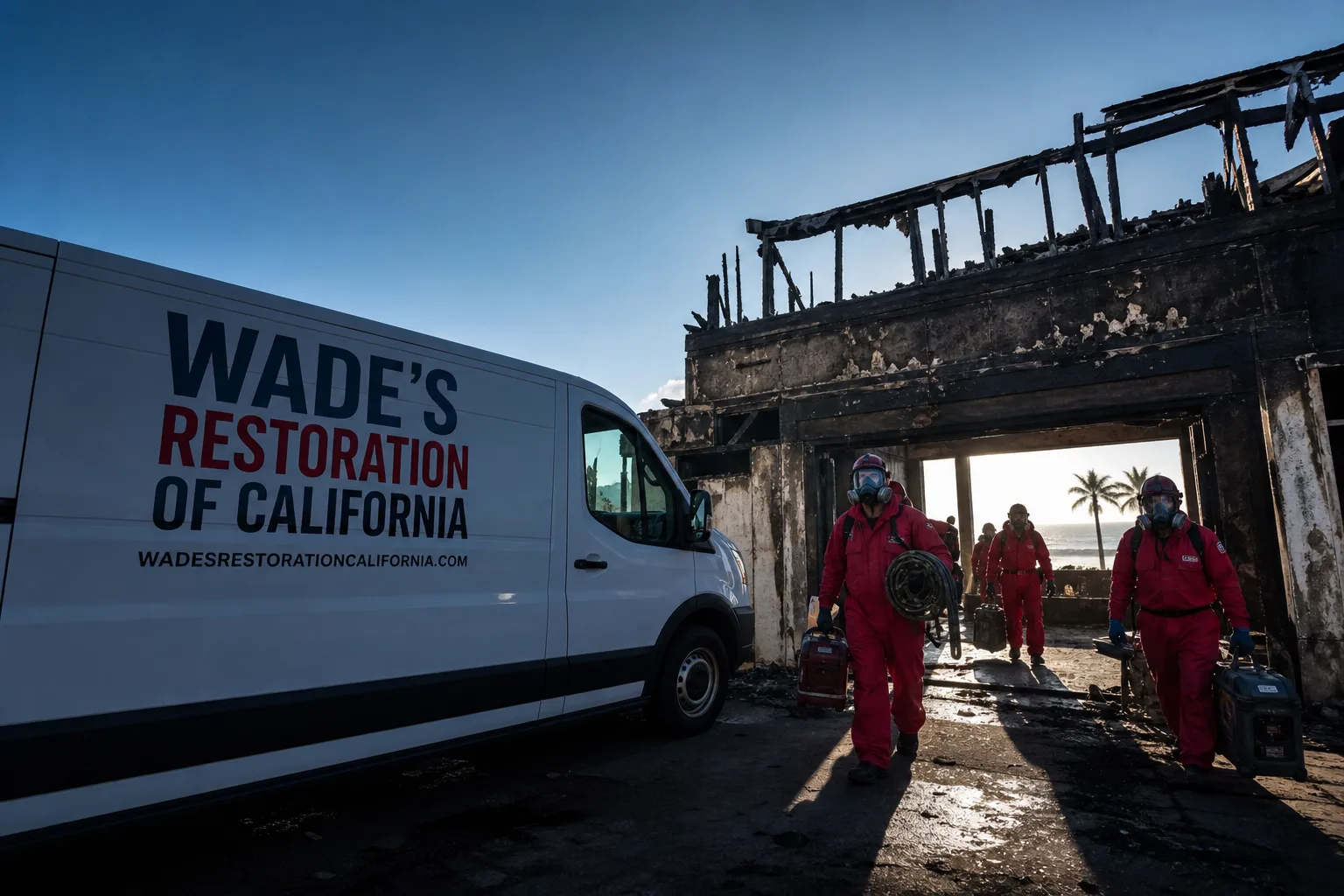
Fast, Reliable Fire & Smoke Damage Restoration Across San Gabriel
Fire damage in San Gabriel doesn’t wait, and neither do we. If you’re standing in a smoke-damaged living room in the 91775 foothills or a kitchen off Las Tunas Drive, here’s the short answer: we answer the phone live, 24/7, and Wade Ferris will be on the road to your door within the hour. Most smoke and soot cleanup in San Gabriel runs $2,800-$7,500 depending on square footage and how far the ash traveled. Call (855) 915-0646 right now and Wade will tell you straight what you’re dealing with, no runaround.
We’ve worked the bungalows off San Gabriel Boulevard, the ranch homes near Vincent Lugo Park, and the foothill blocks where wildfire ash settles into every attic vent. San Gabriel homes weren’t built for modern fire events. They were built with single-pane windows, popcorn ceilings, and galvanized pipes that hard water has been eating for sixty years. That changes how we restore them. It’s why local knowledge matters more than a national call center.
Why Wade’s Restoration of California Is San Gabriel’s Preferred Fire & Smoke Damage Restoration Company
Wade’s Restoration has been owner-operated since 2007, and that means something specific in San Gabriel. Wade Ferris publishes his name, his license number, and his address. You’ll run into him again at the hardware store or the farmers market on Mission Drive. That’s the oldest accountability mechanism there is, and it’s why homeowners in 91776 and 91778 call us before the national chains.
Ask anyone on your street. We’ve restored smoke-damaged kitchens near San Gabriel High School, deodorized attics off Walnut Grove Avenue, and done contents pack-outs for families near the San Gabriel Mission. The reviews from San Gabriel customers mention the same thing: a person answered the phone, gave a straight number, and showed up when he said he would. Not a crew you’ve never met. Wade himself.
When a fire hits at 2 a.m., you don’t need a corporate dispatch queue. You need someone who knows that the marine layer sits heavy against the mountain front north of Las Tunas, keeping smoke odor trapped in wall cavities longer than it would in Alhambra or Rosemead. Wade heads out immediately. His crew brings HEPA-filtered negative air machines because standard air movers just recirculate fine ash back into 1940s wall cavities and make the soot smell permanent.
Our Fire & Smoke Damage Restoration Services in San Gabriel
Every fire loss in this city touches at least three of these services, often all four, including our San Gabriel Reconstruction & Cleanup work. Here’s what we actually do in San Gabriel homes, street by street.
Smoke & Soot Removal
Soot from a kitchen fire behaves differently than soot from wildfire ash. In San Gabriel, we see both. The wildfire ash that pushes through original single-pane windows during Santa Ana events is finer and more alkaline than kitchen soot. It etches paint and gets into the pores of 1940s plaster. We use dry-chem sponges first, then HEPA air-scrubbing, then a final seal to keep the stain from bleeding back through fresh paint. In the 91775 foothills, where ash infiltrates attic vents and wall cavities, this is the difference between a clean job and a permanent ghost odor.
Odor Removal & Deodorization
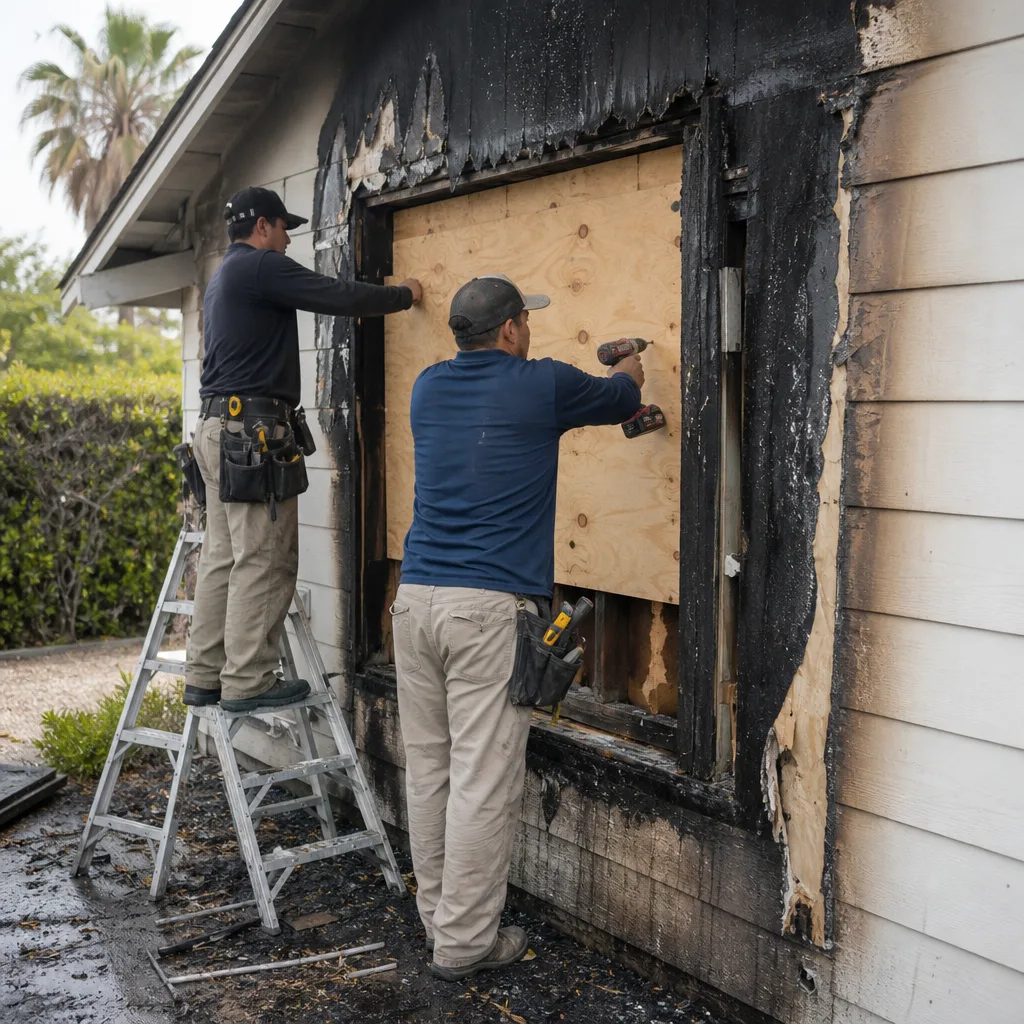
Odor in San Gabriel hangs around longer than people expect. The city sits in a natural bowl, and cold air pools against the mountain front, holding smoke molecules in place. We don’t mask odor with fragrances. We run hydroxyl generators and HEPA-filtered negative air machines, and we inject a thermal fog that penetrates drywall and insulation. A 1952 ranch off Hermosa Drive needed three full days of thermal fogging after a small electrical fire because the smoke had wicked into the unsealed wall cavities. That’s typical here.
Emergency Board-Up & Tarping
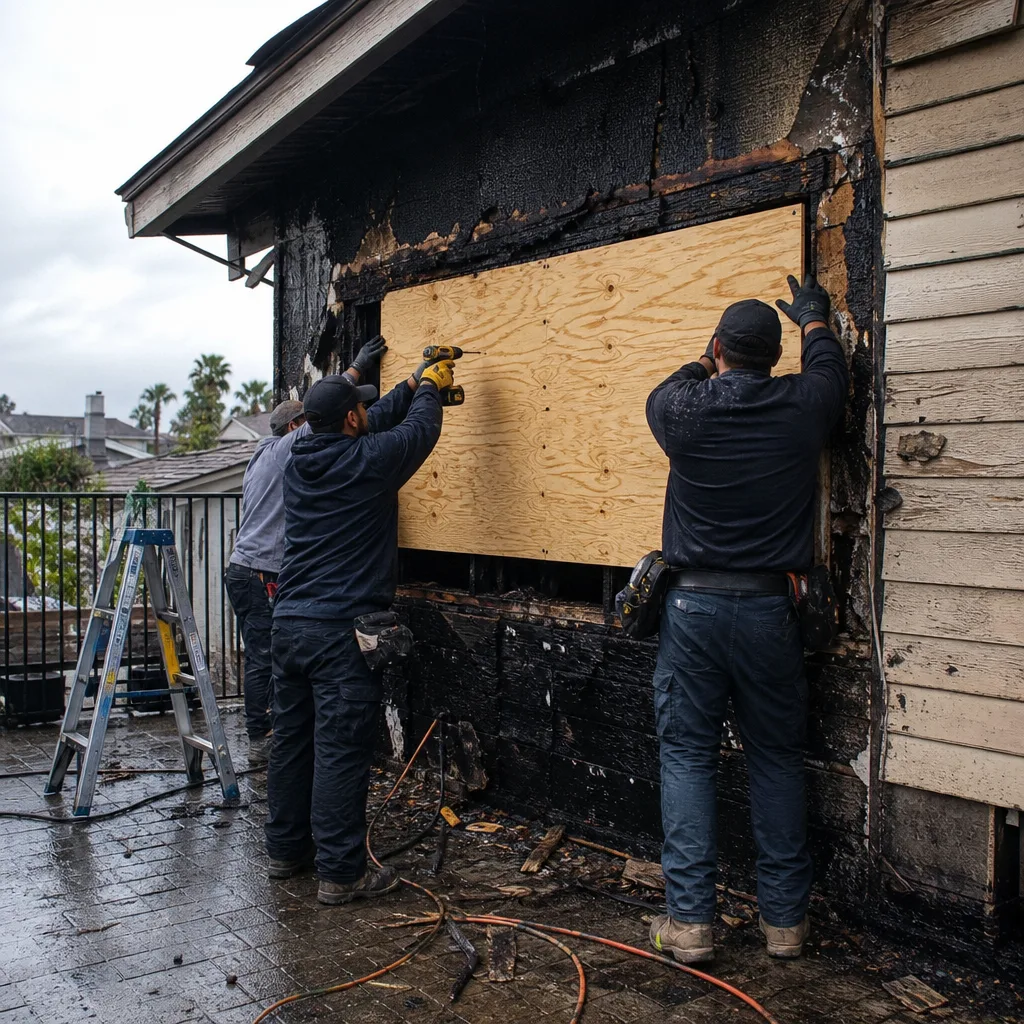
After a fire, your home is open to San Gabriel’s damp overnight air, and damp air plus ash creates acid that corrodes metal, pits glass, and sets stains. We board up and tarp within hours, not days. If the fire department cut a hole in your roof, we tarp it before the marine layer rolls in. If your garage door burned through, we’ll secure the opening. This isn’t just about security. It’s about stopping the damage from compounding before restoration even starts.
Contents Cleaning & Pack-Out
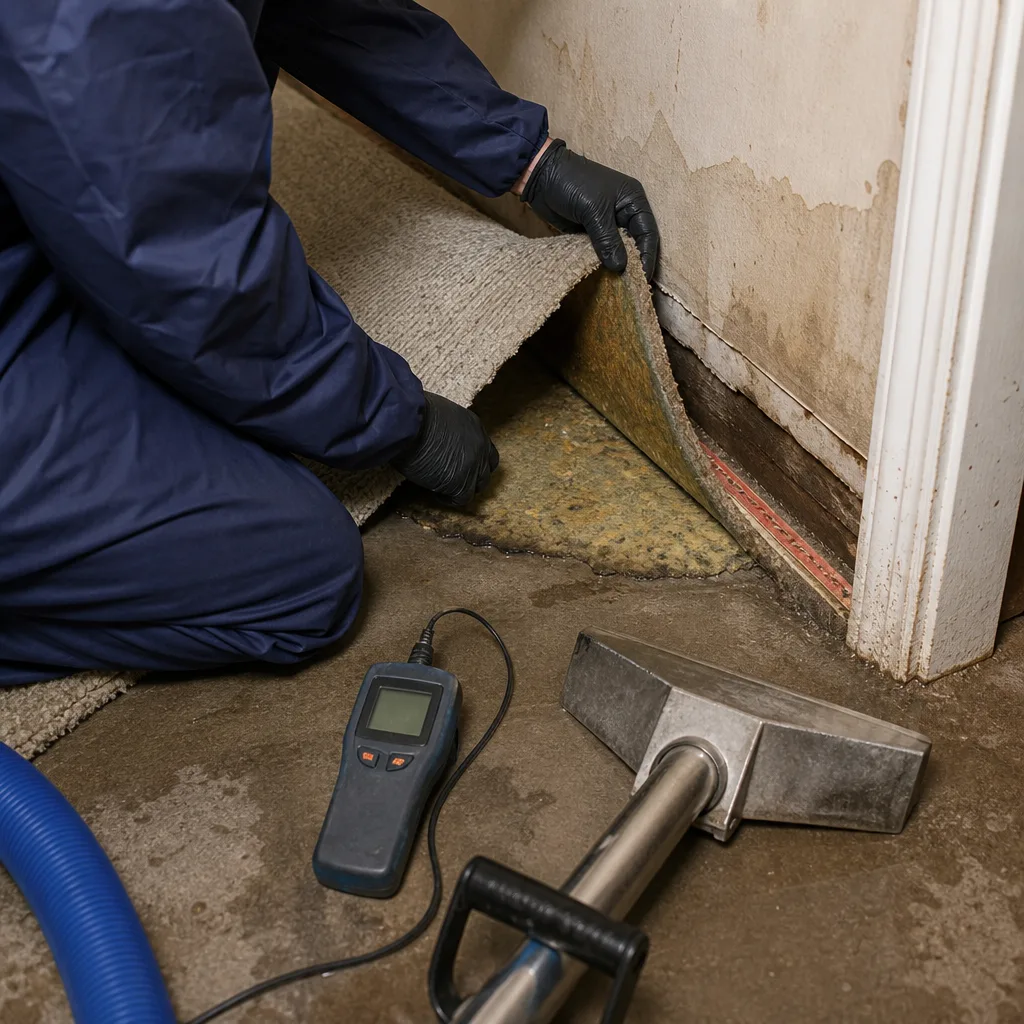
Smoke gets everywhere, including into the clothes in your closet near San Gabriel Country Club and the heirloom dishes you inherited from your grandmother. We inventory, photograph, pack out, and restore contents at our facility. Every item gets a documented chain of custody. If it can’t be restored, we document that for your adjuster. Wade deals with the insurance company directly, so you’re not relaying information between two sides.
What happens when you call
- 1
A real person answersNo phone trees - you reach a local pro.
- 2
You get an upfront price rangeHonest numbers before anyone is dispatched.
- 3
A background-checked tech heads outLicensed & insured, dispatched right away.
- 4
You approve before work beginsNothing starts until you say go.
Common Fire & Smoke Damage Restoration Problems We See in San Gabriel Homes
- Foothill homes treated like flatland jobs. Contractors who skip seismic gas-line shutoff checks on 91775 foothill homes can accidentally re-energize a fire-damaged gas appliance. We check shutoffs before touching anything else. That’s a San Gabriel-specific failure mode, and it’s dangerous.
- Fine ash recirculation. Standard air movers push microscopic wildfire ash deeper into 1940s wall cavities, locking in soot odor permanently. In San Gabriel’s older homes, you need HEPA-filtered negative air machines from day one. We bring them on every foothill job.
- Galvanized pipe failures hidden behind fire-damaged walls. The San Gabriel Valley’s hard water has been corroding galvanized supply lines for sixty years. A fire weakens them further. The first pressure test after restoration can blow out a joint and flood the house again. We inspect and replace brittle galvanized lines before we close up walls.
- Asbestos-era materials. Most 1940s and 1950s San Gabriel homes still have popcorn ceilings and asbestos-containing floor tile. Any fire or smoke loss that disturbs those surfaces triggers mandatory hazmat testing before restoration can proceed. We handle it, and we document everything for your insurance carrier.
Pricing for Fire & Smoke Damage Restoration in San Gabriel, CA
Here are straight numbers for the San Gabriel market, as of this year:
- Smoke and soot cleanup (single room, no structural damage): $2,800-$4,500
- Whole-house odor removal and thermal fogging: $4,000-$8,500
- Emergency board-up and tarping: $800-$2,500 depending on openings and roof penetrations
- Contents pack-out and cleaning (3-bedroom home): $3,500-$9,000
- Structural fire repair (wall framing, drywall, finish): $9,000-$35,000 based on burn-through and engineering
Cost in San Gabriel is driven by three things: how far smoke traveled through the house, whether asbestos-containing materials need abatement, and whether the foothill microclimate forced deeper odor penetration than a flatland home would experience. We give a written scope before any work starts. No charge for a second opinion on any written estimate you already have. Senior and veteran discount is 10%, always. Call (855) 915-0646 for a free estimate.
Trusted Brands We Service in San Gabriel
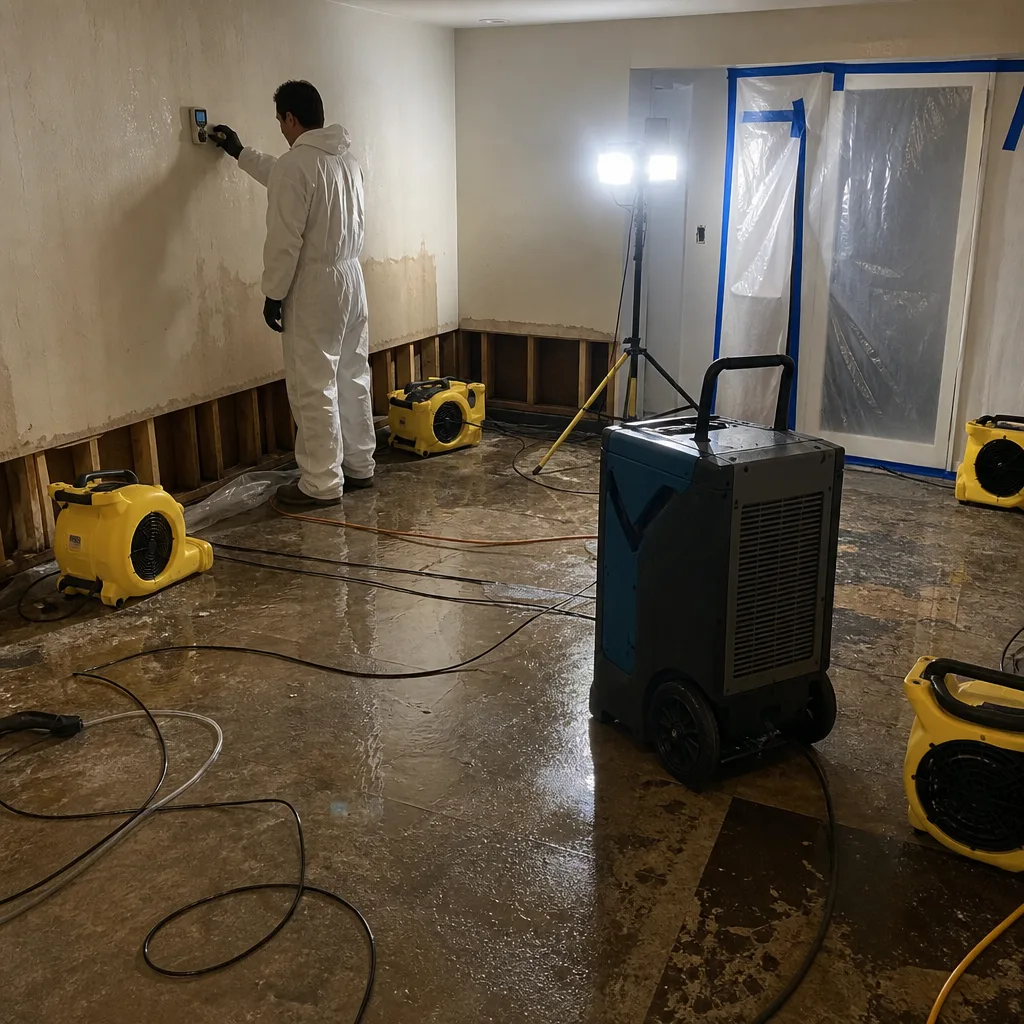
We service all major equipment brands in San Gabriel homes, and we’re certified through IICRC, RIA, and IFA. When dehumidifiers or air scrubbers need replacement parts mid-job, we source fast through local supply channels rather than waiting on a national warehouse. We run Dri-Eaz and Phoenix equipment on San Gabriel jobs because the foothill humidity demands professional-grade drying, not rental-store units. Our crew is background-checked and uniformed. The test equipment is calibrated. The moisture logs are daily, handwritten, and yours to keep. That’s how we’ve done every job since Wade started this company in 2007.
What Makes San Gabriel Fire Restoration Different
Here’s what a flatland fire-damage page won’t tell you, and it’s the single most important thing to understand about fire restoration in this particular city. San Gabriel’s northern neighborhoods, primarily ZIP 91775, sit directly against the San Gabriel Mountain front. After the 2020 Bobcat Fire burned the slopes above the city, the burn scar stripped away the vegetation that once held the hillside together. Now, even moderate rainfall sends mud, ash, and debris rushing down alluvial channels into residential streets. That debris flow can enter homes through garage door gaps and foundation vents, leaving a distinct mudline ring on the stem-wall foundation. That ring is a calling card of debris-flow intrusion, not a plumbing failure. It changes everything about documentation, restoration scope, and insurance coverage, because coverage for debris-flow damage follows a different path than San Gabriel Sewage Cleanup claims a standard flood loss.
Crews working those foothill blocks of 91775 photograph and GPS-tag the source channel before any remediation begins. We do this because the San Gabriel Valley Water District’s spreading-ground infrastructure can shift where flows concentrate from one storm season to the next. A mudline you photograph in January tells a different story than the one an adjuster sees in March. If we skip that step, your claim gets tangled, and the restoration stalls. Most restoration contractors in flatland cities never learn this. We learned it the hard way, on real fire and debris-flow jobs in San Gabriel.
Our crew responded to a smoke-damaged 1950s ranch in the 91775 foothills after a Santa Ana wind event pushed wildfire ash through the original single-pane windows and attic vents. We found fine soot caked onto the popcorn ceilings and asbestos-containing floor tile, triggering our San Gabriel Biohazard & Crime Scene Cleanup protocols before we could begin HEPA air-scrubbing and odor neutralization. The job required removing the corroded galvanized supply lines because the hard water had left them too brittle to flush, and we sealed the stem-wall mudline with an EPA-approved encapsulant before structural drying. That was one job. Every foothill fire loss in San Gabriel has layers like this.
For a deeper look at how we approach this work, see our Fire & Smoke Damage Restoration approach, then read more about Fire & Smoke Damage Restoration in San Gabriel for city-specific conditions.
We Also Serve Cities Near San Gabriel
Our crews work throughout the San Gabriel Valley. Beyond San Gabriel itself, we run daily jobs in East San Gabriel, San Marino, Alhambra, and Rosemead. Response times to those neighboring communities are typically under an hour, and the same local pricing, written scope, and 90-Day Done Right Promise apply.
Serving San Gabriel, CA - Our Local Coverage Area
We’re based in the San Gabriel area and know this community well. Use the map below to see our service coverage - if you’re nearby, we can almost certainly help.
FAQs - Fire & Smoke Damage Restoration in San Gabriel
Yes. Wildfire smoke carries fine alkaline ash that behaves differently than kitchen soot. It penetrates deeper into wall cavities, etches paint, and requires HEPA-filtered negative air machines rather than standard air movers. On Bobcat Fire burn scar jobs in the 91775 foothills, we specifically look for debris-flow mudlines and ash intrusion through foundation vents, which a standard kitchen fire never produces. Call (855) 915-0646 and we’ll tell you whether your smoke damage is standard or burn-scar specific.
We stop work, contain the area, and bring in a certified asbestos testing lab before any disturbance. Most 1940s and 1950s San Gabriel ranch homes have popcorn ceilings and asbestos-containing floor tile. If smoke has coated those surfaces, the material must be treated as contaminated hazardous waste until lab results say otherwise. We handle the testing, abatement coordination, and documentation your adjuster needs. San Gabriel homes of this era almost always trigger this protocol.
Because the San Gabriel Valley Water District’s spreading grounds can shift where debris flows concentrate from one storm season to the next. A mudline that is visible and photographable in January may be partially obscured by March. Without GPS-tagged photos showing the original debris channel, your insurance coverage path gets murky. We document the source channel before remediation begins, every single time. Call (855) 915-0646 and ask for a documented debris-flow assessment.
Usually we can restore them. Original hardwood from the 1950s is typically solid oak, and smoke damage sits in the finish and the first few millimeters of wood. We use HEPA sanding, enzymatic cleaning, and resealing. Replacement is only necessary if fire actually charred the boards or water from firefighting warped them beyond sanding tolerance. We’ll tell you which one you’re dealing with, in writing, before any work starts.
It extends them. The city sits in a bowl where cold air pools against the mountain front, and that trapped moisture means smoke odor lingers longer and water from firefighting doesn’t evaporate quickly. A flatland city might dry out a fire-damaged wall cavity in two days. In San Gabriel, especially in 91775, it can take three to four days with professional-grade dehumidification. We plan for that from day one. For an exact timeline on your loss, call (855) 915-0646.
If your San Gabriel home has smoke damage, fire damage, or debris-flow intrusion, call Wade’s Restoration of California at (855) 915-0646 now. Live answer, 24/7. Wade Ferris will be on the road within the hour, and you’ll get a written scope before anything gets touched. Free estimate. 90-Day Done Right Promise, in writing, on every fire and smoke restoration job.
Written by Wade Ferris, Owner at Wade’s Restoration of California, serving San Gabriel since 2007.