
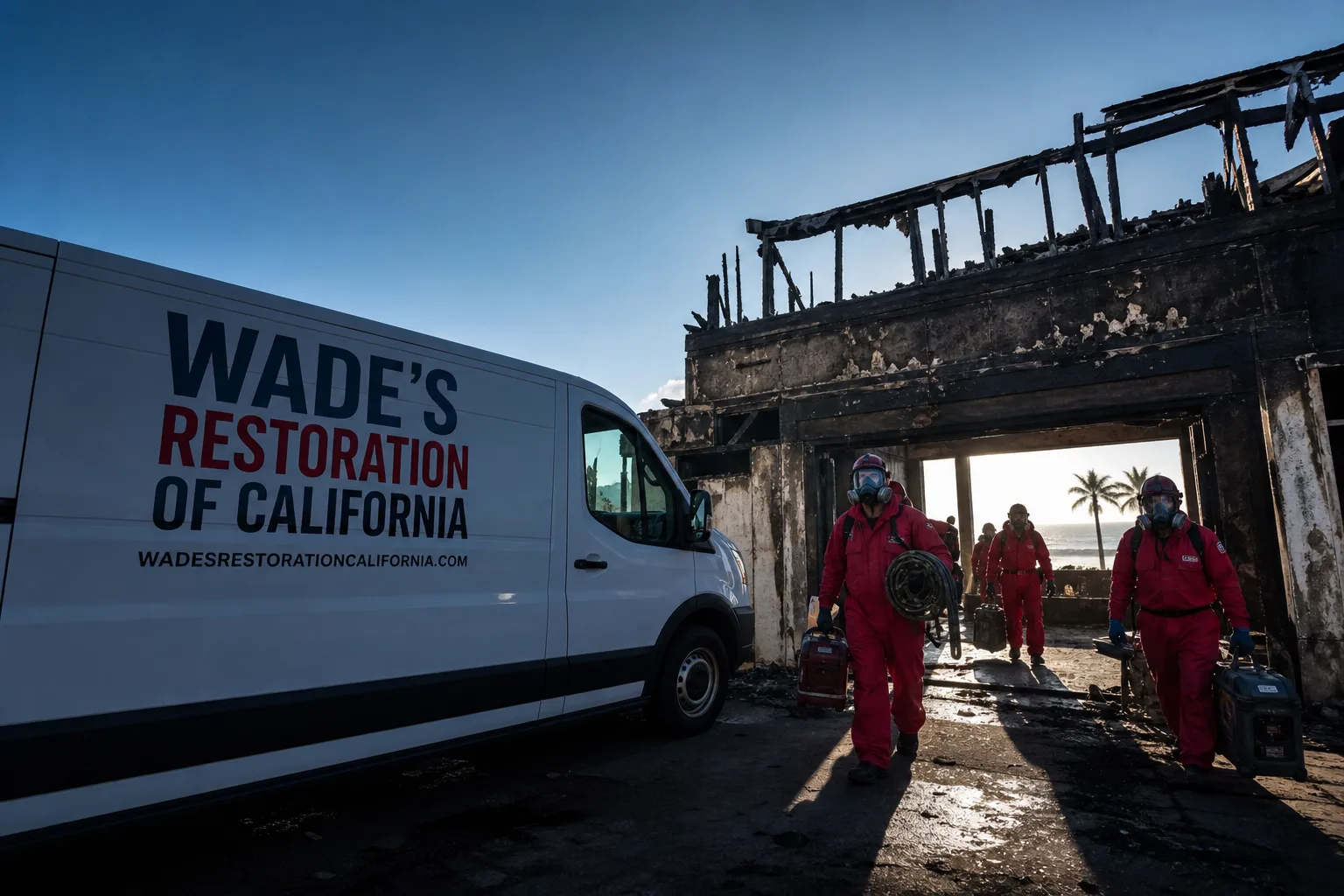
Fast, Reliable Fire & Smoke Damage Restoration Across Castro Valley
Fire damage in Castro Valley needs a response built around how this valley actually behaves. The marine fog that rolls through the Hayward Hills keeps moisture in the air and inside crawl spaces, which means soot starts etching metal and mold starts moving within days, not weeks. Wade Ferris has run Fire & Smoke Damage Restoration in this area long enough to know the first storm pattern, the hillside drainage issues, and the 1960s ranch construction that turns a small kitchen fire into a subfloor problem if you wait. Call Wade directly at (855) 915-0646 and he’ll head out to Castro Valley himself.
Why Wade’s Restoration of California Is Castro Valley’s Preferred Fire & Smoke Damage Restoration Company
Wade’s Restoration was founded in 2007 by Wade Ferris, a local owner who publishes his name and license number and answers his own phone. When a Castro Valley homeowner calls at 2 a.m. after a garage fire on a Redwood Road hillside lot, Wade picks up. Not a call center. Not a dispatcher three time zones away. The guy whose name is on the truck.
His crew knows Castro Valley’s housing stock because they’ve worked inside it for nearly two decades. Wood-frame ranch houses off Lake Chabot Road, hillside split-levels above 580, older homes near the BART corridor around Castro Valley Boulevard. The 90-Day Done Right Promise applies to every fire job here, in writing. If something isn’t right after the restoration, Wade comes back and makes it right. No argument, no fine print.
Wade deals with the insurance adjuster directly, so a Castro Valley homeowner never has to relay messages between two parties. He also hands over the full daily moisture log at job’s end, which almost nobody in this trade does. That matters in a valley where hidden moisture in crawl spaces is the thing that comes back to bite you.
Our Fire & Smoke Damage Restoration Services in Castro Valley
Smoke & Soot Removal
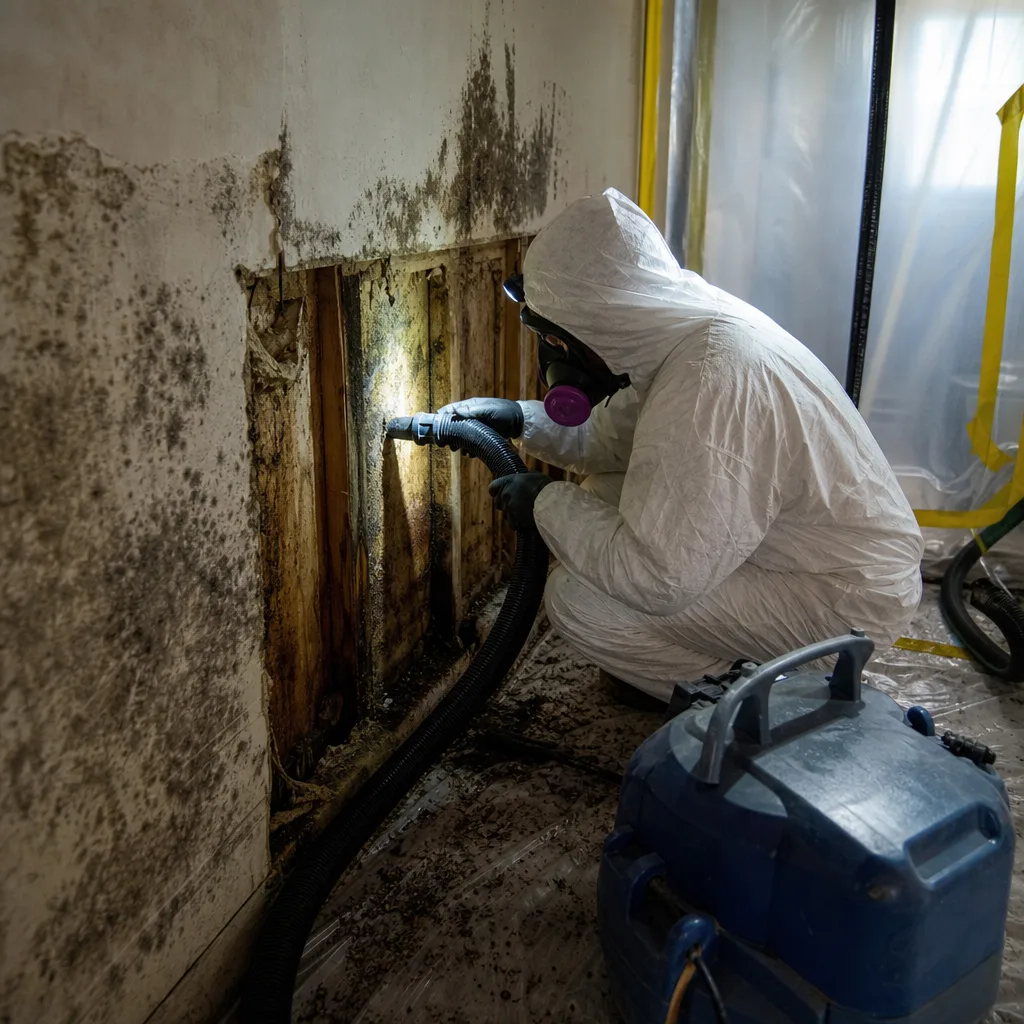
Soot in Castro Valley behaves worse than in wind-swept East Bay cities because the bowl geography traps marine air against the hills. Soot settles into lath-and-plaster walls, galvanized ducting, and open ceiling beams in the 1950s and 1960s ranch homes that dominate the 94546 and 94552 ZIP codes. Wade’s crew removes it with dry sponges, HEPA vacuums, and chemical sponges on unfinished wood, then seals surfaces so acidic soot doesn’t keep corroding paint and metal for months after the fire. This is the step that gets skipped by companies in a hurry, and it’s the step Castro Valley’s humidity punishes hardest.
Odor Removal & Deodorization
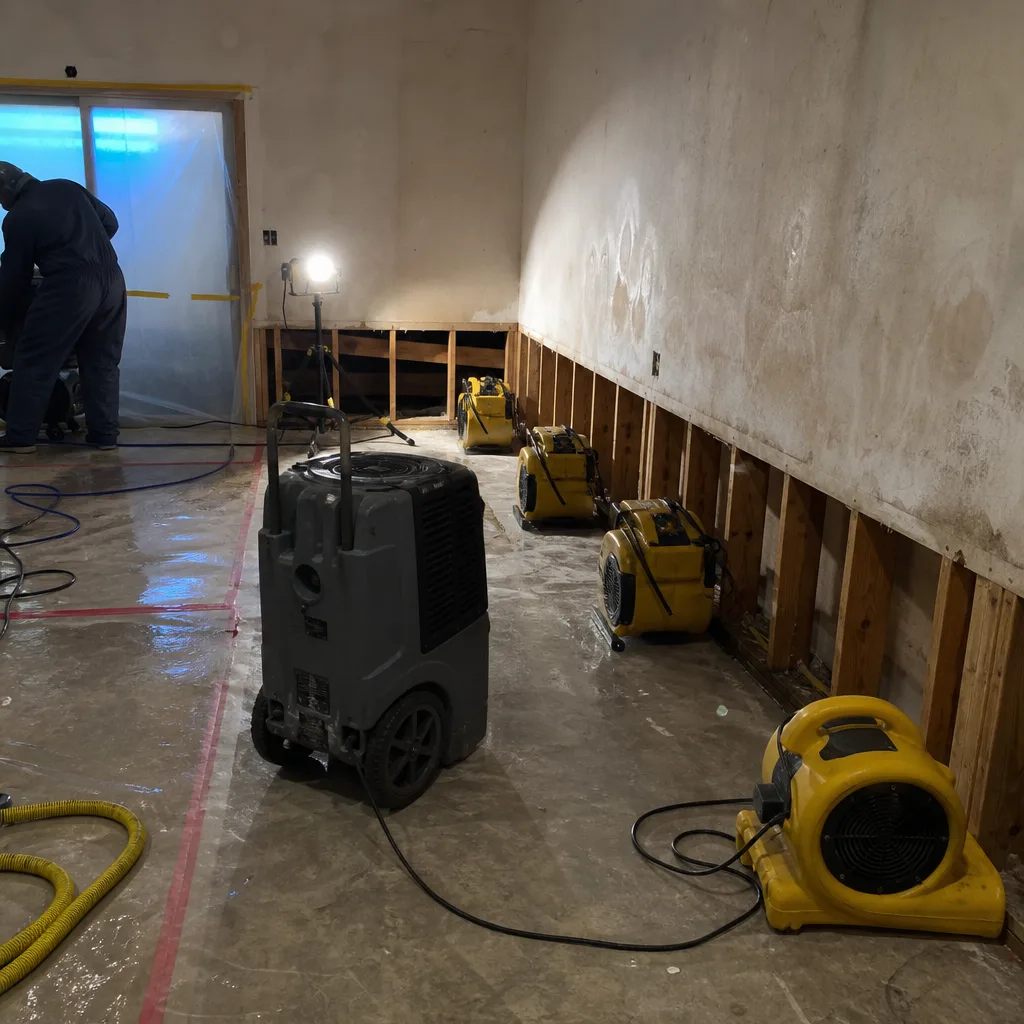
Smoke smell in Castro Valley’s hillside homes doesn’t just hang in the air. It works its way under sill plates, into subfloor cavities, and through crawl-space ducting. Then the fog cycle keeps re-activating the odor every time humidity climbs. Wade’s team uses thermal fogging with Injectidry equipment and repeated passes on the under-floor framing, because a single ozone treatment rarely holds on a hillside split-level with a raised foundation. Odor work here takes patience, and Wade doesn’t rush the job or charge twice for coming back.
Emergency Board-Up & Tarping
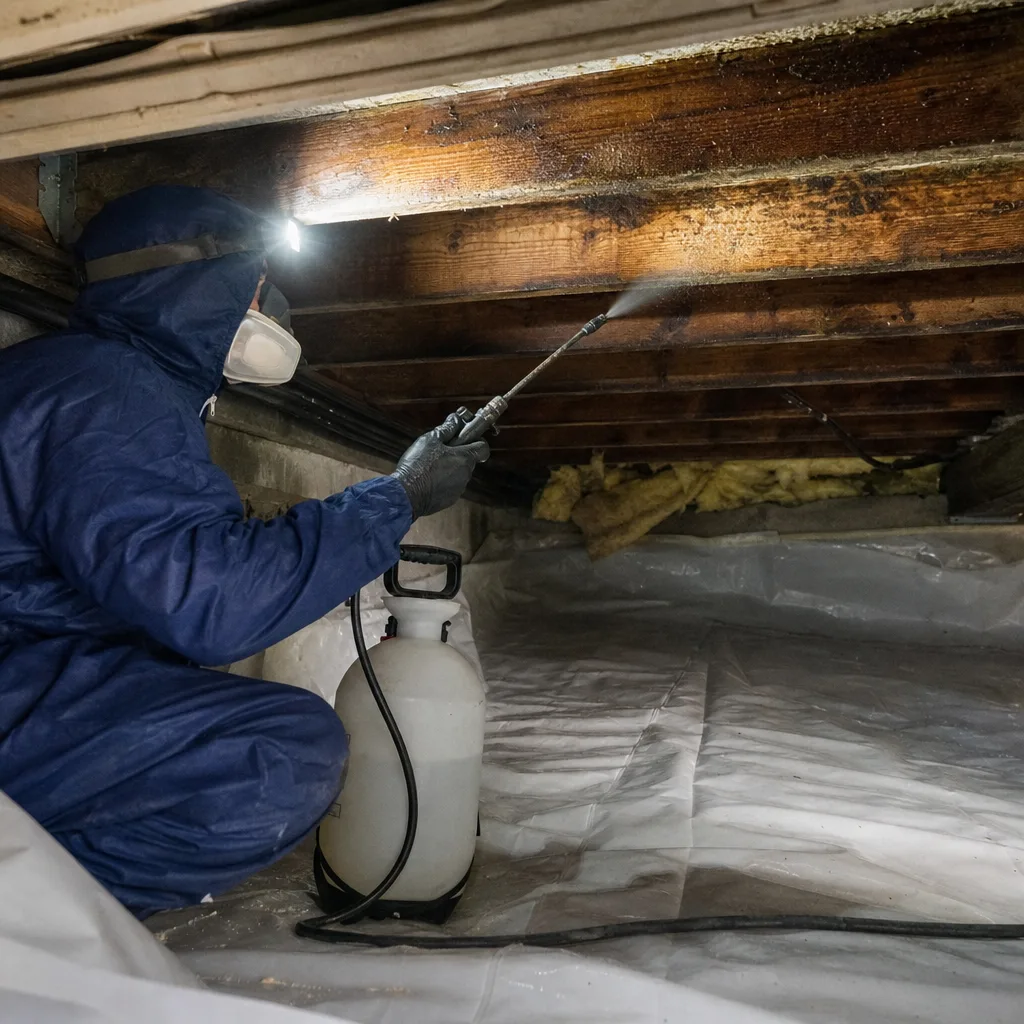
After a fire, the first practical problem in Castro Valley is keeping everything else out. Wind-driven embers, rain off the Hayward Hills, animals getting into a compromised wall, looters on a long driveway lot. Crews should have board-up and tarping done on the same call as the assessment. Wade does emergency board-up and tarping on hillside lots where a failed retaining-wall drain can send water into a fire-damaged structure before the second storm hits. The first storm of the season already tests those drains. Don’t leave a burned home open for it.
Contents Cleaning & Pack-Out
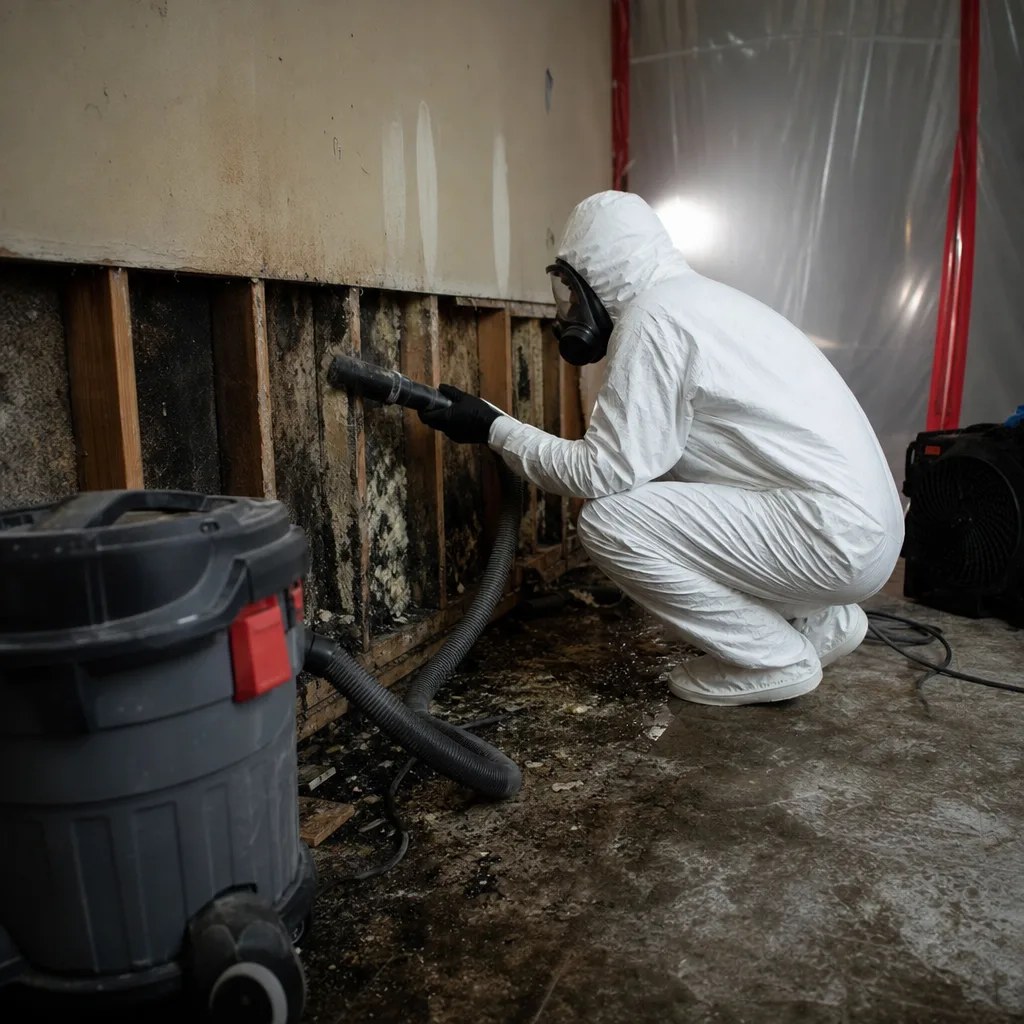
Furniture, clothing, tools in a detached Castro Valley workshop, family photos in a hallway off Crow Canyon. Wade’s crew inventories, packs out, and cleans salvageable contents off-site when needed, using professional-grade equipment from Dri-Eaz and Phoenix to clear particulate and odor. They photograph everything for insurance before anything moves. When contents come back, they’re clean, documented, and delivered to a home that no longer smells like smoke.
What happens when you call
- 1
A real person answersNo phone trees - you reach a local pro.
- 2
You get an upfront price rangeHonest numbers before anyone is dispatched.
- 3
A background-checked tech heads outLicensed & insured, dispatched right away.
- 4
You approve before work beginsNothing starts until you say go.
Trusted Brands We Service in Castro Valley
Homeowners in Castro Valley run equipment from the usual workhorse brands, and after a fire, that gear needs cleaning, deodorizing, and sometimes replacing. Wade’s crew works with Dri-Eaz and Phoenix drying and air-scrubbing equipment on every job, and the same professional-grade standards apply whether they’re restoring a Craftsman toolbox, a Stihl chainsaw, or a KitchenAid mixer from a Castro Valley kitchen. We stock testing supplies and can assess whether smoke-exposed electronics and small equipment are salvageable, which matters when every item has to justify itself to an adjuster.
Common Fire & Smoke Damage Restoration Problems We See in Castro Valley Homes
- Smoke in crawl-space ducting after a kitchen fire. Castro Valley’s fog-driven humidity keeps that smoke active and corrosive against galvanized ductwork and unsealed wood framing. If a tech never opens the crawl space, the smell returns.
- First-storm water intrusion after a fire. Hillside retaining walls, drainage swales, and downslope French drains on steeper 94546 lots fail on the first significant rain after a dry summer. A fire-damaged home with a compromised roof or wall is already vulnerable, and that first storm can turn a smoke job into a full water loss.
- Lath-and-plaster walls soaking in soot. Older Castro Valley ranch homes with lath-and-plaster construction hold smoke differently than drywall. Soot embeds in the plaster’s texture, and standard dry-sponging doesn’t get it all. The surface needs to be sealed before repainting or the stain and smell bleed through.
- Raised-foundation subfloor rot after suppression water. When firefighters dump water into a hillside split-level, it runs under sill plates and into the crawl space. Castro Valley’s humidity keeps that subfloor wet longer than a flat lot in Hayward would. Without daily moisture readings and forced drying, mold establishes within three to five days.
Pricing for Fire & Smoke Damage Restoration in Castro Valley, CA
Here’s what fire and smoke work actually costs in Castro Valley based on the scope Wade’s crew sees most often. Emergency board-up and tarping on a standard single-family home runs $400-$900 depending on how many windows and entry points need securing. Smoke and soot removal for a contained kitchen fire typically lands between $2,500 and $6,500, with the higher end covering lath-and-plaster walls and open-beam ceilings that need sealing. Full odor removal with thermal fogging and repeated passes on a hillside split-level with crawl-space ducting runs $1,800-$4,500 on top of soot cleanup. Contents cleaning and pack-out ranges from $1,200 for a small job to $8,000+ for a whole house with a detached workshop. Every estimate is written, itemized, and agreed to before work starts. Call (855) 915-0646 for a free estimate at your Castro Valley home. If you already have a written estimate from another company, bring it to Wade. He’ll give you a free second opinion, no charge.
We Also Serve Cities Near Castro Valley
If you’re in Cherryland, Fairview, Hayward, or Ashland and dealing with fire or smoke damage, the same crew that works Castro Valley will come out. No trip charge inside the county, and the same 90-Day Done Right Promise applies. Castro Valley is where we’ve seen the fog-driven soot corrosion pattern most clearly, but the surrounding communities share the same housing stock and the same weather. Call (855) 915-0646 and Wade will head your way.
Serving Castro Valley, CA - Our Local Coverage Area
We’re based in the Castro Valley area and know this community well. Use the map below to see our service coverage - if you’re nearby, we can almost certainly help.
FAQs - Fire & Smoke Damage Restoration in Castro Valley
The marine fog that funnels through the Hayward Hills into Castro Valley’s bowl keeps relative humidity elevated along creek corridors and lower valley areas, which accelerates acidic soot corrosion on metal surfaces and mold colonization on wet wood. San Leandro gets more wind to clear the air and dry things out. In Castro Valley, a kitchen fire’s soot can start etching galvanized plumbing and door hardware within 48 hours if untreated. Start cleanup immediately. Call (855) 915-0646 and Wade’s crew can be on site the same day.
A basement-level fire in a Castro Valley hillside split-level sends smoke into the crawl space and along the raised foundation, where it lingers because the space doesn’t vent well in the bowl’s still air. Suppression water also pools under the sill plates instead of draining away like it might on a flat Hayward lot. That means the crawl space needs its own odor treatment and drying plan, not just the finished rooms. Wade’s crew opens the crawl space on every hillside fire job, takes moisture readings daily, and runs air scrubbers and thermal fogging there before closing it up.
Yes. Open beams and exposed framing in 1950s and 1960s Castro Valley ranch homes absorb smoke deeply because the wood is old, dry, and often unpainted. The fix is dry-chem sponge cleaning followed by a sealant that locks in any remaining stain and odor. If the beams are already heavily stained, they may need soda blasting or hand sanding and resealing. Rushing this step just means the beams keep off-gassing smoke smell every time the valley’s humidity rises.
Returning smoke smell in Castro Valley almost always means smoke particles are still embedded somewhere the first restoration missed: crawl-space framing, ducting, wall cavities, or the underside of subflooring. The summer dry season can temporarily mask the odor, but when fog returns in the fall, the smell comes back with it. The fix is to re-treat the hidden cavities with thermal fogging and sealing, not just to re-deodorize the finished rooms. If a previous company’s odor work failed, Wade will take a look and tell you honestly what’s recoverable. Call (855) 915-0646 to have him assess it.
Yes. In a Castro Valley hillside crawl space, water from fire suppression doesn’t flow out or evaporate the way it does under a flat-lot home in Hayward. The soil slopes, water collects against the foundation on the downhill side, and the fog-heavy air slows evaporation. Wade’s crew uses Dri-Eaz high-efficiency dehumidifiers and Phoenix axial air movers positioned for the slope, plus daily moisture readings taken from multiple points. On a flat lot, one dehumidifier and one air mover per 200 square feet might work. On a hillside, the drying plan has to be built around gravity and trapped air. That’s why Wade logs readings every day and hands the homeowner the full log at the end.
Call Wade’s Restoration of California for Fire & Smoke Damage Restoration in Castro Valley
If you’ve had a fire in Castro Valley, don’t wait for the soot to etch your plumbing or the fog to push smoke smell into your subfloor. Call Wade Ferris directly at (855) 915-0646. He answers his own phone, and he’ll be honest about what needs to happen and what can wait. Free estimates. Free second opinion on any written estimate. Senior and Veteran 10% discount always. Wade’s name is on the truck and he’ll see you again on a Saturday, which is the oldest accountability mechanism there is.
Written by Wade Ferris, Owner at Wade’s Restoration of California.